Audio Amplifiers
Good vs Great Amplifier Performance: Five Amplifiers That Show the Difference
A practical look at the measurements that separate good amplifier performance from genuinely excellent performance, illustrated by five amplifiers with very different results.
Introduction
Amplifier shopping usually comes down to a single number: rated power. That number says surprisingly little about how an amplifier actually behaves. Two amplifiers with identical wattage ratings can differ enormously in how cleanly they deliver that power, how consistently they respond across the audio band, and how gracefully they handle difficult loudspeaker loads.
This guide looks at five amplifiers that sit at very different points on the price and performance spectrum. Some are engineering benchmarks. One is a genuinely affordable design that outperforms far more expensive hardware in key measurements. Another is a beautiful, costly amplifier whose measured behavior at full power falls short of its reputation. The aim is not to declare a winner on sound alone, but to show what the underlying data looks like when performance is genuinely excellent.
How to Read Amplifier Performance
Four measurements tell most of the story.
Frequency response should be flat from 20 Hz to 20 kHz, and ideally an octave or so above that. Just as important, the response should not change shape when the load impedance changes. An amplifier whose frequency response shifts between an 8-ohm and a 4-ohm load will interact audibly with different speakers. Load-invariant behavior removes much of the guesswork people describe as system synergy, because the amplifier then behaves consistently no matter what it drives.
The power versus distortion sweep is where the character of an amplifier becomes visible. A strong design holds a flat, low-distortion line all the way to its rated output, with the knee occurring at or above the rated power. A weaker design starts bending upward well before its rating, meaning distortion climbs sharply just when the amplifier is working hardest.
FFT spectra show harmonic content at one watt and at full rated power. At one watt, harmonics should be essentially absent. At full power, harmonics should stay far below the fundamental, with 70 dB or more of separation considered good and around 90 dB excellent.
Signal-to-noise ratio, measured at one watt, indicates how quiet the amplifier is. Around 80 dB or better is a solid result, and higher is better. This matters most with high-sensitivity speakers, where amplifier hiss becomes easier to hear.
Finally, power delivery into lower impedances matters. An amplifier should roughly double its 8-ohm rating into 4 ohms. Very few receivers manage this, and many power amplifiers do not either. Multi-driver tower speakers are almost always a harder load than their nominal impedance suggests.
Classé CT-2300: A Benchmark in Linear Power Delivery
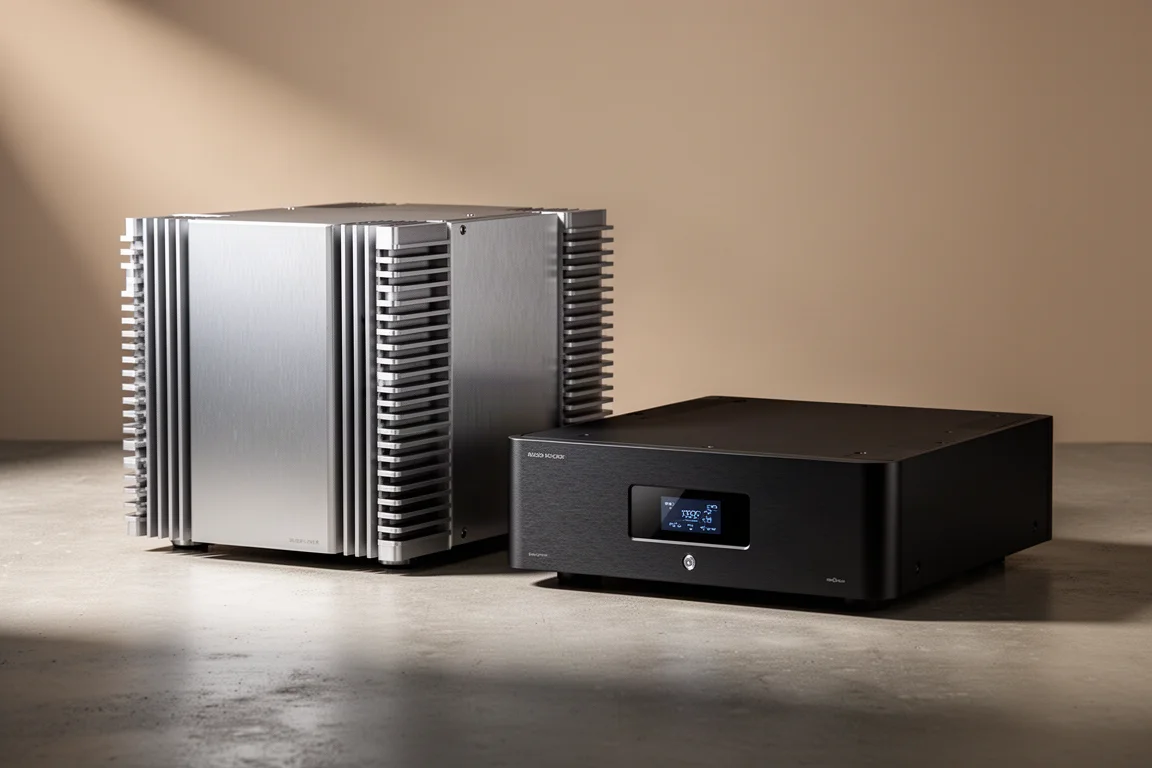
The Classé CT-2300 is a two-channel amplifier rated at 300 watts per channel and priced in the region of $6,000 to $7,000. On the bench it behaves almost like a textbook ideal. Distortion sits at roughly 0.003 percent before clipping, which is equivalent to about 90 dB, and that figure holds all the way out to the amplifier’s power limit.
The power sweep is remarkably flat. With both channels driven, the CT-2300 delivered around 340 watts into 8 ohms at 0.1 percent distortion, comfortably above its 300-watt rating. Into 4 ohms it produced approximately 590 watts at 0.1 percent and 610 watts at 1 percent, close to a true doubling of the 8-ohm figure. Continuous full-power bandwidth was measured without difficulty, and signal-to-noise ratio at one watt came in roughly 6 dB better than the considerably more expensive amplifier discussed next.
That combination of conservative ratings, load-invariant frequency response and low distortion at every power level is what excellent performance looks like.
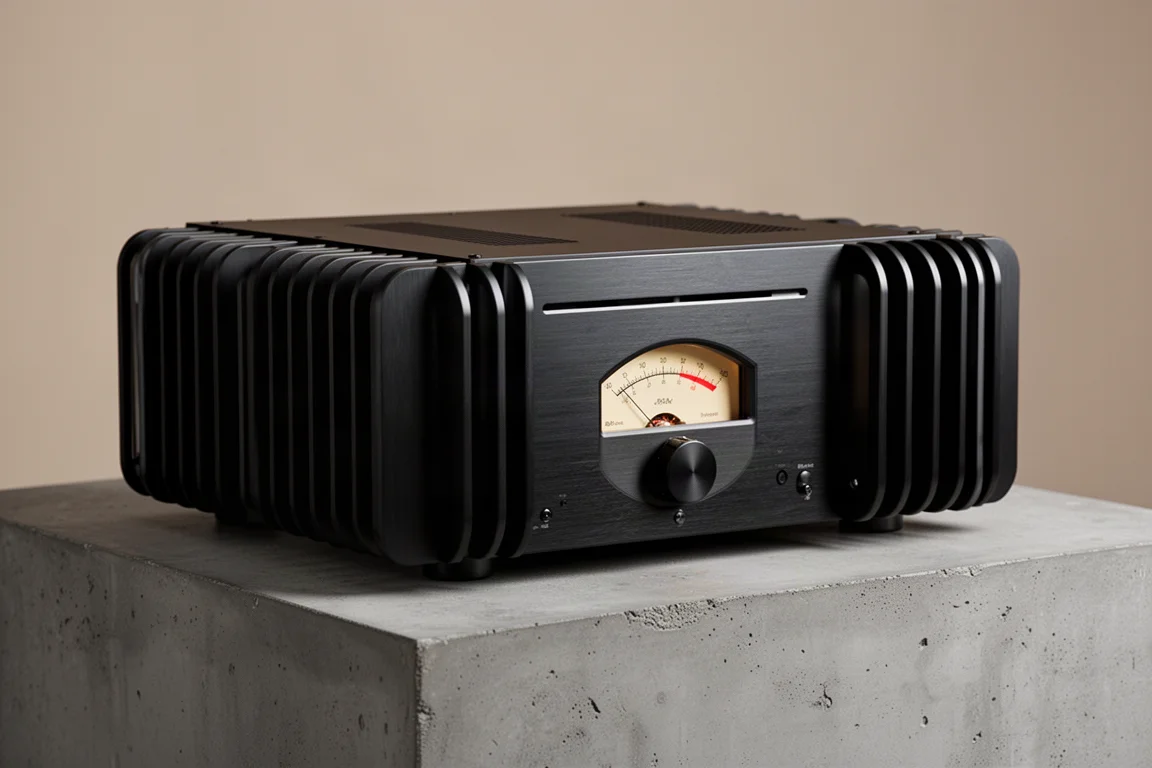
Pass Labs X350: Superb at One Watt, Compromised at Full Power
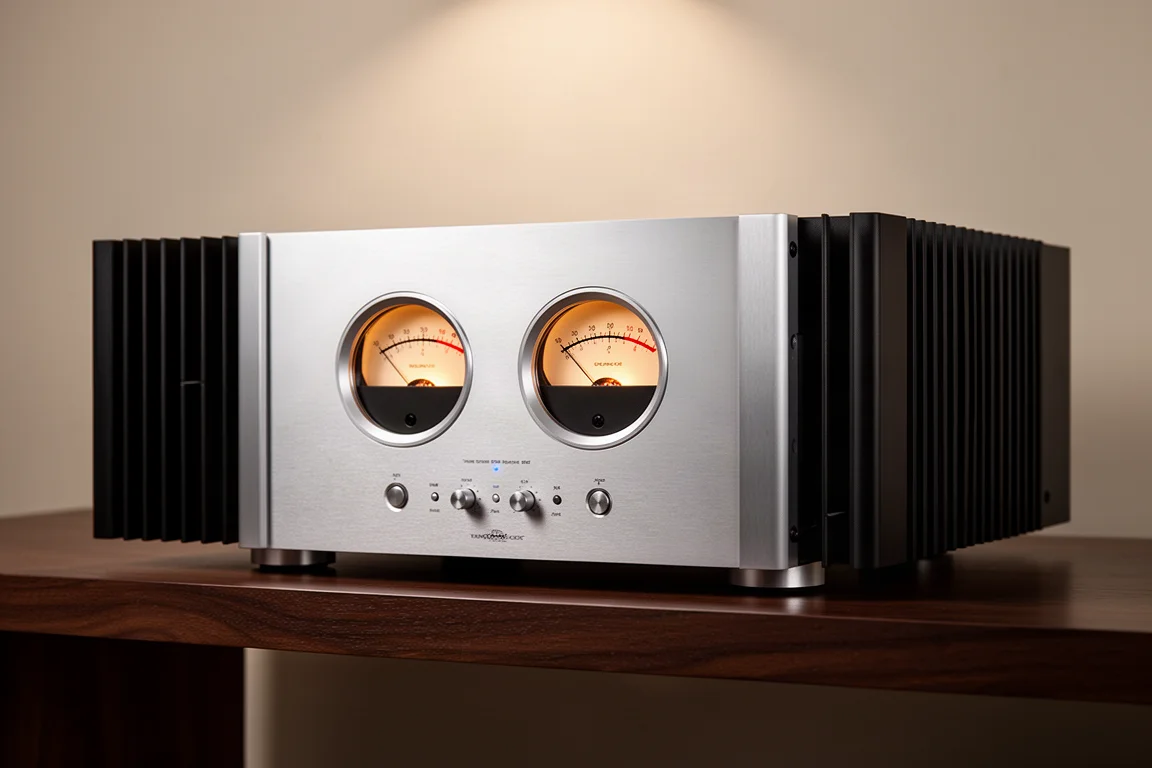
The Pass Labs X350 is a striking amplifier in person and is priced around $11,000. Its design philosophy emphasizes the first watt, and the measurements support that emphasis. At one watt the FFT was extremely clean, with no measurable harmonics, although a raised DC offset was visible near 20 Hz.
At higher output the picture changes. Rated at 350 watts into 8 ohms and 700 watts into 4 ohms, the X350 does not specify how many channels are driven for those figures. Measured with both channels driven, it reached about 370 watts into 8 ohms at 0.1 percent distortion, but only around 490 watts into 4 ohms, well short of the 4-ohm rating. Distortion rose from roughly 0.005 percent at 300 watts to 0.03 percent at rated power, roughly 70 dB and about 20 dB behind the less expensive Classé. At rated power the FFT showed jagged harmonic spikes below 70 dB, and signal-to-noise ratio measured 88 dB at one watt, which is quiet but not state of the art.
The transformer appears to sit in the region of 1,200 to 1,500 VA, which is modest for an amplifier with this rating. Driving 4-ohm speakers that dipped toward 2 ohms in the 50 to 60 Hz range, the X350 ran out of power audibly, and its front panel visibly dimmed as bass notes hit.
So the low-power behavior is genuinely good, and the one-watt claim is honest. At $11,000, though, the full-power and low-impedance behavior is difficult to justify when a much cheaper design measures better in exactly those areas.
Monoprice Monolith: Value Engineering That Measures Exceptionally
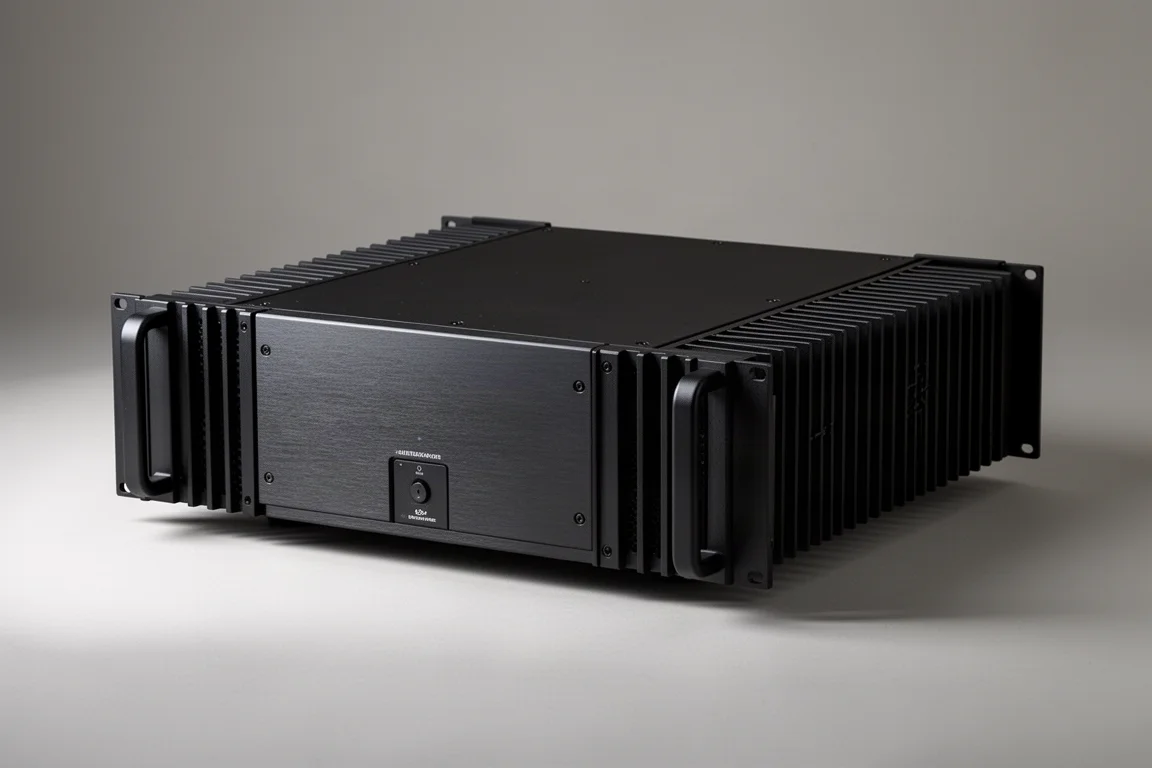
Monoprice Monolith amplifiers cost between roughly $1,500 and $3,000 depending on how many channels you choose, and they are designed by ATI, a company with decades of amplifier design experience behind it. The two-channel model is rated at 200 watts.
The measured power versus distortion sweep is flat, even and linear all the way to its rated output, at both 8 ohms and 4 ohms. That is a stellar result for an inexpensive amplifier, and the distortion profile is actually superior to that of the $11,000 Pass Labs X350. Spending far less does not have to mean accepting measurably worse behavior.
Anthem STR: Differential Design With Real Headroom
The Anthem STR is a two-channel amplifier with fully differential outputs, priced in the region of $5,000 to $6,000. It turns in state-of-the-art measured performance: distortion stays very low and the power sweep remains linear all the way to a knee at 440 watts, above the amplifier’s own rating. Buyers effectively get more usable power than the specification promises.
That headroom, combined with a linear power curve, is the same pattern seen in the Classé and the Monoprice designs. It points to a power supply and output stage sized generously relative to the published numbers, which is exactly what makes an amplifier feel unstressed with demanding speakers.
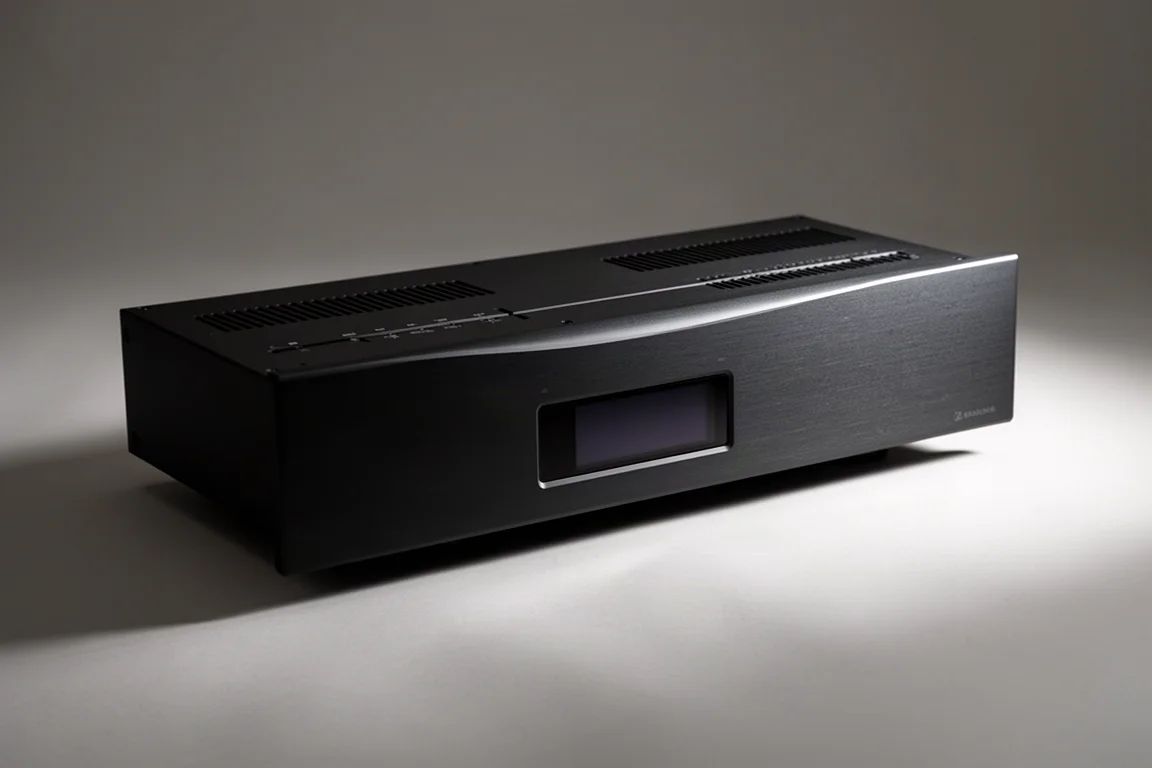
Denon PMA-A110: A Clean Integrated Amplifier
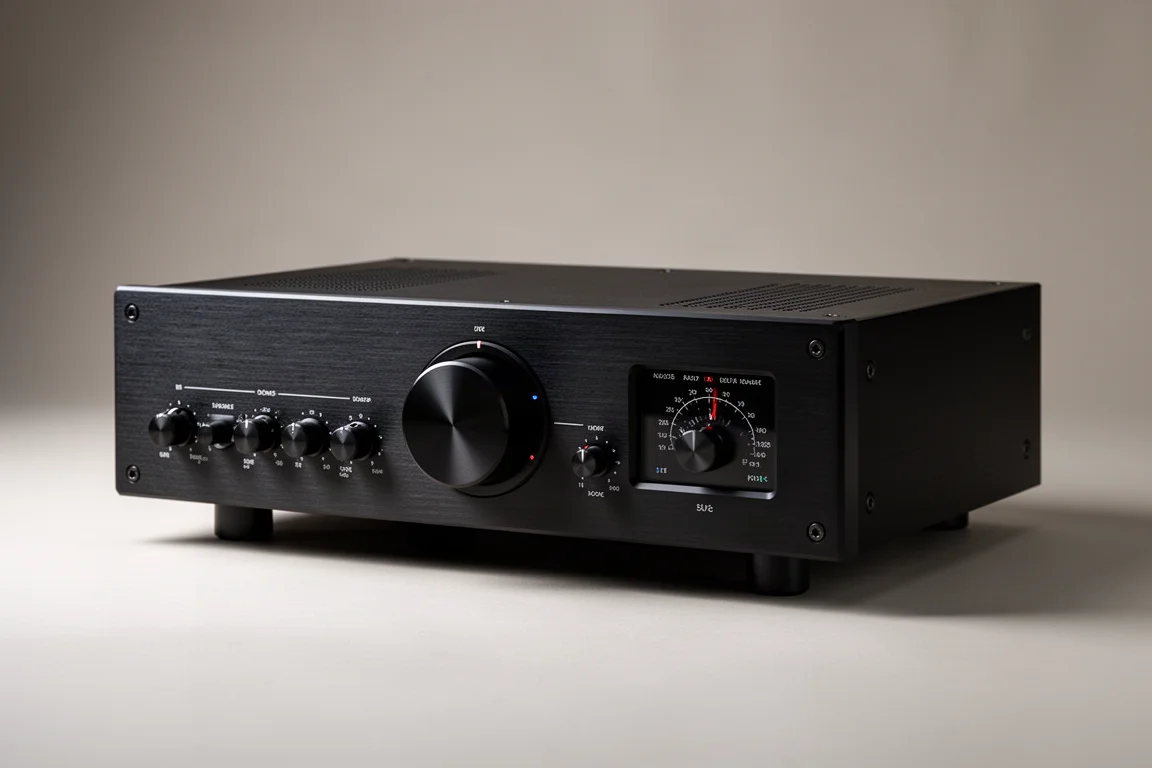
The Denon PMA-A110 is an integrated amplifier priced at around $3,500, and its harmonic profile at full rated power is excellent. With a 1 kHz fundamental, the second-order harmonic at 2 kHz sat 91 dB below the fundamental while the amplifier was running at its rated output.
For context, 70 to 80 dB of separation at full rated power is already a strong result, so 91 dB is a very clean showing. At one watt, most well-designed amplifiers show almost no visible harmonics, and the PMA-A110 follows that pattern.
Buying Advice
When comparing amplifiers, look past the headline wattage. Check whether the rating specifies the number of channels driven and the load impedance, and whether the manufacturer publishes a 4-ohm figure at all. A rating that quietly assumes one channel driven tells you much less than a rating that states both channels driven into 8 and 4 ohms.
Look for evidence that power roughly doubles into 4 ohms. Multi-driver tower speakers are usually a harder load than their nominal 8-ohm rating suggests, and amplifiers with undersized supplies can struggle there even when their wattage looks generous on paper.
Signal-to-noise ratio at one watt and FFT data are worth checking when they are available. High-sensitivity speakers make amplifier hiss more audible, so a quiet amplifier matters more in some systems than others. It is also worth remembering that measurements describe behavior rather than guaranteeing a personal preference. Not every measured difference will be audible, but cleaner performance tends to hold up better across a wider range of speakers and listening levels.
Conclusion
The five amplifiers here span a wide range of prices, and the measurements do not follow the price tags in a straight line. The Monoprice Monolith delivers an outstanding power sweep for a fraction of the cost of the Pass Labs X350, which is superb at one watt but falls short at full power and into low impedances. The Classé CT-2300 and the Anthem STR show what conservative ratings and generous headroom look like in practice, while the Denon PMA-A110 demonstrates that an integrated amplifier can post excellent harmonic numbers at full rated power.
The practical takeaway is straightforward: prioritize linear frequency response that does not shift with load, a flat power sweep up to the rated knee, low distortion and noise at one watt, and a 4-ohm rating that represents a genuine doubling. Those are the habits of an amplifier that will behave well in almost any system.
Further reading
Related Reviews
Audio Amplifiers
AGD Audion Mark III Review: A Compact Class D Amplifier With Tube-Like Musicality
A gallium nitride Class D amplifier that delivers tube-like midrange warmth, serious bass grip, and a modular upgrade path in a very small chassis.
Audio Amplifiers
Best Class D Amplifiers Under $100: Douk Audio A5 vs Fosi Audio V3
Two sub-$100 Class D amplifiers built on the same 3255 chipset, compared on bass weight, midrange body, treble presence, and real-world speaker matching.
Audio Amplifiers
Best Power Amplifiers Under $500: Six Stereo Amplifiers From $74 to $579
A practical roundup of six stereo power amplifiers under $500, covering real-world power, connectivity, cooling, and which kind of system each one suits.