Bookshelf Speakers
Good, Better, Best Bookshelf Speakers: What Extra Money Actually Buys
Three well-regarded bookshelf speakers at roughly $419, $1,000, and $3,000 a pair, and a clear look at which parts of the performance improve as the budget grows.
Introduction
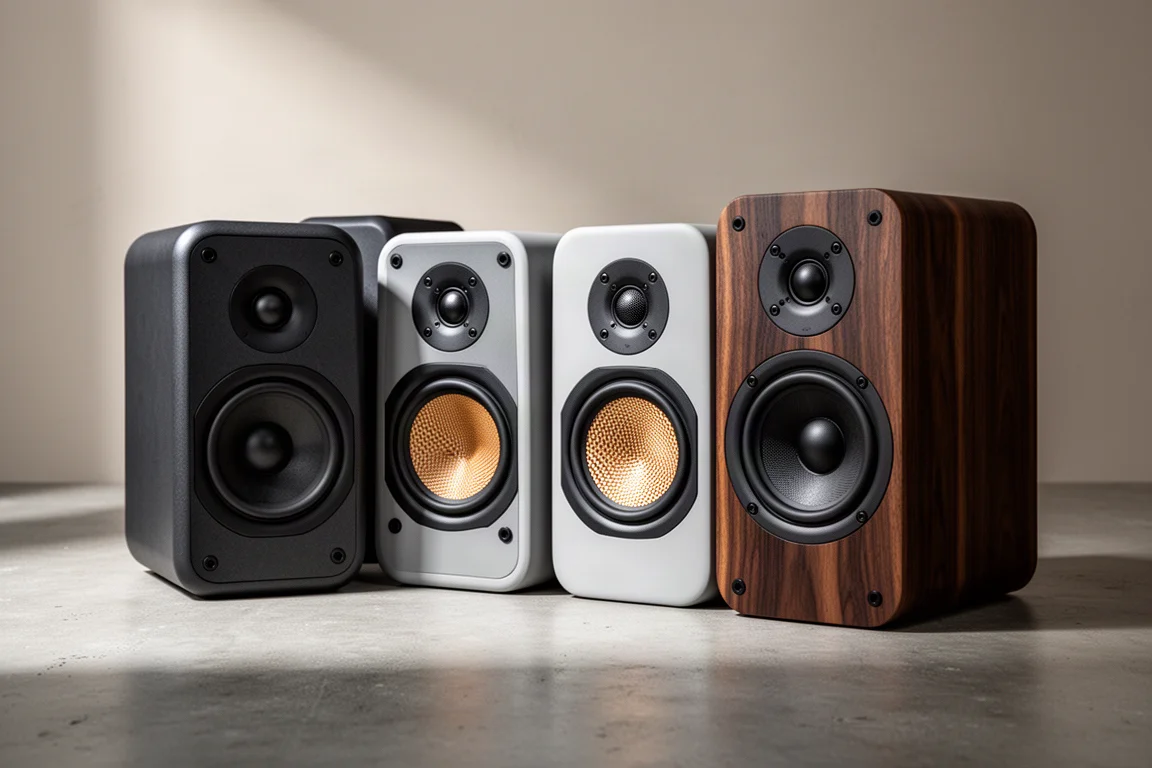
Bookshelf speakers exist at every price point, and the step from a few hundred dollars to a few thousand is rarely a straight line. Three pairs make that scaling easy to see. The Hsu Research Aurora 300 sold for $419 a pair when it was last available. The Focal Theva No.1 sits at roughly $1,000 a pair. A custom Salk Sound LS1802G pair would have landed near $3,000. None of these is an exotic showpiece. Each is a strong performer for its price, which is exactly what makes the comparison useful.
The question is not simply whether the more expensive speaker sounds better. It is which parts of the performance improve, how large those improvements are, and whether they line up with the way you actually listen.
How Bookshelf Speakers Scale With Price
Speaker performance is usually described through a handful of curves. The on-axis response shows what happens directly in front of the tweeter. The listening window averages a small spread of angles around that axis and is often the single most useful indicator of tonal balance. The in-room response shows what a listener hears at the seat after the room has added its own coloration.
Two further qualities separate a competent design from an excellent one. The first is directivity matching, meaning the woofer and the tweeter hand off to each other with a similar radiation pattern through the crossover region. The second is consistency between the left and right speakers, because a well matched pair produces a stable phantom center and a more convincing soundstage. Both improve with tighter manufacturing tolerances, better matched drivers, and higher-tolerance crossover parts, and all of that costs money.
It is worth stating plainly that spending more does not guarantee better sound. Plenty of expensive speakers measure worse than cheaper ones. What follows is a look at three designs that all deliver strong value at their price, so the differences are mostly about engineering rather than marketing.
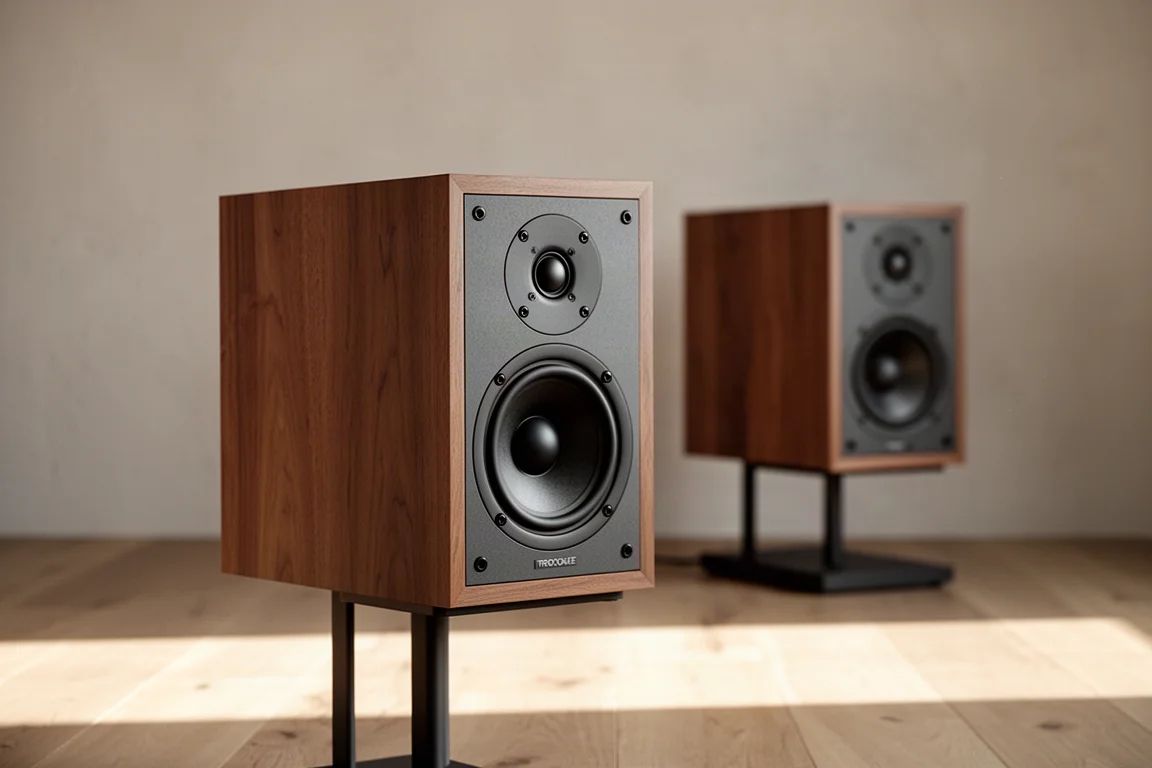
Above a certain point, extra money shows up as smoother curves rather than as a louder or more dramatic presentation, and that smoothness is what tends to hold up over long listening sessions.
Best Budget Pick: Hsu Research Aurora 300
The Aurora 300 was $419 a pair at its last availability and has been hard to find since, so stock may come and go. For the money it is unusually well built, and its 90 dB sensitivity is high for a small passive speaker, which means it does not demand a powerful amplifier to reach satisfying levels.
Its listening window is remarkably flat from about 1 kHz to 10 kHz, a sign of a well-behaved design that responds predictably to equalization. In-room measurements show a mild rise through the midrange and a small bump near 700 Hz, most likely a port interaction with the room rather than a flaw in the speaker itself. The most consequential strength is bass. The Aurora 300 extends deeper than the Focal Theva No.1, and that difference is a big deal if you are not adding a subwoofer.
The trade-off only appears under direct comparison with higher-fidelity speakers, where a slight glare in the treble region becomes audible. On its own, most listeners would never notice it.
Best Mid-Range Pick: Focal Theva No.1
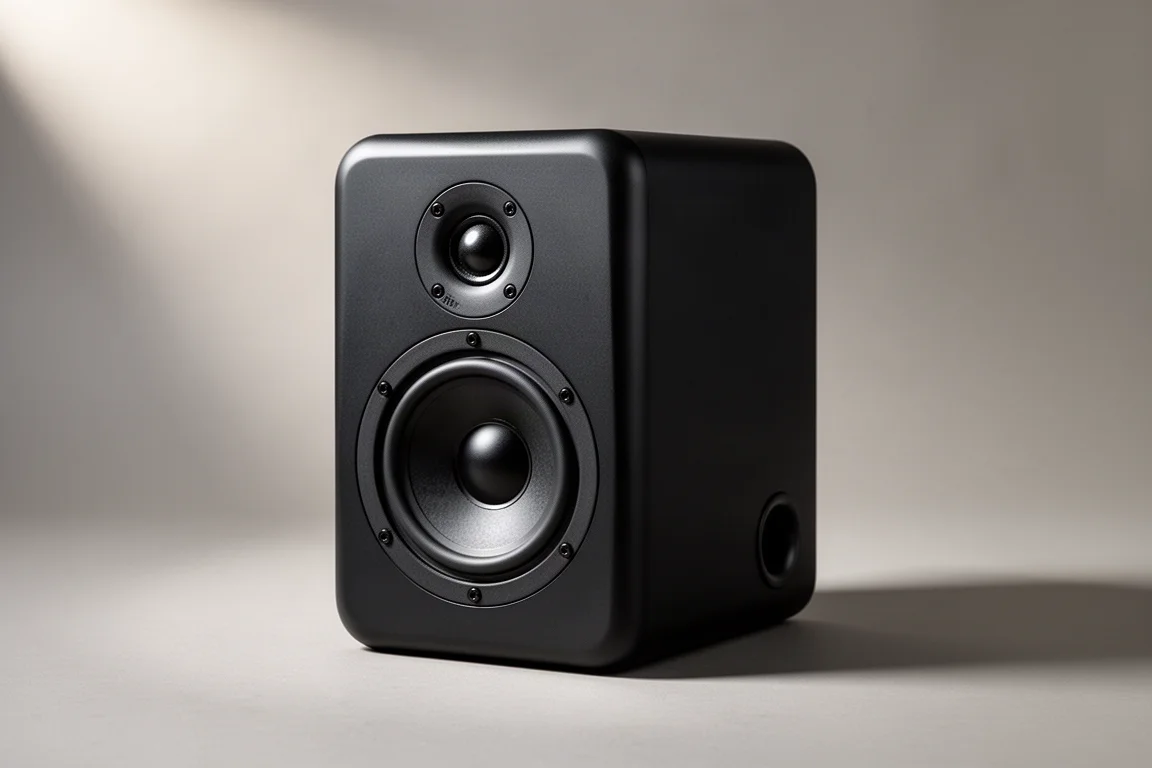
At roughly $1,000 a pair, the Theva No.1 costs more than twice as much as the Aurora 300, and the extra money shows up in the measurements rather than in sonic fireworks. Its response is flatter and smoother, its behavior is better controlled overall, and the directivity matching between the woofer and the tweeter through the crossover is cleaner. Left and right in-room tracking is tighter as well, which pays off in imaging and in the solidity of the center image.
There is a gentle rise in the treble. Some listeners find that welcome, particularly as high-frequency sensitivity declines with age. If it is too much for your taste, the fix is simple: reduce the toe-in so the speakers are not aimed straight at the listening position, since dome tweeters narrow their output above 10 kHz.
Bass extension is the one area where the Theva No.1 gives ground to the cheaper Aurora 300, so a subwoofer makes sense here. With one added, this pair is a natural foundation for a two-channel system fed by an AVR with HDMI, with a clear path to adding surround channels later.
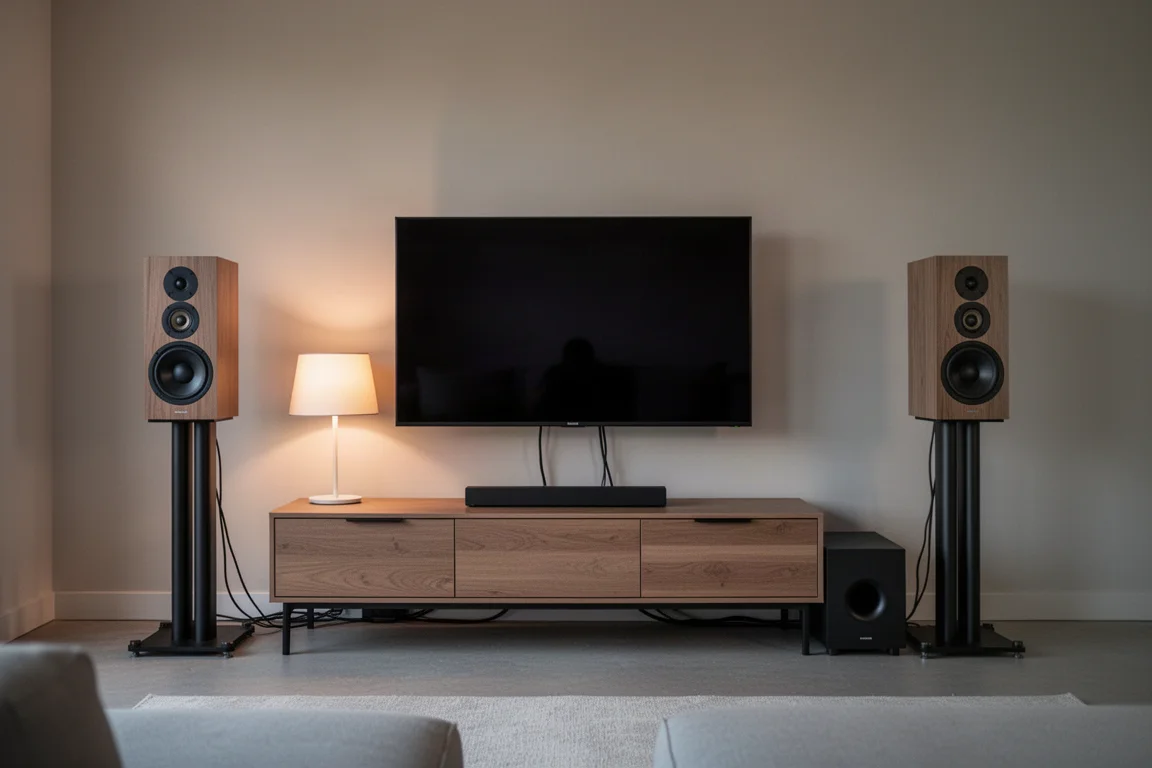
That flexibility is a real part of the value. The speaker works as a straightforward stereo pair now and as the front channels of a larger system later, without forcing you to start over.
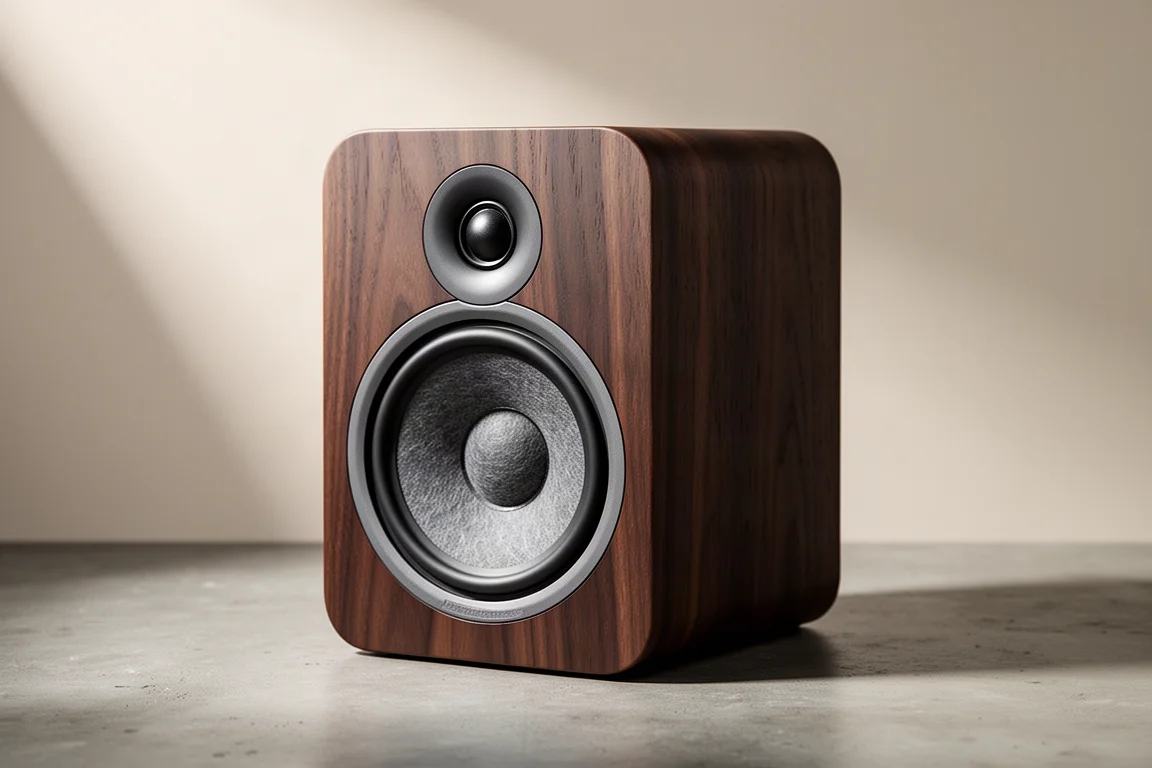
Best High-End Reference: Salk Sound LS1802G
The LS1802G was a custom, one-of-a-kind pair built in collaboration between Salk Sound and designer Dennis Murphy. Salk Sound has since closed, and these particular speakers were never a catalog product, so they cannot be purchased. A comparable pair would have cost roughly $3,000. The closest currently available design in the same spirit is Philharmonic Audio, also from Dennis Murphy.
What the money bought is visible in the parts list. The woofers use graphene diaphragms and outperform the drivers used in the older LS1801, the crossover was reworked around them, and the cabinet differs as well. The tweeter is a 3/4 inch dome with a phase plug rather than a 1 inch dome, which widens dispersion at higher frequencies and lets the driver cover more of the midrange. Each speaker weighs somewhere in the region of 25 to 30 pounds.
The result is a nearly flat on-axis and listening window response. An early port resonance near 700 Hz was resolved in the current version by changing the port length. In-room left and right tracking is excellent, the kind of match that is genuinely difficult to achieve in a passive design. Clarity and articulation improve across every frequency band, and the soundstage becomes noticeably more lifelike.
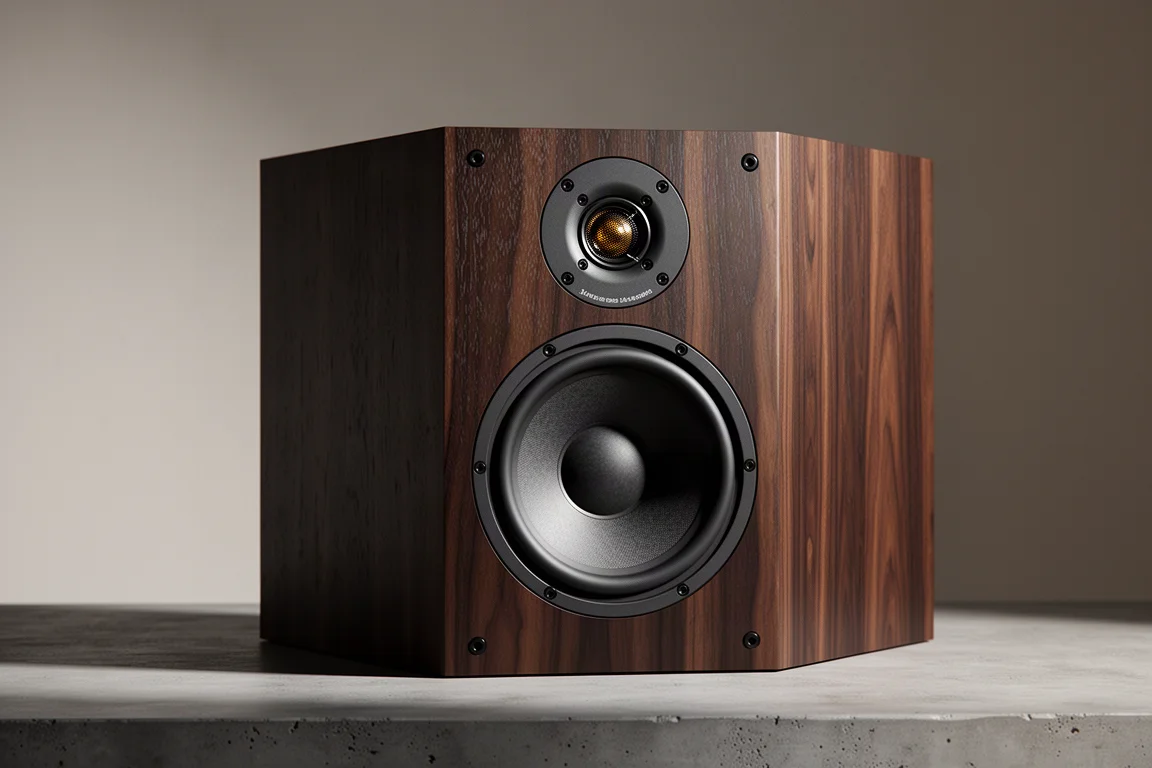
What Casual Listeners Actually Heard
Measurements describe capability, but they do not predict preference. In an informal session with listeners who had no prior exposure to any of the three pairs, tracks were switched between speakers as quickly as possible and levels were matched as closely as they could be. The intent was to avoid steering anyone’s impressions in either direction.
The results were mixed in an instructive way. Some listeners found the Aurora 300 clearer, while others said the Theva No.1 was clearer and less bright. Several could not reliably tell when the speaker had been swapped at all, particularly between the two lower-priced pairs on material without heavy bass. Most felt the LS1802G had an edge in clarity and realism. Reports about bass were contradictory, which is a reminder of how much placement and seating position shape what people hear.
On a tight budget, every participant said they would be happy with the Aurora 300. Given more room in the budget, one said they would move up to the LS1802G, one said they could not justify spending over $1,000 a pair regardless of performance, and another said they might make the jump.
There is one more consideration that a short comparison cannot capture. Extended listening tends to favor neutral speakers over ones with boosted treble or bass, because the initial impression of extra detail or extra punch fades once the ear adjusts.
Build Quality, Ownership, and Room Aesthetics
Sound quality is not the only thing that scales with price. Handling the Aurora 300 and the Theva No.1 next to the LS1802G makes the gap obvious: the custom pair weighs about as much as the other two combined. Cabinets, finish, and hardware all reflect the larger budget.
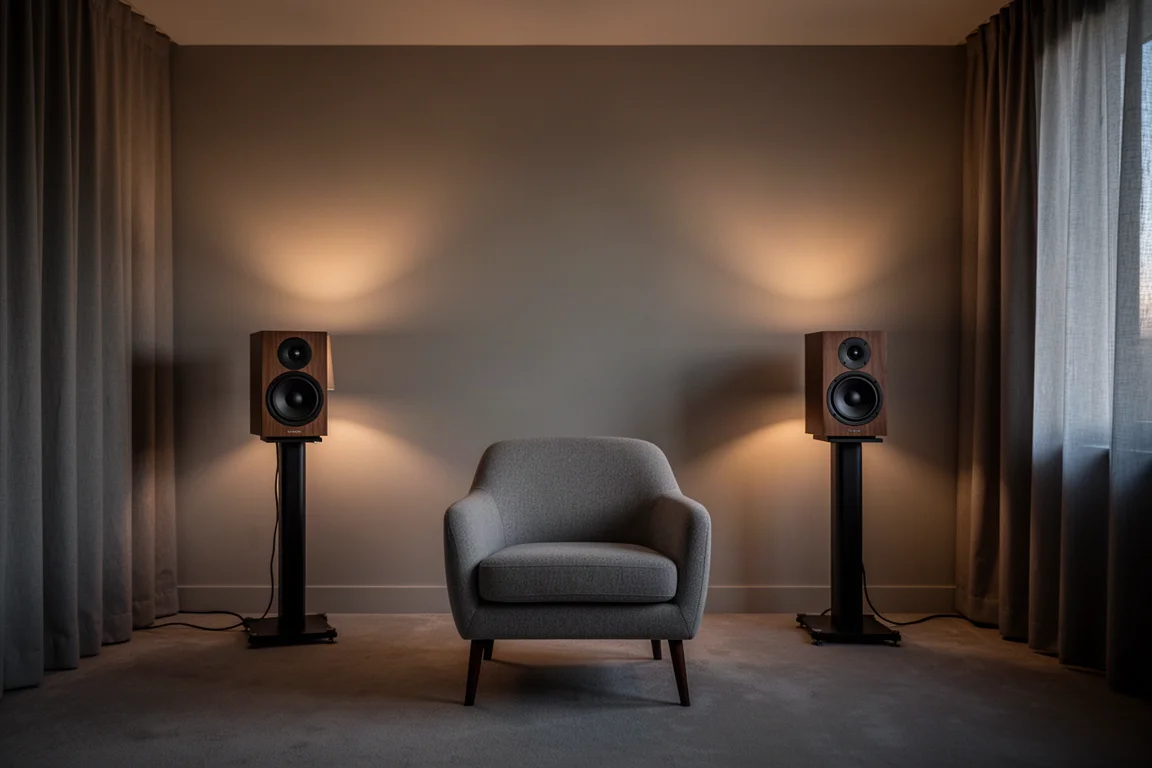
Pride of ownership is a genuine part of the experience. A system that looks considered tends to invite longer listening sessions, and a tidy, dimly lit room supports that. Placement matters too. Symmetry relative to the side walls strengthens the phantom center and the soundstage, while pulling one speaker closer to a wall than the other degrades both. None of this changes a measurement, but it changes how often you sit down and use the system.
Buying Advice: Matching Spend to Priorities
If the budget sits near $400 to $500 a pair, the Aurora 300 is the clear choice among these three. Its deeper bass extension makes it the better option for anyone who will not add a subwoofer, and its flat listening window means it responds well to equalization if you want to tune it.
If roughly $1,000 a pair is comfortable, the Theva No.1 buys a smoother response, better driver integration, tighter left-right matching, and a more flexible platform for a two-channel system that may grow into surround sound. Plan on a subwoofer to recover the low-end depth.
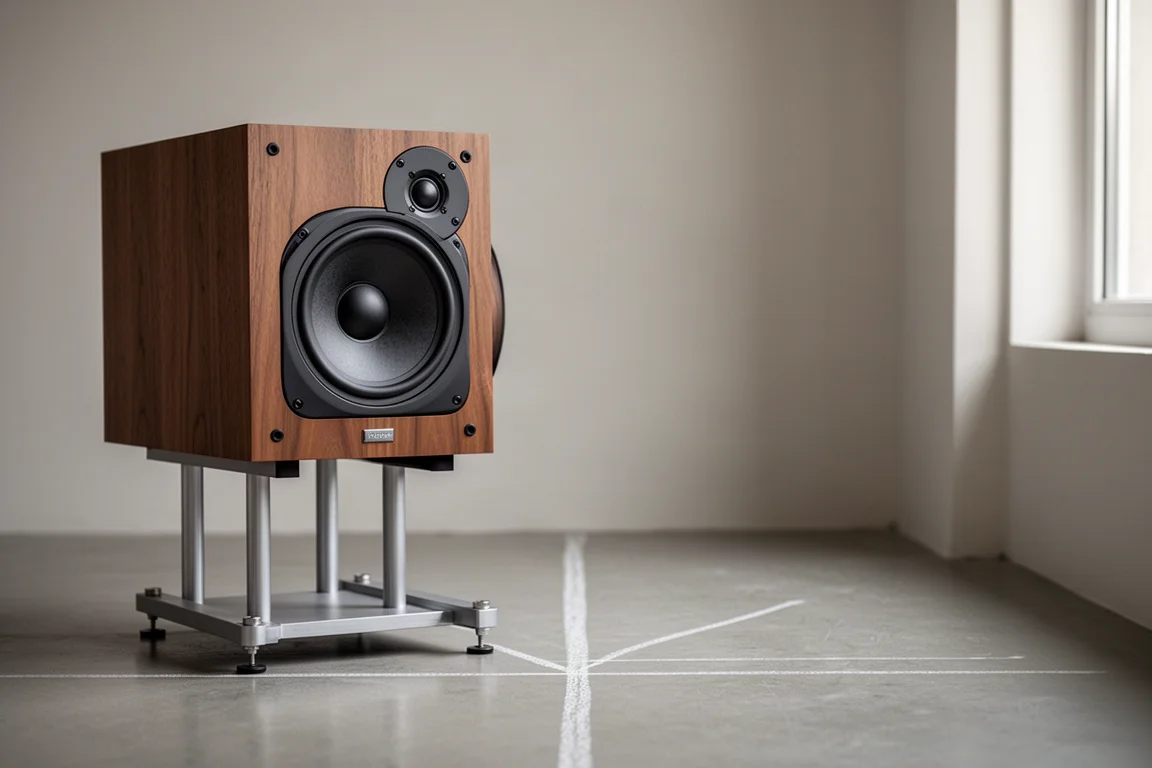
Above that, gains become harder to predict. The LS1802G shows what is possible when driver quality, crossover tolerance, and cabinet construction all improve at once, but comparable performance from a current manufacturer usually costs considerably more. Whether that step is worth it comes down to how much weight you place on sound quality, how the speakers look and feel in your room, and how much of your budget you are comfortable committing to a single component.
Conclusion
Spending more on a bookshelf speaker does buy measurable improvements: smoother response, better driver integration, tighter pair matching, and deeper, more articulate bass. It also buys better cabinets, better parts, and a more satisfying object to live with. What it does not buy is a guaranteed doubling of enjoyment for every listener. The Aurora 300 is an excellent place to start, the Theva No.1 is a well-rounded step up that leaves room to grow, and the LS1802G represents the kind of engineering that a much larger budget can reach. Match the purchase to your priorities and your room, and any of the three will serve you well.
Further reading
Related Reviews
Bookshelf Speakers
Acoustic Energy A100 Mark II Review: A Compact Standmount With an Expansive Soundstage
The Acoustic Energy A100 Mark II brings clarity, natural tonality and a wide soundstage to an entry-level standmount, with a few setup details worth knowing first.
Bookshelf Speakers
Acoustic Energy AE-100 Mark II Review: Compact Bookshelf Speakers With Standout Imaging
A compact British two-way bookshelf speaker with deep, layered imaging, fast bass, and a slight treble lift to weigh against a crowded $500 field.
Bookshelf Speakers
Acoustic Energy AE100 MK2 Review: Measured Performance and Four Alternatives
A close look at the Acoustic Energy AE100 MK2 bookshelf speaker, what its measured performance reveals, and four alternatives with different trade-offs.