Hi-Fi Speakers
GoldenEar vs Klipsch vs KEF: Standmount Speakers and Subwoofer Systems Compared
Three routes into high-quality two-channel sound, from standmount and subwoofer pairings to a single floorstanding cabinet, with the trade-offs made clear.
Introduction
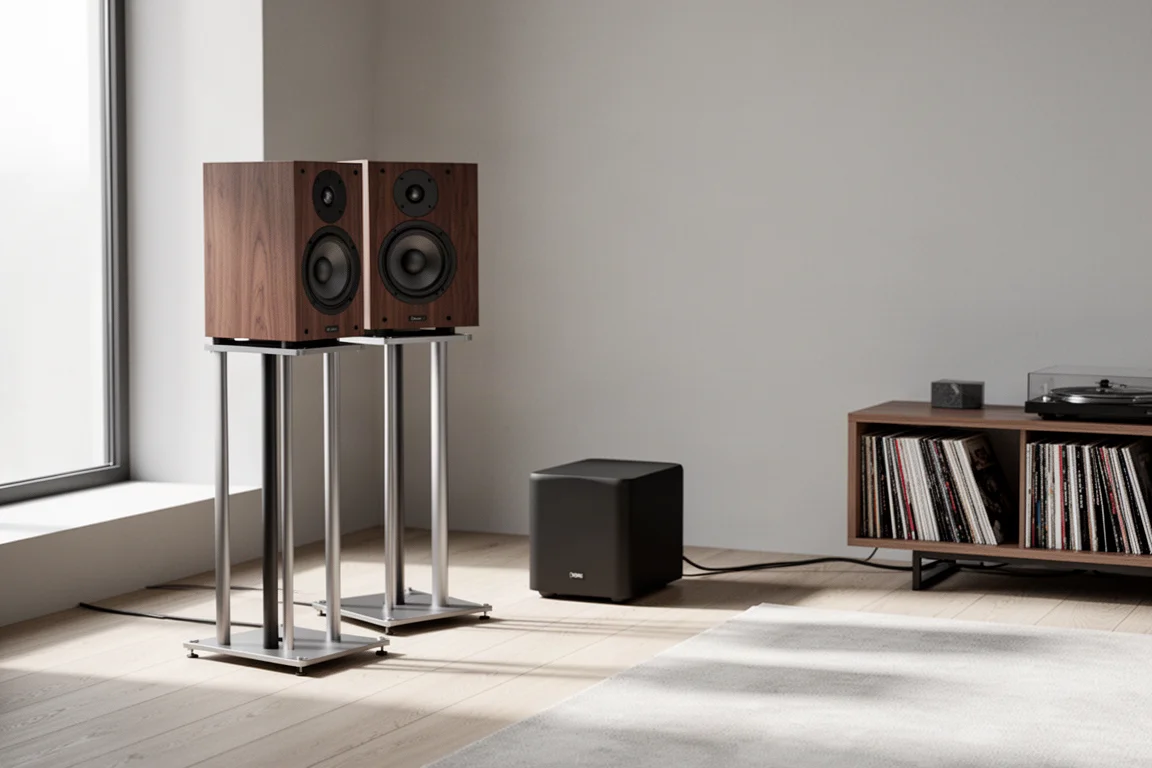
A well-integrated standmount speaker and subwoofer pairing can deliver a wider frequency range and more placement flexibility than a single floorstanding cabinet, but the result depends heavily on how the two parts are matched. This comparison looks at three routes into high-quality two-channel sound: the GoldenEar BRX standmount with the GoldenEar ForceField 3 subwoofer, the Klipsch Forte IV floorstander, and the KEF LS50 Meta standmount with the KEF KC62 subwoofer.
Each option has its own character rather than a single obvious winner. The aim here is to make the trade-offs clear so a buying decision can be matched to a room, a listening habit, and a taste in music.
What Was Compared and How
Both standmount systems were integrated using bass management with an 80 Hz crossover, high-passing the main speakers and low-passing the subwoofer. Gain on each subwoofer was adjusted by ear to suit the room. Listening moved back and forth between the systems over a period of three to four weeks, with several days spent on one setup before switching to another.
The Klipsch Forte IV was assessed as a standalone floorstander, which makes part of this comparison a question of approach: a larger single cabinet against a smaller cabinet supported by a dedicated bass unit.
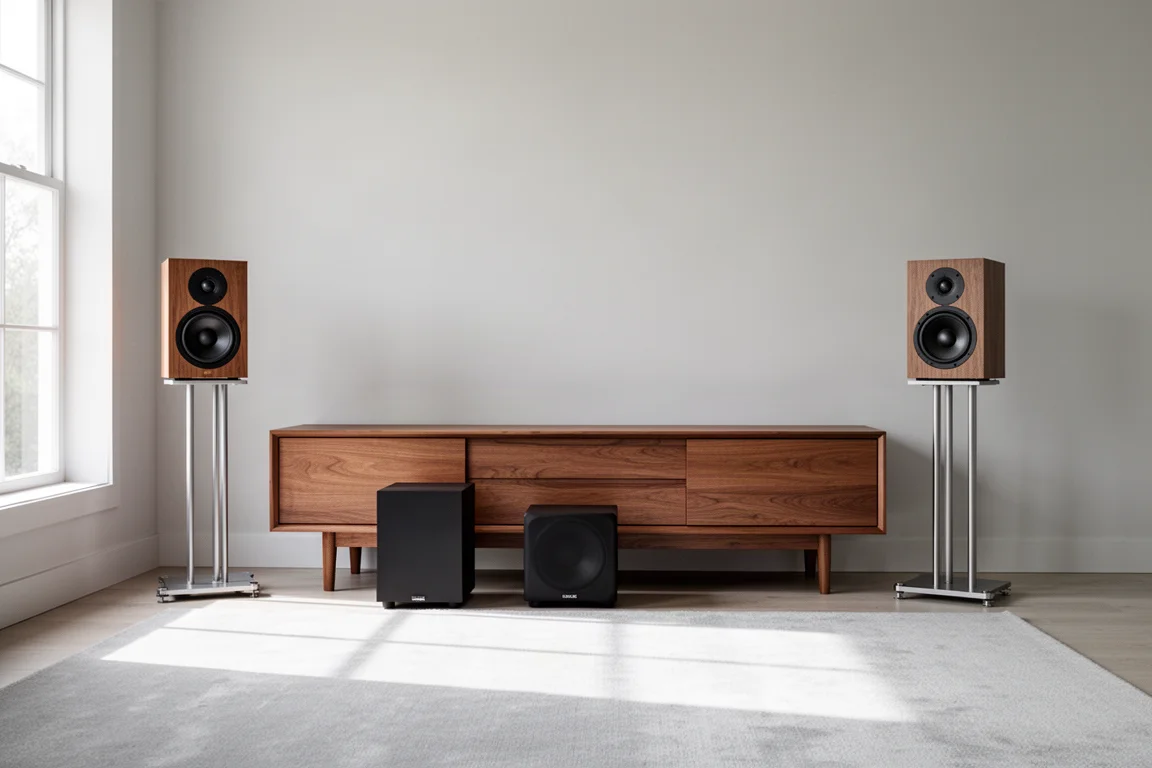
Subwoofer integration is rarely plug and play. Placement, crossover point, and gain level all shape the outcome, and a pairing that is properly dialled in can change the character of a system more than the choice of standmount alone.
GoldenEar BRX: A Folded Ribbon Standmount
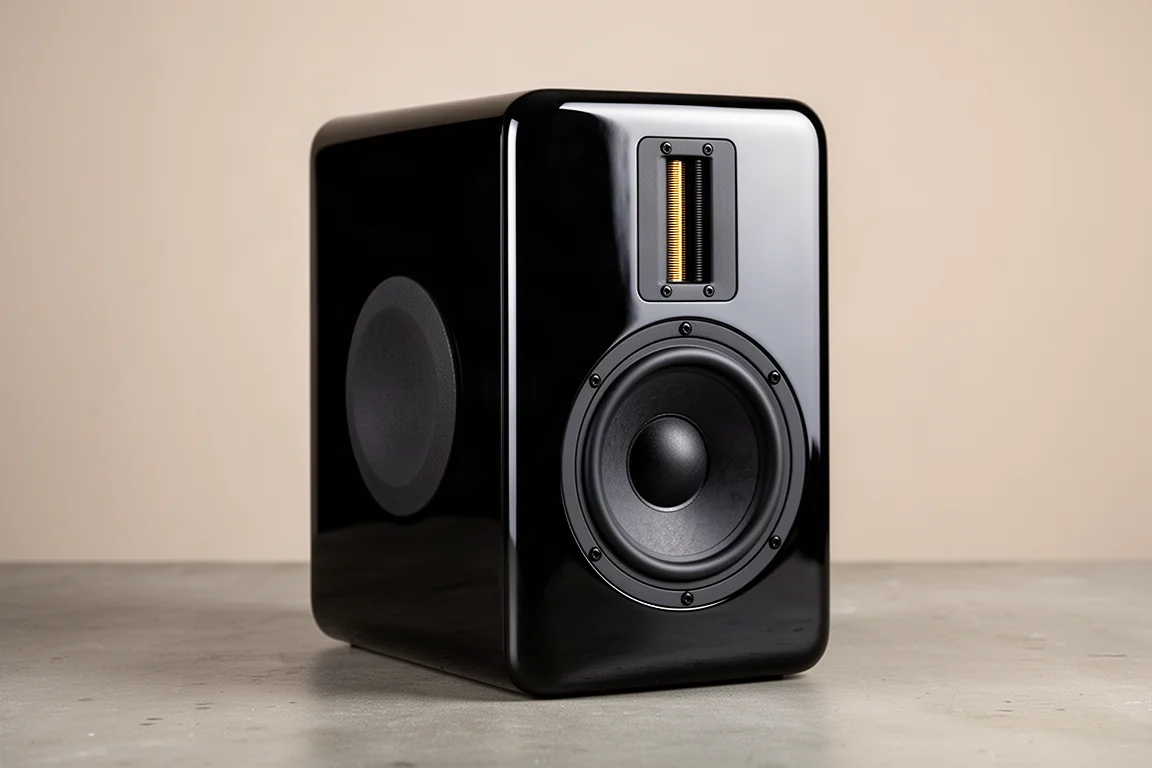
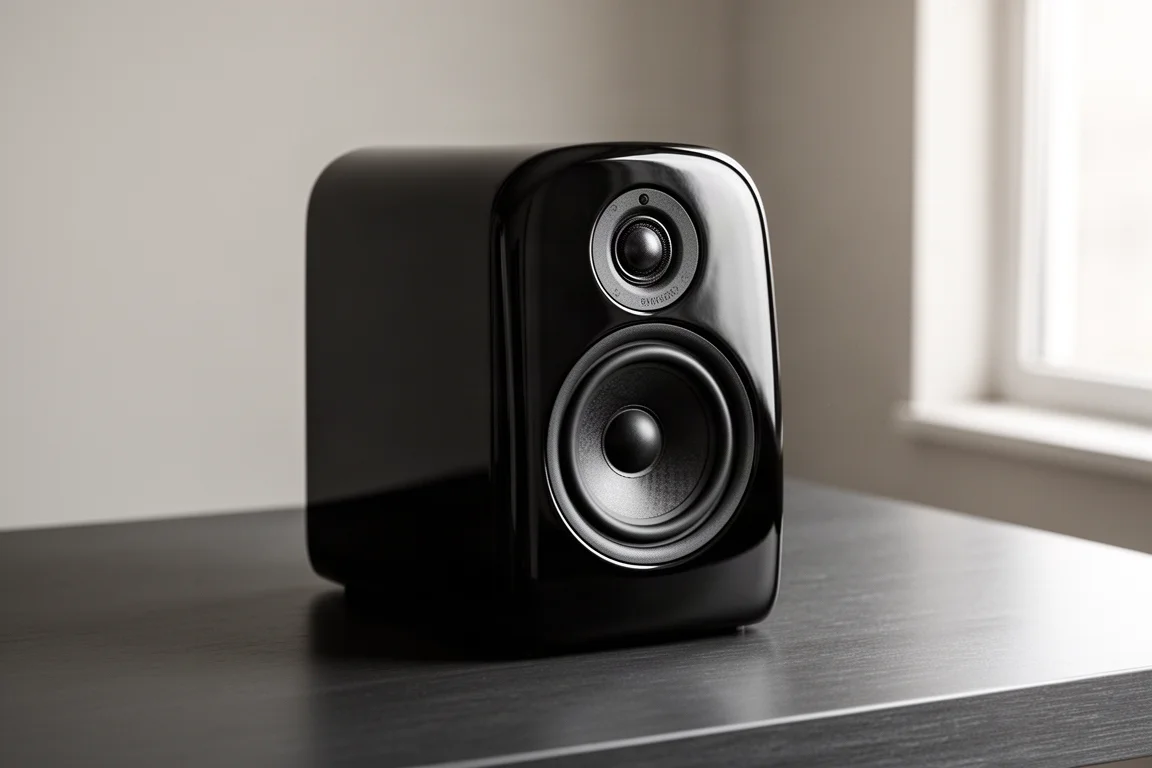
The BRX is a standmount speaker built around a folded ribbon tweeter. Its 6-inch mid-bass driver is supported by two 6.25-inch passive radiators that fire from the sides of the cabinet. GoldenEar rates the speaker down to 40 Hz on its own, which is where a subwoofer takes over.
Compared with the Forte IV, the BRX is less keen in the presence region that covers the upper midrange and lower treble. It is also less intimate and less dynamic, and it is less satisfying at low listening levels, with less tonal colour and a midrange that does not project as forcefully.
Where the BRX pulls ahead is imaging, which is noticeably stronger than the Forte IV, and perceived neutrality. The Forte IV is enjoyable but coloured; the BRX is coloured less. Detail and clarity come through on dense productions, with a sense of transparency across the midrange and a cleaner separation of the individual strands of a mix, particularly in the depth plane.
Bass is the other clear advantage. The BRX reaches lower and delivers more low-end punch than the Forte IV, which lowers the centre of gravity of electronic music. Busy electronic soundscapes and modern pop productions benefit most, and the speaker holds its composure when a mix becomes chaotic.
GoldenEar ForceField 3: Compact Subwoofer With Deep Reach
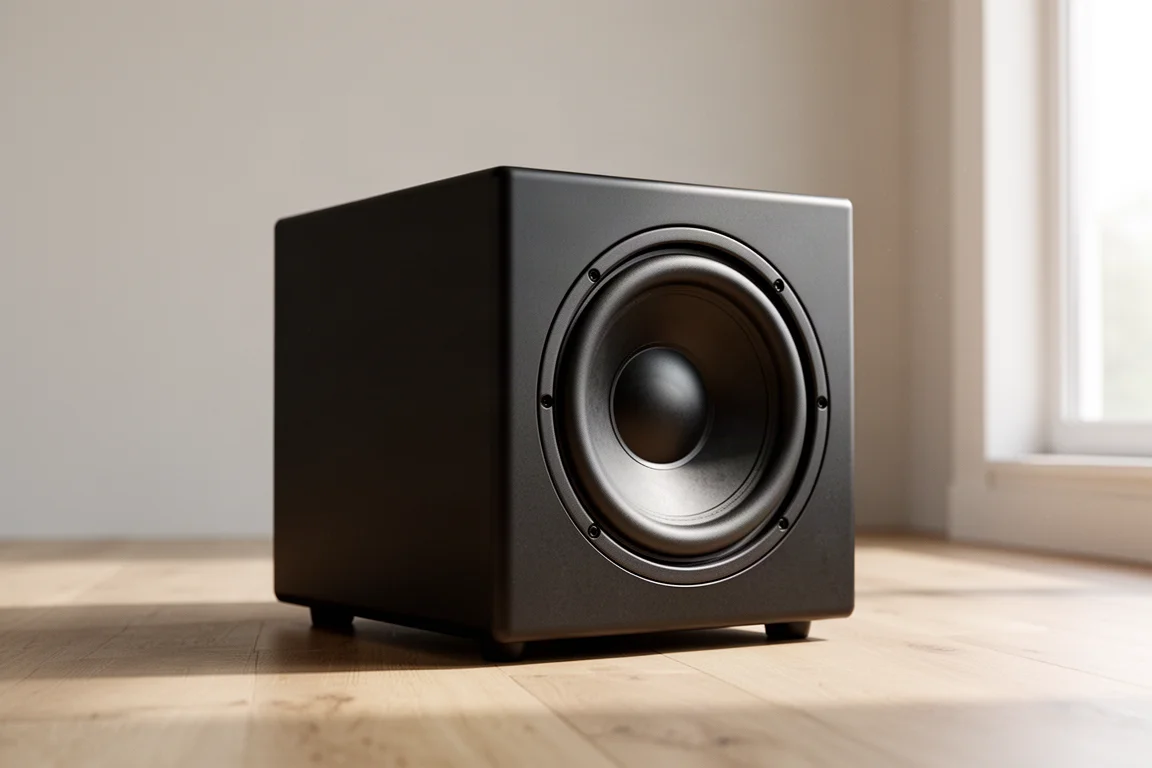
The ForceField 3 is the smallest subwoofer in the GoldenEar range, and it is rated down to 18 Hz, which is unusually low for a compact cabinet. It achieves this with a front-firing 8-inch driver powered by a 1,000-watt digital amplifier, supported by a rectangular passive radiator on the underside measuring roughly 9 by 11 inches.
In use, the ForceField 3 sounds less restricted than the KEF KC62. It plays a little looser, and that slight relaxation makes the whole system sound more dynamic in the low end. It can also play louder, which makes it the better fit for a room larger than a small studio space.
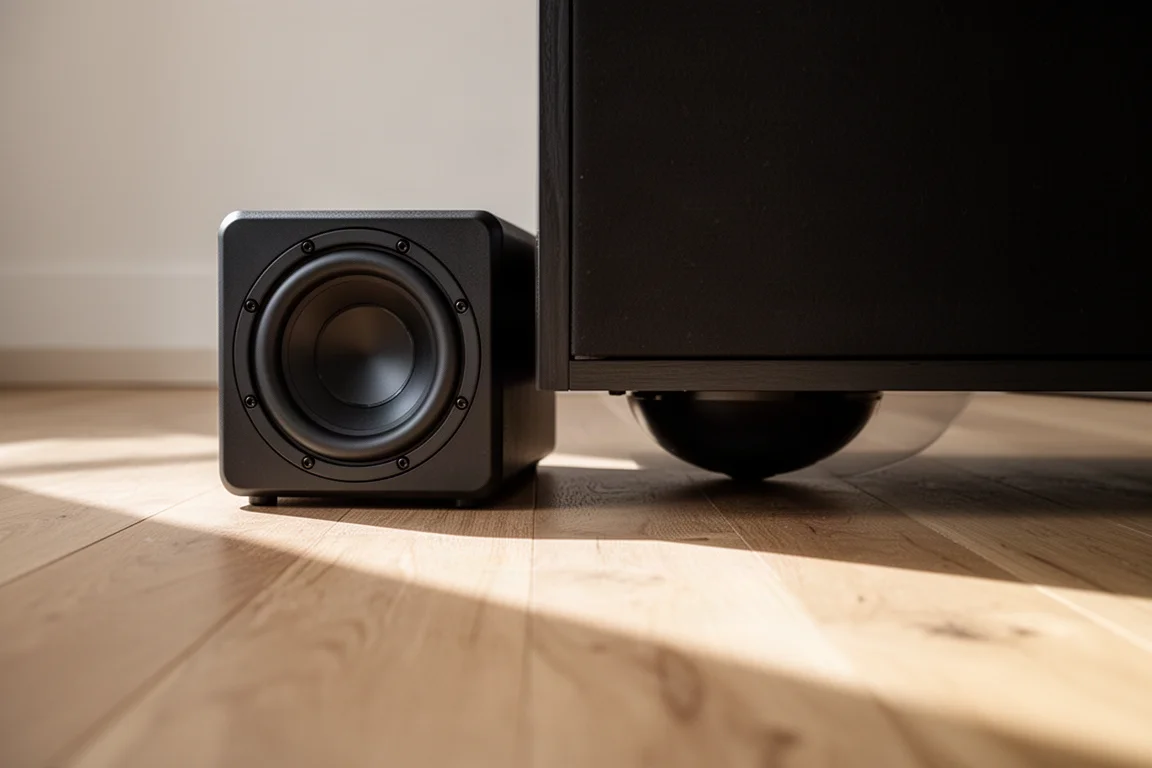
Because the cabinet is compact and the passive radiator faces downward, placement matters. Floor coupling and distance from walls will change how much weight the subwoofer adds, so it is worth spending time on positioning before adjusting gain.
For listeners building a system around the BRX, the ForceField 3 extends the bottom octave in a way the standmount alone cannot, and it does so without taking up much floor space.
Klipsch Forte IV: Presence, Dynamics, and Colour
The Forte IV is a floorstanding speaker, and it takes a very different approach. It is keener in the presence region, more intimate, and more dynamic than the GoldenEar system. It is also more satisfying at lower listening levels, with more tonal colour and a midrange that steps forward into the room rather than sitting back.
That forward character suits music with a dramatic or sinister atmosphere, where a greater sense of intimacy works in its favour. The trade-offs appear in imaging, which is not as precise, and in the handling of dense or chaotic productions, which can sound more confusing than they do on the GoldenEar system. Low-end extension and punch are also more limited than on either of the subwoofer-supported systems.
KEF LS50 Meta: Imaging and Taut Bass
The LS50 Meta is the closest competitor to the BRX here, and once both are supported by their respective subwoofers the two systems sit much closer to each other than either does to the Forte IV. The LS50 Meta images more precisely than the GoldenEar system, with a slightly narrower soundstage that reaches deeper.
On an album used to assess layer separation, the two systems were effectively a draw. On a demanding electronic track, the KEF pairing sounded tauter and more muscular in the bottom end. Its handling of the lower treble and presence region is more delicate and finessed, while the GoldenEar system counters with a slightly cleaner treble incision and a marginally truer rendering of piano notes.
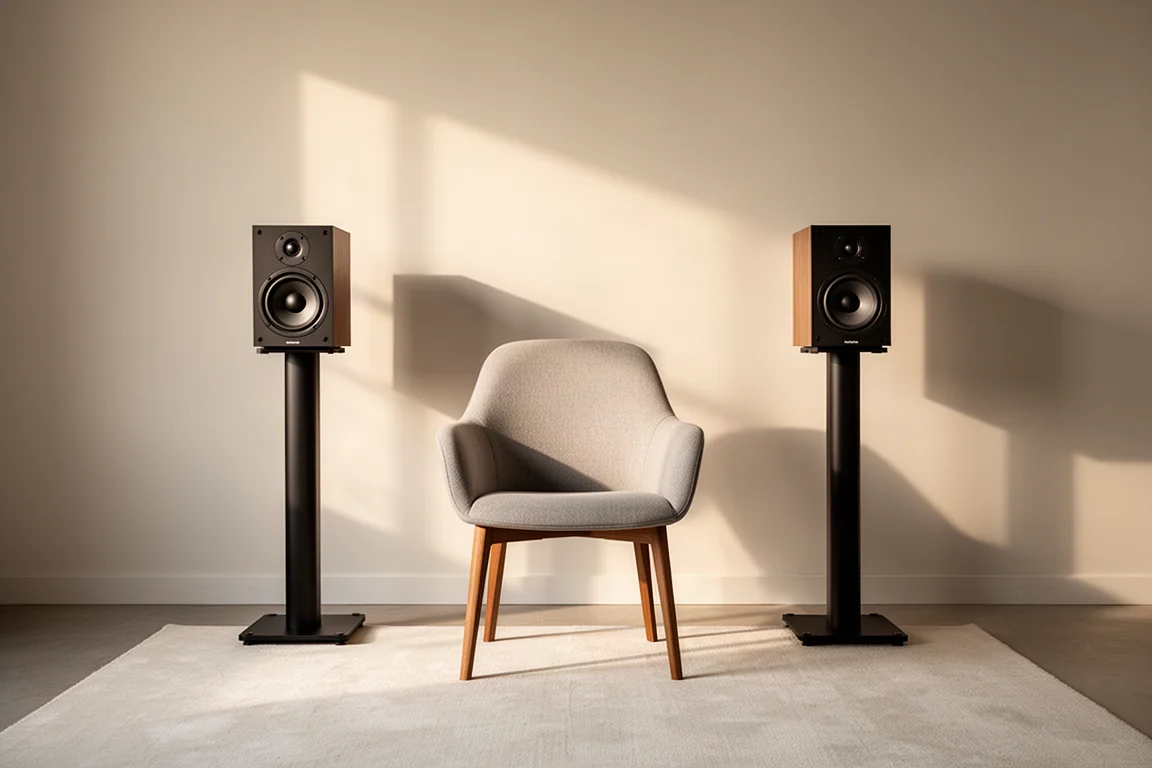
Once subwoofers are in play, the differences between the two standmounts themselves become less prominent. With the bottom octave covered, attention shifts away from the standmount alone and toward the system as a whole.
KEF KC62: A Subwoofer for Smaller Rooms
The KC62 is a compact subwoofer that pairs naturally with the LS50 Meta. Against the ForceField 3, it sounds a little more restricted and does not play quite as loose or as loud, which makes it the more sensible choice when space is limited and playback levels stay moderate.
System-Level Buying Advice
The most useful conclusion from this comparison is that the KEF and GoldenEar systems are close enough that a convincing overall winner is hard to declare. The differences that separate them are real but narrow, and they narrow further once each standmount has a subwoofer beneath it.
The Klipsch Forte IV occupies a different position. It offers presence, dynamics, and low-level satisfaction from a single cabinet, at the cost of imaging precision, tonal neutrality, and deep bass extension. Listeners who value the immediacy of a large floorstander will find it compelling.
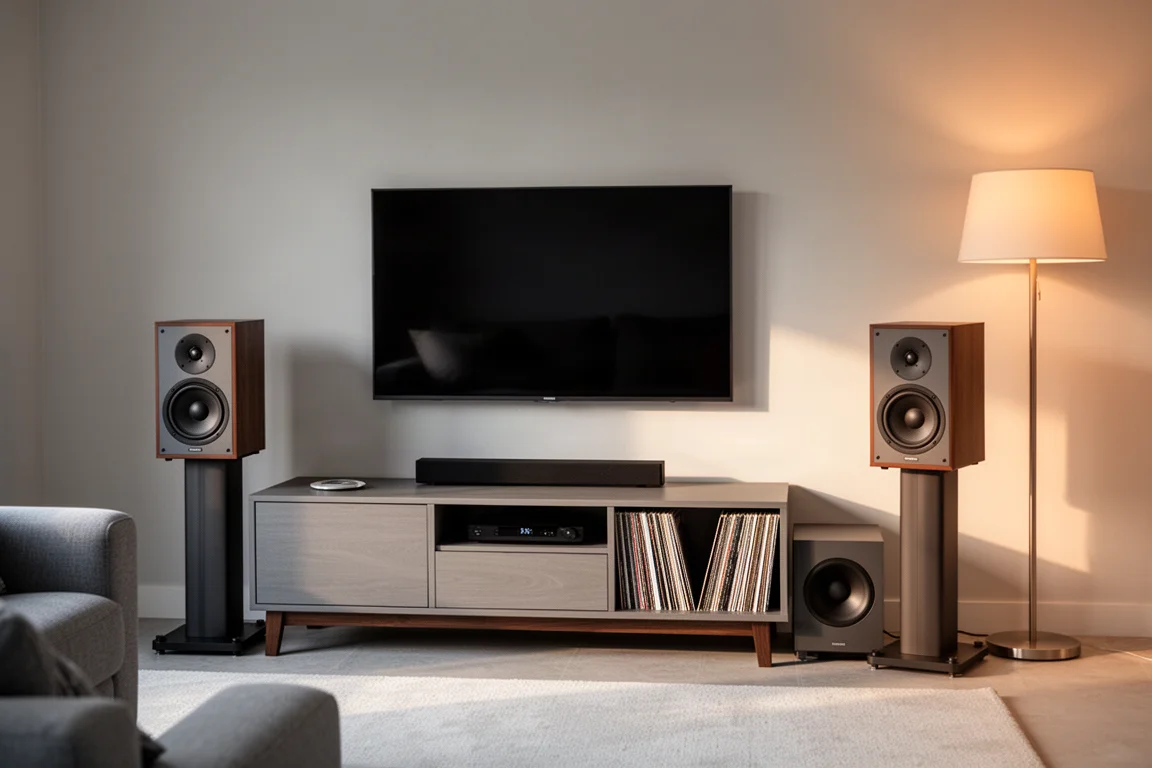
Between the two subwoofer-supported systems, the choice comes down to priorities. The GoldenEar pairing suits a broad diet that leans on electronic music, modern pop, and a healthy mix of television and film alongside music, where its clearer handling of voices and its deeper low-end punch are useful. The KEF pairing suits listeners who prioritise imaging precision and a taut, controlled bottom end, particularly in a smaller room.
Appearance is a legitimate factor as well. The two systems look quite different in a room, and at this level of performance the visual fit is worth weighing alongside the acoustic one.
Budget for setup time too. Subwoofer placement, crossover point, and gain level all need attention, and the payoff for getting them right is substantial.
Conclusion
Three systems, three sets of priorities. The Klipsch Forte IV delivers presence and dynamics from a single floorstanding cabinet. The GoldenEar BRX with the ForceField 3 delivers imaging, neutrality, deep low-end punch, and a strong case for mixed music, television, and film use. The KEF LS50 Meta with the KC62 delivers precise imaging and taut, controlled bass in a compact footprint.
Because the two subwoofer-supported systems are so closely matched, the deciding factors are likely to be room size, listening habits, and appearance rather than a clear performance gap. Any of the three can be an excellent long-term choice when it is set up with care.
Further reading
Related Reviews
Hi-Fi Speakers
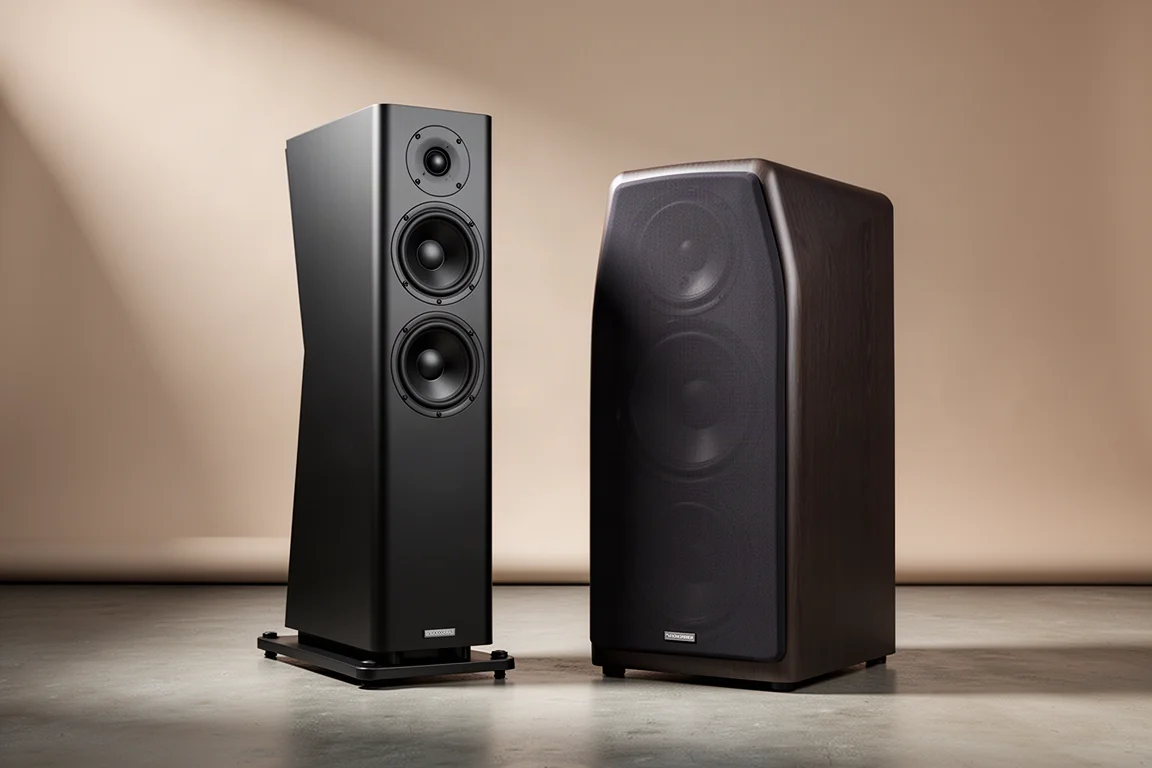
1723 THX Tower vs 1528 Bookshelf: Which Speaker Fits Your Room?
Two speakers at roughly the same price, built very differently. How the 1723 THX tower and the 1528 bookshelf compare on construction, bass, power needs, and sound.
Hi-Fi Speakers
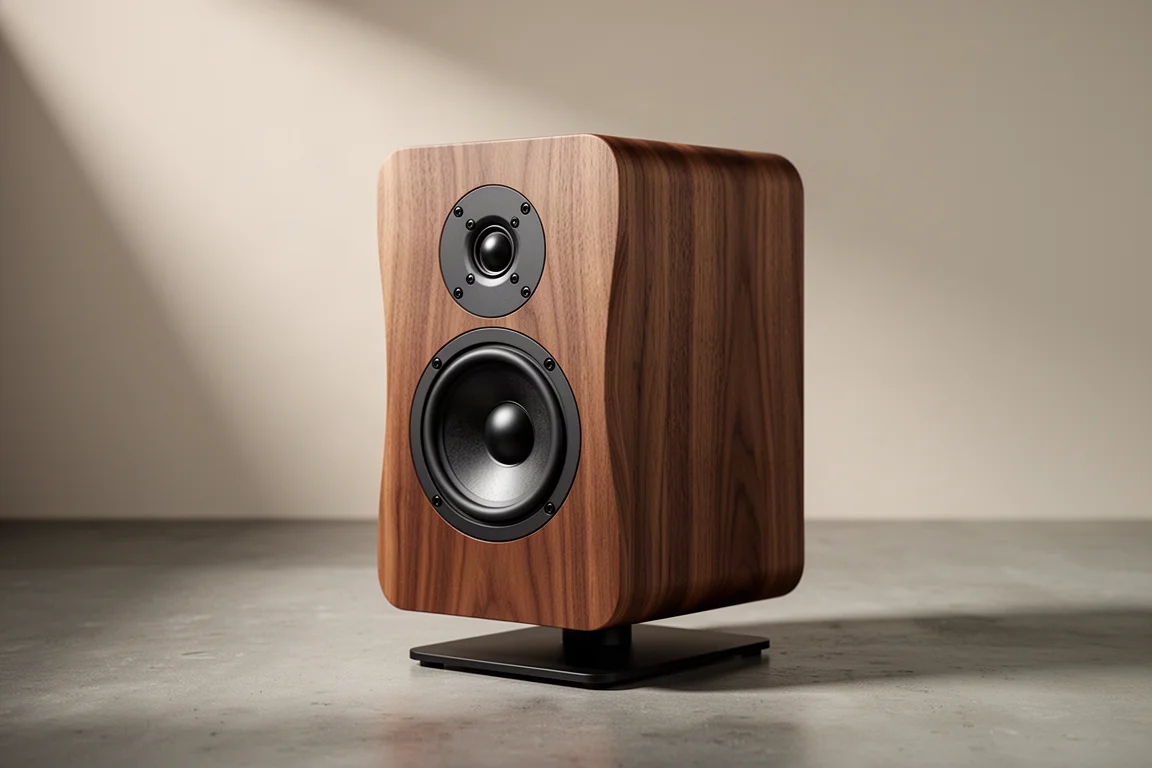
Acoustic Energy AE 300 Review: Deep Bass From a Compact Standmount
A two-way standmount with real wood veneer, surprising low-end weight, and a warm, easygoing character. Here is what to know before buying.
Hi-Fi Speakers
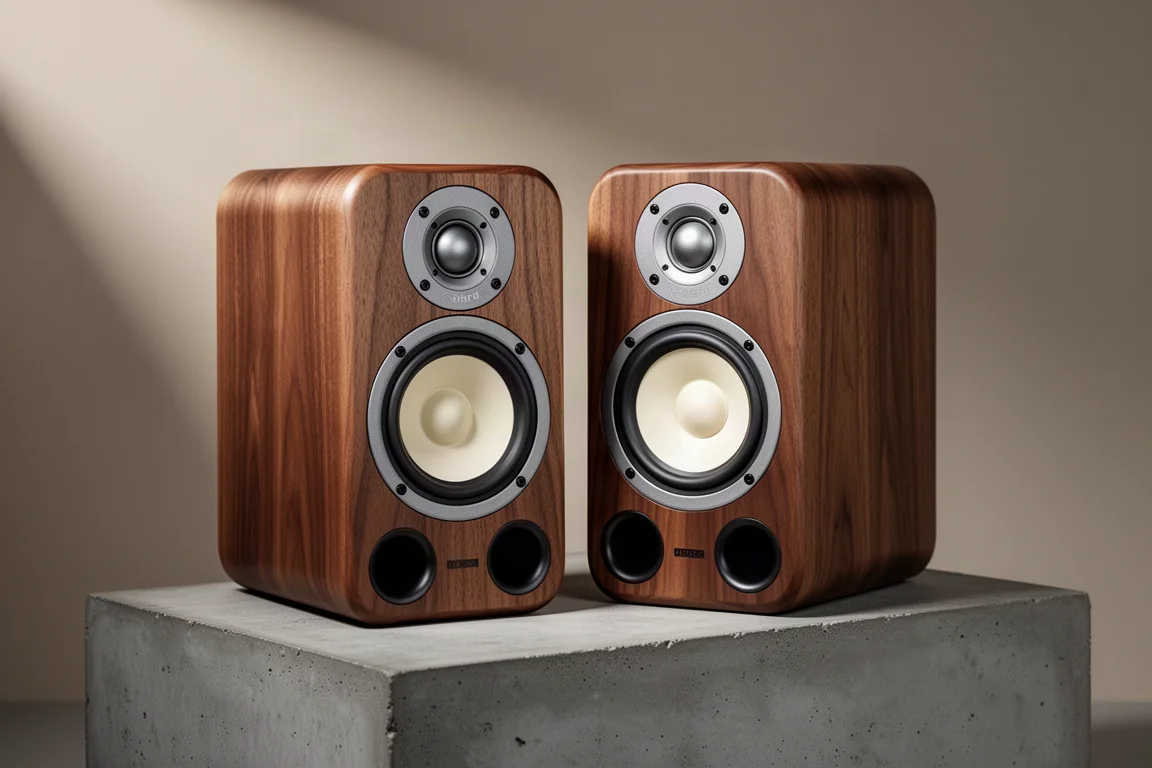
Acoustic Energy AE1 40th Anniversary Review: A Modern Take on a British Classic
A compact standmount that revives a 1980s favorite with all-new parts, a warm mid-centric balance, and a price of £1,499 per pair.