Subwoofers
GoldenEar ForceField 30 Review: A Compact Subwoofer That Sounds Bigger Than It Looks
The GoldenEar ForceField 30 pairs an 8-inch woofer with a bottom-mounted passive radiator and a 1000-watt amplifier. Here is what it adds to a stereo system, and what to check before buying.
Introduction
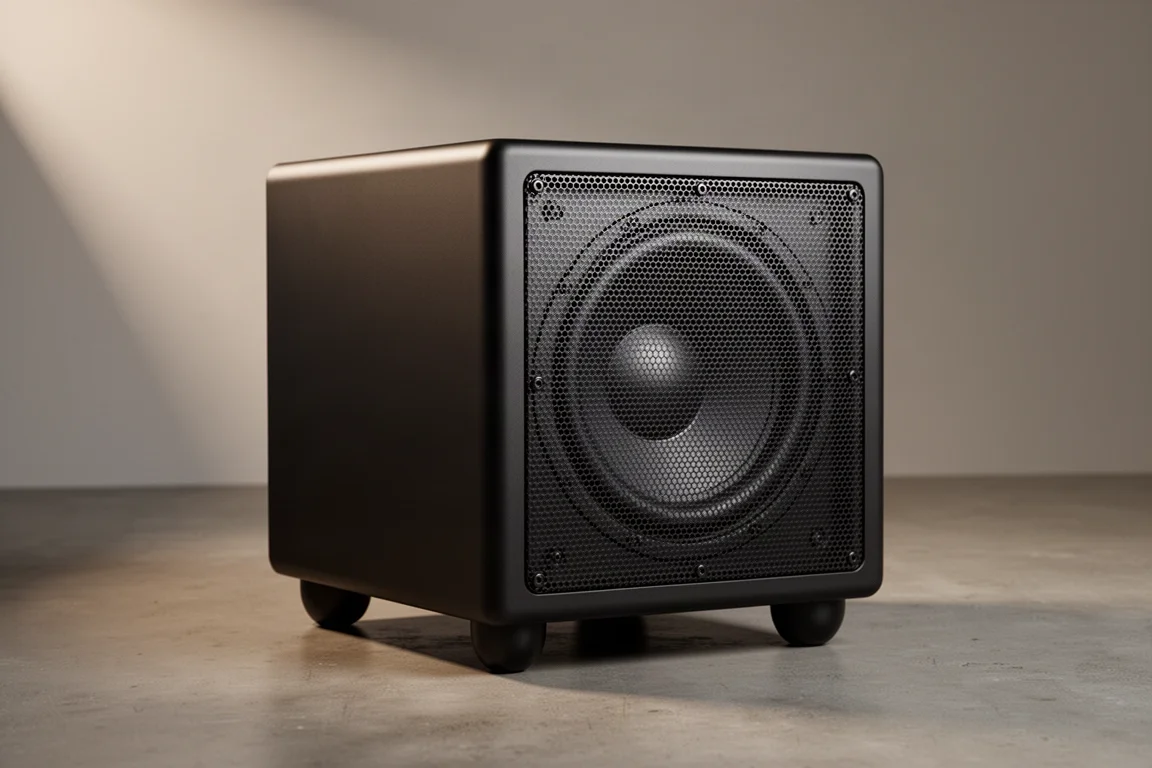
Subwoofers are close to mandatory in home theater, but they remain a rarity in two-channel stereo systems. That is the gap the GoldenEar ForceField 30 is built to fill. It is a compact subwoofer with an 8-inch front-firing woofer behind a perforated metal grille, a 1000-watt internal amplifier designed in-house, and a passive radiator on the bottom rather than a port. It is priced at $899, designed in the USA, and manufactured in China.
On paper the cabinet looks modest. In a room it does not behave that way. A well-integrated subwoofer does more than add low notes: it changes the tonal balance of a system, and it reliably improves imaging and soundstage depth. Much of that benefit comes from the deepest octaves of a recording, where a surprising amount of spatial information sits. Speakers that stop at 50 or 60 Hz simply never reproduce it.
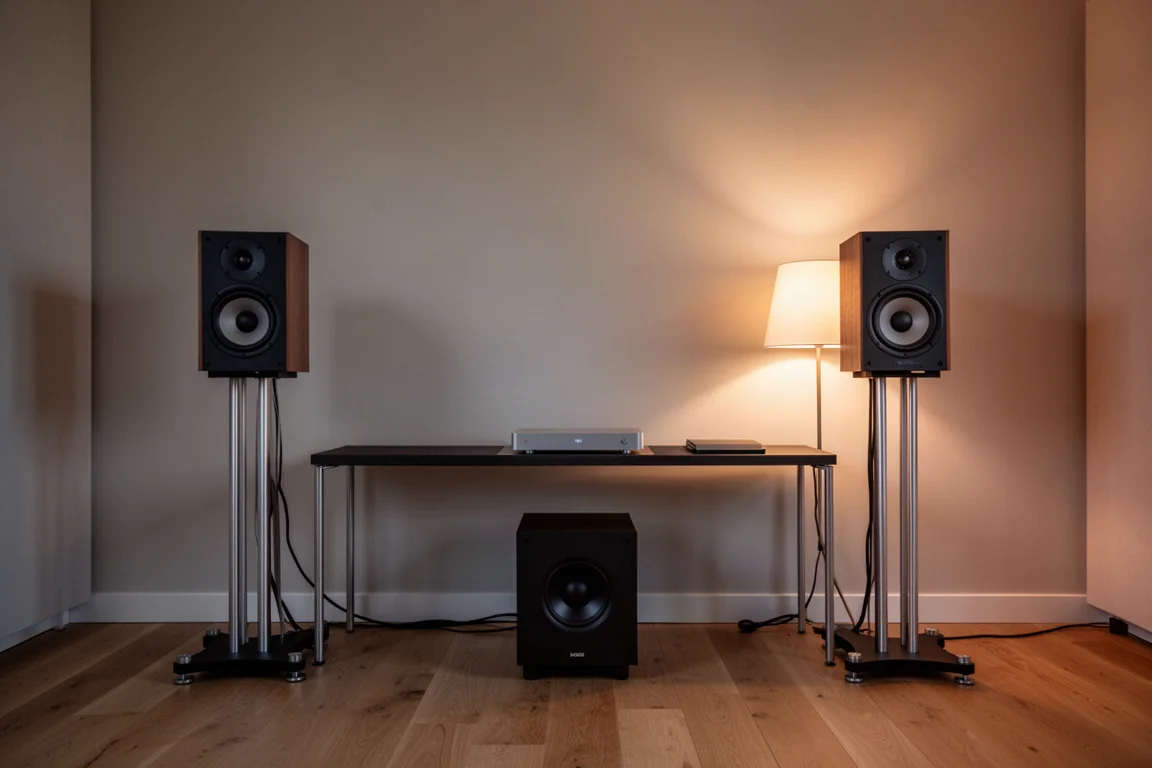
The practical test of a subwoofer is not how loud it can thump. It is whether you stop noticing it. When the blend is right, bass appears to come from the left and right speakers, and the subwoofer disappears into the system as a whole. That is the standard the ForceField 30 was judged against here, and it is the standard worth holding any subwoofer to.
Who this product is for
Two kinds of buyers will get the most from the ForceField 30. The first is a home theater owner: the sub accepts LFE input with a flick of a switch on the rear panel, which hands filtering duties to an AV receiver. The second, and the more interesting case, is a stereo listener whose speakers run out of low-end extension.
That second group covers a wider range of speakers than expected. The ForceField 30 was used with the KEF LS50 Meta, the Magnepan LRS Plus, the PSB Passive 50, the Zu Dirty Weekend Six, and the Pure Audio Project Duet 15. The last of those has 15-inch woofers, and it still benefited from what the subwoofer added underneath. The Magnepan LRS Plus, a thin planar magnetic panel that makes only modest bass on its own, was the most challenging to integrate and ultimately one of the most rewarding.
There is a setup requirement worth knowing before you buy. The subwoofer needs a preamplifier or integrated amplifier with a subwoofer output, or with left and right variable outputs. Not every integrated amp or preamp offers an extra set of preamp outputs, and while Y-connectors can work around that, they make the connection fiddlier than average.
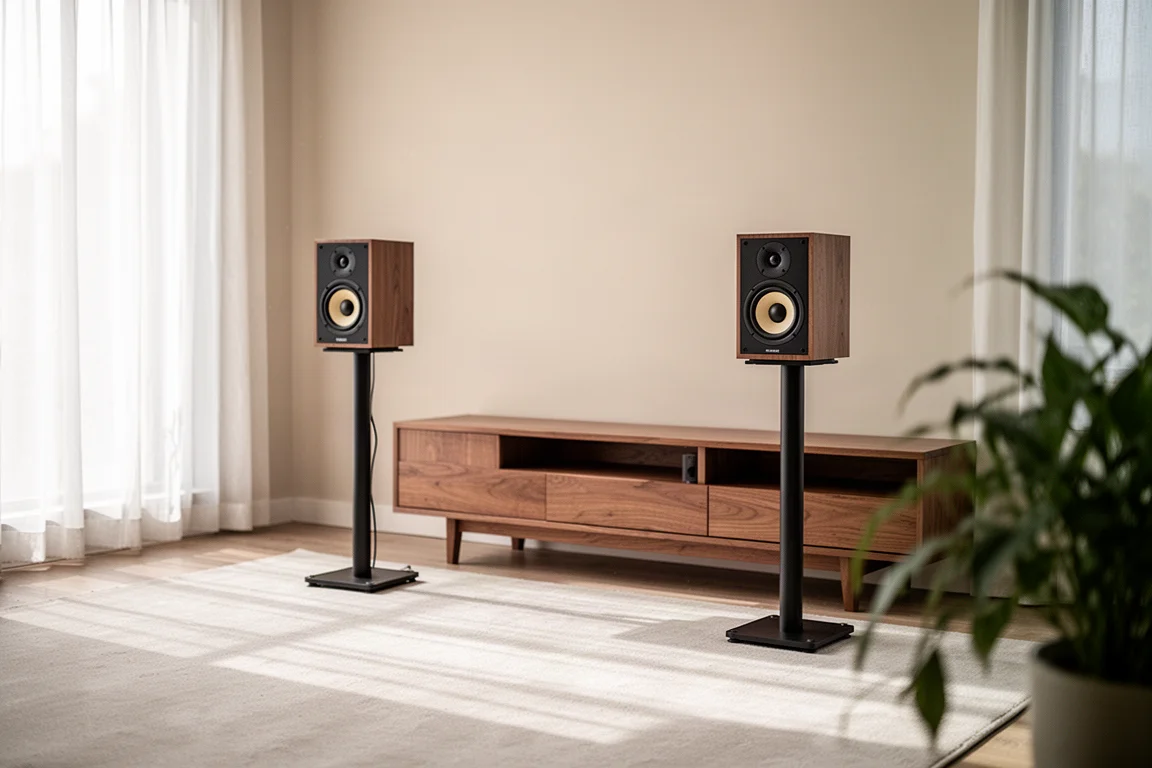
Placement matters too, because the ForceField 30 has no phase control. For stereo use, the recommendation is to keep the subwoofer close to the left or right speaker, or centered between them. It is not a subwoofer you can casually tuck into a far corner and expect to blend.
One expectation to set honestly: the ForceField 30 will not turn a small monitor such as the KEF LS50 Meta or the Magnepan LRS Plus into a high-impact rock speaker. The subwoofer can deliver that kind of low end; those speakers cannot keep up with it. Where the pairing is right, the results are considerable. Where the speaker is asked to do more than it can, the mismatch is audible.
Main strengths
Weight and impact that belie the cabinet size
The defining quality of this subwoofer is that it sounds bigger than it is. It has tremendous weight, impact and thrust, and it delivers all of it effortlessly. Because the design is not ported, there is no port noise to complain about either.
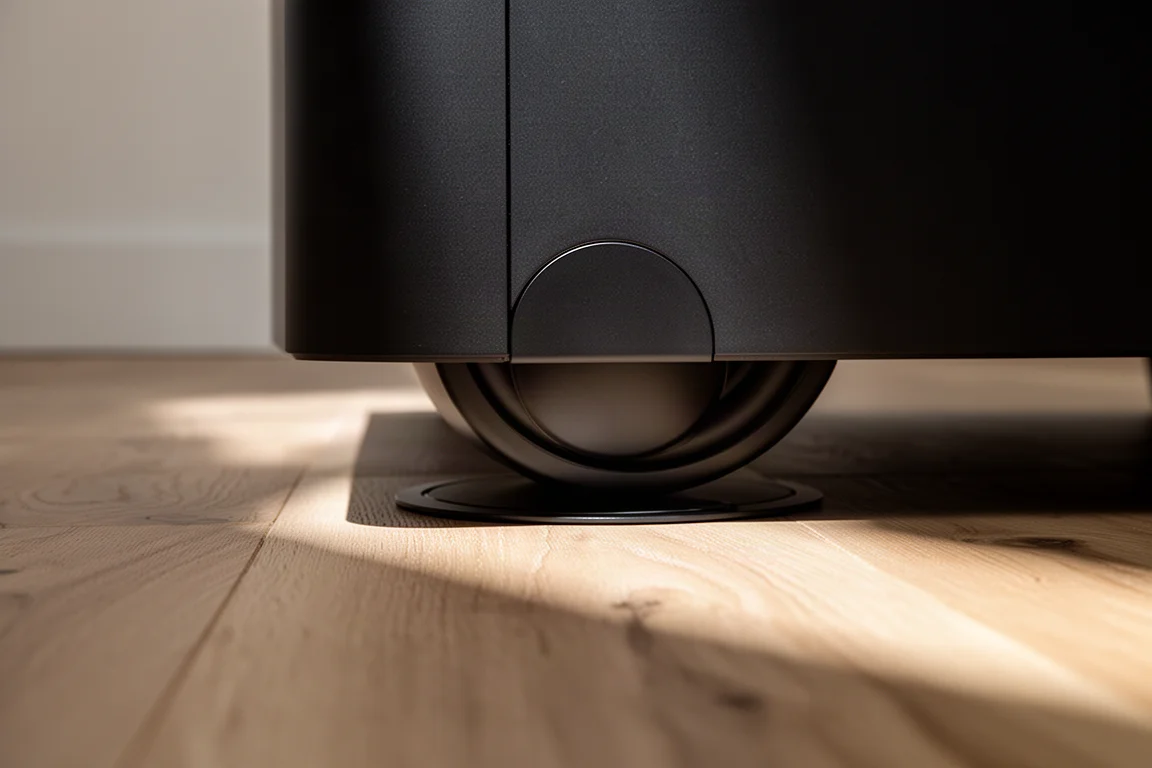
The likely reason for that sense of scale sits underneath the cabinet: a 9 by 11 inch passive radiator mounted on the bottom, just a couple of inches from the floor. The floor reinforces its output, which helps the subwoofer pressurise a room far beyond what its dimensions suggest. Four compliant, cushioned feet support the cabinet and appear to be made from a soft damping material.
A blend you stop noticing
Integration is where this subwoofer earns its keep. Bass appears to come from the left and right speakers rather than from the box on the floor, and the blend holds at low, medium and loud listening levels.
With the PSB Passive 50, the growl of well-recorded electric bass energised the room and made the speakers sound like far larger cabinets. Even at restrained volumes, the bass energy and the blend survived intact. With the Magnepan LRS Plus and a large-scale Bach organ recording, the low pedal notes were tremendous, and the recording took on that sense of air moving through pipes. With the Zu Dirty Weekend Six, which has a 10-inch driver and satisfying bass of its own, adding the ForceField 30 and pushing Led Zeppelin’s Physical Graffiti loud was transformative. With the Pure Audio Project Duet 15, a speaker built for fast, tight, clear bass rather than deep extension, the subwoofer slotted in with the crossover set very low and was among the easiest pairings of all.
A bigger, deeper soundstage
Across every speaker it was paired with, the ForceField 30 enlarged the soundstage. A deep bass foundation opens up the presentation rather than simply adding weight, and the effect held from the smallest monitor through to the large open-baffle design. That is the strongest argument for a subwoofer in a stereo system: not more bass for its own sake, but a wider, deeper, more convincing picture of the recording.
Things to consider before buying
Setup and connections
The rear panel carries a pair of RCA inputs, switchable between stereo input and LFE input from an AV receiver. There is no phase control at all, which is unusual for a subwoofer in this class. In home theater use that adjustment is handled by the receiver, but in a stereo system the missing control is replaced by a placement rule: keep the subwoofer close to one of the main speakers or centered between them.
Controls, power, and convenience
The low-pass crossover runs from 40 Hz to 150 Hz, and there is a level control alongside it. Both knobs turn very easily, which means they are also very easy to knock out of position while you are moving the subwoofer around to find the best spot. During setup this becomes genuinely annoying, since you may lose your settings more than once. Once the subwoofer is dialled in and left alone, it stops being a practical problem.
There is no power switch on the rear panel, no remote control and no app. If you like to switch a subwoofer off in the evening to keep the low end out of the neighbours’ way, the only option is to unplug it. It is a small omission that shows up in daily use.
Buying advice
At $899, the ForceField 30 is a serious purchase, and it comes with an unusually generous warranty: three years on the electronics and five years on the woofer, which is longer coverage than most subwoofers offer. A larger sibling, the ForceField 40, uses a 10-inch woofer and is priced at $1,199 for listeners who want more output or who are filling a bigger room.
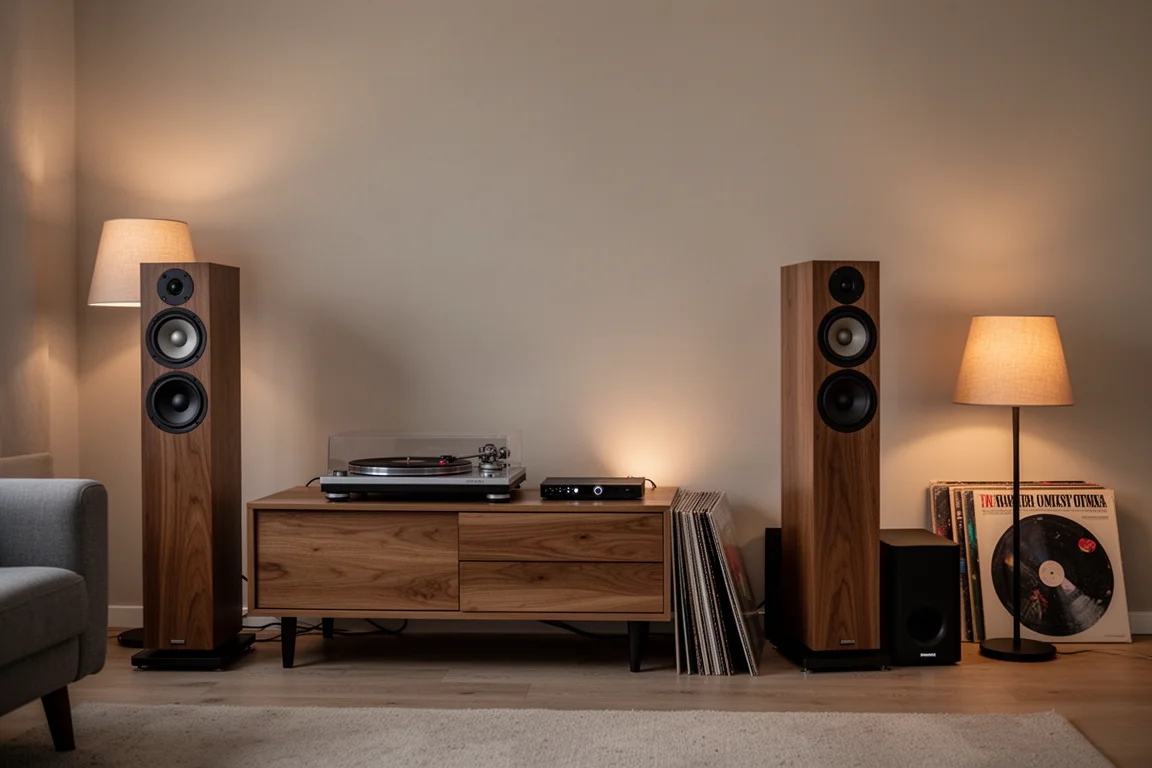
The deciding question is not whether the subwoofer is good, but whether your speakers need it. If you own a small monitor or a planar magnetic panel that runs out of steam below the midbass, this is a substantial upgrade, and a more meaningful one than swapping electronics. If you already run large floorstanders with deep, fast bass, the benefit narrows to the very lowest octaves, and it is worth asking whether your room and your listening habits will let you hear them. Buyers who want to feel bass on every track can simply turn the level up, and that is a perfectly valid way to use it.
Conclusion
The GoldenEar ForceField 30 is a compact subwoofer that behaves like a much larger one. Its weight, impact and effortlessness are the headline, but the real achievement is how cleanly it disappears into a system once placed and dialled in, enlarging the soundstage along the way. The trade-offs are all about convenience rather than sound: no phase control, no power switch, no remote or app, and level and crossover knobs that shift too easily during setup. For stereo listeners with speakers that cannot reach the bottom octaves, those are manageable compromises attached to a genuinely capable subwoofer.
Product link
View more details for GoldenEar ForceField 30
This product is mentioned in the review. Check the specifications, options, and compatibility before buying.
View more details for GoldenEar ForceField 30Further reading
Related Reviews
Subwoofers
Arendal 1961 Subwoofer 1S Review: Beautiful Build, Modest Punch at $1,000
A sealed $1,000 subwoofer with a gorgeous cabinet, plus three lower-priced alternatives that deliver more impact for movie nights.
Subwoofers
Arendal Sound 1723 2V Subwoofer Review: Dual 13.8-Inch Drivers Under $3,000
A flagship ported subwoofer with dual opposing 13.8-inch drivers, a 1,200W RMS amplifier, app-based DSP, and a 10-year warranty.
Subwoofers
Ascendo 16 Sub Active Sealed Review: Sealed Bass Built on Real Engineering
A close look at the Ascendo 16 Sub Active Sealed, a 16-inch sealed home theater subwoofer with independently verified measurements, a purpose-built driver, and genuinely controlled output.