Subwoofers
GoldenEar ForceField 30 and 40 Review: Two Compact Subwoofers Built for Speed
GoldenEar's ForceField 30 and 40 replace the ForceField 3 and 4 with thicker cabinets, more powerful amplifiers, and a speed-first tuning that suits both movies and music.
Introduction
GoldenEar has spent more than a decade building speakers and subwoofers that consistently outperform their price class, and the two newest subwoofers continue that pattern. The ForceField 30 and ForceField 40 replace the long-running ForceField 3 and ForceField 4, and both benefit directly from engineering work done for the higher-performance SuperSub series.
The goal for both models is a difficult one: deliver the dynamic slam that home theater effects demand, while staying musical enough for a two-channel stereo system. Bass needs to reach low enough to be felt, yet remain quick enough that the harmonics of an upright bass stay intact. Meeting all of that at accessible price points took real engineering, and the changes start with the cabinets.
Shared Design and Engineering
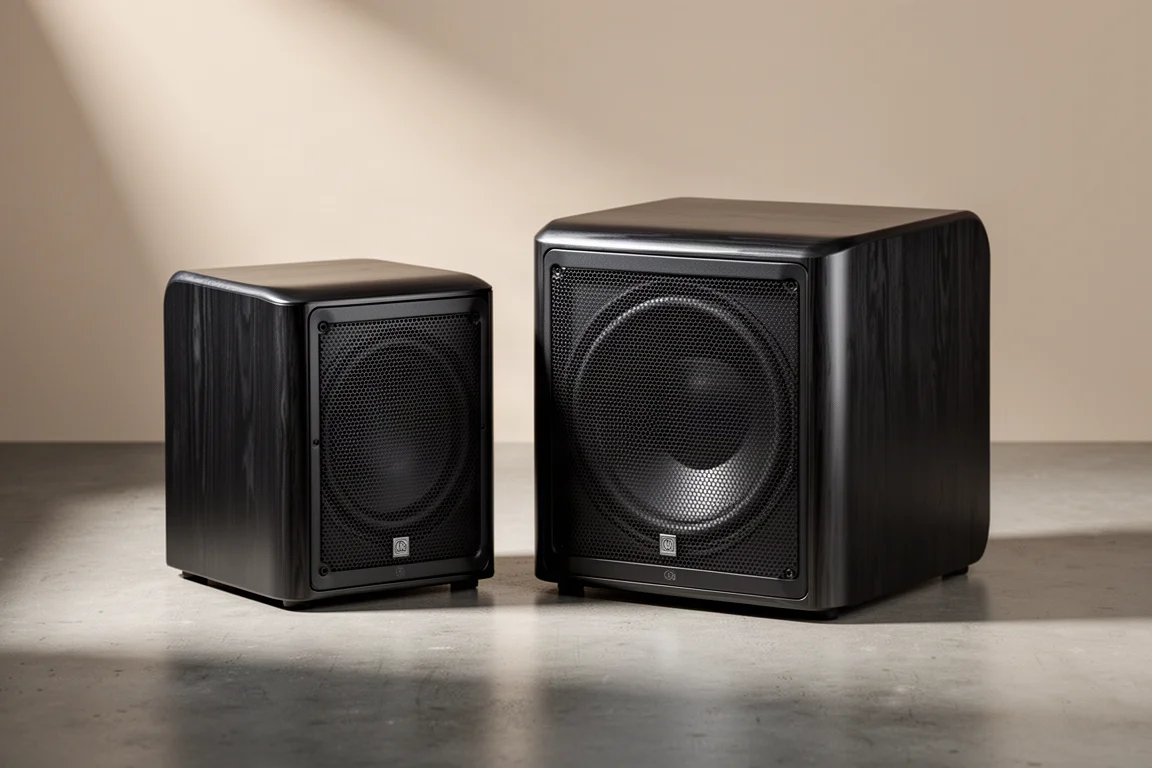
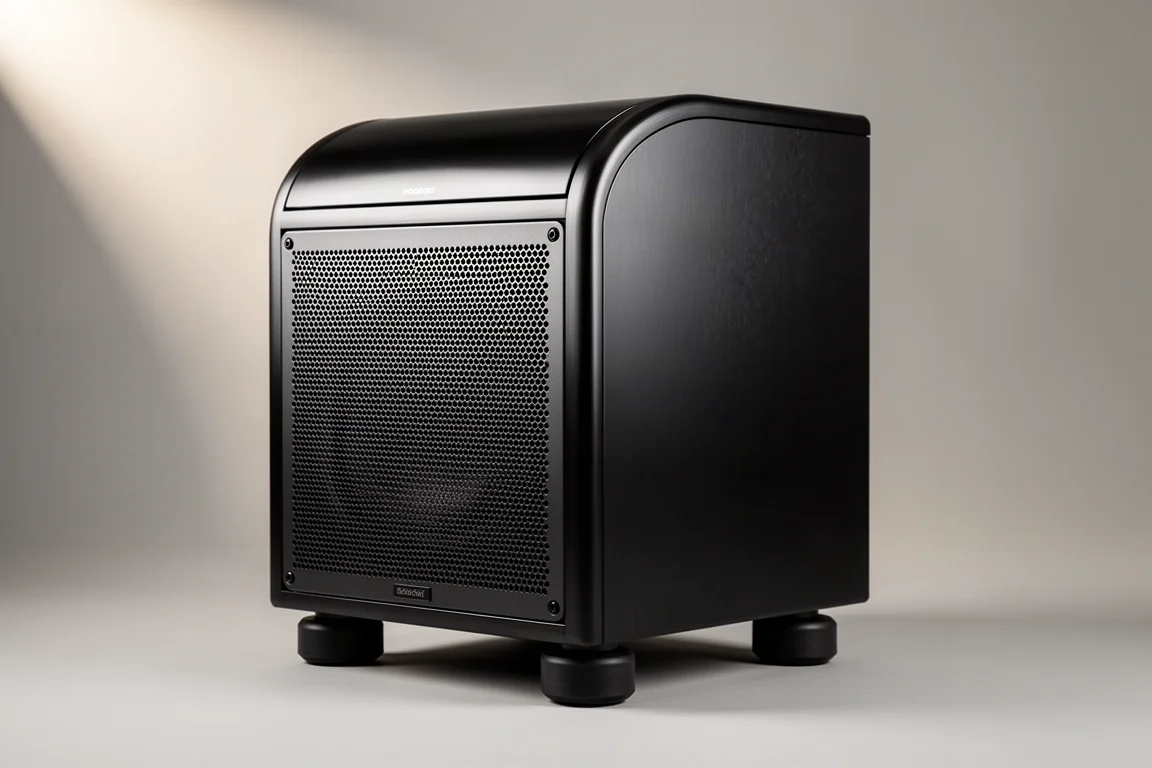
The most visible change is the cabinet shape. GoldenEar gave both ForceField models a curved top that echoes the curved tops of the Triton tower speakers, and the curve is functional rather than cosmetic. Shaping the entire top of the cabinet helps reduce acoustic reflections inside the enclosure.
The grille has also been reworked, moving from a stretchy black cloth to a perforated metal grille with a cleaner design. The front face ends up with a slightly mischievous look, as if the subwoofer is daring you to turn the volume up. The exterior finish is upgraded to a multilayer satin that looks and feels substantial. It will show fingerprints, but a microfiber cloth wipes them away easily.
Cabinet thickness grew as well. The ForceField 30 uses panels slightly over one inch thick, while the ForceField 40 uses 1.3 inch panels, which works out to roughly 33 percent and 37 percent thicker than the cabinets on the earlier models. Combined with the curved top, that construction reduces vibration and distortion while improving energy transfer.
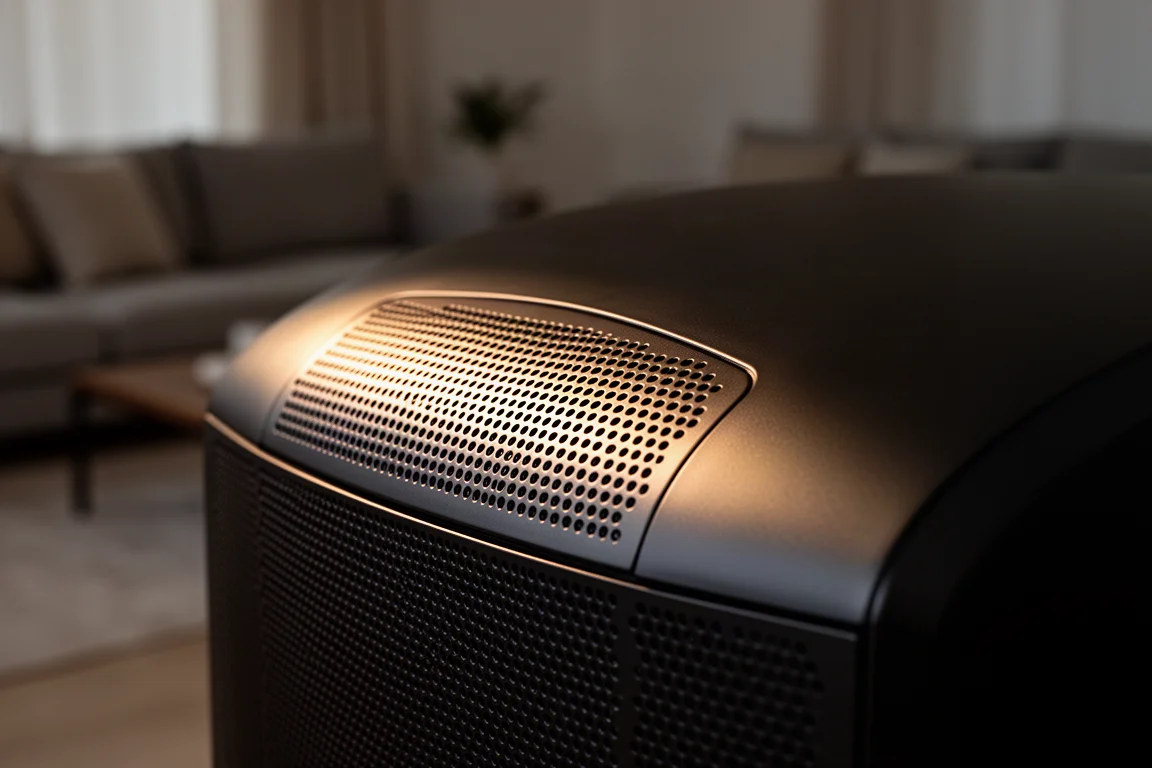
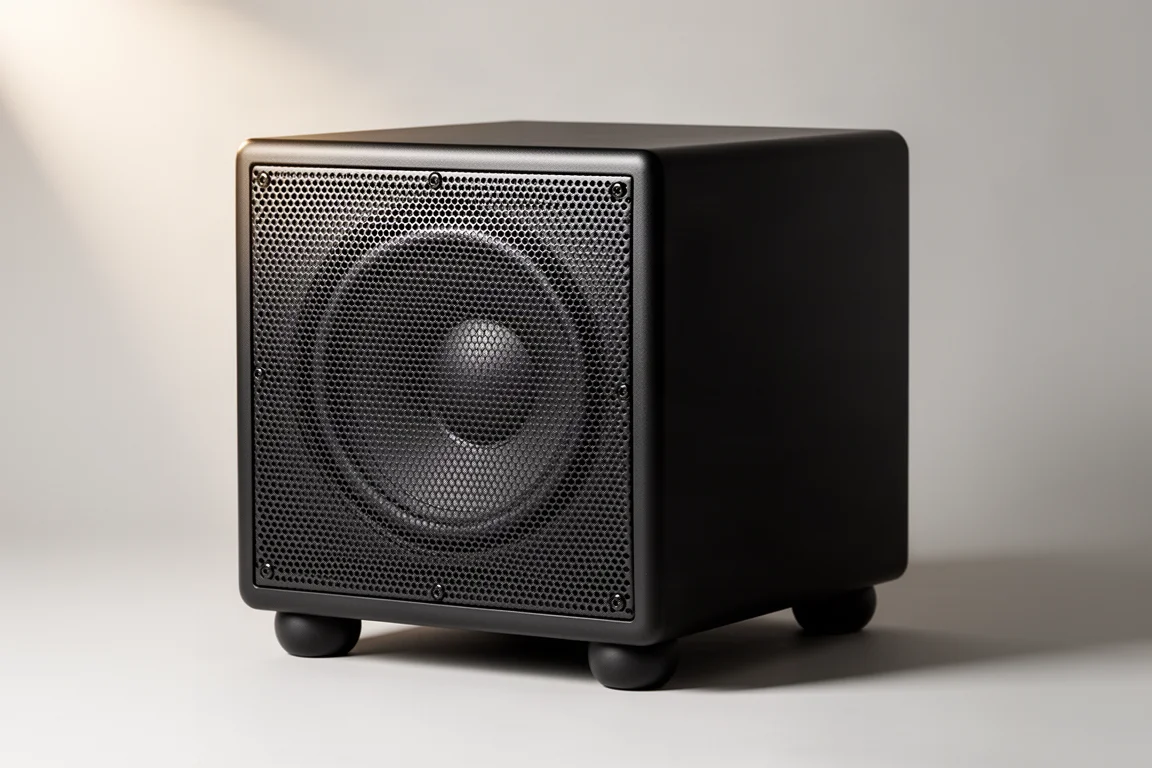
Both subwoofers rest on four large rubber isolation feet. The feet unscrew if you prefer spikes, and the cabinets use a standard quarter inch 20 thread pattern. Spike kits are not included, but GoldenEar can supply spikes if you request them.
The amplifiers are based on the designs used in the SuperSub X and SuperSub XXL. You get 1,000 watts in the ForceField 30 and 1,200 watts in the ForceField 40, with Analog Devices DSP built around a 56-bit DSP chip for equalization, a new EQ circuit that delivers both flatter frequency response and more low end extension, and MOSFET output stages. Current reserve is generous enough that, with music playing loudly, the subwoofer keeps producing sound for several seconds after the power cord is pulled.
Each model pairs its amplifier with a long throw woofer using a stiff fiber cone and an unusually large magnet. The ForceField 30 uses an 8 inch driver, and the ForceField 40 steps up to a 10 inch version. Both also use GoldenEar’s quadratic planar infrasonic radiators, flat passive drivers that stand in for an open bass port. This approach mimics the behavior of a transmission line enclosure, which is often considered an ideal cabinet design, but with better transient performance. The passive radiators add downward pressure and deeper bass than a sealed box with a single active woofer could manage, and they give you more flexibility about where the subwoofer can sit in a room. The ForceField 30 carries a 9 by 11 inch radiator, while the ForceField 40 uses an 11 by 13 inch unit.
GoldenEar ForceField 30: Compact Speed
The ForceField 30 measures roughly 11 inches wide, 16 inches deep, and 12 inches tall, so it disappears into a room far more easily than most high performance subwoofers. Inside that small box are the 1,000 watt amplifier, the 8 inch long throw woofer, and the 9 by 11 inch quadratic planar radiator.
Its character is defined by speed. Of the two, the 30 is the quicker subwoofer, which makes it a natural fit for smaller rooms and for systems where agility matters more than the very lowest octave. It does not reach down quite as deep as the 40. If you mostly want a subwoofer that rumbles for explosions, neither model is aimed at you. If you want to hear the pitch and texture of bass instruments while still getting a convincing sense of weight, the 30 is a compelling option. A pair of ForceField 30s is an especially interesting idea for listeners who want two compact boxes sharing the low end work.
GoldenEar ForceField 40: Deeper and Bigger
The ForceField 40 is the larger of the two at about 13 inches wide, 18 inches deep, and 15 inches tall. It carries the thicker 1.3 inch cabinet construction, the 1,200 watt amplifier, the 10 inch long throw woofer, and the larger 11 by 13 inch quadratic planar radiator.
That extra displacement and cabinet volume translate into deeper extension than the ForceField 30 can provide, without giving up the quick, agile character that makes both models easy to live with in a music system.
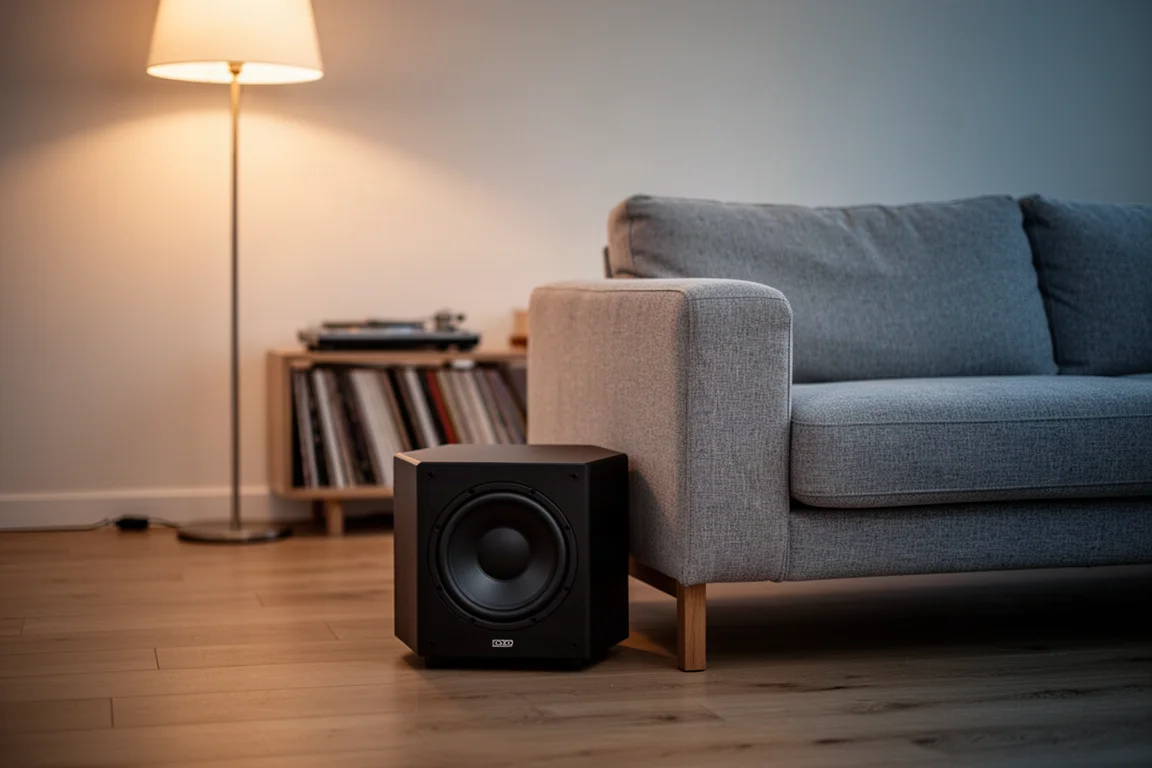
For most rooms, the ForceField 40 is the easier recommendation. It still counts as a fairly small subwoofer for the performance it delivers, so it fits into spaces where a large ported box would be a hard sell, and it covers both movie effects and musical bass without asking you to choose between them.
Setup and Connectivity Notes
The rear panel keeps things simple. There are two connections and a small switch that lets you choose between LFE and a left/right configuration. Select LFE and you feed the LFE output from your home theater processor into the LFE input, which bypasses the subwoofer’s internal crossover. Select left or right and the internal crossover is engaged, adjustable from 40 Hz up to 150 Hz.
One detail worth knowing before you buy is that there is no phase control on the rear panel. In a home theater setup using the LFE input, the subwoofer delay setting in your processor can handle that job. In a two-channel system, however, you would have no way to adjust phase, which means positioning the subwoofer close to being in line with your main speakers is the practical way to get the best blend.
Listening Performance: Speed and Tonality
Speed is the headline. Reaching deep for home theater effects is something plenty of subwoofers can do. Combining that depth with genuinely musical behavior is much harder, and it is where the new ForceField models stand apart. The ForceField 40 blends convincingly with fast speakers, including pairs that have historically been difficult to match with any subwoofer, and it manages the low end without smearing the midrange or calling attention to itself.
The useful test is material where a slow subwoofer exposes itself immediately. The Holly Cole Trio album Don’t Smoke in Bed is a good example, particularly the track Every Day Will Be Like a Holiday, which opens with solo upright bass before the bass and drum kit lock in together about halfway through. On those passages the ForceField 40 showed both speed and strong tonality. You can hear the pitch and character of the upright bass, and the kick drum still lands with real physical impact.
The ForceField 30 is actually the faster of the two, though it does not dig as deep as the 40. That trade-off is worth keeping in mind if your priority is tight, articulate bass in a small room rather than maximum low frequency extension.
Who These Subwoofers Are For
These are not the right subwoofers for listeners who simply want constant pressure and booming rumble from explosions. That job is better served by other designs. They are aimed at people who want to hear bass tonality, who want the low end to keep pace with fast speakers, and who still want the sense of a bomber passing overhead when a film calls for it.
Buying Advice
For most systems the ForceField 40 is the best single choice. It reaches deeper than the 30 while remaining small enough to place in a normal room, and it handles music and film material with equal composure. The ForceField 30 makes more sense where space is tight or where speed is the top priority, and a pair of them is a genuinely appealing option for listeners who want two compact subwoofers working together.
Two practical points to plan for. First, decide on feet before you install: the supplied rubber isolation feet unscrew, the cabinets use a standard quarter inch 20 thread pattern, and spikes are not included but can be requested from GoldenEar. Second, think about placement in advance if you run a two-channel system, because the absence of a rear phase control means positioning the subwoofer close to in line with your main speakers is how you achieve the best integration.
Both models are compact, well built, and finished to a standard that looks considerably more expensive than the older ForceField 3 and 4 they replace.
Conclusion
With the ForceField 30 and ForceField 40, GoldenEar has delivered two more high value products. The curved cabinets, thicker panels, more powerful amplifiers, and quadratic planar radiators all come from serious engineering work, and the payoff is bass that stays fast and tonally rich while still delivering the depth home theater demands. Choose the 40 for the deepest, most versatile single subwoofer, or the 30 when speed and footprint matter most.
Further reading
Related Reviews
Subwoofers
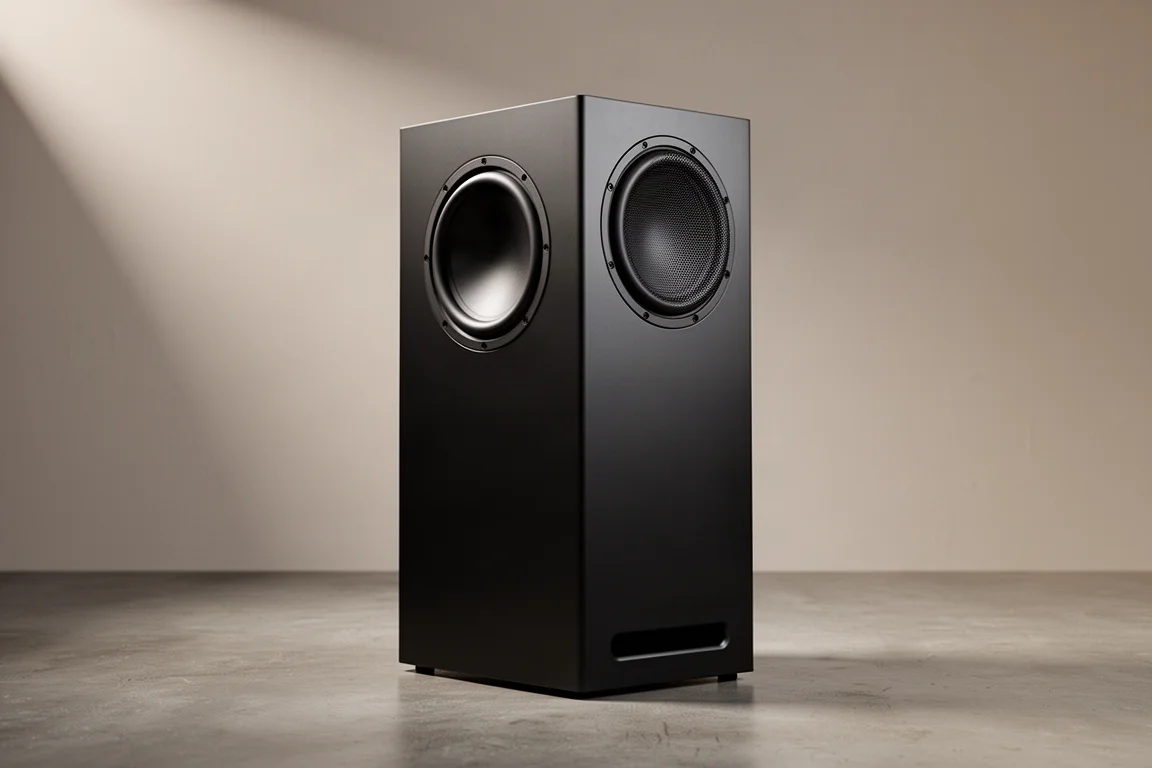
Arendal 1961 Subwoofer 1S Review: Beautiful Build, Modest Punch at $1,000
A sealed $1,000 subwoofer with a gorgeous cabinet, plus three lower-priced alternatives that deliver more impact for movie nights.
Subwoofers
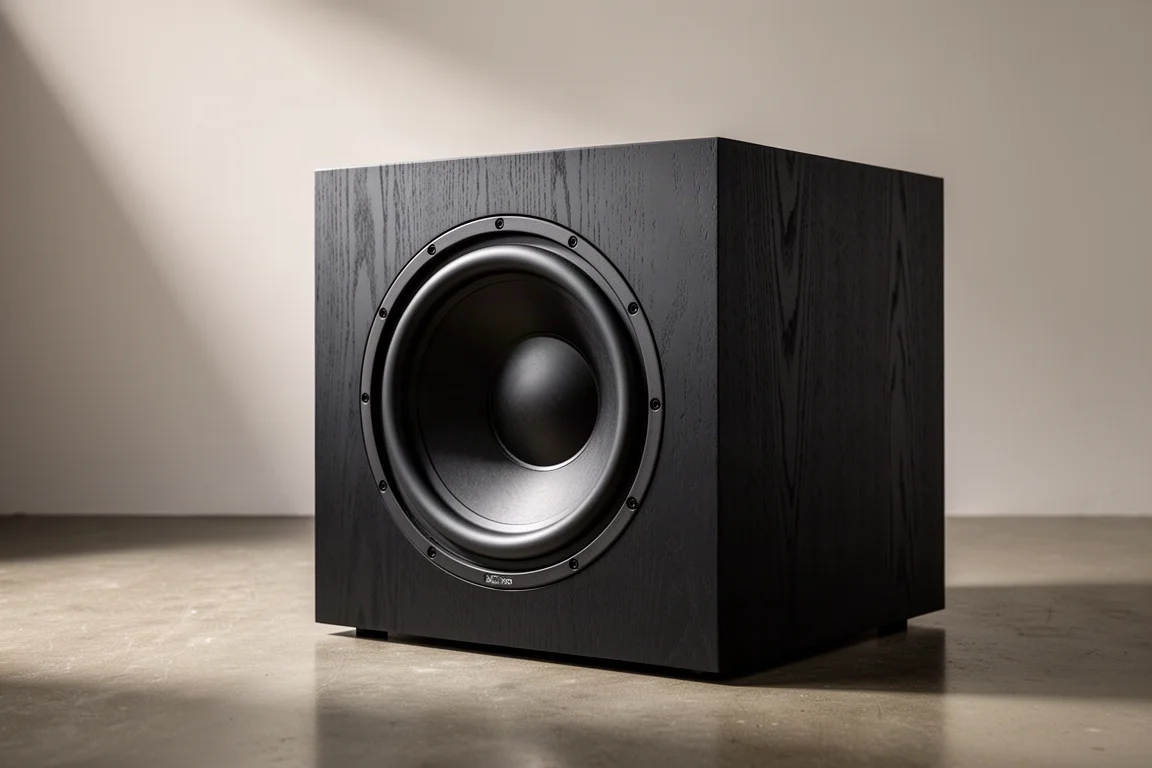
Arendal Sound 1723 2V Subwoofer Review: Dual 13.8-Inch Drivers Under $3,000
A flagship ported subwoofer with dual opposing 13.8-inch drivers, a 1,200W RMS amplifier, app-based DSP, and a 10-year warranty.
Subwoofers
Ascendo 16 Sub Active Sealed Review: Sealed Bass Built on Real Engineering
A close look at the Ascendo 16 Sub Active Sealed, a 16-inch sealed home theater subwoofer with independently verified measurements, a purpose-built driver, and genuinely controlled output.