Bookshelf Speakers
GoldenEar BRX Review: Big Bass and Bold Looks in a Bookshelf Speaker
The GoldenEar BRX pairs a folded ribbon tweeter with twin passive radiators for deep, textured bass in a compact curved cabinet. Here is what to know before buying.
Introduction
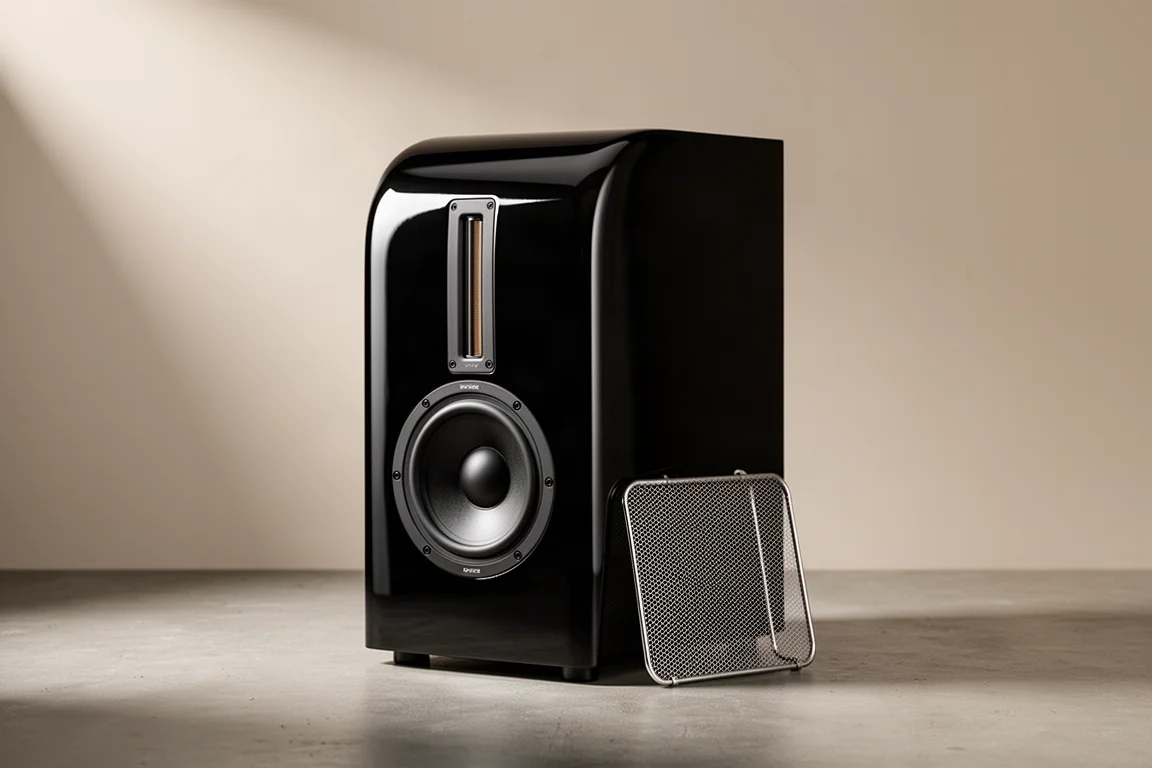
Some bookshelf speakers are built to be sensible. The GoldenEar BRX is built to make an impression. The cabinet curves in ways most box speakers do not, the finish is a deep high gloss black, and the driver complement includes a folded ribbon tweeter and a pair of side mounted passive radiators. The result is a compact speaker that plays far larger than its 12 pound cabinet suggests.
At $1,600 per pair, the BRX sits above the entry level and below the flagships. Placed alongside speakers costing several times as much at a hi-fi show, it held its own on both sound and styling. That alone makes it worth a closer look before you commit.
Who the GoldenEar BRX Is For
The BRX suits listeners who want a two channel system that can also handle television and film duty without a subwoofer. Its bass output is genuinely substantial for the cabinet size, so a small to medium room gets a full range presentation from two boxes and an amplifier. The 90 dB sensitivity and 8 ohm nominal impedance also mean it is not a difficult load, and low powered amplifiers, including tube designs, are realistic partners.
It is equally appealing to buyers who care about how a speaker looks in a living space. The curved profile and glossy finish read as premium, and the magnetic metal grille keeps the front clean when it is in place.
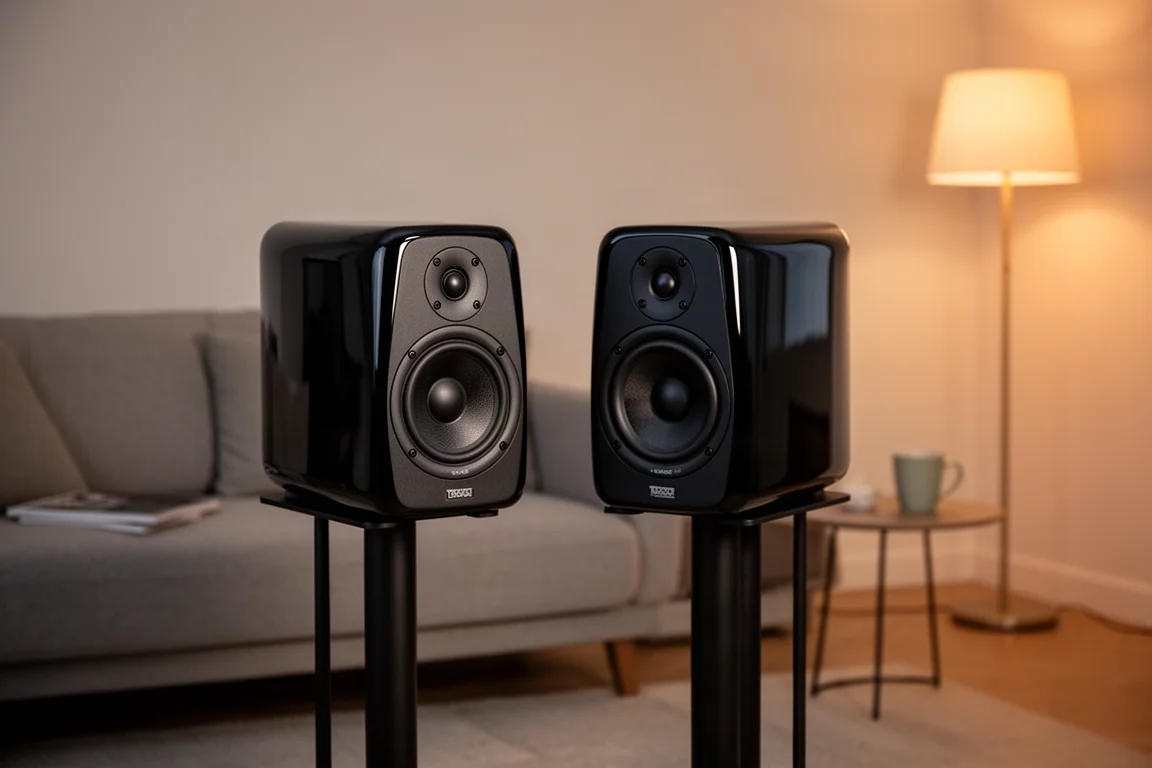
It is a less obvious fit for very large rooms, where the passive radiator design will not pressurise the space the way a floorstander can. Listeners who prefer a lean, forward, analytical balance should also audition carefully, because the BRX leans warm and generous in the lower registers.
Design and Build Quality
The cabinet is the first thing anyone notices. The sides curve gently, the enclosure is thicker at the rear than at the front, and the high gloss finish catches light along its edges. That finish will show fingerprints, which is the trade off for the look. The grille is metal rather than cloth, attaches magnetically, and carries a small lip at the top with a felt pad where it meets the cabinet, a detail that protects the gloss.
The driver layout is unusual for the price. A 6 inch cast basket mid bass driver handles the lower and middle frequencies, while a high velocity folded ribbon tweeter, roughly two inches tall, covers the top end. Two rectangular passive radiators sit on the sides of the cabinet and do the work normally given to a bass port. Rated frequency response runs from 40 Hz to 35,000 Hz. Each speaker weighs 12 pounds.
The one area that feels less resolved is the binding posts on the rear panel. They work perfectly well, and nobody spends their evening looking at the back of a speaker, but they do not match the sense of quality set by the rest of the cabinet.
Sound Characteristics
Bass is the headline. The passive radiator design produces bass with real weight and, more importantly, real texture. Notes have shape and tone rather than a single dull thump, and the quantity is generous enough that a subwoofer is largely unnecessary in a typical room. The mid range follows that character and sits slightly on the warm side, with electric guitars sounding full and grunty.
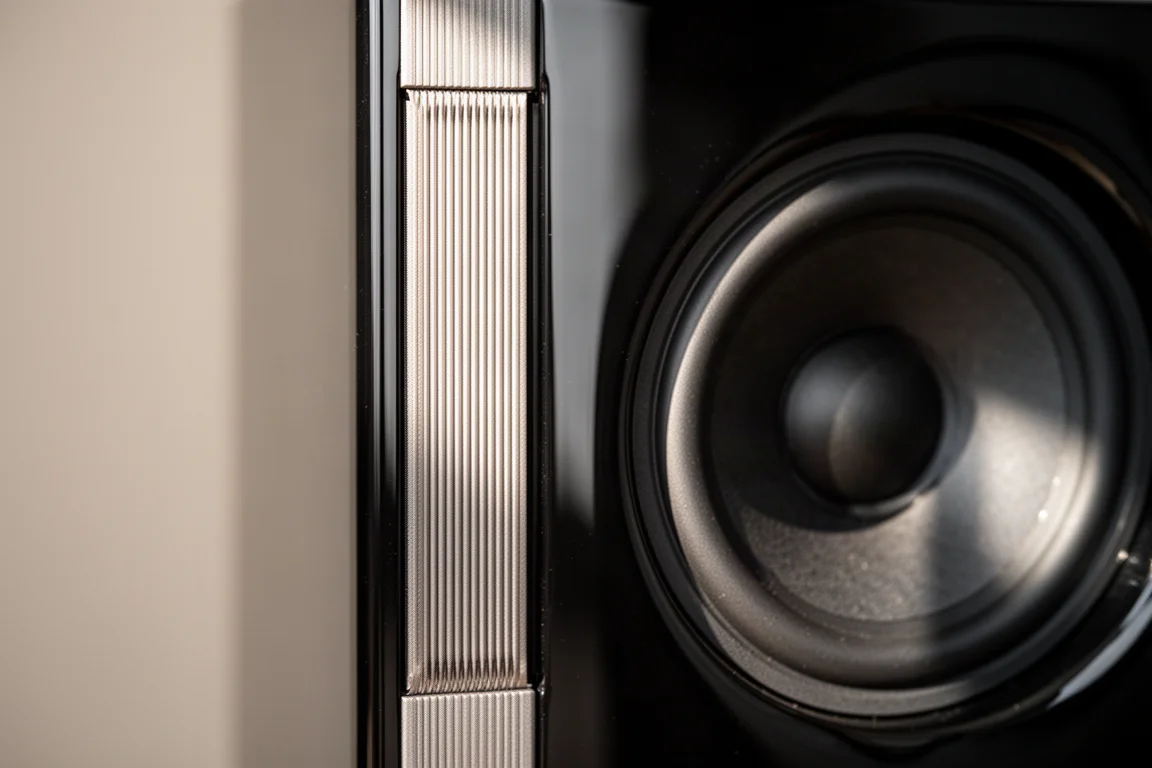
The top end is where the ribbon tweeter earns its place. Cymbals carry air and fine detail, plucked strings have texture, and instruments separate cleanly from one another rather than blurring into a single mass. Soundstage and imaging are a particular strength. The presentation extends well beyond the cabinets and stays seamless, and the speakers are notably unfussy about placement, so loose toe in still delivers a convincing stage.
One behaviour worth knowing is vertical. Above and below the ribbon tweeter, the top end falls away more quickly than it does with many dome tweeters. In practice this means the speaker rewards a listening position roughly level with the tweeter, and it is more forgiving of side to side movement than of standing up and walking around.
Main Strengths
The first strength is bass depth without a subwoofer. Few bookshelf speakers at this price deliver this much low frequency energy with this much texture, and the side mounted passive radiators keep the cabinet compact while doing it.
The second is imaging. The BRX throws a wide, seamless stage and does not demand surgical setup to do it, which makes it easy to live with in a real room rather than a dedicated listening space.
The third is design. The curved cabinet, glossy finish, and metal magnetic grille give the speaker a presence that most boxes at this price cannot match, and it holds its own visually next to far more expensive models.
Things to Consider Before Buying
Bass quantity cuts both ways. In a smaller room, especially with walls close behind and beside the speakers, the low end loads up quickly and can become too much. In that situation a modest cut on a tone control or an amplifier’s bass trim restores balance, and the upper mid range and top end detail come back into focus immediately. If your amplifier has no tone controls, plan the placement more carefully.
The warmth in the mid range also means dialogue in films is not as forward as it is on some more analytical speakers. Detail is present, but the bass and lower mid range can sit over it until the low end is trimmed. Buyers who mostly watch dialogue heavy content at low volume should factor that in.
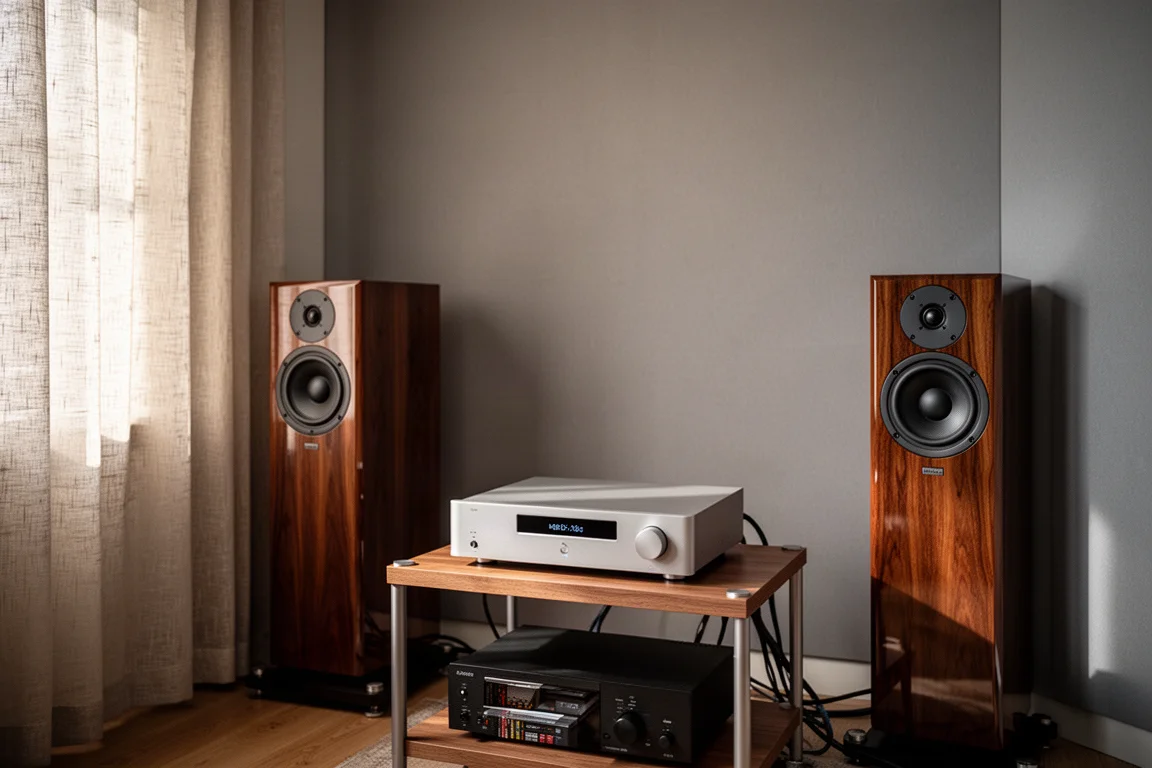
Two practical points round out the list. The high gloss finish needs occasional dusting to stay pristine, and the speakers are sold as singles, so a stereo pair means ordering two. A clean, capable front end is also worth budgeting for, because the ribbon tweeter reveals what it is fed.
Placement and Room Setup
Setup is refreshingly simple. The BRX does not require precise toe in to lock in a centre image, and a slightly loose arrangement still produced a solid stage. What matters more is distance from boundaries. In a small room, pulling the speakers away from the side and rear walls reduces the bass build up, and a small bass cut on the amplifier can finish the job.
Aim for ear height roughly level with the ribbon tweeter, since the top end rolls off fairly quickly above and below it. In a larger room the speakers were far less prone to overload, so if you have the space, they will reward it.
Buying Advice
At $1,600 per pair, with each speaker sold separately at around $800, the BRX is expensive but not out of reach for a serious two channel or film system. The value case rests on what you get for that money: a compact speaker with genuine low frequency output, strong imaging, and a finish that looks like it belongs on a much more expensive shelf. If you can save toward it, it is a purchase most listeners will not regret.
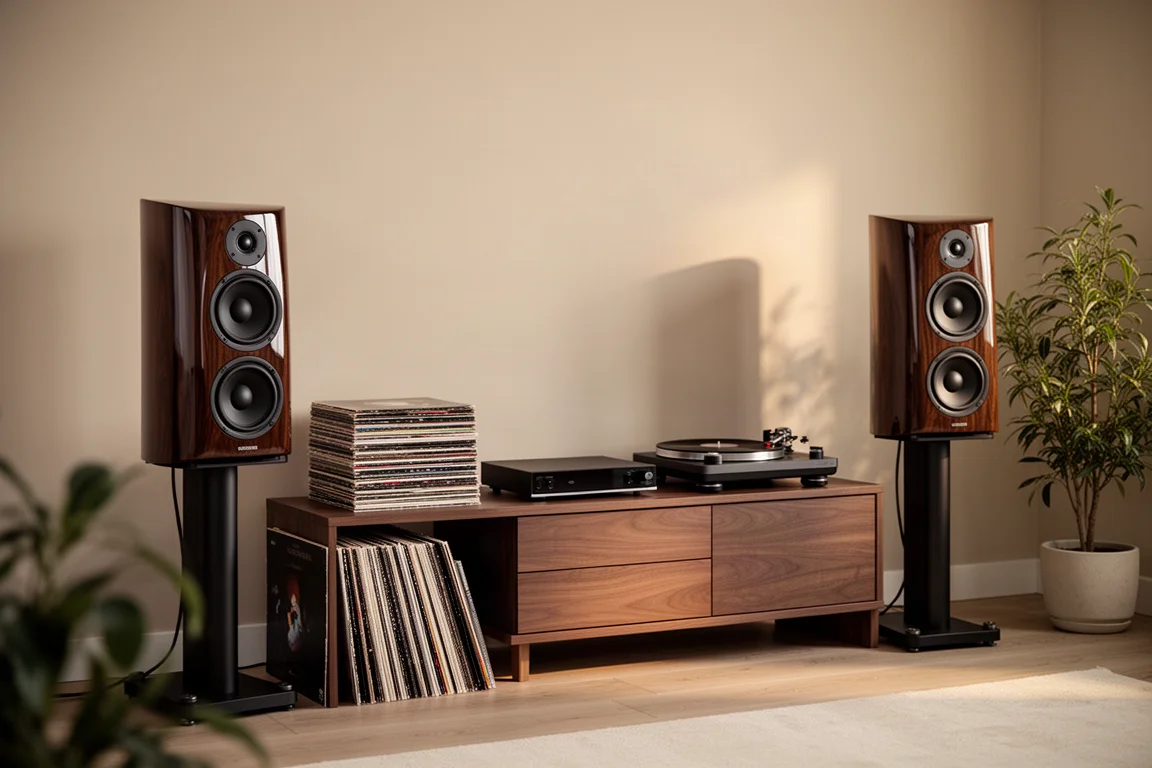
Before committing, compare it against other speakers near the same price to confirm which balance you prefer, since the BRX deliberately leans warm and full rather than neutral and lean. Pair it with an amplifier that offers at least basic bass adjustment if your room is on the small side, and budget for two units rather than one.
Conclusion
The GoldenEar BRX is one of the more memorable bookshelf speakers in its price band. It looks distinctive, it plays far bigger than its size, and its bass performance means many buyers will never need a subwoofer. Trim the low end in a small room, give the ribbon tweeter a level listening position, and it delivers a rich, detailed, room filling sound that justifies the asking price.
Product link
View more details for GoldenEar BRX
This product is mentioned in the review. Check the specifications, options, and compatibility before buying.
View more details for GoldenEar BRXFurther reading
Related Reviews
Bookshelf Speakers
Acoustic Energy A100 Mark II Review: A Compact Standmount With an Expansive Soundstage
The Acoustic Energy A100 Mark II brings clarity, natural tonality and a wide soundstage to an entry-level standmount, with a few setup details worth knowing first.
Bookshelf Speakers
Acoustic Energy AE-100 Mark II Review: Compact Bookshelf Speakers With Standout Imaging
A compact British two-way bookshelf speaker with deep, layered imaging, fast bass, and a slight treble lift to weigh against a crowded $500 field.
Bookshelf Speakers
Acoustic Energy AE100 MK2 Review: Measured Performance and Four Alternatives
A close look at the Acoustic Energy AE100 MK2 bookshelf speaker, what its measured performance reveals, and four alternatives with different trade-offs.