Camping Fans
Geek Aire 10-Inch Portable Camping Fan Review: Airflow, Runtime, and Rain Testing
A practical look at the Geek Aire 10-inch portable camping fan, covering airflow range, measured runtimes, noise levels, metal build quality, and IPX4 rain resistance.
Introduction
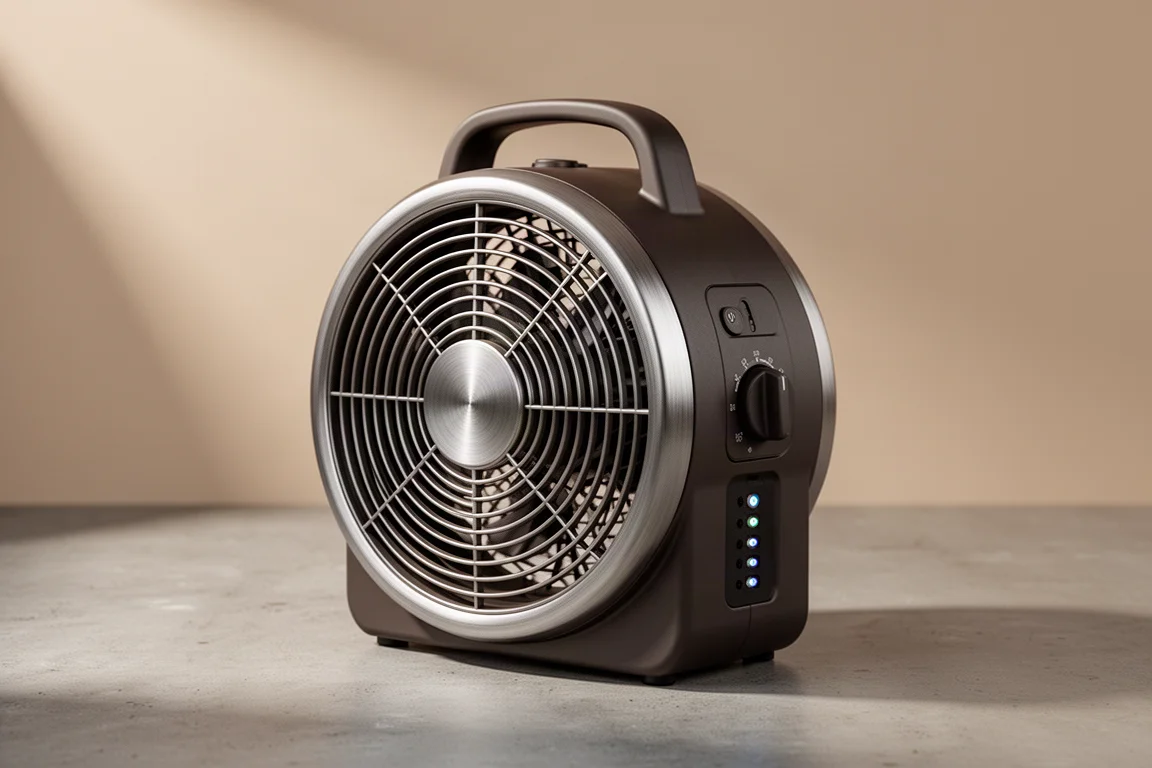
The Geek Aire 10-inch Portable Camping Fan is a rechargeable fan built for tent camping and outdoor use, and it has been put through several months of practical testing covering airflow, runtime, noise, charging behaviour, and rain exposure. The first thing that stands out is construction: almost the entire fan is metal, with only the rear control panel made from plastic, which gives it a noticeably hardier feel than many portable fans.
Out of the box you get the fan itself, a 12 volt AC adapter, and a user guide. The fan arrives partially charged, somewhere between 60 and 80 percent, so it is worth topping it up before a trip. Charging is the only way to power it, and the stated charging time is between two and two and a half hours.
Who This Fan Is For
This fan makes the most sense for campers who use a four to six person tent. In a six-person Coleman Sundome, airflow stayed usable to roughly nine feet diagonally across the tent, and it was still measurable across the narrower width of the same tent. Larger tents are where the reach starts to fall away, so the practical ceiling is a six-person model or smaller. Geek Aire also offers 12-inch and 16-inch versions for anyone who needs more coverage.
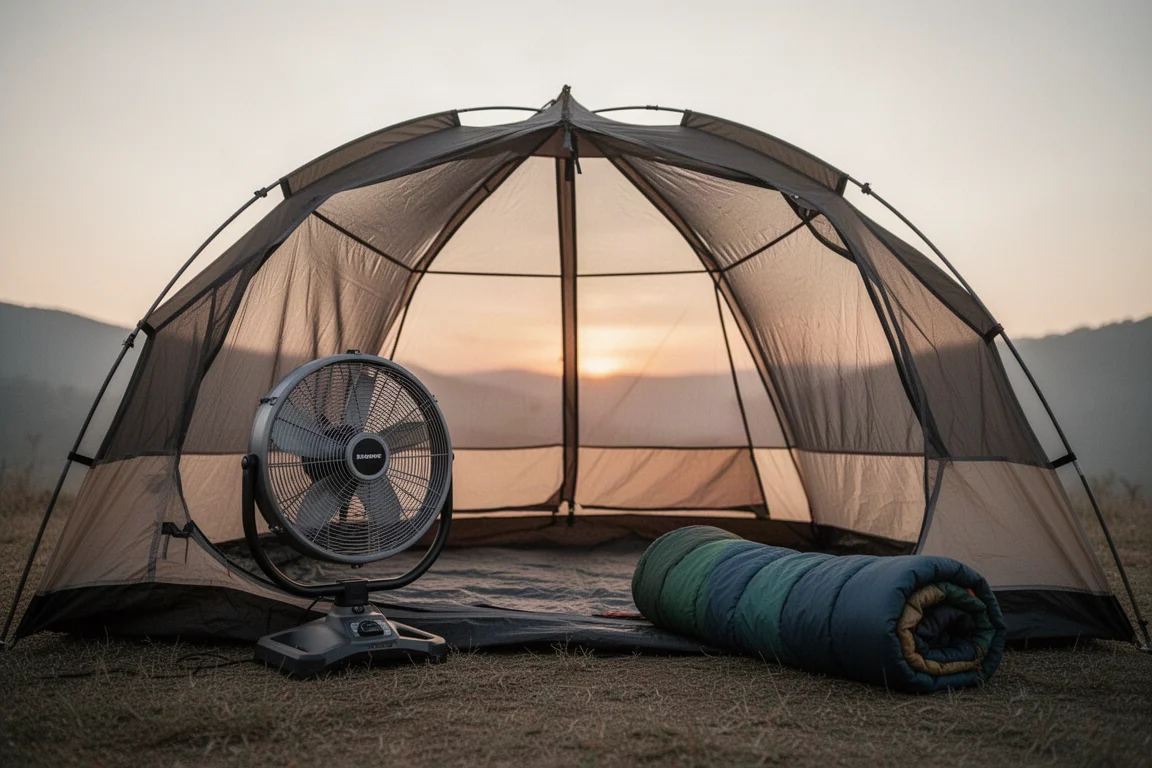
It is at its best for people who want a large, heavy-duty unit rather than a compact one. If your tent sleeps two to four people, a smaller fan is likely to be the more sensible choice.
Main Strengths
Charging and Controls
The control panel carries five power indicator lights, each representing 20 percent of the battery. When charging begins, the first light blinks red, and the sequence progresses through the lights until the fan is full. In testing, a full charge took about one and a half hours, quicker than the stated two to two and a half hours.
The speed knob is the standout control. It rotates through more than 270 degrees, clicks on at the lowest setting, and clicks off when turned back anticlockwise. Because it is a dial rather than a set of fixed modes, any speed in between is available, from the gentlest breeze up to full power.
The indicator lights stay on while the fan runs, so battery level can be checked at a glance without switching the fan off and on again. They are also visible in a dark tent, which is handy for checking charge at night, though anyone who needs complete darkness while sleeping will want to cover them.
Airflow Range and Tent Coverage
Measured output starts at roughly 1.5 to 1.6 meters per second, about 5 feet per second, at the lowest setting. That is a very gentle breeze that is only really felt within about a foot of the fan. Turning the dial roughly 90 degrees gives around 2.5 to 2.6 meters per second, about 8.2 feet per second, and 180 degrees gives about 3.3 meters per second, or 10.8 feet per second. At the top of the dial the fan reaches about 3.8 to 3.9 meters per second, roughly 13 feet per second.
Maximum airflow distance on the highest setting came in at about 132 inches, or 11 feet, or 3.3 meters. On the lowest setting that distance collapses to about 16 inches, or 0.4 meters.
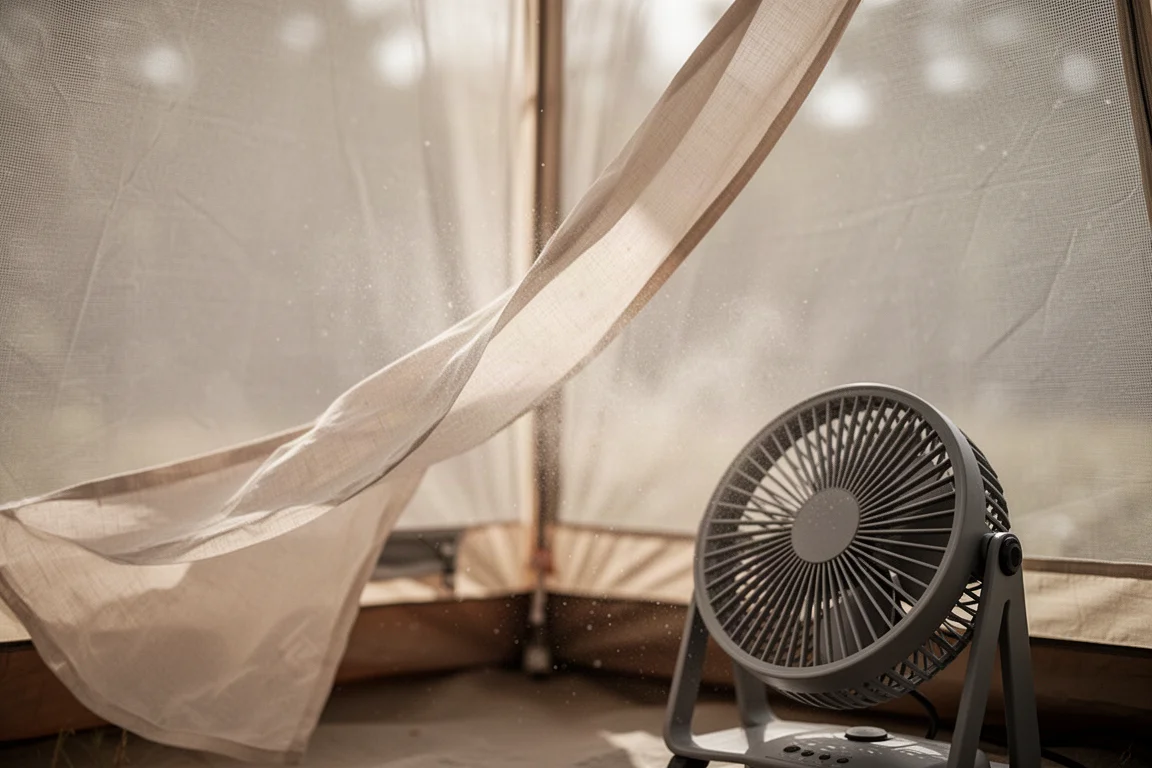
The 360-degree tilt adds real flexibility in a tent. Two knobs at the sides can be loosened and tightened to lock the angle, although the fan can also be rotated by hand without adjusting them, which is how most people will end up using it day to day.
Noise Levels and Battery Runtime
With the fan switched off, the ambient reading in the test space was about 41 decibels. The lowest speed barely moved the meter at around 42 decibels. A mid-range setting measured roughly 55 decibels, and the highest speed came in at about 66 decibels.
Capacity comes from three cells of 2,000 milliampere hours each, for 6,000 milliampere hours in total. The official runtime claim is four and a half to 24 hours, and measured results beat it. The lowest setting ran for 29 and a half hours, plus a further hour of spinning blades with no perceptible airflow. A setting of about 2.3 meters per second, or 7.5 feet per second, ran for 20 hours. A higher setting of about 3 meters per second, close to 10 feet per second, ran for 9 hours and 15 minutes. The highest setting managed about 6 hours. For most campers that translates into two or three days of use between charges.
The indicator lights tracked the actual battery state reasonably closely during both low-speed and high-speed runs, so they can be trusted as a rough guide.
Build Quality, Stability, and Weather Resistance
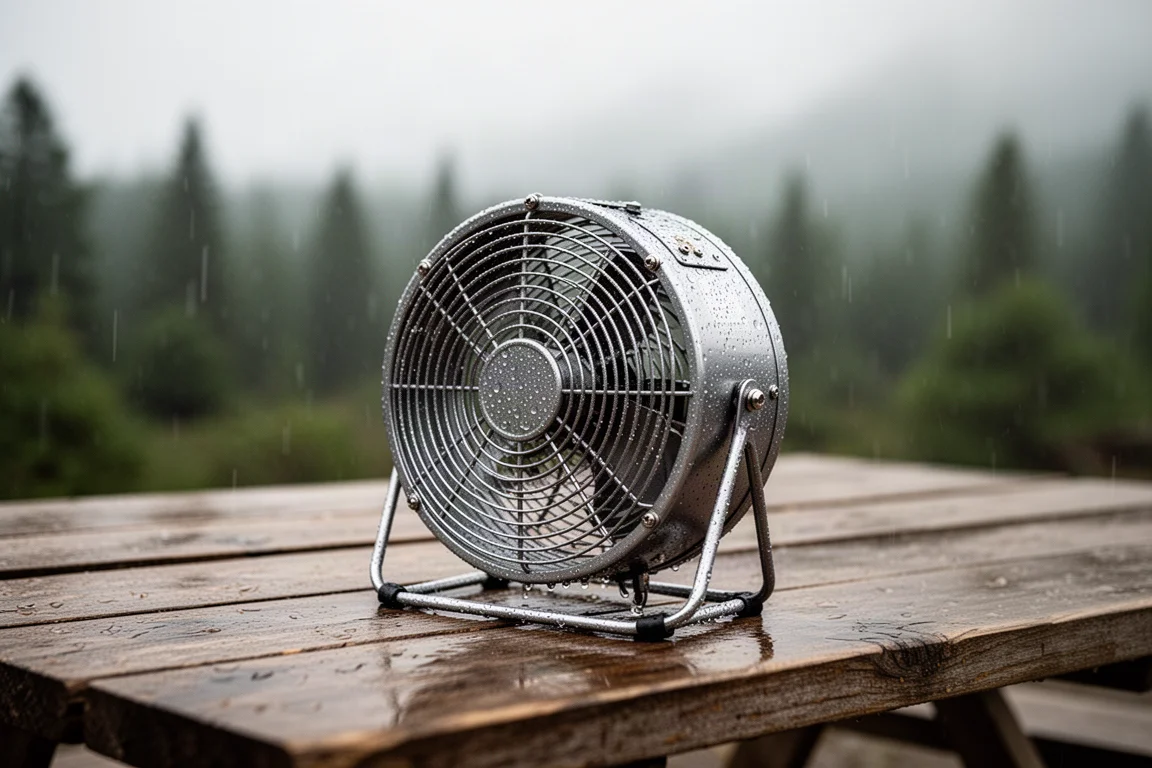
The body is metal apart from the rear control panel, and the fan carries an IPX4 water resistance rating, which covers light to moderate rain. Thirty minutes of moderate rain left the fan working normally, with the control panel and every speed still functioning. The one weak point was the power input plug, which filled with water, a reminder that IPX4 is a ceiling rather than an invitation to leave the fan out in hours of heavy rain.
Carrying is handled by a handle at the back that fits a hand comfortably. The base uses three slip-resistant rubber feet and is wide enough to stay stable on slightly uneven ground, which matters in a tent. The fan weighs about 61.7 ounces, or 1.75 kilograms, and packs down to roughly 14 by 12 inches, or 35 by 30 centimeters, with a depth of about 5.5 inches, or 14 centimeters. The fan face measures about 10.5 inches, or 27 centimeters, across, and the blades span about 8.5 inches, or 22 centimeters. Warranty coverage runs for one year.
Things to Consider Before Buying
There is no sleep timer, no built-in lighting, and no charge-out function, so the fan cannot double as a power bank for a phone. Those features appear on some competing models, and their absence is the main trade-off here.
The one-year warranty is on the short side for a fan in this price bracket, and at 1.75 kilograms it is heavier and bulkier to pack than a plastic alternative of similar size. The lowest speed is also too gentle to be useful for most people, so the effective range starts higher up the dial. Finally, the indicator lights may need covering in a tent where complete darkness matters.
Buying Advice
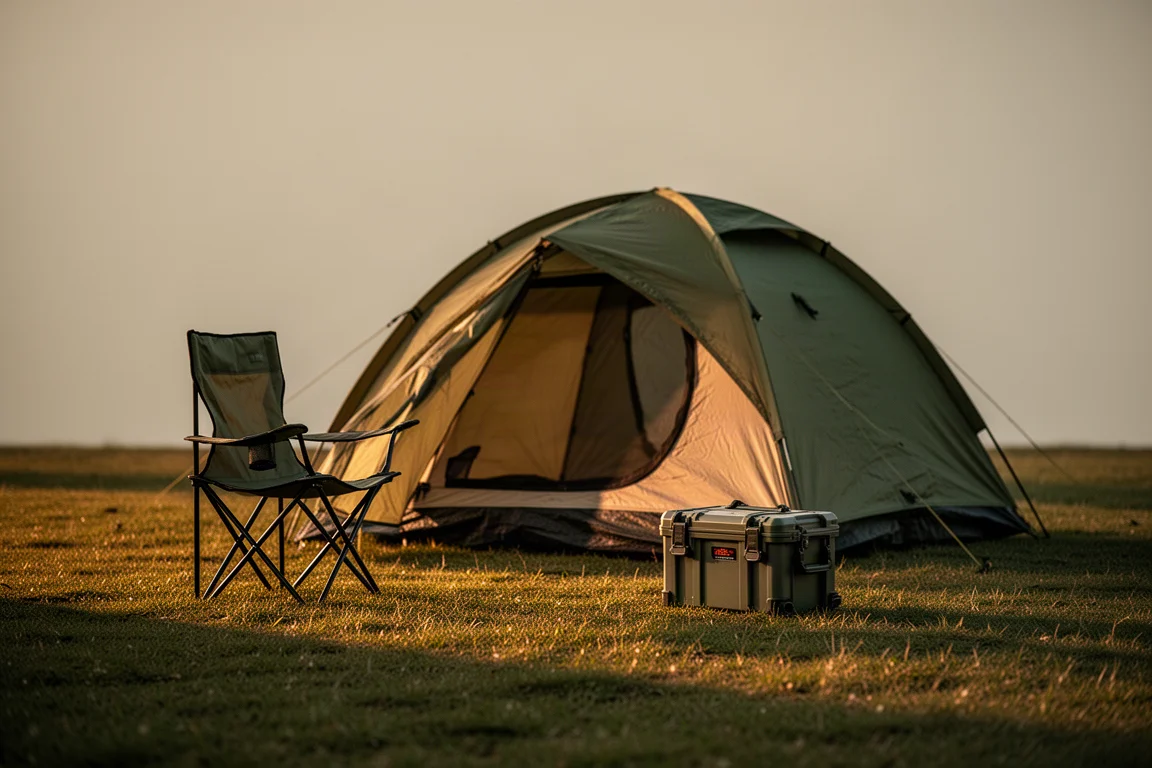
The case for this fan is strongest when you need genuine airflow across a four to six person tent, want a fan that can shrug off light rain, and value a metal body over low weight. Its tested runtimes, fast charging, and continuously variable speed control all support that use case.
If you mostly camp in a two to four person tent, or you want lighting and a sleep timer built in, this is not the fan to prioritise. For everyone else, the Geek Aire 10-inch is a dependable, heavy-duty choice that moves air very well and holds up to the conditions it is rated for.
Conclusion
The Geek Aire 10-inch Portable Camping Fan is a large, mostly metal fan that performs better in real use than its specification sheet suggests. Airflow reaches across a six-person tent, runtimes exceeded the official four and a half to 24 hour claim in every setting that was measured, charging is quick, and the IPX4 rating held up through moderate rain. The gaps are the missing sleep timer, lighting, and charge-out function, plus a short warranty for the price. Campers who need a big, stable, weather-resistant fan for a mid-size tent will find this one easy to recommend.
Product link
View more details for Geek Aire 10-inch Portable Camping Fan
This product is mentioned in the review. Check the specifications, options, and compatibility before buying.
View more details for Geek Aire 10-inch Portable Camping FanFurther reading
Related Reviews
Camping Fans
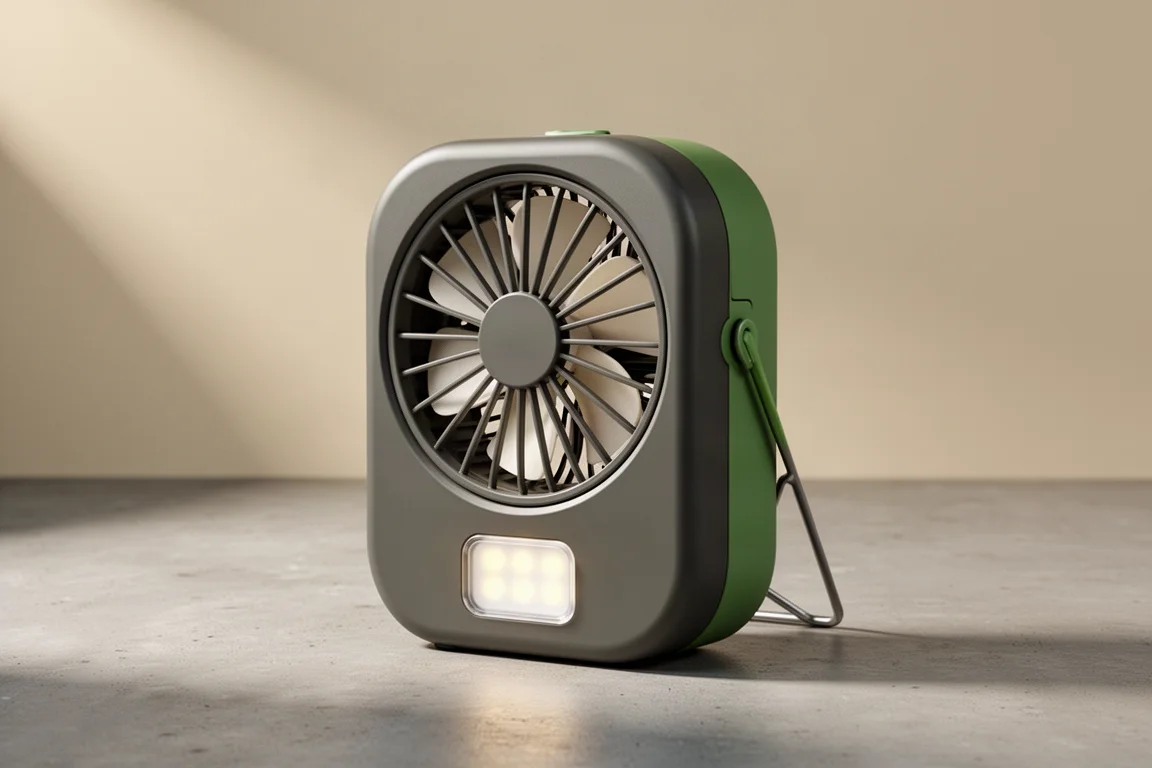
Coleman CPX6 Camping Fan Review: A Bright Lantern With Very Limited Airflow
A dual-purpose camping fan and lantern with a genuinely clever magnetic mount, a very bright light, and airflow that fades out within about half a metre.
Camping Fans
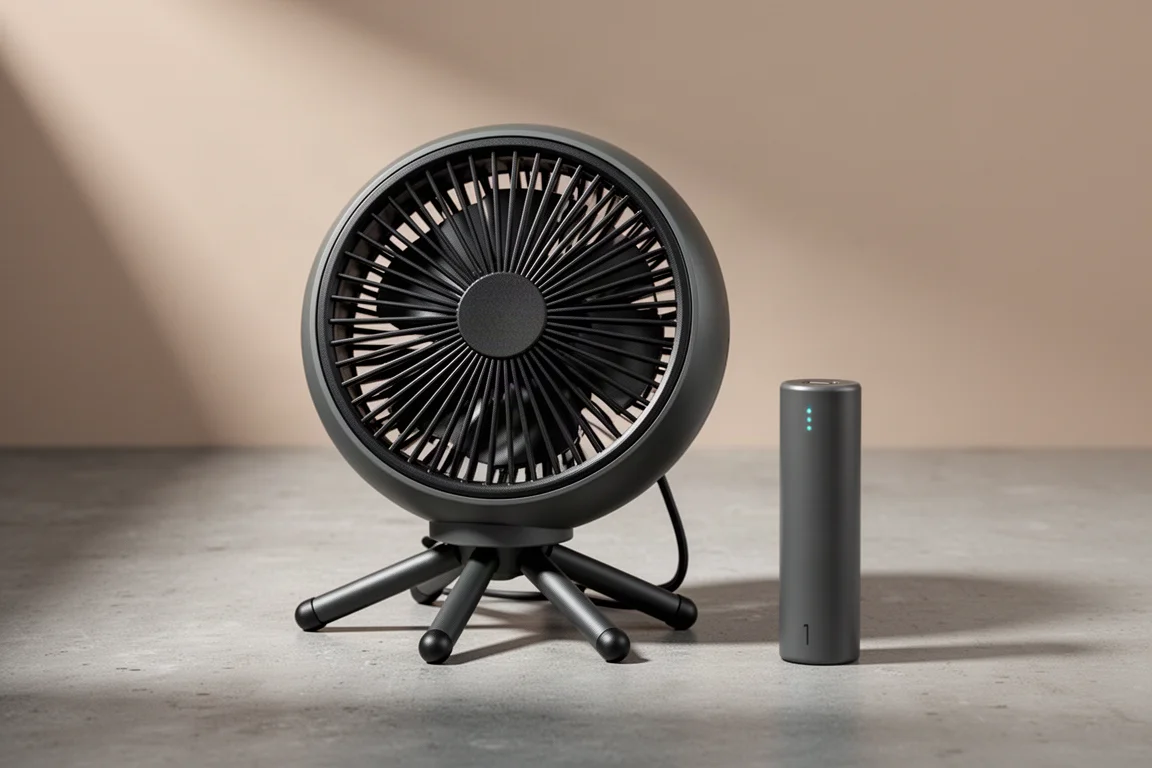
Coleman OneSource Camping Fan Review: A Compact Tent Fan With Real Trade-Offs
A practical look at the Coleman OneSource camping fan, covering airflow, noise, run times, phone charging, and the limits worth knowing before you buy.
Camping Fans
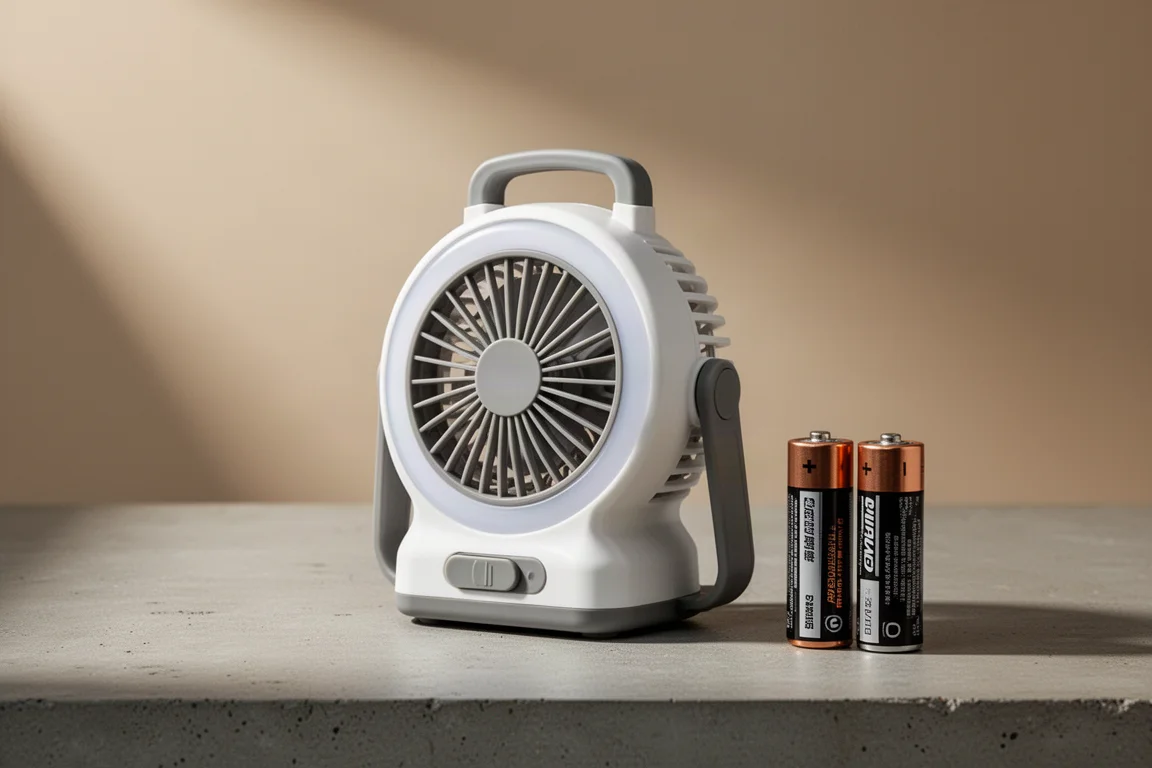
Odoland Camping Fan and Lantern Review: A Two-in-One Camping Fan Under $20
A measured look at the Odoland camping fan and lantern, covering airflow, noise, lantern output, runtime, weather resistance, and the real cost of running it on D batteries.