Camping Fans
Coleman CPX6 Camping Fan Review: A Bright Lantern With Very Limited Airflow
A dual-purpose camping fan and lantern with a genuinely clever magnetic mount, a very bright light, and airflow that fades out within about half a metre.
Introduction
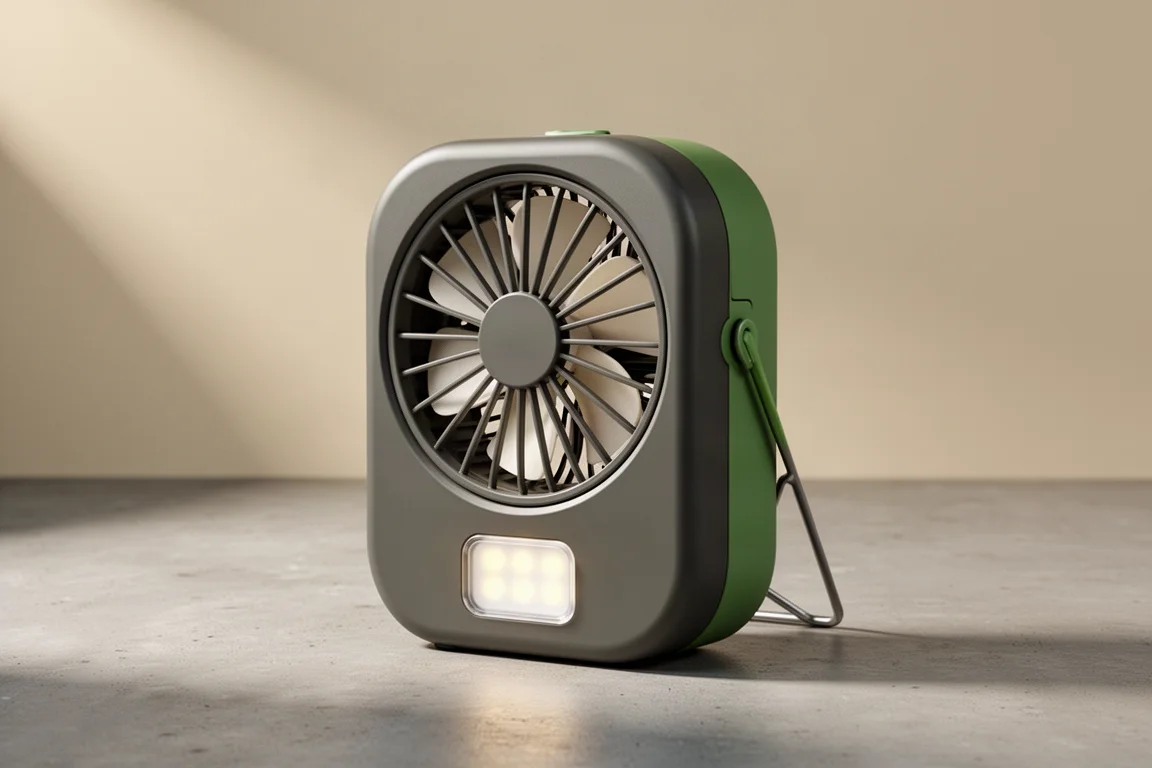
The Coleman CPX6 is a battery-powered camping fan with a built-in lantern, a fold-out stand, and a magnetic mounting system designed to hang inside a tent. It runs on four D batteries and offers two fan speeds and two light modes.
On paper that combination is efficient: one piece of gear for moving air and lighting the tent after dark. Measured performance tells a more divided story. The lantern is considerably brighter than its own specification suggests, while the fan produces airflow that fades to nothing within roughly half a metre. What follows is what the numbers look like, where the design genuinely works, and which campers will get real value from it.
Who This Fan Is For
The CPX6 makes the most sense for campers who want a light source first and a fan second. Its lantern throws a wide pool of light inside a tent, bright enough to read by, and the magnetic plate and hook make it easy to reposition almost anywhere on the tent wall. If your priority is a portable light you can hang high or low, this covers that job well.
It is a much less obvious fit for anyone buying it primarily for airflow. There are only two speeds, the reach measured about 21 inches (53 cm) on high and 10 inches (25 cm) on low, and the stand needs flat, level ground to be useful. That positions it as a tabletop companion or a gentle breeze right beside a sleeping mat rather than something that conditions the air in a tent.
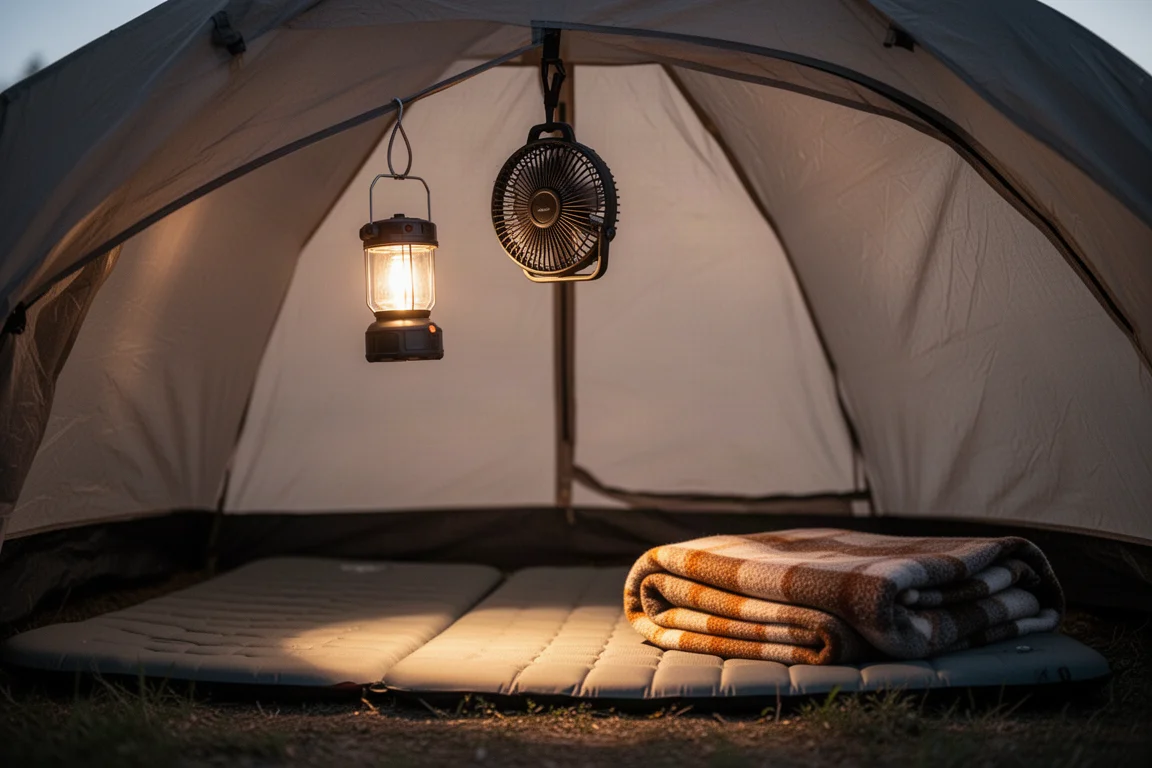
It also suits campers who mostly camp in mild weather and need evening light plus a small amount of moving air, and who are comfortable carrying a set of D batteries. Anyone chasing serious airflow for a warm night will be disappointed by what this fan can actually do.
Main Strengths: The Magnetic Mounting System
The standout feature is the mounting hardware. The package includes a magnetic plate and a carabiner-style hook. You place the plate on one side of the tent wall and the hook on the other, then let the magnets pull together, and the connection holds firmly. To take it down, you twist the plate 90 degrees and pull it away.
Because the mount is separate from the fan, it doubles as a general-purpose hook: you can hang other light gear from it, and you can position the fan low near the floor or high above the door depending on where you want light and air. The fan body itself has a thin metal handle at the back for carrying or clipping to a carabiner, plus a fold-out stand for tabletop use. One small note is that the magnetic plate can leave faint black marks on tent fabric where it has been attached.
The lantern side earns its place too. Readings put the bright mode at around 470 lumens, well above the 99 lumens stated in the specifications, and the low night light mode at around 150 lumens. Inside a tent, the bright mode lights the interior well enough to read a page clearly from the far edge of the floor. The fan is covered by a one-year warranty stated on the box.
Fan Performance: Airflow, Speed, and Reach
Speed readings put the high mode at about 3.7 metres per second (12.1 feet per second), though the figure is inconsistent and flips between roughly 3.2 and 4.4 metres per second as it runs. The low mode settles at about 2.8 metres per second (9.2 feet per second).
Reach is where the design runs out of ideas. In still air, the point at which a meter stopped detecting any airflow was about 21 inches (53 cm) from the fan on high, and only about 10 inches (25 cm) on low. The same pattern showed up with a small windmill, which would not spin unless it was placed directly in front of the grille. Hanging the fan at the top of a tent, you cannot feel it at all unless you are sitting right underneath it.
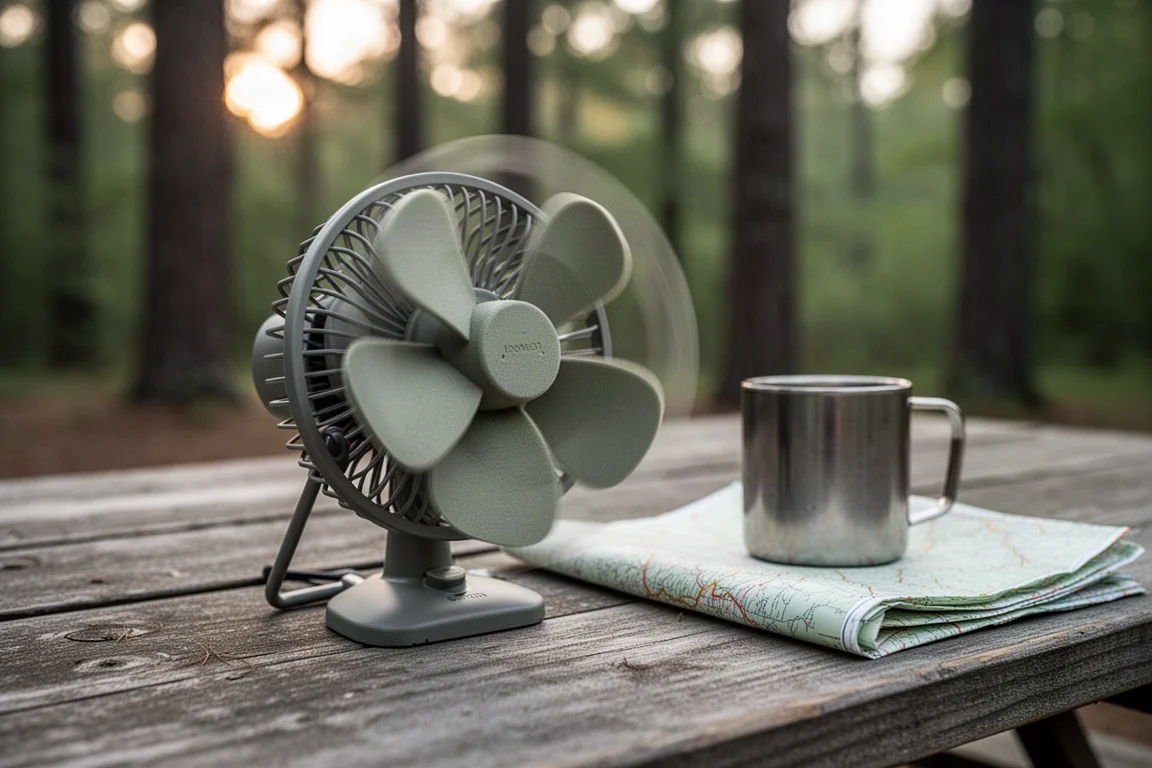
The likely cause is the soft foam blades. They are gentle to the touch, which is a sensible safety choice, but they flex so much that they push far less air than stiffer plastic or metal blades would. Treat this as a personal-space fan rather than a tent cooler: it will not meaningfully move air in a four-person tent, let alone a six-person one.
The Built-In Lantern: Bright, But Hard on the Eyes
The lantern uses four 5mm LEDs with no frosting and no diffusion layer. The result is a harsh, glaring light source. It lights a tent very effectively, but looking up at it while lying down is uncomfortable, and the glare is present on both the bright and the low night light modes.
Used as ambient light rather than a light you look at, it performs well. On the bright mode, a page of text stays readable from the edge of a tent, which makes it practical for reading or card games after dark. The low night light mode also fills the tent comfortably without being overwhelming.
Run times on the lantern side are generous. The bright mode held its maximum output for roughly 100 hours before beginning to dim, and by about the 150 hour mark it had faded to a barely visible night light that continued running for several hundred more hours. The low night light mode delivered about 300 hours of solid output at around 150 lumens before gradually dimming and reaching effectively zero output at around the 400 hour mark.
Noise, Battery Life, and Running Costs
Quiet it is not. With the fan off, ambient sound measured about 41 decibels. Switching to the high speed pushed that to about 61 decibels, and the low speed sat at roughly 55 decibels. There is also a mechanical annoyance: if you pick the fan up while it is running and the flexible blades catch the front plastic housing, they produce a loud, repeating clicking sound.
The power source is four D batteries and nothing else, loaded through a compartment at the back that pops out when you squeeze two latches. Official run time figures are about 10 hours on high and 30 hours on low. Measured results were longer but uneven: the high mode held its maximum speed for roughly 25 hours before dropping sharply to about 1.5 metres per second, with the blades finally stopping at around the 38 hour mark. The low mode gave about 35 hours of usable airflow, gradually falling from 2.8 to 2.2 metres per second, produced nothing measurable by 40 hours, and stopped turning at about 45 hours.
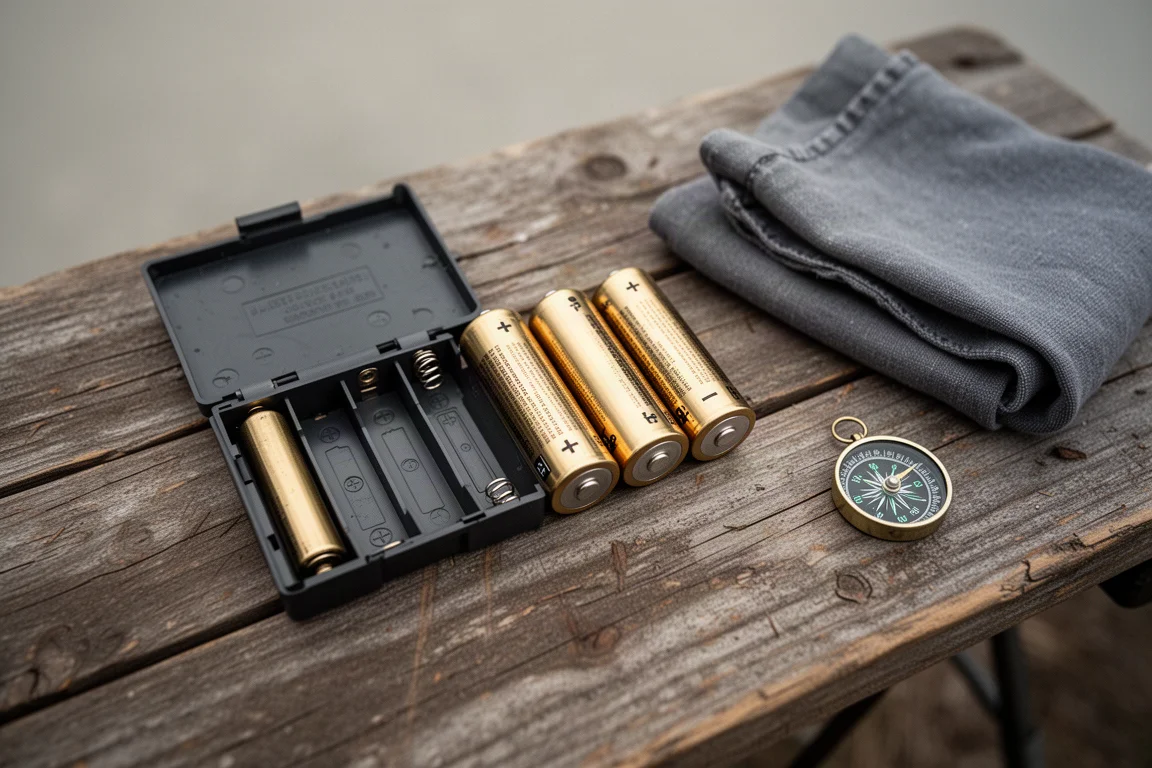
Running costs deserve a place in the decision. D cells typically sell for about $1 to $2 each, so a set of four works out at roughly $4 to $8 per fill, which adds up quickly across a season of camping. Running the fan and lantern together shortens things further: with the high fan and the low light mode, the light went out and the fan slowed at around 25 hours, with the blades stopping near 30 hours. With the brighter light setting, run time dropped by roughly 10 percent, from about 25 hours to about 22 hours, before everything went flat a few hours later.
Portability, Setup, and Weather Resistance
Weight is reasonable for the category: about 25.2 ounces (714 grams) without batteries, rising to roughly 1.3 kilograms (45.2 ounces) once four D cells are loaded. Packed size is about 10 by 9.5 by 5.75 inches (25 by 24 by 14.6 centimetres), and the fan blades measure about 7.5 inches (19 centimetres) across.
Setup is simple, with one practical catch. The fold-out stand is small, so the fan needs genuinely flat, level ground. On a slightly uneven tent floor it struggled to stay upright, which effectively limits it to tabletop placement on a solid surface.
There is no published waterproof rating for the fan. After 30 minutes of moderate rain, both the fan and light functions still worked, but the battery compartment was thoroughly soaked, so this is not gear to leave outside in wet weather or to trust in a downpour.
Buying Advice
The CPX6 is a reasonable purchase if you want a bright hanging tent light with a small fan attached, and you mostly camp in mild conditions. The magnetic plate and hook are the best part of the design and genuinely useful, the lantern output is strong, and the low light mode runs for a very long time. For light-first campers, the package does its job.
It is a harder recommendation if airflow is the main goal. With about 21 inches of reach on high, only two speeds, a 61 decibel noise level, and no option other than disposable D batteries, it will not cool a tent on a warm night. Anyone buying it for that reason should also budget for the ongoing battery cost, which runs to several dollars every time the cells are replaced.
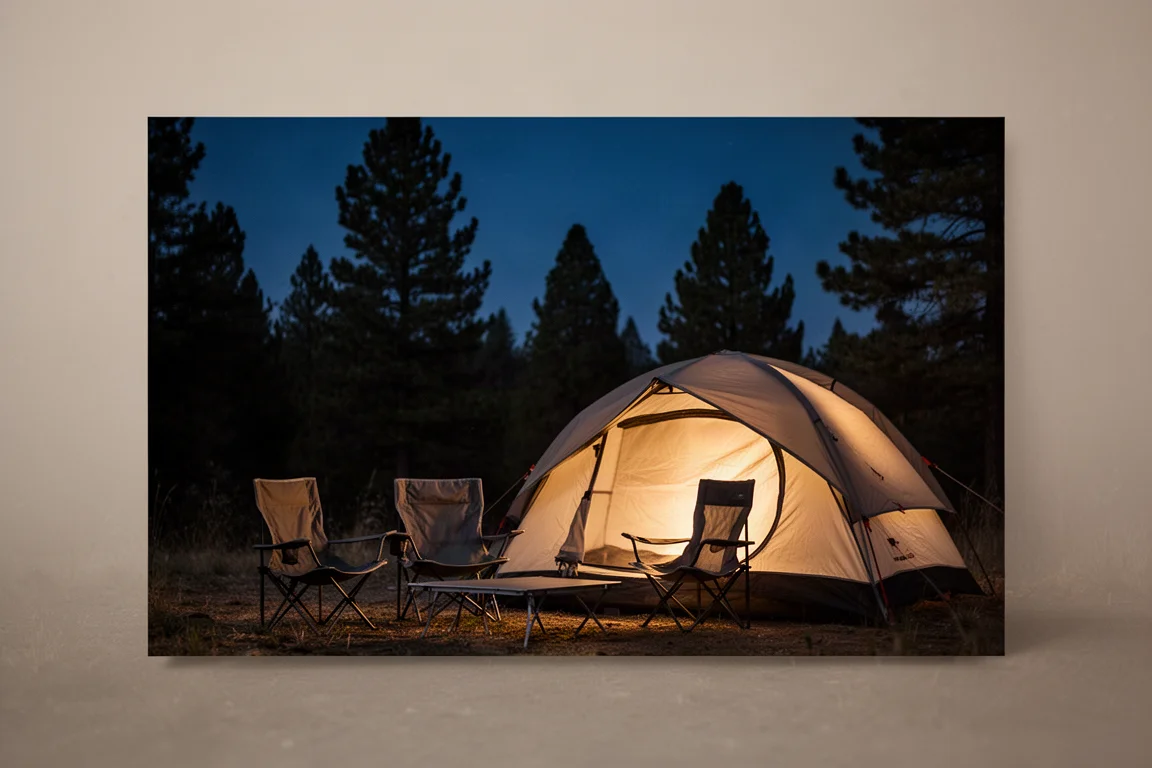
If your setup is tabletop based, you value the lantern more than the breeze, and you want something that hangs anywhere in a tent without extra hardware, this can earn its place in your kit. If real air movement is what you are shopping for, compare dedicated fans before committing.
Conclusion
The Coleman CPX6 pairs a clever magnetic mounting system and a genuinely bright lantern with a fan that barely moves air beyond its own blades. It is worth considering as a hanging tent light with a small breeze attached, particularly for mild-weather campers who want long low-light run times. As a cooling device, its two speeds, short reach, noise, and reliance on four D batteries make it a much harder case to justify.
Product link
View more details for Coleman CPX6 Camping Fan
This product is mentioned in the review. Check the specifications, options, and compatibility before buying.
View more details for Coleman CPX6 Camping FanFurther reading
Related Reviews
Camping Fans
Coleman OneSource Camping Fan Review: A Compact Tent Fan With Real Trade-Offs
A practical look at the Coleman OneSource camping fan, covering airflow, noise, run times, phone charging, and the limits worth knowing before you buy.
Camping Fans
Geek Aire 10-Inch Portable Camping Fan Review: Airflow, Runtime, and Rain Testing
A practical look at the Geek Aire 10-inch portable camping fan, covering airflow range, measured runtimes, noise levels, metal build quality, and IPX4 rain resistance.
Camping Fans
Odoland Camping Fan and Lantern Review: A Two-in-One Camping Fan Under $20
A measured look at the Odoland camping fan and lantern, covering airflow, noise, lantern output, runtime, weather resistance, and the real cost of running it on D batteries.