Camping Tents
Gazelle T3X Tent Review: Fast Pitching, Real Trade-Offs
A three-person pop-up camping tent with quick setup, strong wind handling, and excellent airflow, weighed against a lower real-world height and rough finish quality.
Introduction
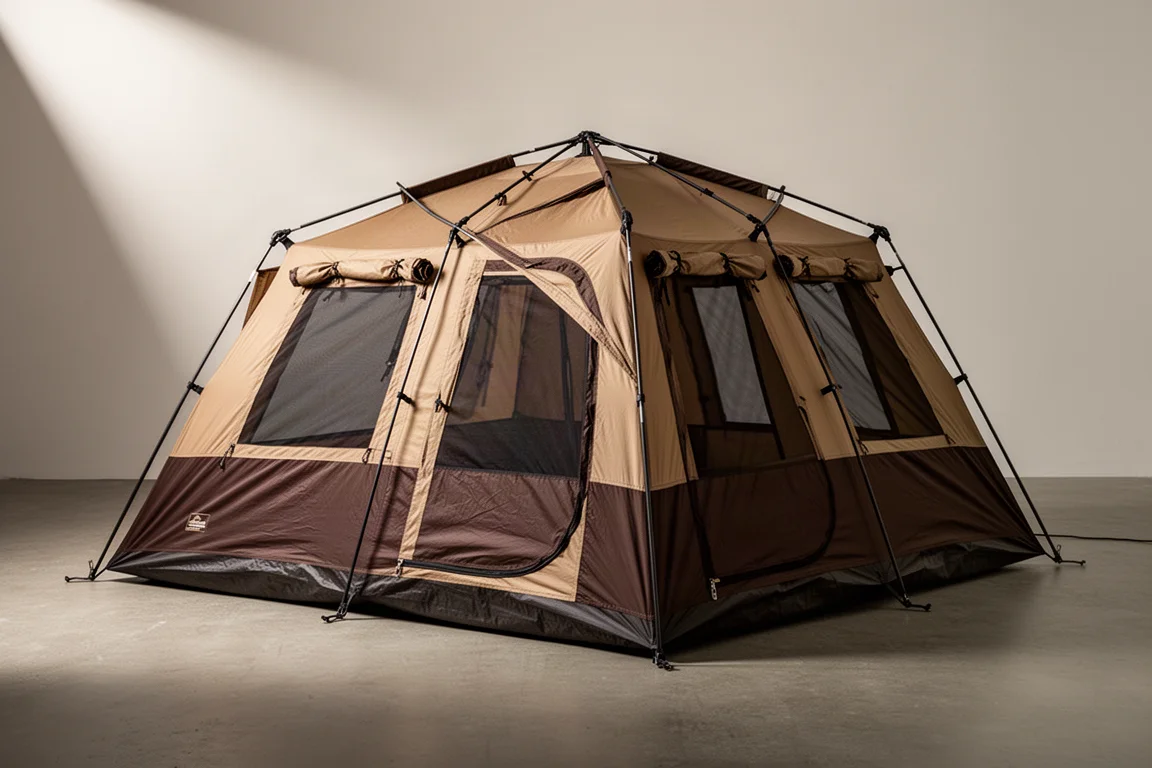
The Gazelle T3X is a three-person, two-door camping tent built around a pop-up frame that pitches in a few minutes and a footprint large enough for family car camping. It ships with a fly, twelve stakes, and four guy lines in a storage bag that doubles as a duffel, and it retails around $390. The body uses Alpine green panels with green, grey, and black sections, and the same design is offered in four-person and eight-person versions along with accessories such as footprints, upgraded stakes, and waterproof duffel bags.
The pitch is straightforward. Each wall panel has a center grab handle, and pulling it back locks the frame into place. The fly goes on before the roof is raised, and the final step happens inside, where the caved-in roof pushes up and locks. A full setup lands closer to two or three minutes than the 90 seconds the company advertises, but it is still one of the quicker large tents to get standing.
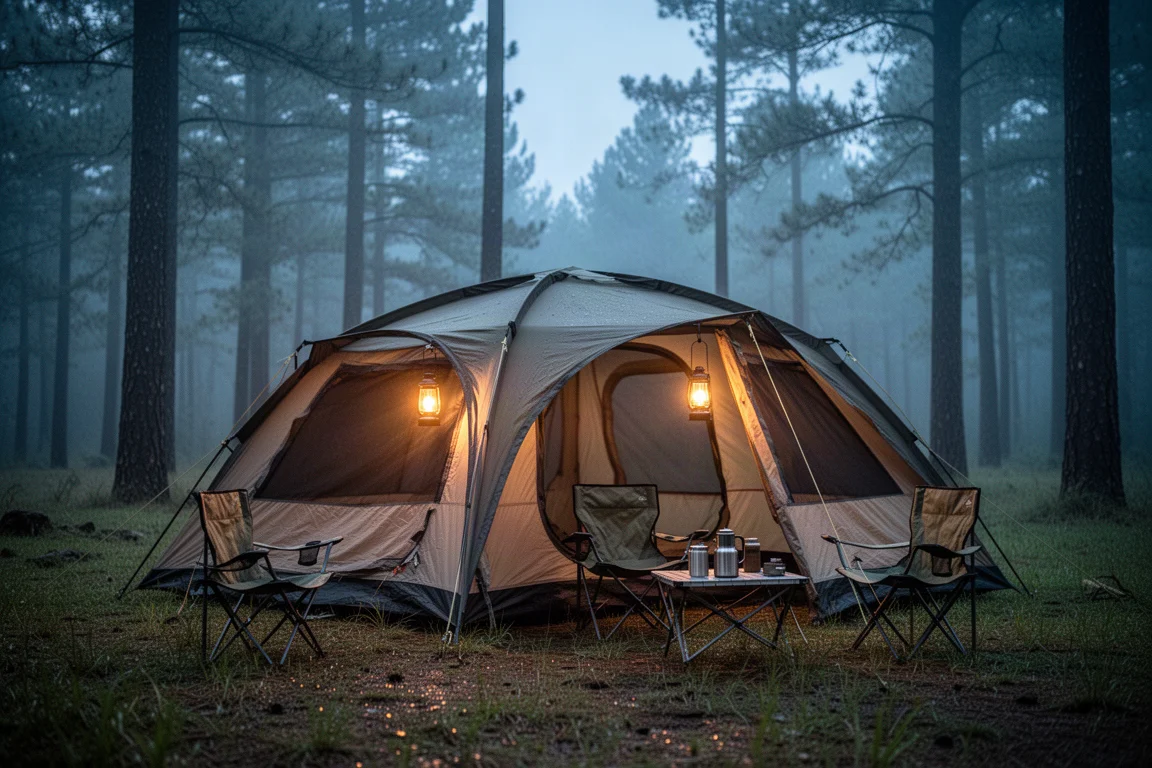
The interesting part of the T3X is not the speed. It is the way the tent trades interior height and door ergonomics for that convenience, and those trade-offs matter more than the marketing numbers.
Who This Tent Is For
This tent suits car campers, families, and weekend campers who drive to a site and want a large shelter that goes up quickly. The packed size of roughly 57 by 10 by 10 inches fits in the back seat of most vehicles, and the 29 to 30 pound weight is manageable when it only travels from the trunk to the campsite. Airflow is a genuine strength while the windows and vents are open, and the removable floor, four mesh pockets, gear caddy, and six vented windows give it a practical, livable layout.
It is a poor fit for backpackers, for anyone who has to carry gear any real distance, and for campers with mobility concerns. The doors have a tall lip at the bottom and an angled shape that makes entry and exit awkward, and the measured interior height of 64 inches at the center peak means most adults cannot stand upright inside. Anyone who specifically wants a stand-up tent should look at the taller four-person version instead.
Main Strengths
Setup speed is the headline. Each panel pulls out by its center handle until the frame locks, the fly drops over the top and hooks onto the panel hardware, and the roof locks up from inside. Breakdown is just as quick, and the frame feels stable once everything is tensioned.
Wind performance is stronger than the finish quality might suggest. With all corners and guy lines staked out, the tent held up through a severe overnight storm with wind-driven rain and gusts around 40 miles per hour. Ventilation is excellent while the windows are open, and the interior stays comfortable rather than stuffy.
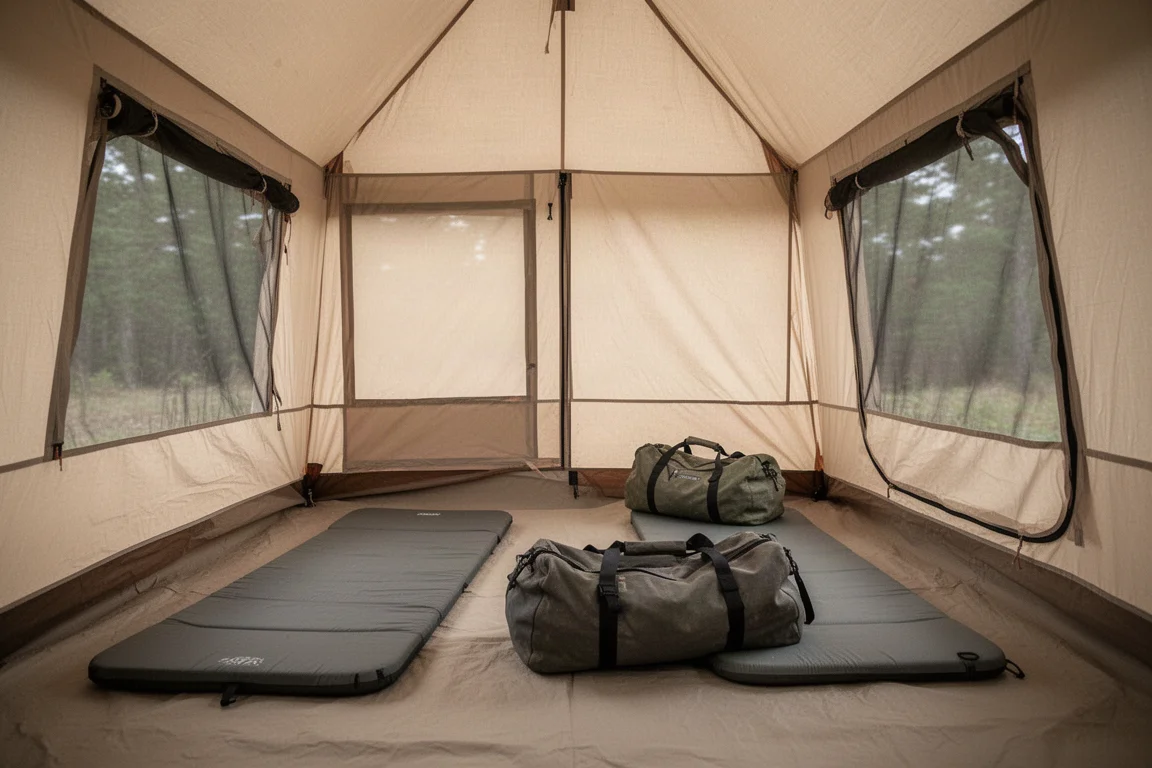
The included storage bag doubles as a duffel with a padded grab handle that also works as a shoulder strap, plus compression straps and additional grab handles. Twelve long stakes and four guy lines are included, and the stakes anchor firmly once they are in the ground.
Setup and Handling
Stake the corners first if there is any wind, then work around the body pulling each panel until it locks. Lay the fly over the top before raising the roof, hook the elastic loops onto the metal hardware at each panel, then attach the small fly poles into the top frame. The last step happens inside the tent: push the caved-in center of the roof upward until it clicks into place.
Realistic full setup time is two to three minutes rather than the advertised 90 seconds, which only covers popping out the panels and roof. Handling is a compromise. At around 29 to 30 pounds the tent is heavy and slightly awkward to move, and the long stakes anchor so well that pulling them back out of hard ground takes real effort because the pull lip is small.
Quality, Doors, and Construction Notes
Construction quality is the weakest point for the price. Loose threads, uneven seam work, and punched holes in the body panels with no thread run through them were visible on close inspection, and light passes through some of those openings. The gaps do not appear to affect waterproofing, but they look rough inside and out, which is hard to justify at this price.
The doors are the second issue. Two doors are welcome, but the shape is awkward: one side drops straight down, the other curves, and a tall lip at the bottom has to be stepped over every time. That lip is a trip hazard even for campers with good mobility, and it makes the tent a poor choice for anyone with knee, hip, or balance concerns.
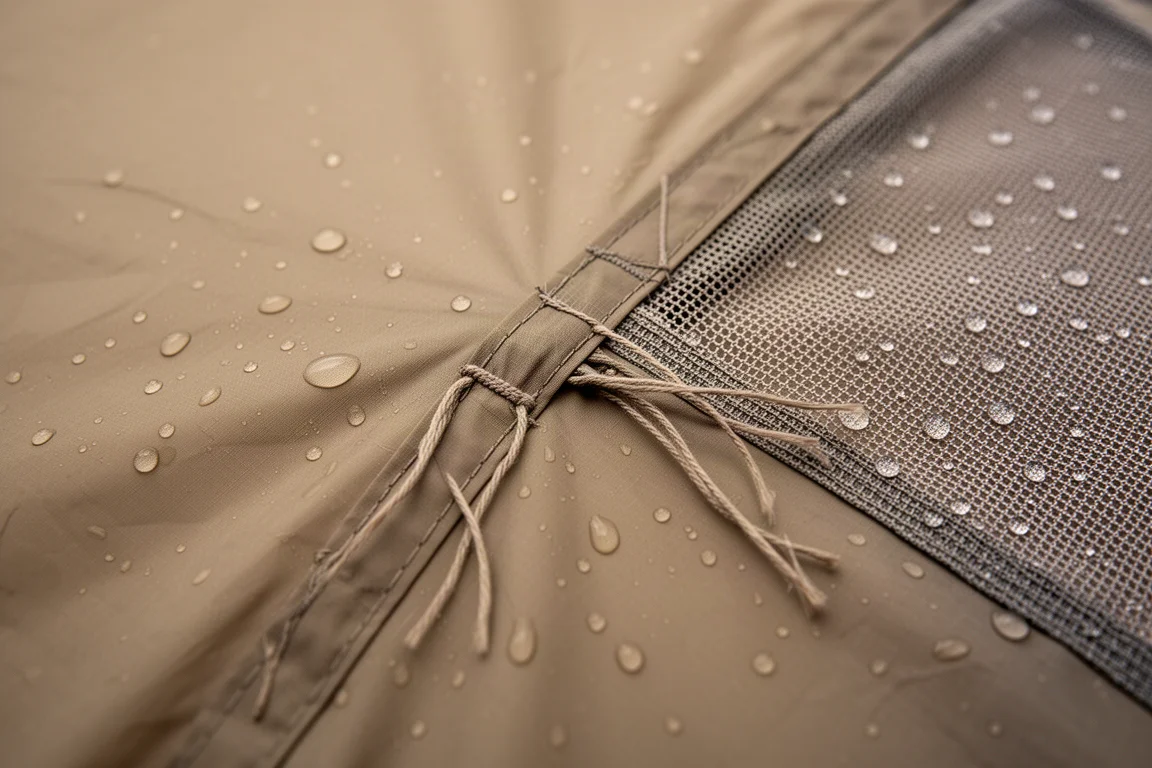
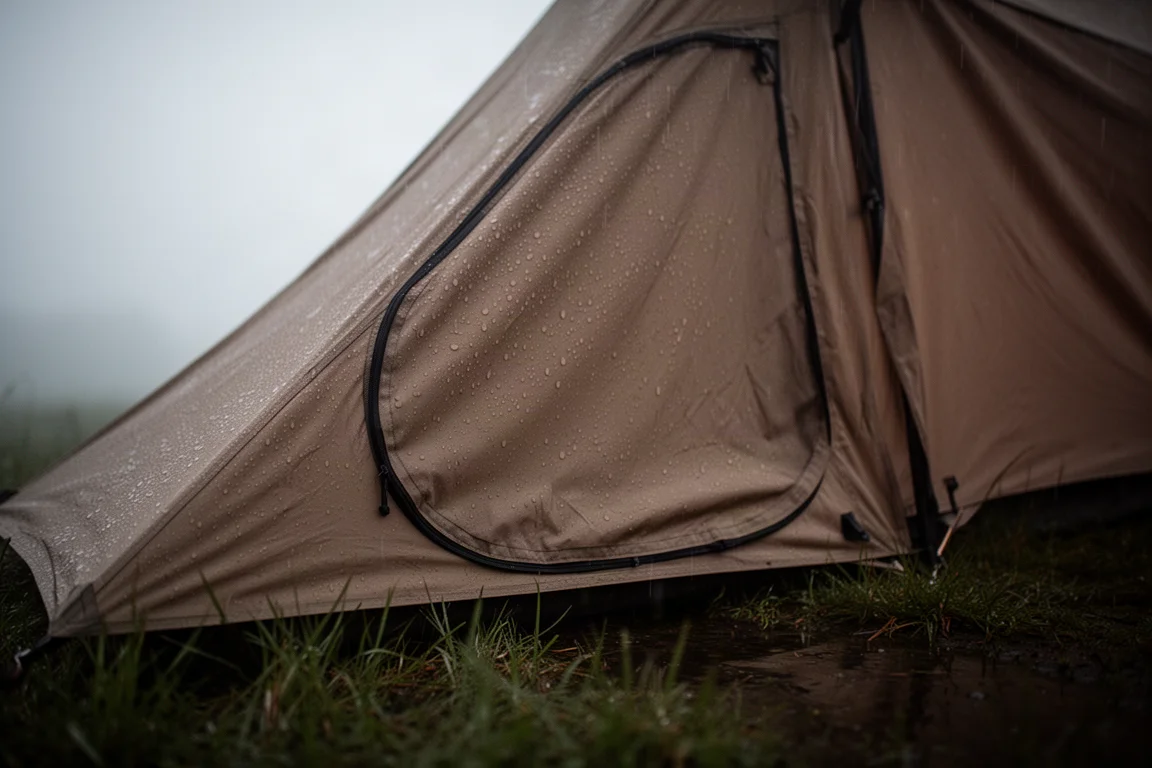
Storm flaps add a quality control concern. On one side the flaps meet and cover most of the zipper. On the other there is roughly a one inch gap that leaves the zipper exposed, which is where water can find a way in.
Waterproofing and Storm Performance
The company lists two different hydrostatic head figures for the Oxford polyester floor material, one at 2,000 millimeters and another at 5,000 millimeters, so the true rating is unclear. In practice, the tent leaked from the zippers during an extreme storm with heavy sideways rain and gusts near 40 miles per hour. It leaked only on the side taking the brunt of the weather, and given the intensity of those conditions, that is a reasonable result rather than a disqualifying one. Waterproofing is still being evaluated over longer use.
One owner has reported substantial leaking at the hub connection points, and the company offered either a full refund or a replacement. The T3X uses YKK zippers and a mix of 210 denier and 300 denier Oxford polyester, and the tent handled powerful wind without structural problems once it was fully staked out.
Buying Advice
The height claim is the detail to check before ordering. The company lists the T3X at 68 inches, but the measured height at the center peak is 64 inches, and it drops further toward the walls. For many adults that is the difference between standing up and hunching over.
If headroom is the reason you are considering this tent, the four-person version has a roof roughly 10 inches taller and costs only a little more, which is the more sensible choice. If quick pitching and strong ventilation matter more than standing height, the three-person T3X still delivers on those points, provided you accept the door design and the construction finish.
Conclusion
The Gazelle T3X gets the fundamentals of car camping right: fast setup, confident wind handling, and excellent airflow. It is let down by a measured interior height below the advertised figure, awkward doors with a tall lip, uneven stitching, and a zipper that leaked in extreme weather. Buyers who need headroom should size up to the four-person model, while those who value a quick-pitching three-person shelter should weigh the price against the finish quality.
Product link
View more details for Gazelle T3X Tent
This product is mentioned in the review. Check the specifications, options, and compatibility before buying.
View more details for Gazelle T3X TentFurther reading
Related Reviews
Camping Tents
3F UL Gear Taiji Two-Person Tent Review: Field Waterproofing Results and Buying Advice
The Taiji pairs an attached fly with a removable inner, but sustained rain exposed untaped vent seams that need sealing before this shelter can be trusted.
Camping Tents
3FUL Gear Lanshan 2 Pro 4-Season Review: A Sub-$200 Single-Wall Trekking Pole Tent
An early look at the 3FUL Gear Lanshan 2 Pro 4-Season, covering its straightforward pitch, generous interior space, and the condensation and seam-sealing questions that come with any single-wall shelter.
Camping Tents
Alps Mountaineering Lynx 1-Person Tent Review: Big Value in a Small Budget Tent
A close look at the Alps Mountaineering Lynx 1-Person Tent, covering real interior dimensions, materials, setup time, ventilation limits, and who should buy it.