Hi-Fi Amplifiers
Gato PWR222 Review: A High-Power Monoblock Compared With NAD M23 and Decware Sarah 300B
A practical look at the Gato PWR222 monoblock, how it drives high-sensitivity and demanding speakers, and where the NAD M23 and Decware Sarah 300B fit in.
Introduction
The Gato PWR222 is a monoblock Class AB power amplifier rated at 250 watts into 8 ohms and 450 watts into 4 ohms, with the first 15 watts running in Class A. That is far more power than most high-sensitivity speaker owners will ever ask for, which is exactly why the amplifier is interesting. Its appeal is not the number on the specification sheet but the way it changes the behaviour of the speakers connected to it, including speakers that were never designed to need that kind of headroom.
This guide covers what the PWR222 is, how it sounds with very different speaker types, and how two alternatives at very different price points, the NAD M23 and the Decware Sarah 300B, compare on character and value.
Why the Gato PWR222 Monoblock Stands Apart
Gato is a Danish manufacturer that sells direct worldwide without distributors. That structure keeps dealer margin out of the price, and it is also why the amplifier ships with free shipping, a 30-day home trial and a five-year warranty. Returns do not travel back to Denmark. They go to a US facility that also handles warranty repairs for US customers.
Power is the headline specification: 250 watts into 8 ohms and 450 watts into 4 ohms per monoblock, with the first 15 watts delivered in Class A. The more interesting claim concerns the output stage. Where most high-power amplifiers use a row of output transistors, the PWR222 uses just two unusually large MOSFET devices, one handling the positive half of the waveform and one handling the negative half. Gato’s argument is that even carefully matched transistor arrays are never perfectly identical, and those small differences can blur fine detail in the high frequencies. With a single device per half of the waveform, that source of variation disappears.
That design choice is why the PWR222 deserves attention even in systems built around high-sensitivity speakers that need only a handful of watts. It is not simply a tool for difficult loads, and it does not sound like a muscle amplifier that trades refinement for output.
For listeners who cannot stretch to a pair of PWR222s, Gato also offers the AMP-150 integrated amplifier, which shares the same size and shape and costs roughly half as much.
Design and Build: Curves, Wood, and Dual Meters
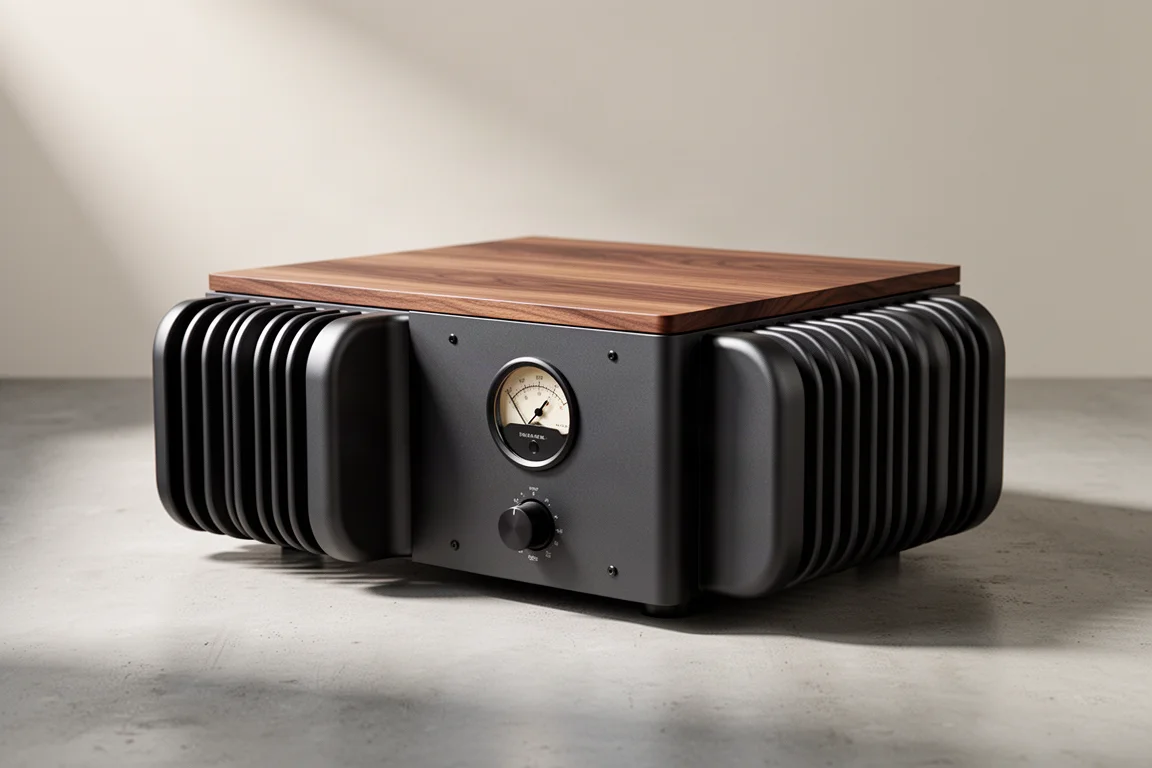
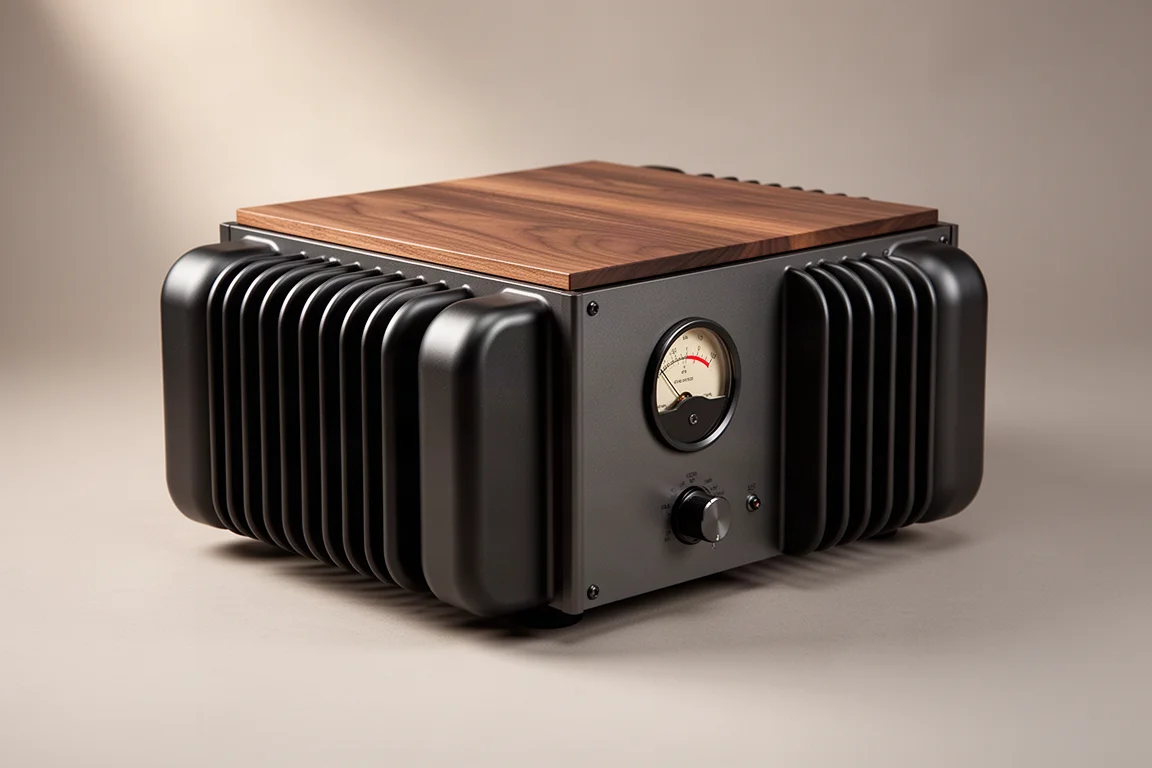
The PWR222 is not a rectangular metal box. Its most recognisable feature is the pair of rounded heat sinks that curve along both sides of the chassis, and the shape is a large part of why it looks as good as it measures. It is also a compact amplifier, so a pair does not demand much shelf space, though a monoblock design naturally means two units rather than one.
Up front sits a round meter that serves two purposes. It works as a VU meter showing how much power the amplifier is delivering, and it also acts as a temperature gauge, which matters because the amplifier can run hot when it is pushed hard for long stretches.
The top cover is wood. Buyers can have it painted black, white or a custom automotive colour, or keep the wood look in walnut or another finish on request. Inside, the layout is unusually sparse for an amplifier of this output, with just the two large MOSFET devices visible on the board.
Listening With High-Sensitivity Speakers
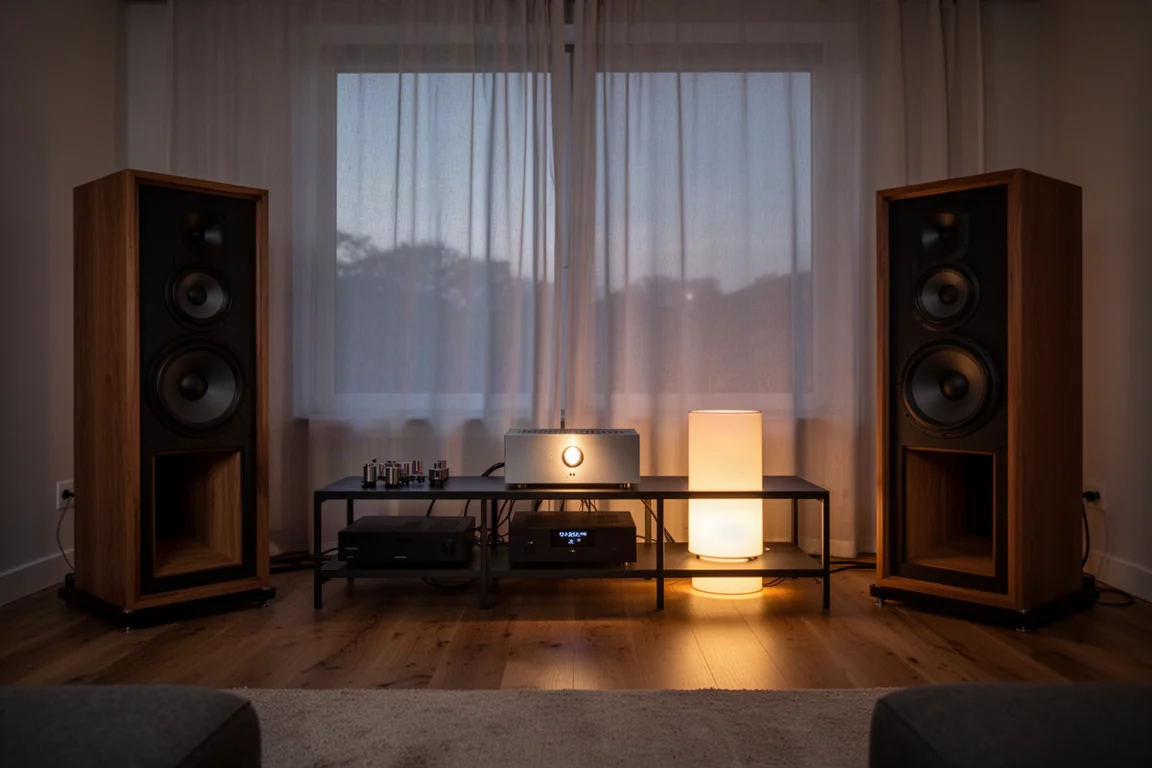
High-sensitivity speakers are usually comfortable with 10 or 20 watts, and some need even less. Partnered with a pair of open-baffle high-sensitivity speakers, the PWR222 added jump factor, aliveness, airiness and spatial detail that those speakers do not normally show. Open-baffle designs generally throw a larger stage than box speakers, and the amplifier’s grip made that stage bigger, deeper and wider. The result was a tactile quality and a sense of life that went well beyond what the speakers deliver with the amplifiers usually paired with them.
Listening With Low-Sensitivity Speakers
The opposite scenario is a low-sensitivity speaker that needs real power to come alive. Two such designs were used during listening: a TAD CE1TX and an Eminent Technology LFT-8B, a planar magnetic panel with a ribbon tweeter and an 8-inch sealed woofer.
With the TAD, the PWR222 produced extraordinary dynamics and detail, letting the energy of live-to-two-track recordings through without holding anything back. Loud passages in the high 90 dB range stayed composed. A 1987 live-to-two-track album by King Sunny Adé, recorded with a large ensemble and a single stereo microphone, spread out of the speakers with the ambient detail, percussion and vocals all intact.
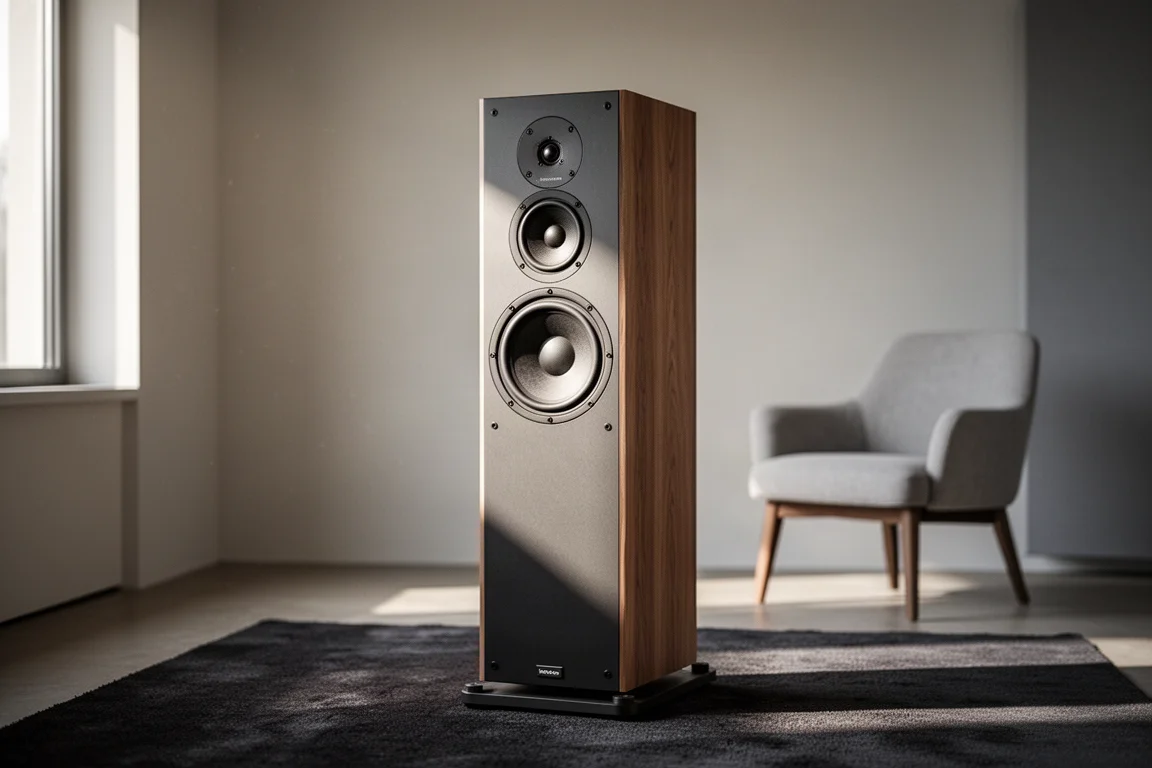
With the Eminent Technology panels, the amplifier delivered air, clarity and a strong sense of the recording space, along with firm control of the sealed 8-inch woofer. On acoustic bass, the body and shading of the instrument came through clearly. A live-to-two-track drum-led recording made with no dynamic range compression and no equalisation showed the same qualities, with every gradation of the playing presented plainly.
Switching the system to a fully balanced preamplifier and DAC changed the character only slightly. The presentation became more neutral, with no added warmth, but it never tipped into sounding cool. The tonal balance stayed straight down the middle.
How the Gato PWR222 Compares With the NAD M23
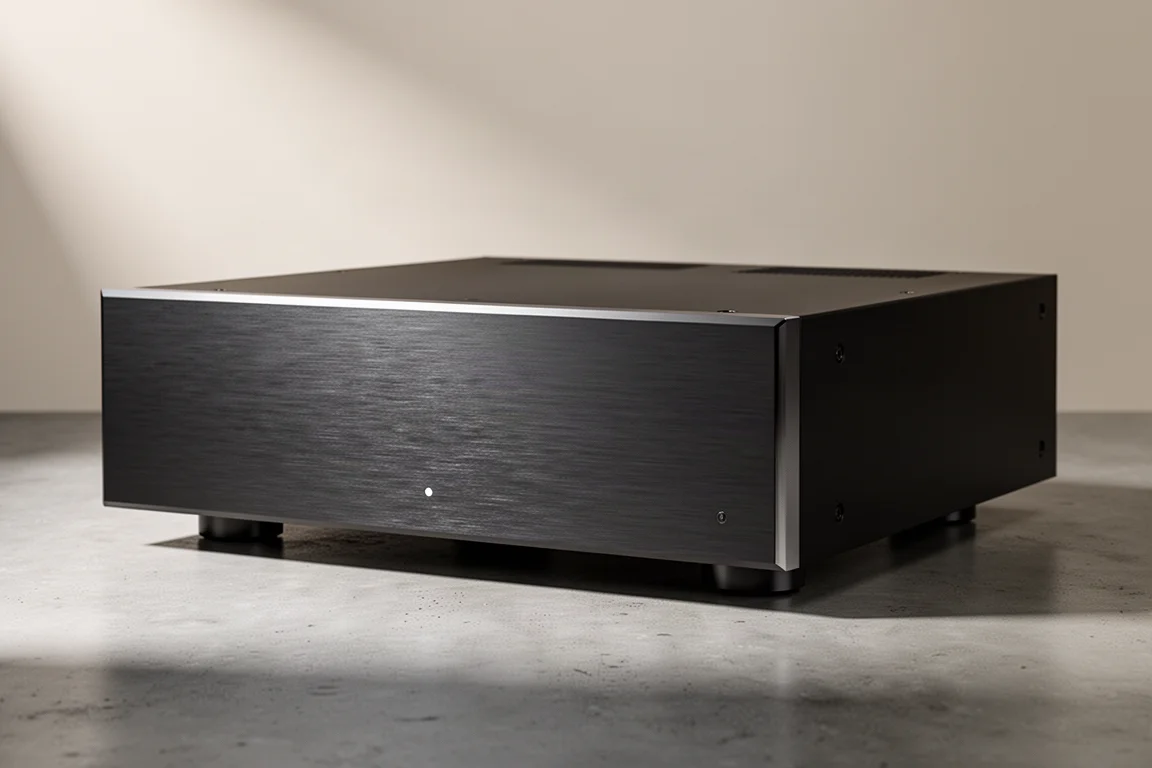
The NAD M23 is a Class D amplifier rated at 200 watts per channel into 8 ohms and 380 watts into 4 ohms, and it costs less than half as much as the PWR222. On paper the two are close in output, but they do not sound the same.
In direct comparison, the M23 shifted the tonal balance warmer, fuller and rounder. What it gave up was dimensionality. The soundstage flattened noticeably and the sense of space around instruments became less defined. Returning to the PWR222 restored that depth immediately, with a clear impression of the air around each instrument. The M23 remains a strong option for its price, but listeners who value a three-dimensional stage should hear both before deciding.
How the Gato PWR222 Compares With the Decware Sarah 300B
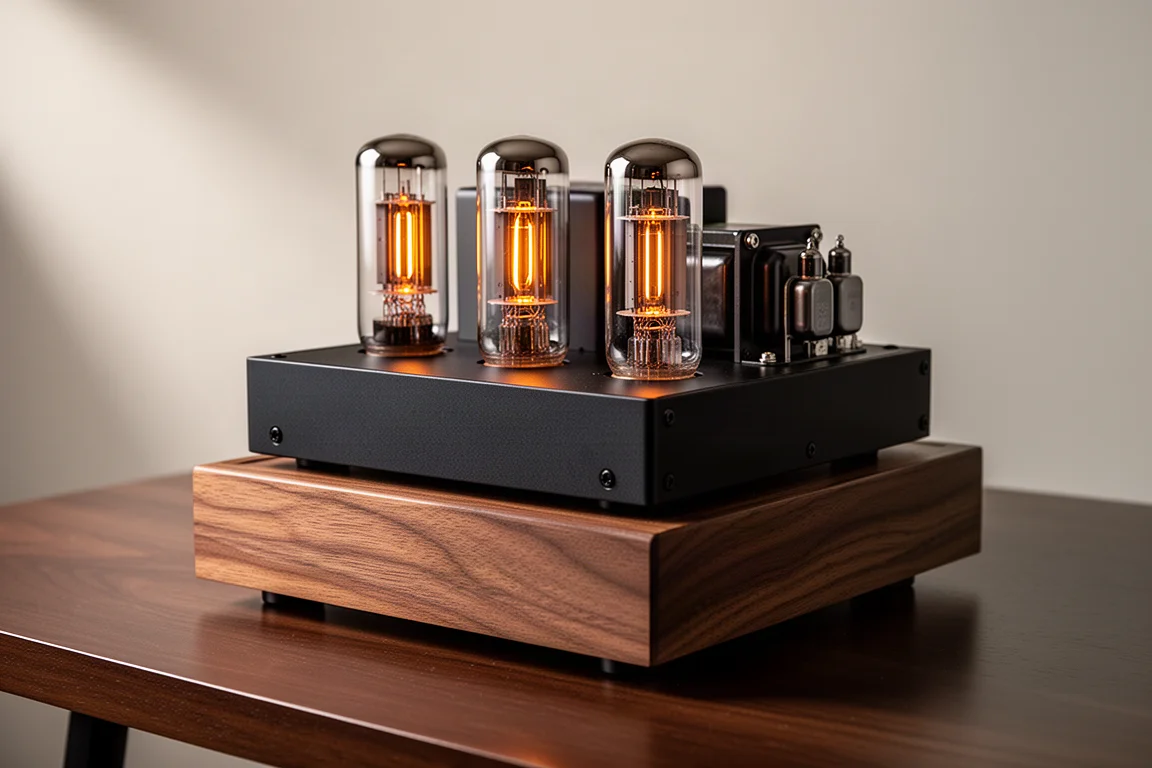
The Decware Sarah 300B sits at the opposite end of the spectrum: a 7 watt per channel tube amplifier intended for high-sensitivity speakers. It is not a particularly soft sounding amplifier, yet it takes a very different approach to difficult recordings.
On an early Elton John album with a boxy piano sound and overly bright strings, the PWR222 presented the recording honestly. Nothing was wrong with the amplifier’s behaviour. It simply revealed what was on the record. The Sarah 300B made the same music far easier to enjoy, with a less intrusive piano, calmer strings and a generally more musical result.
That contrast is the heart of the decision. If accuracy on every recording matters most, the PWR222 has the edge. If the goal is to make a wide range of recordings pleasant to listen to through high-sensitivity speakers, 7 watts of tubes can be the more satisfying answer.
Pricing, Warranty, and Buying Direct
The PWR222 is priced at 4,395 euros each. For US customers that worked out to roughly $4,726 each at the time of writing, which puts a pair close to $10,000. Because Gato sells direct with free shipping, there is no dealer margin built into that figure, and the 30-day home trial gives buyers a chance to evaluate the amplifier in their own system. Warranty coverage runs for five years, and US customers send returns to a domestic facility that also carries out warranty repairs.
For context, the NAD M23 costs less than half as much as a single PWR222, and the Gato AMP-150 integrated is around half the price of the PWR222 while sharing the same chassis dimensions.
Buying Advice: Matching Amplifier to Speakers
The Gato PWR222 makes sense for listeners who want one amplifier that covers both ends of the speaker spectrum. It adds life and spatial detail to high-sensitivity designs, and it has the control to drive demanding low-sensitivity speakers without strain. Clarity, precision and neutrality are the main reasons to pay the premium, and the design is a genuine part of the appeal.
The NAD M23 suits buyers who prefer a warmer, fuller tonal balance and want to spend less than half as much. Accept that the presentation is less three-dimensional and the choice becomes straightforward.
The Decware Sarah 300B is the right answer for owners of high-sensitivity speakers who value an easy, musical presentation and do not need large power reserves. Seven watts goes a long way when the speakers are efficient, and the amplifier’s forgiving character is the point.
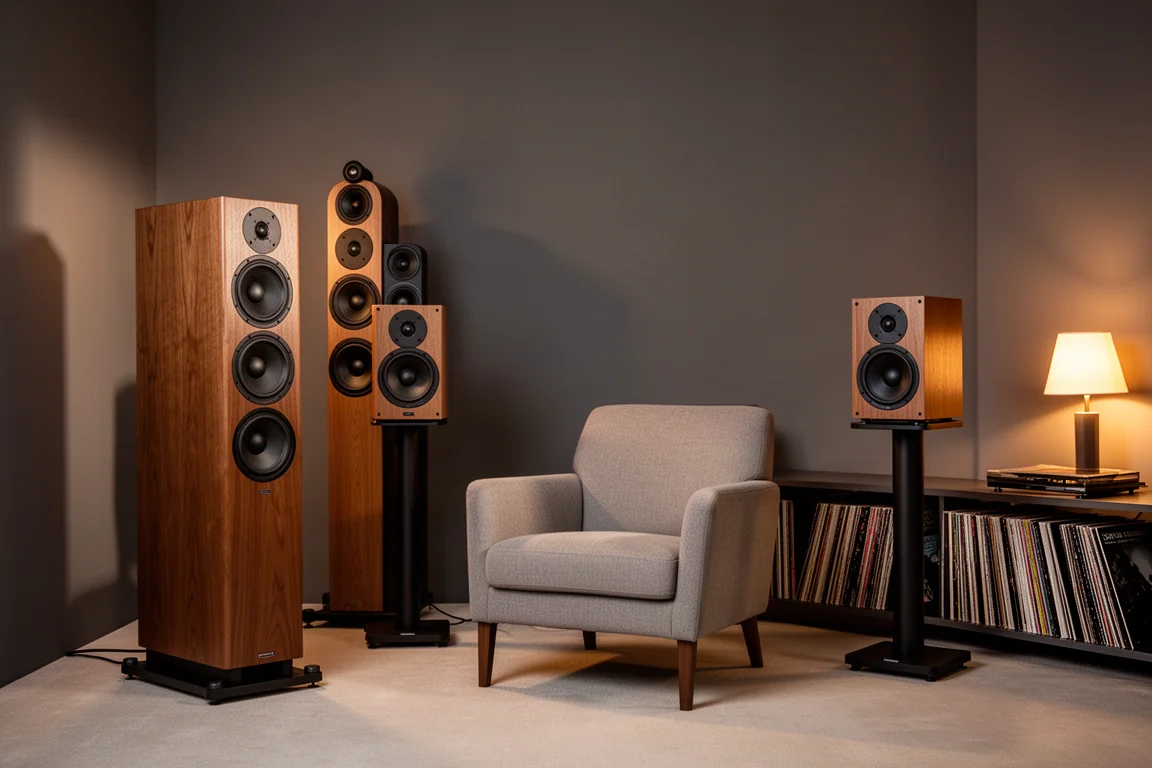
Whichever direction you take, the deciding factor is the speaker rather than the specification sheet. Power ratings matter far less than how an amplifier behaves with the speakers already in the room, and all three of these amplifiers behave very differently indeed.
Conclusion
The Gato PWR222 is an unusual proposition: a high-power monoblock with a Class A bias, a two-MOSFET output stage, and a chassis that is as considered as its circuit. It brings high-sensitivity speakers to life and keeps difficult low-sensitivity speakers under control, and it does so with clarity and neutrality rather than added colour. At close to $10,000 for a pair, it is a serious purchase, and the five-year warranty and 30-day home trial soften that commitment. The NAD M23 and the Decware Sarah 300B remain credible alternatives at very different price points and power levels, but for listeners who want one amplifier to cover both worlds, the PWR222 is the more complete answer.
Further reading
Related Reviews
Hi-Fi Amplifiers
Accuphase E-280 Review: Entry-Level Accuphase With Flagship Attention to Detail
A close look at the Accuphase E-280 integrated amplifier, covering its champagne build, AAVA volume control, sound quality, and the speakers and sources that suit it best.
Hi-Fi Amplifiers
Advance Paris A10 Classic vs Yamaha A-S301: Two Integrated Amplifiers Compared
A practical comparison of a $350 integrated amplifier and a $2,500 reference model, covering the differences that matter and the ones that do not.
Hi-Fi Amplifiers
Affordable Chinese Amplifiers Worth Buying: Five Budget Hi-Fi Amps Compared
A practical look at five affordable amplifiers, what each one does well, and the trade-offs to weigh before you buy.