Power Amplifiers
Gateau PWR 222 Monoblock Power Amplifiers Review: Danish Craft and Neutral Power
A pair of sculpted Danish monoblocks with genuine WBT binding posts, 250W into 8 ohms, and a neutral, highly resolving character that rewards careful preamplifier matching.
Introduction
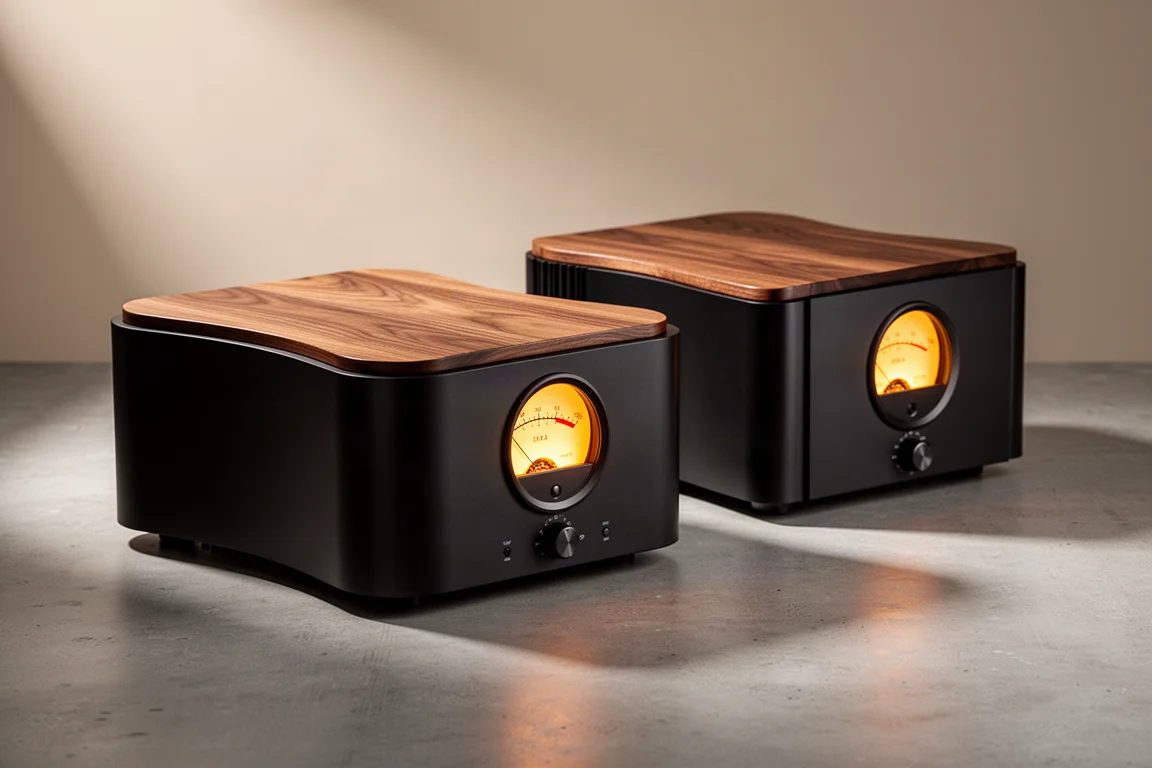
Walk through the upper end of the audio market and one pattern repeats. Even the most exotic components tend to arrive as square or rectangular boxes. The internals differ, and so does the sound, but the chassis rarely does. The Gateau PWR 222 monoblock power amplifiers deliberately break that pattern with a sculpted enclosure that is shaped rather than boxed.
Gateau builds the PWR 222 in its own factory in Denmark, which gives the company direct control over the smallest aesthetic details as well as the sonic behaviour of the amplifier. That level of control is what makes a form factor this unconventional possible in the first place. Designing a chassis so far from the traditional hi-fi box is slow and tedious work, and it is not the sort of enclosure that can simply be ordered from a supplier with minor modifications.
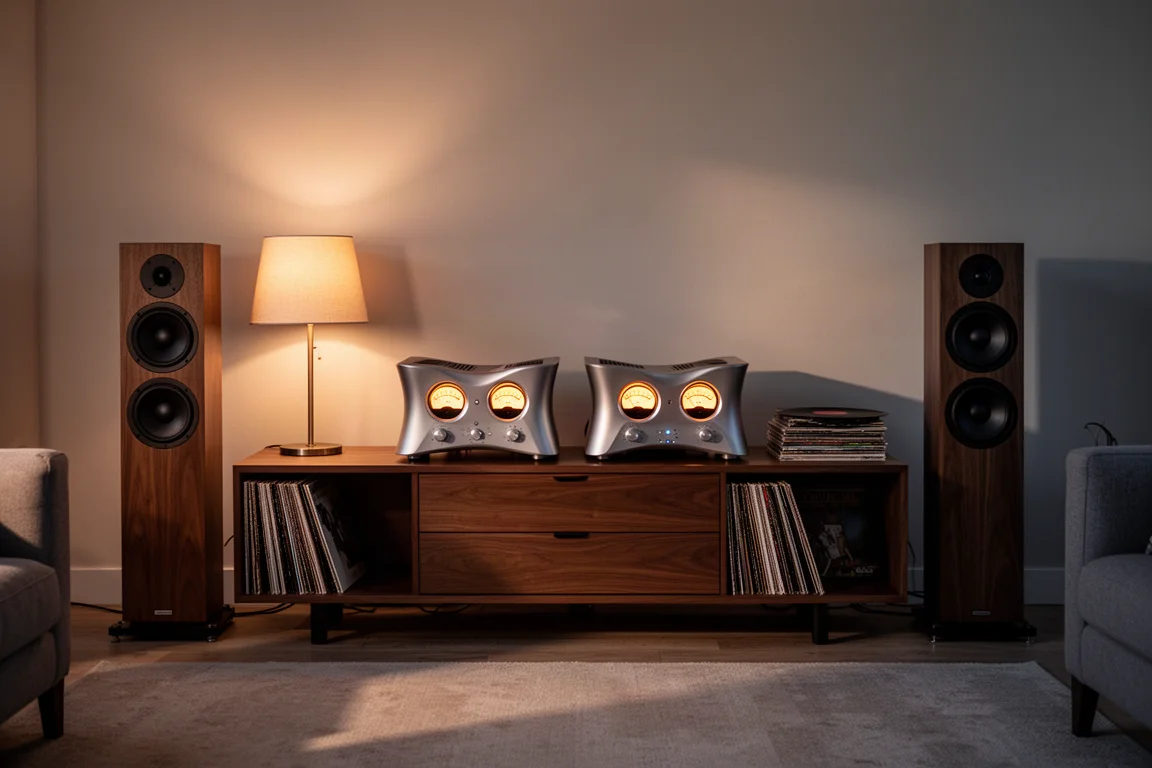
The pleasant surprise is the price. A pair of these monoblocks sits just under $10,000. That is a serious amount of money, but it is meaningfully less than the finish and the build quality would suggest to anyone who has spent time around high-end equipment.
Who the Gateau PWR 222 Is For
This pair suits listeners who care about how their system looks as much as how it sounds, and who want high-end amplification that can live in a designed room rather than a utilitarian rack. It also suits owners of speakers that respond well to abundant, tightly controlled power.
- Listeners building a system around a specific interior finish, since the top cover can be specified in a range of finishes or commissioned as a custom piece.
- Owners of demanding or inefficient speakers who want headroom to spare.
- Anyone who prefers a neutral, highly resolving amplifier and expects to shape the tone through the preamplifier.
It is a less obvious fit for listeners who want an amplifier to add warmth or character on its own, or who mostly play poorly recorded material and prefer a forgiving, smoothing presentation.
Design, Build, and Power
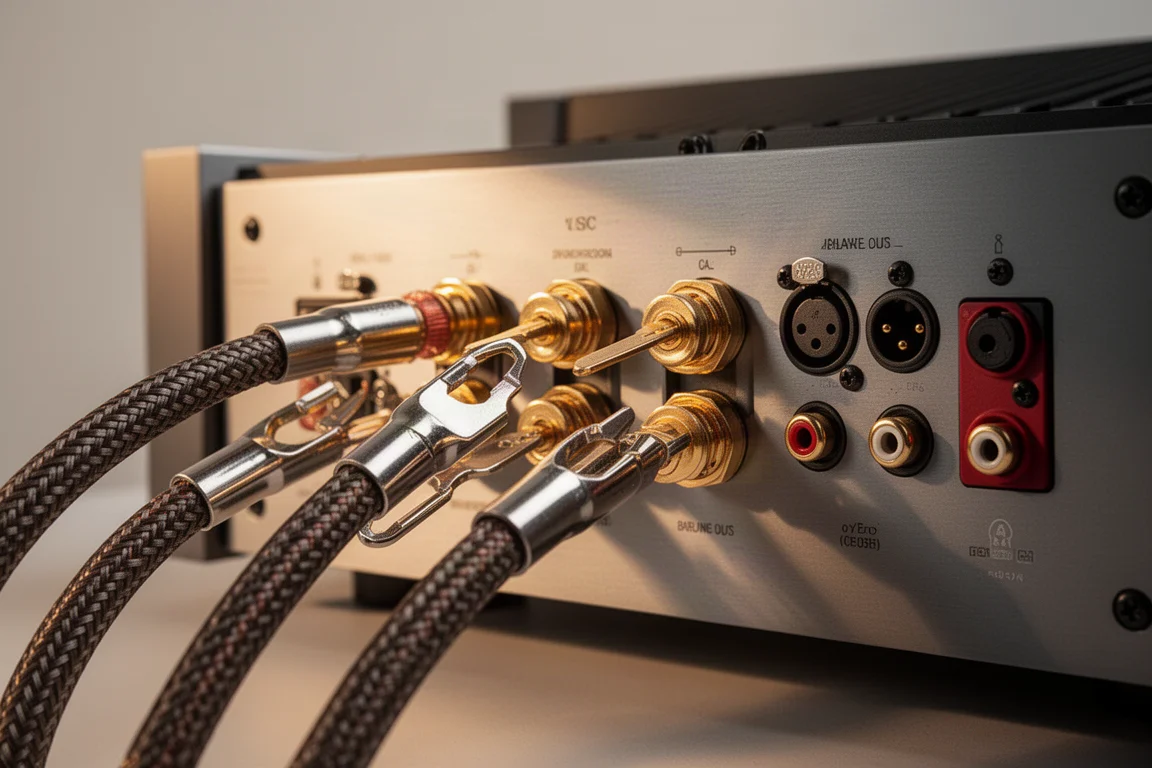
The build quality is exceptional, and the word crafted fits better than made. That standard carries through to the rear panel, where nobody normally looks. Gateau fits genuine WBT nextgen binding posts rather than a copy or a lookalike part, and that component alone is an expensive choice. Balanced XLR and RCA inputs are both present, which is not guaranteed at this level, and both connections perform on a par, with the balanced input running slightly quieter in practice.
The front panel keeps things minimal, as a power amplifier should. There is a circular VU meter, and it is a beautifully executed one, plus just two buttons: one for standby and one to control the display.
The top cover is the visual centrepiece and it is interchangeable. The review unit arrived in a wood finish, and the range also includes black piano and a finish matched to a Lamborghini colour, which says a lot about how far the company will go to match a room. Buyers can also commission a bespoke cover: if you want to match a specific speaker finish or a piece of furniture, Gateau will consult with you and produce a custom fitted top cover. Very few high-end brands offer that.
Inside the cover sits a neatly laid out circuit and a signature TwinFed design. Rather than using multiple capacitors or MOSFETs, the PWR 222 uses two large capacitors. Gateau’s position is that the more common approach introduces smearing and time domain problems, and that the TwinFed layout resolves them. Large toroidal transformers complete the power supply, and the result is a class AB amplifier rated at 250 watts into 8 ohms and 450 watts into 4 ohms.
In real-world use, that power translates into the ability to drive essentially any speaker on hand. The KEF LS50 Meta, the Buchardt S400 Mark II, and the Q Acoustics Concept 50 all performed without issue, alongside several other designs. The Buchardt was the one model that genuinely needed this kind of power to come alive, while the rest showed nuance and control with no trouble reaching high volumes.
Sound Character: Neutral Without Being Boring
The overall signature is neutral, and nothing in particular stands out. Normally that is a warning sign, because an amplifier with no character can be a dull one. The PWR 222 avoids that trap through nuance. It does neutrality to a very high standard, and it keeps pulling you deeper into your music rather than sending you looking for something else.
Bass is quick, dynamic, snappy, and controlled, almost piston-like. It is not the last word in low-frequency extension, but the midbass texture and punch are genuinely chest-thumping, and they let a capable speaker breathe in the lower registers. The midrange is neutral and clean. Paired with a very clean solid-state preamplifier it can occasionally feel a touch too clean, but with a tube preamplifier the presentation becomes fuller and more fleshed out while keeping all of the detail. Vocals and imaging are on point, with clear separation between instruments.
The high frequencies are where the amplifier makes its strongest impression. It is quick and snappy without being bright or tilted up, and the standout quality is layering. A trumpet behind a saxophone stays behind the saxophone, and a guitar placed to the left stays precisely to the left. There is no lingering and no ringing, just attack and decay. That combination is rare, and it is why long listening sessions stay comfortable rather than becoming fatiguing: nothing sounds cramped or as though it is shouting at you. The low noise floor also means the same nuance and midbass texture are audible at quiet volumes, which is where many amplifiers fall short.
Recording quality matters here. Well-mastered material is reproduced with remarkable nuance and layering, and familiar tracks can surprise you. Poor recordings are laid bare, with artifacts and unwanted details becoming audible. They remain acceptable rather than unlistenable, but the PWR 222 will not mask them the way a tube amplifier might.
Matching the PWR 222 With a Preamplifier
Because the PWR 222 is so neutral and so resolving, whatever you connect to it will be reflected in the result. Preamplifier choice is therefore the single most important decision an owner makes, and it drives soundstaging, imaging, and overall musicality more than the amplifier’s own character does.
A quality tube preamplifier was the most musical match by a clear margin, producing a full-bloom, warmer, more enveloping presentation in which the room seems filled with music. Solid-state preamplifiers moved in the opposite direction: thinner, quicker, more detailed, and snappier, with a soundstage that is more pinpoint and accurate, though still generous in width and depth compared with much of the solid-state competition at this price. A compact hybrid preamplifier with switchable solid-state and tube modes also worked well in every setting, offering more nuance and detail but less bass extension than full-size designs. Gateau also builds a preamplifier intended to partner with these monoblocks.
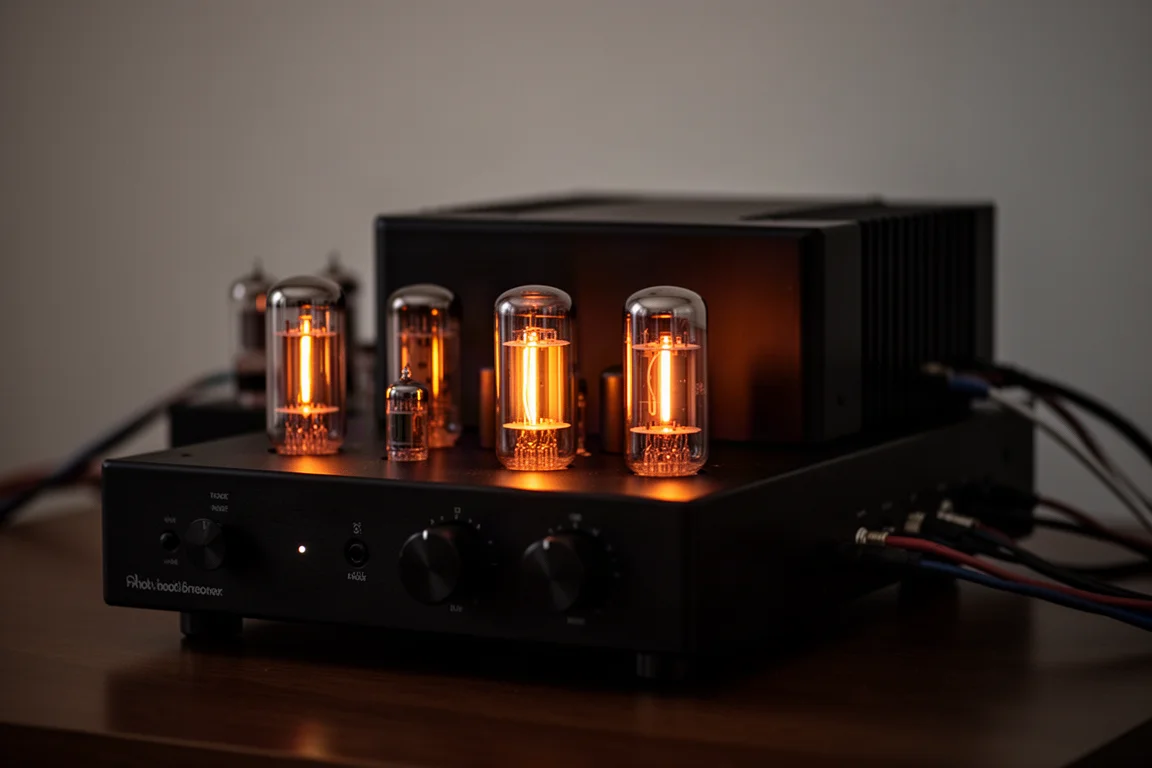
The layering capability stays intact regardless of the preamplifier in use, which suggests it is inherent to the amplifier design rather than an artifact of matching. What changes is how large and how enveloping the stage feels, and how much warmth or precision you want in the midrange.
Things to Consider Before Buying
- A pair costs just under $10,000, and two monoblock chassis means two positions and two power connections in your setup.
- The amplifier is neutral and highly revealing, so it will expose the character of everything upstream. Preamplifier matching is not an optional detail if you want a specific presentation.
- Low-frequency extension is not its strongest suit. It favours grip, speed, and midbass punch over deep reach.
- Poorly recorded material is reproduced honestly, artifacts included.
- The custom top cover is arranged directly with the company through consultation, rather than chosen from a fixed shelf of options.
Buying Advice
Buy the PWR 222 if you want a high-end power amplifier that looks as considered as it sounds, and if you are prepared to treat preamplifier matching as part of the purchase rather than an afterthought. A tube preamplifier delivers the fuller, warmer, room-filling presentation, while a solid-state preamplifier gives you precision, speed, and a more tightly defined stage. Both approaches work; they simply lead to different systems.
On power, there is little to worry about. The amplifier drove every speaker it was paired with, including the notoriously demanding KEF LS50 Meta, and it produced some of the most impactful bass that speaker is capable of. If your speakers are hard to drive, this is not the limiting factor in your chain.
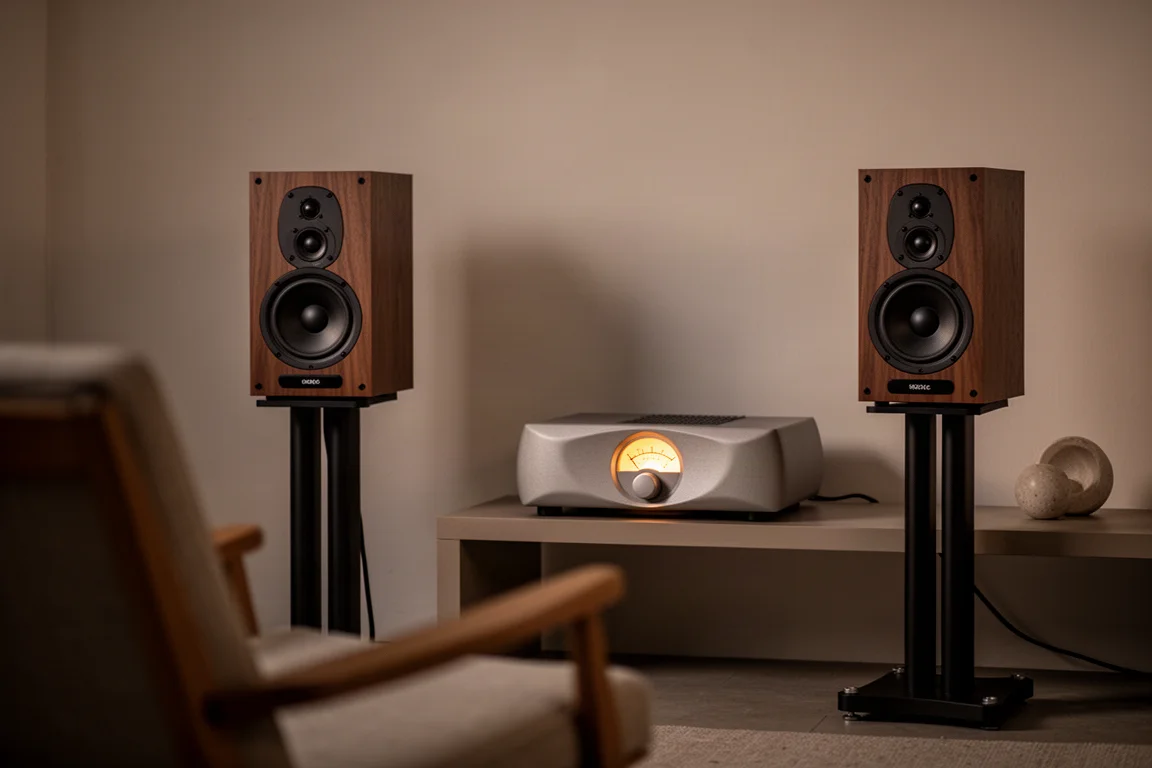
The finish options deserve real consideration too. With black piano, a Lamborghini-matched colour, and bespoke commissions available, the PWR 222 can be made to fit a specific interior instead of being hidden away in a cabinet. Given the build quality and the genuine WBT hardware on the back panel, the price is lower than the appearance implies.
Conclusion
The Gateau PWR 222 is a rare thing: an amplifier that treats aesthetics and engineering as a single problem. It is built in Denmark under one roof, shaped in a way that conventional hi-fi boxes are not, and finished with components that most brands reserve for their flagship models. Sonically it is neutral, quiet, and remarkably layered, with quick controlled bass and a midrange that responds beautifully to a good tube preamplifier.
It asks for thoughtful system matching and it will not flatter weak recordings. In exchange, it delivers nuance, control, and a long-term listenability that makes extended sessions easy. For buyers who want a high-end monoblock pair that looks at home in a real room and performs at the level its price and finish promise, the PWR 222 makes a strong case.
Product link
View more details for Gateau PWR 222 Monoblock Power Amplifiers
This product is mentioned in the review. Check the specifications, options, and compatibility before buying.
View more details for Gateau PWR 222 Monoblock Power AmplifiersFurther reading
Related Reviews
Power Amplifiers
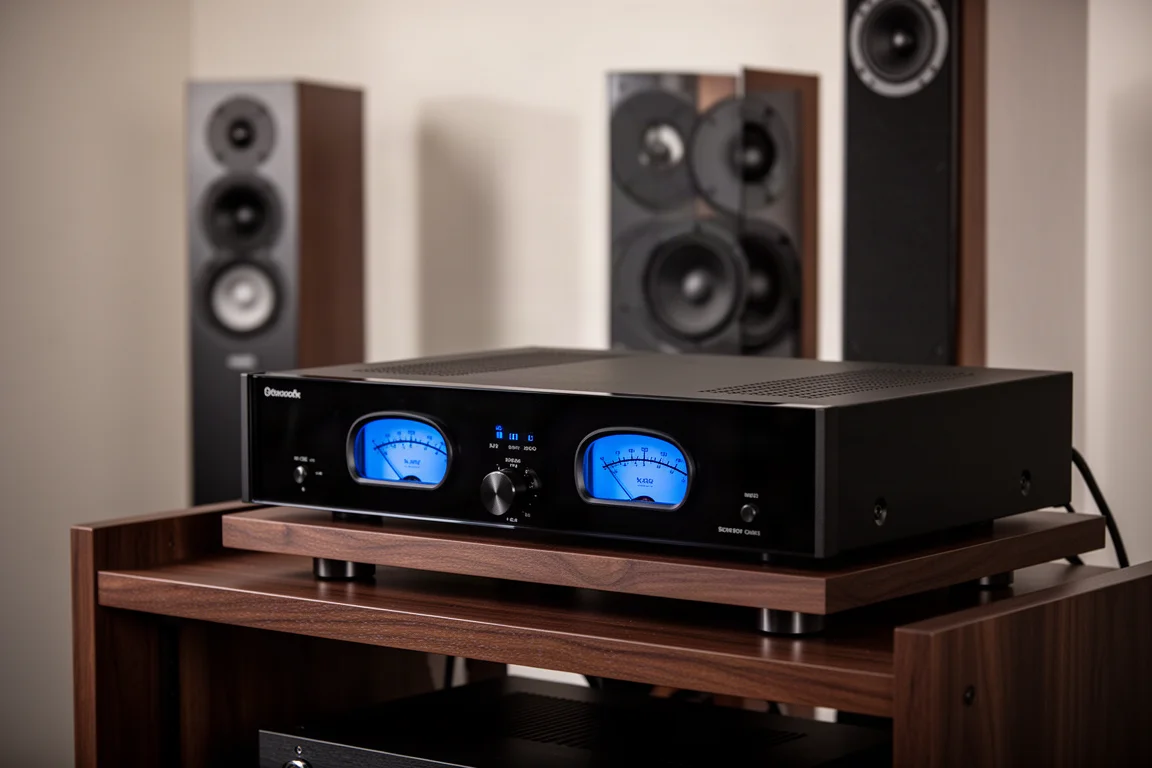
Advance Paris X-A160 EVO Review: A Focused Power Amplifier Built to Last
A $1,999 stereo power amplifier with selectable class A bias, 160 watts per channel, blue VU meters, and a build designed to be serviced for decades.
Power Amplifiers
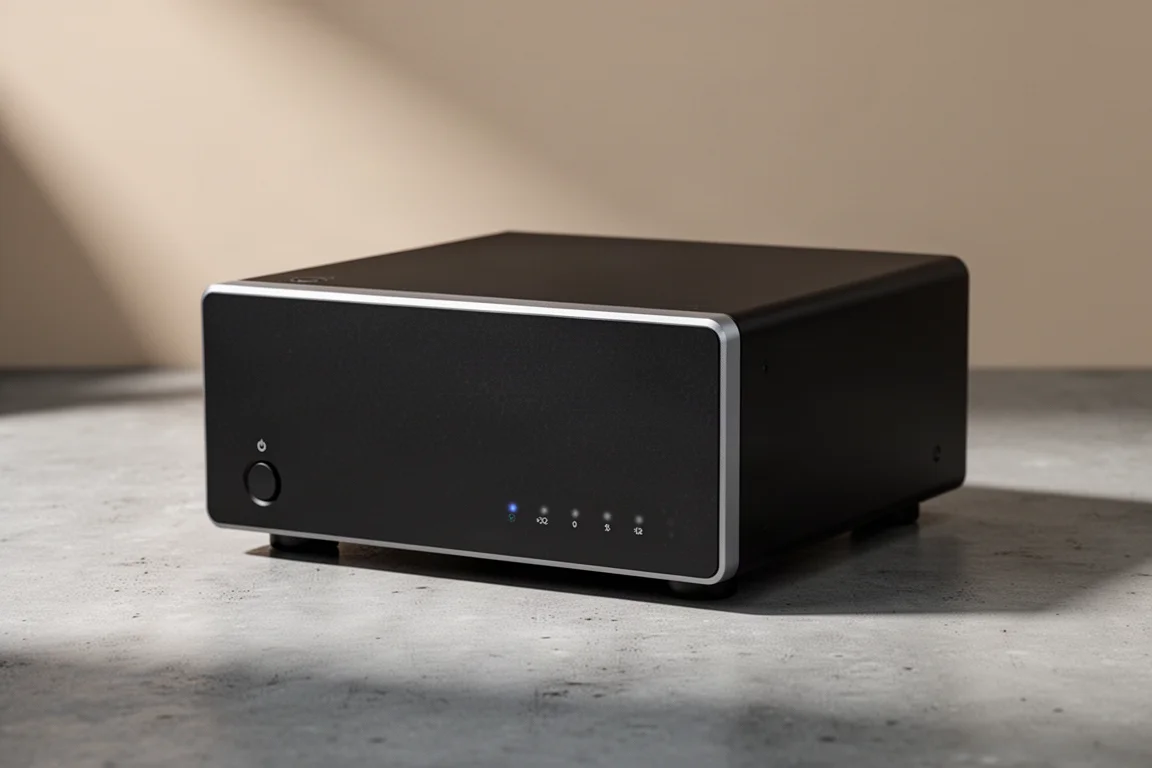
Benchmark AHB2 Review: A Compact Power Amplifier Built Around Transparency
A compact reference-oriented power amplifier with THX-patented feed-forward error correction, balanced-only inputs, and the current to drive low-impedance speakers.
Power Amplifiers
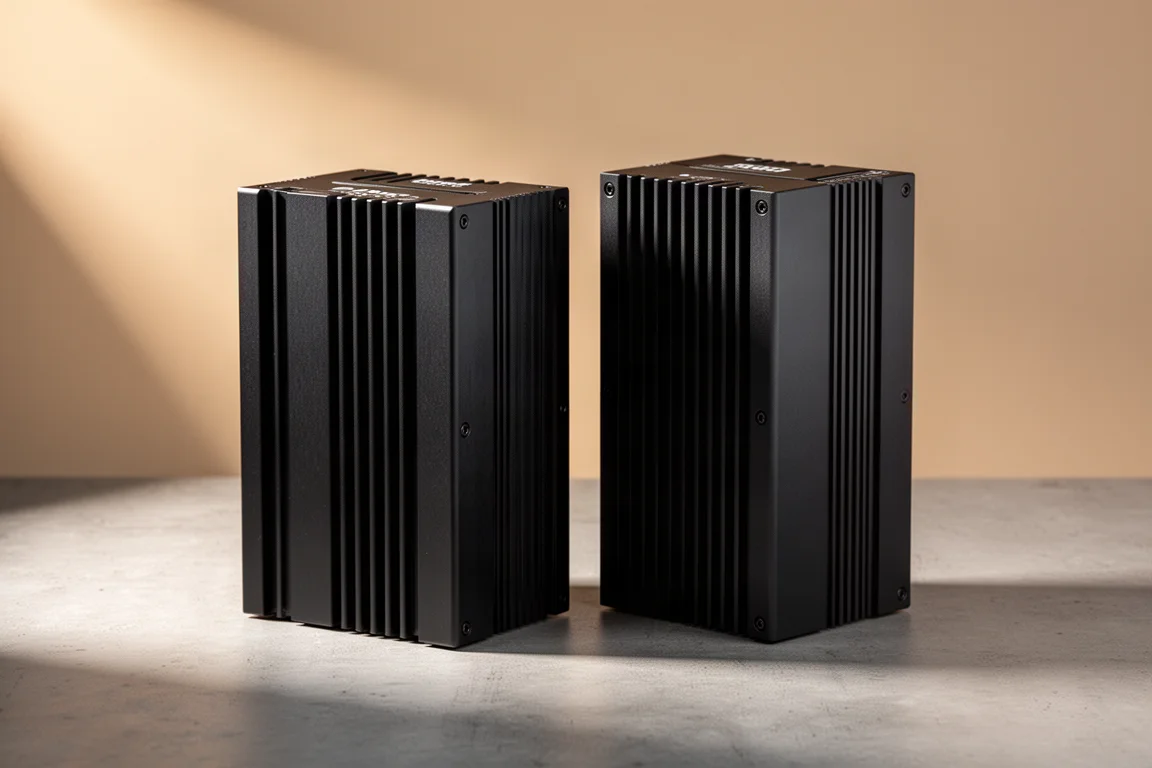
Burson Timekeeper 3X GT Review: Class A Character in a Compact Monoblock
A compact flagship monoblock with the first 30 watts in Class A, 110W into 8 ohms, pinpoint imaging, and an unusually large soundstage.