Fitness Smartwatches
Garmin Vivoactive 5 vs Garmin Venu 3: Which Fitness Smartwatch Makes More Sense
Two closely related Garmin fitness smartwatches with very different prices. Here is how the Vivoactive 5 and Venu 3 compare on design, battery, health tracking, and sport features.
Introduction
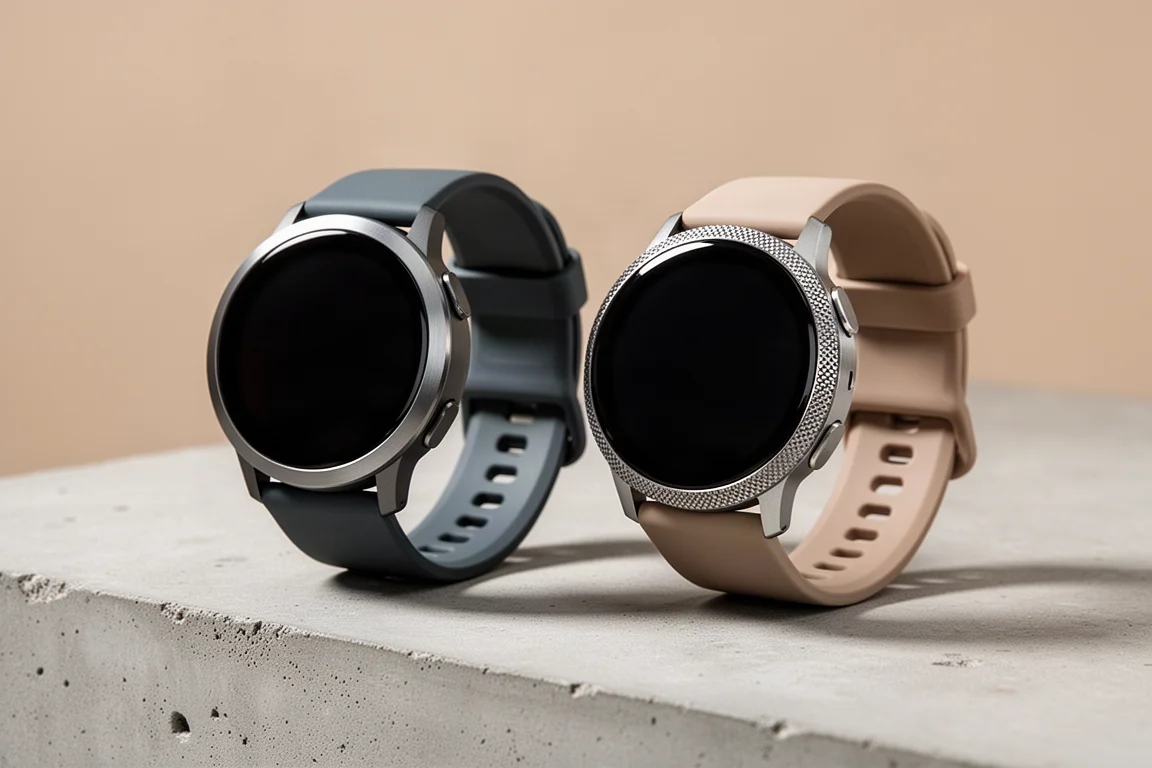
Garmin’s fitness-focused smartwatch lineup can be confusing, and the Vivoactive 5 and Venu 3 are the clearest example of why. Despite different names, these two watches are essentially siblings: very similar core features, the same AMOLED display technology, and the same overall family design. The back story explains part of the confusion. The Vivoactive name was long associated with Garmin’s more smartwatch-oriented watches and evolved into the Venu series when Garmin moved to AMOLED displays. With the Vivoactive 5, Garmin brought the name back, but the watch shares the same display technology as the Venu line. You can reasonably think of the Vivoactive 5 as a smaller, lighter sibling in the same family.
The real differences come down to size, a handful of sensors and features, and price. The Vivoactive 5 runs $299 while the Venu 3 runs $449, a $150 gap that shapes who each watch is for.
Design, Sizes, and Build
The Vivoactive 5 comes in a single 42 mm case size with four color options. The Venu 3 offers two sizes, a 41 mm version and a 45 mm version, each with its own color options. All of them use a polymer main case, but the bezels differ: the Vivoactive 5 has an aluminum bezel, while the Venu 3 uses a slightly textured stainless steel bezel. Both carry a clean, classic look.
Band sizing is industry standard across the board. The 45 mm Venu 3 uses 22 mm bands, the Vivoactive 5 uses 20 mm bands, and the smaller 41 mm Venu 3 uses 18 mm bands. Weight differences between them are minor; all are lightweight and comfortable on the wrist.
Durability is identical across the family: Corning Gorilla Glass 3 protects the display, and every model carries a 5 ATM water resistance rating. That makes them fine for showering, pool swimming, and open water swimming, though diving is not recommended.
Displays and Controls
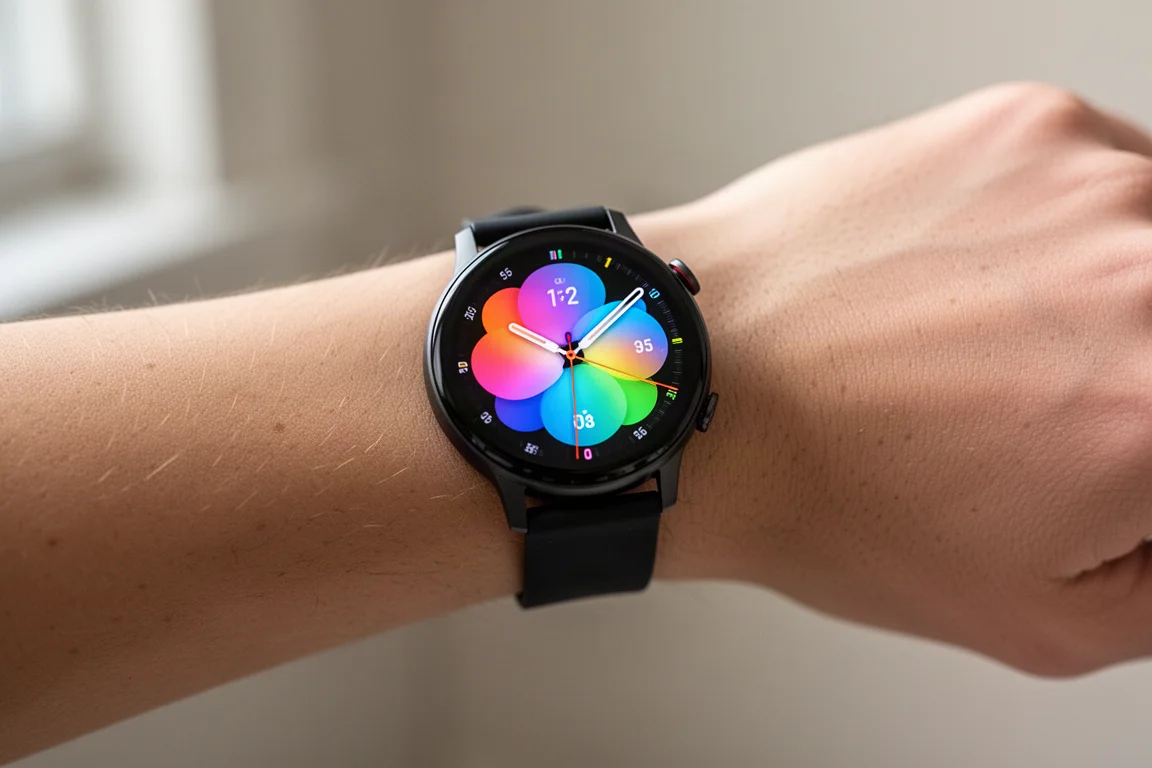
All of these watches use bright AMOLED displays. The larger Venu 3 has a 1.4-inch panel at 454 x 454 pixels, while both the smaller Venu 3 and the Vivoactive 5 use a 1.2-inch panel at 380 x 380 pixels. Touch responsiveness is reliable, with taps, touches, and swipes all working as expected. You swipe up or down to move through widgets like heart rate, steps, and calories burned, and swipe right for a quick action such as accessing recent apps or widgets. An optional always-on display mode dims the screen when idle so you can glance at the time, at the cost of extra battery drain. A new large font size option is also available on all of them.
The buttons are where the watches start to diverge. The Vivoactive 5 has a two-button layout; the Venu 3 has three. On both watches, the upper button starts and pauses workouts, and a long press opens a controls menu with sleep mode, do not disturb, and power options. The lower button marks laps and works as a back button.
The Venu 3’s middle button adds two things: a short press pulls up your most recently used apps and widgets, and a long press calls your phone’s voice assistant, whether that is Siri on iPhone or Google Assistant on Android. That button matters because the Venu 3 has a built-in microphone and speaker.
Smartwatch Features: Where the Venu 3 Pulls Ahead
The Venu 3’s microphone and speaker enable two things the Vivoactive 5 cannot do: talking to your voice assistant directly from the watch, and taking phone calls on your wrist. Both features require your phone to be in Bluetooth range, since the Venu 3 has no cellular capability of its own. The speaker can even play music in a pinch, though the quality is about what you would expect from a watch-sized speaker.
Text handling is mostly shared. Both watches receive texts with emoji support when paired to iPhone or Android. Replying is where things split. Paired with an Android phone, both watches can reply using customizable quick replies or a new on-screen keyboard. Paired with an iPhone, you can receive texts but not reply from the watch, because Apple restricts iMessage replies to Apple watches. There is a workaround on the Venu 3, though: you can use the voice assistant to compose and send a text by voice, which sidesteps that limitation. The middle button’s short and long press actions can also be remapped if you would rather not use the voice assistant.
Beyond that, the smartwatch feature set is nearly identical. Both support Garmin Pay contactless payments and offline music playback from services like Spotify, Deezer, and Amazon Music. The Venu 3 has 8 GB of music storage versus 4 GB on the Vivoactive 5. Both also show weather and calendar events synced from your phone.
Sleep, Recovery, and Daily Health Features
On the health side, the two watches track steps, 24/7 heart rate, blood oxygen saturation, resting heart rate, respiration rate, stress levels, and abnormal heart rate alerts. Both include Garmin’s Health Snapshot feature, which bundles several of those measurements into one reading.
One hardware difference shows up here: the Venu 3 has a barometric altimeter, so it tracks floors climbed throughout the day. The Vivoactive 5 lacks that sensor.
Both watches carry Garmin’s latest Body Battery, which scores your current energy level from 1 to 100 based on sleep, stress, restful periods, and activity. New to both watches are Body Battery factors, which list the specific events that drained or recharged your energy, including workouts, restful periods, and automatically tracked naps. Nap tracking is automatic for anything five minutes or longer during waking hours, or you can start a manual nap timer through sleep mode with an optional alarm. A new Sleep Coach feature also adjusts your nightly sleep recommendation, starting from a baseline of roughly seven to nine hours depending on age, then factoring in sleep quality, training load, HRV status, and naps.
Both watches include advanced sleep tracking with sleep scores and sleep stages, a customizable Morning Report with your sleep quality, Body Battery, HRV status, and weather, and an end-of-day summary about two hours before your scheduled bedtime. For recovery, both offer HRV status tracking and a recovery time advisor that estimates how long until you are fully recovered from training. The Jet Lag Adviser, which recommends when to sleep, exercise, eat, and nap around travel schedules, is exclusive to the Venu 3. Both watches also support Garmin’s wheelchair user features, including daily pushes and dedicated workout profiles.
Fitness and Sport Tracking
The sport profile lists overlap heavily: running, cycling, and gym profiles, pool and open water swimming, plus outdoor options like stand-up paddle boarding, skiing, and snowboarding. The altimeter in the Venu 3 makes a difference here too. It can automatically detect ski runs, pausing your activity on the chairlift and restarting as you descend. The Vivoactive 5 cannot do this automatically, though you can still mark runs manually with the lap button. The Venu 3 also adds profiles like bouldering, indoor climbing, hiking, and floor climb that lean on the altimeter.

For outdoor GPS accuracy, both watches share the same multi-GNSS chipset, so tracking results should be extremely similar. In practice, both performed very well across running, road biking, and mountain biking. The data collected is comparable too, with pace, distance, calories, and cadence for runs, plus a new Workout Benefits feature that spells out what a session improved, such as VO2 max. Both estimate VO2 max for running and include Garmin’s Fitness Age metric. The Venu 3 can show real-time elevation gain during activities thanks to its altimeter; the Vivoactive 5 calculates total elevation gain after you save an activity by matching GPS data against Garmin’s base maps.
Sensor support diverges in one significant way. Both pair with external heart rate straps, speed and cadence sensors, and Garmin’s Varia radar and lights. But only the Venu 3 can pair with cycling power meters and smart trainers, making it the better pick for serious cyclists who train by power. Both watches include Garmin Coach training plans for running and cycling, which are completely free and sync automatically to the watch. The Venu 3 adds on-screen workout animations to guide you through exercises.
The heart rate sensors also differ. The Vivoactive 5 uses Garmin’s fourth-generation Elevate optical sensor, while the Venu 3 has the fifth generation. Both do well for running and cycling, but the newer sensor should hold up better during weight training and high-intensity interval training, where optical sensors can still struggle. For the most accurate results in those sessions, pairing an external heart rate strap works with either watch. One final note: the Venu 3 appears to include the hardware needed to record an ECG, but the feature is not currently available and would require regulatory approval before it could be enabled. The Vivoactive 5 does not have ECG-capable hardware.
Battery Life and Everyday Use
Battery life is close across the lineup, with the larger Venu 3 lasting a bit longer. Expect anywhere from about four days up to roughly ten days on the smaller Venu 3 and the Vivoactive 5. The range mostly depends on the always-on display: with it enabled, plan on four to five days, and without it, over a week is realistic. Other factors matter too, including screen brightness, whether the blood oxygen sensor runs during sleep, and how many outdoor activities you track. With about an hour of outdoor activity per day, always-on display enabled, and the SpO2 sensor active during sleep, around four days is a realistic expectation.
Which One Should You Buy
The Vivoactive 5 makes sense if you want the core Garmin AMOLED experience at $299: bright display, strong GPS accuracy, full health and sleep tracking, Garmin Pay, offline music, and free Garmin Coach plans. It gives up the altimeter-based features, the microphone and speaker, power meter support, and the newer heart rate sensor.
The Venu 3 justifies its $449 price if any of those gaps matter to you. On-wrist calls and voice assistant access, automatic ski run tracking, floors climbed, power meter pairing, on-screen workout animations, the Jet Lag Adviser, and the fifth-gen heart rate sensor add up to a meaningfully more capable watch, and the larger version also lasts slightly longer on a charge.
Conclusion
These are two versions of the same idea at two price points. If your priorities are everyday fitness, sleep, and health tracking in a lightweight watch, the Vivoactive 5 covers nearly all of it for $150 less. If you want the fullest feature set, especially calls, voice assistant, altimeter features, and cycling power support, the Venu 3 is the more complete package. Either way, you are getting a polished fitness smartwatch from the same well-executed family.
Product link
View more details for Garmin Vivoactive 5
This product is mentioned in the review. Check the specifications, options, and compatibility before buying.
View more details for Garmin Vivoactive 5Further reading
Related Reviews
Fitness Smartwatches
Garmin Forerunner 265 vs Garmin Venu 2 Plus: Which Mid-Range Garmin Fits You Best?
Two AMOLED Garmin watches at a similar price with very different personalities: one leans sports and training, the other leans smartwatch. Here is how to choose.
Fitness Smartwatches
Garmin Venu 3 vs Garmin Forerunner 265: Which Fitness Smartwatch Fits You Best
Two Garmin watches with the same price and very different personalities. Here is how the smartwatch-focused Venu 3 stacks up against the sports-focused Forerunner 265.
Bike Computers
Best Bike Computers 2026: Wahoo ELEMNT ACE, Garmin Edge 1050 and Two Value Alternatives
A practical comparison of the Wahoo ELEMNT ACE and Garmin Edge 1050, plus two cheaper computers that cover the essentials for far less.