Power Meters
Garmin Rally RS 210 vs Rally XC 210: First Look at the Second-Generation Power Pedals
Garmin's next-generation Rally power pedals bring rechargeable batteries, easier pedal body swaps, and new cycling force metrics to road and mountain riders.
Introduction
It has been over four years since Garmin released the original Rally power meter pedals, and the second generation finally brings some substantial updates across the board. The new Rally lineup is more durable, easier to reconfigure, and, perhaps most welcome of all, rechargeable. The coin cell batteries are gone.
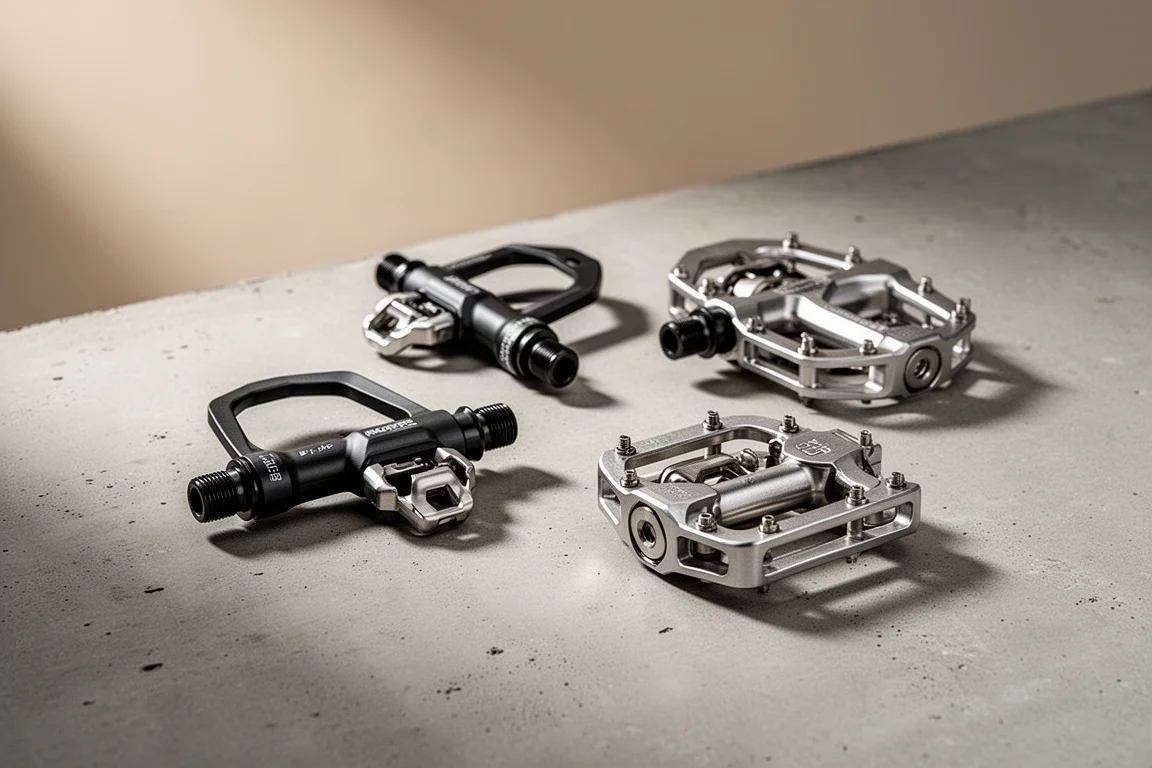
The range still splits into road and mountain flavours: the Rally RS uses a Shimano SPD SL body, the Rally RK uses a Look KEO-style cleat, and the Rally XC is the mountain version. Each of those comes in single-sided (the Rally 110 series) or dual-sided (the Rally 210 series) power configurations. This first look focuses on the dual-sided versions: the Rally RS 210 for SPD SL and the Rally XC 210 for mountain riding.
Early riding impressions suggest the changes are more than cosmetic, though long-term accuracy and durability verdicts will need more miles. Here is what matters if you are deciding between the two.
What’s New: Hardware Changes
The road versions get a redesigned pedal body that is more streamlined and lighter overall, with Garmin also claiming improved durability. Comparing old and new side by side, a lot of unnecessary material appears to have been removed from the body.
The bigger story is the Rally XC. Garmin completely redesigned the mountain pedal bodies with an all-metal build for added durability, and the pedals are now much lower profile than before, both in stack height and in engagement front and rear. The original Rally XC pedals were tall, which made them prone to pedal strike and damage, so the extra clearance here is a genuine improvement.
Q factor looks identical to the originals, and there is no visible difference in Q factor between the Rally XC and Rally RS. Weight-wise, the new XC pedals show no meaningful change, while the SPD SL versions appear a few grams lighter than the originals. Engagement feels slightly smoother than before, and the bearings spin with a notably silky feel.
Easier Pedal Body Swaps
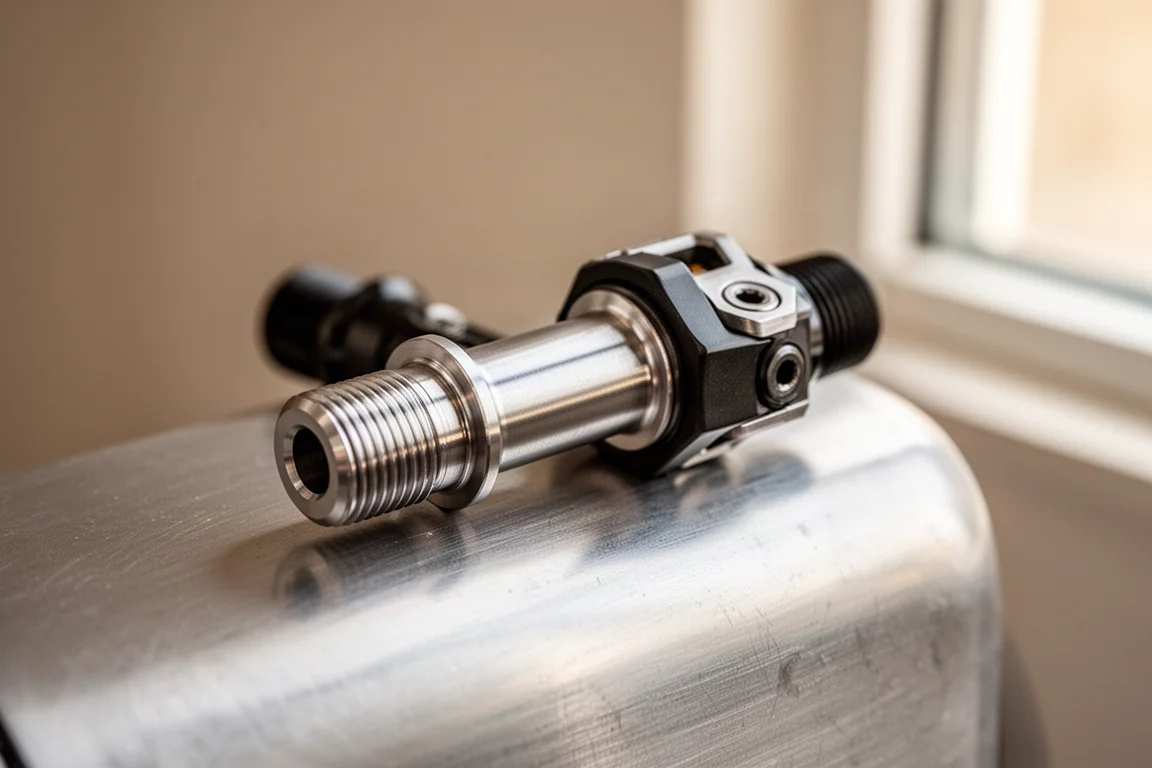
The redesigned power-sensing spindles make swapping pedal bodies dramatically easier than on the originals. Previously the process involved messing around with battery compartments and seals, which was just enough hassle that most people never bothered. Now it takes two tools and two steps.
All you need is a standard 15mm pedal wrench and a 5mm Allen wrench, plus ideally a torque wrench for reinstalling the fixing nut to the recommended spec. You remove the outer cap from the pedal body, unscrew the nut underneath, and the spindle slides out for a body swap.
One detail worth remembering: the right pedal uses reverse threads, so to loosen its cap and nut you turn clockwise, and to tighten you turn counterclockwise. The left pedal is normal righty-tighty threading. The reverse threading is deliberate, preventing the nuts from unscrewing themselves under normal pedalling motion.
Because swapping bodies is now genuinely practical, Garmin also sells conversion bundles with two sets of pedal bodies, one road and one mountain, sharing a single set of spindles. The kit price is the same whether you choose SPD SL or Look KEO bodies, and it can save real money compared to buying two complete pedal sets. If you ride both road and gravel or mountain setups, the bundle is worth a close look.
Rechargeable Batteries at Last
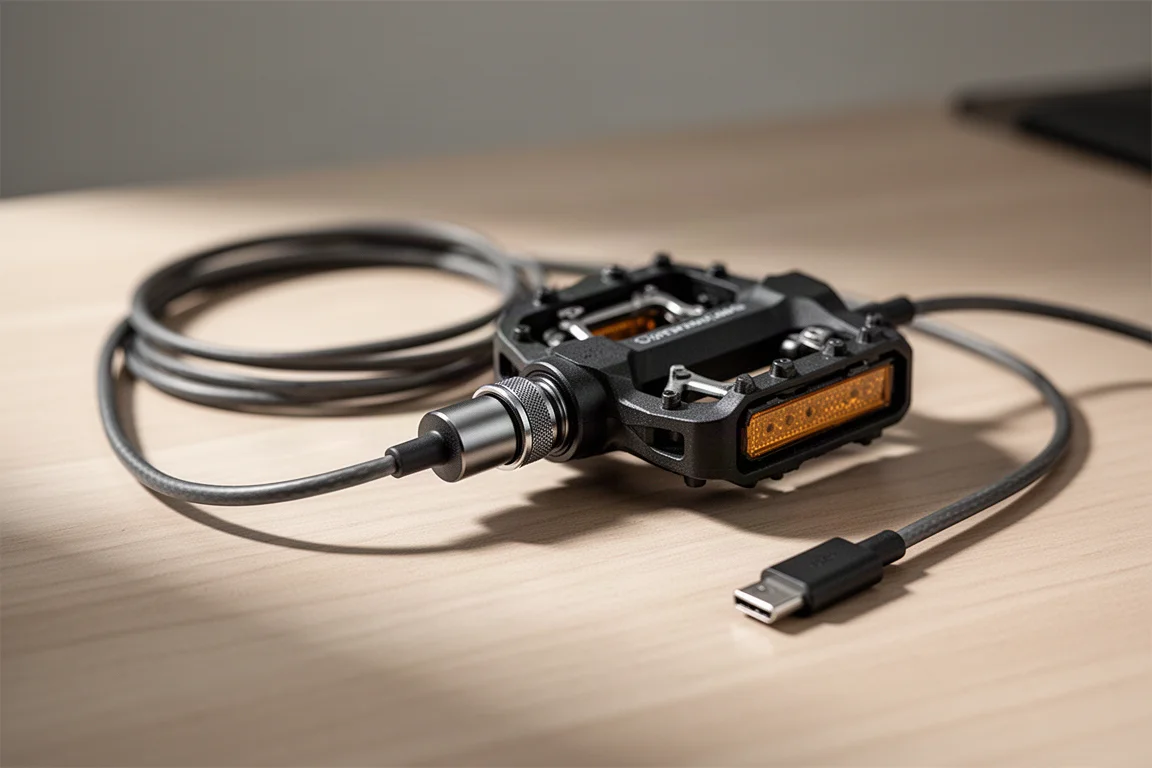
Garmin pedals have a long history of battery drama, and while coin cells solved part of the problem, you still had to carry spares. The new Rally pedals are fully rechargeable via a small magnetic charger that plugs into an included USB-C cable. The cable is pleasingly long, so it can actually reach the pedals from a wall outlet, though no wall charger is included in the box.
Garmin advertises up to 90 hours of ride time per charge. If you run low, a quick charge feature delivers up to 12 hours of ride time from roughly 15 minutes plugged in. There is also a travel mode in the companion app that puts the pedals to sleep to conserve battery while you are on the road.
Both Bluetooth and ANT+ connectivity are on board, but there is an important distinction between the two connection types that affects some of the newest features, covered below.
Single-Sided vs Dual-Sided: What You Actually Get
The single-sided Rally 110 versions measure power from the left pedal only. The dual-sided 210 versions measure power independently from each pedal, which unlocks the extra cycling dynamics: left and right power balance, seated versus standing time, and more.
If you only care about total wattage, the single-sided versions are the cheaper route. If you want to dig into balance, pedal stroke data, and the newest metrics, the dual-sided 210 models covered here are the ones to consider.
Accuracy and Early Impressions
Garmin claims the same plus or minus 1% accuracy as before, but says these pedals respond faster to changes in power thanks to a redesigned strain gauge and the addition of a gyroscope. Early rides back that up: the pedals track changes promptly, and accuracy looks strong so far.
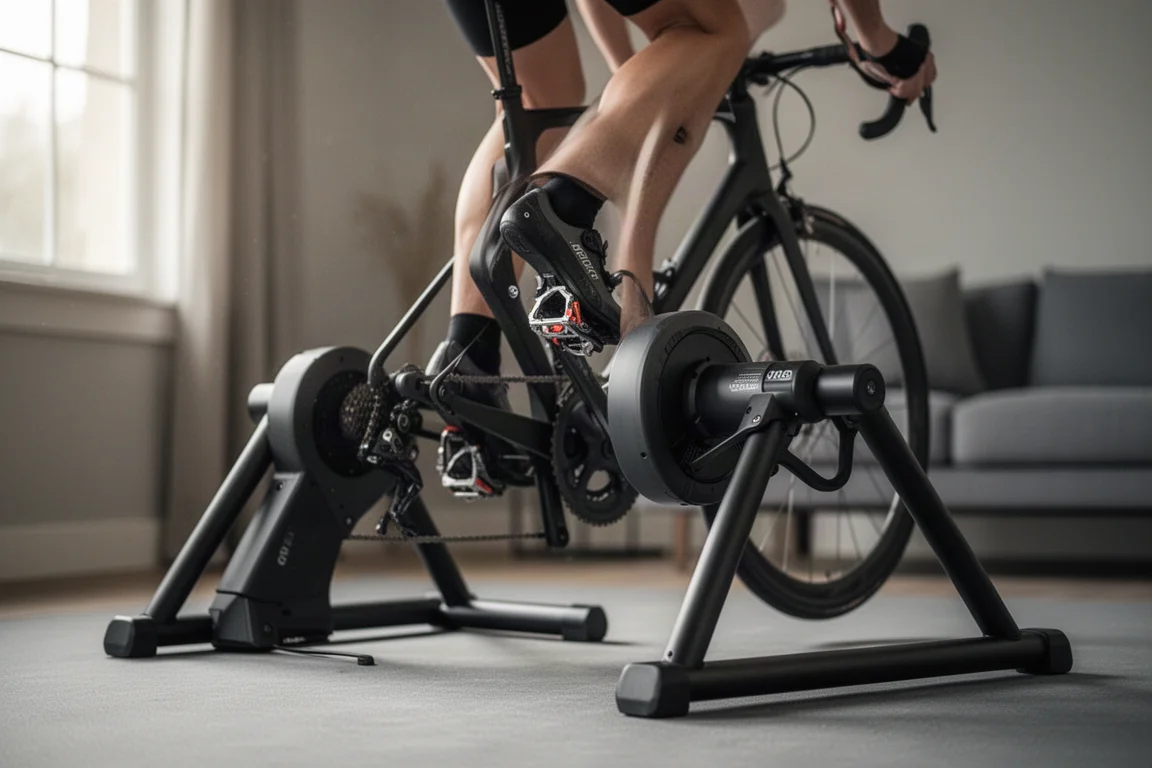
In early comparisons against a very accurate smart trainer and a set of current-generation crank-based power meters, the Rally numbers lined up well with the trainer, reading a few watts higher as expected since the pedals measure at the pedal while the trainer measures after drivetrain losses. The cranks read a few watts higher still, which is consistent with how those cranks tend to read. Longer-term testing will tell the full story on responsiveness and drift.
These pedals are also stated to be compatible with oval chainrings, though that specific claim has not been put to the test here.
The Cycling Force Question
Beyond power and cadence, the dual-sided 210 pedals collect left and right power balance, seated versus standing time, pedal power phase, and pedal platform offset, which shows where on the pedal body you apply the most pressure. Platform offset is useful for cleat adjustment, and power phase can inform saddle position.
New for this generation is cycling force. Power combines the force you apply to the pedals with cadence; force is now delivered as its own independent metric. The idea is to understand how much force you need at varying cadences to produce the same power. Lower cadences generally strain the muscles more, while higher cadences demand less force but more from the cardiovascular system. Isolating force could help you dial in a pedal stroke that suits your riding style and fitness.
None of these metrics are strictly necessary, but for riders who want to optimise every variable, they are a meaningful addition. Note that cycling force, like the smart calibration features, requires a compatible Garmin bike computer connected over secure Bluetooth. Standard metrics like pedal phase and left/right balance remain available over ANT+.
Smart Calibration and Connectivity
Pairing over secure Bluetooth to a compatible Garmin device unlocks the new Pedal IQ smart calibration system. The pedals can alert you when calibration is needed based on criteria such as temperature changes, time since the last calibration, or detecting that the pedals have been moved to a different bike. You can set reminders to calibrate on every ride or handle it manually.
None of this works over ANT+, so if smart calibration and cycling force matter to you, you will want a compatible Garmin head unit and the secure Bluetooth connection. If you are already in the Garmin ecosystem, that tight integration is a genuine reason to choose these pedals over the competition. If you are not, those features add little for your money.
Pricing and Buying Advice
The road versions start at $749 for the single-sided Rally RS or RK, with dual-sided 210 versions at $1,199. The SPD Rally XC runs $799 single-sided and $1,299 dual-sided. The two-body conversion kits are priced at $1,449 regardless of whether you pick SPD SL or Look KEO bodies.
These are not cheap pedals, and they cost more than the leading alternative power pedals, which are also accurate, rechargeable, and spindle-swappable. What you are paying extra for is the Garmin ecosystem integration: the smart calibration prompts, cycling force data, and seamless pairing with Garmin bike computers. For riders already invested in that ecosystem, it is a compelling package. For everyone else, the decision comes down to whether those ecosystem features justify the premium.
Between the two models here, the choice is straightforward. The Rally RS 210 suits road riders on SPD SL who want refined dynamics and a slightly lighter body. The Rally XC 210 is the pick for mountain and gravel riders, with its all-metal low-profile body fixing the biggest complaints about the originals.
Conclusion
The second-generation Rally pedals address nearly every practical complaint about the originals: rechargeable batteries, dramatically easier body swaps, a lower-profile and more durable XC build, and faster-responding spindles with a new gyroscope on board. Early accuracy looks strong, and the new force metric adds genuine depth for data-focused riders.
The premium price and the Garmin-ecosystem lock-in for the headline features are the main caveats. If dual-sided power metrics on your platform of choice appeal to you, and you ride with compatible Garmin hardware, both the Rally RS 210 and Rally XC 210 are easy pedals to recommend.
Product link
View more details for Garmin Rally RS 210
This product is mentioned in the review. Check the specifications, options, and compatibility before buying.
View more details for Garmin Rally RS 210Further reading
Related Reviews
Power Meters
Favero Pro RS and Pro MX2 Power Meter Pedals: Two Systems, One Architecture
A practical look at Favero's road and off-road power meter pedal systems, covering shared build quality, durability, fit, battery life after the firmware update, and value.
Power Meters
Favero Assioma Pro RS and Pro MX: The Power Meter Pedals to Beat
Favero's new Pro RS road pedals share the proven Pro MX spindle, adding a slimmer body, standard road Q factor, longer battery life, and swappable spindles.
Power Meters
Shimano Power Meter Review: An Accuracy Problem You Should Know About Before Buying
Eight months of side-by-side testing against trusted power meters and smart trainers reveals serious, repeatable accuracy problems with the Shimano power meter.