Outdoor Watches
Garmin Instinct Solar vs Fenix 6 Pro Solar: Which Outdoor Watch Fits You Better?
A practical comparison of the Garmin Instinct Solar and the Garmin Fenix 6 Pro Solar, covering battery life, training tools, on-watch maps, durability, and the $400 price gap.
Introduction
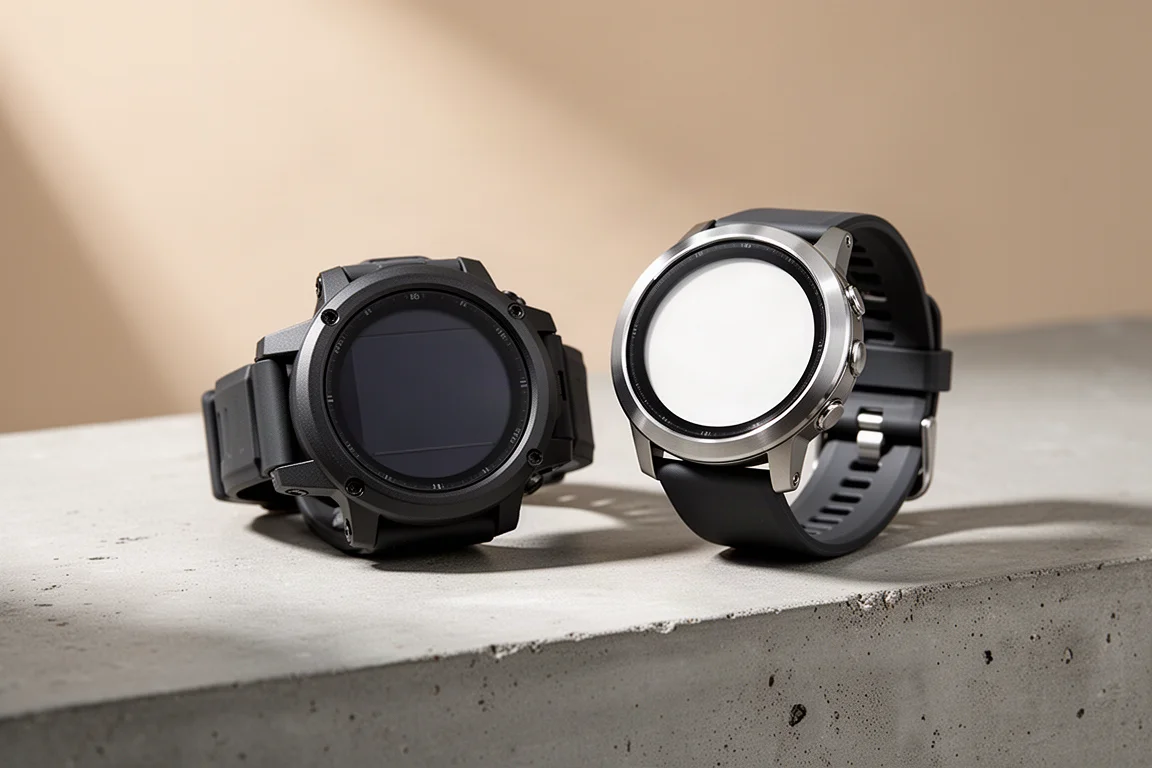
The Garmin Instinct Solar and the Garmin Fenix 6 Pro Solar sit at two very different points on the outdoor watch spectrum. Both are solar-assisted multisport watches with heart rate monitoring, GPS, and a broad sensor suite, and both are built for people who spend real time outside. The question is not which one works. Both work. The question is what you are paying for and what you get back.
The Instinct Solar costs $400. The Fenix 6 Pro Solar costs $800. That $400 gap is the heart of this comparison: are the Fenix extras worth doubling the spend, or does the Instinct’s battery life and toughness make it the smarter buy?

Both watches have been in regular use over a four-month period, and neither has shown signs of trouble. What follows is a feature-by-feature look at where the two diverge, so you can match the watch to the way you actually live.
What the Instinct Solar and Fenix 6 Pro Solar Have in Common
Both watches share the fundamentals that matter most outdoors. Each one tracks heart rate, uses GPS, and packs a wide range of sensors, so baseline activity and health tracking is comparable across the two. Both are solar models, meaning they harvest energy from light and feed it back into the battery, which extends runtime noticeably when the watch spends time in the sun.
Both also use a crystal lens rather than sapphire. Sapphire is not available on solar-capable models, and the crystal used here has held up without scratches in regular use, including contact with walls and rocks. Neither watch is treated delicately, and neither has shown lens damage.
Both watches also connect to a Garmin inReach satellite communicator, and an SOS can be triggered from the watch itself. That safety layer is available whichever model you choose.
Garmin Instinct Solar: Rugged Build, Long Battery Life
The Instinct Solar is the more rugged of the two. It has a raised bezel around the outside of the case, which sets the lens slightly deeper and makes it harder to scratch. It also leans into a bolder look, with color options that read as outdoor gear rather than office wear.
Battery life is the Instinct’s headline advantage. In smartwatch mode it runs for 24 days without solar input, and up to 54 days with solar charging. Part of that comes from the solar panel design. The Instinct carries a larger area of high-efficiency photovoltaic panel, which cannot sit over a display but contributes a meaningful amount of charge.
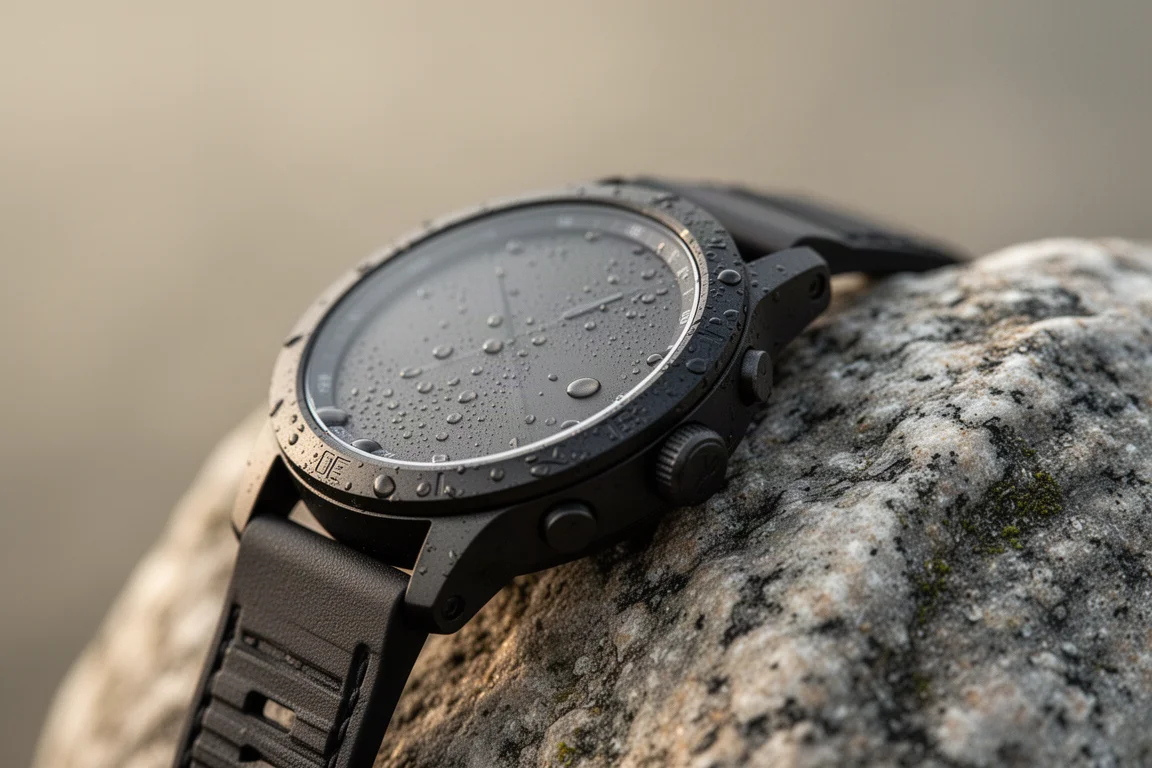
The trade-off is display capability. With more of the face given over to solar collection, the Instinct has less room to show information than the Fenix. It also lacks the dedicated gym training programs and the running analysis tools found on the Fenix, and it does not offer on-watch maps.
Garmin Fenix 6 Pro Solar: Everyday Wear and Training Features
The Fenix 6 Pro Solar is designed to be worn everywhere, not only on trails. It looks more professional, works with a dress shirt, and fits into an office environment in a way the Instinct’s rugged styling does not. Bands can be swapped out, so the silicone band it ships with can be replaced with leather for a dressier look.
For training, the Fenix is the more capable watch. It includes a dedicated weight training program with on-screen animations that demonstrate exercises and automatic rep counting that logs each set and ends it without any input, which is genuinely useful for timing rest periods. Running analysis and tracking programs are stronger here as well. Spotify playlists can be played straight from the watch over Bluetooth headphones, so a phone can stay at home for runs, gym sessions, and podcasts.
Battery Life and Solar Charging Compared
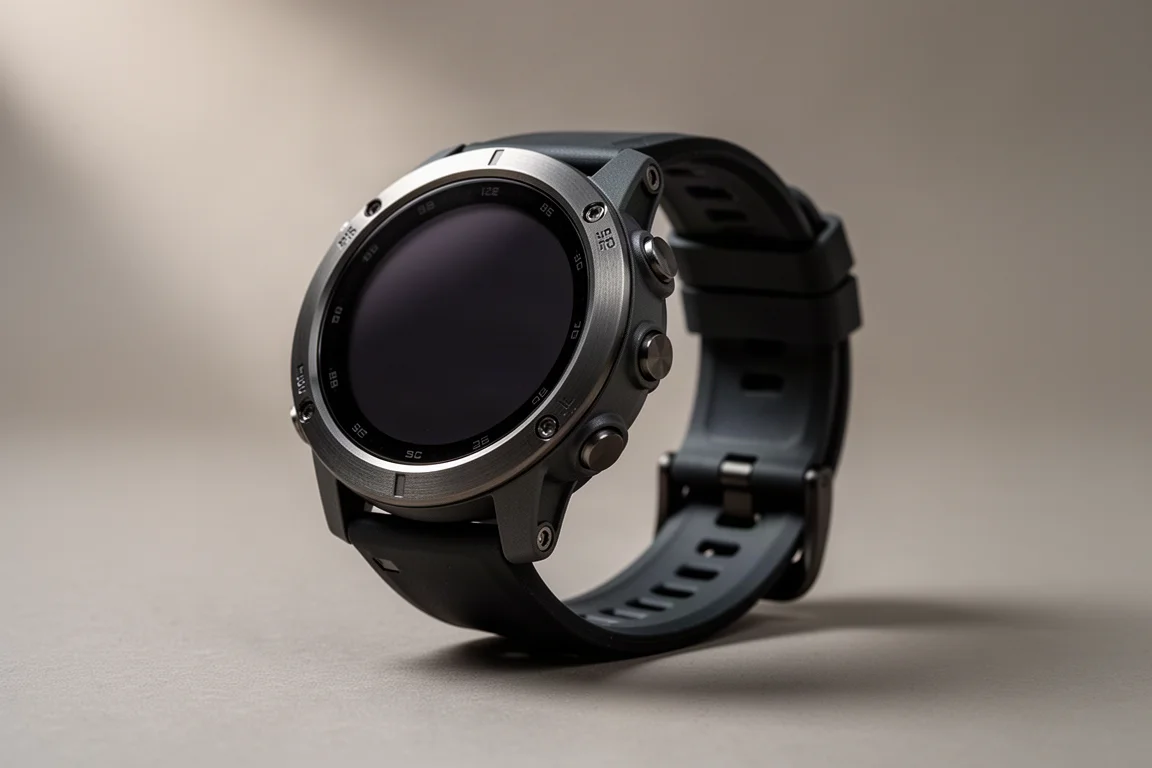
Battery figures diverge sharply. The Fenix 6 Pro Solar manages 14 days in smartwatch mode without solar, and 16 days with solar charging. The Instinct Solar reaches 24 days without solar and up to 54 days with it.
The reason comes down to two different solar panel types. One is a full photovoltaic panel that cannot sit beneath a display, so on the Fenix it exists only as a thin ring around the dial. The other absorbs roughly 10 percent of available light and can sit under the display area, which is where the time and data fields live. The Fenix has a larger display and therefore more area dedicated to showing information, while the Instinct dedicates more of its surface to the high-efficiency panel.

In practice, this means the Instinct is the watch to choose if you want to think about charging as little as possible, while the Fenix trades some runtime for a more informative screen.
Navigation, Maps, and Durability
The single biggest functional difference for outdoor use is mapping. The Fenix 6 Pro Solar can display topographical maps on the watch. Routes can be loaded before a trip and followed directly from the wrist, which removes the need to pull out a phone mid-route. At a trail junction with several options, the map makes it clear which line to take, and navigation no longer drains your phone battery.
The Instinct Solar does not offer on-watch topo maps. If route finding, bushwhacking, or the occasional wrong turn is part of a typical outing, this feature alone may settle the decision.
Both watches are built to take abuse. The Instinct’s raised bezel gives its lens extra protection, and the Fenix has survived the same treatment in daily use. Neither uses sapphire, but neither has picked up a scratch over months of contact with walls and rocks.
Buying Advice: Which Watch Fits Your Routine
Choose the Fenix 6 Pro Solar if you want one watch for everything: office days, gym sessions, runs, and trail navigation. The professional styling, swappable bands, weight training tools, stronger running analysis, offline Spotify playback, and on-watch topographical maps justify the $800 price for people who will actually use them week to week.
Choose the Instinct Solar if battery life, durability, and price matter more than those extras. At $400, it delivers the same core GPS, heart rate, and sensor foundation with substantially longer runtime, a more protective bezel, and a tougher overall look. Giving up the Fenix’s training and mapping features is a real compromise, but it is a deliberate one.

Either way, both watches pair with a Garmin inReach device for satellite messaging and SOS, so the safety layer is there regardless of which model you pick. The right answer depends on whether the extra $400 buys features you will use often enough to notice.
Conclusion
The Instinct Solar and the Fenix 6 Pro Solar are both capable outdoor watches, and the decision comes down to priorities rather than quality. Pay for the Fenix if you want everyday polish, gym and running tools, and maps on your wrist. Save the money and take the Instinct if you want maximum battery life and a watch that shrugs off rough treatment.
Further reading
Related Reviews
Outdoor Watches
Garmin Fenix 7 Solar vs Garmin Epix: Which Outdoor Watch Fits Your Adventures?
Two top-end Garmin watches share the same build and feature set. The screen technology decides battery life, daylight readability, and how much detail you can pull from a map.
Outdoor Watches
Apple Watch Ultra for Hiking: How It Compares to the Garmin Epix and Fenix
Six months of trail use show what the Apple Watch Ultra does well on hikes, where navigation falls short, and when a Garmin Epix or Fenix is the better fit.
Outdoor Watches
Apple Watch vs Garmin: Which Outdoor Watch Should You Buy?
A practical comparison of Apple Watch Ultra, Apple Watch SE, the Garmin Fenix and Epix lines, and the two apps that add offline trail maps to an Apple Watch.