Satellite Communicators
Garmin inReach Mini vs inReach Explorer Plus: Which Satellite Communicator Fits Your Hike
A practical comparison of the Garmin inReach Mini and inReach Explorer Plus, covering weight, price, battery life, messaging, and on-device navigation.
Introduction
Choosing a satellite communicator often comes down to one question: how much capability do you want to carry? The Garmin inReach Mini and the Garmin inReach Explorer Plus answer that question in two very different ways, and after more than a year with each, the trade-offs are clearer than the spec sheets suggest.
Both devices cover the essentials. They track your route, let other people follow along, send and receive messages, and include an SOS function for calling for help. Beyond that shared foundation, weight, battery capacity, messaging comfort, and on-device navigation separate the two.
This comparison looks at where each device genuinely earns its place in a pack, and where it asks you to compromise.
What Sets These Two Devices Apart
At a glance the choice looks simple. The inReach Mini is lighter and cheaper, so why would anyone carry the heavier, more expensive Explorer Plus?
The answer is that weight and price are only two variables in a much longer list. The Explorer Plus offers a larger body with more physical keys, a brighter backlit screen, a bigger battery, and color maps already loaded on the device. The Mini strips all of that down to the smallest possible package and leans on a paired smartphone for the parts it cannot do comfortably on its own.
That difference shapes everything else: how often you charge, how quickly you can send a message, and whether you have a navigation backup when your phone fails.
Garmin inReach Mini: Lightweight and Minimal
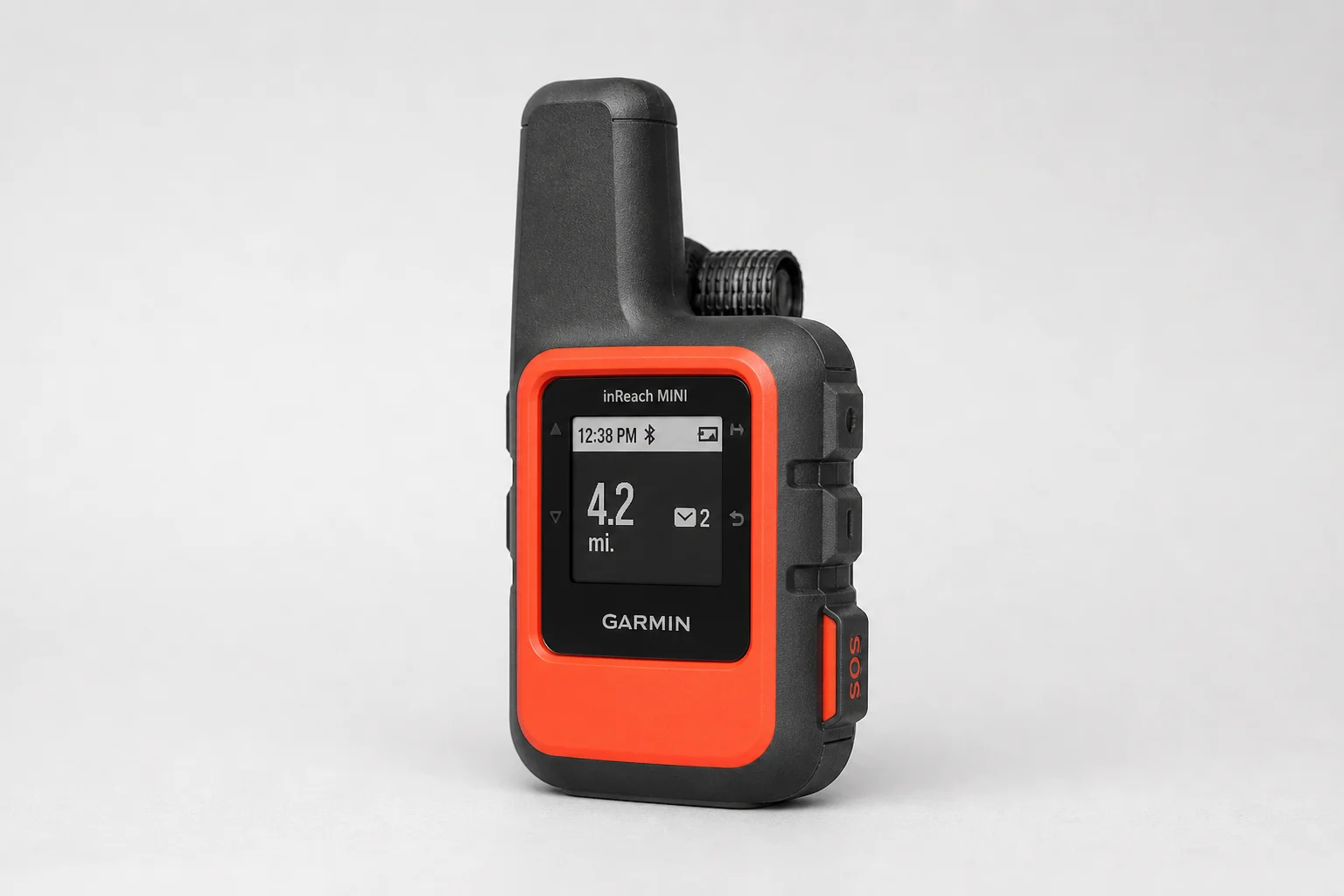
The inReach Mini weighs 3.5 ounces, roughly four ounces less than the Explorer Plus. For backpackers counting every gram, that is a meaningful saving, and it is the main reason many hikers move to the Mini after carrying the larger unit.
It runs about $350, roughly $100 less than the Explorer Plus. It keeps the full set of core features: tracking, two-way messaging, and SOS. It pairs over Bluetooth with a phone and works through a companion app, which handles messaging, maps, and settings.
The catch is standalone use. Typing a message directly on the Mini is tedious, so it is best treated as a device that wants a phone nearby. Offline maps can be downloaded to the phone for navigation, but if the phone is lost, damaged, or out of power, that navigation goes with it.
Battery capacity is 1,250 mAh, less than half of what the Explorer Plus offers, and it shows in practice. Expect to charge more often, and expect to draw more from an external battery bank if the device stays paired to a phone.
Garmin inReach Explorer Plus: Built for Standalone Use
The inReach Explorer Plus weighs 7.5 ounces and costs $450. It is the bulkier option, and it uses that extra space well.
The larger body has more keys, which makes typing a message directly on the device far more efficient than on the Mini. That matters when you want to send a detailed message or hold a longer exchange with rescue services, and it matters even more if you are separated from your phone or its battery has died.
Battery capacity is 3,100 mAh, giving noticeably longer runtime between charges. Because on-device messaging is comfortable, there is less pressure to keep the unit paired to a phone, which reduces drain on both devices.
Color maps come preloaded on the device. That makes the Explorer Plus a genuine backup navigation source, useful on trails where it is easy to wander off route and phones tend to die at the worst possible moment.
Weight, Price, and Battery Life
Four ounces and about $100 separate the two devices, and those numbers are the ones most buyers notice first. Whether they matter depends on how you travel.
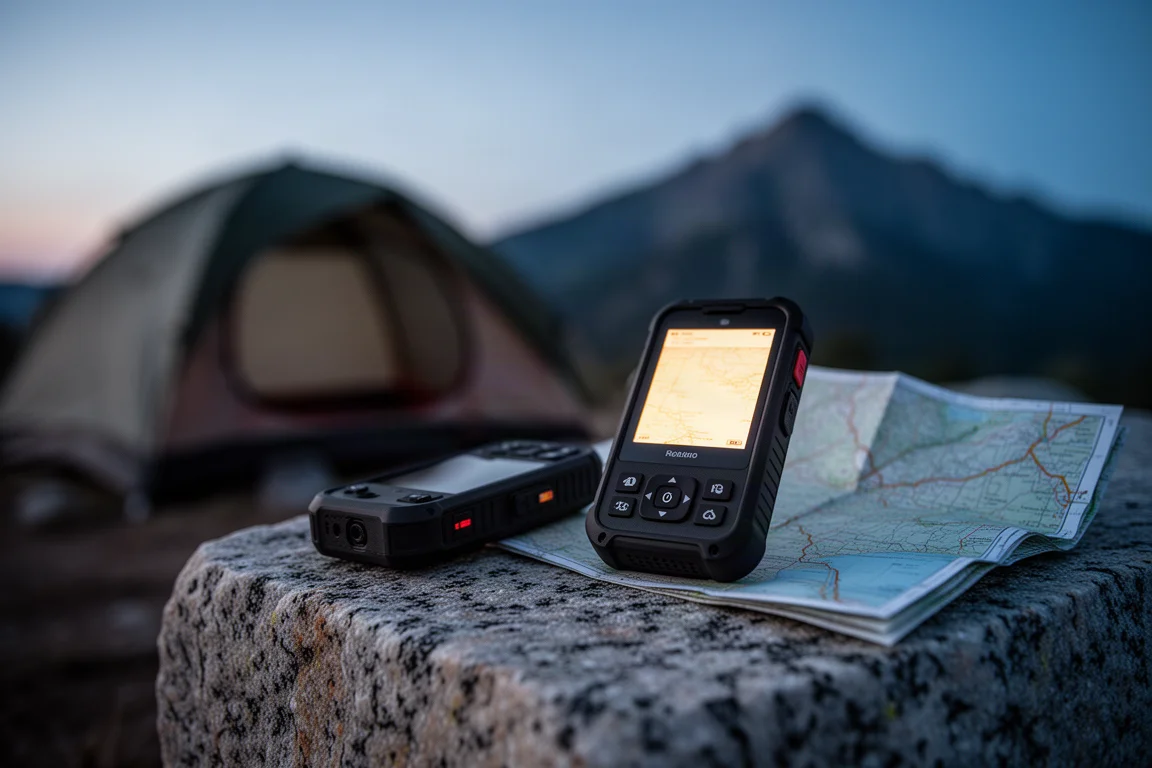
A 3.5 ounce device is easier to justify on shorter trips and on hikes where you already carry a phone and a power bank. The 7.5 ounce Explorer Plus is easier to justify on long-distance routes where every function has to work without a second device.
Battery is where the gap becomes practical rather than theoretical. At 3,100 mAh the Explorer Plus lasts considerably longer than the 1,250 mAh Mini. On a multi-day stretch without a resupply, that difference can decide whether your communicator is still alive when you need it.
Messaging Without a Phone
Both devices can send and receive messages, and both can pair with a smartphone over Bluetooth to make that process easier. The difference appears when the phone is not available.
On the Mini, typing a message on the device itself is slow and fiddly enough that many users avoid it entirely, even for a simple check-in. That pushes you toward keeping the phone paired and powered at all times, which adds its own battery cost.
On the Explorer Plus, the extra keys make on-device messaging quick enough that a short message can be sent without reaching for the phone. In a situation where you need to explain something clearly to someone who can contact authorities, that efficiency is worth a great deal.
There is also a planning lesson here. Relying on an app means the app has to be installed and working when the moment arrives. A communicator that can handle a message on its own removes that dependency.
Navigation and Screen Brightness
Navigation is the other area where the two devices diverge. The Explorer Plus carries preloaded color maps on the device itself, so you can check topography and confirm you are still on route without a phone. On the Mini, offline maps live on the phone through the companion app, which works well until the phone does not.

Screen brightness is a smaller detail with a real-world edge. The Explorer Plus is brighter and backlit, while the Mini is dimmer and not backlit. For texting inside a tent at night, the softer Mini screen can be preferable. In an emergency after dark, a brighter screen is easier for a rescue crew to spot, which can help them pinpoint your location.
Who Each Device Suits
The Mini fits hikers on day trips and shorter outings who do not need extended battery life, who mostly send preset check-in messages, and who revisit familiar trails where getting lost is less likely.
The Explorer Plus fits hikers heading into new areas for longer trips, anyone who likes to message regularly, and anyone who plans to leave the phone at home or wants a navigation backup that does not depend on it.
Buying Advice: Matching the Device to the Trip
Neither device is a mistake. The important decision is carrying a satellite communicator at all, so that you can call for help and communicate with the people responding.

From there, match the device to the trip. If you are already adding camera gear and counting grams, the Mini’s lighter build makes sense. If you value comfortable standalone messaging, longer battery life, and on-device maps, the Explorer Plus earns its extra weight. Knowing what a long season on trail teaches, many hikers who already own the Explorer Plus may find it worth keeping rather than upgrading purely for a lighter pack.
Conclusion
The inReach Mini and the inReach Explorer Plus share the features that matter most: tracking, messaging, and SOS. They differ in how comfortably they deliver those features without a phone.
Choose the Mini for weight savings and a lower price on shorter, phone-supported trips. Choose the Explorer Plus for longer journeys, easier messaging, longer battery life, and a navigation backup built into the device. Either way, carrying one is the decision that counts.
Further reading
Related Reviews
Satellite Communicators
Garmin inReach Messenger vs inReach Mini 2: Which Satellite Communicator Belongs in Your Pack
A practical comparison of two compact Garmin satellite communicators, covering navigation, screen size, battery life, reverse charging and price.
Satellite Communicators
Garmin inReach Messenger vs Zoleo: Which Satellite Communicator Is Right for You?
A practical comparison of two satellite communicators, covering price, battery life, messaging, apps, satellite coverage, and standalone SOS use.
Satellite Communicators
Garmin inReach Mini 2 vs inReach Mini: Is the Newer Satellite Communicator Worth It?
A practical comparison of the Garmin inReach Mini 2 and the original inReach Mini, covering battery life, USB-C charging, navigation, app support, and upgrade advice.