Satellite Communicators
Garmin inReach Messenger vs Zoleo: Which Satellite Communicator Fits Your Trips?
A practical comparison of the Garmin inReach Messenger and the Zoleo Satellite Communicator, covering price, subscriptions, battery life, coverage, and the messaging experience.
Introduction
Satellite communicators have become standard safety gear for hikers, backpackers, and backcountry skiers who travel beyond reliable cell coverage. Two devices dominate that conversation: the Garmin inReach Messenger, the most widely adopted satellite communicator and SOS device available, and the Zoleo Satellite Communicator, which built its reputation on a clean, easy-to-use experience. The inReach Messenger and its companion app read as a direct answer to the things Zoleo does better. This comparison covers price, subscription plans, hardware, battery life, satellite coverage, messaging, and emergency response, so you can match a device to the trips you actually take.
What These Devices Do and How We Compared Them
Both devices handle the same core job. They send and receive messages over satellite, provide weather forecasts, and trigger an SOS that routes to emergency responders. Where they diverge is in pricing, physical size, battery endurance, and how much you can do without pulling out a phone.

The sections below work through those differences in the order that matters most in the field: the hardware each device puts in your pack, the battery life you can expect, the satellite networks behind them, what each subscription costs over a season, and how the messaging and emergency experience holds up when conditions are poor.
Garmin inReach Messenger: A Compact Device With a Screen
The inReach Messenger is the smaller and sleeker of the two, and it is the only one of the pair with a display. The screen is tiny, and typing on it is tedious, but it changes what the device can do on its own. You can read incoming messages and send replies, check the weather, and use TrackBack, a breadcrumb trail that leads you back along the path you came in on if you lose your way.
The Zoleo, by comparison, offers only a check-in button and an SOS button. No screen means no on-device messaging and no on-device navigation aid.
There is also a Garmin ecosystem advantage. The inReach Messenger pairs easily with Garmin watches, so you can read messages, send preset messages, and trigger an SOS from your wrist while the communicator and your phone stay in your pack. For anyone checking in every hour or two, that removes a lot of fumbling.
Zoleo Satellite Communicator: App-First Simplicity
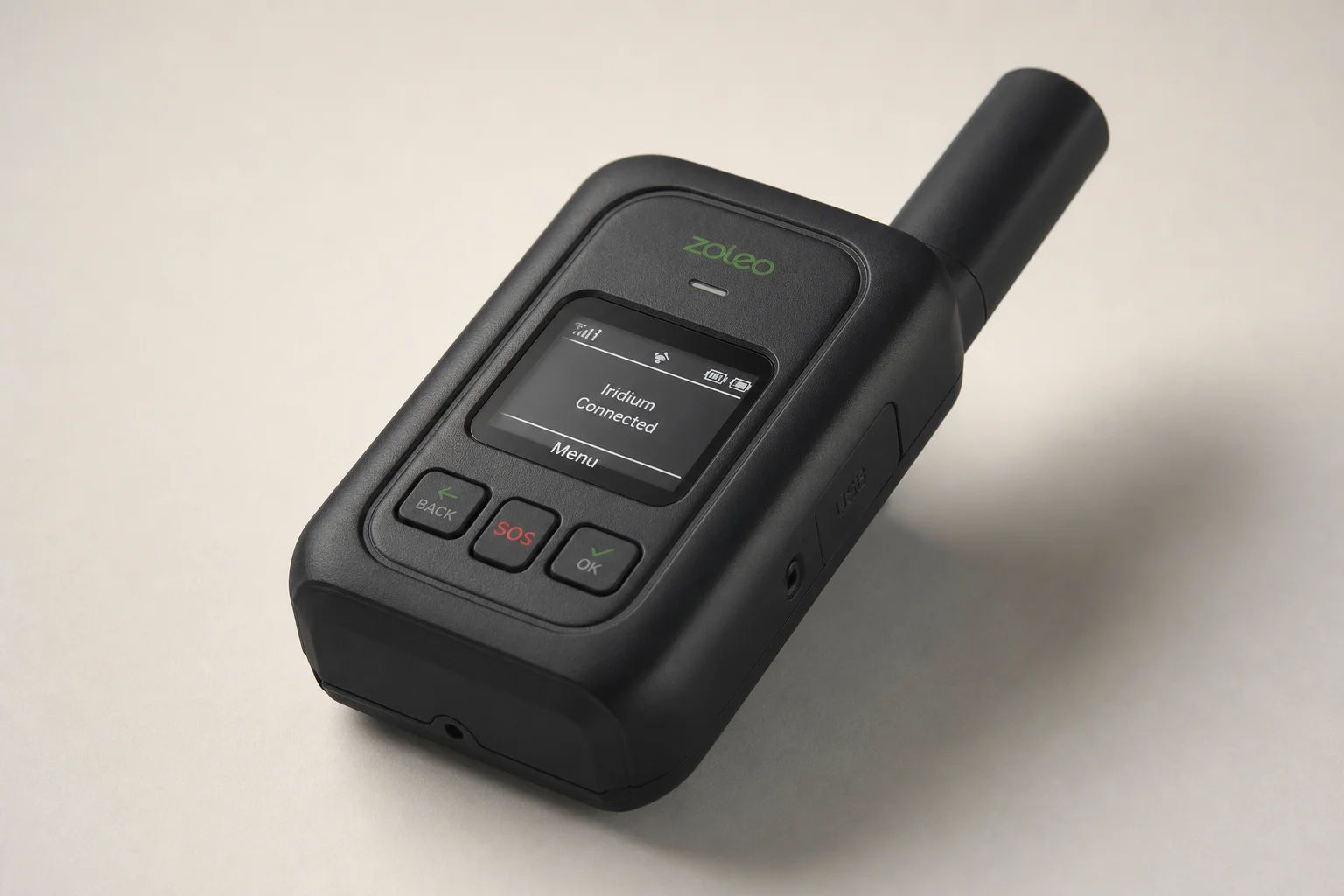
Zoleo earned its following by making satellite messaging simple, and that strength still shows. The hardware is deliberately minimal, with no screen at all, just a check-in button and an SOS button. Everything else happens in the app.
That app remains better than Garmin’s. It is cleaner and more intuitive to use, it shows when messages were last checked, and it lets you manually trigger a message check directly from the messages screen. On the Garmin side, that same action lives in the settings page, which is far less obvious. Zoleo also gives SOS its own dedicated tab, so there is no hesitation about where to go in an emergency. Zoleo additionally issues a dedicated phone number for the device, so the people you message always see the same number from you.
Hardware, Battery Life, and Charging
The inReach Messenger weighs 114 grams against the Zoleo’s 150 grams, and it is noticeably smaller and sleeker. The size difference is more surprising when you look at what is inside: the inReach Messenger carries a 1,800 mAh battery, while the Zoleo has 1,430 mAh. That gap shows up in real use. Expect roughly 12 days or more per charge from the inReach Messenger and about six to seven days from the Zoleo.
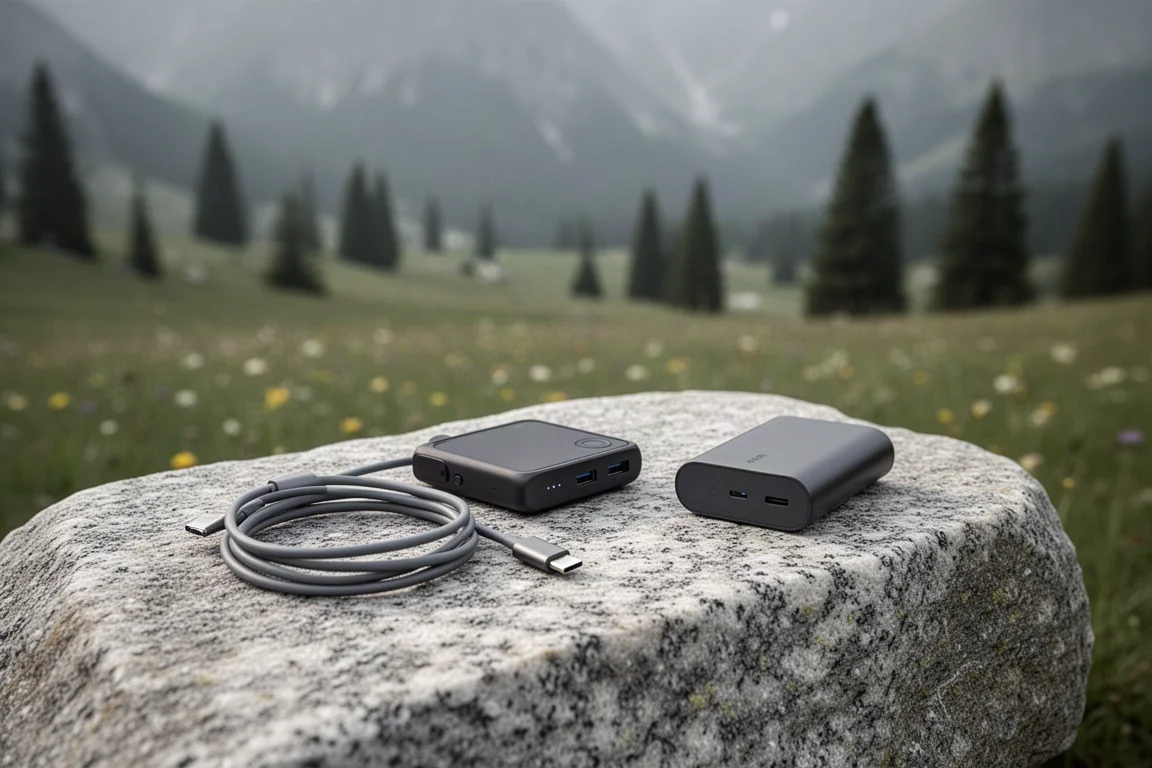
Charging is another clear split. The inReach Messenger uses USB-C, which most current devices share, while the Zoleo still relies on micro-USB. USB-C also charges faster, and it unlocks reverse charging: if your phone is dead or nearly dead, you can connect it to the inReach Messenger, turn on reverse charging, and pull power from the communicator’s battery. The feature only works when the inReach Messenger is above 25 percent battery, and it runs for roughly 20 minutes before shutting off.
Satellite Coverage, Navigation, and SOS
Both devices run on the Iridium network, which offers strong worldwide coverage. In practice both have sent and received messages quickly in treed areas, in canyons, and from inside a tent, and neither holds a clear edge on connection speed. How fast you reach a satellite still depends mostly on the conditions around you.
Navigation support differs slightly. The Zoleo connects to GPS and GLONASS. The inReach Messenger connects to GPS, Galileo, QZSS, and BeiDou.
SOS works the same way on paper for both. You can trigger it from a button on the device or through the app, and the alert is routed to the IERCC, which dispatches the most appropriate search and rescue or emergency responders for your location. Both Zoleo and Garmin use that service, and Garmin owns the organization behind it. Once you are connected to responders, both apps support two-way communication with them.
Pricing and Subscription Plans
The hardware prices are far apart. The Garmin inReach Messenger costs $300, the Zoleo Satellite Communicator costs $200, and the inReach Mini 2 sits above both at $400. Both devices also require a monthly subscription in order to function.
Subscription value depends on how you ride out the seasons. On the cheapest plans available, the inReach Messenger costs less whether you bill annually or month to month. On mid-tier plans, Zoleo is cheaper unless you pay annually, in which case the inReach Messenger comes out ahead. On the most expensive unlimited messaging plans, the two are roughly a wash.
Activation terms matter just as much. Zoleo requires a minimum three-month activation and charges a fee each time you reactivate. If you only need a communicator for one or two months of the year, that makes the inReach Messenger the more practical choice.
Messaging, Weather, and the App Experience
Both devices can message phone numbers and email addresses, and both work through their companion apps. Connectivity is flexible on both: each will use Wi-Fi, cellular, or satellite depending on what is available, a convenience Zoleo once had to itself. One difference in messaging is worth knowing before you buy. The Zoleo’s dedicated number stays constant, while the inReach Messenger uses a number that changes, though the number for an existing message thread stays consistent once you start a conversation, so replies always reach the same place.
Preset messages are where Garmin pulls ahead on value. The inReach Messenger includes three preset messages with unlimited sending, so routine check-ins do not eat into your monthly message allowance. Zoleo offers unlimited check-ins but only a single preset message. Those unlimited check-ins used to carry a $6 monthly charge and are now bundled into Zoleo’s plans.
Weather is close to a tie on accuracy. Zoleo uses Aeris weather and the inReach Messenger uses Dark Sky. Running checks side by side shows little practical difference, and any advantage depends on where you are: 2021 forecast accuracy data put Dark Sky slightly ahead in New York and Aeris ahead in Denver. One concrete difference is units. Zoleo displays Fahrenheit only, with no workaround, while the inReach Messenger lets you choose Fahrenheit or Celsius.
The app experience still favors Zoleo overall, even after Garmin’s improvements. The Garmin Messenger app is a substantial upgrade over the older Explore app, focused on messaging and cleaner and simpler to use, and it supports group messaging when everyone in the conversation is on the same app, which is useful for splitting into separate groups on a backcountry ski day.
Buying Advice: Which Device Fits Your Trips
The choice comes down to what you value most.
Choose the Garmin inReach Messenger if you want a screen, three unlimited preset messages, lower costs on the cheapest plans, longer battery life, USB-C charging, and reverse charging for your phone. The screen matters more than it first appears. With the Zoleo you must connect to your phone to communicate with emergency responders, while the inReach Messenger lets you read their messages and reply directly from the device. Search and rescue teams describe two-way communication as essential to a fast, efficient rescue, and losing that option because a phone battery died or a phone broke is a real risk.
Choose the Zoleo Satellite Communicator if the messaging and app experience is your priority, or if you want the lowest hardware price and a dedicated device number. Its app is still the cleaner and more intuitive of the two.

If neither set of trade-offs feels decisive, the practical tiebreaker is how you use a subscription. A device that only comes out for a couple of months a year favors the inReach Messenger, while a full-season or app-first user is well served by Zoleo.
Conclusion
Garmin has closed much of the gap that Zoleo once held, and the inReach Messenger now leads on hardware, battery life, on-device capability, and entry-level plan pricing. Zoleo still wins on the app, with a cleaner interface, an easier message check, and a dedicated SOS tab. If messaging and app quality come first, Zoleo remains the better fit. If you want a screen, three preset messages, and less expensive base plans, the inReach Messenger is the one to carry.
Further reading
Related Reviews
Satellite Communicators
Garmin inReach Messenger vs inReach Mini 2: Which Satellite Communicator Belongs in Your Pack
A practical comparison of two compact Garmin satellite communicators, covering navigation, screen size, battery life, reverse charging and price.
Satellite Communicators
Garmin inReach Messenger vs Zoleo: Which Satellite Communicator Is Right for You?
A practical comparison of two satellite communicators, covering price, battery life, messaging, apps, satellite coverage, and standalone SOS use.
Satellite Communicators
Garmin inReach Mini 2 vs inReach Mini: Is the Newer Satellite Communicator Worth It?
A practical comparison of the Garmin inReach Mini 2 and the original inReach Mini, covering battery life, USB-C charging, navigation, app support, and upgrade advice.