Fitness Tech
Garmin HRM-Pro Plus Review: The Heart Rate Strap Garmin Users Have Been Waiting For
A tool-free battery door, accurate heart rate, and running pace from your chest make Garmin's top-end strap a smarter buy than before.
Introduction
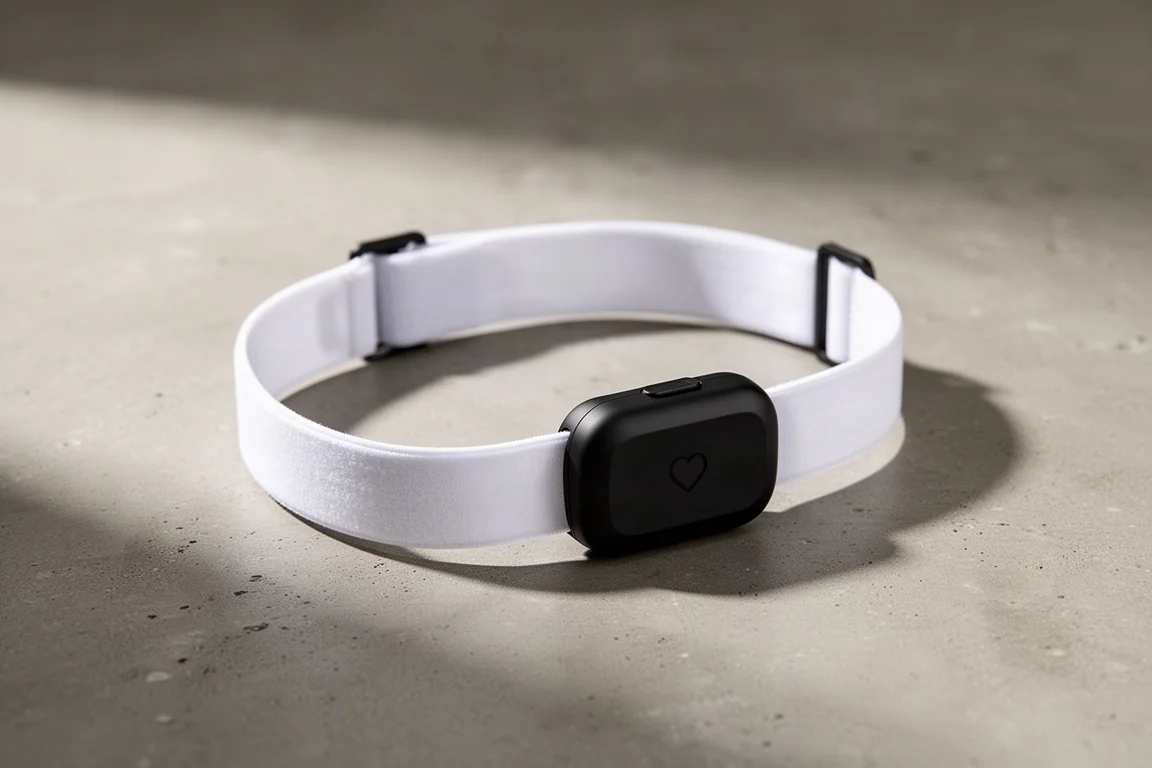
A heart rate strap exists for one core reason: more accurate heart rate data in the edge cases where wrist-based optical sensors struggle. That includes workouts with lots of wrist flexing, cold-weather sessions where the watch sits on the outside of a jacket, and simply preferring a strap for certain sports. The Garmin HRM-Pro Plus is Garmin’s top-end strap, and it is aimed squarely at Garmin users. If you wear a Garmin watch, this is probably the strap to buy. If your watch is from Polar, Suunto, or Apple, it still works well but may be a bit of overkill.
The strap transmits over both ANT+ and Bluetooth Smart, and the good news for owners of the older HRM-Pro is that most of the new software features arrive on that strap too, via a firmware update. The headline hardware change is the battery compartment, which finally addresses one of the most persistent complaints about Garmin’s higher-end straps.
Who This Product Is For
This strap makes the most sense for people already inside the Garmin ecosystem. Pair it with a Garmin watch and you unlock extra data over ANT+ that Garmin does not send over Bluetooth, including running dynamics, running power, and swimming workout offloading. Outside that ecosystem, a simpler, cheaper strap like the Polar H10 covers the basics just as well.
Some people simply prefer a chest strap over wrist-based optical heart rate depending on the sport they do. For sports like soccer, football, or martial arts where a watch is not allowed on the wrist, the strap can transmit heart rate, steps, intensity minutes, and calories to your Garmin account on its own. That said, it will not create a one-off workout file by itself: something else, like a watch or an app, needs to start and control the activity. For swimming, the strap records heart rate while you swim, but a Garmin watch still has to start that swim.
The Fix That Matters: The Battery Compartment
The big change in the box is the new battery door. Older Garmin straps like the HRM-Pro required four small screws to be removed to change the battery, and waterproofing was not always great afterwards, which killed more than a few straps. The HRM-Pro Plus switches to tool-free entry: you rotate the door, pop it open, and a small tab makes it easy to lift the battery out. Snap it back and lock it, and you are done. It is a genuinely handy improvement over fumbling with screws and dropping coin cells on the floor.
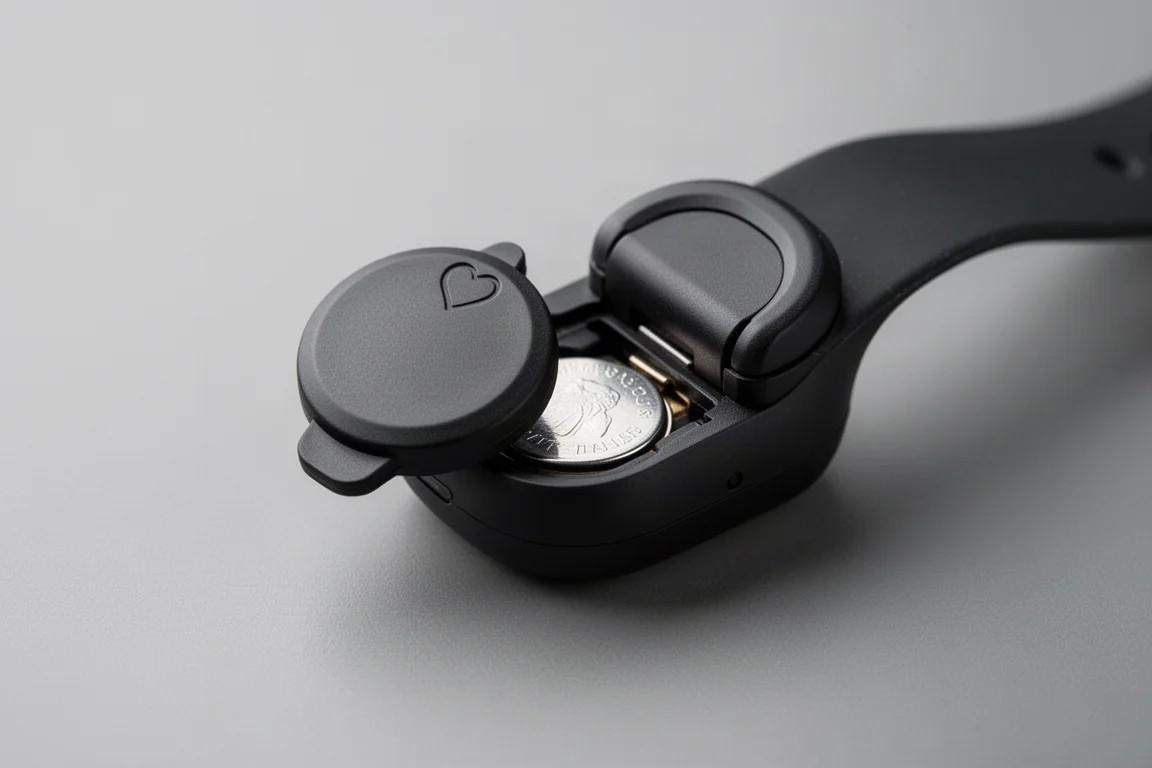
Garmin says the only hardware difference between the HRM-Pro and the HRM-Pro Plus is the battery compartment and the components around it; everything else, software included, remains the same. The coin cell battery lasts up to about a year of typical use, potentially up to two years with light use, though heavier users may see closer to six months. One caveat: some countries, notably Australia, do not allow the sale of this device due to child safety regulations around toolless coin cell battery access. Elsewhere, it is priced the same as before at $129, and the older HRM-Pro is likely to be phased out in most markets.
Pairing and Connectivity
Setup starts in the Garmin Connect mobile app on Android or iOS. From there, the strap supports three concurrent Bluetooth Smart connections plus unlimited ANT+ connections, which means it pairs with Zwift, Strava, and thousands of other apps and devices. It is nearly impossible to find a gadget or app that will not work with it.

When pairing with a Garmin watch for sports, choose ANT+ rather than Bluetooth. That is where the extra data lives: running dynamics like vertical oscillation and ground contact time, plus running power. On newer 2022 Garmin watches such as the Fenix 7, Forerunner 955, Forerunner 255, and Instinct 2, running power works natively with this strap, including for structured workouts. Older watches can still get it through a Connect IQ app. ANT+ is also important for cross-country skiing power and for swimming, where the strap offloads and syncs its recorded heart rate data with the watch after you finish.
Indoor Running Pace and Distance
The most interesting new feature, also coming to the original HRM-Pro via firmware, is running pace and distance from the strap itself, indoors and out. Calibration happens automatically when you run outside with GPS on a Garmin watch, needing roughly two hours of running time, ideally on flatter terrain with clean GPS signal and across different pace groups. Garmin discards calibration data from portions of a run with too much elevation change or poor GPS. There is also a treadmill option: run at least 1.5 km at varied paces, enter the treadmill’s displayed distance, and the strap calibrates.
In real testing against a foot pod and a high-end treadmill, the strap’s pace and distance were virtually identical to the foot pod across warm-ups, steady running, and full sprints, and it correctly applied a treadmill calibration factor when it was entered. Just as telling, wrist-based pace on a sports watch was wrong throughout the intervals, even when the final distance landed close. If you follow pace targets, a strap or foot pod beats the wrist here.
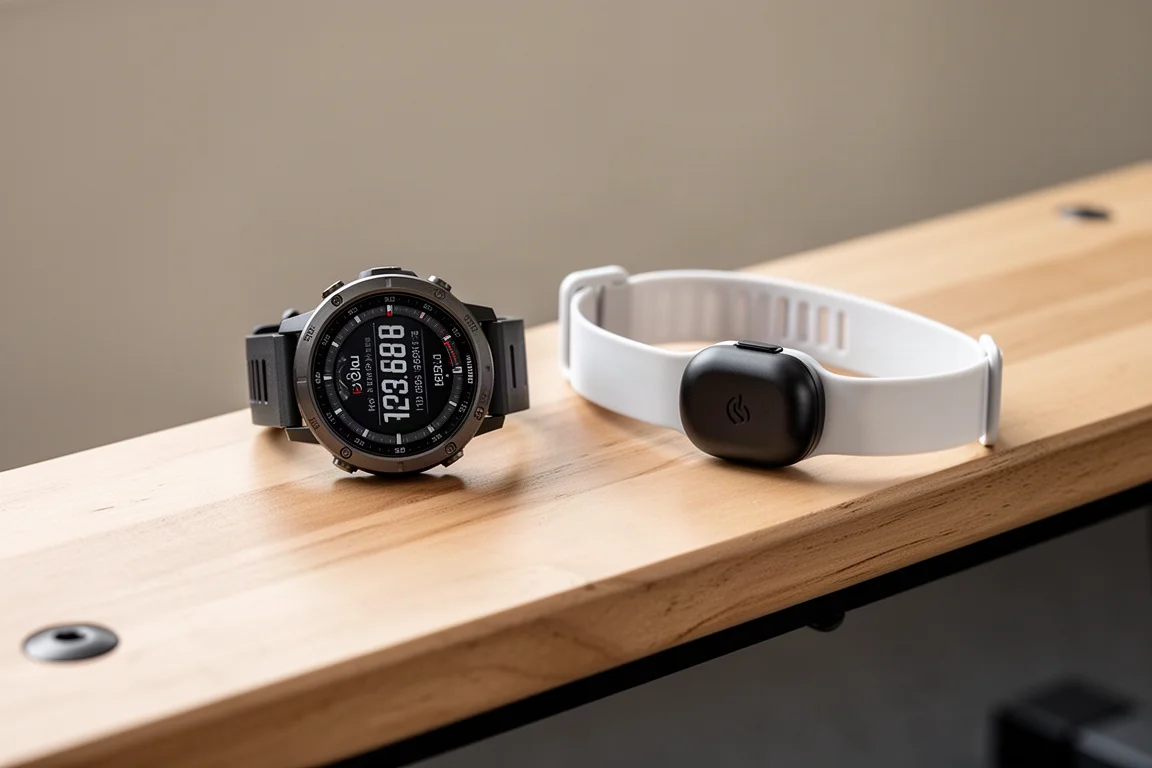
The result is a compelling alternative to a dedicated foot pod at roughly half the price. On Garmin watches you can choose whether pace and distance come from GPS or the chest strap, indoors or outdoors, or restrict the strap to heart rate only. Compared side by side, the strap matched the foot pod across walking, easy running, and sprints, with near-identical response times.
Heart Rate Accuracy
Heart rate accuracy is where this section stays short because there is little drama to report. Across interval sessions on a treadmill, trail runs, city runs, and a ninety-minute outdoor ride, the strap’s heart rate traced identically against a Polar H10, an optical armband sensor, and a wrist-based optical sensor on a Garmin Forerunner 255. In every comparison it was spot-on, which matches the trend for Garmin’s recent chest straps.
Long-term durability of the new battery door is the one open question, and realistically it will take months of user reports to confirm it holds up better than the screw-down design it replaces.
Buying Advice
If you are choosing between Garmin’s straps and cheaper rivals like the Polar H10 at around $80 or the Wahoo Tickr at around $60, it comes down to ecosystem. In the Garmin world, the HRM-Pro Plus earns its price with running power, running dynamics, swim offloading, and standalone intensity minutes. If you only need accurate heart rate, the Polar H10 is just as accurate at roughly two-thirds of the price.
Conclusion
The HRM-Pro Plus is the strap existing HRM-Pro owners wanted: same accurate heart rate, same advanced Garmin-specific data, and finally a battery door you can open without tools and without worrying about the seals. For Garmin watch owners, it is the obvious pick. For everyone else, weigh whether the extra Garmin data matters enough to skip a cheaper, equally accurate strap.
Product link
View more details for Garmin HRM Pro Plus
This product is mentioned in the review. Check the specifications, options, and compatibility before buying.
View more details for Garmin HRM Pro PlusFurther reading
Related Reviews
Fitness Tech
Garmin HRM 200 Review: A Heart Rate Strap Built for the Next Few Years
Garmin's new HRM 200 adds a button, a light, and encrypted heart rate broadcasting to a familiar chest strap formula, at a reasonable price.
Fitness Tech
Garmin Connect Plus Nutrition Logging: A Hands-On Look at Food Tracking Inside Garmin Connect
Garmin has added food and nutrition logging to its paid Garmin Connect Plus tier. Here is how the feature works, where it excels, and the trade-offs to know before subscribing.
Fitness Tech
Garmin Forerunner 255 Review: A Complete Beginner's Guide to Garmin's Mid-Range Running Watch
A practical walkthrough of the Garmin Forerunner 255, covering the interface, training tools, HRV status, race widgets, GPS accuracy, battery life, and music support.