Fitness Tech
Garmin HRM Fit Review: A Heart Rate Strap Designed for Sports Bras
Garmin's HRM Fit clips into the underside of a sports bra instead of using a chest band. We look at how it works, how accurate it is, and whether it earns its place over a traditional strap.
Introduction
Heart rate chest straps are famously accurate, but the strap itself has always been the awkward part. The Garmin HRM Fit takes a different approach: instead of a band that wraps around your torso, it is a compact sensor unit that snaps directly into the underside of a sports bra. It is aimed at women, or more precisely at anyone who trains in a sports bra.
There is no strap to adjust, no band to tighten, and nothing to slide into position the traditional way. But that design change brings trade-offs of its own, and after testing, the honest picture is more nuanced than the concept suggests.
Who This Strap Is For
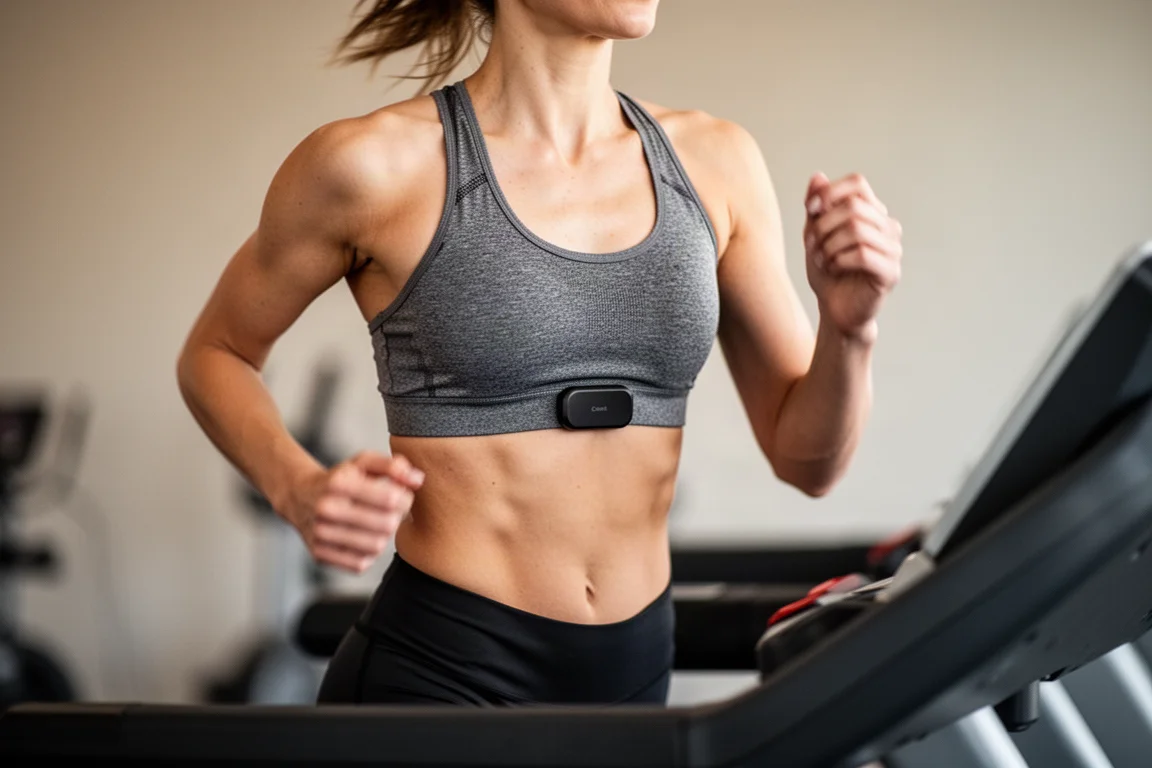
The HRM Fit is designed to snap into the underside of a sports bra once it is on. It will not work on bare skin, so it only makes sense for people who actually train in a sports bra. Garmin recommends a medium or high support bra for higher-impact activities, because the same reason you wear a supportive bra, restricting movement, applies to the sensor: if it bounces around, accuracy suffers.
For low-movement activities like yoga or indoor cycling, a low support bra works fine. Once attached, it stays put remarkably well. A tester’s first impression was that it felt like it might fall off during the first few minutes of a run, but by the end of that first run she stopped thinking about it entirely, and it has felt normal ever since.
Design and How It Attaches
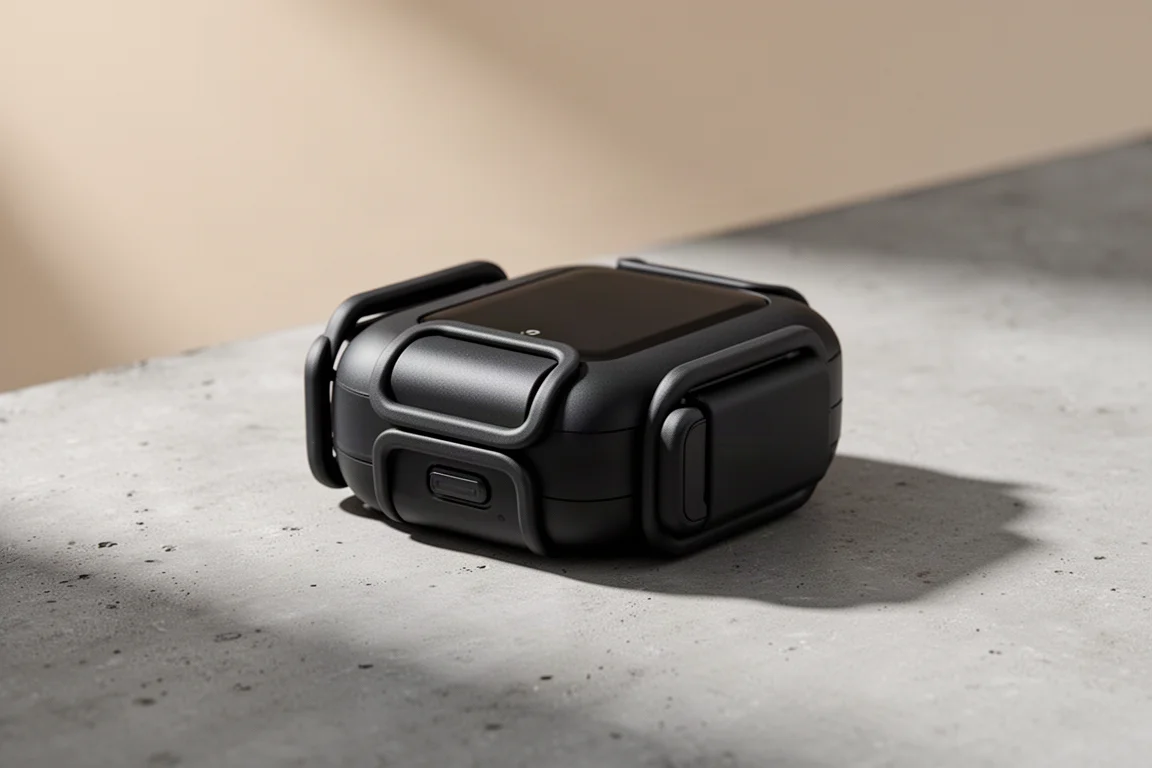
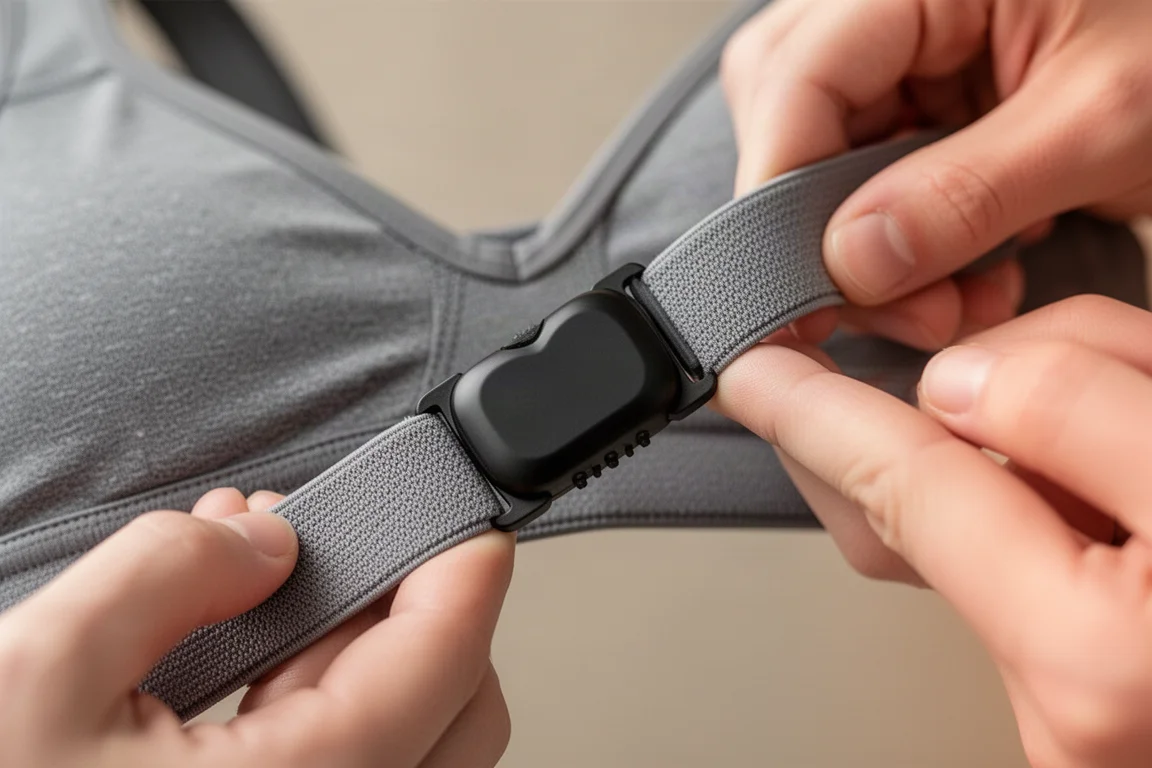
Physically, the unit has two side clasps plus a central clasp that opens up, and the electrode pads on the back are essentially the same design as Garmin’s higher-end HRM Pro Plus, shifted about a centimetre inward to make the unit smaller overall. The battery is a standard CR2032 coin cell, housed in a twist-lock compartment that opens without tools, a small improvement over the older screw-based design.
Attaching it is simple: open the clasps, slide the unit under the underside band of the bra, and snap the clasps shut. Small teeth keep it locked in place on the fabric. In slow-motion treadmill footage, the unit stayed in exactly the same spot on the chest even while the rest of the sports bra moved around. It is genuinely secure, and there is no risk of it wandering mid-workout.
Technical Features Beyond Heart Rate
Because it comes from Garmin’s HRM Pro lineage, this is more than a plain heart rate sensor. It broadcasts over both ANT+ and Bluetooth Smart with multiple Bluetooth connections, so it pairs with Garmin watches, Apple Watch, Peloton, Strava, or essentially any modern app or device. Pairing to a Garmin watch is quick, and a handy trick for waking the sensor is to rub the electrode pads for a second.
Two features stand out. First, stored activity data: if you do a sport without your watch, such as football, the strap records heart rate, calories, steps, and intensity minutes and sends them to your Garmin account afterwards. Note that this data appears in your daily timeline, not as a proper workout file that uploads to third-party sites like Strava. To capture it as a workout, you need a Garmin watch, which can download the full heart rate file from the strap at the end of an activity. That also makes swimming viable: the strap will not transmit through water, but it can record and sync later, and it stays put under a swimsuit edge.
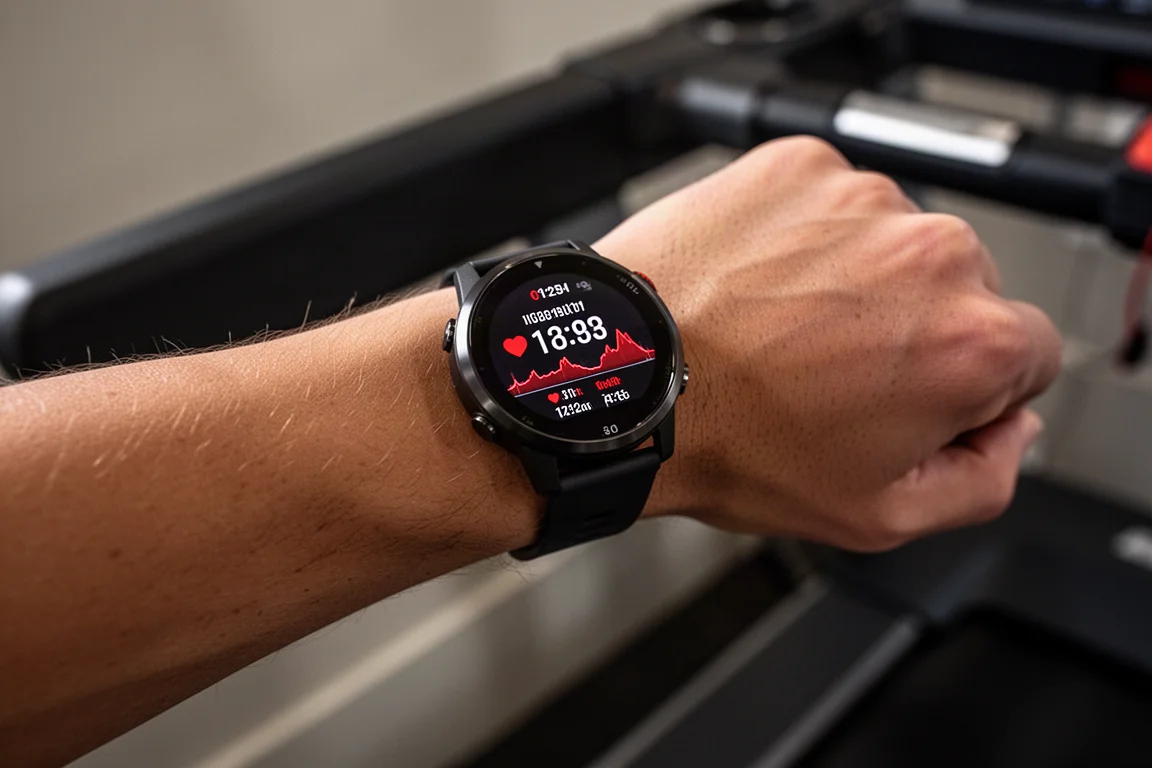
Second, indoor running pace and distance. On a treadmill with the watch left on the console and only the strap worn, the watch received heart rate, cadence, and pace data, and calculated distance within about 50 metres of the roughly 5,000 metres recorded on the treadmill itself. Calibration can run automatically outdoors via GPS, and you can reset it if calibration happened in poor GPS conditions.
Running dynamics and running power are also supported, though most Garmin watches from recent years calculate both natively on the wrist, so these matter mainly for older watch owners.
Accuracy Testing
Across indoor cycling and treadmill runs, the HRM Fit tracked identically to a Polar Verity Sense armband and a Garmin Fenix 7S Pro optical sensor, with high-intensity intervals handled without issue and readings staying within a couple of beats of each other throughout.
The one weak spot was a very cold, dry outdoor run. With just a sports bra and no outer layer, all sensors struggled in the first half, and the strap’s pre-moistened pads dried out quickly near freezing temperatures. Even with generous moisture applied, it needed several minutes before locking on. Once an outer shirt layer was added and moisture was reapplied mid-run, it matched the other sensors for the remainder of the run. This is a known behaviour of chest electrodes in cold, dry conditions rather than a flaw specific to this design.
Overall, accuracy matched what you would expect from a high-end Garmin chest strap: excellent when conditions are right, with dry cold weather as the main caveat.
Comfort and Fit: What Testers Said
Two runners tested the strap across various workouts, and their feedback was consistent. Attaching it was easy and it never moved. Comfort during workouts was fine, with no issues beyond the normal chafing risk that appears in warmer weather on longer efforts, which applies to any strap.
The friction points were procedural rather than physical. Snapping it on takes more steps than a traditional strap: slide it up the band, adjust, then secure the clasps. Taking it off was trickier still, with one tester feeling she might break a fingernail unless she found the right angle. And on the core question of whether it solves anything: both testers felt the added cost did not buy them a meaningful improvement over what they already used, whether that was a traditional chest strap or an armband.

That said, neither tester had real problems with it, and both acknowledged that someone with a different use case could genuinely benefit. Garmin’s own broader tester feedback was reportedly positive, and five of the six inventors listed on the design’s patent are women, so the problem it aims to solve was clearly understood from the inside.
Buying Advice
If you have never liked chest straps because of the constricting band, this genuinely removes that issue: a medium to high support sports bra already provides that compression, and the sensor itself feels equal or lighter by comparison. If your complaint has always been the strap rather than the sensor concept, the HRM Fit is the most secure, forgettable chest-based option of its kind.
If, however, you are happy with an upper-arm optical band or your existing chest strap, the honest verdict from testing is that this solves a problem that may not be yours. The attaching process adds steps, removal can be fiddly, and accuracy is comparable to what those alternatives already deliver.
Conclusion
The Garmin HRM Fit is well built, secure, accurate, and packed with useful features from the HRM Pro family. Whether it is worth buying comes down to one question: is the strap itself the thing keeping you from wearing a chest strap? If yes, this is a genuinely thoughtful solution designed by people who understood the problem. If not, a traditional strap or a quality armband will serve you just as well for less.
Product link
View more details for Garmin HRM Fit
This product is mentioned in the review. Check the specifications, options, and compatibility before buying.
View more details for Garmin HRM FitFurther reading
Related Reviews
Fitness Tech
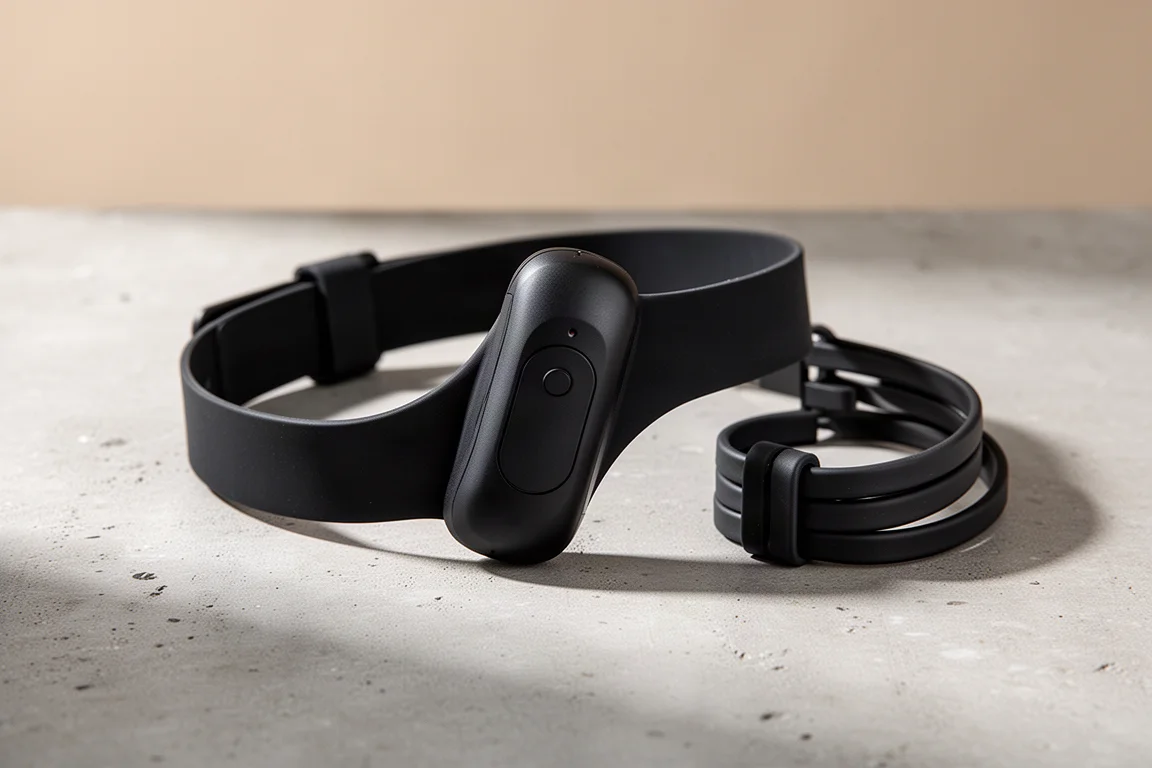
Garmin HRM 200 Review: A Heart Rate Strap Built for the Next Few Years
Garmin's new HRM 200 adds a button, a light, and encrypted heart rate broadcasting to a familiar chest strap formula, at a reasonable price.
Fitness Tech
Garmin Connect Plus Nutrition Logging: A Hands-On Look at Food Tracking Inside Garmin Connect
Garmin has added food and nutrition logging to its paid Garmin Connect Plus tier. Here is how the feature works, where it excels, and the trade-offs to know before subscribing.
Fitness Tech
Garmin Forerunner 255 Review: A Complete Beginner's Guide to Garmin's Mid-Range Running Watch
A practical walkthrough of the Garmin Forerunner 255, covering the interface, training tools, HRV status, race widgets, GPS accuracy, battery life, and music support.