Handheld GPS
Garmin GPSMAP H1 Review: A Capable Handheld Navigator That Still Needs Polish
A close look at Garmin's flagship handheld navigator: accurate tracks after months of firmware updates, dependable inReach messaging, and the screen and battery trade-offs to weigh before buying.
Introduction
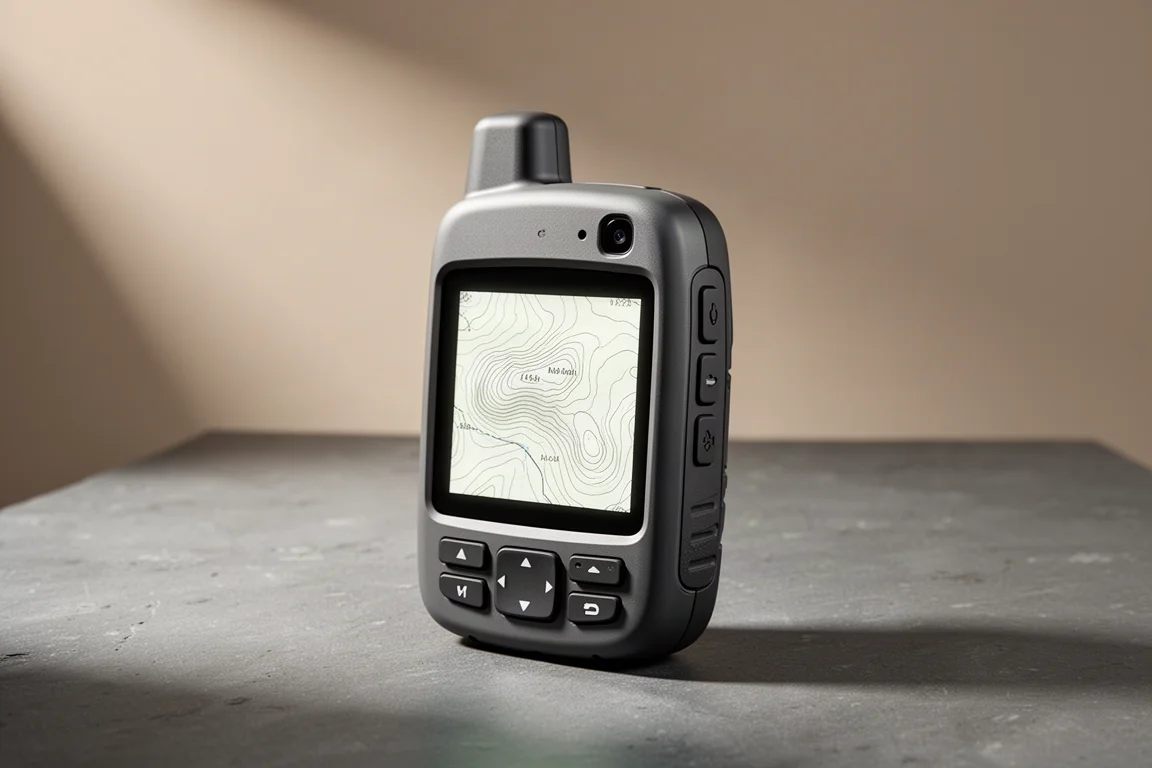
The Garmin GPSMAP H1 is the company’s flagship mapping handheld and the only model in the range with a camera built into the body. It combines full topographic mapping with inReach satellite messaging, and it replaces the older button-driven interface with a hybrid touch and button layout that behaves much more like a modern sports watch.
That ambition came with a rough start. Early units shipped with software that froze, forced hard resets, and made the device difficult to trust on a remote trail. Garmin has since released a long series of firmware updates, and the picture today is far calmer: navigation, satellite messaging, and position accuracy all work as intended, even though a handful of smaller annoyances remain.
This review covers what the GPSMAP H1 does well, where it still falls short, and who should think carefully before choosing it over the lower-priced GPSMAP 67.
Who the Garmin GPSMAP H1 Is For
This is a device for people who deliberately leave reliable phone coverage behind. If you work in extreme temperatures, travel well off the grid, or simply do not want to depend on a phone touchscreen in cold and wet conditions, the H1 is built around that exact scenario. It also suits anyone who wants to send photos over satellite without carrying a phone at all.
It is not a lightweight accessory. The H1 is bigger and heavier than the GPSMAP 67, so it makes most sense for users who already carry a specific navigation and communication need rather than counting every gram.

For long day hikes and multi-day backpacking trips, the extra bulk is the price of having mapping, messaging, and a camera inside one rugged body.
Main Strengths
Navigation and Map Handling
The redesigned interface mixes a touchscreen with physical buttons, and that combination makes map work noticeably easier. Panning around the map is smooth, redraws arrive faster than on earlier models, and you no longer have to nudge the map off the edge of the screen to make it move. Holding a point on the map brings up a reroute option, and recalculating a route happens quickly.
Starting an activity now follows a watch-like flow rather than the trip-computer logic of older GPSMAP units. The layout is less customizable than before, but once learned it fits the way most people record a hike or a ride.
Position accuracy has settled down as well. Early readings averaged around 10 to 14 feet and lagged behind the GPSMAP 67. After the firmware updates, typical accuracy lands in the 7 to 10 foot range in both auto select and multi-GNSS multi-band modes, and recorded tracks look clean and stay on the mapped trail.
Satellite Messaging and the Built-In Camera
inReach functions work as planned, including SOS and two-way messaging. Weather reports over satellite initially failed to come through, but that now works both for the current location and for a selected waypoint.
The H1 is the only unit in the family with a camera, and there are two of them, one front-facing and one rear-facing. They are basic sensors rather than a smartphone replacement, but a photo can be geo-referenced as a waypoint and sent over the satellite link without a phone. A side-mounted action button can be configured for a single tap, a double tap, or a press and hold.
Firmware Progress Since Launch
Garmin has invested real effort in the H1. The update history is long, and it includes added apps such as a proximity alarm and music controls alongside a wide range of fixes. Stability is dramatically better than it was at release, and the freezing screens and forced hard resets that made early units unreliable have not reappeared.
Some gaps remain. There are still no user profiles on the device, and a tides app that once existed on GPSMAP units is not present here. These are minor frustrations rather than deal breakers, and it is worth checking the current list of known issues before buying to confirm nothing major is outstanding.
Things to Consider Before Buying
Screen Visibility
The display is dimmer than the GPSMAP 67’s. Because it is a MIP panel, it is excellent in direct sunlight and stays readable in bright conditions, but it becomes harder to read in shade, such as under dense tree canopy. For a flagship mapping handheld, a higher pixel density would have been welcome.
Battery Life Versus Published Specs
Real-world runtime falls short of the published figures. Used mainly for navigation with the occasional map check, the H1 runs for roughly 70 to 80 hours with auto select enabled. Add inReach tracking at 10-minute intervals in low-power mode alongside auto select GPS, and that drops to around 30 to 40 hours depending on tree cover.
That is enough for long day hikes and typical backpacking trips. Anyone heading out for weeks at a time will need a plan to repower in the field.
Battery settings can be tuned to stretch runtime further, so those numbers represent a normal configuration rather than a hard ceiling.
Size, Weight, and Missing Features
The H1 is heavier and larger than the GPSMAP 67. It feels good in the hand and the weight is easy to adjust to, but it is a deliberate carry rather than a pocketable one. The watch-style activity flow also means less customization than long-time GPSMAP users may expect.
Buying Advice
The H1 is priced like a flagship, and at that price the screen and the state of the software at launch are fair criticisms. What you get in return is the most capable handheld Garmin makes: fast map handling, dependable inReach messaging, satellite weather, and the only integrated camera in the range. If those specific capabilities matter to you, the H1 is the strongest option available.
If your needs are simpler, the calculation changes. A device that provides mapping plus core inReach functions such as SOS and messaging covers most emergency and check-in scenarios for far less money, and the GPSMAP 67 has proven itself over thousands of miles of real use.
How the GPSMAP 67 Compares
The GPSMAP 67 costs roughly half as much as the H1. It is lighter, easier to hold, and its screen is brighter. Garmin no longer sells it directly, so availability now runs through resale listings, which is worth factoring into the decision.
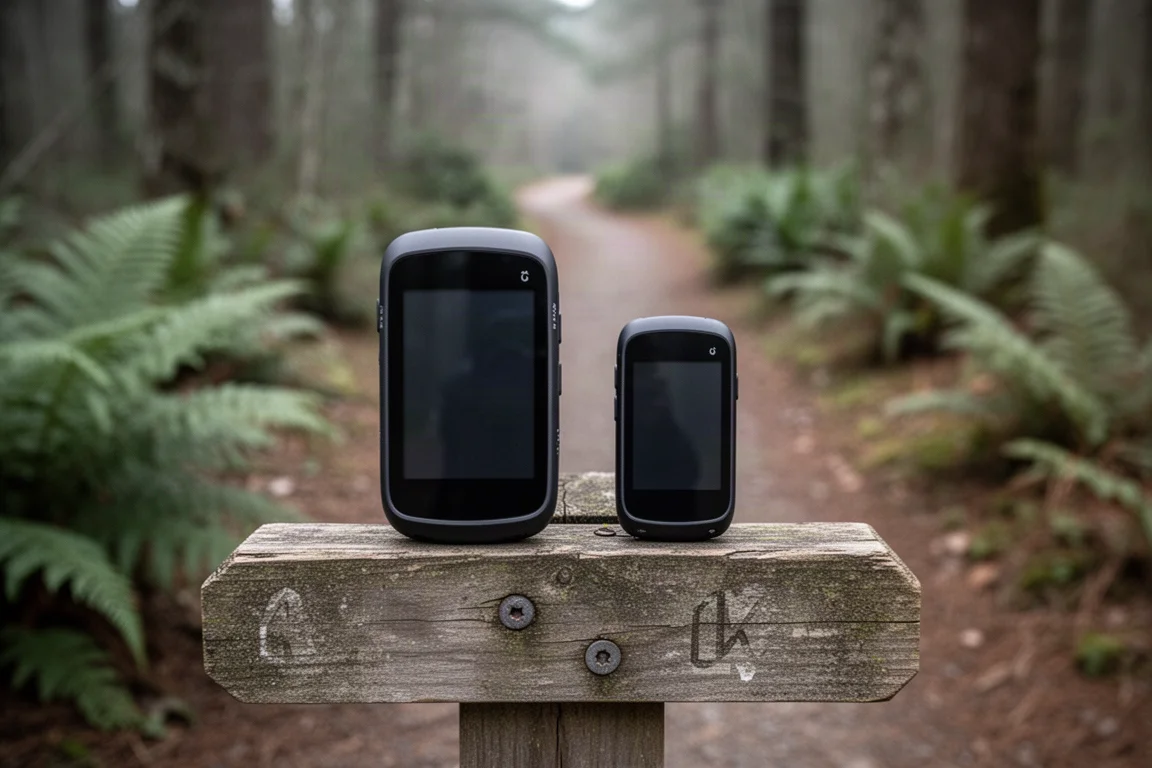
Choose the 67 if maps and core inReach features are all you need, and the H1 if you want the newest hardware, the faster interface, and the camera.
Conclusion
The GPSMAP H1 has grown into a genuinely usable backcountry tool. Accuracy, navigation, and satellite messaging all behave as they should, and Garmin’s firmware work has removed the instability that defined its first months. The dimmer screen, the shortfall against published battery figures, and the missing extras keep it short of perfect, but for off-grid users who need mapping, messaging, and a camera in one rugged device, it is a sensible choice. Buyers who only need the basics will still find better value in the GPSMAP 67.
Product link
View more details for Garmin GPSMAP H1
This product is mentioned in the review. Check the specifications, options, and compatibility before buying.
View more details for Garmin GPSMAP H1Further reading
Related Reviews
Handheld GPS
Garmin eTrex Touch Review: Rugged Handheld GPS With Real Trade-Offs
A detailed look at the Garmin eTrex Touch, covering real battery runtime, GPS accuracy, all-weather touchscreen performance, and the software quirks to weigh before buying.
Handheld GPS
Garmin GPSMAP 65 Review: Multi-Band Precision in a Familiar Handheld
A hands-on look at the Garmin GPSMAP 65, its multi-band GNSS precision, elevation accuracy, battery life, maps, and who should buy it.
Handheld GPS
Garmin Montana 750i Review: A Big, Rugged Handheld GPS With Real Trade-Offs
A practical look at the Garmin Montana 750i, covering the large transflective touchscreen, inReach messaging, preloaded maps, the camera, battery behaviour, and the trade-offs worth weighing before buying.