Outdoor GPS Watches
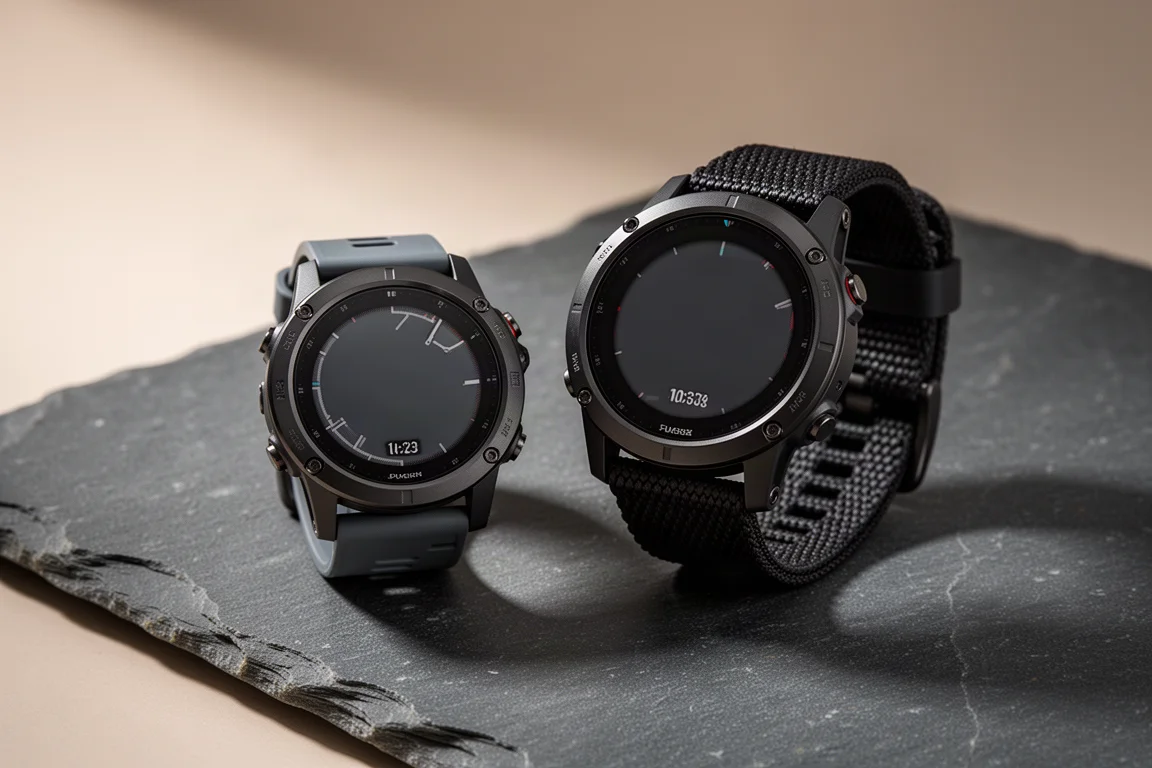
Garmin Epix Gen 2 Sapphire vs Fenix 7X Solar Sapphire: Which Outdoor Watch Fits You?
A practical comparison of two rugged Garmin outdoor watches: AMOLED brightness and map detail versus solar charging and multi-week battery life.
Introduction
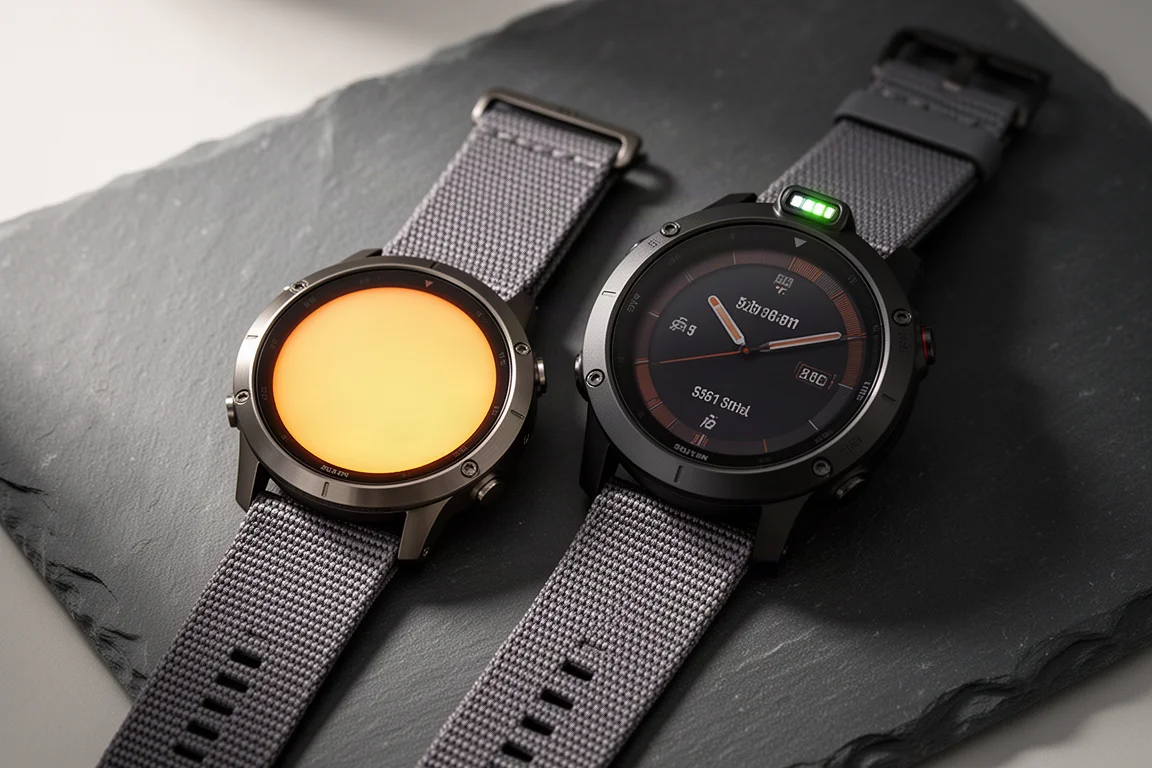
The Garmin Epix Gen 2 and the Fenix 7 family are built on the same foundation. The Epix Gen 2 is effectively a medium-sized Fenix with the same internals and the same operating system, while the Fenix 7X is the largest case size in the range. Two differences decide the purchase: the display technology and the battery life that comes with it.
This comparison covers what actually separates the Epix Gen 2 Sapphire from the Fenix 7X Solar Sapphire for hiking, navigation, and everyday wear, and it explains which version of each watch is worth targeting.
What the Epix Gen 2 and Fenix 7X Share
The Epix Gen 2 and the Fenix 7 run identical software and share the same sensor suite, so the choice is not about features being present on one watch and missing on the other. The split is narrower: the Epix has an always-on AMOLED display, the Fenix 7 has a transflective display that needs external light, and the Fenix 7 lasts considerably longer on a charge.
Across the many variants in both families, the sapphire editions are the ones to aim for. Sapphire glass is more resistant to scratches, which matters when a watch is banging against rock and brush. Storage doubles from 16GB to 32GB, which is enough to load large regional map sets, save music, record more activities, or store long GPX tracks. The sapphire models also add multi-band GPS, the most capable consumer positioning available on a wrist, and that receiver makes a real difference in difficult terrain.
For anyone spending serious money on an outdoor watch, the sapphire premium is the difference between a device that ages well and one that shows every scrape. It also tends to hold up better at resale.
Garmin Epix Gen 2 Sapphire: The AMOLED Option
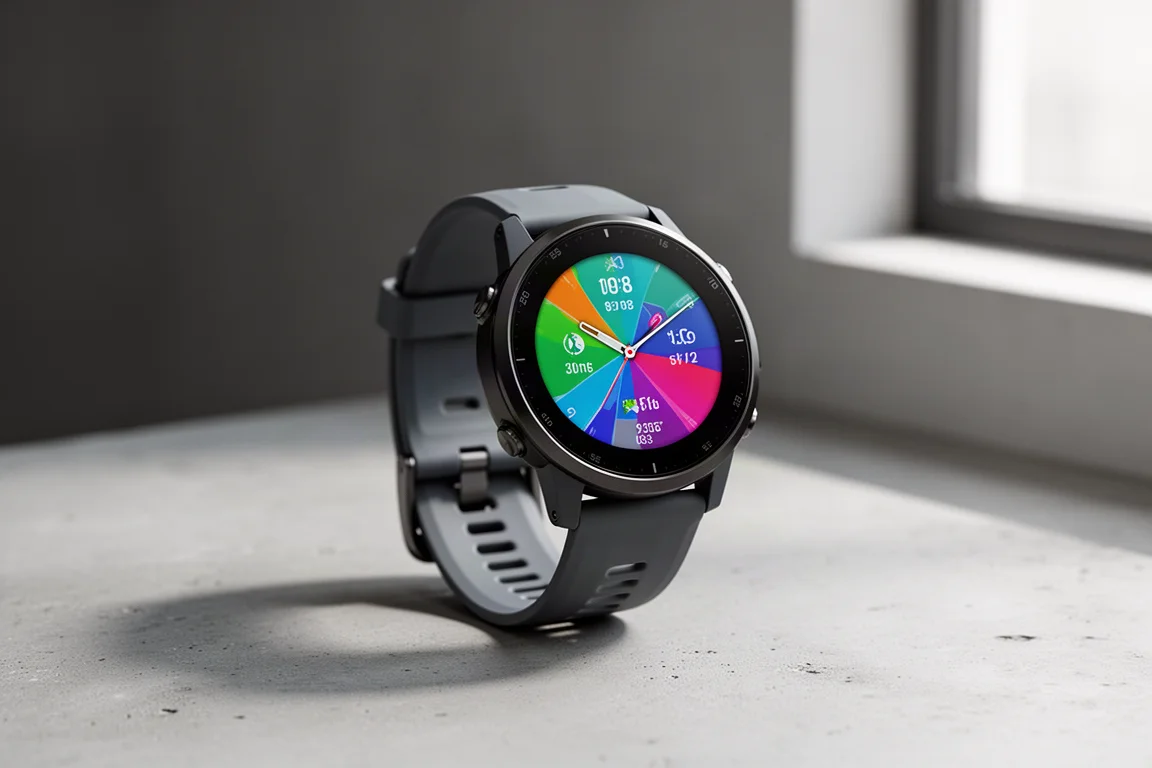
The Epix Gen 2 Sapphire uses an always-on AMOLED display with 65,000 colors per pixel, the same type of screen found on an Apple Watch. It is bright, vivid, and readable without tilting the wrist toward a light source. That single change reshapes how the watch gets used on trail: checking the map becomes a quick glance instead of a small task.
Pixel density is close to double that of the Fenix 7, so more information fits at the same zoom level. At a one-mile zoom, trail names that require extra zooming on the Fenix appear directly on the Epix. The practical result is better map readability and more detail available at a glance, which is exactly what matters when you are moving.
Battery life is the trade-off. The Epix managed roughly 20 to 33 hours of GPS activity tracking, which still covers a 24-hour ultra run, and about a week between charges in everyday use with daily exercise, heart rate tracking, and sleep tracking. The case is the medium size in the Fenix range, so it sits lighter on the wrist than the 7X. There is no built-in LED flashlight, though the screen can be lit fully white and used as a light in a pinch.
Garmin Fenix 7X Solar Sapphire: The Battery and Solar Option
The Fenix 7X Solar Sapphire keeps the transflective display used across earlier Fenix generations. It relies on external light to read clearly and offers 64 colors per pixel, so it needs a small wrist adjustment to catch the light before the screen looks right. It works, but the extra movement becomes noticeable once you have used a brighter screen.
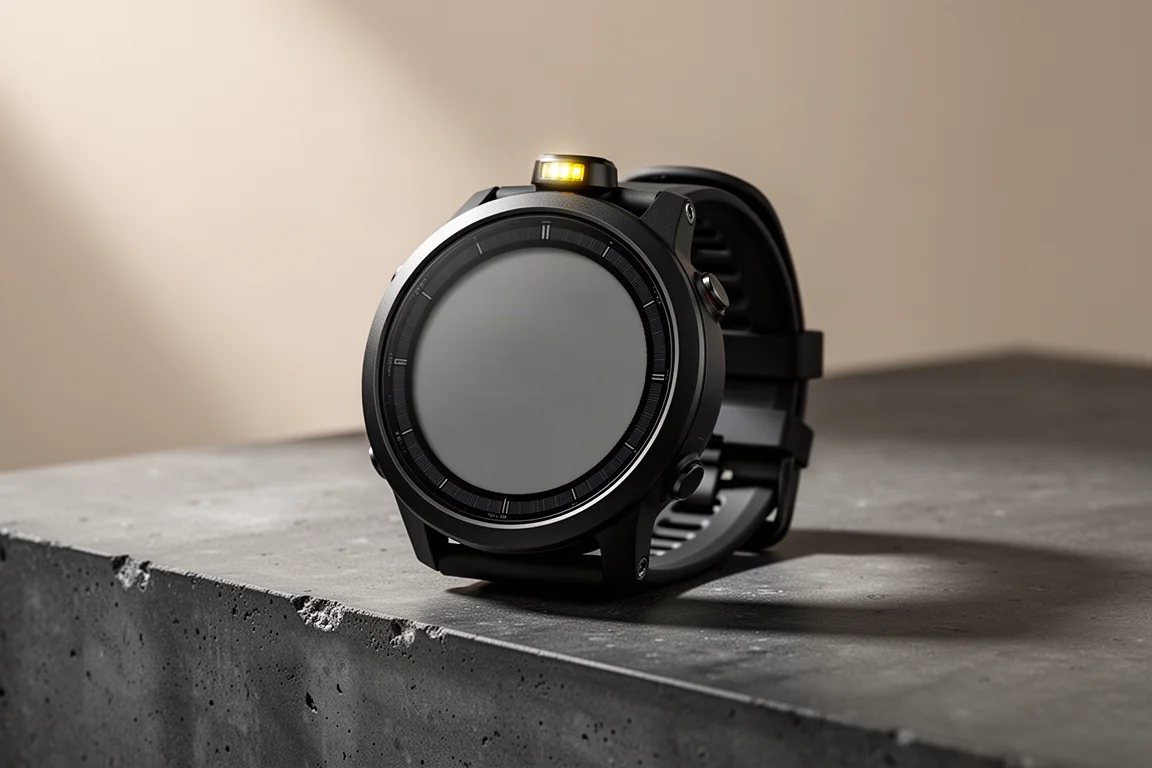
Solar charging extends the runtime further, and the 7X adds an LED flashlight built into the top crown. The flashlight offers several brightness levels, a red light, and a strobe mode. It is not a substitute for a headlamp on a hike or a night trail run, but it works well as a backup, and the red light is genuinely useful around camp after dark. The flashlight is only available on the 7X model, not on the smaller Fenix 7 variants.
Runtime is where this watch separates itself. It tracked roughly 65 to 100 hours of GPS activity with solar assistance, which covers a 24-hour race or a multi-day effort without worry, and about three weeks between charges in everyday use. For through-hikers and anyone heading out for long stretches without a charger, that endurance is the whole point.
GPS Accuracy, Maps, and Navigation
Positioning offers three settings: GPS only, multi-GNSS using GPS, Galileo, GLONASS, BeiDou, and QZSS, and multi-GNSS combined with multi-band. Multi-band draws additional signals from the same satellites, and satellite lock takes roughly 10 to 15 seconds, compared with up to a minute or two on earlier generations.

The accuracy gains are most visible in demanding terrain. In slot canyons, deep gullies, and cliffside trails, multi-band helps reject signals that bounce off canyon walls, and the wider satellite pool keeps a fix when one side of the sky is blocked. Tracks matched those from handheld multi-band units, in a far smaller package. GPS elevation, available once four or more satellites are locked, was routinely within five to ten feet, which makes elevation a usable way to confirm position and gauge climbing progress.
In ordinary conditions the gap narrows considerably. Multi-GNSS alone produced nearly identical tracks in regular terrain and in heavy tree cover, including wet and cloudy days, so disabling multi-band is a sensible way to save battery when the environment is forgiving. GPS only was noticeably off track and is best avoided.
Sapphire editions ship with regional TopoActive maps preloaded, and additional maps can be downloaded directly on the watch through the map manager app, without syncing to a computer. The watch must be plugged in while downloading, and large sets take hours, with the Europe set around 11GB. The maps are routable, support course creation and waypoints, and allow the theme and level of detail to be customized.
Courses remain the main navigation method. Following a course gives on-course and off-course alerts, and turn alerts can be switched off when switchbacks make them constant. The Up Ahead feature lets you add points along a course, such as water sources, junctions, or checkpoints, and a dedicated screen shows the distance to the next one. ClimbPro breaks out the climbs on a course and shows progress up each one, which is useful for pacing a long ascent. The altitude, barometer, and compass sensors behave as expected and match earlier generations.
Touchscreen and Map Handling on the Trail
Both watches add a touchscreen, and it can be disabled entirely. Touch is off by default during activities, so water sports and heavy rain do not trigger accidental input, and full button operation still works exactly as before.
Rain performance held up well, well beyond what dedicated cycling computers manage once their screens get soaked. On the map, panning and zooming with a finger replaced the older button cycling between pan mode and zoom mode, and redraws are quick at the zoom levels used for hiking and trail running.
The map is the largest battery drain on either watch. It is worth using deliberately and then returning to a data screen rather than leaving it running, and redraws slow down noticeably when the map is zoomed far out.
Health and Training Features Worth Knowing
Body Battery summarizes readiness on a 0 to 100 scale using exercise load, heart rate, and heart rate variability. It is a practical gauge before a long hike or a big day out, and a low reading on a morning that otherwise feels fine can be an early signal to ease off.
Stamina is the related metric for pacing during activity, showing how much capacity remains as an effort progresses. It is available for activities such as biking and running, though not for hiking.

The pulse oximeter is the weakest of the health features. Readings came in two to three percent or more below a professional-grade device, and accuracy depends on holding the wrist still and horizontal. Most users can leave it switched off.
Data lands in two places. Health and fitness metrics sync to Garmin Connect, while navigation data such as saved waypoints syncs to Garmin Explore, and recorded activities sync to either system. A custom dashboard on the Garmin Connect website pulls health and activity data into a single view, which avoids juggling several apps.
Battery Life in Real Use
The Fenix 7X Solar Sapphire tracked roughly 65 to 100 hours of GPS activity with solar assistance, enough for a 24-hour race or a long multi-day effort. The Epix Gen 2 Sapphire tracked 20 to 33 hours, still enough for an ultra run while keeping the brighter screen.
Everyday runtime separates the two more sharply. With 30 to 60 minutes of daily exercise, a longer weekend hike of six to ten hours, continuous heart rate, and sleep tracking, the Epix lasted about a week between charges. The Fenix 7X Solar Sapphire ran about three weeks. For context, a smartwatch with a comparable AMOLED screen typically manages six or seven hours of activity tracking and needs a daily recharge.
Both watches can be stretched with power profiles that disable features you are not using. Turning off the always-on display on the Epix, disabling multi-band in forgiving terrain, switching off Wi-Fi during activities, and using sleep mode at night all extend runtime. On the Epix, the always-on setting can be switched off so the screen turns off when lowered, which saves battery at the cost of a short delay of about a second before the display wakes when you lift your wrist. For multi-day trips, a small USB cable and a battery pack are enough to top the Epix up overnight.
Who Should Buy Which Watch
Choose the Epix Gen 2 Sapphire if the screen matters most. The brighter display, higher pixel density, lighter medium-sized case, and better map readability make it the more enjoyable watch to wear daily, and roughly a week of battery life is reasonable for most outdoor use. Hikers coming from an Apple Watch will find it a natural step up in endurance without giving up a modern display.

Choose the Fenix 7X Solar Sapphire if endurance is the priority. Through-hikers and anyone spending long stretches away from a charger benefit from the extended runtime, the solar option, and the built-in flashlight. The trade is a larger, heavier case and a display that needs the right light.
Neither watch is necessary for straightforward navigation. A smartphone with offline maps and a downloaded track handles well-conditioned day hikes, and a basic handheld unit covers wet or rough conditions where a watch would be exposed. If you already own a Fenix 5 or Fenix 6 and it still works well, there is little reason to replace it, since the newer tracks are more accurate but the core functionality is largely the same. The Instinct and Instinct 2 are worth a look for a lower-cost route into the ecosystem, offering course following without on-watch maps.
Conclusion
These two watches share the same software, sensors, and navigation tools, so the decision comes down to display versus endurance. The Epix Gen 2 Sapphire delivers AMOLED brightness, higher pixel density, and clearer map detail in a lighter case. The Fenix 7X Solar Sapphire delivers multi-week battery life, solar charging, and a built-in flashlight in a larger case.
Whichever direction you take, the sapphire edition is the version to buy. Scratch-resistant glass, doubled storage for maps and tracks, and multi-band GPS accuracy are the features that make these watches genuinely capable in the outdoors, and they are worth the incremental cost over the standard models.
Further reading
Related Reviews
Outdoor GPS Watches
Garmin Epix Gen 2 Sapphire vs Fenix 7X Sapphire Solar: Which Adventure Watch Fits You?
Two Garmin adventure watches built on the same platform, separated by display technology and battery endurance. Here is how to pick between them.

Backpacking Gear
Building a 10 lb Base Weight: An Ultralight Backpacking Gear List
A practical walkthrough of the ultralight pieces behind a 10 lb base weight, from a 765 g pack and a roomy one-person tent to a full camp chair and a dependable water filter.

Road Bikes
10 New Road Bikes Worth Watching: Aero, Titanium, Steel and Endurance Standouts
A practical roundup of 10 new road bikes, from aero flagships chasing single-watt gains to titanium, steel and endurance platforms built for real roads.