Outdoor Watches
Garmin Enduro 3 vs Garmin Fenix 8 51mm AMOLED: Battery, Screen, and Comfort Compared
A practical comparison of the Garmin Enduro 3 and the Garmin Fenix 8 51mm AMOLED, covering battery life, screen technology, comfort, and the UltraFit nylon band that improves both watches.
Introduction
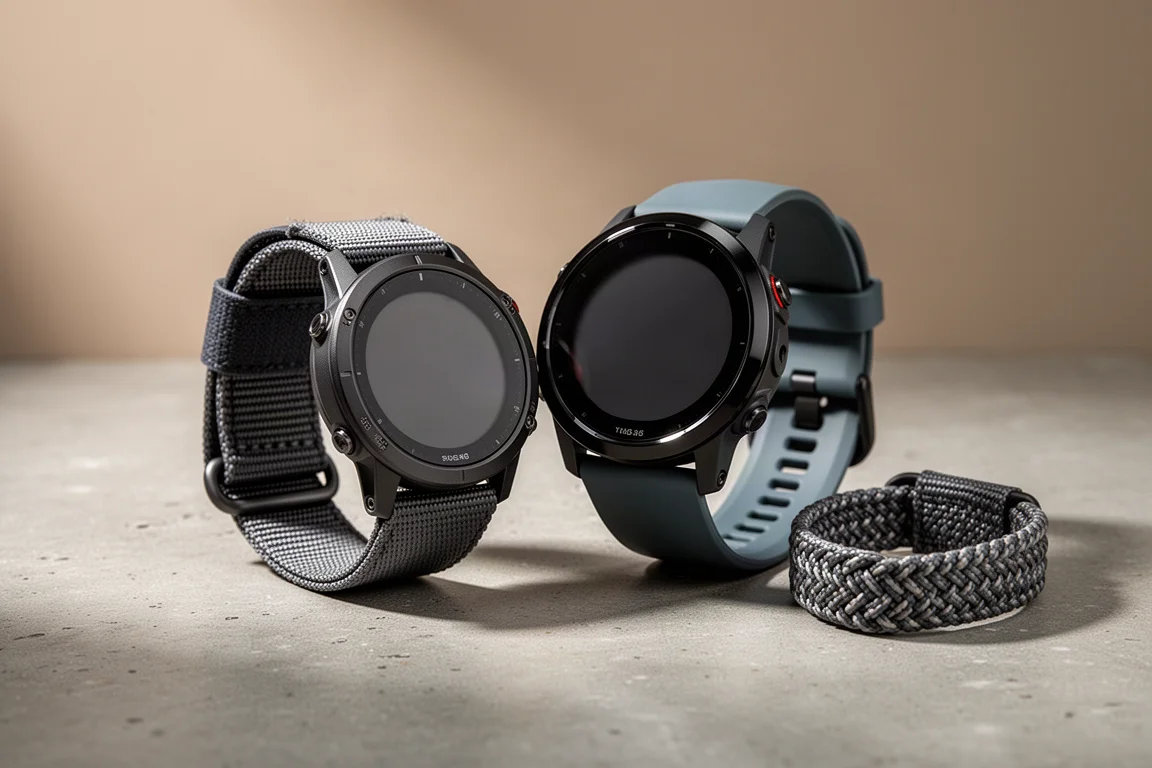
Choosing between the Garmin Enduro 3 and the Garmin Fenix 8 51mm AMOLED usually comes down to a short list of questions. How often do you want to charge? How much do you care about screen quality? How much do you want the watch to do beyond tracking? Both watches share the same 51mm case size, both are built for outdoor use, and both handle hiking, health tracking, and navigation. The differences show up in daily ownership rather than on a specification sheet.
This comparison covers battery life, display behaviour, comfort on the wrist, connected features, and the firmware reality of living with each watch.
How These Two Watches Differ
The clearest difference is charging cadence. The Fenix 8 51mm AMOLED typically needs a recharge about once a week with regular activity and a long hike included. The Enduro 3 stretches that to roughly every three or four weeks.
Two things drive that gap. The first is the display technology, since the Enduro 3 uses a MIP screen rather than an AMOLED panel. The second is the solar panel on the Enduro 3, which is best understood as something that offsets battery use rather than something that tops the watch up. Reaching a full charge from sunlight alone is unlikely, although leaving the watch out in the sun in smartwatch mode has produced a positive charge.

In practice, solar results vary a lot. Hiking in bright sun above the tree line works well. Walking or riding under tree cover and cloudy skies makes the contribution negligible. Even so, the Enduro 3 is efficient enough that its battery still holds up without much solar help.
Screen quality is the other major fork in the road. The AMOLED panel on the Fenix 8 is stronger on paper, and maps in particular look noticeably better there. Maps on the Enduro 3 remain acceptable, and for a glanceable confirmation of position that is often enough. Anyone expecting to pan around and navigate in fine detail on a watch will prefer the Fenix 8, while heavier route work tends to move to a dedicated GPS unit or a phone.
Comfort is the difference people underestimate. The Enduro 3 is lighter than the Fenix 8 51mm, and it feels considerably lighter and better balanced on the wrist. Part of that comes down to the band, which is covered further below.
Garmin Enduro 3: Battery Life and Solar Charging
The Enduro 3 concentrates on the things Garmin does well: long battery life, health and fitness tracking, activity tracking, and on-board maps and navigation. It does not attempt much beyond that, and for many outdoor users that focus is exactly the point. Between charges, expect roughly three to four weeks of normal use, which is the single most persuasive argument for this watch.
The solar panel is best treated as an offset rather than a top-up. Reaching a full charge from sunlight alone is unlikely, although leaving the watch out on a sunny surface in smartwatch mode has produced a positive charge. Walking and hiking through the day means the light hitting the panel varies constantly, so results are mixed. Bright sun above the tree line helps. Tree cover and cloudy skies make the contribution negligible. The watch is efficient enough that this rarely becomes a problem.
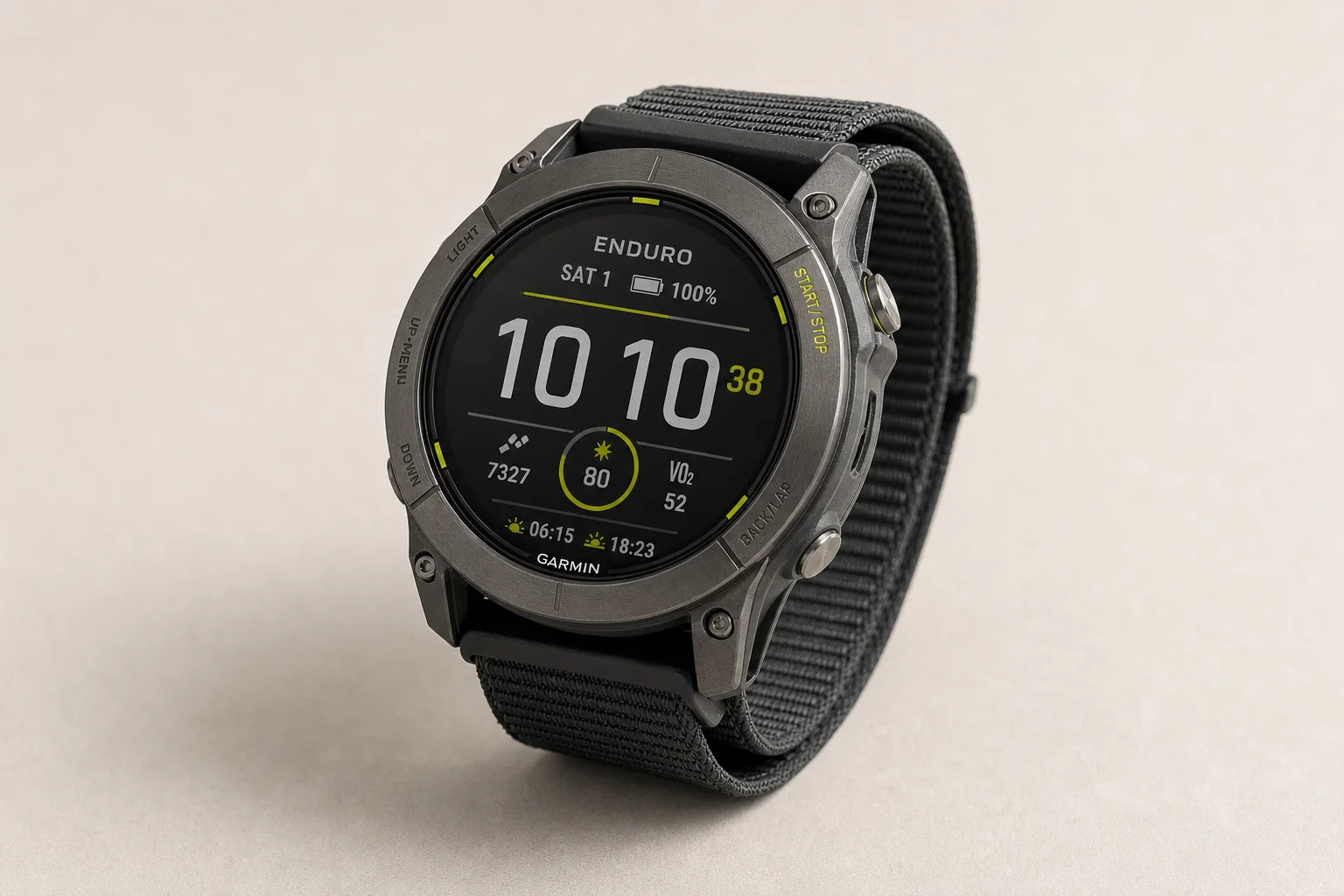
The MIP display is sharper and crisper than earlier MIP screens. In direct sunlight it reflects light back to the eye, which sometimes means adjusting your wrist angle slightly to catch it cleanly. When ambient light is low, a backlight takes over and can be triggered by a wrist gesture, a button press, or automatically after sunset. Anyone upgrading from an older MIP watch should be pleased. Anyone coming from an AMOLED watch may need a few days to adjust.
Maps are acceptable on the Enduro 3, offering a glanceable confirmation of where you are rather than a detailed navigation surface.
Garmin Fenix 8 51mm AMOLED: Display and Connected Features
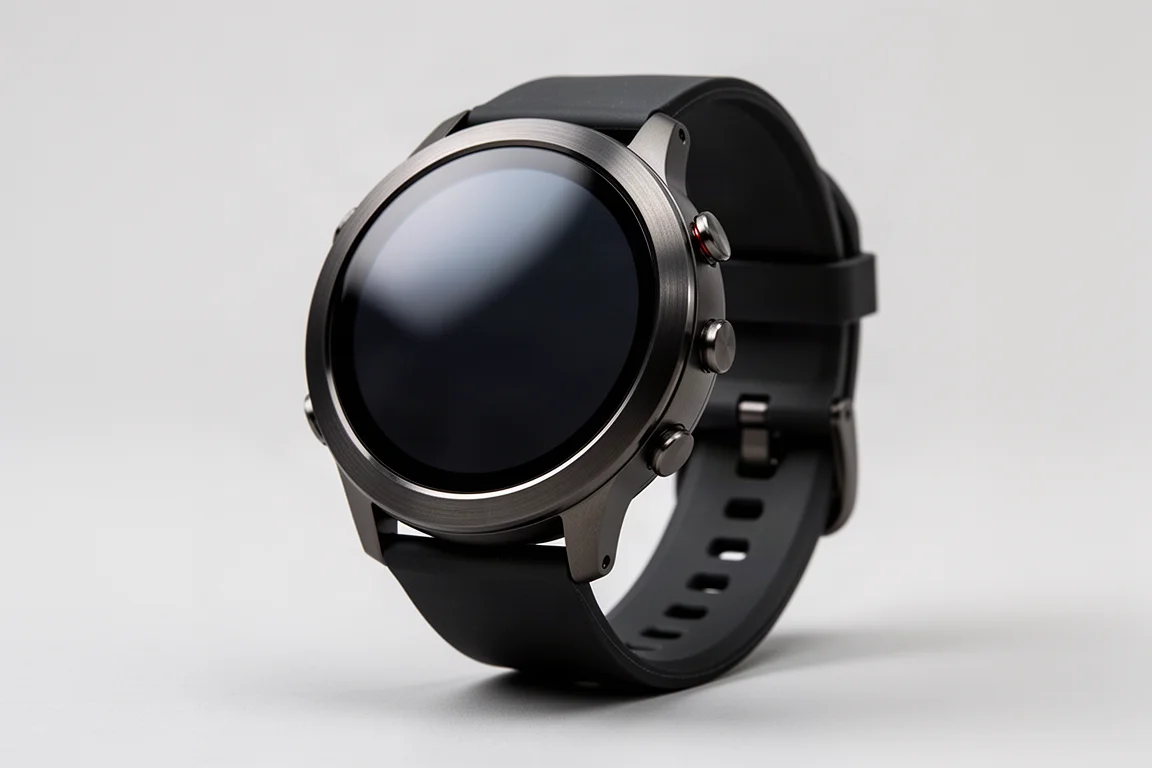
The Fenix 8 51mm AMOLED pushes further into smartwatch territory. A speaker and microphone allow calls to be taken and made from the wrist, which is convenient when a phone is packed away. It can also remote control a phone, surface weather information, and includes a dive computer. Those extras only earn their place if you will actually use them.
The AMOLED display is the headline difference. Compared side by side, the eye tends to settle on the AMOLED panel, and maps carry noticeably more detail and context. For anyone who glances at a watch hundreds of times a day, that screen is a genuine quality of life improvement.

The trade-offs are weight and charging. The Fenix 8 51mm feels bigger and heavier on the wrist than the Enduro 3, and the standard rubber band does not help matters. It also needs a recharge roughly once a week with regular activity and a long hike included, which is a different rhythm of ownership to the Enduro 3.
Garmin UltraFit Nylon Band: Comfort and Fit
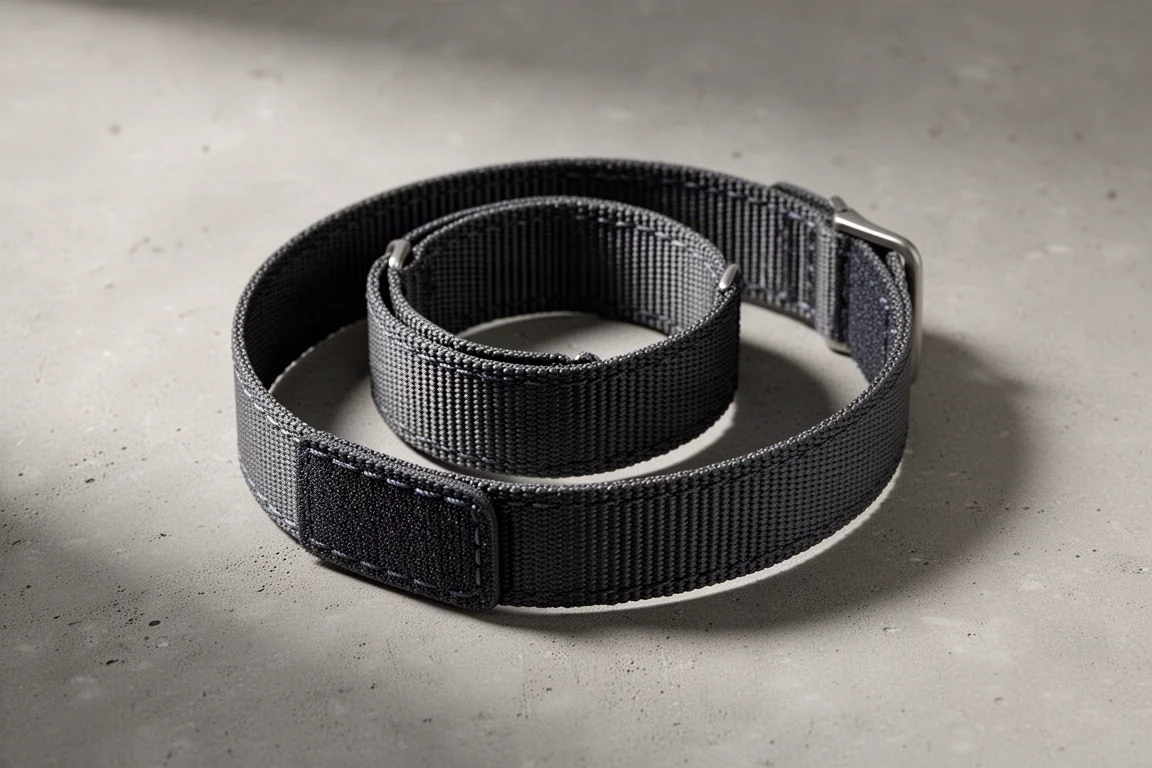
The UltraFit nylon band closes with a hook-and-loop fastener and is one of the simplest upgrades available for either watch. It is very comfortable, dries quickly, and makes a noticeable difference to how a large watch sits on the wrist.
Moving the Enduro 3’s band onto the Fenix 8 transformed how that watch felt, making it far better balanced despite the identical case size. Generic nylon bands from marketplaces tend to stretch out over time. The Garmin band costs more, but it has held its shape well so far and has proven a worthwhile purchase.
If you buy the Fenix 8, adding this band is worth considering from the start.
Firmware, Stability, and What to Expect
Garmin’s recent pattern has been to release a firmware update that resolves one issue and occasionally introduces another, sometimes in the form of battery drain. The Enduro 3 has seen less of this than the Fenix 8. The Fenix 8 had high-profile bugs early on, along with restarts and other glitches, but close to a year later it is relatively stable. Both watches are in a reasonable place now.
The practical advice is the same for either model: update the firmware as soon as the watch arrives, and check the support forums before buying, because behaviour changes over time. Neither watch needs to be avoided purely on stability grounds at this point.
Which Watch Fits Which Outdoor Routine
If your priority is time away from a charger, the Enduro 3 is the straightforward answer. Three to four weeks between charges changes how you plan trips, and the solar panel adds a useful offset when you are above the tree line in bright conditions.
If your priority is the screen, the Fenix 8 51mm AMOLED wins. The AMOLED panel is easier to read, and maps carry more context. The connected features, including the speaker, microphone, phone remote control, and dive computer, only matter if you will genuinely use them.
Buying Advice: Matching the Watch to Your Needs
The Enduro 3 costs a few hundred dollars less than the Fenix 8, largely because it skips the connected features and uses the MIP display. For outdoor users who want Garmin doing what Garmin does best, that is a sensible trade rather than a compromise.

If you are coming from an Apple Watch or an AMOLED Garmin and cannot picture living with a MIP screen, the Fenix 8 is the better fit. If the speaker, microphone, phone remote control, or dive computer matter to you, it is the only option of the two. Either way, the UltraFit nylon band is worth adding, and it makes the biggest difference on the larger Fenix 8.
Two further Garmin options are worth a look. The Instinct 3 Solar suits anyone who does not need maps and wants a rugged outdoor watch with solar and long battery life. The 4Runner 970 is positioned as a less expensive alternative to the Fenix 8.
Conclusion
Both watches are capable outdoor tools, and the decision comes down to which trade-offs you would rather live with. The Enduro 3 delivers weeks of battery life, a lighter and better balanced feel on the wrist, and a focused feature set for less money. The Fenix 8 51mm AMOLED delivers the better display, richer maps, and connected features you may or may not use. Whichever you choose, update the firmware right away and consider adding the UltraFit nylon band.
Further reading
Related Reviews
Outdoor Watches
Garmin Fenix 7 Solar vs Garmin Epix: Which Outdoor Watch Fits Your Adventures?
Two top-end Garmin watches share the same build and feature set. The screen technology decides battery life, daylight readability, and how much detail you can pull from a map.
Outdoor Watches
Apple Watch Ultra for Hiking: How It Compares to the Garmin Epix and Fenix
Six months of trail use show what the Apple Watch Ultra does well on hikes, where navigation falls short, and when a Garmin Epix or Fenix is the better fit.
Outdoor Watches
Apple Watch vs Garmin: Which Outdoor Watch Should You Buy?
A practical comparison of Apple Watch Ultra, Apple Watch SE, the Garmin Fenix and Epix lines, and the two apps that add offline trail maps to an Apple Watch.