Bike Computers
Garmin Edge 840 vs Hammerhead Karoo 3 vs Wahoo ROAM V2: Full Bike Computer Comparison
Three flagship GPS bike computers compared on display, mapping, training features, battery life and sensor support, to help you pick the right head unit.
Introduction
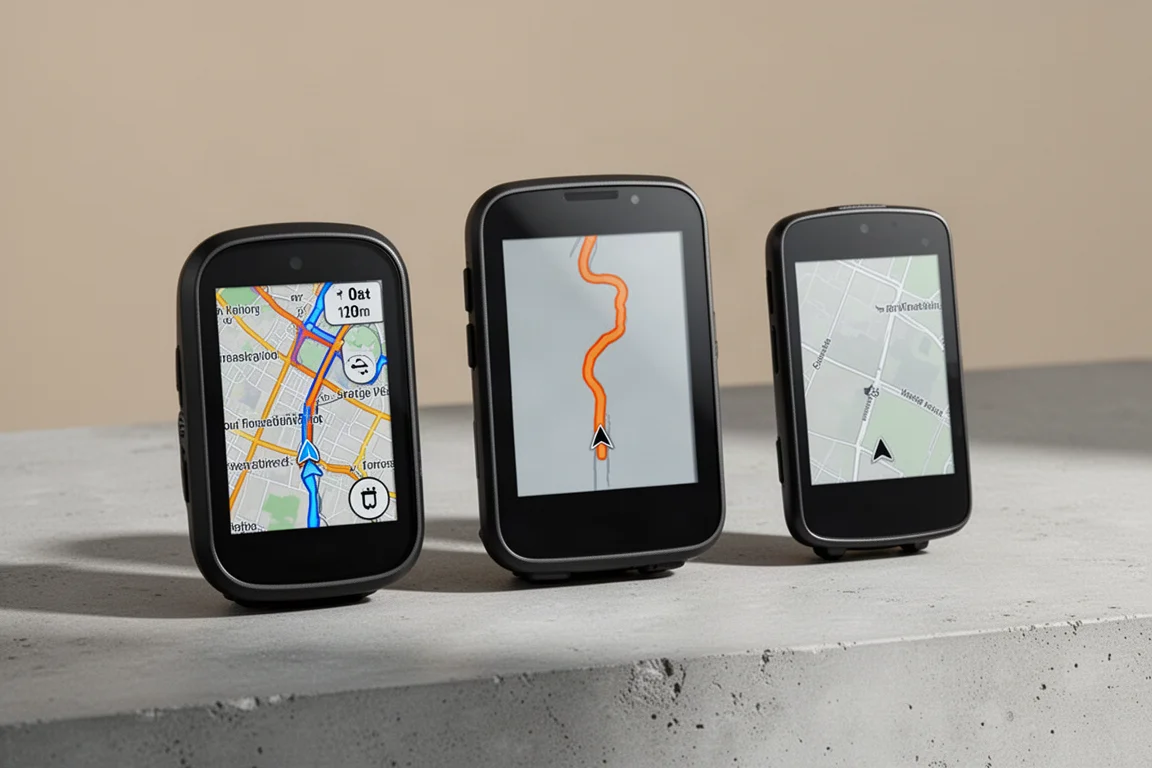
The Garmin Edge 840, Hammerhead Karoo 3 and Wahoo ROAM V2 are three of the most capable GPS bike computers on the market, and after extensive riding on all three, including long mountain rides in Gran Canaria, the honest headline is this: all three are excellent, and you would be happy with any of them. The differences are in the details, and those details matter differently depending on how you ride.
This comparison walks through every meaningful feature area, from display and mapping to training tools, battery life and sensor support, so you can match the strengths of each unit to your own priorities.
Pricing and What’s in the Box
All three units sit in a similar general price ballpark, so this is not a category where one device dramatically undercuts the others. One thing to keep in mind: the Garmin Edge 840 comes in two versions, one without solar and one with solar. The solar variant simply extends battery life using solar cells on the outer edge of the device; there is no other difference in features or functionality between the two.
Each unit ships with an out-front mount, which is standard for bike computers today. On the Garmin and Hammerhead mounts, you can additionally mount a GoPro, action camera or bike light below the computer, although that requires a separate accessory not included in the box. The Wahoo mount is an aero-style design, so nothing can be attached underneath it, but it is theoretically more aerodynamic than the other two.
Displays, Touchscreens and Responsiveness
The three displays have distinctly different characters. The Hammerhead Karoo 3 looks the most like a smartphone, with rich colour and a modern interface. The Garmin Edge 840 uses fewer colours but remains very visible, while the Wahoo ROAM V2 is the most restrained in its use of colour across display elements.
In real-world riding, from bright sun to full darkness and everything in between, all three are perfectly usable. Some claims that the Karoo 3 has the clearest display available are overstated: it is easy to see, but in very bright sunlight it is not quite as visible off-angle, from the riding position, compared with looking straight down at it. At night, none of the units are problematic, and the Karoo’s dark mode keeps it comfortable rather than excessively bright.
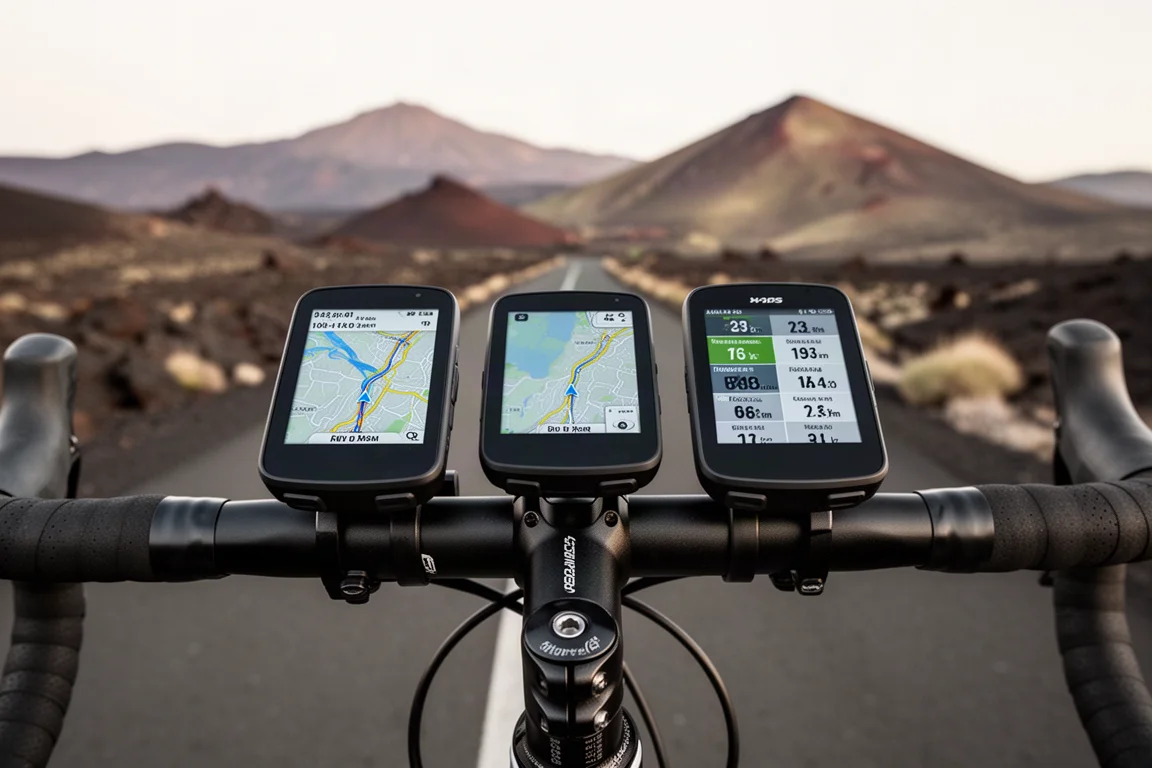
On touchscreens, the Wahoo has none, which settles that question. Both the Garmin and Hammerhead touchscreens worked flawlessly even in heavy rain during dedicated testing. In terms of interface responsiveness, the Garmin feels the fastest of the three. The Hammerhead is the slowest, with noticeable lag when swiping down from the top of the screen, and that lag can grow as a ride progresses. That said, swiping between data pages during a ride is efficient and poses no real problem.
The bottom line for this whole section: do not overthink it. All three are fine in sun, fine at night, and fine while riding. Despite what internet discussions might suggest, you cannot go wrong on the display front with any of these units.
Ease of Use and Data Pages
Garmin has the most features of the three by a wide margin, and more features inevitably means more complexity. That does not make the Garmin harder to use for daily riding, it just means more menus and more places to get lost when digging for deeper options. Starting a ride is simple on all three: tap and go on the Garmin, press start on the Wahoo, or press the yellow button on the Hammerhead.
All three cover every common data field you would want: speed, distance, time, ascent, calories and so on. Differences appear in the graphical extras. Hammerhead and Garmin include more native charts and graphical data pages on the device itself, while Wahoo offers fewer of those visuals while riding.
Wahoo does have one unique trick: you can instantly increase or decrease the number of data fields on a single page using the up and down buttons, letting you reorder priorities mid-ride. Some riders love that flexibility; others never touch it. Garmin counters with its Connect IQ platform, which expands data fields through mostly free third-party apps.
One notable Wahoo gap is the absence of bike profiles, meaning no distinction between road, gravel or mountain biking, and consequently no bike type feeding through to Strava. If you own multiple bikes across different disciplines and want different data pages per bike, this stands out compared with virtually every other bike computer on the market.
Mapping and Navigation
All three units offer free downloadable maps for essentially every country in the world, and all three handle the core navigation tasks well: following routes downloaded from Strava, Komoot or RideWithGPS; routing to a point you select on the map; and navigating back to your start or home point. Rerouting on the fly after a missed turn works just fine on all three, without internet connectivity, and none of the units failed in testing.
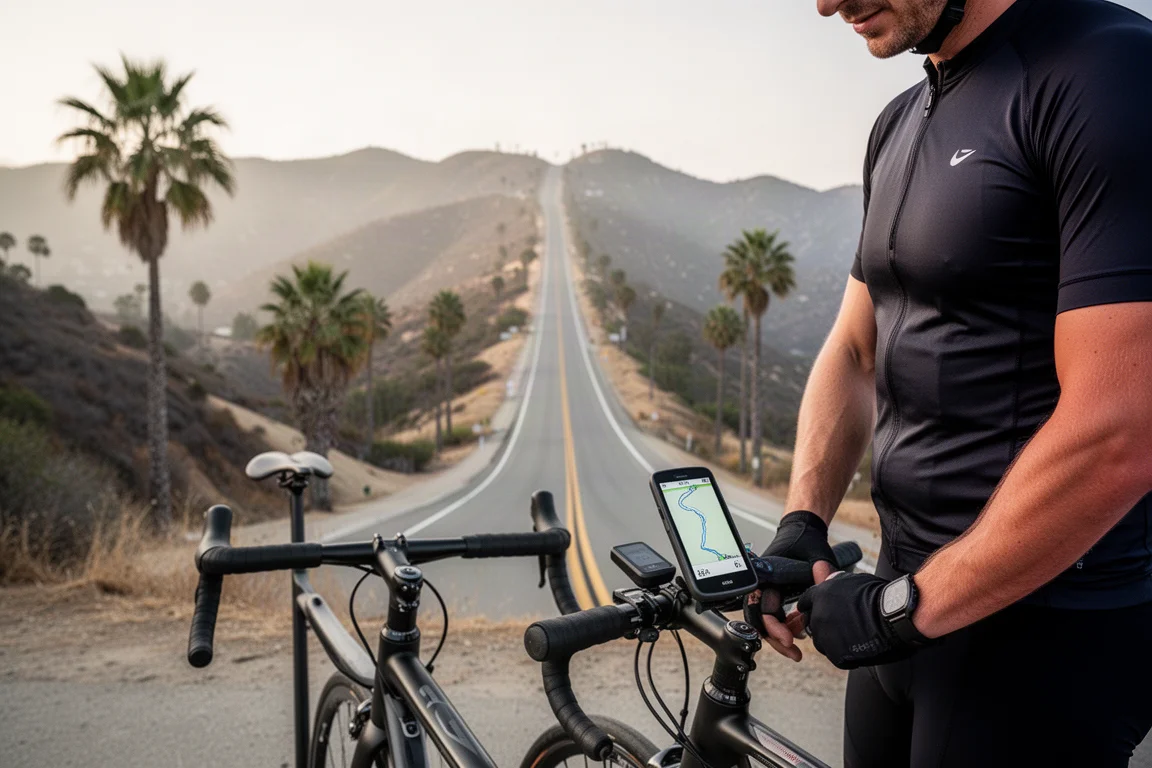
The differences show up in map styling and on-the-fly freedom. The Hammerhead’s map styling is arguably the most attractive, with orange heat-map shading based on Strava heat-map data making it clear where other cyclists actually ride. How well that works depends on where you are: excellent in Europe and much of the United States, weaker in regions with fewer Strava users. Garmin has its own popularity routing data, arguably a better dataset, though its on-screen display of that data gets lost in the map clutter. The Wahoo takes a minimalist approach, showing mainly your route and the surrounding main roads with everything else stripped away.
For going rogue with no planned route, Garmin is the clear leader. You can ask for a 50 km ride and it will generate a genuinely good one, even specifying a direction, using its heat-map data. Neither Hammerhead nor Wahoo can do this. Garmin is also the only unit with an on-device point-of-interest database for finding bike shops, coffee stops or restrooms on the fly; the other two require your phone or prior knowledge of the destination.
Summed up: with a planned route from Strava, Komoot or similar, you will see little difference between them. For ad-hoc routing without connectivity, Garmin has the clear edge.
Climbing Features and Strava Live Segments
All three units offer an automatic climb detection feature under different names. As you ascend, each shows distance remaining to the summit, average gradient both upcoming and remaining, and total altitude left to gain. All worked very similarly in testing, for both planned routes and unplanned climbing. Hammerhead recently improved its European maps, which noticeably sharpened the accuracy of its upcoming gradient numbers in Europe.
All three support Strava Live Segments with a paid Strava account, showing your progress against your own PR or the segment leader. The differences here favour Hammerhead: it and Wahoo both support multiple concurrent segments, letting you tab through two or three overlapping segments at once, while Garmin shows only one at a time. That is most noticeable on big climbs where different segments cover different portions of the ascent.
If live segments are not your thing, they can be disabled on all three units without any problem.
Structured Workouts and Training Tools
All three support structured workouts pulled from training platforms, and all support the majors like TrainingPeaks and TrainerRoad. Wahoo additionally supports workouts from its own system platform. Garmin supports essentially every other platform as well, including Final Surge and ExtriCare among dozens of others, which is a genuine advantage if your coach or training app sits outside the big names.
When it comes to executing those workouts outdoors, Garmin and Wahoo both clearly understand the structured workout mindset, with the right data fields, pages and target range displays. Hammerhead’s implementation feels unfinished, missing some core data fields and presenting target ranges awkwardly, although it has been iterating quickly and recent firmware updates suggest the gaps are being addressed.
Garmin stands alone in the wider training ecosystem. Only Garmin offers physiological metrics such as training load, training status, recovery, load focus and stamina. Only Garmin provides suggested workouts, a full daily coaching plan toward a target event like a gran fondo, and a complete calendar of upcoming workouts. Many riders will not care about any of this, but it is a major differentiator if you do. Garmin also uniquely offers Power Guide, which takes a race course file and generates power targets for each section, adjusting for gradient in real time.
Crash detection is another Garmin-only feature: in a crash, it can automatically notify friends and family so they can call for help.
Battery Life
The claimed specifications put Hammerhead at the lowest battery life, Wahoo close behind, and Garmin well beyond both. Real-world testing matched that order almost exactly. On one ride with all three units configured identically, with matching brightness and connected sensors, the Hammerhead lasted around 12.5 hours, the Wahoo roughly 23 hours, and the Garmin was on track for about 32 hours.
You can extend battery life further on all three, especially the Garmin, by lowering screen brightness, the biggest driver of battery consumption, and by switching from multiband or dual-frequency GPS down to a basic GPS mode in areas without complicated signal conditions.
Sensor Connectivity and Third-Party Apps
All three units support the major sensors you are likely to own, including power meters and heart rate straps, over both ANT+ and Bluetooth Smart. The elephant in the room is the Hammerhead Karoo 3’s lack of Shimano Di2 support for displaying shifting stats, despite virtually every other device supporting it. A third-party app called ki2 solves this on the Karoo 2, but it is not yet available for the Karoo 3. More fringe sensors, such as certain sensors used on time trial bikes, are only supported on Garmin via Connect IQ.
Third-party platform connectivity tells a similar story. All three sync to the major platforms like Strava and TrainingPeaks, but beyond the top half-dozen or so platforms, connectivity is essentially Garmin territory, with support for hundreds of smaller services. On the apps front, Wahoo supports none, Hammerhead can run Android apps such as Spotify or a companion app, though these run alongside rather than integrating with its data, and Garmin has its entire Connect IQ platform for apps, data fields and pages.
Companion Apps and Web Platforms
The manufacturer ecosystems differ dramatically. The Hammerhead app is essentially a connectivity tunnel to the internet, with almost no features you can interact with; you cannot even view your ride totals. Wahoo’s app lets you see ride totals and stats, change settings, and do most of what you would want. Garmin’s app has extensive trending and reporting, possibly too many features for some tastes, but far more than the other two.
On the web, Wahoo has no consumer-facing website dashboard. Hammerhead has a site where you can review past rides individually and, more importantly, use an excellent route planner that imports files and URLs from major routing platforms. Garmin’s web platform is massive and simply beyond the other two.
The three philosophies are clear: Garmin aims to cover everything holistically for free across app and web, Wahoo covers the core functions and leaves deep analysis to third-party platforms, and Hammerhead focuses almost entirely on the device itself with route planning as its main web bonus.
GPS and Elevation Accuracy
All three units deliver great GPS and elevation accuracy. Each has multiband or dual-frequency GPS and solid altimeters, and the Karoo 3’s updated altimeter performed well. Testing turned up a single issue: one ride on the Karoo where the software failed to calibrate the altimeter at the start, offsetting its elevation data for that ride. Hammerhead is investigating that software bug; it was not a sensor hardware problem.
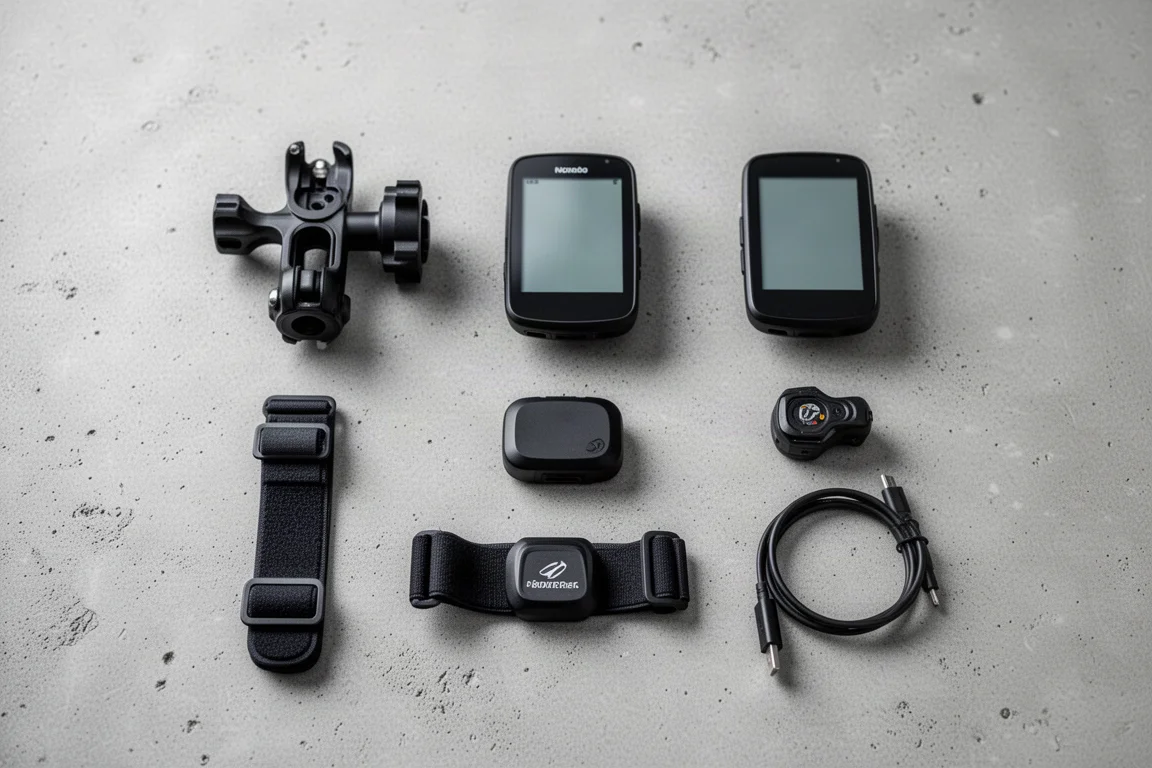
Sensor connectivity matters here too, since the accessories you pair, from power meters to electronic shifting, shape what each unit can record and display.
Buying Advice
If you want the deepest feature set, the broadest third-party support, the best on-the-fly routing and the longest battery life, the Garmin Edge 840 is the safest all-round choice, and the only option if physiological training metrics, suggested workouts or crash detection matter to you.
If you prioritize a modern smartphone-like display, the most polished map styling and the strongest Strava Live Segments handling, the Hammerhead Karoo 3 is compelling, with the caveats of slower interface responsiveness, shorter battery life and no Shimano Di2 support.
If you prefer simplicity, strong battery life and a flexible data page system without touchscreen complexity, the Wahoo ROAM V2 fits well, as long as you can live without bike profiles and native graphical charts.
Conclusion
All three of these bike computers are genuinely great, and any of them will serve you well for years. The right choice comes down to which feature areas matter most to you: Garmin for features and ecosystem depth, Hammerhead for display and mapping style, Wahoo for simplicity and battery-friendly practicality. Match the strengths to your riding and you will not regret any of the three.
Product link
View more details for Garmin Edge 840
This product is mentioned in the review. Check the specifications, options, and compatibility before buying.
View more details for Garmin Edge 840Further reading
Related Reviews
Bike Computers
Best Bike Computers 2026: Wahoo ELEMNT ACE, Garmin Edge 1050 and Two Value Alternatives
A practical comparison of the Wahoo ELEMNT ACE and Garmin Edge 1050, plus two cheaper computers that cover the essentials for far less.
Bike Computers
Bryton Rider 650 Review: High-Performance GPS Without the Premium Price
A full-featured touchscreen GPS bike computer at a fraction of the cost of its premium rivals, with a few quirks worth knowing before you buy.
Bike Computers
Coros Dura Review: A 120-Hour Battery Claim and a Serious Value Pitch
The Coros Dura pairs a claimed 120-hour runtime with a $250 price. Here is what stands out, what to weigh, and who it suits.