Hi-Fi Amplifiers
GaNFET Monoblock Amplifiers Compared: LAiV Harmony GaNM vs AGD Audion
Two compact GaNFET monoblock amplifiers that finally deliver the efficiency and power of class D without the glare, dryness, and flat staging that usually come with it.
Introduction
Gallium nitride field-effect transistors, usually shortened to GaNFET, are a newer alternative to silicon transistors. They promise to be faster, more efficient, and lower in distortion. The technology has already moved into everyday accessories such as chargers, where GaN designs charge faster and waste less energy, although those chargers cost more than conventional ones. That price premium is a recurring theme: GaN modules are still relatively new, so they remain relatively expensive.
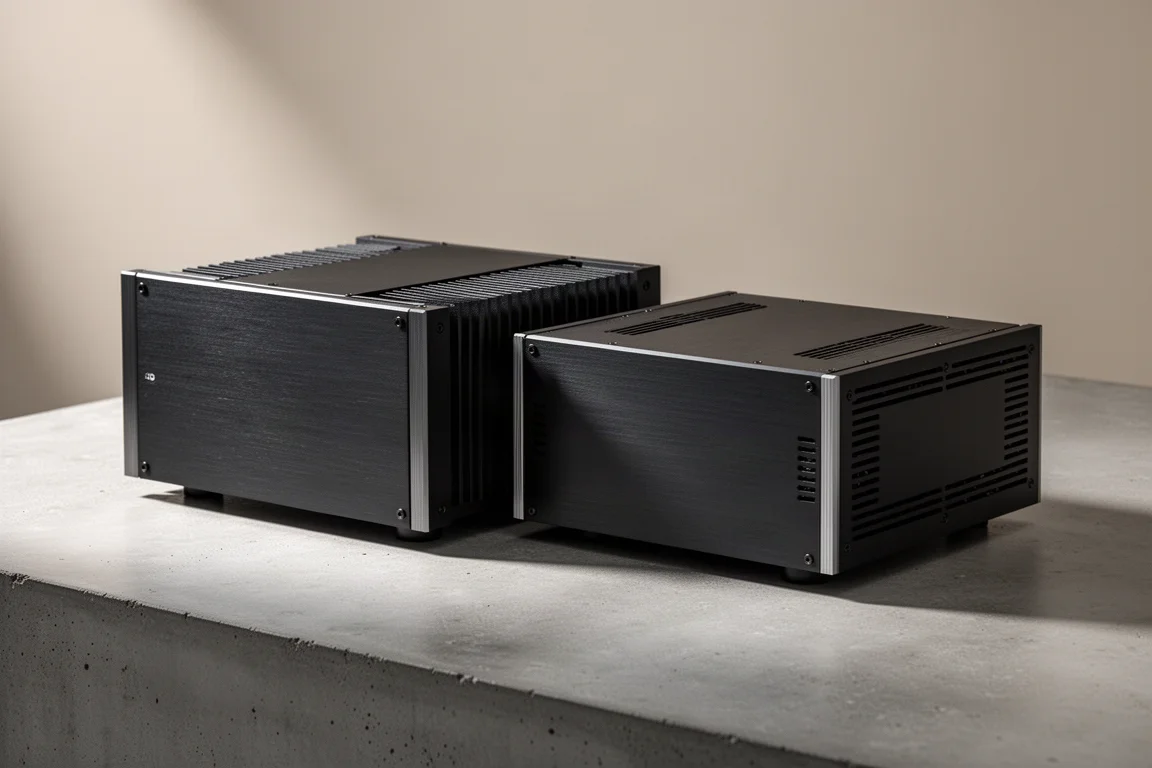
That context matters for the two amplifiers in this roundup. The LAiV Harmony GaNM and the AGD Audion are both compact monoblock designs built around GaN modules, and both aim to deliver the efficiency and power of class D without the dryness and glare that have historically put listeners off. They are not identical in character, and they are not priced the same, but they solve the same problem in two slightly different ways.
What Makes GaNFET Amplifiers Different
The case for GaN is straightforward: more efficient switching, lower distortion, and less waste heat than silicon. In practice that translates into compact amplifiers with a short signal path from input to output, high current delivery, and enough power to drive demanding speakers without a large chassis or a lot of heat.
Class D has always promised exactly this: lighter, more efficient designs that run cool and deliver plenty of power for less money. For years that promise did not fully land. Many class D amplifiers sounded dry and clinical, with a lean, lifeless quality and a flat, two-dimensional presentation that put off listeners who had grown up with class A, class AB, and tube designs.
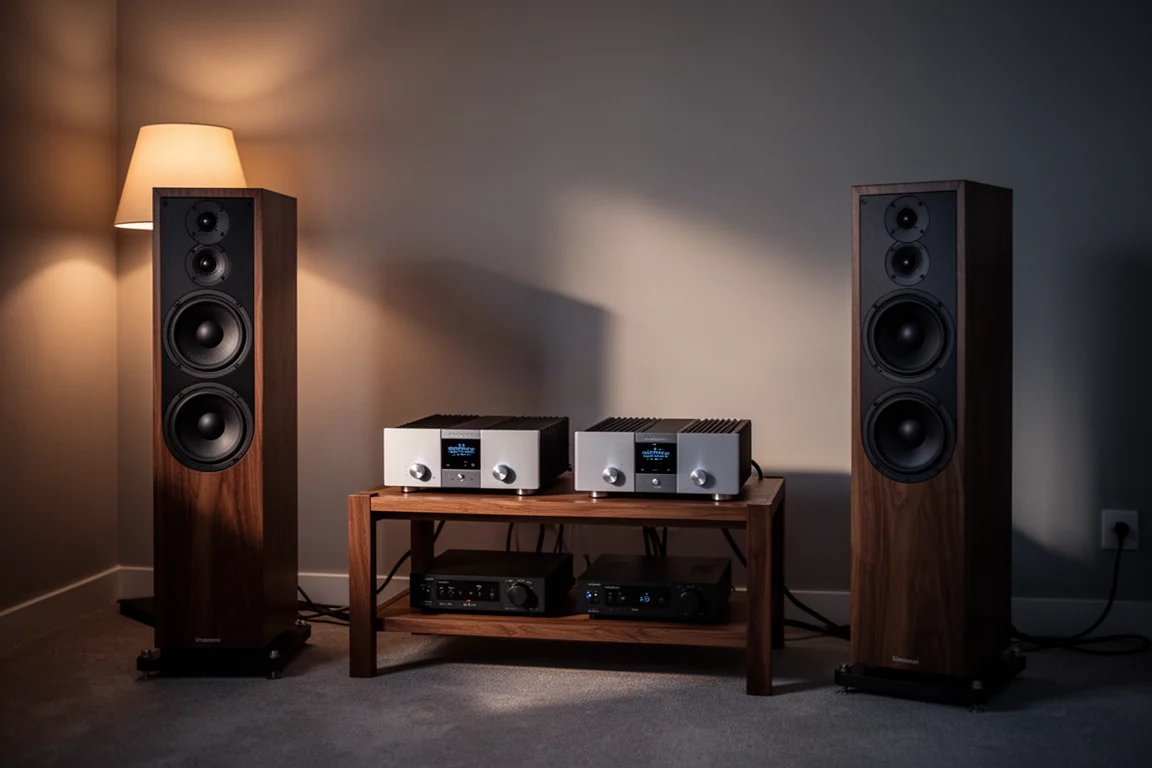
GaN modules change that equation. Both amplifiers here avoid the traits that made class D hard to love: no brightness, no upper midrange glare, no chill, no dryness. They also handle low impedances and high current, which means they can drive a wide range of speakers.
LAiV Harmony GaNM: Warmth, Power, and Build Quality
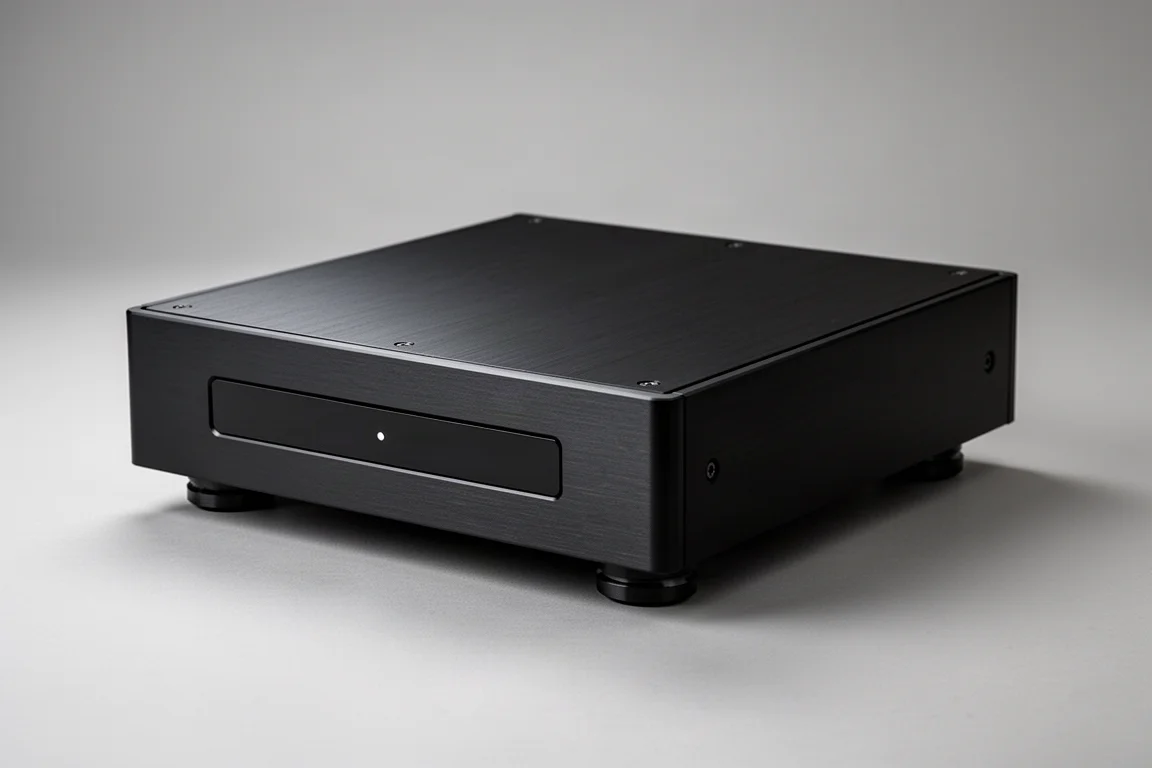
The Harmony GaNM monoblocks are chunky, and the build quality is a genuine standout. The fit and finish, inside and out, sits at the level usually associated with premium Japanese hi-fi brands, and the internals are just as considered: a custom GaN module designed by LAiV alongside a custom switching-mode power supply.
That compact chassis and short signal path are central to the design. Because the amplifier is small, there is very little distance between input and output, and the result is clean, low-distortion power in a form factor that is easy to place.
Sonically, the Harmony GaNM leans warm. Bass notes are fuller, bolder, and rounder than on the AGD Audion, and they punch harder and more dynamically. Detail and nuance are still strong, and the sense of layering in the soundstage comes remarkably close to the more expensive amplifier. Power output is quoted at 400 watts into 4 ohms.
AGD Audion: The Detail-First Reference
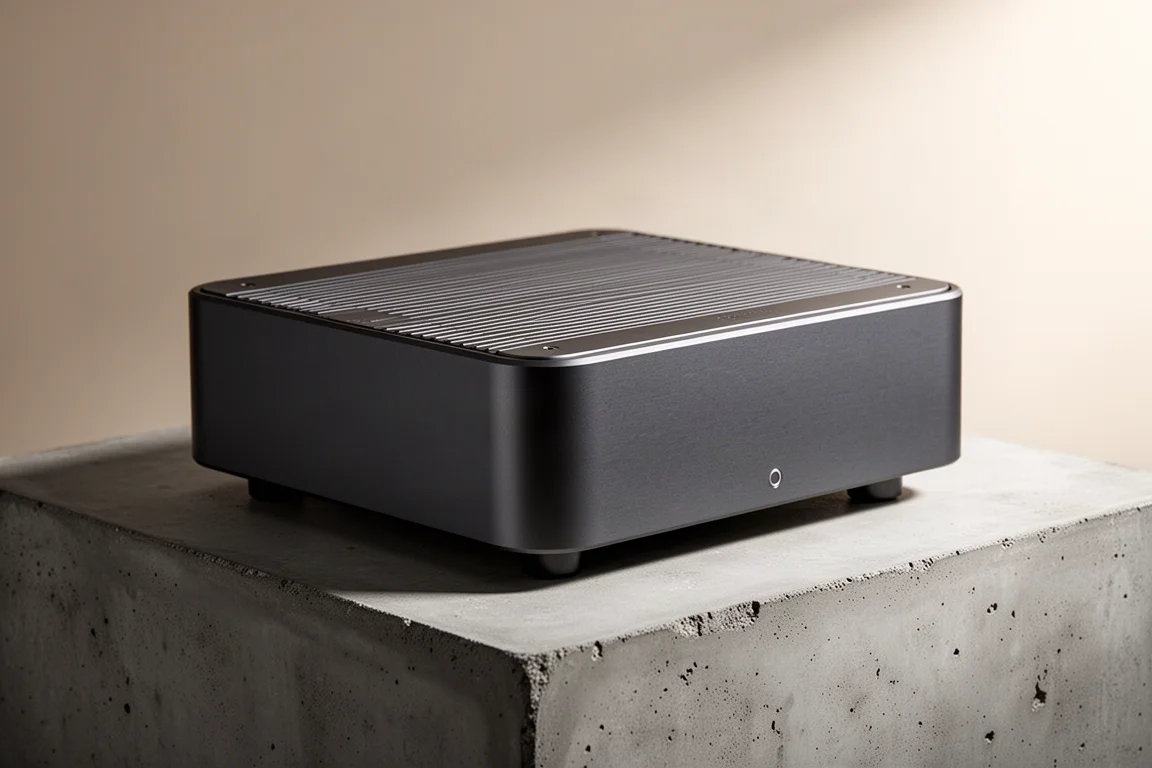
The AGD Audion takes a different approach. Its GaN module is mounted in a socket, so it can be replaced if better modules arrive later, and the module itself was designed from the ground up by AGD. That upgrade path is unusual, and it gives the amplifier a longer useful life than a fixed-module design.
Where the AGD Audion excels is detail retrieval and nuance in the midrange and treble. It is the more transparent of the two through those ranges, and it remains free of the brightness, forwardness, and glare that class D designs have historically shown. What it gives up in return is some of the bass heft and warmth that the LAiV offers. Power output is quoted at 200 watts into 4 ohms.
Build quality is substantially similar to the LAiV, which is notable because the Audion costs close to double the LAiV in its special finish. It has also been recognized with a 2024 hi-fi component award.
How the Two Sound Different in Practice
Both amplifiers are inviting and easy to listen to over long sessions, and neither shows the usual class D drawbacks. The differences come down to balance rather than quality.
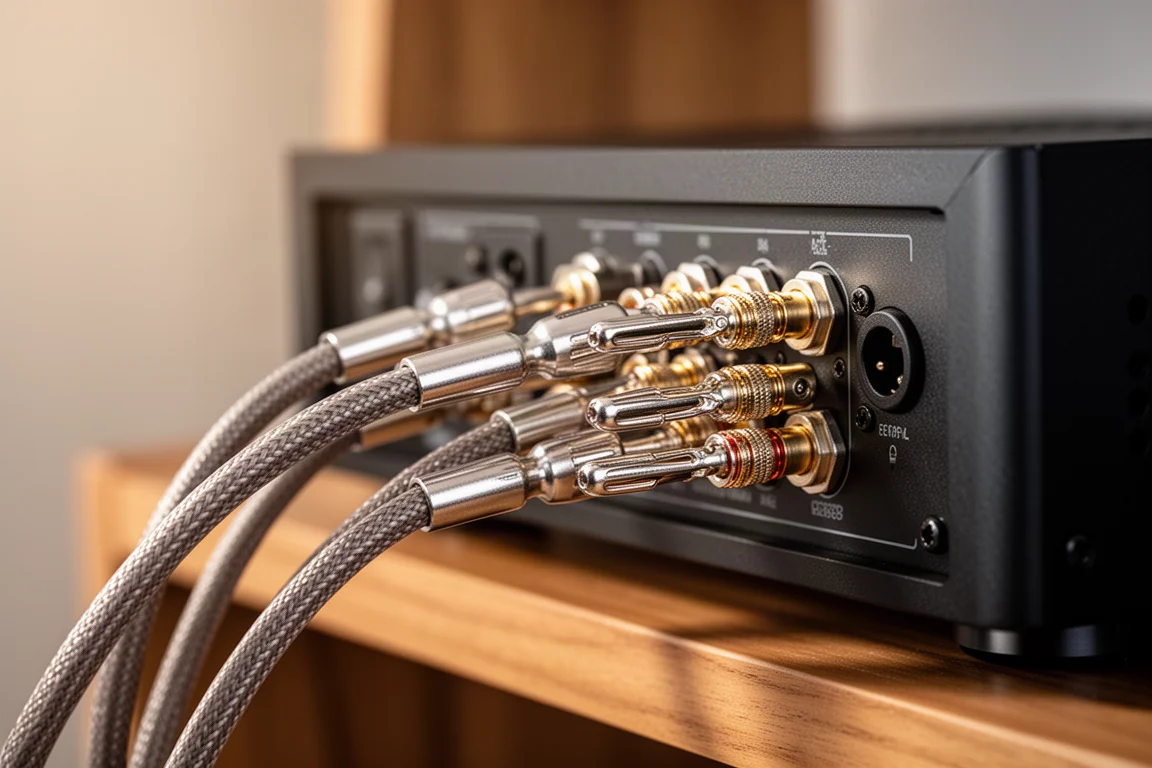
The LAiV Harmony GaNM is the warmer, weightier option. Its bass is more full-bodied and more dynamic, and its overall tonality sits slightly warmer than the rest of the LAiV range. The AGD Audion counters with a more nuanced, more detailed midrange and treble. If you value the texture of a voice or the decay of a string, that is where the Audion pulls ahead. If you want punch and body, the Harmony GaNM is the more satisfying listen.
Layering is the trait both share, and it is worth understanding why it matters. Layering describes a three-dimensional soundstage rather than a wide but flat wall of sound. Instruments sit at different depths, with a guitar forward of the singer or a percussion line set behind the strings. It also describes how a single instrument fills the space around it, so a plucked string propagates and decays into the room instead of stopping abruptly. That sense of realistic space is what class D designs have often lacked, and it is exactly what these two amplifiers deliver.
Speaker Matching and High-Current Demands
Both amplifiers can handle low-impedance loads and deliver high current, so speaker matching is less restrictive than it is with many class D designs. Speakers that dip low or demand a lot of current are within reach of either amplifier.
The power difference is still worth noting. With 400 watts into 4 ohms, the Harmony GaNM has twice the output of the Audion at 200 watts into 4 ohms, which gives it more headroom in large rooms or with inefficient speakers. Efficiency and low heat output are shared benefits: both run cool and take up far less space than a comparable class A or class AB design.
Adding a Tube Preamplifier
A good tube preamplifier is a natural partner for both amplifiers. Tube preamps have long been paired with class D power amplifiers to soften the glare and dryness those designs can show, and with conventional class D the result is usually a compromise: the glare is masked rather than removed.
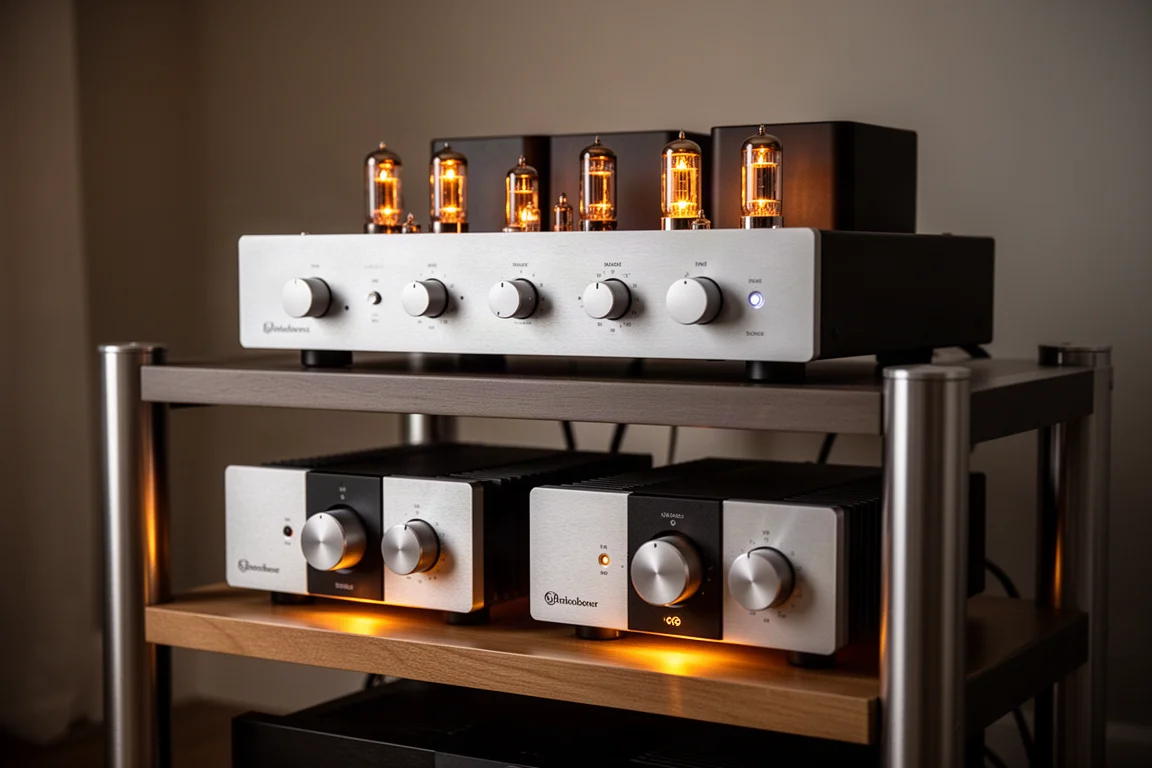
That is not what happens here. With the Harmony GaNM and the Audion, a tube preamplifier amplifies what is already there. You get more layering, more warmth, and a more spacious, three-dimensional stage, without covering up anything unwanted. Nothing is being hidden, which is a meaningful difference for anyone who has tried this combination before and found it only partly successful.
Practical Considerations Before You Commit
Cost is the first thing to weigh. GaN modules are still relatively new, and that keeps prices high across the category. The Harmony GaNM sits at roughly half the price of the Audion in its special finish, which makes it the more accessible entry point into GaN monoblock amplification.
Monoblock designs also mean two chassis rather than one, plus two sets of speaker cables and enough shelf or floor space for both. The compact dimensions help here, but the component count is still doubled. Finally, consider whether your speakers actually need the extra power. The Audion’s 200 watts into 4 ohms is ample for most systems, and the case for the Harmony GaNM’s 400 watts is strongest with demanding loads.
Buying Advice: Which Amplifier Suits Which System
If value, power, and a warmer tonal balance are the priorities, the LAiV Harmony GaNM is the clear choice. It costs roughly half as much as the AGD Audion in its special finish, doubles the power output, and delivers fuller, more dynamic bass while keeping the layering and nuance that make GaN designs worth considering in the first place.
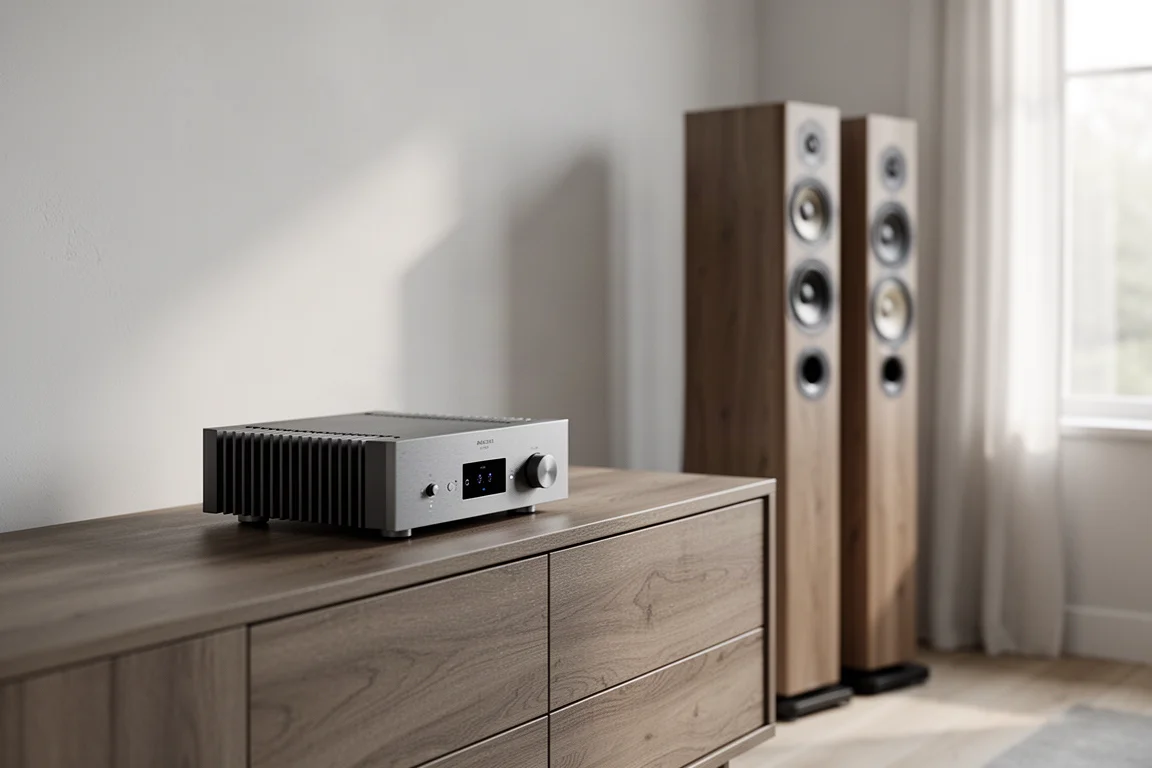
If detail retrieval and long-term flexibility matter more, the AGD Audion remains the reference. Its socketed module can be swapped as better GaN modules appear, and its midrange and treble resolution is the more refined of the two. It is the more expensive amplifier, and it gives up some bass weight to get there, but for listeners who prize nuance above all else it is the one to choose.
Either way, you are buying an amplifier that avoids the traditional class D compromises. That is the real story here: GaN technology has finally delivered on the promise of compact, efficient, high-current amplification that behaves like the best class A and class AB designs rather than a compromise against them.
Conclusion
The LAiV Harmony GaNM and the AGD Audion approach GaN monoblock amplification from opposite ends. One prioritizes power, warmth, and value; the other prioritizes detail, nuance, and an upgradeable module. Both are free of the glare, dryness, and two-dimensional staging that have kept listeners away from class D, and both handle low impedances and high current with ease. Match either to a good tube preamplifier and a pair of speakers that suit your room, and the result is a compact, efficient system that behaves like a much larger one.
Further reading
Related Reviews
Hi-Fi Amplifiers
Accuphase E-280 Review: Entry-Level Accuphase With Flagship Attention to Detail
A close look at the Accuphase E-280 integrated amplifier, covering its champagne build, AAVA volume control, sound quality, and the speakers and sources that suit it best.
Hi-Fi Amplifiers
Advance Paris A10 Classic vs Yamaha A-S301: Two Integrated Amplifiers Compared
A practical comparison of a $350 integrated amplifier and a $2,500 reference model, covering the differences that matter and the ones that do not.
Hi-Fi Amplifiers
Affordable Chinese Amplifiers Worth Buying: Five Budget Hi-Fi Amps Compared
A practical look at five affordable amplifiers, what each one does well, and the trade-offs to weigh before you buy.