Hi-Fi Audio
Gallion TSP75 and TSA75 Review: A Matching Tube Preamplifier and Power Amplifier
A practical look at Gallion's matching valve preamplifier and dual mono power amplifier, covering build quality, internals, sound character, and system matching.
Introduction
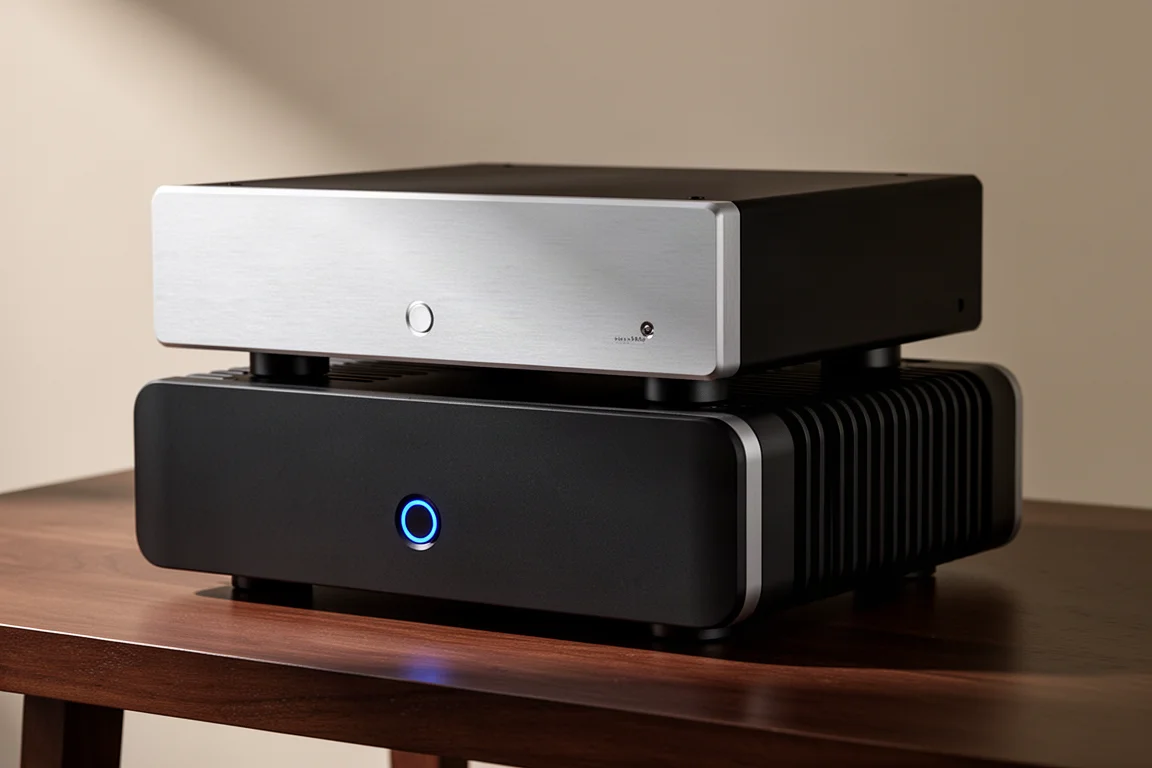
Gallion Hi-Fi’s TSP75 tube preamplifier and TSA75 power amplifier are designed as a matched pair, and listening to them together is the clearest way to understand what the brand is aiming for. The TSP75 is a pure line stage: four single-ended RCA inputs, two sets of RCA outputs for bi-amping, a trigger connection, and an earth lift option to prevent ground loops. There is no DAC and no phono stage. The TSA75 is a dual mono class AB power amplifier rated at 75W into 8 ohms and 100W into 4 ohms, with selectable RCA and XLR inputs.
This article covers how both units are built, what their internals look like, how they sound as a pairing, and what to weigh up before buying.
Who the Gallion TSP75 and TSA75 Are For
These are amplifiers for listeners who want an amplifier to do exactly one job: select an input, adjust the volume, and drive a pair of speakers. Neither unit tries to be a hub for streaming, vinyl or digital conversion, so a system built around them needs its sources and its digital conversion elsewhere in the chain.
The character is deliberate. Both units sit on the warm side of neutral, with a big, dynamic and rich presentation that prioritises enjoyment over absolute accuracy. Anyone chasing tonal neutrality or the tightest possible grip on low frequencies should look at other options. Anyone who values scale, weight and an involving midrange will find plenty to like.
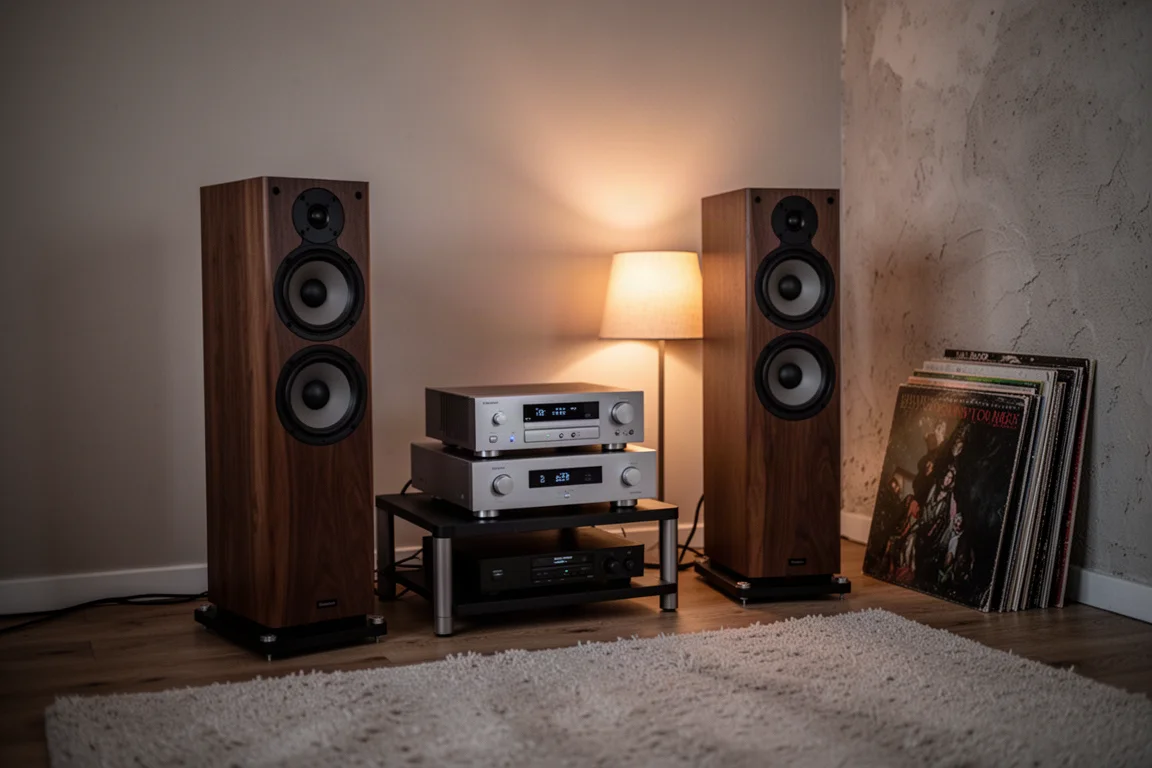
The pairing also makes sense for listeners who already own a good outboard DAC with balanced outputs and a high-quality volume control, since the power amplifier can be used on its own without the preamp in the middle.
Gallion TSP75 Tube Preamplifier: Build, Features and Internals
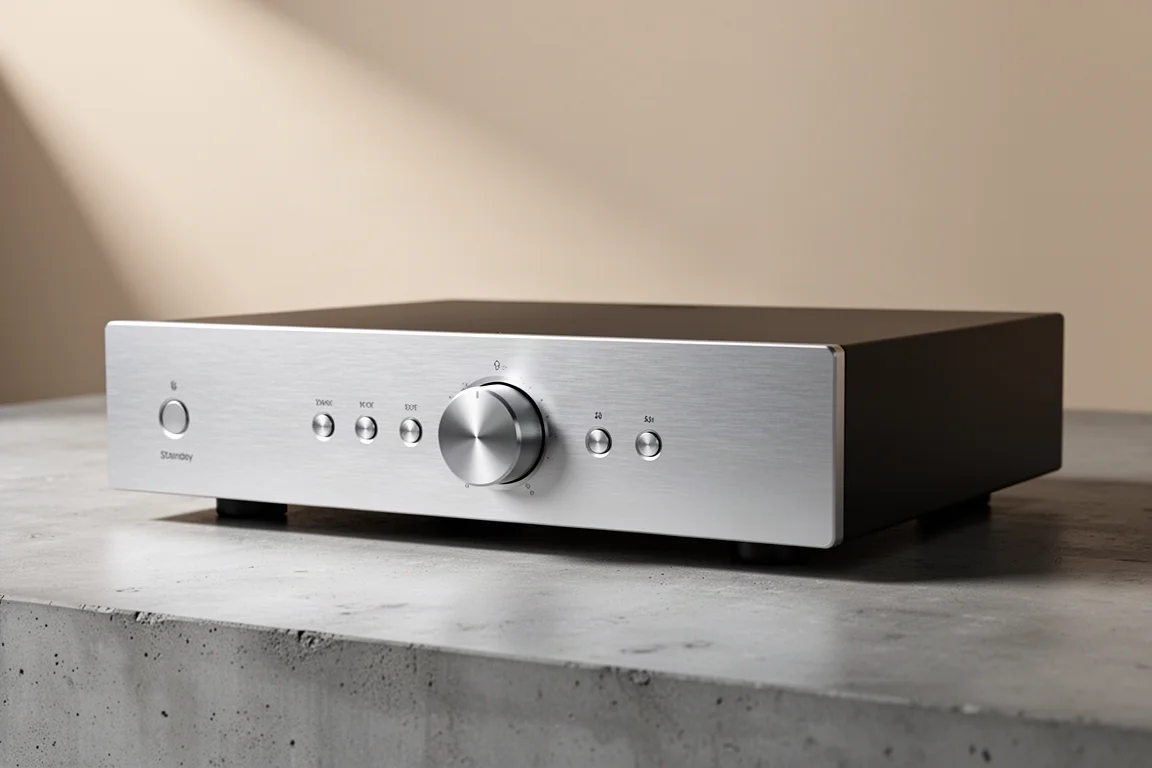
The casework is made from substantial aluminium plates, which helps suppress vibration and external noise. Styling is fairly generic and purposeful rather than decorative. The unit measures 435 x 330 x 108 mm and weighs 10 kg.
The front panel carries a standby button and four buttons for selecting line-level inputs, plus a rotary volume dial. The controls have a positive, solid feel, and the same functions are replicated on a nicely machined metal remote control.
At the rear, the TSP75 confirms its role as a line stage only. There are four single-ended RCA inputs, two sets of RCA preamp outputs, a trigger connection for powering up with other devices, and a ground connection that can be earthed or left floating to avoid ground loops with connected equipment.
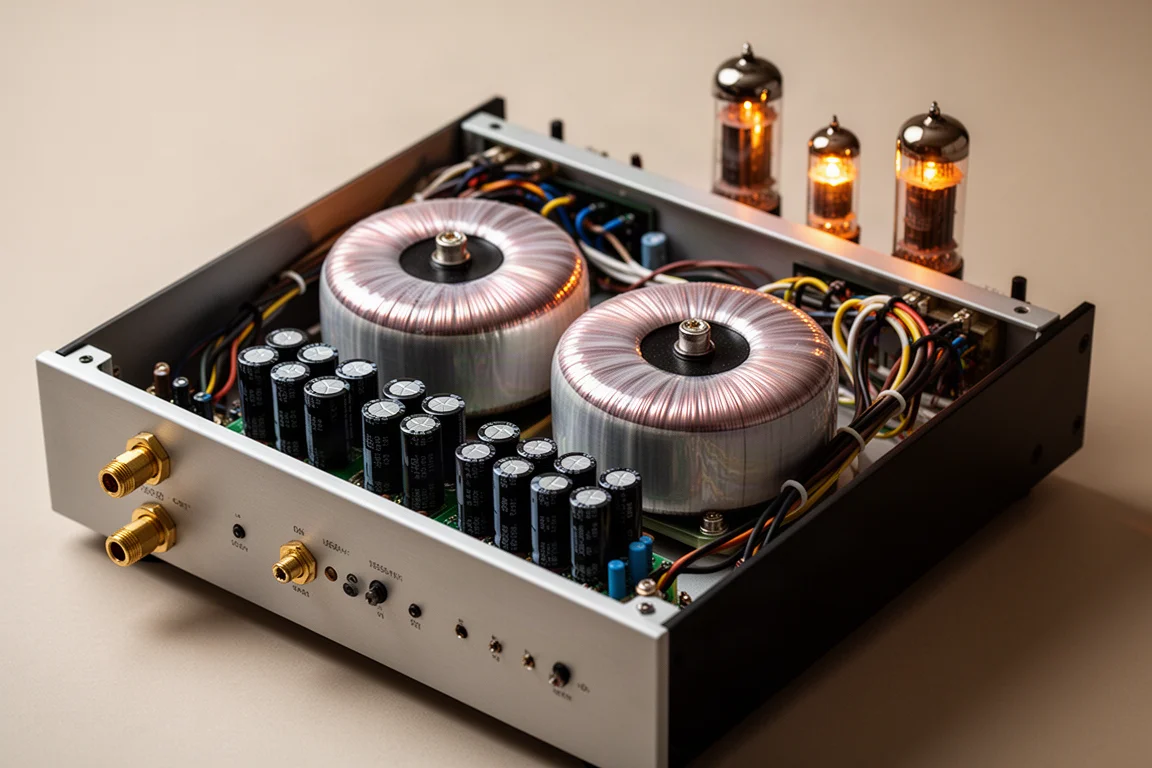
Inside, the layout is tidy and generously populated. A reasonably sized toroidal transformer keeps impedance low, with rectification diodes mounted to small heat sinks, two chokes to remove the remaining AC ripple, and power supply filtering from Nippon Chemicon capacitors, finished with a small Solen capacitor. Two banks of Clarity Cap ESA metallized film capacitors handle DC decoupling, with two further ESA capacitors of slightly better quality coupling the two main stages. Jupiter Bumblebee capacitors act as bypass capacitors, which changes the gain of the valve and improves its frequency response.
The signal path runs from the inputs to an Alps volume control and on to the gain stage, which uses four ECC81 dual triode valves. Two further valves work as a buffer, doing a similar job to output transformers by lowering output impedance. The stock valves are PSVane, and the design invites tube rolling: warmer with Mullards, crisper with PSVane Horizon, and a more rounded result with Ray valves.
Gallion TSA75 Power Amplifier: Dual Mono Design and Internals
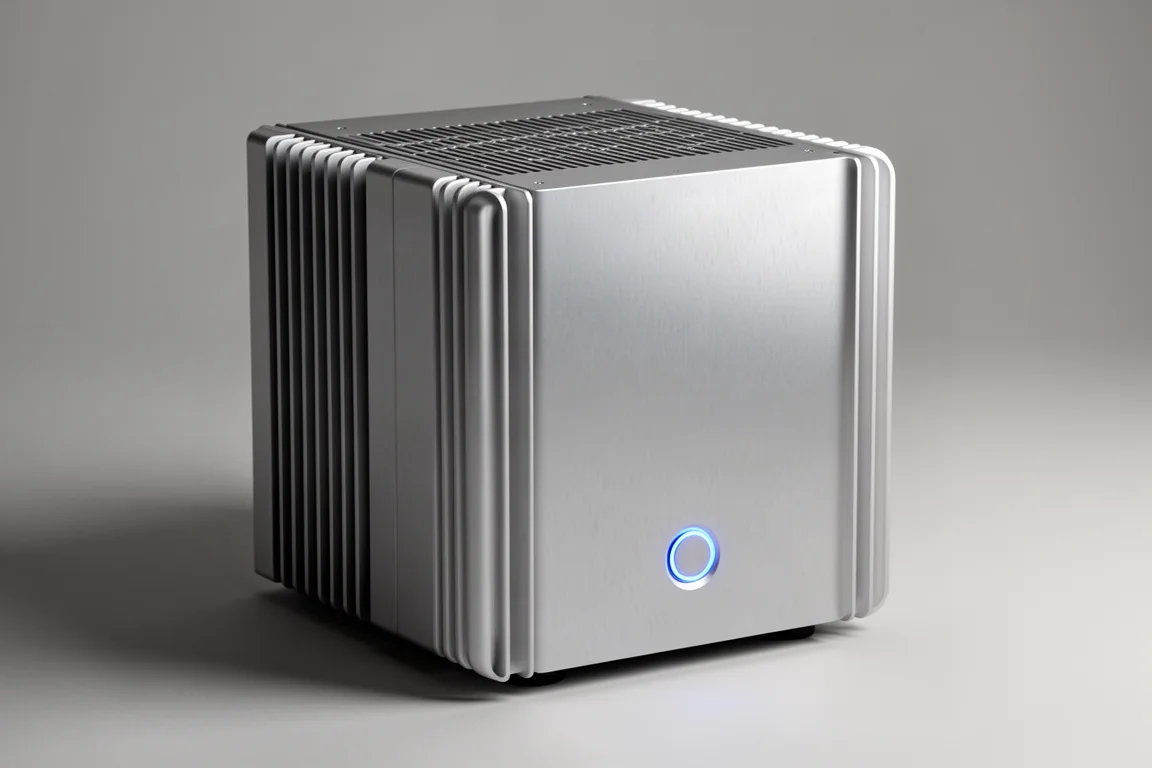
The TSA75 shares the finish and width of the preamp but is taller and shallower, at 159 mm high and 308 mm deep, and heavier at 17.6 kg. The heat sinks have slightly rounded edges, which makes the amplifier easier to lift without injury. The front panel has a single power button with blue illumination that matches the preamp.
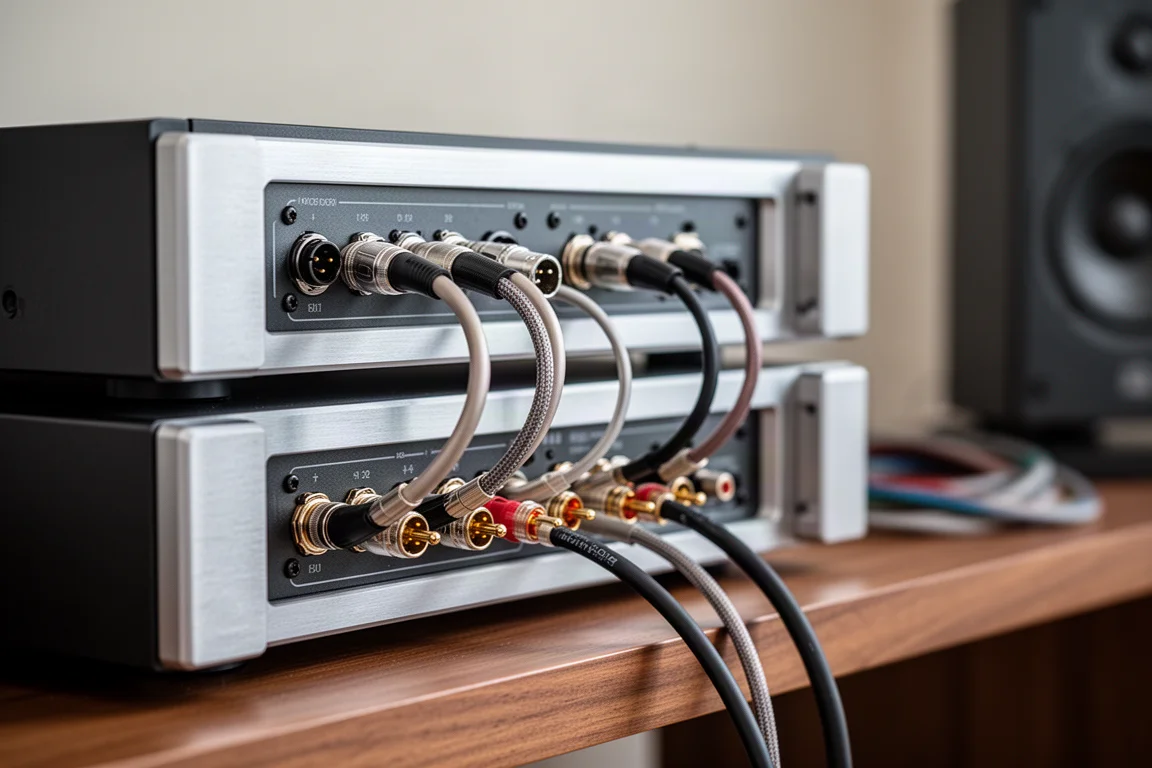
Speaker binding posts are of standard quality, and the amplifier accepts single-ended RCA or balanced XLR signals, selectable with a button. Balanced XLR inputs on the preamp would have been a welcome addition, even as a paid option.
Internally, this is a dual mono design. Each channel has its own 200 VA transformer and its own bank of capacitors, with that separation maintained all the way back to the AC inlet filter, which is the best approach for channel separation. Total power supply capacitance is 200,000 microfarads, made up of twenty 10,000 microfarad capacitors. Around ten prototypes were built with different capacitance arrangements, and this configuration was chosen because it sounded best.
Output is rated at 75W into 8 ohms and 100W into 4 ohms, with a peak current rating of 7 amps. That figure is modest because this is a push-pull class AB design using a single pair of Sanken bipolar transistors per channel, where more powerful amplifiers would use two or more pairs. The amplifier modules are described as genuinely balanced, and the layout is symmetrical enough that the circuitry above and below the midline looks identical, which points to a fully balanced topology rather than a balanced input stage feeding a single-ended output.
How the Pairing Sounds
Used together, the TSP75 and TSA75 are big, dynamic, rich and warm. Bass is full and carries real weight while staying agile enough to keep a track moving, and the midrange is acoustically saturated. The result is a presentation closer to a well-sorted valve system than to a neutral studio monitor.
Soundstage width and depth are excellent, and instrument separation is a clear strength. Stereo imaging is solid rather than hyper-precise, which is unlikely to bother anyone except the most analytical listeners. The highs are not rolled off, but the fullness in the bass and midrange means attention tends to settle there.
Low-level listening is well handled. Below roughly 60 dB the pairing keeps its fullness and vibrancy, though the leading edges of notes soften slightly. Turning the volume up resolves that, and the amplifiers shift convincingly between quiet and loud passages. In a room of about 15 square metres, driving speakers with mid-80s sensitivity at average levels around 85 dB, there was no shortage of dynamic headroom.
Against a precise, controlled solid-state integrated amplifier such as the Hegel H190, the Gallion pair gives away some bass tightness and bleed into the midrange, while reproducing a similar amount of micro detail. What it adds is scale and a sense of dynamics that a more measured presentation does not deliver. Vintage Exposure pre and monoblock amplifiers open the soundstage to a similar size and sit on the warm side of neutral too, but with less colouration and slightly more micro detail, harmonic texture and timbre.
Living With the Pairing: System Matching and Flexibility
Both units mix reasonably well with other equipment, though the family sound travels with them. Pairing the TSA75 power amplifier with a different preamplifier traded some fidelity for extra warmth, and the TSP75 behaved the same way when connected to other monoblocks.
Source equipment matters. A modest streamer feeding an affordable DAC made a perfectly good starting point, while a better transport and a more capable DAC brought clear improvements across the board. Connecting a DAC directly to the TSA75 over XLR produced a cleaner sound than routing through the preamp, but with less scale and dynamics, which is why the preamp was generally preferred in the chain. A direct comparison between single-ended RCA and balanced XLR connections through the same DAC showed more resolution over XLR.
Speaker matching is forgiving. The pairing drove demanding floorstanders and a pair of vintage standmounts without struggling, apart from some missing bass control. The more revealing of the two speakers uncovered extra midrange nuance, which suggests the amplifiers are transparent enough to show what the rest of the system is doing.
If you are digital-only, have a very good DAC with balanced outputs and an excellent volume control, the sensible order is to buy the TSA75 first, live with it for a while, and then decide whether the matching preamp is worth adding.
Things to Consider Before Buying
- There is no DAC and no phono stage, so digital and vinyl sources need their own conversion and amplification.
- The preamp has single-ended RCA inputs only, with no balanced XLR option.
- The tuning is coloured on the warm side of neutral. Listeners who want neutrality should look elsewhere.
- Bass definition from the power amplifier and resolution from the preamp are areas where more is available from more expensive designs, including a 160W integrated amplifier that sells for £5,500 in the UK and offers better low-frequency control.
- Valve-based designs involve eventual valve replacement and invite tube rolling, which is part of the appeal but also a running cost.
Buying Advice
The TSP75 retails directly from Gallion for $1,849 plus shipping and taxes. EU customers are directed to German retailer and distributor Hi-Fi Pilot, where it sells for $2,390 including taxes. The TSA75 retails on the Gallion website for $1,495 plus shipping and taxes, and EU customers can also buy through Hi-Fi Pilot. Because shipping and taxes vary, the value proposition differs by country.
If you want the combination the designer intended, buy both and keep them together. If your system is digital-first and your DAC already has balanced outputs and a proper analog volume control, start with the TSA75 and add the preamp later if you want the fuller, warmer presentation it brings.
Conclusion
The Gallion TSP75 and TSA75 are a coherent pairing: substantial aluminium casework, thoughtful internals, a dual mono power stage with a large capacitor bank, and a sound that is unashamedly warm, big and dynamic. They give away some bass definition and preamp resolution to more expensive designs, but in most other areas they comfortably outclass feature-packed integrated amplifiers. Buyers who want a straightforward amplifier that prioritises enjoyment should feel confident adding this pair to their shortlist.
Further reading
Related Reviews
Hi-Fi Audio
Accuphase C-57 vs Allnic H-7000V: Two High-End Phono Stages Compared
A fully balanced solid-state phono stage with a pitch-black noise floor meets a tube design built for well-loved records. Here is how to choose between them.
Hi-Fi Audio
Active vs Passive Hi-Fi: Five Components for a Modern System
Five components that define modern active and passive hi-fi systems, with the strengths, trade-offs and setup details worth weighing before you buy.
Hi-Fi Audio
Advance Paris A10 Apex Review: A Hybrid Integrated Amplifier That Covers a Lot of Ground
A French hybrid integrated amplifier with a class A tube preamp stage, analogue power meters, and an internal DAC and phono stage good enough to make extra boxes unnecessary.