Hi-Fi Amplifiers
Gallion TS120 SE Review: A Flexible Integrated Tube Amplifier With Class A Character
A detailed look at the Gallion TS120 SE, a 30 kg integrated tube amplifier with switchable Class A and Class AB modes, two sound profiles, auto-bias and broad tube rolling support.
Introduction
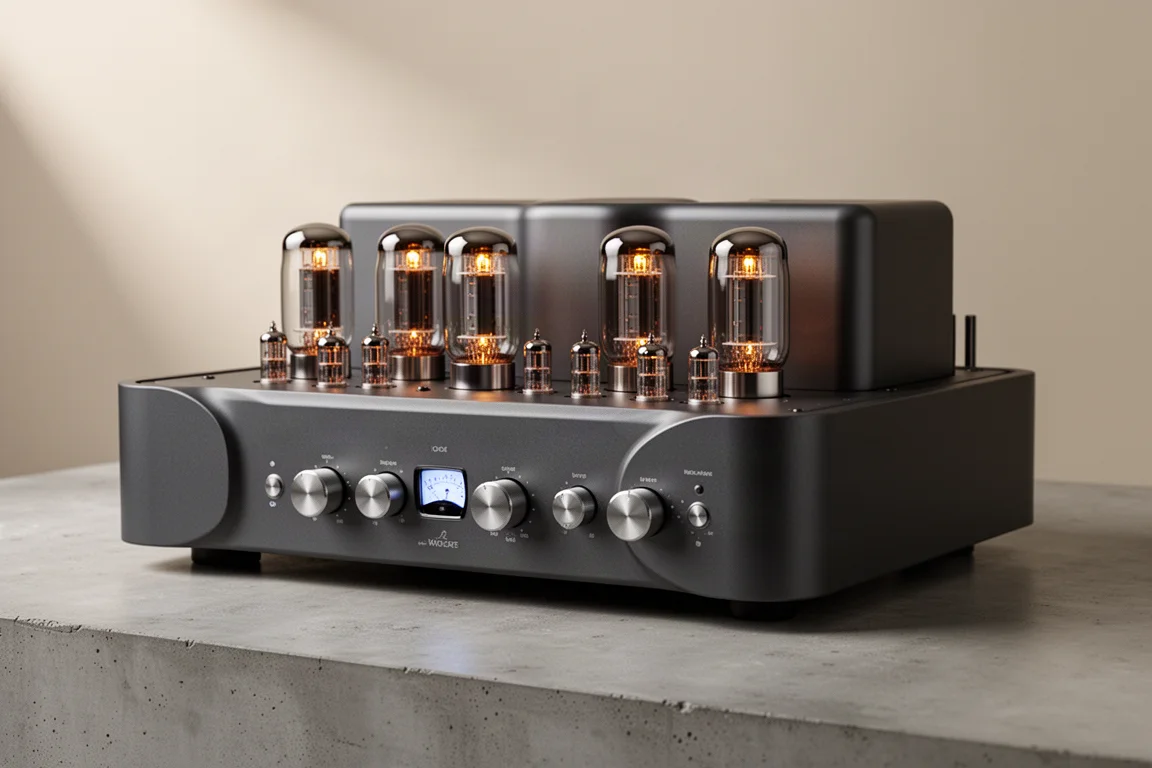
The Gallion TS120 SE is the first product from Gallion Audio, developed in partnership with Dodds Audio, and it arrives as a full rack width integrated tube amplifier sold direct for $4,495. It is a hefty unit at around 30 kg, and the chunky build, matte finish and contoured edges give it an unusually solid, almost stone-like sense of quality.
This is not a simple tube amplifier with a volume knob. The TS120 SE is designed as a flexible centrepiece for a system. It can run in Class A or Class AB, offers two selectable sound profiles, includes tone controls that can be taken out of the signal path, and accepts a range of common power tube types.
The sections below cover what the amplifier does well, the practical points worth planning for, and the kind of system it suits best.
Who the Gallion TS120 SE Is For
This amplifier suits listeners who want genuine tube character without giving up modern flexibility. The combination of two operating modes, two sound profiles and straightforward tube rolling leaves a lot of room to tune the presentation to a room and a pair of speakers, rather than living with one fixed voicing.
It is a natural match for owners of reasonably easy to drive speakers who value midrange texture, timbre and a deep soundstage. It also appeals to anyone who enjoys experimenting with tubes, since the auto-bias circuit removes most of the fiddliness that normally comes with that hobby.
It is a less natural fit for listeners whose music is built on heavy crescendos and who want maximum grip on demanding woofers. At this price, solid state power tends to hold an advantage in that specific area.
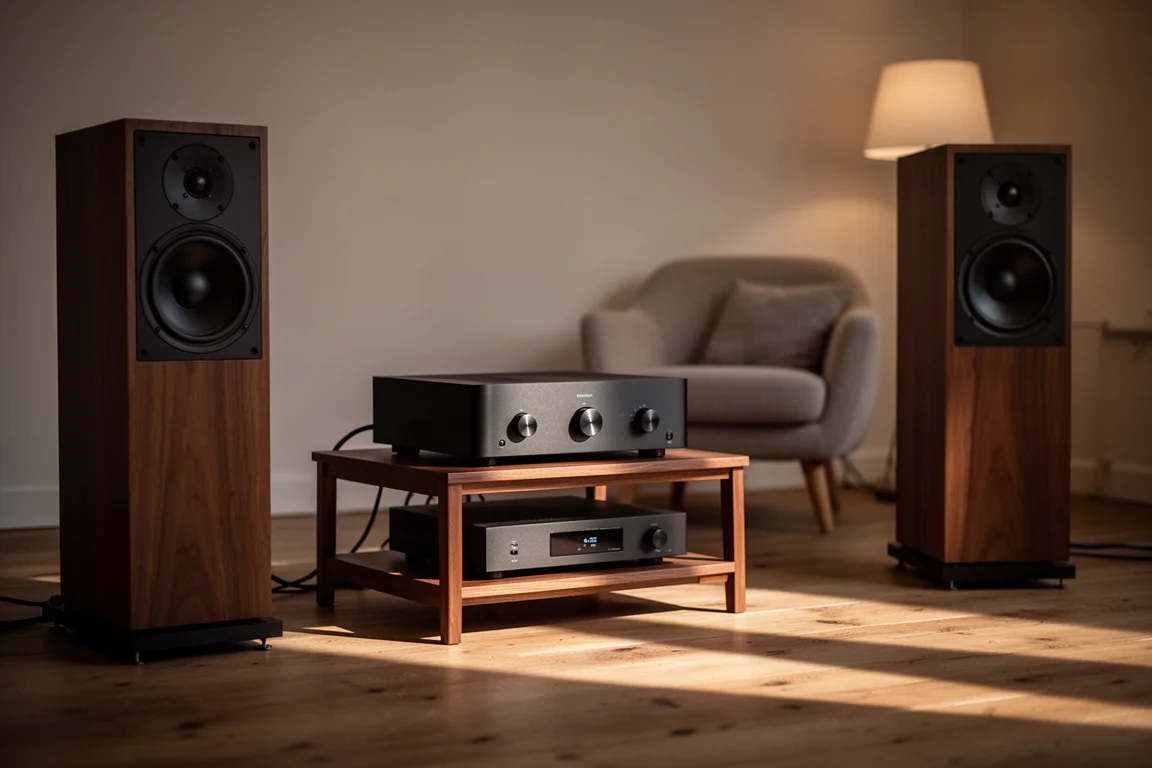
Anyone shopping in this range should also be realistic about physical space. A full rack width chassis at around 30 kg needs a sturdy shelf and sensible ventilation, and the tubes run hot enough that airflow matters more than it does with a typical solid state amplifier.
Main Strengths: Class A Sound and Everyday Flexibility
The headline feature is the choice between Class A and Class AB operation. In Class A the amplifier produces 30 watts per channel, while Class AB raises that to 50 watts per channel into an 8 ohm load. Class AB with the stock power tubes sounds good, with balanced tonality across bass, midrange and treble, reasonable clarity and decent control over the speakers. Class A is where the design makes its strongest case. Resolution improves noticeably, the leading edges of notes stay clean without sounding etched, and there is a transparency that shows up in timbre and in the way notes decay.
The two sound profiles change the character further. Profile A uses higher feedback and delivers the most even tonality, with a weighty bass, a full sounding midrange and a top end that sits in balance with the rest of the range. Profile B uses lower feedback and improves resolution and timing even more, with a wider and deeper soundstage, more precise imaging and better separation between instruments. The trade-off is a tonal shift upward: bass becomes lighter, the midrange slightly leaner, and the high frequencies more emphasised, which can turn sibilant on bright recordings.
Tone controls are available under the T setting, with adjustments for bass and treble, and they are usefully removed from the signal path when either profile A or profile B is selected. Around the back, the amplifier provides four line level inputs, a home theatre input for use with an AVR, a tape loop and dual subwoofer outputs, all through single-ended RCA connections. An all aluminium remote control is included as standard.
Tube Complement and Tube Rolling Options
The preamp stage relies on a pair of 12AU7 and a pair of 12AX7 dual triode tubes, and equivalent types can be substituted. The power stage comes with a set of four KT88 tubes from Psvane as standard, and these can be rolled for 6550 or KT120 types if you prefer a different flavour.
Gallion also offers a set of Shuguang KT88-Z power tubes for an additional $195. Sonically they sit between the warmer, richer presentation of vintage style tubes and the cleaner, crisper character of the stock Psvane set. For anyone unsure which direction to take, they are the safest middle ground. KT88 sets more generally are widely available for around $200 to $300, so tube rolling does not have to be an expensive pursuit unless you go looking for rare new old stock.
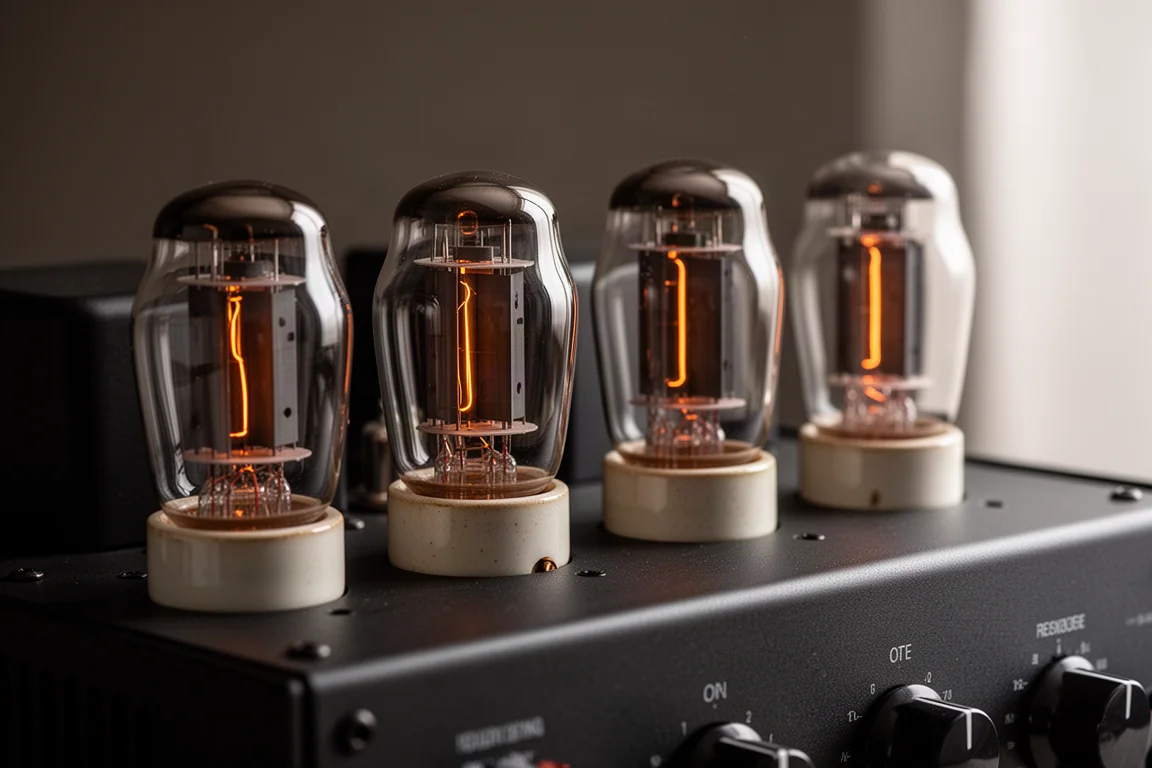
Because the power tubes are the main variable here, it helps that the amplifier handles the setup for you. The other tubes do not require user bias adjustment, so experimentation stays practical rather than turning into a bench project.
Things to Consider Before Buying
Weight and heat are the two practical points. At around 30 kg the amplifier is best placed once and left alone, and the tubes run very hot. An optional cage is available for $95, and in some countries a cage is necessary to meet safety regulations, so it is worth checking what applies locally.
The second consideration is musical taste. The TS120 SE will not flatter material that depends on relentless low frequency weight, and it will not drive every speaker on the market. Buyers who want the last word in woofer control at this price should weigh that carefully.
Finally, Class AB performance with the stock tubes is competent rather than exceptional for the money. The amplifier earns its price in Class A, so it makes most sense for someone who intends to use that mode.
Speaker Matching and Power Delivery
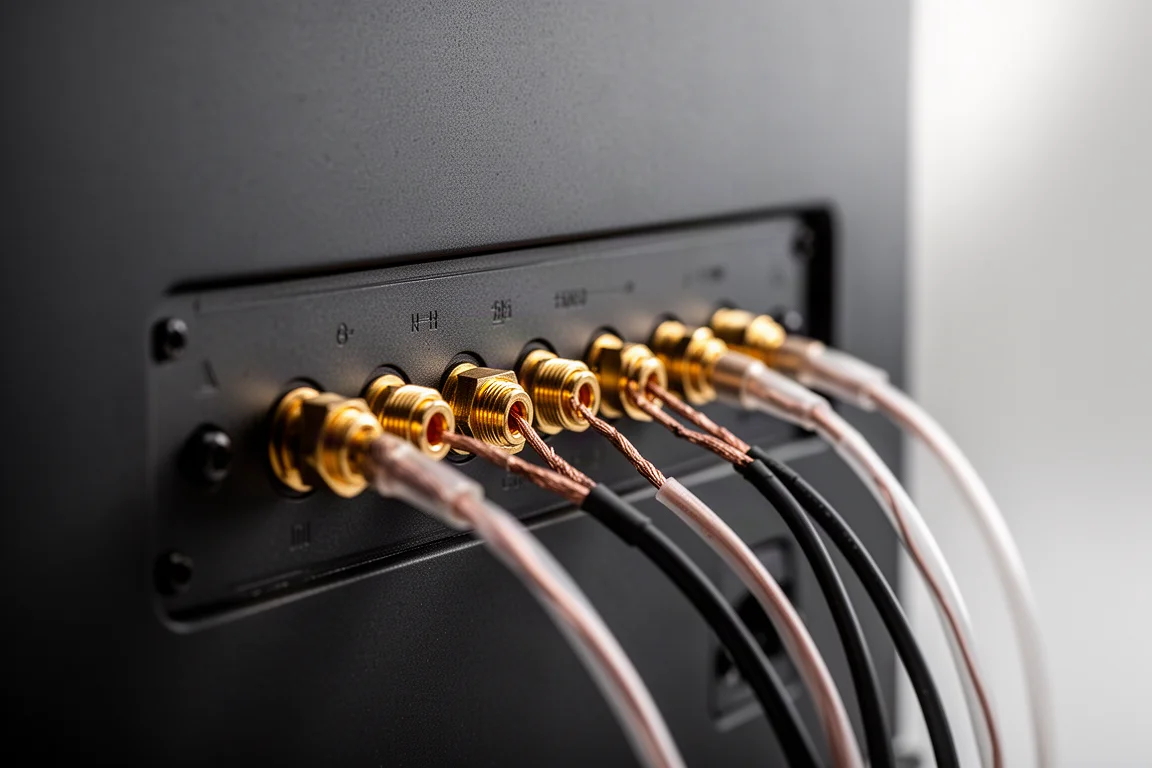
The TS120 SE works well with a wide variety of speakers, and the 4 ohm and 8 ohm taps flanking the neutral connection on the rear panel make matching straightforward. The layout of the speaker binding posts is unconventional, with the left channel terminals sitting above the right, but everything is clearly labelled.
Paired with a warm, dark sounding speaker such as the direct-sale CSS Typhon, running in Class A with profile B gives the amplifier a slightly more incisive and bright balance that counters the speaker’s character while keeping reasonable control of the bass. Easy to drive speakers with good detail are an ideal starting point. More demanding loads also work: with a pair of standmounts known for testing an amplifier’s power supply, the soundstage opens up and midrange detail is preserved well.
Tubes and horn loaded speakers are a classic combination, and here the higher feedback profile A in Class A proved the better match, sounding a little softer and better suited to that kind of presentation.
The wider lesson is that the amplifier rewards careful matching rather than brute force. The two sound profiles effectively give you two voicings to work with, which makes it easier to find a balance with speakers that lean warm or lean bright.
Setup, Bias, and Safe Operation
Warm-up takes around 30 seconds before the amplifier is ready, though everything needs considerably longer to reach optimal temperature.
As with almost all tube amplifiers, the TS120 SE uses output transformers, which means it should never be powered up without speakers attached. With no load on the secondary coil, the energy in the primary coil has nowhere to go and the transformer can produce potentially dangerous high voltage peaks.
Biasing is handled by a microprocessor based auto-bias circuit for the power tubes. The amplifier needs to be re-biased whenever you switch between Class A and Class AB, and whenever the power tubes are changed. The process is simple: press the change button, select the required mode, then press the bias button and let the circuit do the work. The indicator may cycle between red and blue a couple of times before settling on blue, so it is worth waiting until the bias LED goes off rather than pressing change too early. Do not have anything playing on the input while biasing new tubes, since tubes with a lower bias than the previous set can potentially damage both the tubes and the amplifier.
Buying Advice
Context helps when judging the TS120 SE’s price. Its Class AB performance with stock tubes is comparable in authority to a well regarded alternative such as the Willsenton R8, which costs roughly a third as much when fitted with a full set of upgraded tubes. Switch the Gallion to Class A, however, and it pulls ahead in resolution and transparency in a way that justifies part of the gap.
Against a solid state integrated such as the Hegel H190, the Gallion is a genuine match overall when running in Class A with profile A, with relative strengths on both sides. The Gallion goes considerably deeper in soundstage terms and offers a harmonically richer midrange, while the solid state design holds on to rhythm more successfully and presents a wider stage.

In short, the TS120 SE is a compelling proposition for listeners who want Class A tube sound, a deep and expressive soundstage, and the flexibility to tune the presentation through profiles and tube rolling. Buyers who mainly want maximum drive and grip should look to solid state instead.
Conclusion
The Gallion TS120 SE is superbly put together, and in Class A it delivers high levels of detail with finesse alongside more than acceptable control. The range of operating modes, sound profiles and tube options means most listeners will find a setting that suits their system and their taste.
It will not drive any speaker, and it is not the amplifier for bass heavy, crescendo driven listening, but it drives most speakers well. For the price, its combination of sonic ability and flexibility makes it easy to recommend.
Product link
View more details for Gallion TS120 SE
This product is mentioned in the review. Check the specifications, options, and compatibility before buying.
View more details for Gallion TS120 SEFurther reading
Related Reviews
Hi-Fi Amplifiers
Accuphase E-280 Review: Entry-Level Accuphase With Flagship Attention to Detail
A close look at the Accuphase E-280 integrated amplifier, covering its champagne build, AAVA volume control, sound quality, and the speakers and sources that suit it best.
Hi-Fi Amplifiers
Advance Paris A10 Classic vs Yamaha A-S301: Two Integrated Amplifiers Compared
A practical comparison of a $350 integrated amplifier and a $2,500 reference model, covering the differences that matter and the ones that do not.
Hi-Fi Amplifiers
Affordable Chinese Amplifiers Worth Buying: Five Budget Hi-Fi Amps Compared
A practical look at five affordable amplifiers, what each one does well, and the trade-offs to weigh before you buy.