Bike Components
FSA K-Force Team Edition Crankset Review: 1,000 km on 165 mm Cranks
A practical look at shorter crank lengths, what the FSA K-Force Team Edition crankset changed in comfort and bike fit, and where the gains stop.
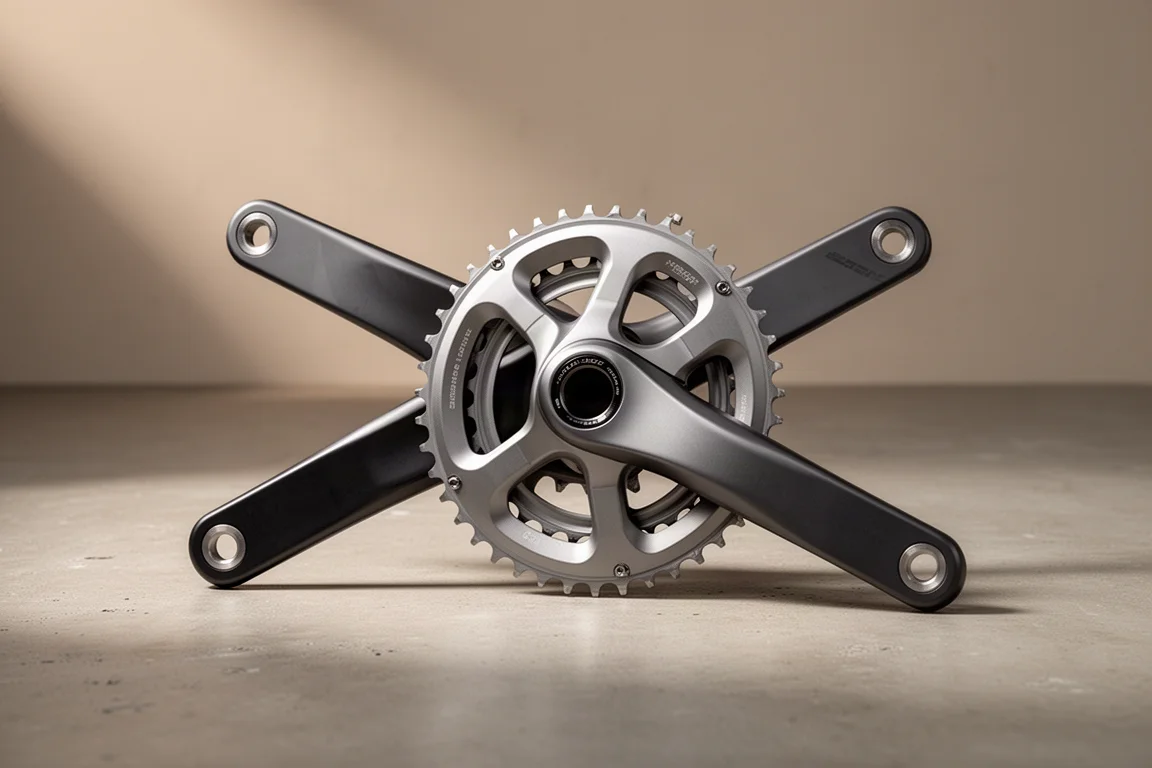
Introduction
Crank length is one of the few contact points on a road bike that most riders never question. Saddle height gets adjusted, stems get swapped, handlebars get narrowed, yet the cranks that came with the frame usually stay. The FSA K-Force Team Edition crankset in a 165 mm length makes that question difficult to avoid, especially for taller riders who have spent years on 172.5 mm or 175 mm arms.
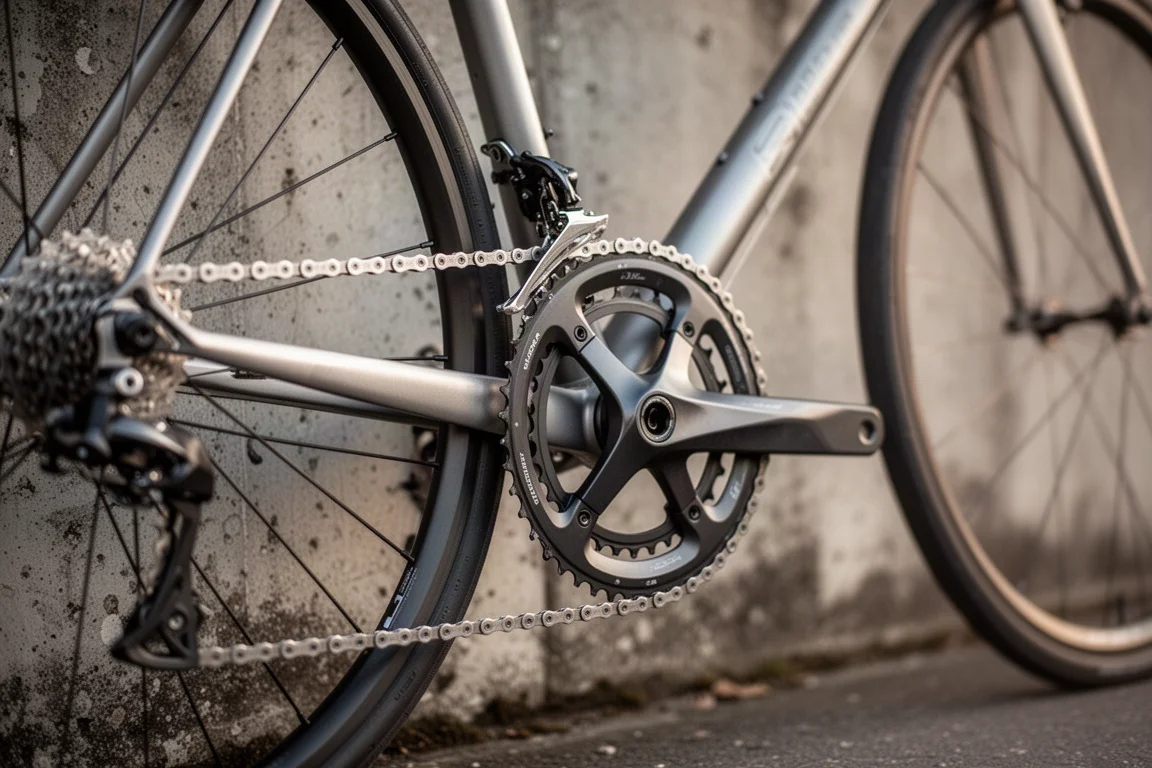
This review is built on 1,000 km ridden on the 165 mm version, fitted with 50/34 gearing, after moving down from a familiar 175 mm setup. The goal was simple: work out whether shorter cranks are a genuine change or a passing trend.
The honest answer sits somewhere in between, and it depends heavily on what a rider wants from a bike. Shorter cranks did not deliver a measurable power gain. What they changed was comfort, position and the way a long ride feels in its final hours.
Who this product is for
The K-Force Team Edition crankset in 165 mm is most relevant to three groups of riders. The first is tall riders, who often default to the longest crank available simply because it matches their frame size. The second is riders dealing with hip, knee or lower back discomfort that has resisted saddle and cleat adjustments. The third is riders covering long distances who care more about finishing fresh than about peak sprint numbers.
It is also worth a look for anyone who likes a slightly more forward, aggressive position but cannot move the saddle further forward without compromising reach.
Main strengths
The strengths here are not measured in watts. They are measured in how the bike feels underneath a rider over hours rather than minutes.
Smoother pedaling and less fatigue
The first impression of a 165 mm crank is unfamiliarity. After an hour or two the sensation settles, and the pedal stroke begins to feel rounder, with fewer of the dead spots that creep in late on a long ride when fatigue takes over. Over the course of 1,000 km that showed up as no saddle sores, less joint stiffness in the evenings after eight to ten hour days, and a lower back complaint that had been hard to manage fading almost immediately.
There is a positional benefit too. Holding an aggressive position for longer became easier, and the front of the bike stopped feeling like the limiting factor on long days.
A more open hip position
The biomechanical case for shorter cranks is straightforward. A shorter arm lets the hip open at the top of the pedal stroke, and a more open hip means a less severe turn for the iliac artery, which carries oxygen-rich blood to the leg. Reducing that restriction supports better blood flow during hard efforts.
There is a second effect at the point of peak power, roughly between the 90 and 110 degree positions of the crank cycle. Shortening the crank moves the pedal back slightly at the three o’clock position, which allows a more perpendicular force direction against the crank arm. In practice that achieves something similar to moving the saddle forward, a trick triathletes use and road riders cannot because of position regulations.
Things to consider before buying
Changing crank length is not as simple as raising a saddle or swapping a stem. It means new cranks, often a different chainring combination, and a fresh look at saddle height. It is an expensive and time-consuming job, and that alone keeps plenty of riders from experimenting.
Gearing is the detail most riders get wrong. Going shorter reduces leverage, so a gear that felt comfortable on 175 mm cranks will feel heavier on 165 mm. Compensating with easier gears is essential, and it is worth running the calculations rather than guessing.
Gearing and cadence habits
Shorter cranks also change how a rider uses the drivetrain. Gear changes need more attention, because recovering from being caught in the wrong gear takes a little more effort. Riders who are used to grinding at low cadence on steep gradients will notice the difference most. The longer lever of a 175 mm crank still has value at very low cadences, in standing starts and in the stop-start rhythm of steep cobbled climbs, although that advantage fades as cadence rises.
Buying advice
For riders considering the switch, the practical path is to pick a length around 10 mm shorter than the current setup, leave saddle setback where it is, and raise saddle height slightly to account for the shorter arm. Expect an adaptation period of an hour or two before the position starts to feel natural, and expect the drivetrain to feel unfamiliar for the first few rides.
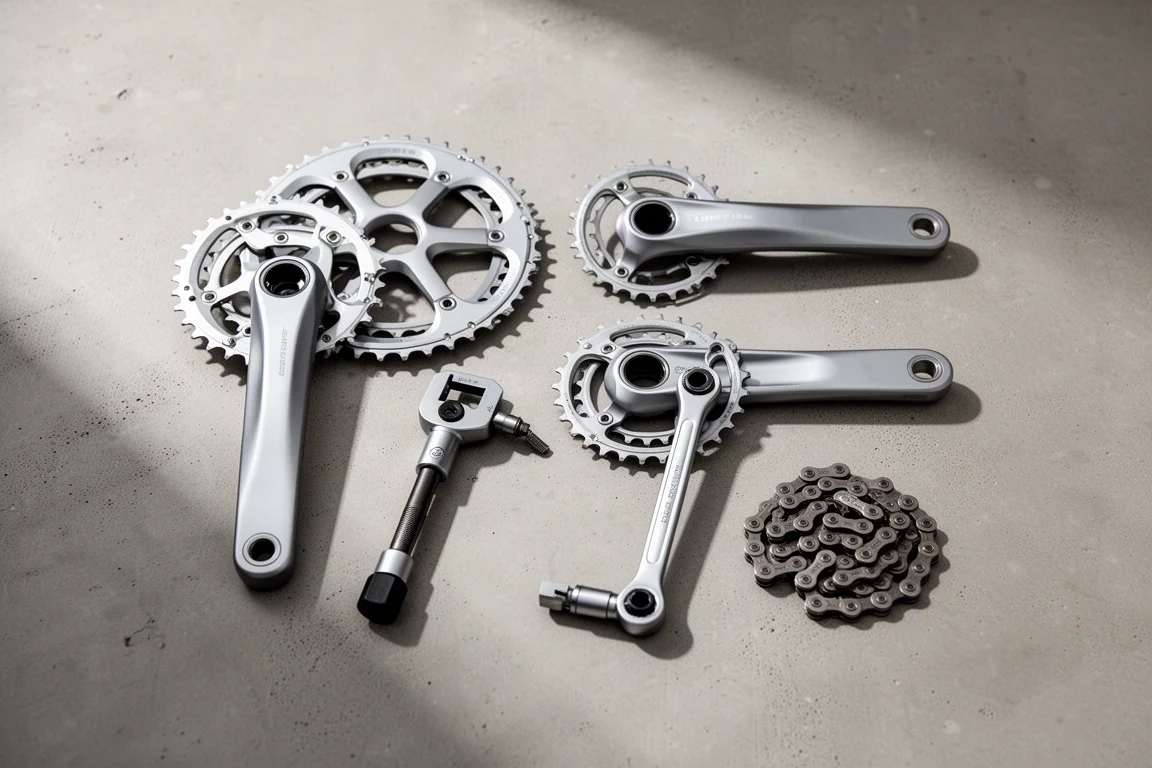
It also helps to be realistic about what shorter cranks deliver. In testing, a five second sprint produced no noticeable difference from previous bests of around 1,400 W, and a benchmark climb produced 443 W at 165 bpm against a season best of 462 W at 166 bpm, roughly 50 seconds slower. That gap is small enough to be explained by fatigue and day-to-day variation rather than crank length, and existing research points to no meaningful difference in power output when crank length changes.
Riders who race on steep, low-cadence terrain may still prefer to stay with a normal crank length. Everyone else should weigh the comfort gains against the cost and hassle of the swap, and it is worth noting that manufacturers do not currently supply every very short length, which limits how far down a rider can go with a stock groupset.
Conclusion
Shorter cranks are not a free speed upgrade, and they are not a fad either. The FSA K-Force Team Edition crankset in 165 mm delivered clear improvements in comfort, position and recovery over 1,000 km without costing measurable power, which is a sensible trade for riders who value long-ride quality. The professional peloton has largely moved toward 165 mm, with some riders going shorter still, and the expectation is that 160 mm becomes more common over the next few years. For riders dealing with discomfort or chasing a better position, the change deserves serious consideration.
Product link
View more details for FSA K-Force Team Edition Crankset
This product is mentioned in the review. Check the specifications, options, and compatibility before buying.
View more details for FSA K-Force Team Edition CranksetFurther reading
Related Reviews
Bike Components
5Dev Titanium Cranks Review: Titanium Craftsmanship and the Shorter Crank Question
A close look at 5Dev's CNC machined titanium cranks, what shorter crank lengths actually change on the road, and how to decide whether this upgrade suits your bike fit.
Bike Components
Bike Groupsets Explained: Shimano, SRAM & Campagnolo Compared
A plain-English guide to the groupset pyramid, from Campagnolo Super Record to Shimano Acera, with buying advice for every tier.
Bike Components
Bird Spokes Review: Are Fabric Bicycle Spokes Worth It?
Fabric spokes promise less weight, more compliance, and better vibration damping than steel. Here is how a Bird spoke wheel build compares with the same rims and hubs laced with steel.