Bike Components
Bike Groupsets Explained: Shimano, SRAM & Campagnolo Compared
A plain-English guide to the groupset pyramid, from Campagnolo Super Record to Shimano Acera, with buying advice for every tier.
Introduction
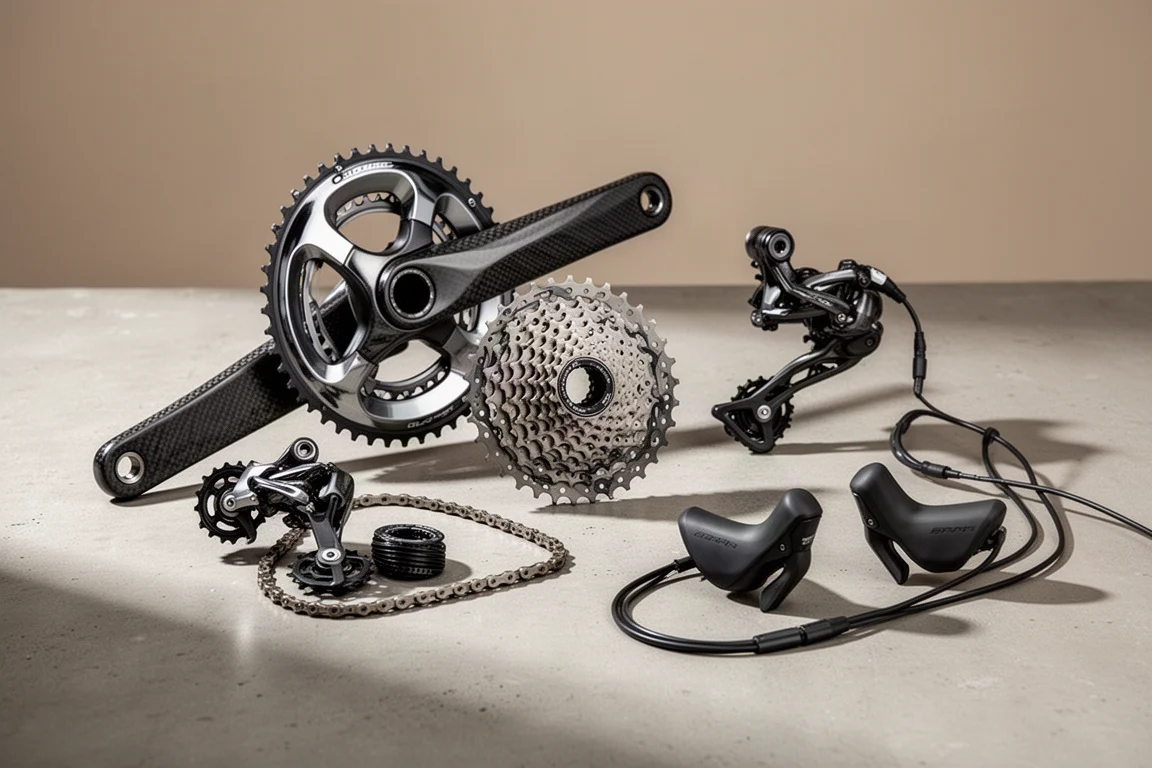
Walk into any bike shop and you will hear groupset names thrown around as if everyone speaks the same language. A groupset is simply the collection of parts on a bike that handle gearing and braking: shifters, brake calipers, brake rotors, front derailleur, rear derailleur, crankset, cassette, and chain. When riders talk about Shimano 105, SRAM Red, or Campagnolo Super Record, they are naming different models of these components. Three manufacturers dominate the conversation, and each one builds a range of groupsets from budget to flagship. This guide explains them in plain English, lays them out from top to bottom, and covers the gear numbers and brake choices that actually matter when you buy.
The Big Three Brands: Shimano, SRAM & Campagnolo
Shimano is the biggest of the three. The Japanese company builds everything from Tour de France race machines down to affordable hybrid and commuter parts, and it has a reputation as the safe, reliable choice. Think of it as the Toyota of groupsets. Shimano even makes fishing rods on the side. It did go through a serious crank recall, but that issue has been resolved and the range has moved on since.
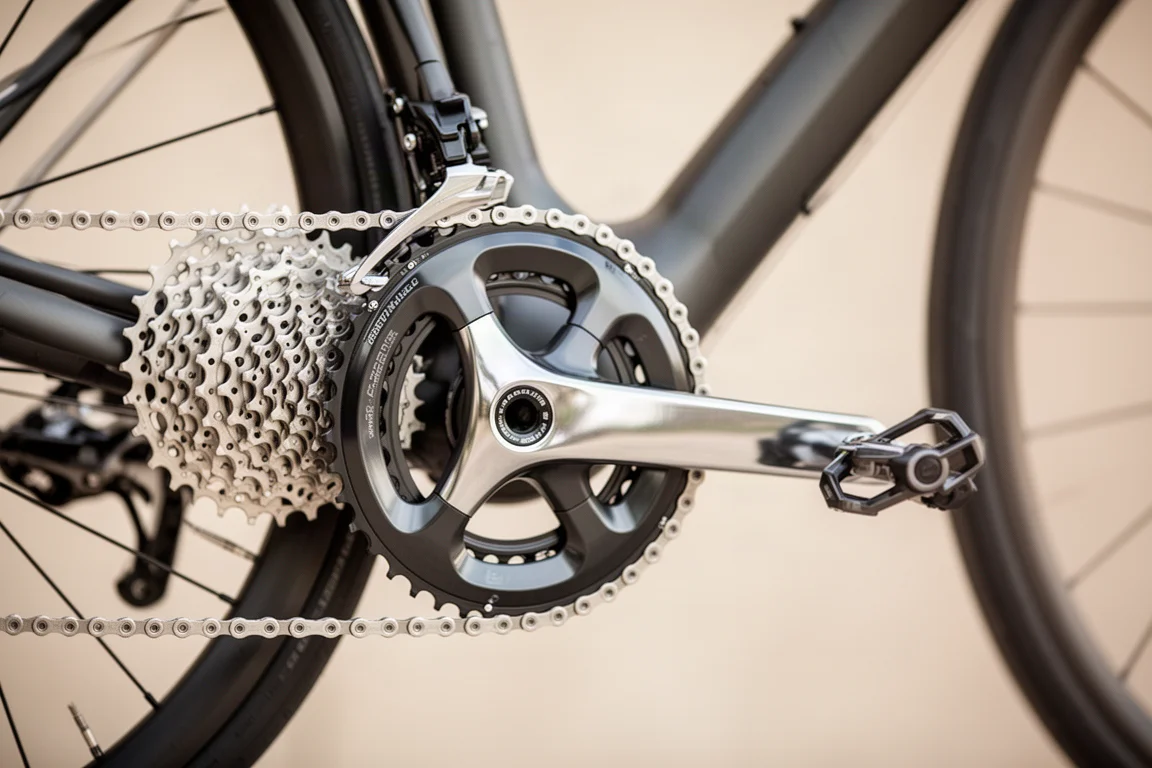
SRAM is the second largest name in the sport. The American brand only makes mid-range to high-end performance groupsets, and even its most affordable Apex series now has an electronic option. SRAM started building road groupsets around 2006 and has improved steadily since. Its latest groupsets are widely regarded as some of the best braking systems available, clever marketing has won it serious market share in the performance category, and it was the first to make fully wireless shifting genuinely work. If you see the terms eTap and AXS, SRAM is referring to its wireless electronic shifting and its broader wireless component system, and riders often use the two interchangeably.
Campagnolo is the last of the big three, and the most Italian of them all. Its beautifully designed components were the most popular in cycling from the 1960s through the mid-1980s, until Shimano overtook it with more reliable products and the STI shifter that put braking and shifting in the same control. Campagnolo still makes an excellent high-end groupset, although it has had a few wobbles lately and wireless technology is clearly difficult to keep up with. If you want the best looking, most luxurious option, Campagnolo remains the obvious answer.
The Groupset Pyramid: Tiers at a Glance
All three brands sell a ladder of groupsets at very different prices. The easiest way to see which model competes with which is to lay them out as a pyramid, from the flagship at the top down to the entry-level options at the base. The comparison below is simplified and focused on road groupsets, but it shows the relative position of every major model.
The Top Tier: Super Record, Red, Dura-Ace & Record
The top of the pyramid is a race-ready group. Every model here uses hydraulic brakes, where squeezing the lever pushes incompressible fluid down a hose to clamp a disc rotor in the middle of the wheel, and they all shift wirelessly or semi-wirelessly. They are extremely light and more than capable of being raced at the top level of the sport.
Campagnolo Super Record
Campagnolo Super Record sits in its own special section at the very top of the pyramid. It is a 13-speed groupset, meaning 13 gears at the back and two at the front, or one if you prefer. Shifting is fully wireless and electronic, powered by small motors in the derailleurs, and the brakes are hydraulic. It is built from the most expensive and lightest materials Campagnolo offers, and it costs just shy of £4,000 without a power meter.
SRAM Red
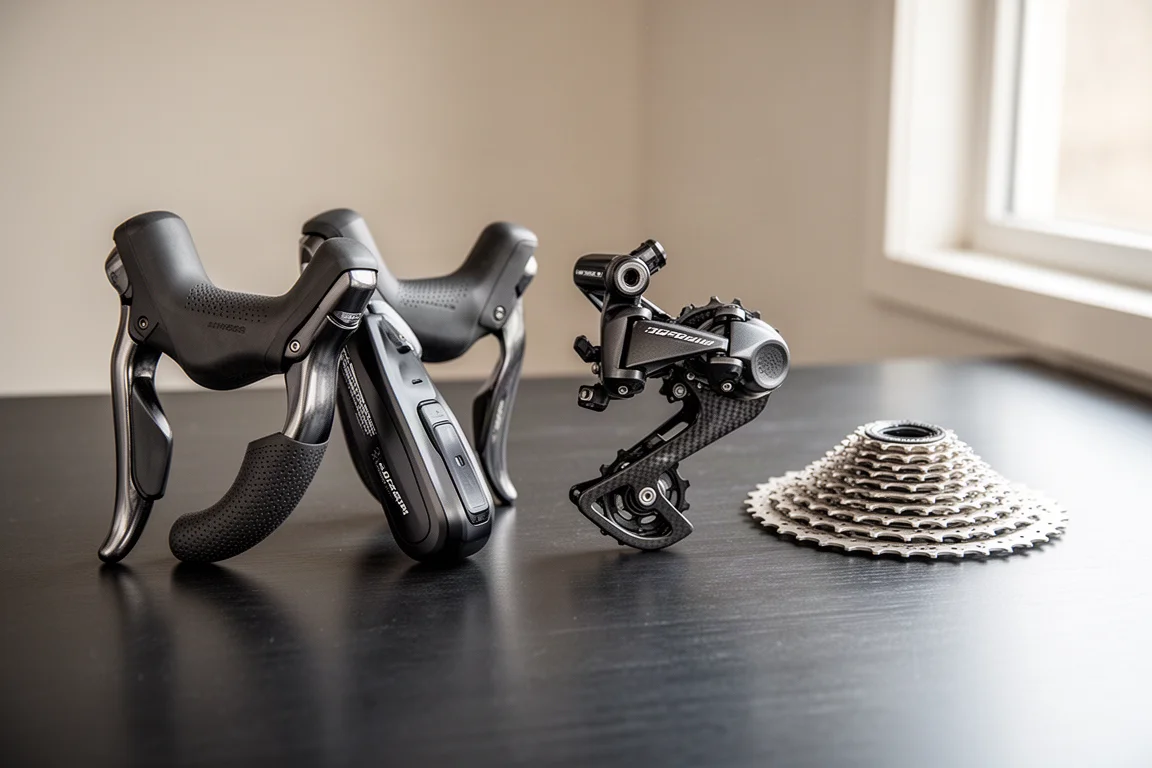
SRAM Red is SRAM’s flagship, one step below Super Record in price but doing much the same job. It is fully wireless with electronic shifting, hydraulic brakes, and an extremely light build that is ready for racing. Red is 12-speed, and it sits alongside Shimano Dura-Ace as the benchmark American performance groupset.
Shimano Dura-Ace
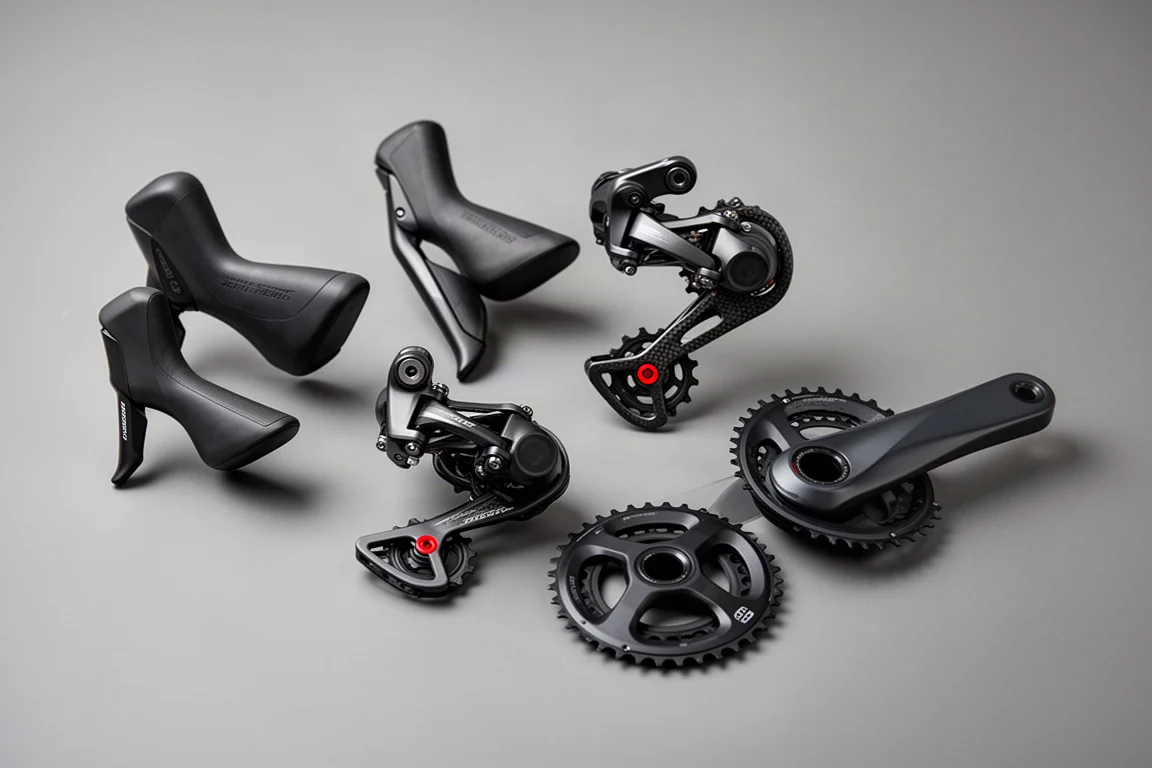
Shimano Dura-Ace is the Japanese brand’s top-tier road groupset and the one most often seen at the sharp end of professional racing. It uses semi-wireless Di2 electronic shifting, hydraulic brakes, and a famously light construction. Like SRAM Red, it is a 12-speed groupset, and it is about as close as a production groupset gets to the machinery used in the Tour de France.
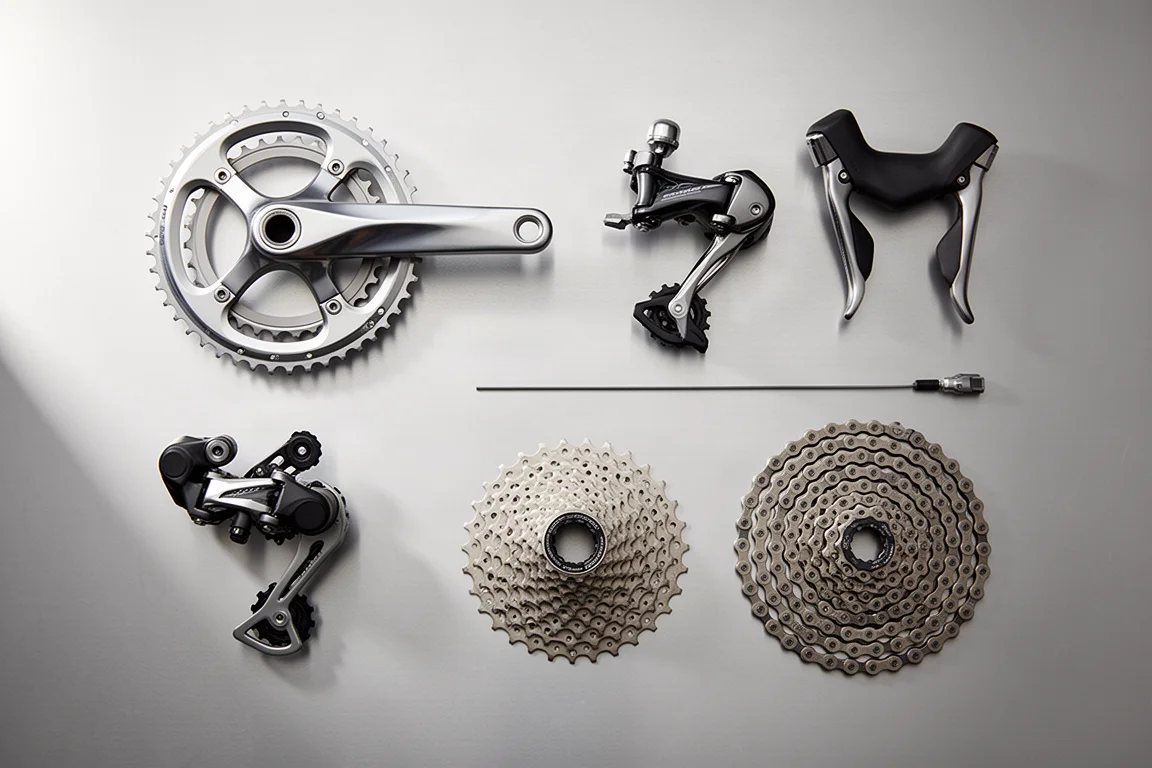
Campagnolo Record
Campagnolo Record is the step below Super Record, and Campagnolo fans consider it to be on the same level as Dura-Ace and Red. It is a 13-speed groupset with hydraulic brakes and wireless electronic shifting, built from lighter materials than the rest of the Campagnolo road range below it. If you really want the extra gear that a 13-speed cassette provides, Record is where that starts.
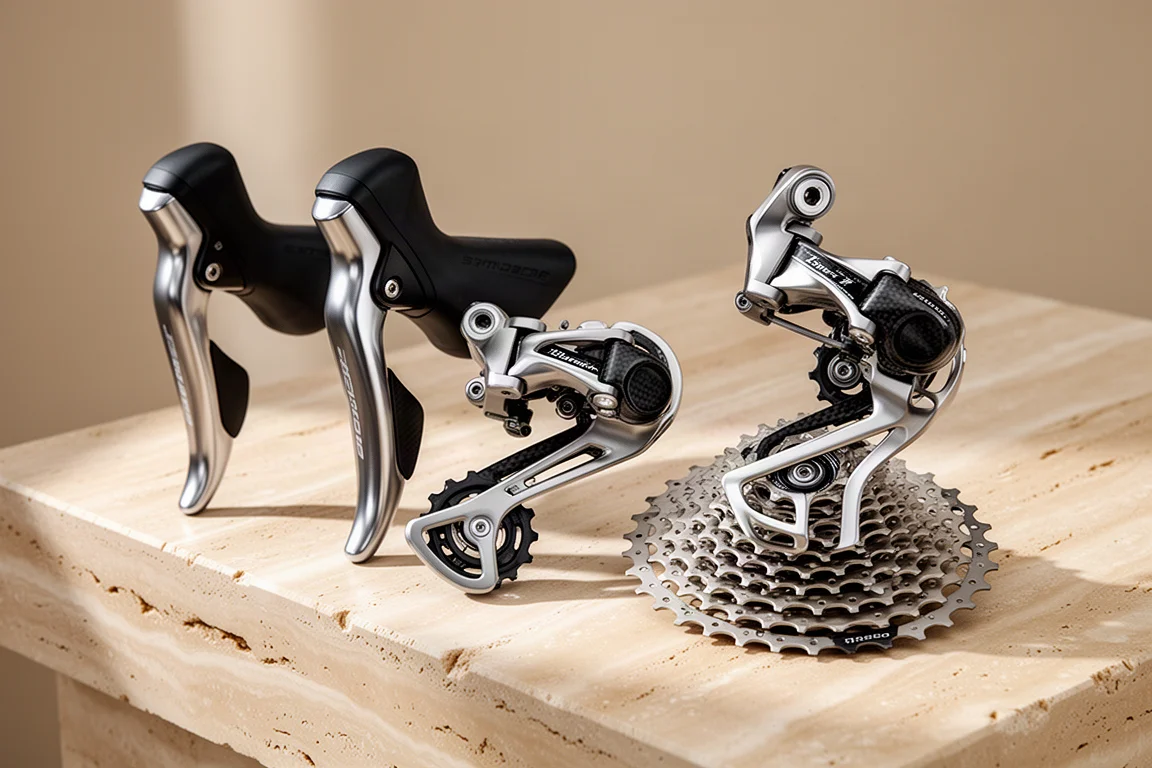
The Performance Tier: Force, Ultegra & Chorus
One step down the pyramid sit SRAM Force, Shimano Ultegra, and Campagnolo Chorus. All three are 12-speed groupsets, and Force and Ultegra are essentially the same as the flagships above them. The main differences are slightly different materials, a little more weight, and a different word written on the side.
SRAM Force
SRAM Force is a 12-speed wireless groupset with hydraulic brakes. It performs almost identically to SRAM Red, with the differences limited mostly to materials, weight, and a small step down in price. For most riders, Force will be hard to tell apart from Red in everyday riding.
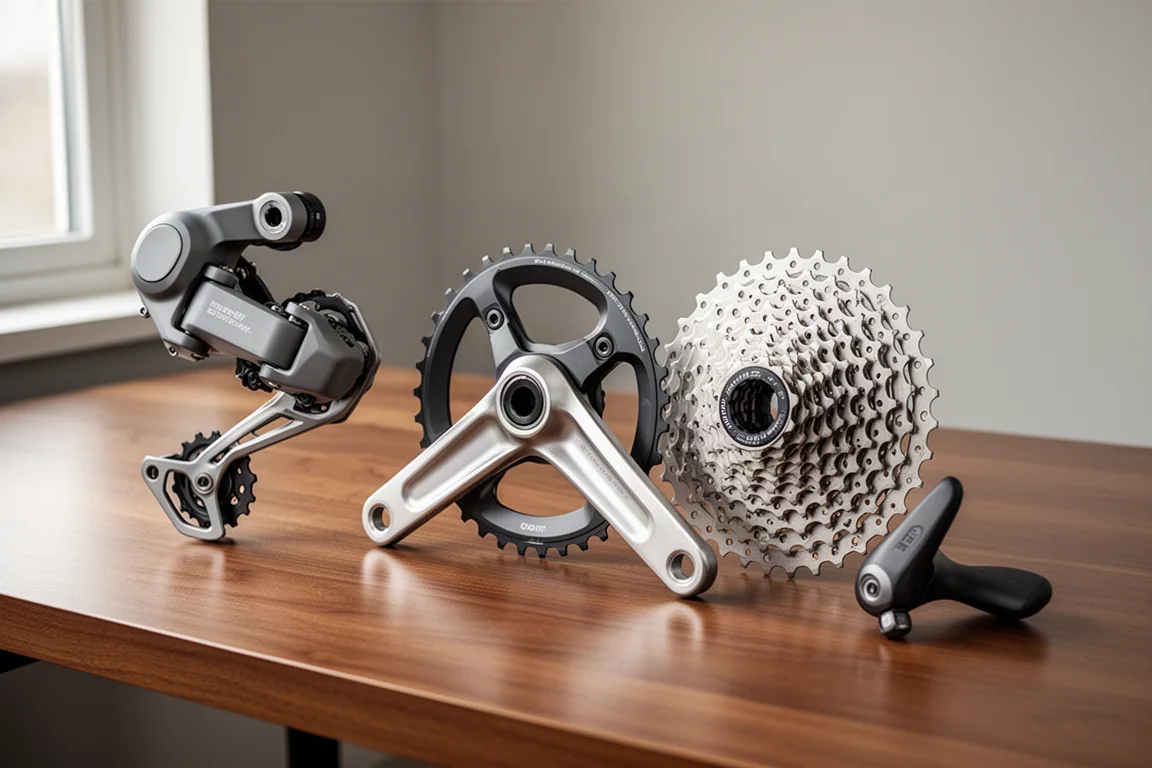
Shimano Ultegra
Shimano Ultegra is the enthusiast favourite in Shimano’s line-up, offering Dura-Ace-level shifting at a more accessible price. It is available with electronic Di2 shifting and hydraulic brakes, and the differences between Ultegra and Dura-Ace are mainly about weight and materials. There is a tiny difference in braking power between Ultegra and 105, mostly in rotor cooling, but you are unlikely to notice it on the road.
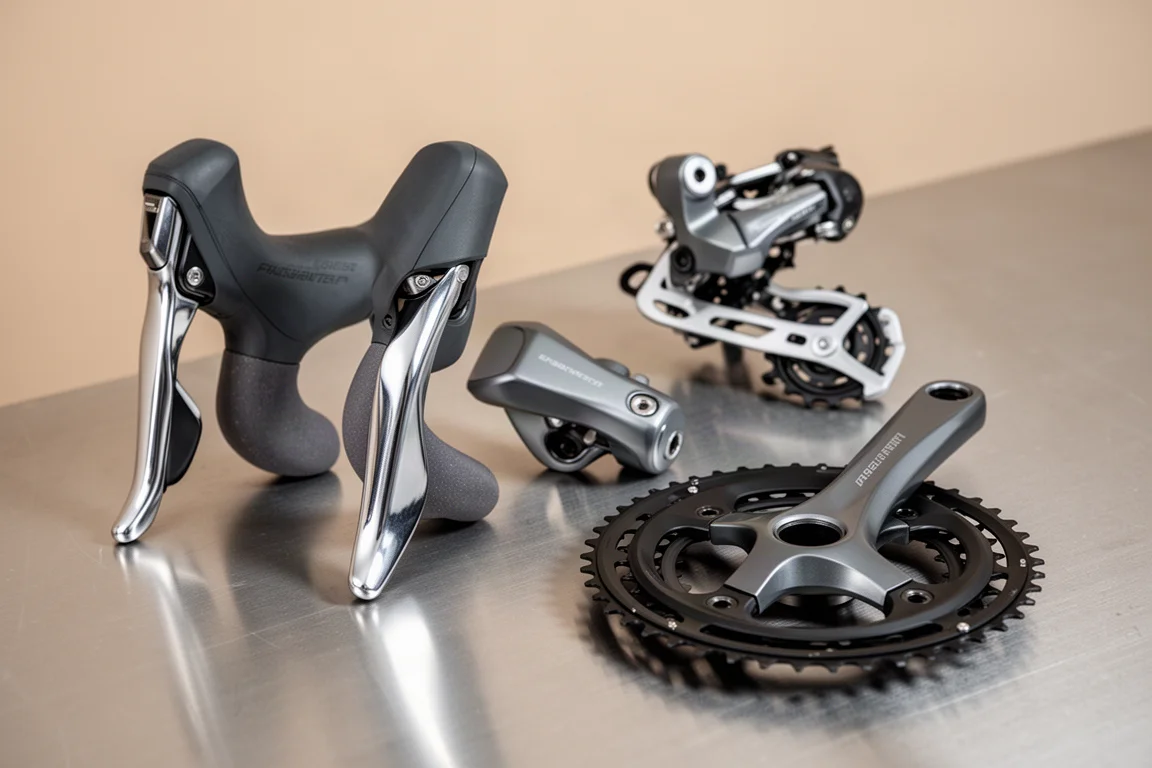
Campagnolo Chorus
Campagnolo Chorus is the most affordable road groupset Campagnolo makes. It is a 12-speed groupset, but unlike Force and Ultegra it is mechanical only, shifting through physical cables that pull the derailleurs into place when you press the levers. Historically, some Campagnolo users rated Chorus as highly as Red and Dura-Ace, although technology has moved on and the comparison is not quite as favourable today.
The Sweet Spot: Shimano 105 & SRAM Rival
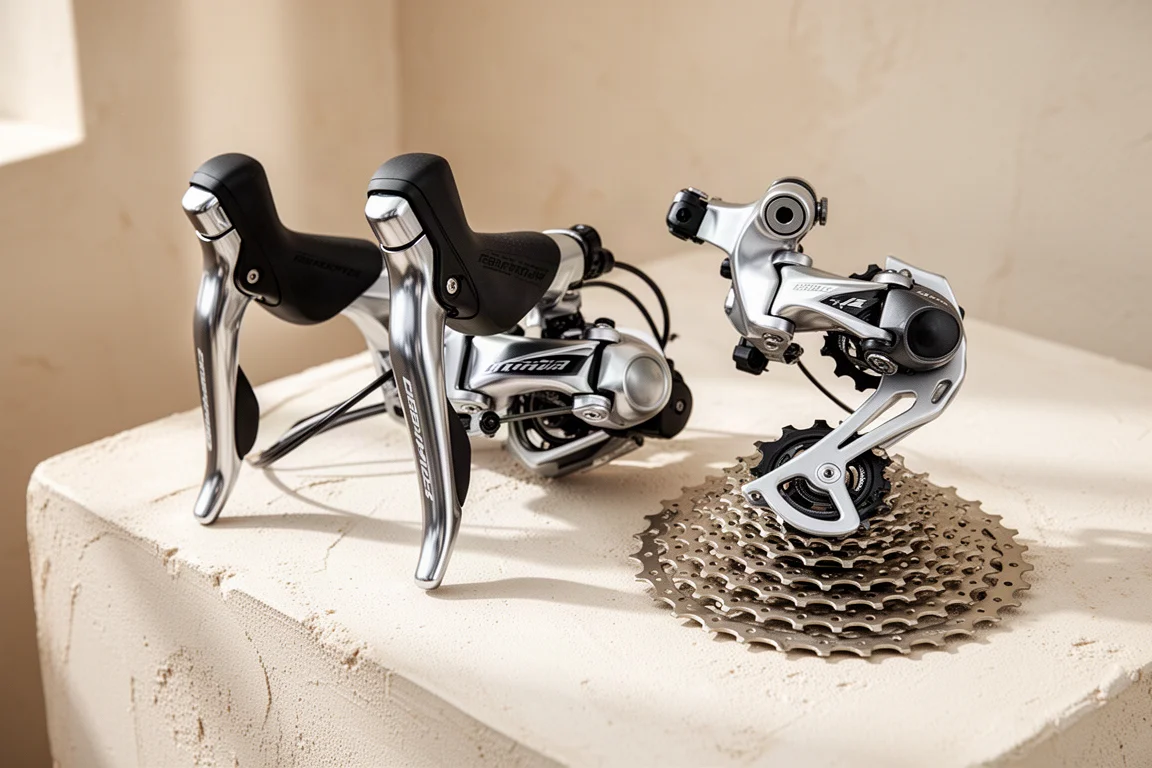
This is the level where most riders should be looking. Shimano 105 and SRAM Rival are more of the same, with only very small differences in materials and weight compared with the tiers above.
Shimano 105
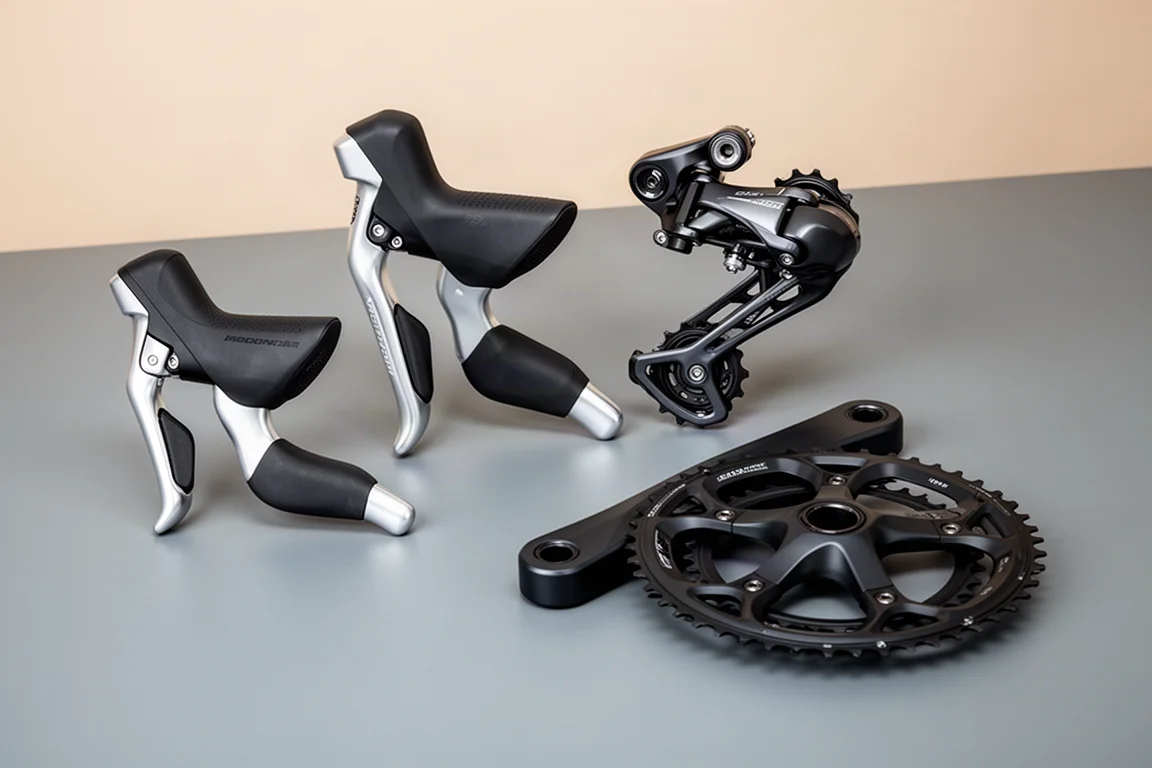
Shimano 105 is the classic sweet spot of the entire groupset market. Right now there are two versions: a mechanical model that is cheaper and still shifts amazingly smoothly, and an electronic Di2 version that is essentially the same as the higher tiers above it. The mechanical version may eventually be retired, so if you want it, it is worth buying while it is still in production.
SRAM Rival
SRAM Rival is SRAM’s answer to 105. It brings fully wireless electronic shifting and hydraulic brakes to the mid-range, with slightly less emphasis on weight and a few fewer programmable buttons than the higher SRAM tiers. Because SRAM parts can be mixed and matched, you can combine Rival with other components to get closer to the features you want.
The Value Tier: Tiagra, Apex, CUES, Claris & Acera
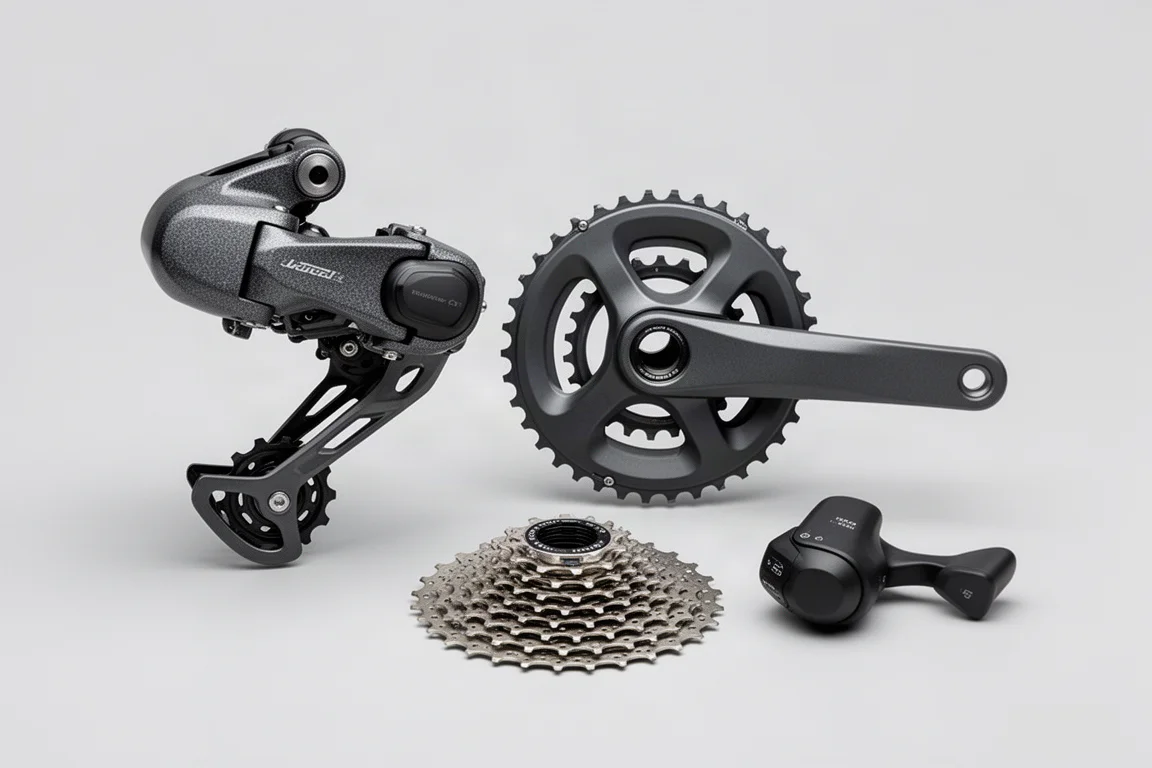
Below the sweet spot the pyramid spreads out. This is where the range gets a little more complicated, but the value can be excellent.
Shimano Tiagra
Shimano Tiagra sits one step below 105. It is an 11-speed groupset, so it has one fewer gear at the back, and it is mechanical only. Tiagra is a little heavier than 105, but it is a dependable performer at a noticeably lower price.
SRAM Apex
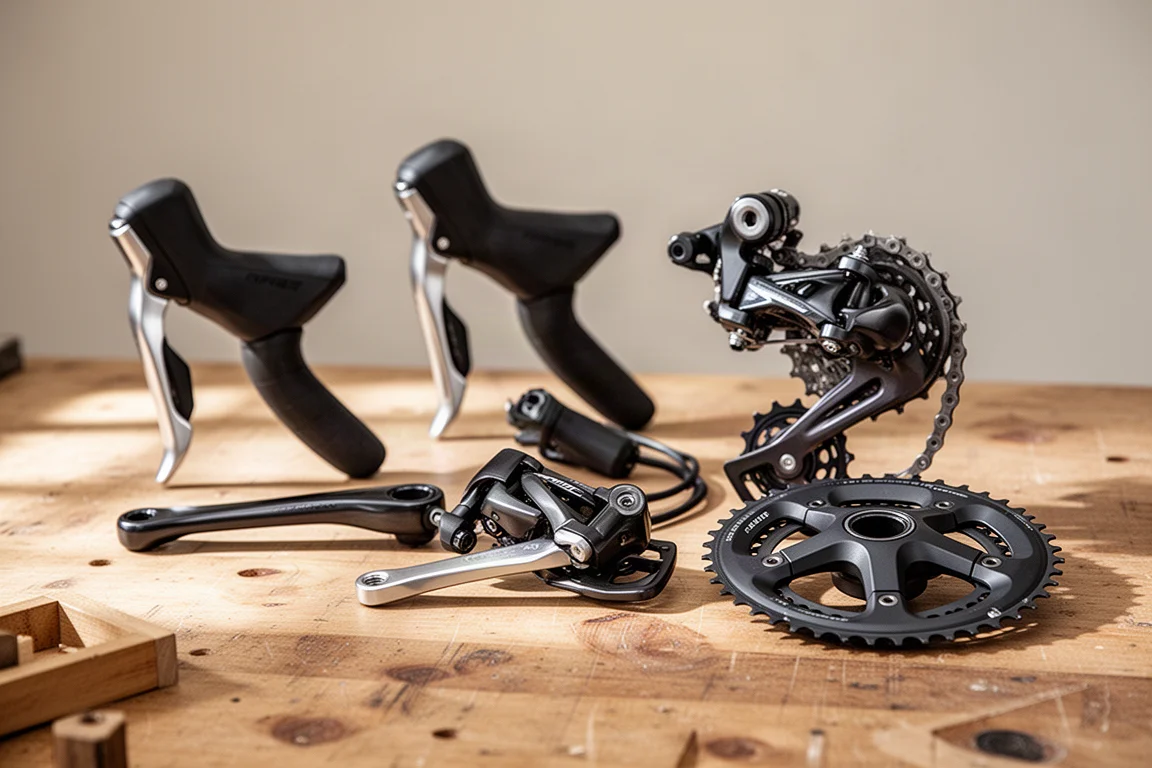
SRAM Apex is where SRAM’s line-up gets confusing, because there are several very different groupsets all carrying the same name. You can buy a fully wireless 12-speed hydraulic Apex, a mechanical 11-speed version with cable brakes, a mechanical 11-speed version with hydraulic brakes, and a mechanical 12-speed version with hydraulic brakes. SRAM does not even list Apex as a series on its website anymore. Be careful which one you buy, because a lot of the parts are not compatible despite sharing the Apex name.
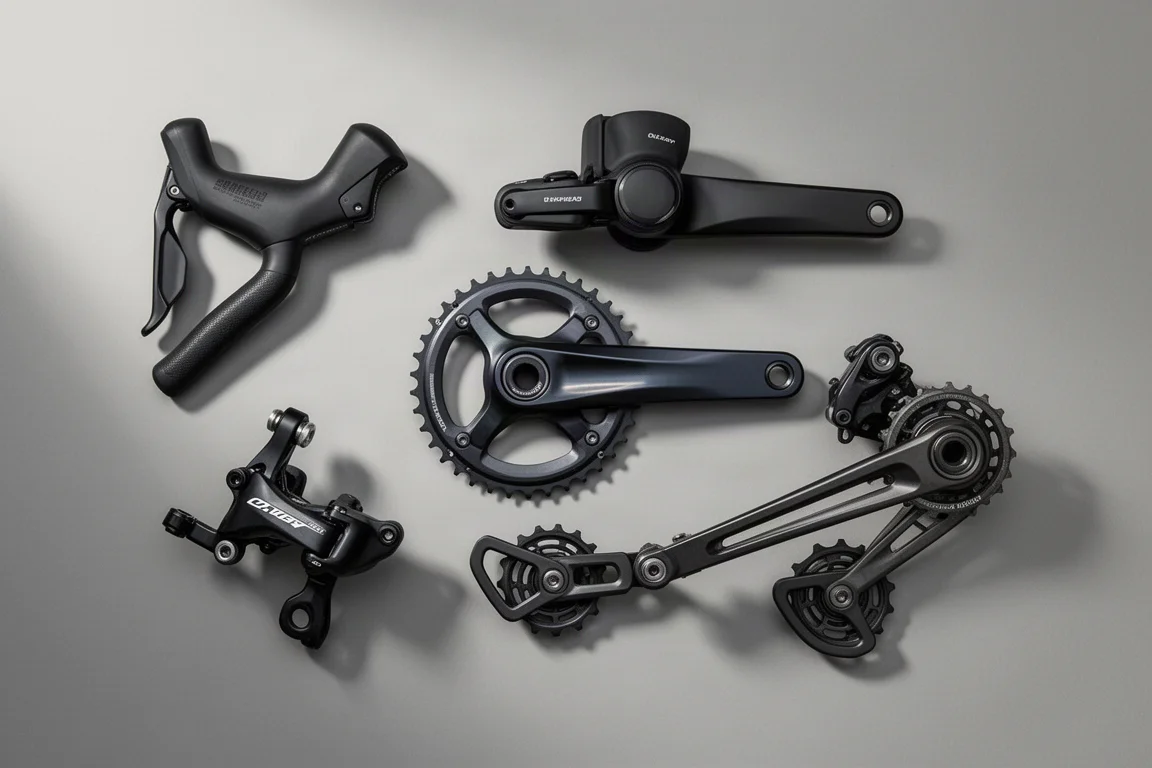
Shimano CUES
Shimano CUES is the name Shimano gave to a new range of mechanical groupsets covering 9, 10, and 11-speed drivetrains. It was designed to replace older entry-level groupsets such as Alivio, Acera, Altus, Claris, and Sora, in an attempt to make the entry-level range less confusing. Tiagra was not replaced, since a new version of it had just been released. The naming may still take some getting used to, but the intention was to simplify a crowded line-up.
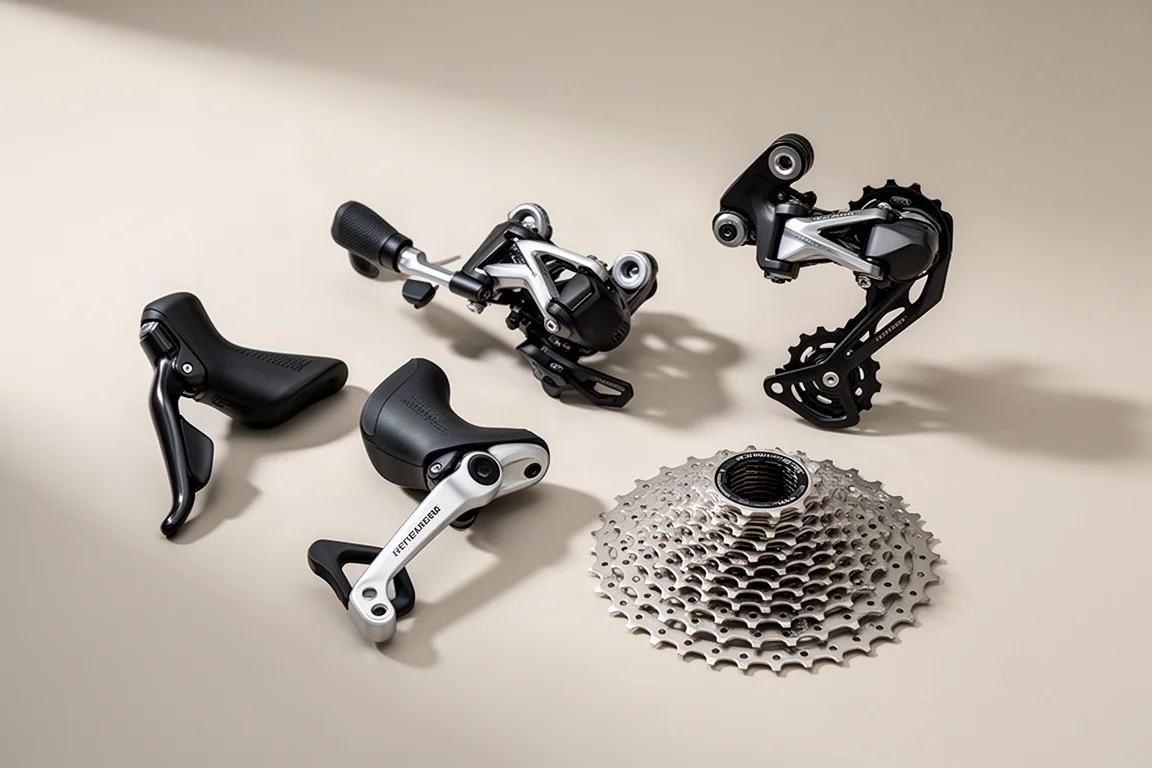
Shimano Claris
Shimano Claris sits low on the hierarchy but has tested excellent in practice. There is even a version with hydraulic brakes, which are impressively powerful. It is easy to turn your nose up at the entry level, but Claris shows that good value does not have to mean bad performance.
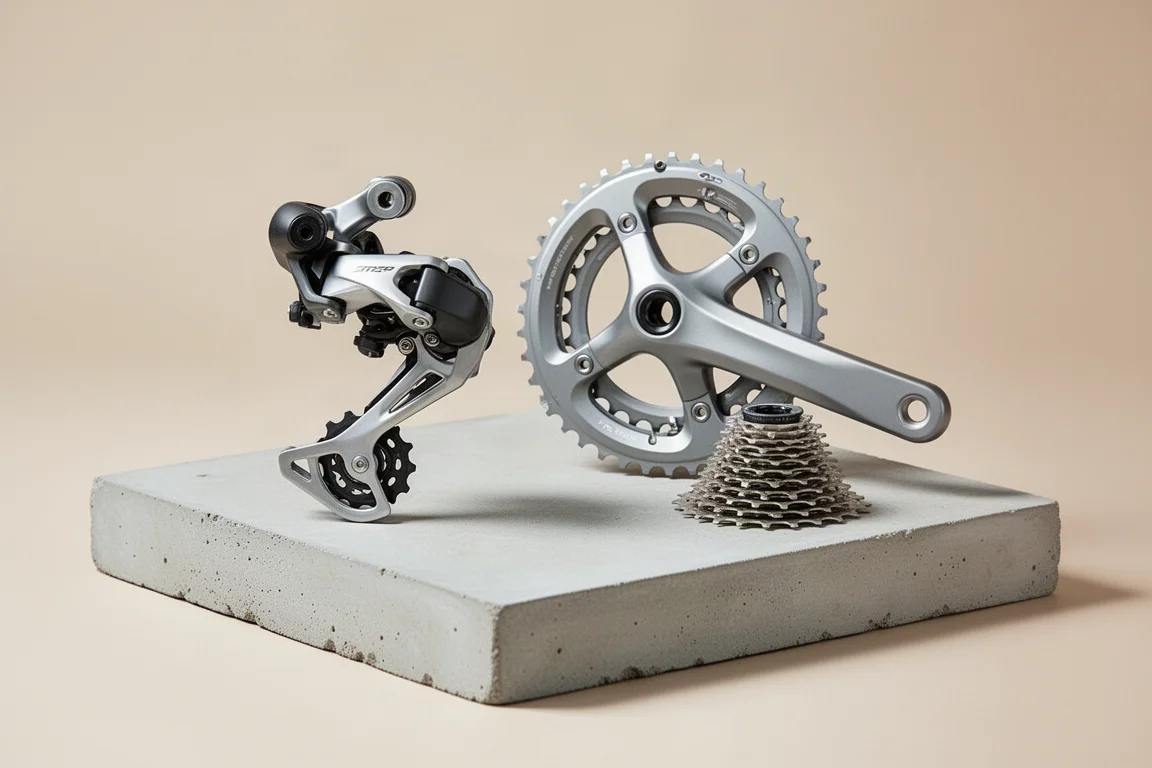
Shimano Acera
Shimano Acera is one step further down, but it is cheaper and backwards compatible with more of Shimano’s older groupsets. It is available with a road-style lever setup, so you get braking and shifting in one control, and it makes a great budget choice. At this level there are no hydraulic brakes, and with only eight speeds the jumps between gears are more noticeable, but the range can still be made generous: you can run a small 32-tooth chainring with a 45-tooth big cassette cog for very easy climbing gears.
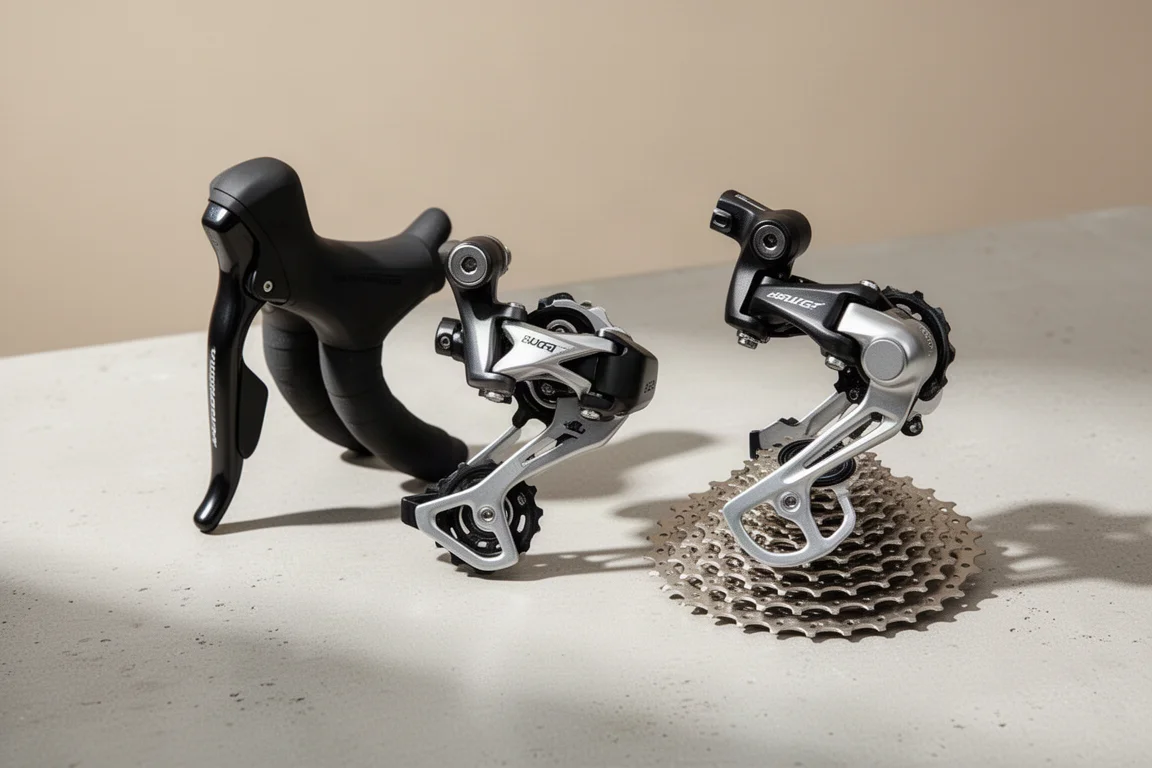
Gears, Cassettes & Chainrings in Plain English
All those numbers that follow a groupset name make more sense once you understand what gears actually do. A bike with a single gear is the easiest example: the bigger the front chainring, the harder it is to turn the pedals, and the bigger the rear sprocket, the easier it feels. On a geared bike, you choose combinations for the situation. A steep climb calls for a small front ring and a big rear sprocket, while a fast flat stretch calls for the big front ring and smaller sprockets at the back.
The speed of your pedalling is known as cadence, and it is personal. Some riders spin fast, some push big gears, and some are sensitive to small changes in cadence. That is where the number of speeds comes in. The more gears on the back, the smaller the jumps between them, so a 13-speed cassette feels smooth and seamless while an 8-speed drivetrain has gaps you will notice.
Cassettes are labelled with two numbers, like 11-28 or 10-34, which refer to the teeth on the smallest and largest sprockets. The front chainrings are labelled the same way: a double might be 50-34, a 1x setup might be a single 48-tooth ring, and a rare triple might read 50-39-32.
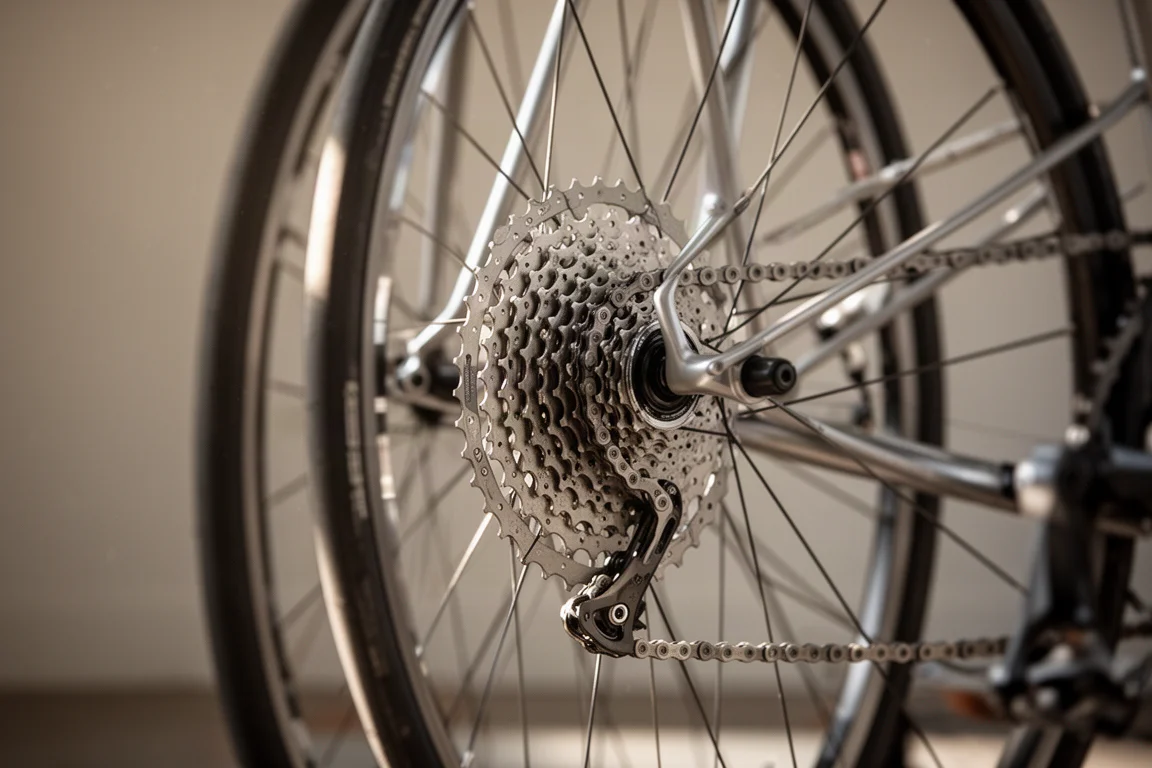
Riders also use the words compact, semi-compact, and standard to describe double chainrings. A standard chainset is usually 53-39, best for strong, fast racers. A semi-compact is usually 52-36, a good balance for fast riding. A compact is usually 50-34, the easiest of the three and, for most normal riders, the best choice unless you live somewhere flat.
SRAM sizes are different again. SRAM now uses a tiny 10-tooth sprocket on many cassettes, which Shimano does not currently offer on road groupsets, and SRAM consistently uses a 13-tooth jump between its chainrings. That means the two brands are not directly comparable. You will also hear riders talk in shorthand like “I only had a 50-11,” meaning the big front chainring and the small rear sprocket, so expect those numbers to take on context the longer you spend around bikes.
The last number that comes up constantly is crank length, the length of the arm where your pedal threads in. Cranks typically run from around 150 to 175 mm. As a rule, shorter riders are better off on shorter cranks and taller riders on longer ones, although racing cyclists are increasingly choosing shorter cranks to achieve a lower, more aerodynamic position while still being able to pedal. It is a small measurement, but if you spend hours on the bike it is worth tailoring.
Electronic vs Mechanical Shifting
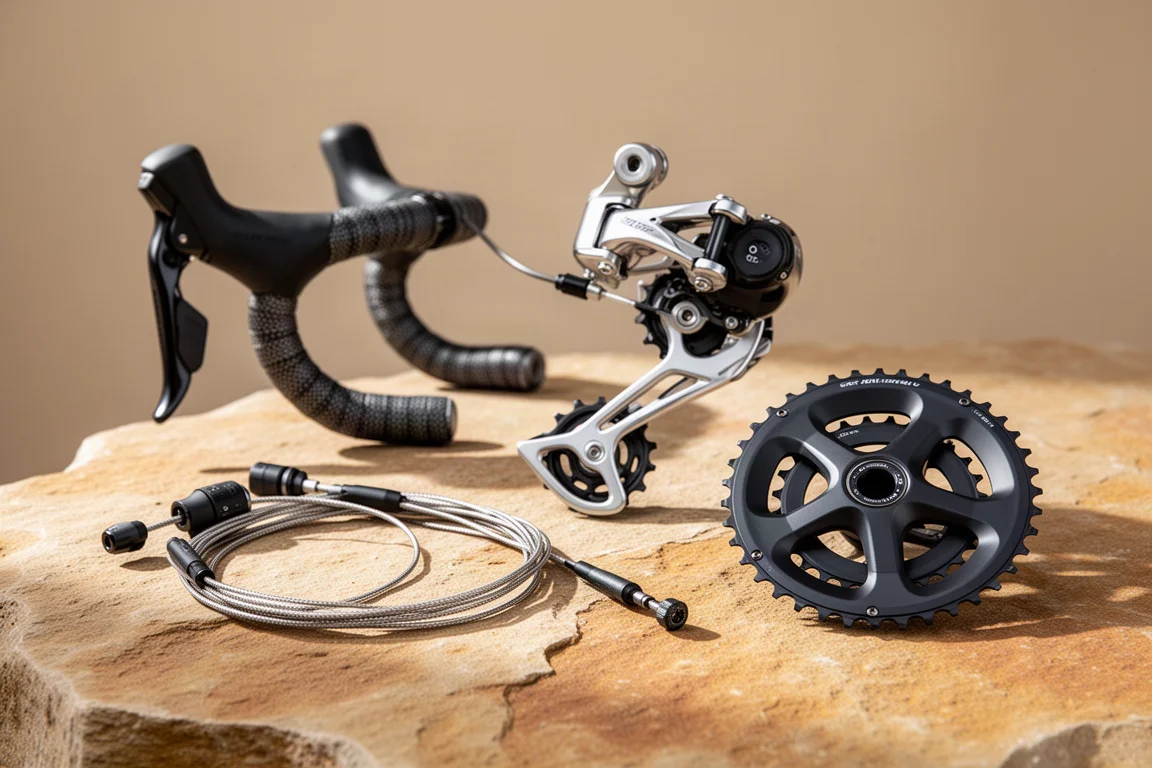
Electronic shifting replaces cables with buttons and small motors in the derailleurs. The shifting is extremely fast and precise, and it makes setup much easier for riders with different levels of hand dexterity or unusual handlebar layouts. For most people, electronic shifting is a nice-to-have rather than a must-have, but once you have tried it, it is hard to go back. If you race and want the crispest shifts available, electronic is probably the way to go. Mechanical shifting uses physical cables and remains cheaper, simpler, and perfectly dependable.
Hydraulic vs Cable Brakes
Disc brakes are the other big choice. Hydraulic brakes are powerful, with incompressible fluid delivering the force to the calipers, and they offer the most stopping power and the nicest lever feel. They cost more, however, and are harder to service than traditional cables. For many riders, cable-operated brakes are entirely adequate, and a hybrid style of caliper lets you run cables at lower cost while using a small reservoir of hydraulic fluid inside the caliper to make the braking surprisingly strong.
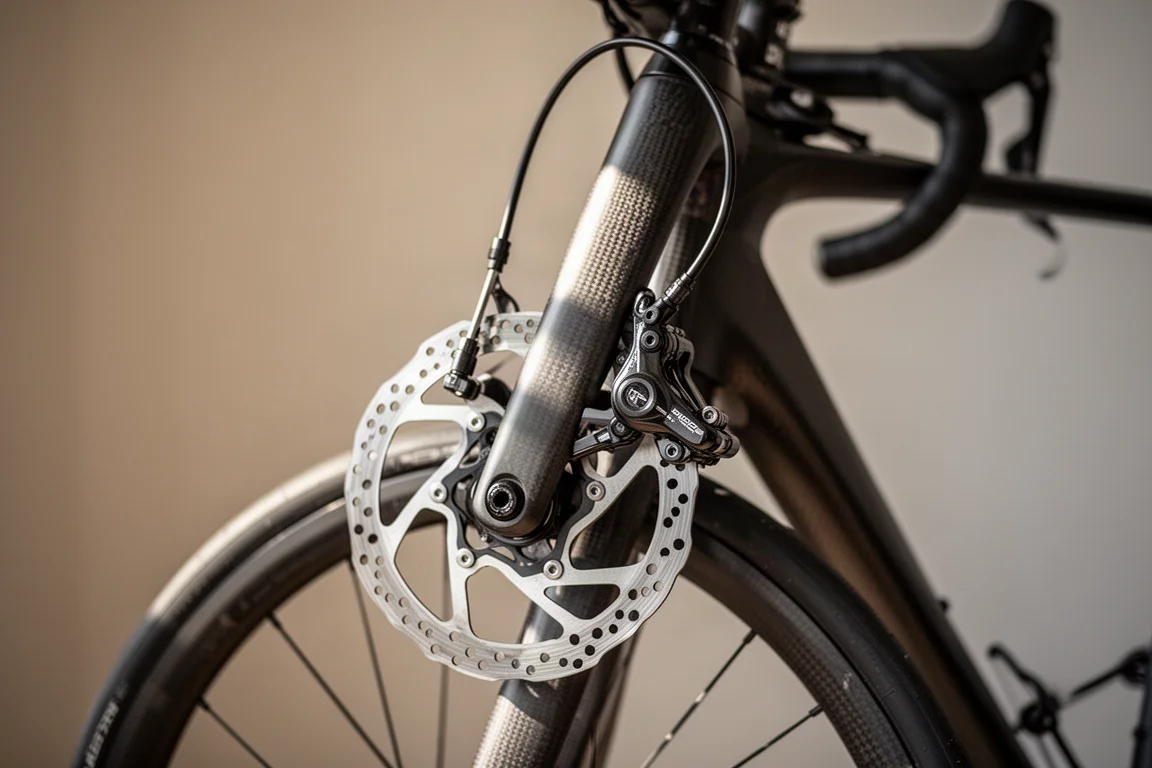
At the top of the brake hierarchy, the latest SRAM groupsets are currently among the best braking systems you can buy, although they are expensive. Shimano’s mid-range braking is also brilliant. Disc rotor size matters too, with 140 mm and 160 mm being the common sizes on drop bar bikes. The bigger the rotor, the more stopping power and the better the cooling, though all of them are extremely powerful.
Gravel-Specific Groupsets: Shimano GRX & Campagnolo Ekar
Gravel has its own groupset options. Gravel groupsets offer simplified shifting, single chainring setups that reduce the number of things to go wrong, and clutch mechanisms that stop the chain from slapping around on rough ground. SRAM offers an Explore version of its top groupsets as well as a mullet setup that mixes in mountain bike parts for even more gear range. Shimano and Campagnolo have their own gravel-specific models below.
Shimano GRX
Shimano GRX is the gravel-specific branch of the Shimano family. Unlike SRAM’s single-ring focus, GRX includes two-by versions, and it is offered at a couple of price points that slot in around the 105 and Ultegra level. If you ride gravel, GRX brings the same dependable shifting as the road range in a form built for dirt.
Campagnolo Ekar
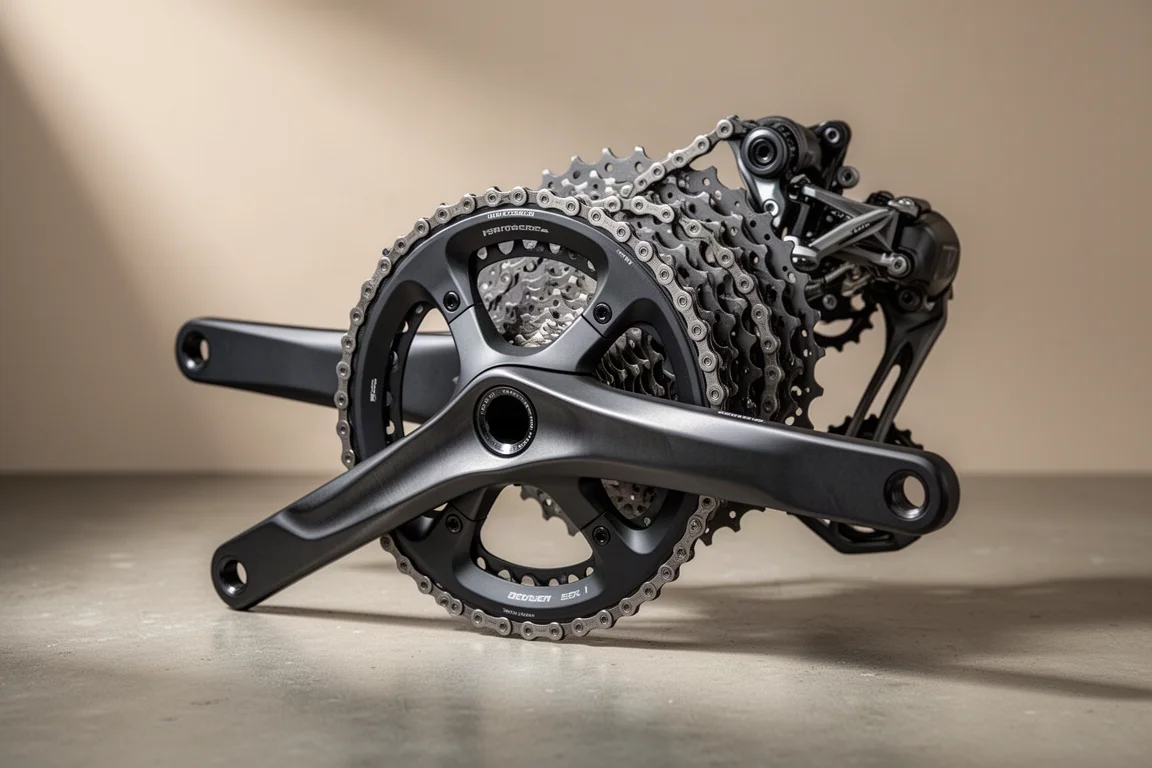
Campagnolo Ekar is Campagnolo’s gravel-specific groupset, mechanical as of right now. Campagnolo also makes an all-road version of Super Record with a clutch system for riders who want the flagship experience off the tarmac. Ekar is a distinctive choice if you want Italian style on a gravel bike, and there is nothing stopping you from using it on the road either.
What Groupset Should You Buy?
The pyramid makes the buying decision surprisingly simple. From Campagnolo Super Record all the way down to Shimano 105 Di2, the groupsets are basically identical in function. Pay more if you want less weight or a nicer name on the side, which is a perfectly valid reason on its own, but do not expect a dramatic performance jump. The sweet spot for most riders is the 105 and Rival level, because the returns above it diminish quickly.
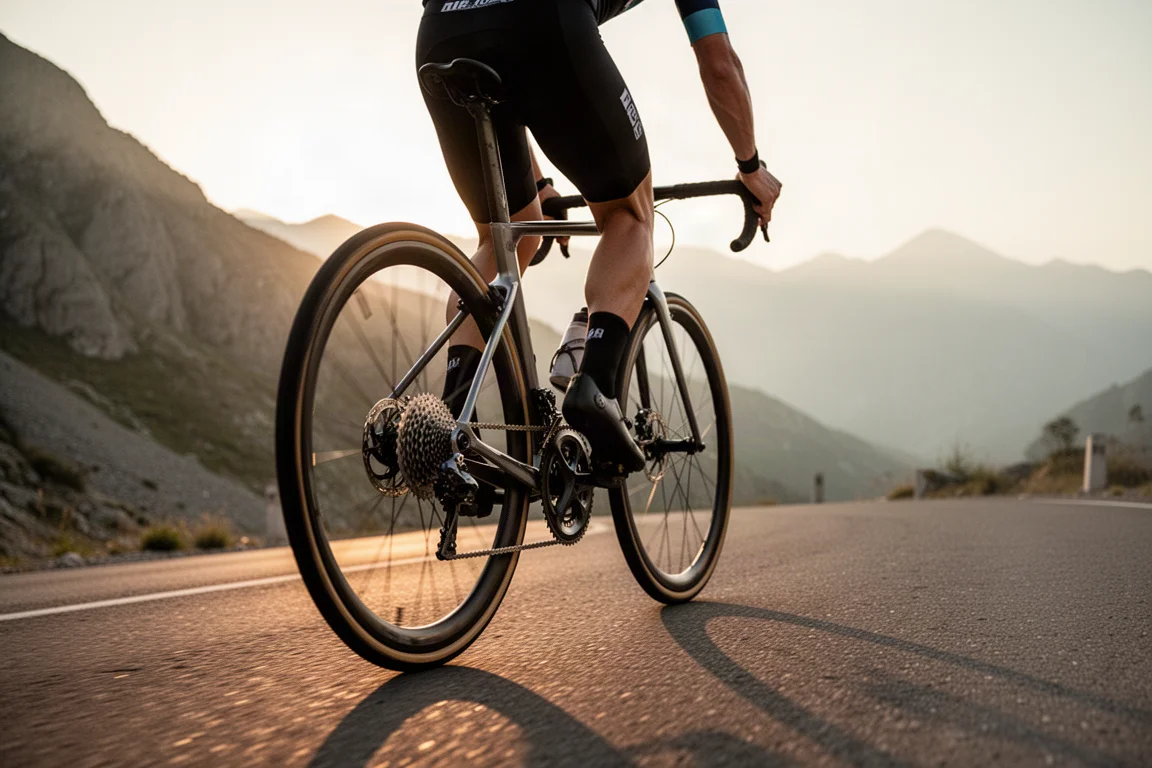
Gear range matters more than almost anything else. There is nothing worse than running out of gears on a climb, and the good news is that a generous range is available at almost every price point. Even the affordable eight-speed Shimano Acera can be set up with a small 32-tooth chainring and a 45-tooth cassette cog for properly easy climbing gears.
Whether to go electronic or mechanical depends on you. Electronic shifting is a genuine pleasure, excellent for racers and for anyone who needs more flexibility in shifter placement or who struggles with hand dexterity. But mechanical shifting is cheaper, simpler, and still very good. Hydraulic brakes are powerful and reassuring, especially on loaded bikes or if you do not have the strongest grip, but they are more expensive and harder to service than cables, so think about whether you actually need them. For gravel riders, the dedicated options from all three brands are worth checking out before you buy. There are also smaller brands such as TRP, Microshift, FSA, Rotor, Wheel Top, L2, and Sensah, but quality can vary drastically, so the big three remain the safer choice.
Conclusion
Groupsets sound like a code until you see them laid out as a pyramid. Campagnolo Super Record sits alone at the top, followed by the flagship tier of SRAM Red, Shimano Dura-Ace, and Campagnolo Record, then the performance tier of Force, Ultegra, and Chorus. Shimano 105 and SRAM Rival offer the best balance of price and performance for most riders, while Tiagra, Apex, CUES, Claris, and Acera keep the cost down without ruining the experience. Prioritize gear range, choose electronic shifting for speed and convenience or mechanical for simplicity, pick the brake system that matches your riding, and you will end up with a bike that does exactly what you need.
Further reading
Related Reviews
Bike Components
5Dev Titanium Cranks Review: Titanium Craftsmanship and the Shorter Crank Question
A close look at 5Dev's CNC machined titanium cranks, what shorter crank lengths actually change on the road, and how to decide whether this upgrade suits your bike fit.
Bike Components
Bird Spokes Review: Are Fabric Bicycle Spokes Worth It?
Fabric spokes promise less weight, more compliance, and better vibration damping than steel. Here is how a Bird spoke wheel build compares with the same rims and hubs laced with steel.
Bike Components
FSA K-Force Team Edition Crankset Review: 1,000 km on 165 mm Cranks
A practical look at shorter crank lengths, what the FSA K-Force Team Edition crankset changed in comfort and bike fit, and where the gains stop.