Growing Media
Does FoxFarm Ocean Forest Burn Seedlings? A Two-Bag Test With Five Seeds
A hands-on seedling test across two bags of FoxFarm Ocean Forest soil, checking for tip burn on days 5, 8, and 12 after sprouting.
Introduction
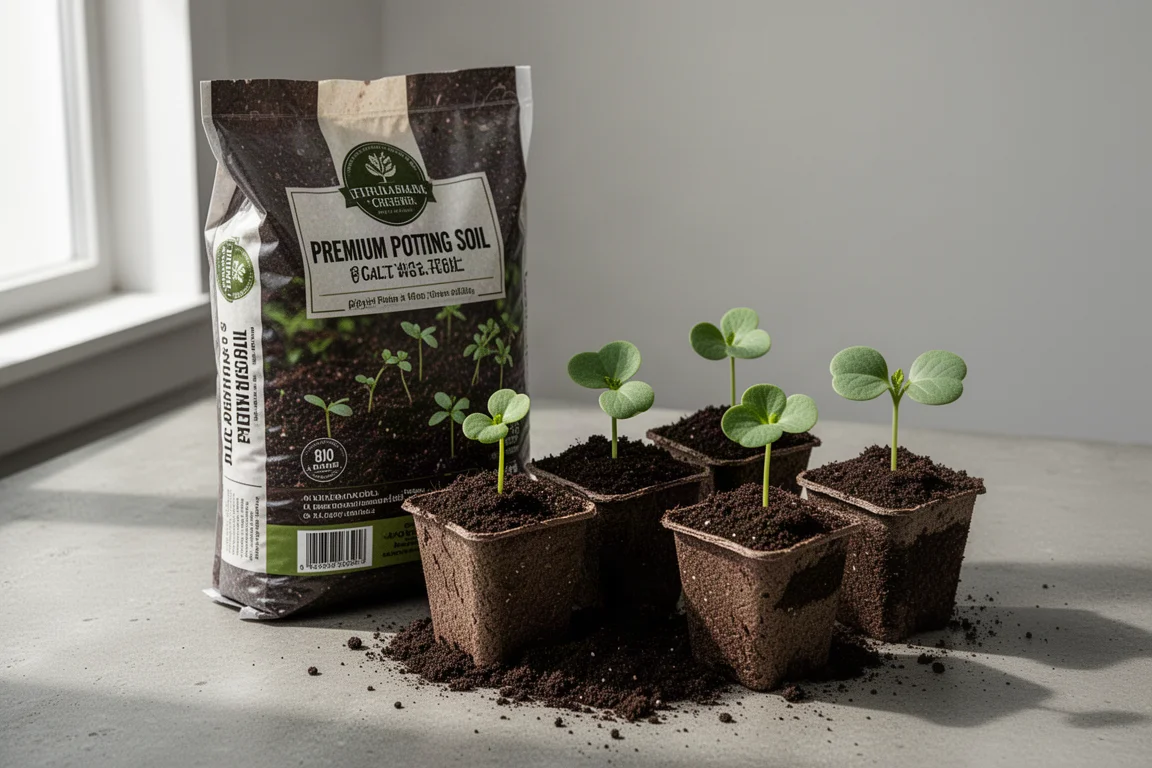
Ask around about FoxFarm Ocean Forest soil and seedlings, and you will find two camps: people who insist it burns young plants, and people who have never seen it happen. Some of those claims come from firsthand experience, others are simply repeated secondhand. To settle it in a practical way, a simple test was set up: two bags of the soil, five germinated seeds, and close inspections at day 5, day 8, and day 12 after planting.
The Test Setup: Two Bags, Five Seeds
The test was run across two separate bags of FoxFarm Ocean Forest rather than just one, on the reasoning that a single bag could easily be dismissed as one that simply was not “hot.” Five containers were filled, each with about two inches of space left at the top to prevent overflow when watering. Two containers were marked to track one bag, while the other three tracked the second bag.
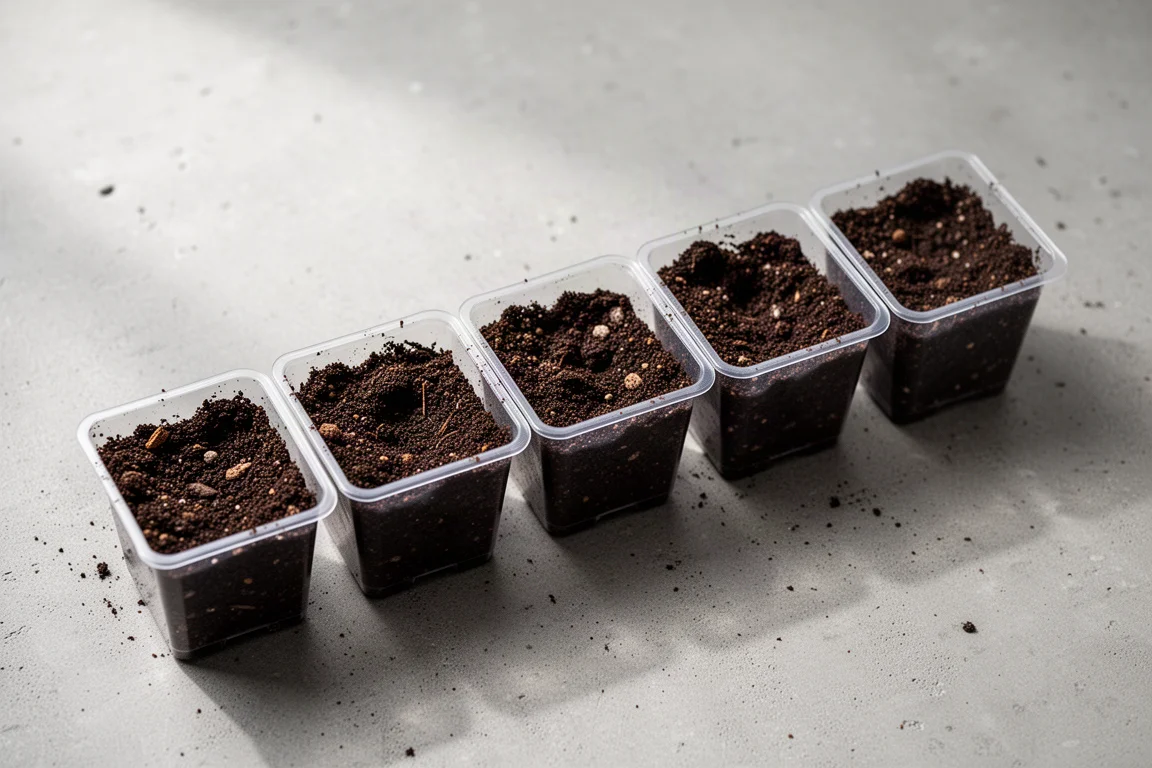
Five seeds were dropped into water and left to float for 72 hours. All five cracked open and showed a visible taproot of roughly half an inch or slightly more. Each seed was placed taproot down into the soil, lightly covered with a small pat-down so that all sides of the seed had contact with moisture. The containers then went into a grow tent running an 18/6 light cycle, so the seedlings would have light waiting for them the moment they broke the surface and could photosynthesize.
First Check: Day 5 After Planting
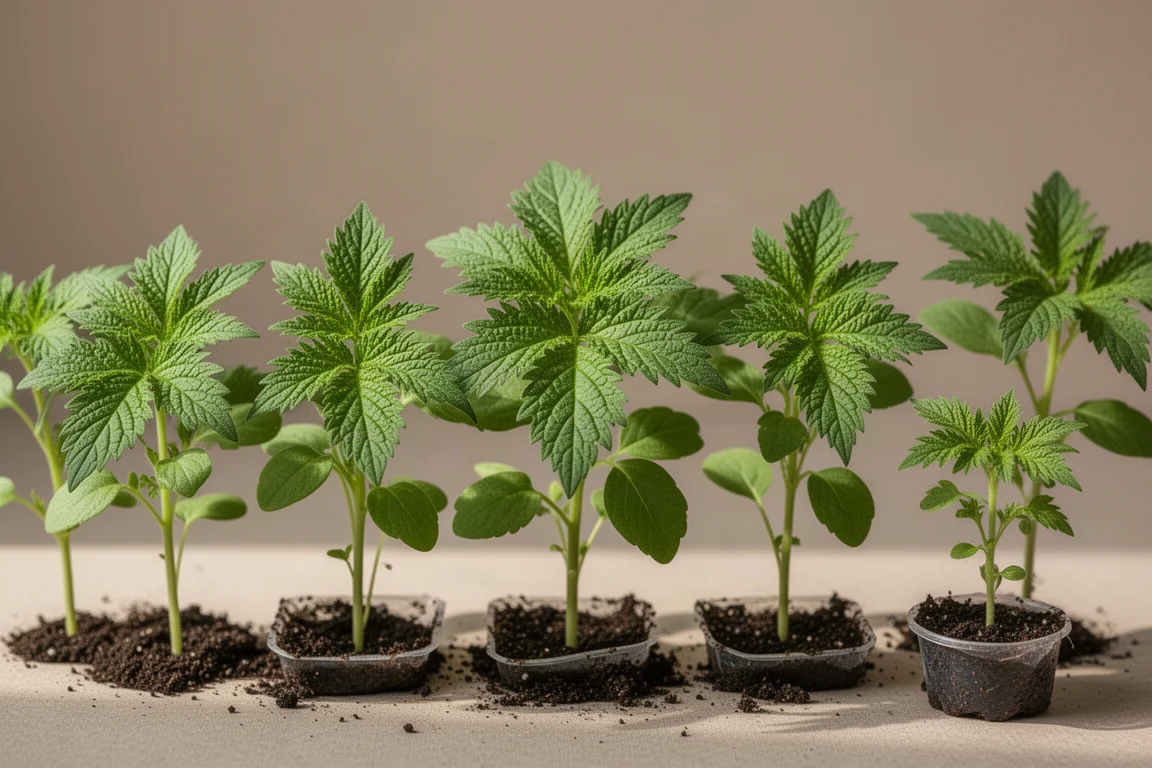
Five days after planting, just a handful of days after sprout, the first close inspection took place. Zooming in on the cotyledon leaves showed no signs of burning on any of the five seedlings, across both bags.
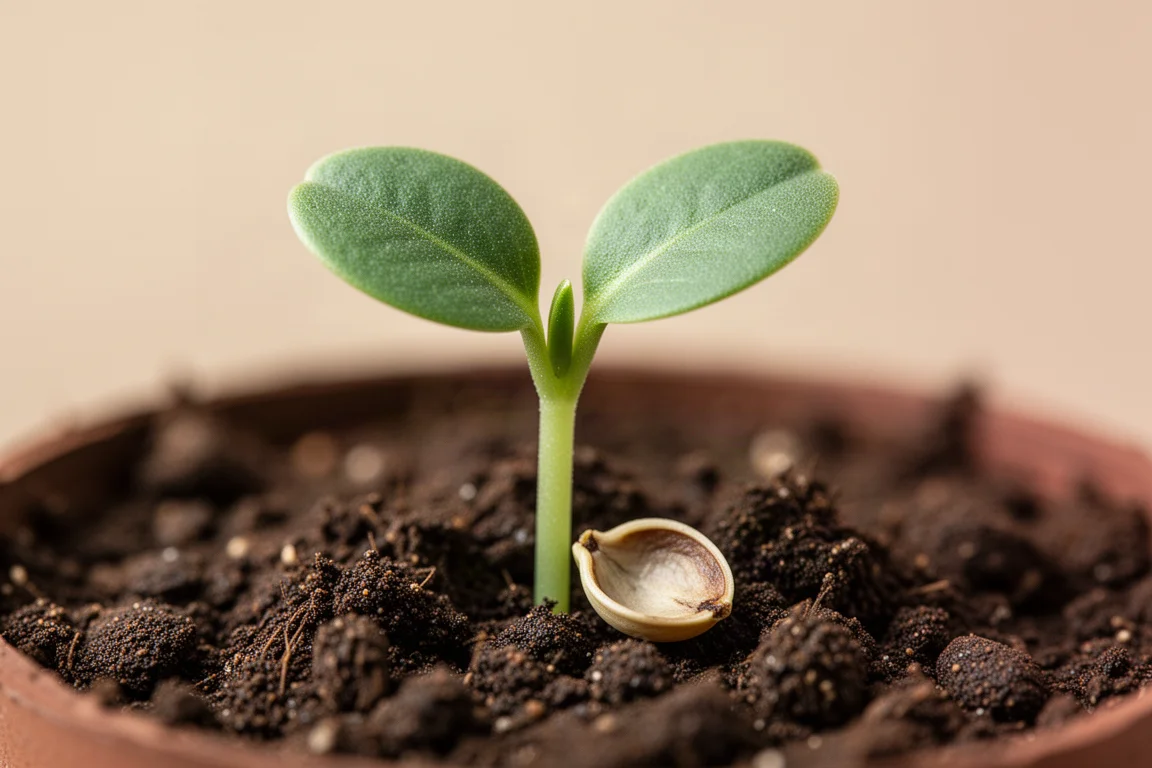
One seedling still had its seed hull attached to a cotyledon leaf, which was carefully removed so nobody would mistake it for burn damage. With that out of the way, everything looked clean. The plants went back into the tent to keep growing, with another check planned a few days later.
Second Check: Day 8 Under the Grow Light
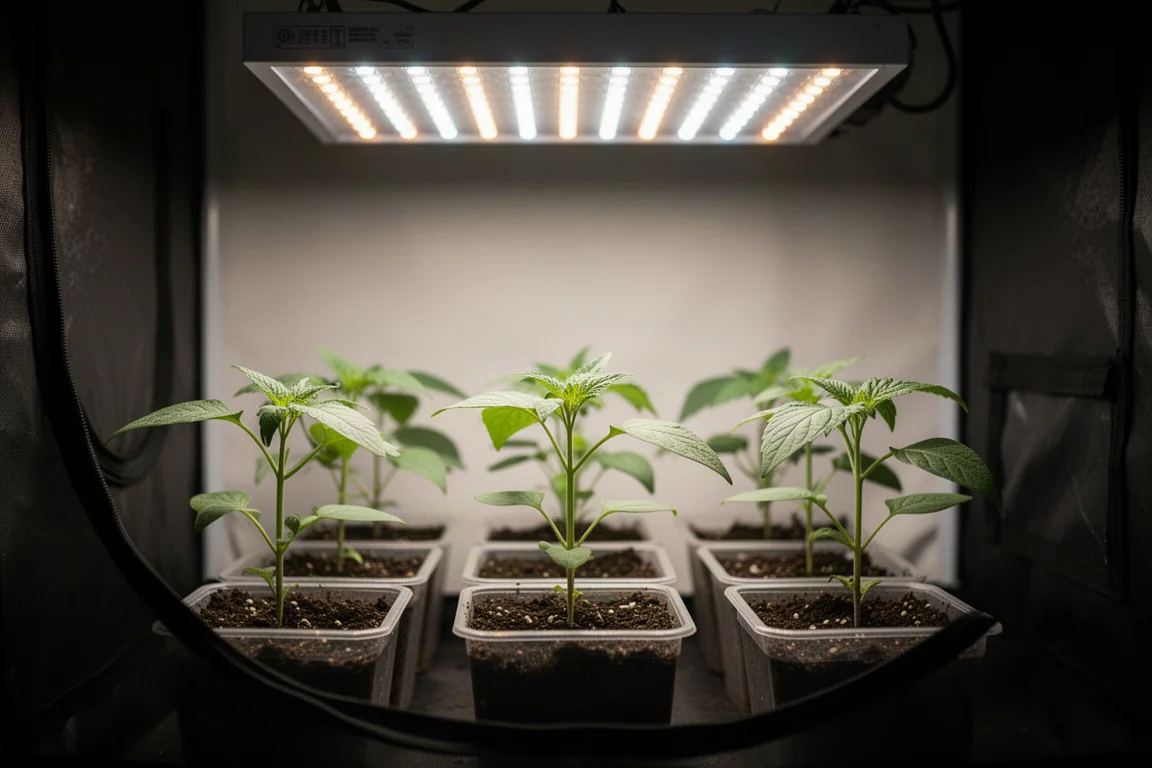
By day 8, the seedlings were running under an Evo 3 LED grow light at roughly 300 to 400 PPFD of PAR, which suits this early stage of growth well. Each plant was pulled out of the tent and inspected tip by tip.
One by one, the results were the same: the first plant clean, the second clean, the third from the second bag also clean, the fourth showing multiple healthy sets of leaves with no tip burn, and the fifth looking just as good. No burning to report from either bag.
The environment stayed around 80 degrees Fahrenheit with 70 to 75% relative humidity, which sits in the dark green range on the VPD chart, so conditions were not stressing the plants in any obvious way.
Final Check: Day 12 and the Verdict
Day 12 after sprouting brought the final inspection. Growth rate looked on track with past experience using this soil, with at least one plant slightly smaller than the rest but overall growth described as excellent. Zooming in on every plant, bag by bag, showed healthy leaf tips across the board.
One plant appeared yellowish at certain angles, but that turned out to be light reflection off the leaf surface rather than discoloration. The plants had just woken up after a six-hour dark period, and even with the exposure lowered, the tips showed no burning. The smallest plant in the group also showed clean tips.
If burning was going to happen, this was the point where it would have shown up. It never did. Across two bags and five seedlings, there was no burn at any stage, and the verdict is simple: in this test, FoxFarm Ocean Forest did not burn seedlings.
That said, one result does not speak for every bag on every shelf, and some growers maintain that certain bags can run hot. For what it is worth, across 14 years of using this soil, only one plant ever had an issue with it, and that was a notoriously finicky variety known for being sensitive with nutrients. Otherwise, it remains a top pick among soils, and further soil comparisons are planned to keep testing it against alternatives.
Buying Advice
For growers deciding whether FoxFarm Ocean Forest is safe to start seedlings in, this test offers a useful data point: two different bags, five germinated seeds, and three inspection rounds produced zero burning symptoms. The soil also supported growth rates consistent with long-term prior experience. If you have been holding off on starting seeds in it out of burn concerns, this test suggests those concerns may be overstated, though checking your own seedlings closely in the first two weeks is always a sensible habit.
Conclusion
The question was whether FoxFarm Ocean Forest burns seedlings, and the practical answer from this two-bag, five-seed test is no. Every seedling came through day 5, day 8, and day 12 with clean, healthy leaf tips and strong growth. Individual bags can vary, so nothing here guarantees every bag behaves identically, but for these two bags the answer was a clear and consistent no-burn result.
Product link
View more details for FoxFarm Ocean Forest Soil
This product is mentioned in the review. Check the specifications, options, and compatibility before buying.
View more details for FoxFarm Ocean Forest SoilFurther reading
Related Reviews
Growing Media
Fox Farm Ocean Forest Potting Soil: Lab Test Results and What They Mean
Independent lab testing reveals how Fox Farm Ocean Forest really stacks up on pH, NPK, calcium, magnesium, and sulfur, plus practical fixes for the nutrient gaps.
Growing Media
FoxFarm Ocean Forest vs Dr. Q's Vegetable and Herb Planting Mix: Which Grows Better?
A side-by-side seedling test comparing FoxFarm Ocean Forest soil against a local vegetable and herb planting mix, with real results after two weeks of growth.
Gardening
FoxFarm Happy Frog Soil Review: A Biodiverse Base With One Big Caveat
A close look at FoxFarm Happy Frog potting soil, including its mycorrhizae, lab-tested pH concerns, and how to prepare it properly before planting.