Hi-Fi Audio
Four Standout Hi-Fi Products Worth Your Attention
A wired-audio smartphone, a collaborative in-ear monitor, two-click headphone EQ, and a streaming deck with serious headphone power: four audio products with clear strengths and honest trade-offs.
Introduction
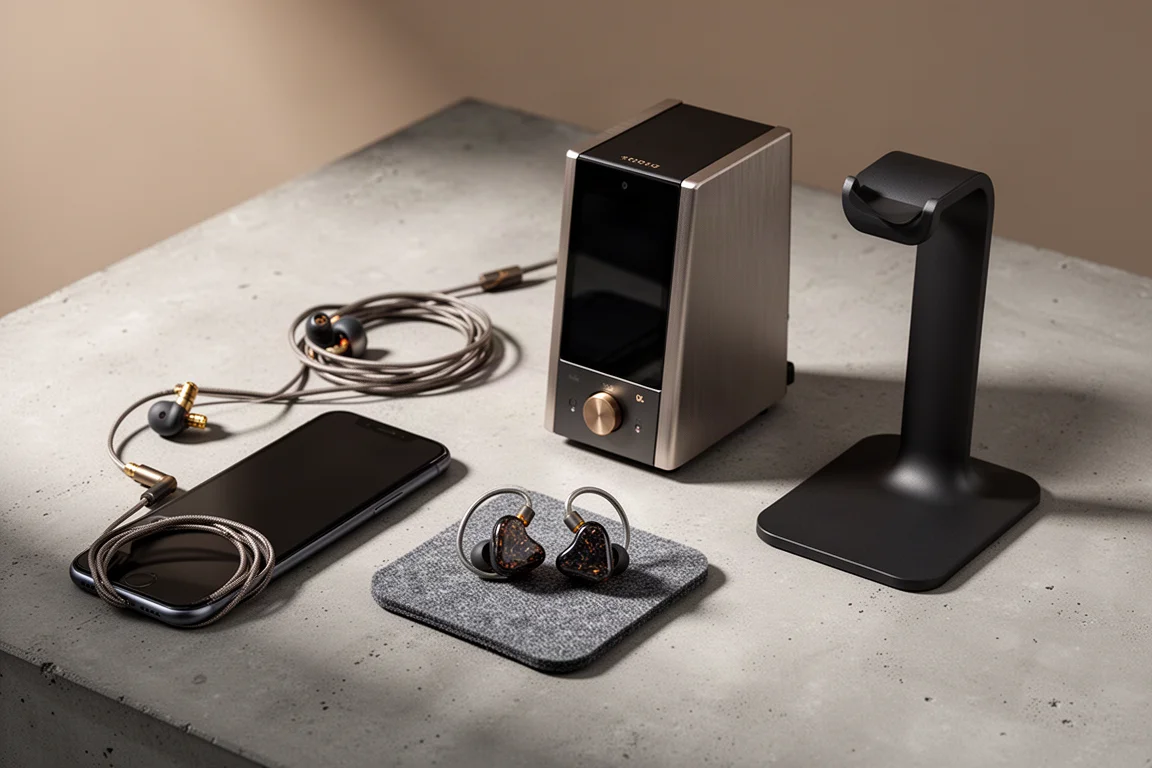
Four products, four different jobs. One is a 5G smartphone built around a dedicated DAC circuit, one is a collaborative in-ear monitor, one is a headphone EQ front end that lives inside a music app, and one is a desktop streaming deck that doubles as a serious headphone amplifier. They sit at different points in the same chain, and each one is interesting for a different reason.
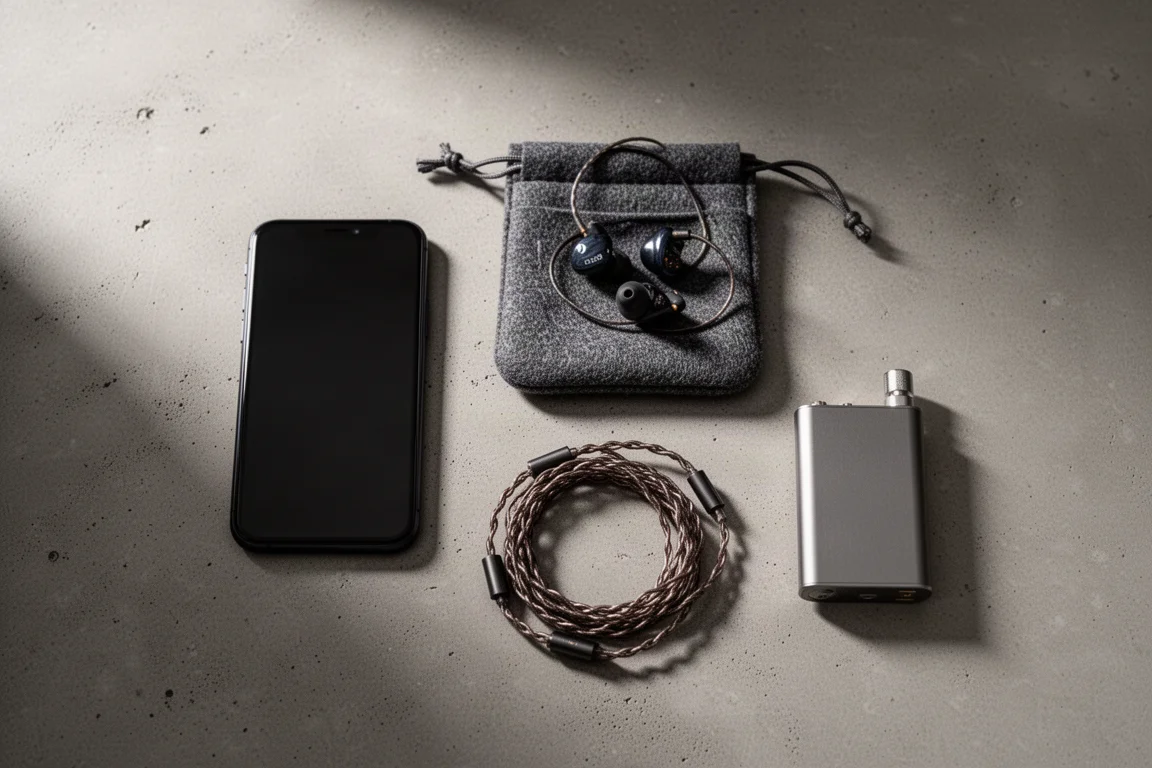
Taken together, they show how much of a difference the source, the transducer, and the correction layer each make. None of them is a universal recommendation, and that is part of the point. Each one solves a specific problem well, and each one asks you to accept a specific compromise.
What These Four Have in Common
Every product here targets a weak link rather than adding features for their own sake. The Moondrop phone puts a proper DAC and a balanced output into a device you already carry. The Campfire Audio Clara rethinks how an in-ear monitor should present treble. Roon OPRA makes headphone correction a two-click operation instead of an evening of manual filter work. The FiiO R9 puts streaming, conversion, and serious headphone amplification in one desktop box.
They also share a willingness to document their own limitations. Camera quality, tuning philosophy, measurement scope, and software version are all discussed openly, which makes it easier to decide whether any of them fits the way you actually listen.
Moondrop MIAD 01: A Smartphone Built for Wired Listening
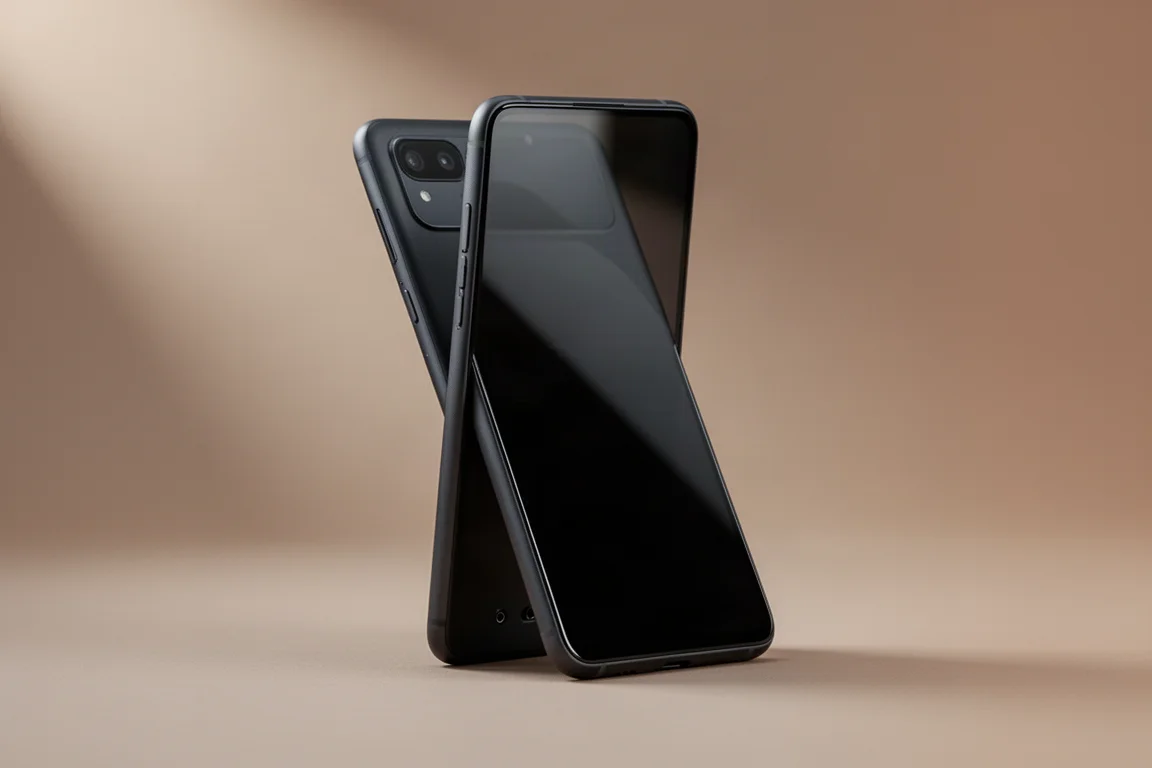
The MIAD 01 is a 5G smartphone from Moondrop, and the name stands for mobile internet audio device. It was designed explicitly for people who care about how wired headphones sound, and Moondrop builds the hardware itself rather than rebadging another supplier’s model. The shell is plastic, the display is a 120Hz 1080p OLED panel that is easy on the eyes, and a fingerprint reader sits underneath it. That reader is not always reliable, but it misses far less often than the reader on a Google Pixel 6 Pro.
Moondrop’s own product page states, rather bluntly, that the camera is not good but it works. That undersells it slightly: photos are acceptable in decent lighting, while night shots are more of a mixed bag. The protruding rear camera housing also makes the phone less comfortable to hold for long stretches.
Inside, Android 13 runs on an eight-core MediaTek Dimensity 7050 processor with 12GB of RAM. Buyers outside China will need to activate Google services in the settings to reach the Google Play Store and streaming apps. There is a microSD slot that accepts cards up to 2TB, alongside 256GB of internal storage for a local library or offline content.
The 5,000mAh battery is rated by Moondrop for up to 27 hours between charges, though real-world use lands closer to 16 hours. That is still more than most portable players manage, and a full recharge from empty takes just over an hour. Wireless charging is not supported.
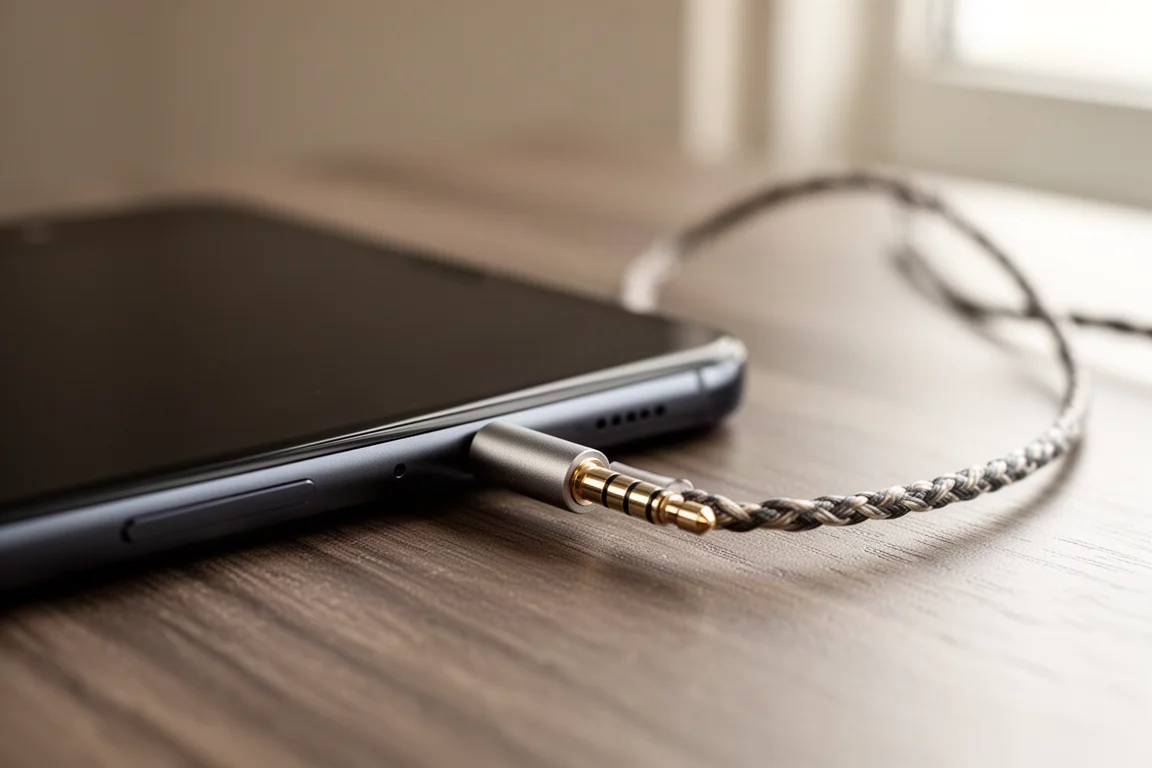
Audio is where the phone earns its place. Digital signals are routed around Android’s sample rate converter for bit-perfect playback with most apps, and the DAC circuit is built around a pair of Cirrus Logic chips. Output runs through two sockets: a 3.5mm single-ended connection and a 4.4mm balanced connection, which is the more capable of the two. Moondrop rates the output at up to 250mW per channel, most likely from the balanced socket.
On sound, the MIAD 01 separates instrumental layers more cleanly than a Sony Xperia 1 Mark 5, giving music a greater sense of internal space in all directions, and it carries more weight than the older LG V40 that once defined this niche. One practical caveat: Google Maps does not currently work. Moondrop says its software team is aware of the issue and is preparing an over-the-air fix, but no date has been confirmed. Until then, the most accurate way to think about the MIAD 01 is as a portable audio player that also happens to be a phone.
Campfire Audio Clara: A Collaborative In-Ear Monitor
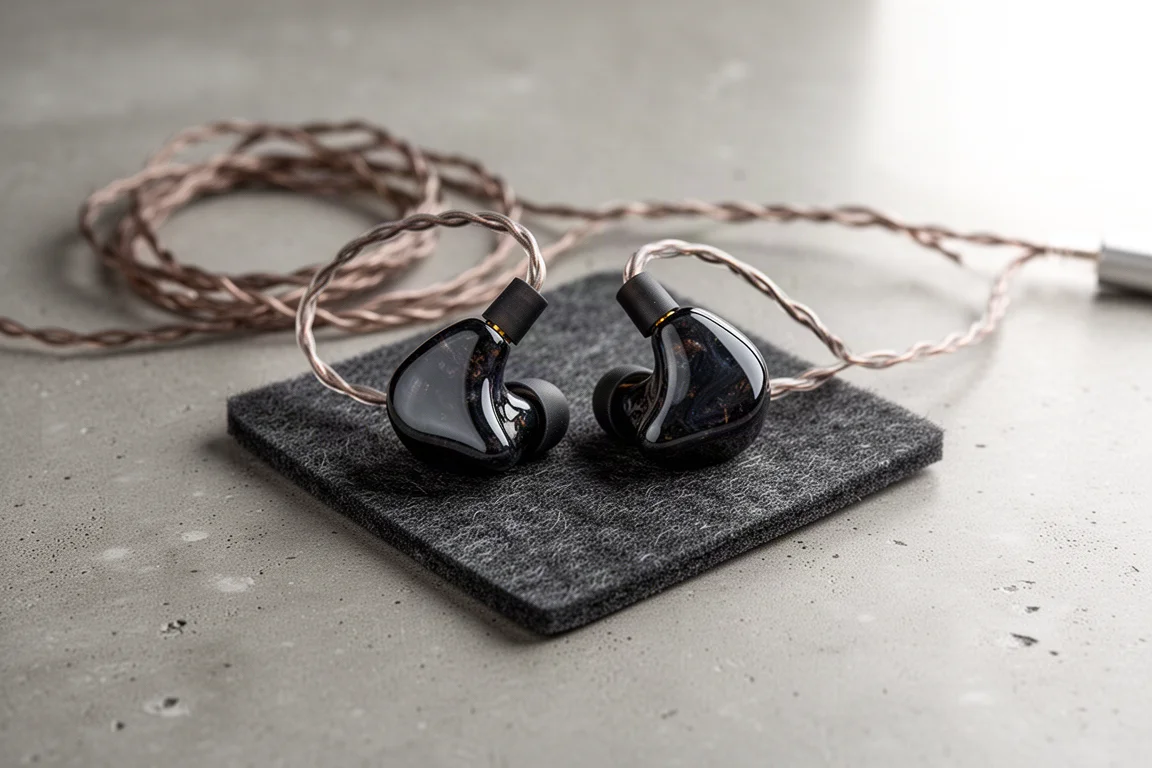
The Clara is a Campfire Audio in-ear monitor developed with Alessandro Cortini, the electronic musician and Nine Inch Nails member. Cortini determined the shell type and the overall sound, while Campfire Audio founder Ken Ball handled design and production. The packaging reflects the sleeve artwork from Cortini’s latest album.
The shell is acrylic and fills the outer ear precisely. It stays in place without readjustment, which is not something every Campfire model can claim, and it offers above-average passive noise isolation. Inside, the driver array is a hybrid design: a dual-magnet dynamic biocellulose driver handles bass, a dual balanced armature driver covers the mids, and a second dual balanced armature driver takes the highs. A crossover and a tuned acoustic expansion chamber let the two collaborators voice the earphone over a twelve-month feedback loop, with each iteration tested on stage and at home before the next revision was dialled in.
The tuning is deliberate. Cortini wanted nothing muffled or dark, but he also wanted less emphasis on the uppermost treble, and the result is a calmer top end than many rivals. Compared with a Sennheiser IE 900, the Clara places instruments more neatly on the headstage even though its stage is not as wide, and it is not as full-bodied as a full-size open-back headphone. It does, however, travel easily onto public transport, which an open-back design does not.
Two versions are available. The acrylic model is priced at $2,000, and a titanium Limited Edition is priced at $3,000 in USD. Listening hard is required to find audible differences between them, so the titanium version is best chosen for its materials, its cable, and its in-box accessories rather than for a dramatic change in sound.
Roon OPRA: Headphone EQ in Two Clicks
OPRA is a headphone EQ layer folded into Roon. It appears in the desktop app and in Roon ARC on a phone or tablet, and it is a front end for a community-driven project rather than a closed feature.
The premise is simple. Headphone manufacturers can only take a design so far before further refinement becomes prohibitively expensive, and DSP-powered EQ can pick up where that cost barrier begins. Instead of applying filters manually, band by band, OPRA lets you choose your headphone model and then choose a preset. That is the whole interaction.
Each preset is built around two or sometimes three elements: the headphone’s frequency response curve as measured by a vetted community member, a compensation reference target curve, and occasionally the preset creator’s own preference nudges. Presets are drawn from oratory1990 and the AutoEQ repository. The oratory1990 entries also disclose which target curve is in play, which makes them easier to reason about.
A practical example: a Sony MDR-7506, an affordable closed-back model, sounds smoother and better balanced with the oratory1990 preset engaged, with fewer noticeable bumps and dips in the response. One caveat is that engaging EQ brings a volume drop, which makes quick on and off comparisons less trustworthy, so longer listening sessions are more informative. The headphone.com Legacy preset is too bass-heavy for some tastes, a useful reminder that measurement is not entirely objective and that preferences differ.
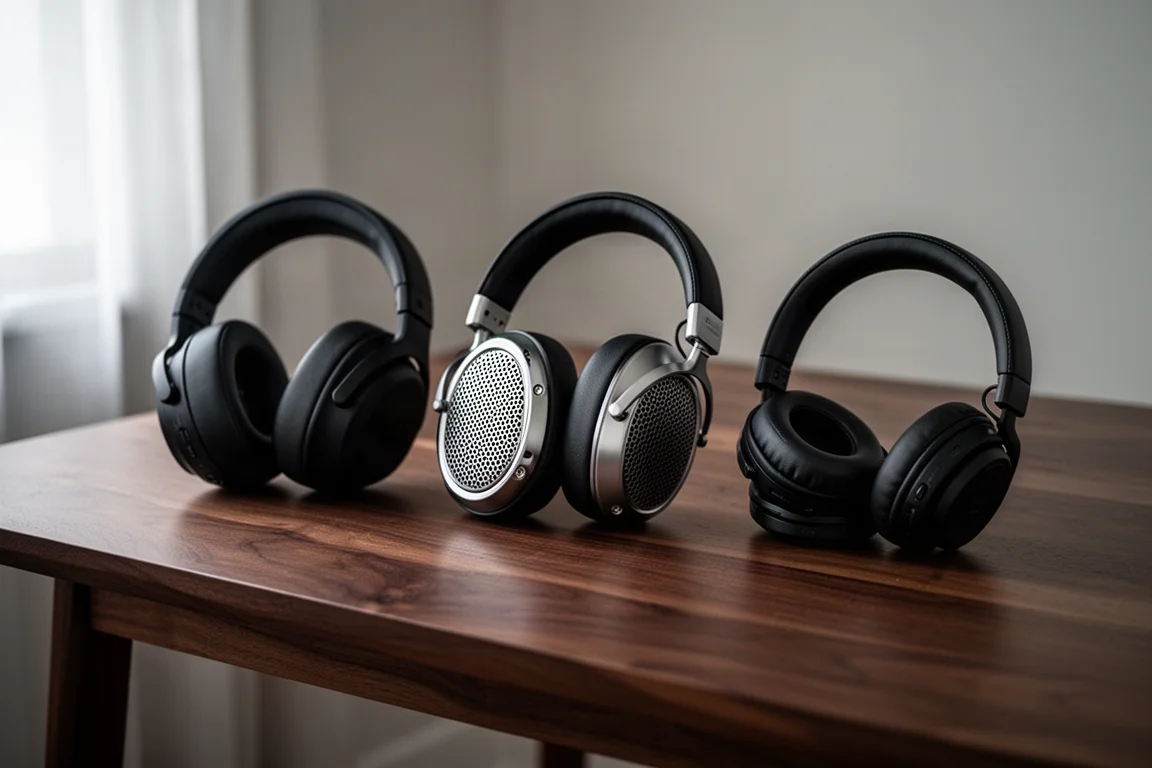
The library reaches further than one pair of headphones. A Sennheiser IE300 sounds slightly livelier in the uppermost treble with the Chronicles preset, and Bluetooth models are covered as well, including the Sony WF-1000XM5. Because the presets are distributed under a Creative Commons license with no licensing fee, the project is not locked to Roon: any music app could adopt the same library without paying for the privilege.
The main reservation is philosophical rather than practical. OPRA reinforces the idea that frequency response is the only measurement that matters, while any headphone with more than one driver also has time-domain behaviour that is not considered here. That is a reasonable point to keep in mind, but it does not diminish how much a couple of clicks can improve a familiar pair of headphones.
FiiO R9: A Streaming Deck and Headphone Amplifier in One
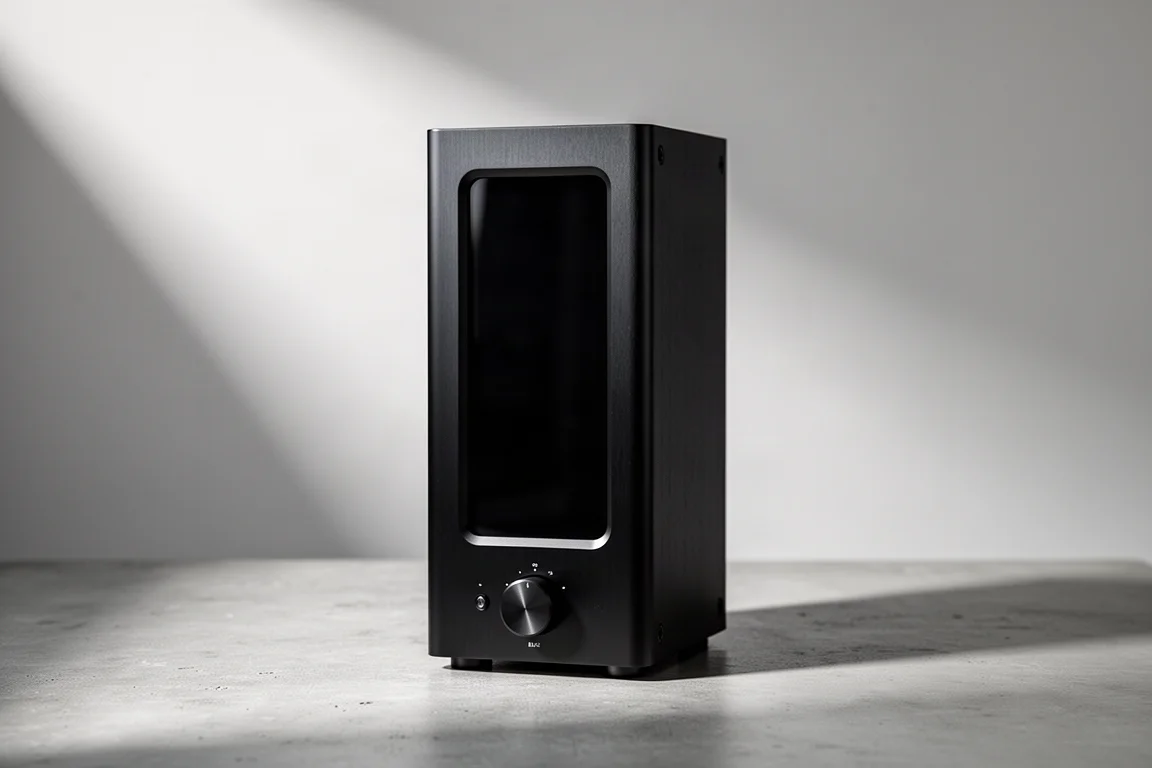
The FiiO R9 was announced in late December 2023, and it is best understood as a smartphone built out with a very good DAC and a THX headphone amplifier. If you know the FiiO R7, think of the R9 as the R7 on steroids.
Power is the headline. The R9 delivers up to 7.3W through its outputs, with a quarter-inch socket, a 4.4mm balanced socket, and an XLR balanced socket on the front panel. That is almost double the headphone power of the R7, and far beyond what compact portable players can offer.
The software side matters just as much. The R9 runs any streaming app you care to install from the Google Play Store, rather than limiting you to a manufacturer’s approved list or forcing you to side-load apps that may not scale properly to an ultrawide display. The touchscreen behaves much like a phone’s and is slightly larger than the R7’s. The glossy casework does show fingerprints, so a microfiber cloth nearby is sensible.
Connectivity is where the R9 separates itself from its cheaper sibling. It adds an HDMI ARC input that the R7 does not have, though it is worth knowing that audio passed from a TV over HDMI ARC is resampled to 48kHz, so that route delivers neither high-resolution nor bit-perfect playback. The USB input has its own XMOS chip to handle incoming signals, which removes the lip sync lag that can appear over USB, and Bluetooth is handled by a dedicated chip supporting several aptX variants alongside AAC and LDAC. A Bluetooth remote is included in the box.
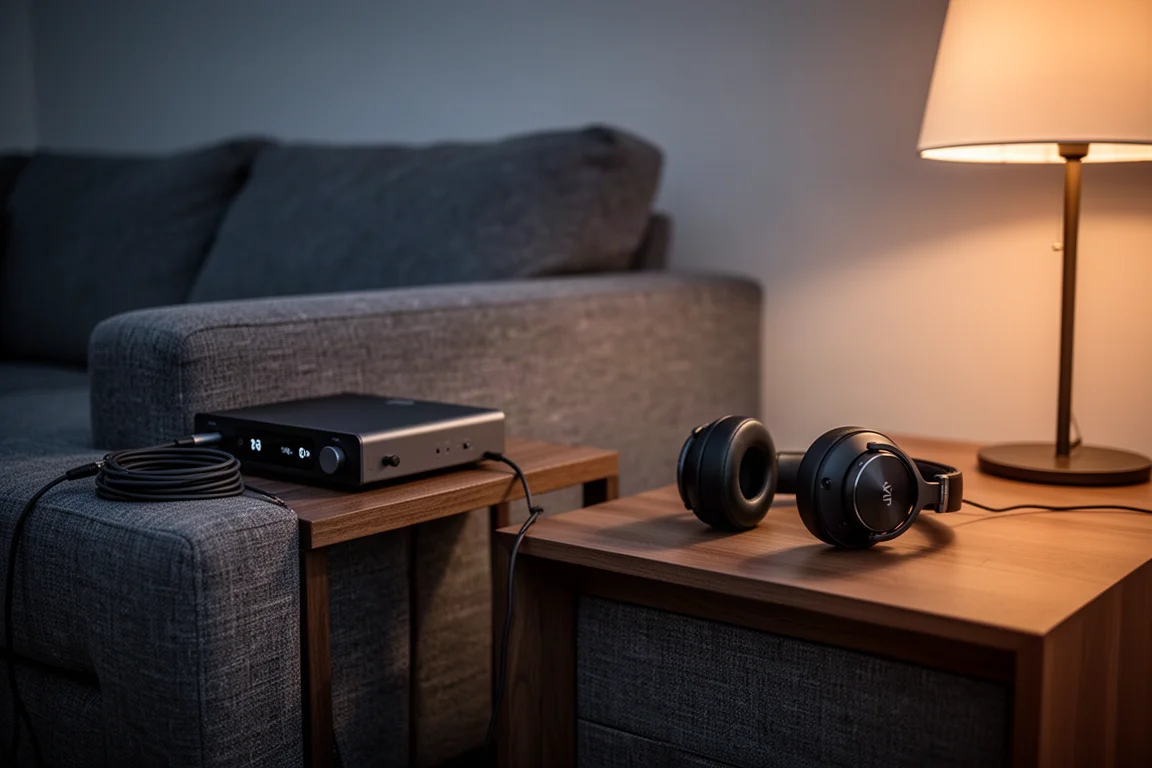
The DAC circuit is built around a pair of ESS chips, and the result is a more tonally colourful, better separated sound than the R7, though it is not as smooth as a more expensive streaming deck that does not handle headphones at all. Roon ARC runs on the device but does not appear to be bit-perfect, yet applying OPRA headphone EQ still made closed-back headphones sound less boxy through the midrange.
Two caveats are worth weighing. The R9 remains on Android 10, and an Android 12 update promised at the start of the year has yet to arrive. The screen mirroring app is also somewhat laggy. Finally, the R9 costs about $700 more than the R7, so the decision comes down to whether you value the extra headphone power, the HDMI ARC input, and the dedicated USB and Bluetooth chips.
Buying Advice
If your priority is one device for wired listening on the move, the Moondrop MIAD 01 is the closest thing to a portable audio player with smartphone functionality. It makes the most sense for listeners who can live with modest camera performance and the current Google Maps situation.
If you want an in-ear monitor with a calmer treble presentation and strong passive isolation, the Campfire Audio Clara is the obvious candidate. The acrylic version delivers the same tuning for considerably less than the titanium Limited Edition, and the audible differences between the two are subtle.
If you already own headphones you like and simply want to hear them at their best, OPRA is the lowest-cost step here, since the presets carry no licensing fee and the interaction is limited to two choices.
If you want a desktop hub that can stream anything and drive demanding headphones, the FiiO R9 justifies its premium over the R7 through output power, HDMI ARC, and its dedicated USB and Bluetooth chips. Those who mainly want the streaming functionality can look at the cheaper model instead.
Conclusion
Each of these four products is a targeted answer to a specific problem. The MIAD 01 puts a proper DAC and a balanced output in your pocket, the Clara trades treble fireworks for midrange depth and isolation, OPRA makes headphone correction accessible in two clicks, and the R9 combines streaming, conversion, and substantial headphone power in one desktop unit.
The trade-offs are documented rather than hidden, which is what makes them worth considering. Match the product to the problem you actually have, and any of the four will feel like money well spent.
Further reading
Related Reviews
Hi-Fi Audio
Accuphase C-57 vs Allnic H-7000V: Two High-End Phono Stages Compared
A fully balanced solid-state phono stage with a pitch-black noise floor meets a tube design built for well-loved records. Here is how to choose between them.
Hi-Fi Audio
Active vs Passive Hi-Fi: Five Components for a Modern System
Five components that define modern active and passive hi-fi systems, with the strengths, trade-offs and setup details worth weighing before you buy.
Hi-Fi Audio
Advance Paris A10 Apex Review: A Hybrid Integrated Amplifier That Covers a Lot of Ground
A French hybrid integrated amplifier with a class A tube preamp stage, analogue power meters, and an internal DAC and phono stage good enough to make extra boxes unnecessary.