Hi-Fi Amplifiers
Four Integrated Amplifiers Compared: Cambridge Audio, Rotel, Emotiva and Advance Paris
A practical look at four integrated amplifiers, from an $849 phono-focused design to a premium tube-fronted reference, and the features and sound signatures that separate them.
Introduction
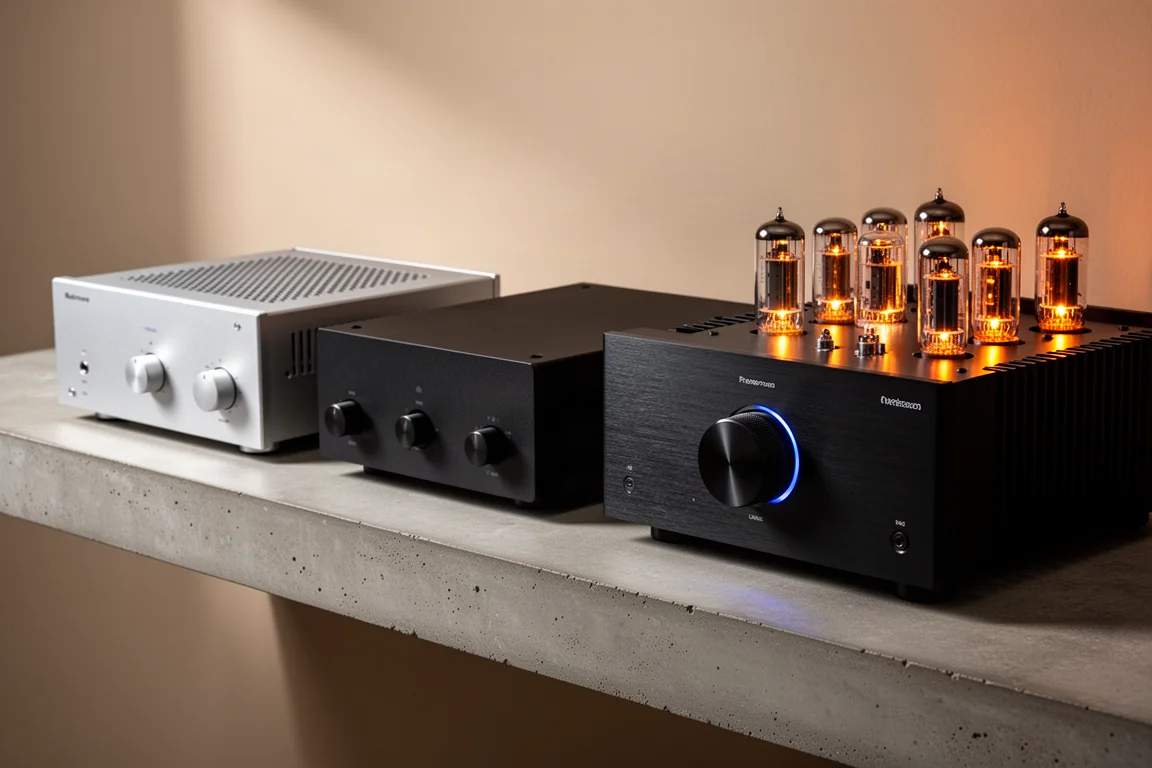
Integrated amplifiers are the simplest way into a serious two-channel system. One chassis holds the preamp, the power amp and, in most modern designs, a digital-to-analog converter, so a single box can handle a turntable, a streamer and a disc player. The four amplifiers here are not entry-level budget pieces, but they are within reach for listeners who set aside a little each month rather than buying everything at once.
Prices in this group start at $849 and climb to roughly three times the cost of the most affordable model. The gap buys more power, more inputs and, in one case, a tube front end and class A bias. It is worth saying up front that all four are built to stay in a system for a long time. The only section likely to age is the DAC, and in each of these designs the digital stage is implemented in a way that should remain useful for years.
How These Four Amplifiers Compare
Power output is the clearest dividing line. The Cambridge Audio CXA81 Mk II is rated at 80 watts per channel into 8 ohms and 120 watts into 4 ohms. The Rotel A11 MkII is rated at 50 watts per channel into 8 ohms, with no 4 ohm figure published, although Rotel is known for conservative ratings and the amplifier will drive 4 ohm speakers. The Emotiva TA2 leads the group on paper with 135 watts into 8 ohms with both channels driven and 200 watts per channel into 4 ohms. The Advance Paris A10 Classic occupies a different price class and a different level of build.
Connectivity separates them just as clearly. The TA2 offers four analog inputs, a full-size USB input, a full-size coaxial input, two optical inputs, Bluetooth, preamp outputs with a selectable high pass filter, a subwoofer output with a selectable low pass filter, home theater bypass and a phono stage that accepts both moving magnet and moving coil cartridges. The CXA81 Mk II answers with balanced inputs, two optical inputs, coaxial and USB type B inputs, four unbalanced RCA inputs, a subwoofer output, preamp output and a front 3.5 mm headphone jack, but no phono stage. The Rotel A11 MkII stays deliberately simple: four RCA inputs, one optical and one coaxial digital input, Bluetooth and a phono stage, with no subwoofer output, no preamp output and no USB input.
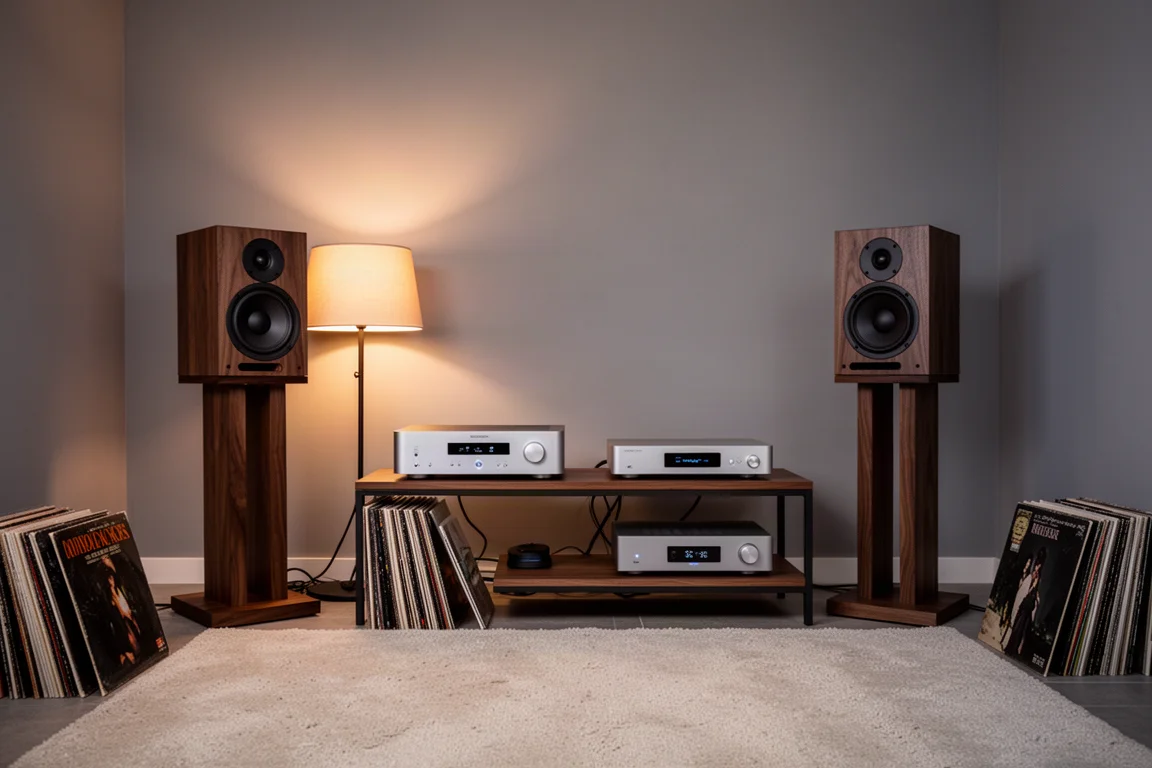
Sound character is where the three lower-priced amplifiers diverge most. The Rotel A11 MkII and the Cambridge Audio CXA81 Mk II share a detailed, fairly neutral presentation, with the Rotel leaning slightly forward through the midrange and the Cambridge sounding a touch warmer. The Emotiva TA2 takes a different route, with a lively balance that emphasizes the bottom and the top. The Advance Paris A10 Classic is the most refined of the four, and sonically it sits between the TA2 and the Cambridge.
Cambridge Audio CXA81 Mk II
The CXA81 Mk II is a silver Class AB design with a large toroidal transformer that is visible through the vents on the top plate. Cambridge Audio fits a Sabre DAC inside, along with balanced inputs, two optical inputs, coaxial and USB type B connections, four unbalanced RCA inputs, a subwoofer output and a preamp output. Source selection is handled by push buttons on the front panel, which makes switching inputs quick, and there is a 3.5 mm headphone jack for late-night listening. The supplied remote carries a lot of buttons, which suggests it is shared with other components in the range.
In use, the CXA81 Mk II comes across as neutral with a little more warmth than the Rotel. Dynamics are strong, and at the peak of a dense, wide-ranging recording it keeps a sense of air around the instruments and places them convincingly in space. What it does not offer is a phono stage or tone controls, so a turntable will need its own phono preamp, and any tonal adjustment has to come from the room or the speakers.
Rotel A11 MkII
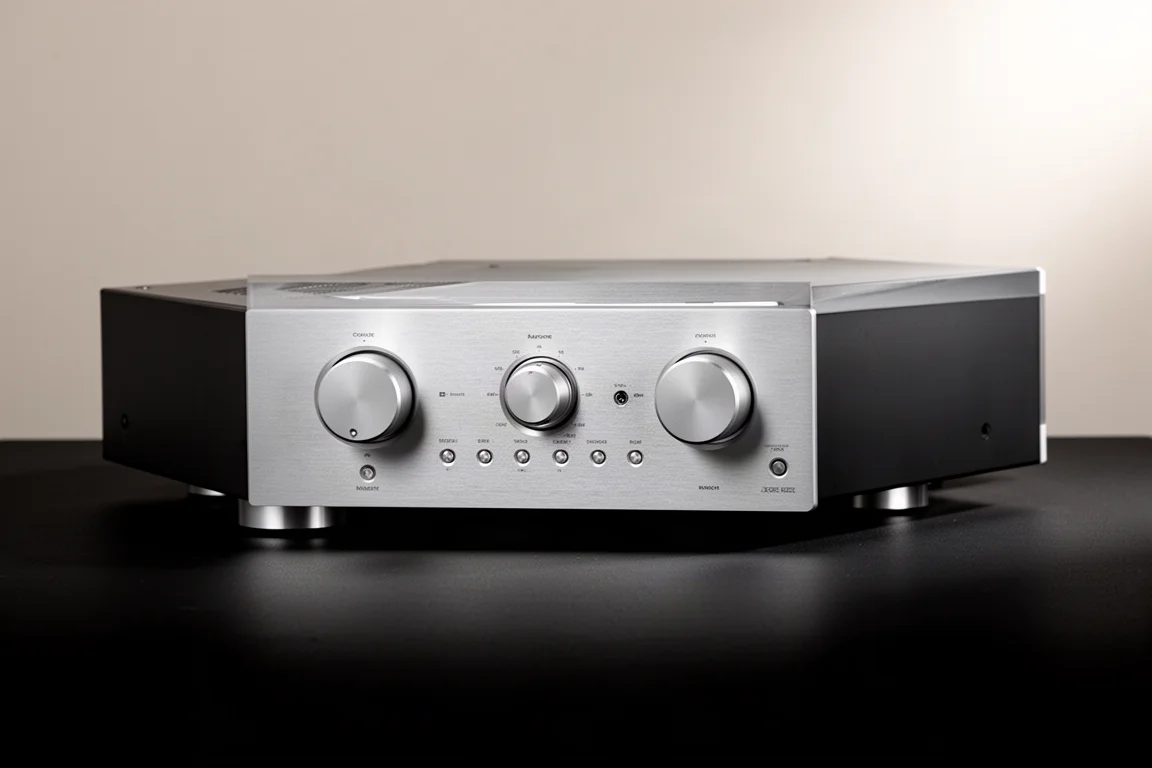
At $849 the Rotel A11 MkII looks like the least generous amplifier in this group, and on paper it is. There is no subwoofer output, no preamp output and no USB input, and the digital side amounts to one optical and one coaxial connection plus Bluetooth. What the Rotel does have is a phono stage that punches well above the price of the amplifier. It is good enough to sit alongside a standalone phono stage costing several hundred dollars, which changes how the value calculation works.
The sound follows the same traditional approach as the chassis. The A11 MkII is detailed and slightly mid-forward, and on bright recordings that forwardness can tip into a hint of sibilance. Next to the Cambridge it sounds a little drier, with less air at the top of a crescendo. It never struggled at a normal listening level, but it is the least powerful amplifier here, and it feels like the one most likely to run out of headroom first with demanding speakers.

Tone controls sit right on the front panel as physical knobs, which is a practical advantage if you want to make a quick adjustment without digging through a menu. The black rectangular chassis is plain and squared off, and it will disappear into a rack without drawing attention.
Emotiva TA2
The Emotiva TA2 is currently on sale at $899, which puts it within touching distance of the Rotel while offering far more. It is rated at 135 watts into 8 ohms with both channels driven and 200 watts per channel into 4 ohms, making it the most powerful amplifier in this group apart from the Advance Paris. It also carries a phono stage that works with moving magnet and moving coil cartridges, four analog inputs, full-size USB and coaxial inputs, two optical inputs, preamp outputs with a selectable high pass filter, a subwoofer output with a selectable low pass filter, home theater bypass and a headphone amplifier.
The feature set is genuinely hard to argue with, and the adjustable filters make it straightforward to blend a subwoofer into a two-channel system. Tone controls are available but buried in a menu, so they are less immediate than the Rotel’s front-panel knobs. The Analog Devices DAC inside is a part the brand has used widely, and it handles everything the digital inputs can accept.
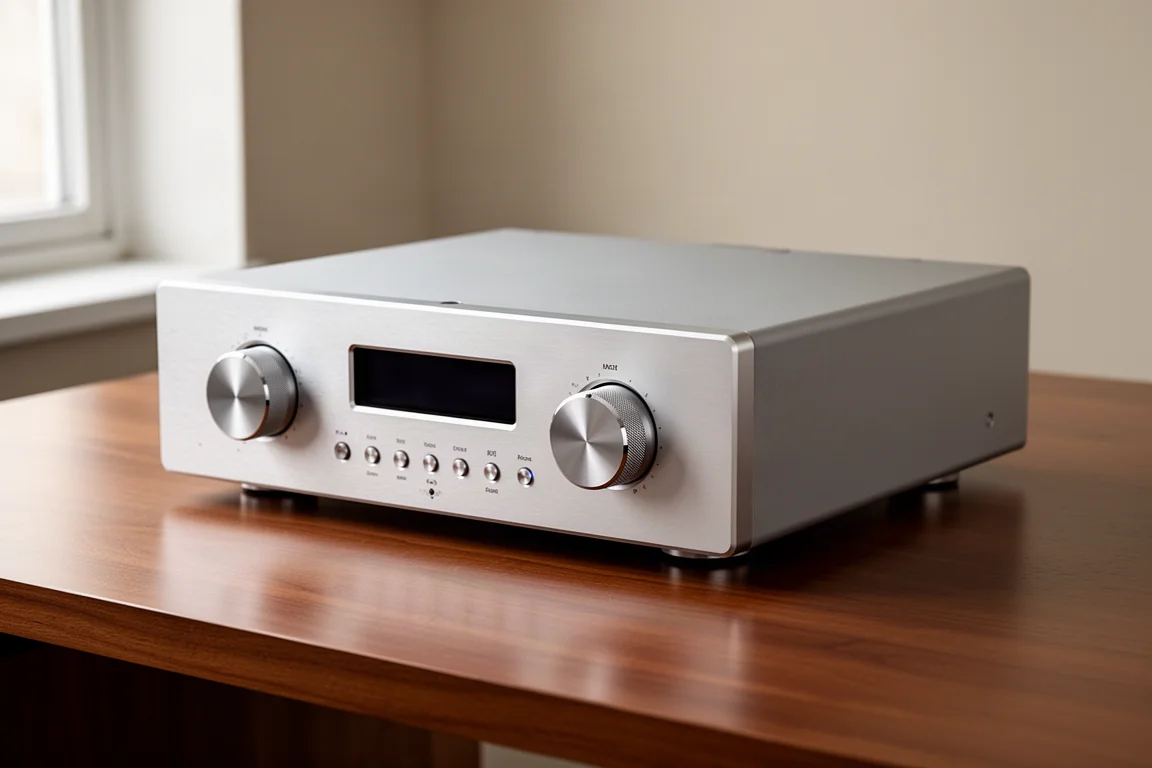
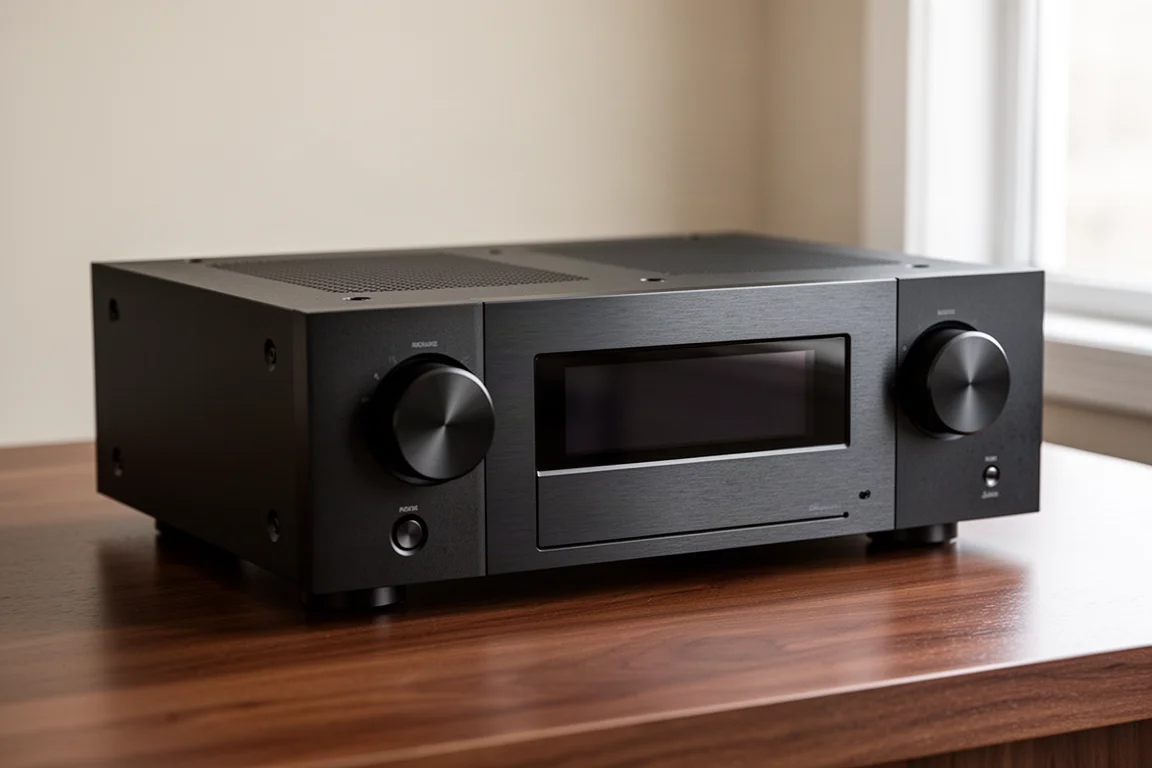
Visually, the TA2 leans into its own style: blue accent lighting, a large knurled volume knob, a small display near the top of the front panel and a brushed aluminium face. It is a divisive look, and the remote control is the part most likely to draw complaints, though a redesign has been suggested for a future version.
Sonically the TA2 behaves like a vintage receiver in the best sense. It is dynamic, with a gentle lift at the bottom and the top and a slightly recessed midrange that still keeps vocals clear. It is the most fun of the three lower-priced amplifiers, and it handles a wide dynamic range without sounding strained.
Advance Paris A10 Classic
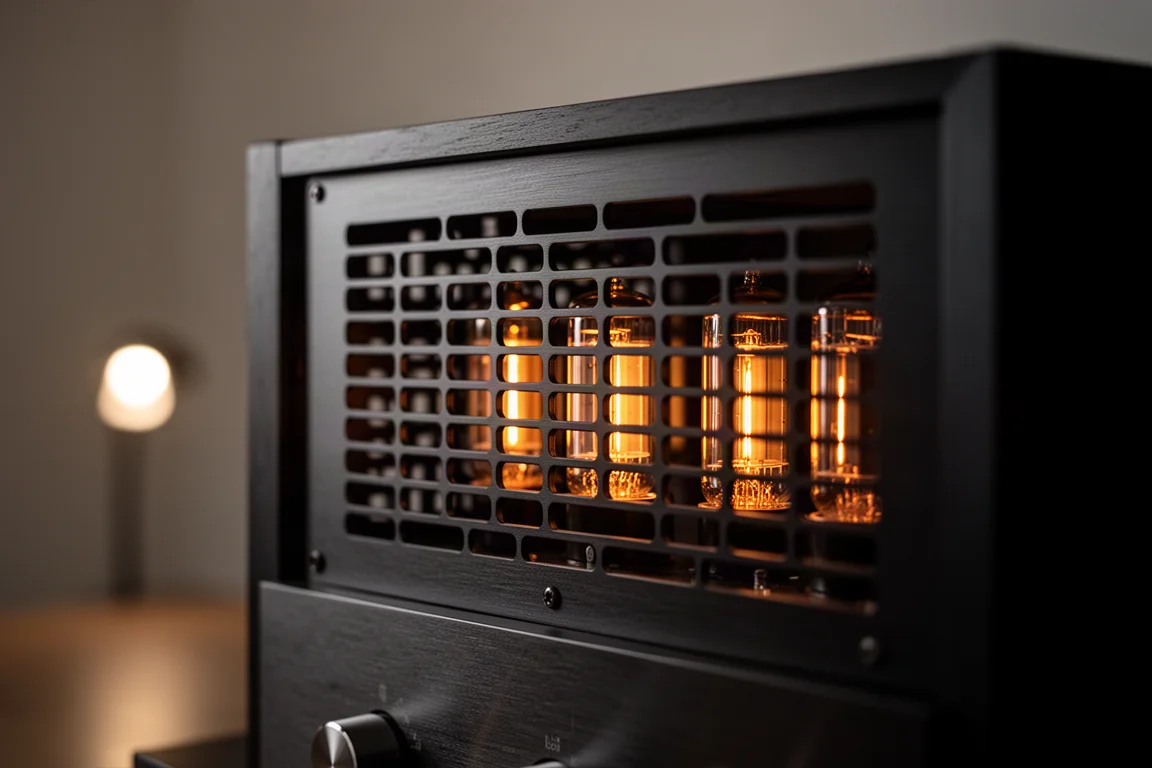
The Advance Paris A10 Classic is the reference point for this group, and it is priced accordingly at roughly three times the cost of the Emotiva TA2. It brings a class A bias, a tube front end, an HDMI input and a broader selection of connections than most two-channel systems will ever use. The build and finish are a clear step above the rest of the group.
Sonically it lands between the TA2 and the Cambridge Audio CXA81 Mk II. It is not quite as dynamic as the TA2, but it is more refined in the way it handles those dynamics, and it beats the TA2 on imaging and three-dimensionality. The tube front end and class A bias are part of that character, and they are the main reasons to consider this amplifier over the more affordable options here.
For a listener building a long-term system around a single pair of speakers, the A10 Classic offers a combination of inputs, character and build that the other three cannot match. The trade-off is straightforward: it costs far more, and much of what it offers may go unused in a simple system with one turntable and one streamer.
What to Check Before You Buy
Speaker sensitivity and impedance should be the first consideration. The TA2 and the CXA81 Mk II have the most power on tap and will handle lower-sensitivity speakers and louder listening sessions most easily. The A11 MkII is rated at 50 watts per channel and will be happiest with reasonably efficient speakers.
The second consideration is the source list. If a turntable is part of the plan, the Rotel and the Emotiva both include a phono stage, while the Cambridge does not. If a subwoofer is part of the plan, the Rotel is the only amplifier here without a subwoofer output, and the Emotiva is the only one with adjustable high pass and low pass filters to blend it properly. If balanced sources matter, the Cambridge is the only one of the three lower-priced amplifiers with balanced inputs.
Listening level matters too. Most people listen at moderate levels rather than at the high volumes used in demonstrations, and all four amplifiers handle a moderate level without difficulty. The TA2 and the CXA81 Mk II simply have more in reserve.
Buying Advice
The Rotel A11 MkII makes the most sense for a vinyl-focused system where simplicity is a virtue. Its phono stage is the strongest argument for the amplifier, and it is good enough that a separate phono preamp is unlikely to be needed.
The Emotiva TA2 is the pick for anyone who wants the most capability for the money. More power, a phono stage for both cartridge types, a headphone amplifier, adjustable filters for subwoofer integration and home theater bypass add up to a package that is difficult to match at the price, particularly while it is discounted.
The Cambridge Audio CXA81 Mk II suits listeners who want a neutral, well-organized presentation with a bit of warmth, plus balanced inputs and a subwoofer output. It is the middle path between the Rotel’s focus and the TA2’s enthusiasm.
The Advance Paris A10 Classic is for buyers who have the budget and want a long-term reference. Tube character, class A bias, HDMI and a very complete input selection make it a different proposition from the other three, and the price reflects that.
Conclusion
All four of these amplifiers are capable of anchoring a two-channel system for a decade or more. The decision comes down to the balance between power, features and sound character: the Rotel for a simple vinyl system with an excellent phono stage, the Emotiva TA2 for the widest feature set and the most power per dollar, the Cambridge Audio CXA81 Mk II for neutral balance with balanced inputs, and the Advance Paris A10 Classic for listeners who want a more refined, tube-fronted design and are prepared to pay for it.
Further reading
Related Reviews
Hi-Fi Amplifiers
Accuphase E-280 Review: Entry-Level Accuphase With Flagship Attention to Detail
A close look at the Accuphase E-280 integrated amplifier, covering its champagne build, AAVA volume control, sound quality, and the speakers and sources that suit it best.
Hi-Fi Amplifiers
Advance Paris A10 Classic vs Yamaha A-S301: Two Integrated Amplifiers Compared
A practical comparison of a $350 integrated amplifier and a $2,500 reference model, covering the differences that matter and the ones that do not.
Hi-Fi Amplifiers
Affordable Chinese Amplifiers Worth Buying: Five Budget Hi-Fi Amps Compared
A practical look at five affordable amplifiers, what each one does well, and the trade-offs to weigh before you buy.