Desktop Audio
Fosi Audio ZD3 and V3 Mono Review: A Compact Three-Box Desktop System
A close look at the Fosi Audio ZD3 DAC and the V3 Mono monoblocks, covering build, connectivity, sound character and who each component actually suits.
Introduction
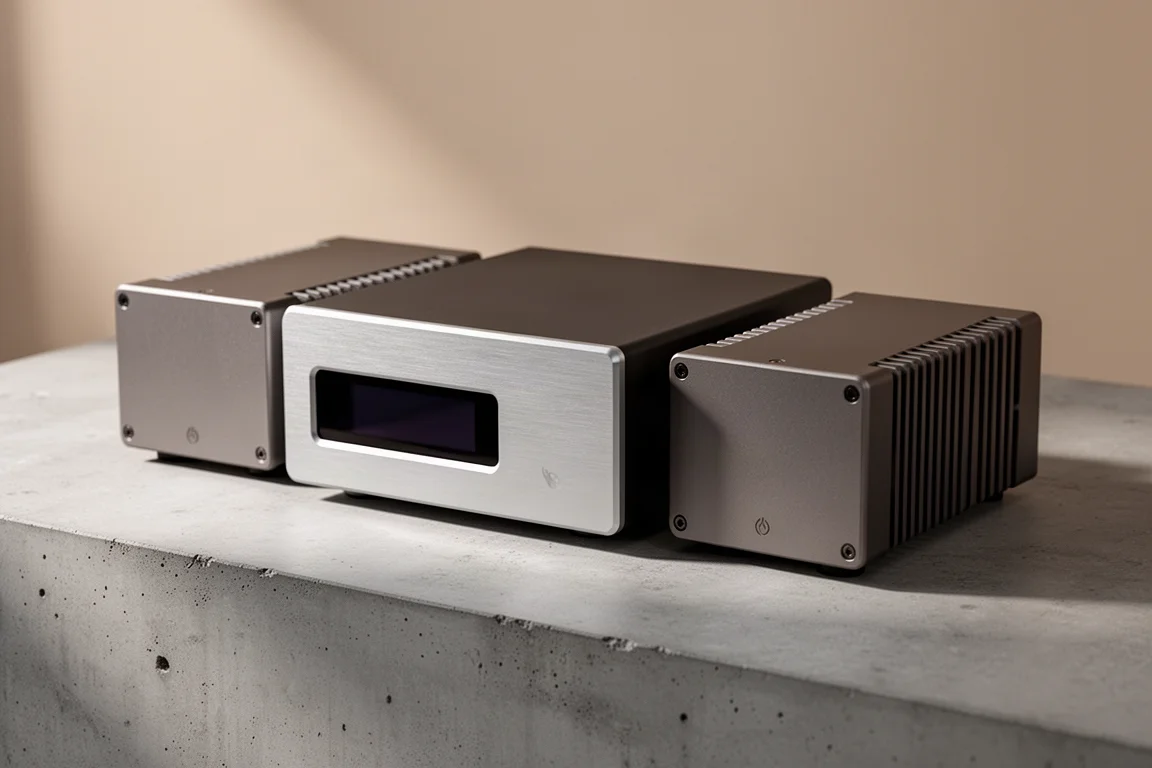
Compact desktop hi-fi has changed a great deal in a short time. Where a small system once meant a single box with a built-in converter and a modest power stage, it now often means a stack of small, well-built components that each do one job properly. The Fosi Audio ZD3 and the Fosi Audio V3 Mono sit squarely in that world. The ZD3 is the company’s first dedicated DAC, with preamp functionality and a broad set of digital inputs. The V3 Mono takes the formula behind the well-regarded V3 stereo amplifier and splits it into a pair of monoblocks.
Bought together, a ZD3 and a pair of V3 Mono amplifiers come in under 500 pounds. That is a genuinely small amount of money for a three-box system, and it raises a fair question: does separating the DAC from the amplification still make sense at this price, or does a single integrated box deliver more for the same money? This guide walks through what each component does well, where the trade-offs sit, and who is most likely to be happy with the result.
What Makes a Good Desktop DAC and Amplifier Pair
Before looking at either product on its own, it helps to be clear about what actually matters in a small system. A few things tend to decide whether a compact stack is a pleasure to live with or a constant source of friction.
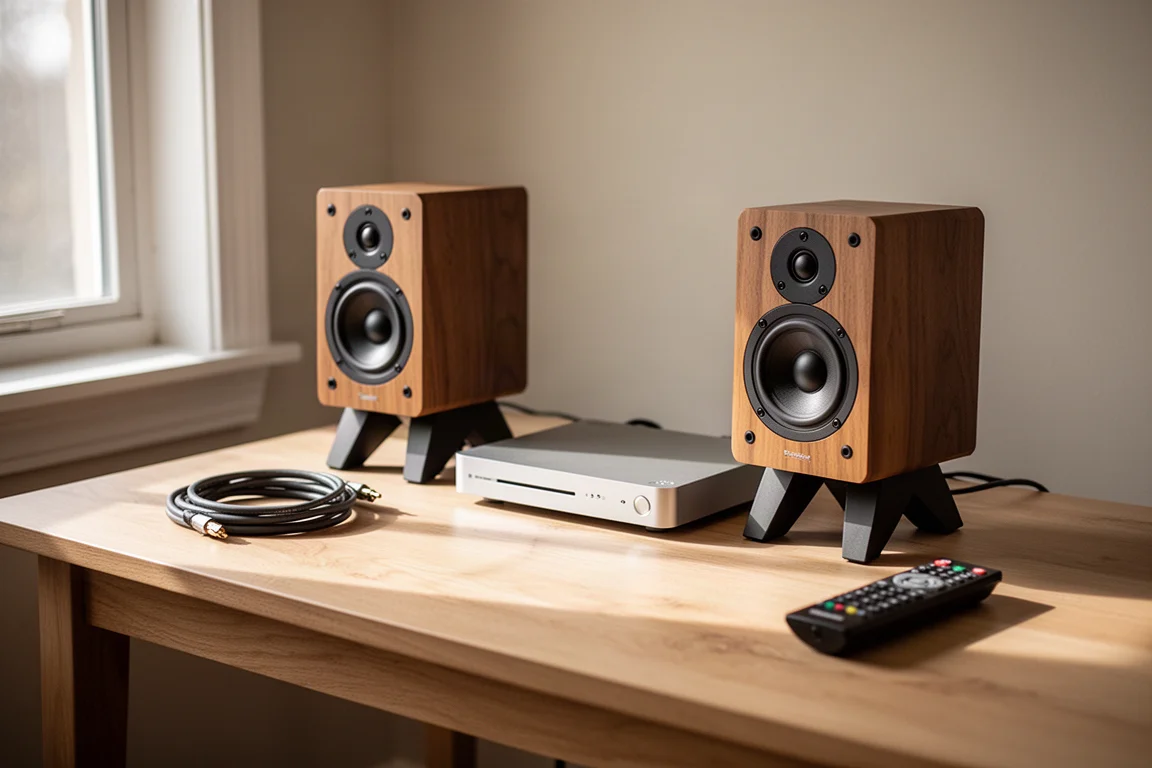
Connectivity comes first. A desktop DAC needs enough inputs to cover the sources you actually own, and one input in particular has become a deciding factor: HDMI ARC. It allows a stereo system to power up, power down and follow the volume of a television using the TV’s own remote, which makes a two-channel setup far easier for everyone in the house to use.
Circuit quality and upgradability come next. Both components here are built around current-generation chips and quality passive parts, and both allow the output op amps to be swapped later if you want to shift the sound. That kind of future flexibility is unusual at this price.
Finally there is ergonomics: how many boxes, how many cables, how many power supplies, and how easy the controls are to use day to day. A stack that sounds excellent but is awkward to operate tends not to stay in a living room for long.
Fosi Audio ZD3: Build, Features and Connectivity
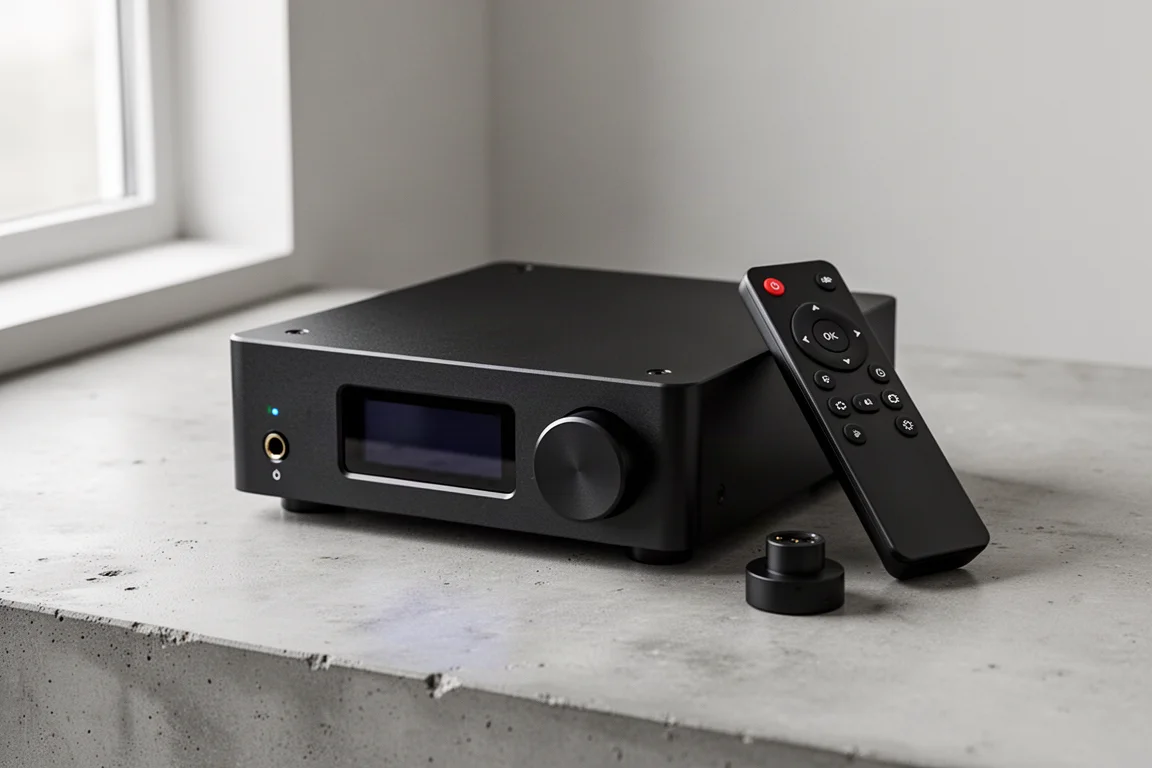
The ZD3 is a well-equipped DAC that retails for $220 in the US, with UK pricing still to be confirmed but likely to land around £200. It arrives in a full metal jacket with rounded sides and a thick aluminium front plate, and the build quality exceeds what the price suggests. At 155 by 160 by 48 mm (6.1 by 6.3 by 1.9 inches), it has roughly the footprint of a pencil case, so it will sit comfortably on a desk or a narrow shelf.
The front panel keeps things minimal. Pressing the rotary dial powers the unit up, and short presses cycle through five digital inputs. A small window above the display shows the incoming digital format, sample rate, input and volume. The one usability quirk is the volume control: relatively small level changes require fairly large turns of the dial. If you would rather use the ZD3 purely as a DAC, a small toggle switch underneath disables the volume control altogether. A remote control is also included.
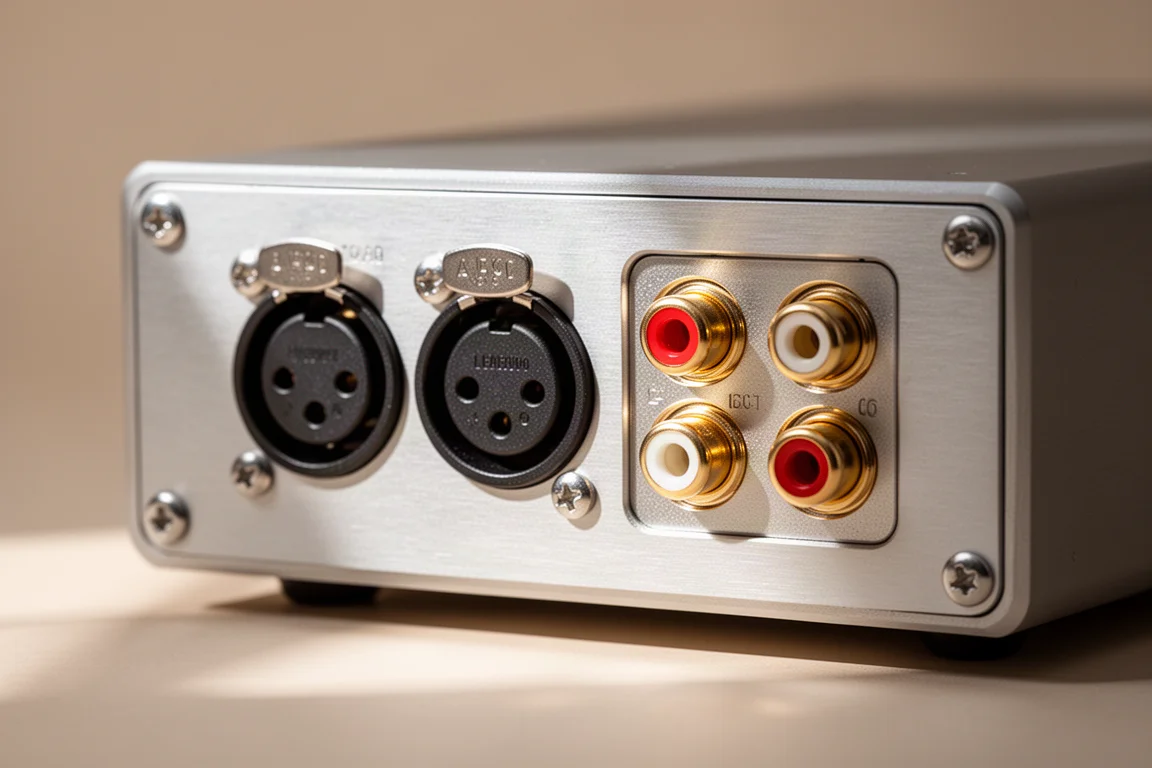
Around the back, the ZD3 offers balanced XLR and single-ended RCA analogue outputs. Digital inputs cover Bluetooth, optical, coaxial and USB, and the addition of HDMI ARC is a significant one at this price, since many direct competitors leave it out.
Inside, the ZD3 uses a fully discrete balanced circuit built around an ESS 9039Q2M converter, with a manufacturer-specified signal-to-noise ratio of 126 dB. The output stage uses OPA1612A op amps, and because they sit in sockets they can be swapped later, with parts from Sparkos and Burson among the popular choices for those who want to tune the sound.
ZD3 Sound Quality and Where It Fits
Sonically, the ZD3 delivers a lean and clean presentation. The soundstage is flat and extends a little beyond the speakers on either side, bass is tight if slightly light, and vocals and lead instruments come through with a crisp quality, though they lack a little body. There is plenty of top-end extension. With less suitable partnering equipment, the upper midrange can turn grainy and the treble can take on a slightly metallic, glassy edge.
That last point matters more than the others, because it defines the ideal partner. In a system built around the £599 Q Acoustics 5020 speakers, the ZD3 outperformed the internal Burr Brown DAC of a £449 integrated amplifier, with the difference most obvious in instrument separation. Against the internal DAC of the Mission 778x, which uses an older ESS 9018K2M chip, the two are much closer: detail retrieval, soundstage size and instrument placement are broadly similar, and which one appeals more shifts from track to track.
A portable Chord Mojo opens up the soundstage further and adds body, detail and refinement, but its lack of input switching makes it awkward in a desktop or hi-fi role. At roughly half the price, the ZD3 offers solid build, good ergonomics, comprehensive connectivity and none of that switching hassle.
The practical conclusion is straightforward. Pair the ZD3 with speakers and amplifiers that retail for up to about £600 and that sound neutral or slightly warm, and it performs very well. Feed it with more revealing equipment and the limits in midrange and treble refinement become easy to hear.
Fosi Audio V3 Mono: Compact Monoblock Amplifiers
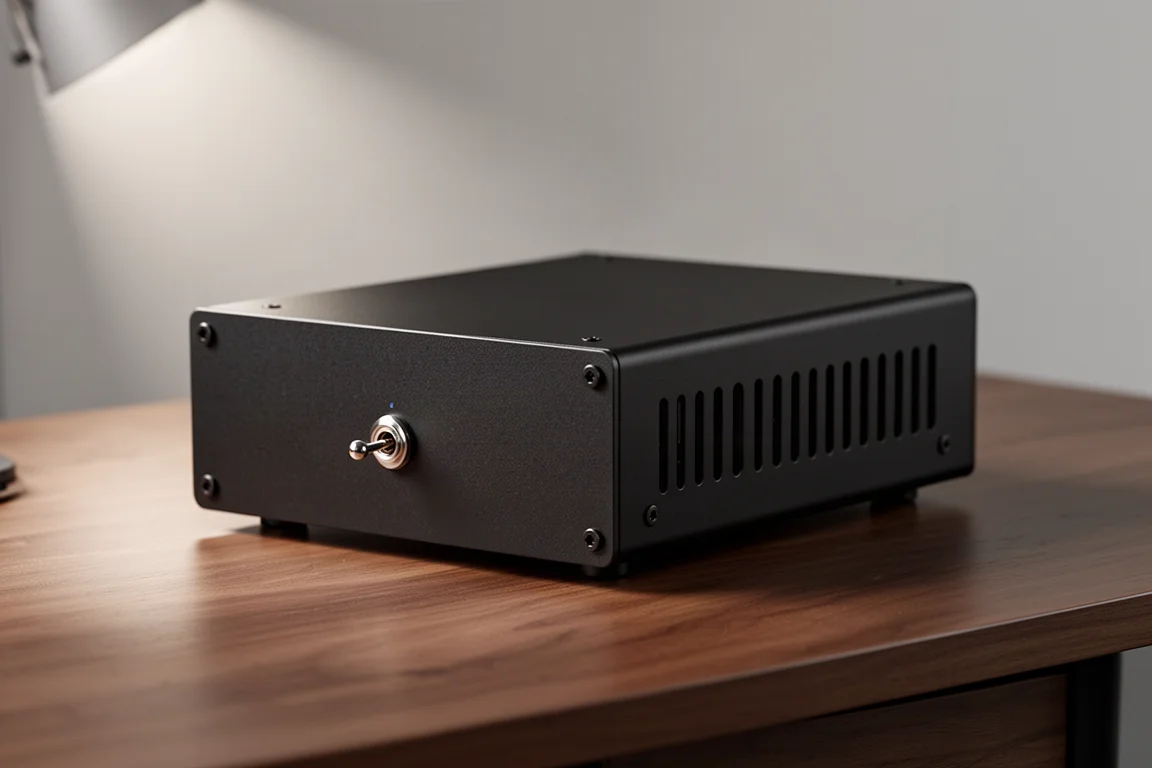
The V3 Mono is sold individually for £150, with a stereo pair available for £280. The chassis is the same size as the V3 stereo amplifier, but the ventilation holes run along the sides rather than the top and bottom, which means the units can be stacked. Each monoblock measures 105 by 142 by 35 mm (4.1 by 5.6 by 1.4 inches).
Two toggle switches handle setup. One can place the amplifier into standby after ten minutes without a signal, or leave it permanently on. The other selects between the RCA and XLR inputs. The rear panel accepts single-ended RCA and balanced XLR, and will also take a 6.35 mm TRS connection. Gain can be set to 31 dB, which is the factory default, or 25 dB.
The small and rather flimsy speaker binding posts are the clearest sign that this is a modestly priced component. Banana plugs make connection far less fiddly. Fosi Audio offers 32V and 48V offboard power supplies, and the 48V 5A version is the one supplied here.
Inside, the V3 Mono uses a Texas Instruments TPA3255 chip, which can deliver a maximum of 240 watts into 4 ohms when fed by a 48V 10A supply. The current generation of the 3255 includes post-filter feedback, a ferrite bead placed inside the class D loop rather than a filter on the output. It minimises the electromagnetic interference generated by the high switching frequency without compromising frequency response or adding the distortion that inexpensive output filters introduce. The stereo V3 does not have this feature. Component quality is maintained throughout, with Nichicon filter capacitors, WIMA and Elna capacitors in the audio circuit, and Japanese inductors. NE5532 op amps are fitted as standard and, as with the ZD3, can be rolled for something like a Sparkos SS3602, a Muses O2, an OPA2604 or a Burson V5i, V6 or V7.
V3 Mono Sound Quality and System Matching
On sound, the monoblocks move in a clear direction. Bass is cleaner, midrange transients are snappier and the background is darker, which together mean more information comes through. They also carry more of the cool class D character than the stereo version.
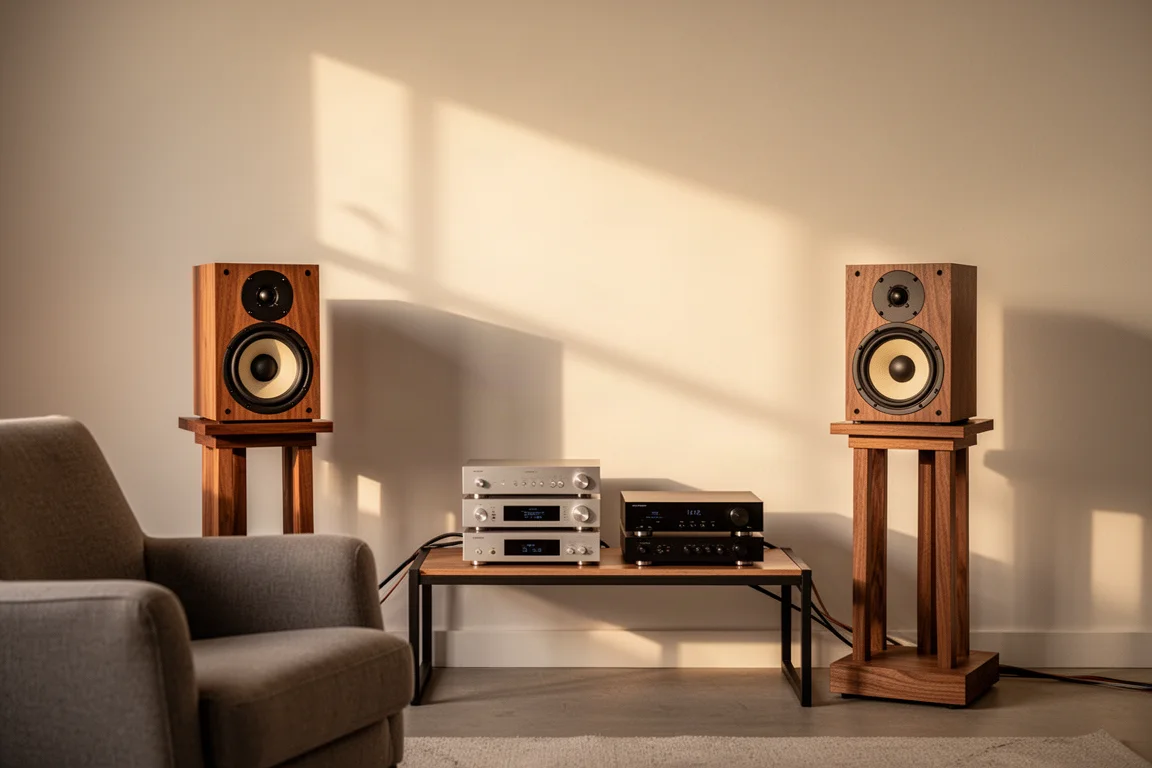
Compared directly, the stereo V3 with the even-handed Q Acoustics 5020 speakers produces a softer, less resolving sound than the monoblocks, but with a fuller bass and midrange. Adding the ZD3 pushes the system further towards a dry, analytical class D presentation. That character can be softened slightly by using a warmer source, but the monoblocks’ own tonal signature still comes through.
The result suits a lot of pop, rock and electronic music very well. With vocal-led recordings and material built around acoustic instruments, it is less convincing. More resolving speakers expose the limits in midrange and treble refinement more clearly, and the Q Acoustics 5020 proved the better match. For comparison, the Mission 778x at £549 is a capable one-box alternative to the three-box Fosi Audio stack, and for listeners who move across a wide range of genres it comes across as the better all-rounder, with similar scale, dynamics and overall resolution but a warmer tonal balance. A neutral-sounding integrated amplifier offers a slightly bigger soundstage and shifts dynamics with more ease, though it needs a better converter to show it.
Living With Two Chassis: Setup and Ergonomics
This is where the case for monoblocks at this price becomes harder to make. Monoblock amplifiers make obvious sense for powering passive subwoofers or adding channels to an AV receiver, but for a two-channel desktop or small-room system the practical cost is real.
The V3 Mono pair doubles the box count. You still need to add an analogue preamp, which means more wires and more clutter, or a digital source with its own volume control. The ZD3 fills that role, but it cannot be stacked on top of the monoblocks because it is too deep, and placing it underneath does not look especially tidy. Two offboard power supply bricks also take up floor or shelf space.
None of this is a problem if the sound justifies it, and in most respects the monoblocks do sound better than the stereo V3. It is simply worth going in with clear eyes: the simplicity of a single compact stereo amplifier is a genuine advantage, and the mono route trades that away for cleaner bass, faster transients and a quieter background.
Buying Advice
The two components answer different questions, so it makes sense to decide which one you actually need.
The ZD3 is the easier recommendation of the two. At $220 it offers solid build, comprehensive connectivity including HDMI ARC, straightforward ergonomics and a clean, detailed sound. If you have a television in the same system, or you want a compact DAC that will not fight you every time you change sources, it is a strong choice. Keep the partnering speakers and amplifier at roughly £600 or below and on the neutral to warm side of the spectrum, and it will reward you.
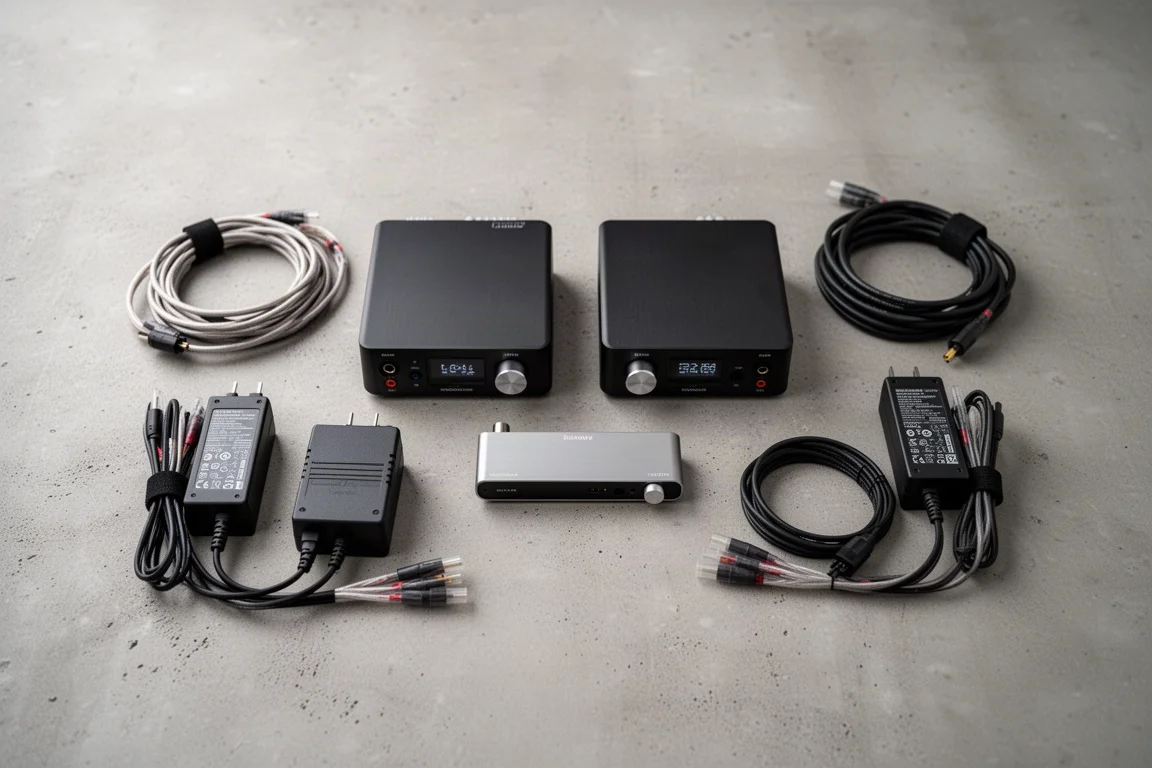
The V3 Mono pair is more of a specialist purchase. At £150 each, or £280 for a pair, it delivers cleaner bass, snappier transients and a darker background than the stereo V3, and it suits pop, rock and electronic music particularly well. What it does not offer is the value or the simplicity of the stereo V3. If your priority is a small, tidy system that is easy to set up, the stereo amplifier remains the more sensible buy. If you already own a suitable preamp or a DAC with volume control and you want the extra control and openness that monoblocks bring, the pair is worth the additional boxes and cables.
Conclusion
The Fosi Audio ZD3 and the Fosi Audio V3 Mono show how far compact, affordable hi-fi has come. The ZD3 is a well-built, generously equipped DAC with a clean and detailed presentation, and it earns a strong recommendation on its own terms. The V3 Mono pair is a more mixed proposition: it sounds better than the stereo V3 in most respects, but it asks for more boxes, more cables and more space to get there. Choose the ZD3 with confidence, and choose the monoblocks only if the extra separation and bass control matter more to you than a tidy, simple setup.
Further reading
Related Reviews
Desktop Audio
ADAM Audio D3V vs Kali Audio LP-UNF: Two $299 Desktop Monitors Compared
Two compact powered desktop monitors at the same price, compared on bass extension, linearity, placement settings, directivity, and realistic output limits.
Desktop Audio
Aiyima T9 Review: A Compact Tube Desktop Amplifier With a Built-In DAC
A budget desktop amplifier that pairs class D power with two tubes, a full DAC section, Bluetooth, tone controls, and a working VU meter.
Desktop Audio
Aune S9c Pro Review: A Weighty Desktop DAC and Headphone Amplifier With Real Power
A desktop DAC and headphone amplifier with a linear power supply, dual Sabre converters and five watts of balanced headphone output. Here is what to weigh before buying.