Hi-Fi Audio
Fosi Audio V3 Review: A Compact Class D Amplifier That Gets the Basics Right
A simple, carefully built Class D stereo amplifier with a very low noise floor, a strong metal volume control, and a price that makes it easy to try.
Introduction
The Fosi Audio V3 is a compact stereo power amplifier built around the widely used TPA3255 Class D chipset, and it arrives at a price that makes it easy to try: roughly $90 at retail, and around $78 when a 12 dollar coupon is applied. That is a lot of amplifier for the money, especially given that it uses Japanese Elna capacitors and German Wima capacitors rather than the generic parts usually found in this bracket.
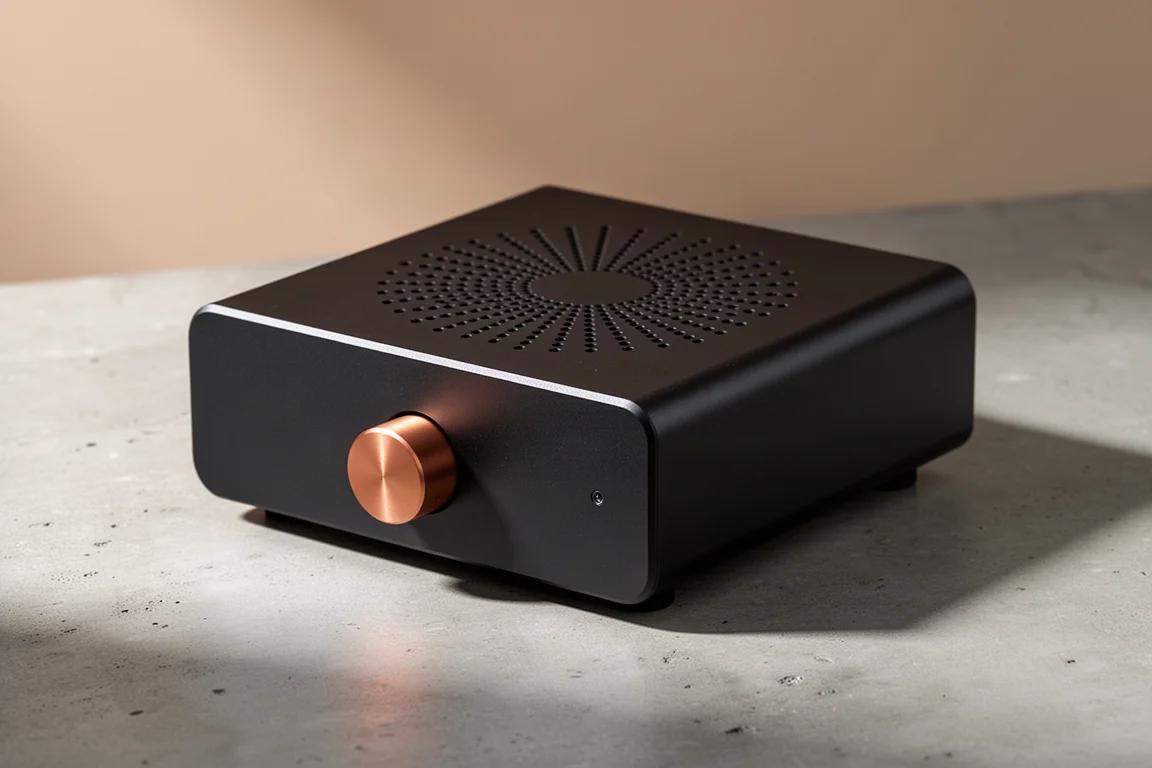
The design is deliberately stripped back. There is one RCA input, one volume control, and a set of speaker outputs. No Bluetooth, no tone controls, no display, and no remote. The appeal is not the feature list but the execution: a short signal path, careful part selection, and ventilation on both the top and bottom of the chassis.
Who the Fosi Audio V3 Is For
This amplifier suits listeners who already have a source they trust and would rather spend their budget on amplification than on connectivity. A desktop system is its natural home, paired with a DAC and a pair of compact speakers.
Because the only control is the volume knob, the amplifier needs to sit within arm’s reach. If you would rather adjust level from the sofa, feed the V3 from a preamp or from a DAC that offers remote volume, and let the V3 do nothing except amplify. It also has a preamp output, so a subwoofer can be added to the chain.
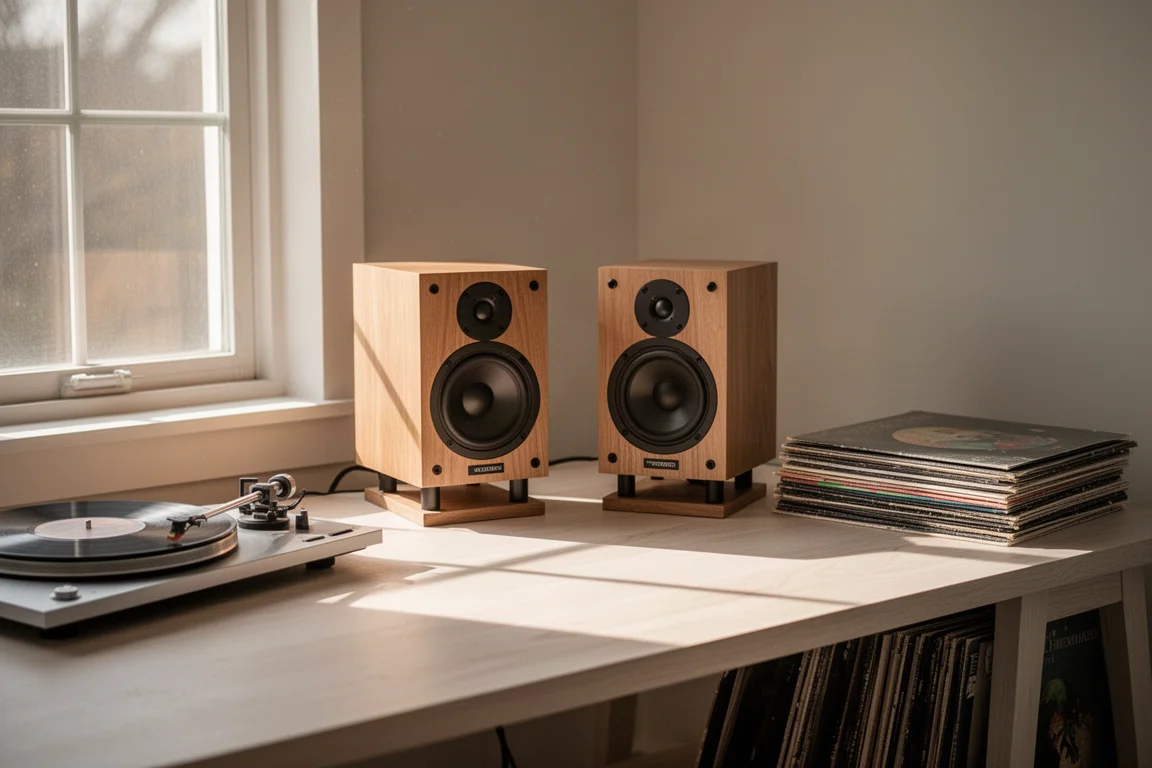
The V3 also rewards owners who care about clean power delivery. The included supply is a 32 volt, 5 amp unit, and the published power ratings are quoted with that supply, so there is room to explore later if you decide to move to a larger power brick.
Main Strengths: Sound Quality and Transparency
The most persuasive argument for the V3 is how quiet it is. The published signal to noise ratio is above 110 dB, the published total harmonic distortion is below 0.003 percent, and the published dynamic range is above 110 dB. Against the Fosi Audio TB10D, which uses the same amplifier chipset, the distortion figure drops from 0.3 percent to 0.003 percent.
That lower noise floor is what most listeners will notice first. Compared directly with the Fosi Audio BT20A Pro, the V3 comes across as cleaner, with a larger soundstage, a less veiled midrange, and more precise imaging. On a well recorded track, individual elements sit clearly defined inside the stage rather than blending into a single wall of sound.
The trade off is transparency. The V3 passes through what the source gives it, which is a virtue with a good DAC and a liability with a harsh or thin one.
Build Quality, Parts, and the Volume Control
The chassis feels substantial for the money, and the internal part selection is the headline. Elna capacitors from Japan and Wima capacitors from Germany sit alongside the amplifier chip, and ventilation is provided on the top and bottom panels so the amplifier can run comfortably.
The volume control deserves particular mention. The knob is all metal and the potentiometer behind it is a quality part. A single LED on the front panel indicates power, and the amplifier switches on by rotating the knob away from its minimum position.
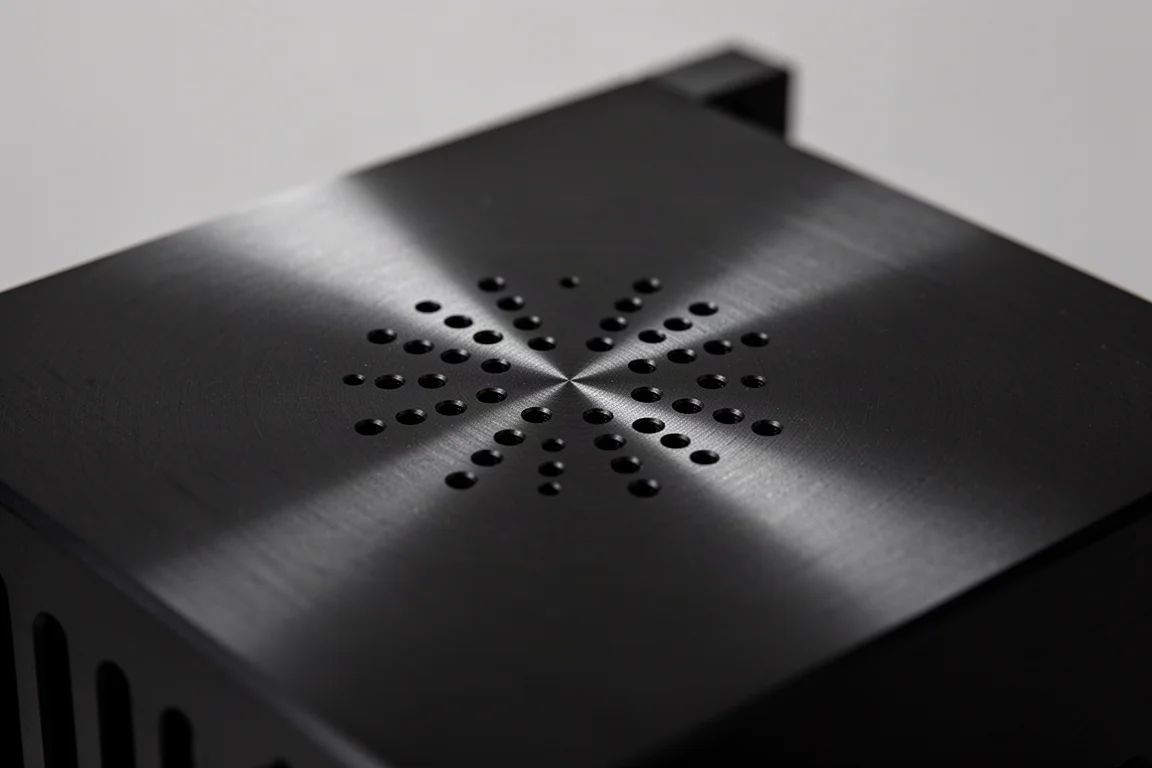
Op amp swapping is possible, but access takes patience. You need to remove the volume knob together with its nut and washer, then two screws on the bottom and two on the back. The board slides out only part of the way, which is enough to reach the op amps but not enough for comfortable work.
Power Ratings and Power Supply Options
Power figures for Class D amplifiers always depend on the supply attached, and the V3 is no exception. With the included 32 volt, 5 amp power supply, the published ratings are 100 watts per channel rated and 125 watts maximum at 4 ohms, plus 50 watts continuous and 65 watts maximum at 8 ohms.
Move to a 48 volt, 10 amp supply and the published numbers rise sharply: 280 watts per channel rated and 300 watts maximum at 4 ohms, plus 140 watts continuous and 150 watts maximum at 8 ohms. Those higher ratings are only useful if a good quality 48 volt supply is easy to find, and that is not something you can currently count on.
Real world output is lower than the headline figures suggest, but even a conservative reading of the 32 volt supply leaves enough usable power for typical speakers in a desktop or small room setup.
How It Compares With Other Fosi Audio Amplifiers
The BT20A Pro is the closest sibling. It shares the chipset and a very similar form factor, and it adds Bluetooth and tone controls. In direct listening comparisons it presents a fuller low end, which may owe something to those tone controls, and it smooths over sibilance a little more gracefully. Those traits make it the friendlier choice with bright or fatiguing speakers, and with a thin sounding source.
The V3 takes the opposite approach. It is the cleaner and quieter amplifier of the two, and it keeps more of the music’s detail and spatial information intact. If your system already leans warm, the V3 will not add colour on top of it.
The TB10D is the more affordable option in the same family, and the distortion gap between it and the V3 is the clearest illustration of what the newer model buys you.
Things to Consider Before Buying
There are no tone controls, so any tonal adjustment has to come from an equaliser or from the source itself. There is no Bluetooth and no remote either, which rules the V3 out as a standalone living room hub unless something else handles input switching and volume.
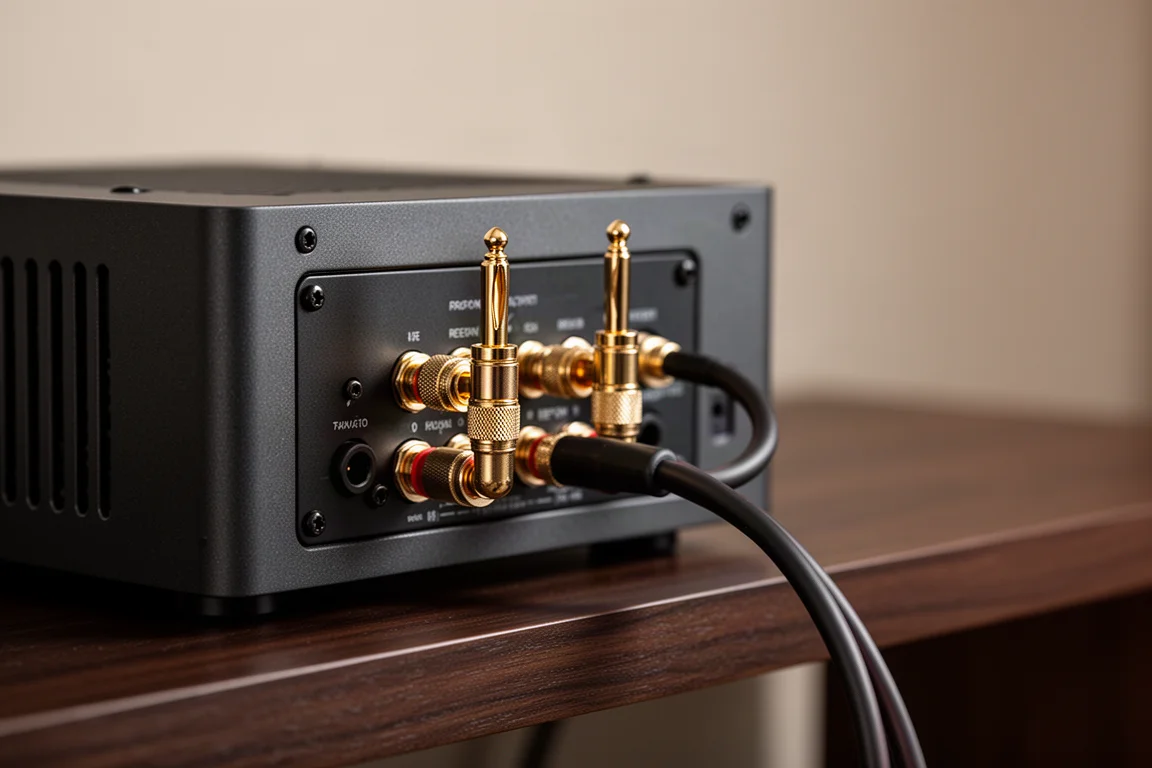
The binding posts are the one part of the amplifier that feels inexpensive, and they are the obvious candidate for improvement. Beyond that, the V3 is transparent enough that it will expose a weak DAC or a noisy source rather than flatter it.
Buying Advice
At around $78 with a coupon and about $90 without one, the V3 is an easy recommendation for anyone building a simple, high quality desktop system. Use it as the core of a nearfield setup with a DAC and compact speakers, or as a pure power amplifier behind a preamp that handles source selection and volume. It is sold through Amazon in several regions, including the United States, the United Kingdom, and Canada.
It is also worth buying with the return window in mind. The V3 is simple enough that a week of listening with your own speakers and your own music will tell you whether its clean, uncoloured character suits the rest of your system.
Conclusion
The Fosi Audio V3 shows what happens when a small amplifier budget is spent on parts and a simple circuit instead of features. It is quiet, well built, and honest about what it does, and it gives listeners an affordable way to hear what a low noise floor does for imaging and detail. If you want tone controls and Bluetooth, the BT20A Pro remains the practical pick. If you want the cleanest signal for the money, the V3 is the one to try.
Product link
View more details for Fosi Audio V3
This product is mentioned in the review. Check the specifications, options, and compatibility before buying.
View more details for Fosi Audio V3Further reading
Related Reviews
Hi-Fi Audio
Accuphase C-57 vs Allnic H-7000V: Two High-End Phono Stages Compared
A fully balanced solid-state phono stage with a pitch-black noise floor meets a tube design built for well-loved records. Here is how to choose between them.
Hi-Fi Audio
Active vs Passive Hi-Fi: Five Components for a Modern System
Five components that define modern active and passive hi-fi systems, with the strengths, trade-offs and setup details worth weighing before you buy.
Hi-Fi Audio
Advance Paris A10 Apex Review: A Hybrid Integrated Amplifier That Covers a Lot of Ground
A French hybrid integrated amplifier with a class A tube preamp stage, analogue power meters, and an internal DAC and phono stage good enough to make extra boxes unnecessary.