Hi-Fi Amplifiers
Fosi Audio V3 Mono Review: A Tiny Monoblock Power Amp With Real Punch
A compact monoblock power amplifier with genuine bass punch, flexible gain and input switching, and a clear catch: you supply the preamp.
Introduction
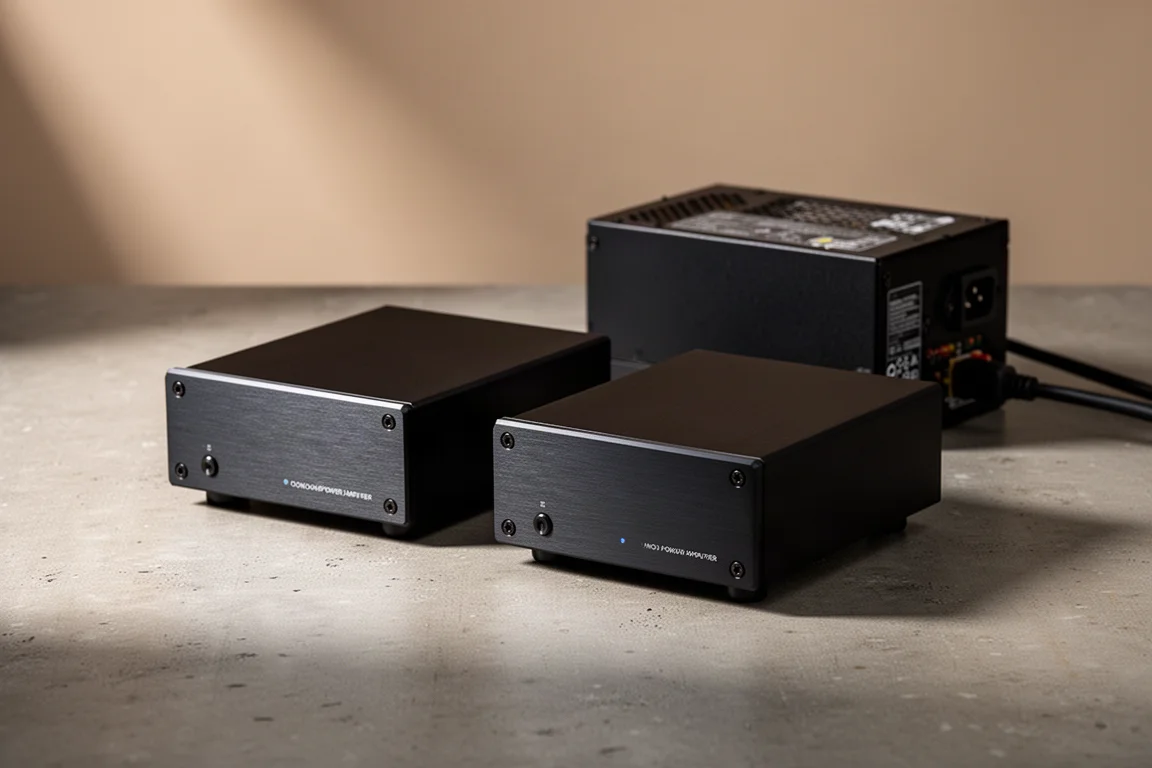
Fosi Audio has built a following on small, affordable amplifiers, and the V3 Mono is its most focused take on that idea so far. This is a pure power amplifier. There is no Bluetooth, no volume control and no tone circuitry. What you get is a compact black chassis, two toggle switches on the front, and a separate power supply that is, frankly, larger than the amplifier it feeds.
The concept is simple. Run one V3 Mono per channel, feed it from a preamp or DAC you already own, and end up with a pair of small blocks that can drive speakers that are not especially easy to drive.
Who this product is for
The V3 Mono makes the most sense for listeners who already have a preamp, a DAC with variable output, or an integrated unit with preamp outputs sitting in their system. If you own one of those, the V3 Mono slots in as the final stage before your speakers and then stays out of the way.
It also suits compact desktop and small-room setups, where a full-size stereo power amplifier would dominate the shelf. In a real system, a single V3 Mono drove a pair of 4-ohm speakers rated at 89 dB efficiency, with three 5.25-inch woofers, to roughly 90 dB at a listening distance of about 12 feet, and it did so without sounding strained.
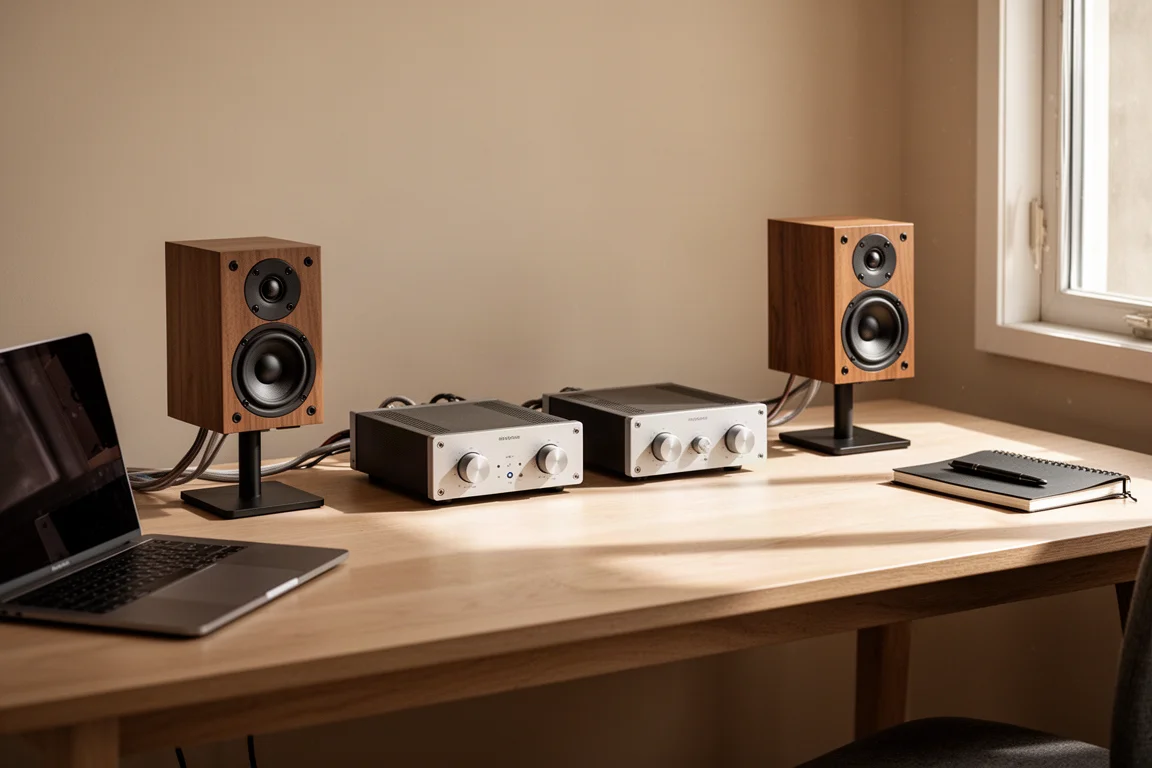
That headroom is the point. Buyers running sensitive, easy-to-drive speakers may find the two-channel V3 or the ZA3 is plenty, while the V3 Mono is aimed at anyone who wants more current delivery and a dedicated amplifier channel per speaker.
Main strengths
The V3 Mono’s appeal comes down to three things: power, bass behaviour and physical size.
Bass presence and dynamic punch
The clearest improvement over the earlier two-channel V3 is low-frequency authority. Where the original V3 sounded clean but restrained, the V3 Mono has a punchier, more present bass response that gives drums and bass lines real weight. Dynamic swings land with more force, which makes energetic music feel alive rather than polite.
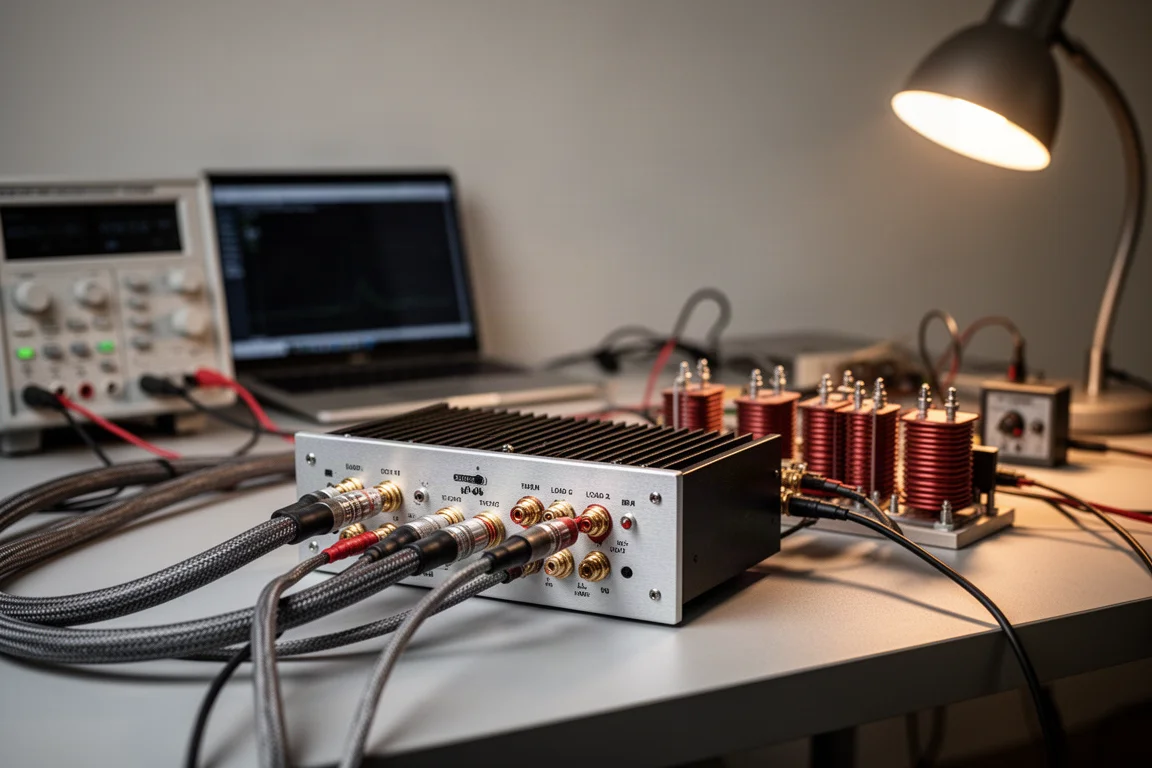
Fosi Audio uses a post-filter feedback design in this amplifier. The company says the approach reduces distortion, improves linearity across the frequency response, and supports cleaner sound and better system efficiency. Published output ratings are listed at 200 watts and 40 watts.
Compact footprint and cool running
Each V3 Mono is genuinely small, which is one of the practical benefits of a monoblock layout: one amplifier channel per chassis means less circuitry to house. The trade-off is that every unit needs its own 48 V, 10 A power supply, and that brick takes up more shelf space than the amplifier itself.
Thermals are well controlled. After extended listening, the chassis is only slightly warm to the touch rather than hot.
Things to consider before buying
The V3 Mono is a specialist component, and a few of its limitations are worth understanding before you order.
No volume control and no subwoofer output
Because this is a straight power amplifier, there is no volume control on the unit and no subwoofer output. You will need a preamp, a DAC with variable output, or another control stage in front of it. That is not a design flaw, but it does mean the V3 Mono cannot be the only box in your system.
Plan for two units if you want stereo. One V3 Mono drives one speaker, so a stereo setup needs a pair, and each of those needs its own power supply and its own spot on the shelf.
Gain, inputs and op-amp swapping
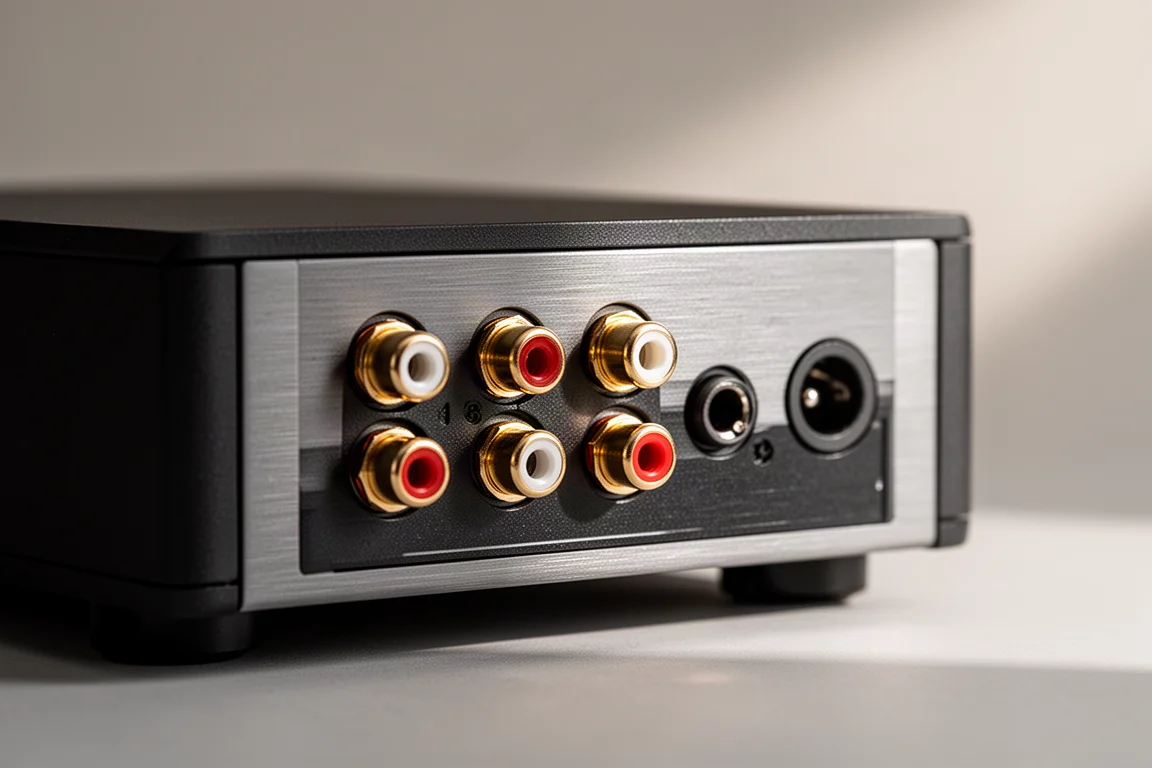
The rear panel offers two gain settings, 31 dB and 25 dB, along with both RCA and XLR inputs. The higher gain setting suits quieter sources and lower-output preamps, while the lower setting gives you more usable range on your volume control with sensitive speakers.
The front panel keeps things minimal. A toggle switch on the left selects off, auto or on, and the auto position puts the amplifier to sleep after roughly 10 minutes without a signal. A second toggle on the right selects between the RCA and XLR inputs. Inside, two op-amps can be swapped out if you enjoy tuning the sound to taste.
Buying advice
At launch, the V3 Mono is offered through a Kickstarter campaign at two units for $270. For a pair of monoblock power amplifiers, that is an aggressive figure, and it is the main reason this amplifier deserves a serious look.
Before committing, confirm three things: that your preamp or DAC has the outputs you need, that you have space for two power supplies, and that your speakers will actually benefit from the extra power. If all three are in place, the V3 Mono is an easy recommendation at this price. If you are starting from scratch without a preamp, budget for one, because it is a required part of the chain rather than an optional extra.
Conclusion
The Fosi Audio V3 Mono does one job and does it well. It delivers a punchy, confident sound from a chassis small enough to disappear on a desk, with flexible gain and input options for matching it to the rest of your system. The catch is that it is a power amplifier and nothing else: no volume control, no subwoofer output, and one large power supply per unit. For listeners who already own the front end and want compact, affordable monoblock power, it is a compelling package.
Product link
View more details for Fosi Audio V3 Mono
This product is mentioned in the review. Check the specifications, options, and compatibility before buying.
View more details for Fosi Audio V3 MonoFurther reading
Related Reviews
Hi-Fi Amplifiers
Accuphase E-280 Review: Entry-Level Accuphase With Flagship Attention to Detail
A close look at the Accuphase E-280 integrated amplifier, covering its champagne build, AAVA volume control, sound quality, and the speakers and sources that suit it best.
Hi-Fi Amplifiers
Advance Paris A10 Classic vs Yamaha A-S301: Two Integrated Amplifiers Compared
A practical comparison of a $350 integrated amplifier and a $2,500 reference model, covering the differences that matter and the ones that do not.
Hi-Fi Amplifiers
Affordable Chinese Amplifiers Worth Buying: Five Budget Hi-Fi Amps Compared
A practical look at five affordable amplifiers, what each one does well, and the trade-offs to weigh before you buy.