Audio Amplifiers
Fosi Audio TB10D Review: A Budget Class D Amplifier With Real Problems
A close look at the Fosi Audio TB10D, a low-cost class D amplifier with tone controls that falls short on noise, sound quality, and basic electrical behaviour.
Introduction
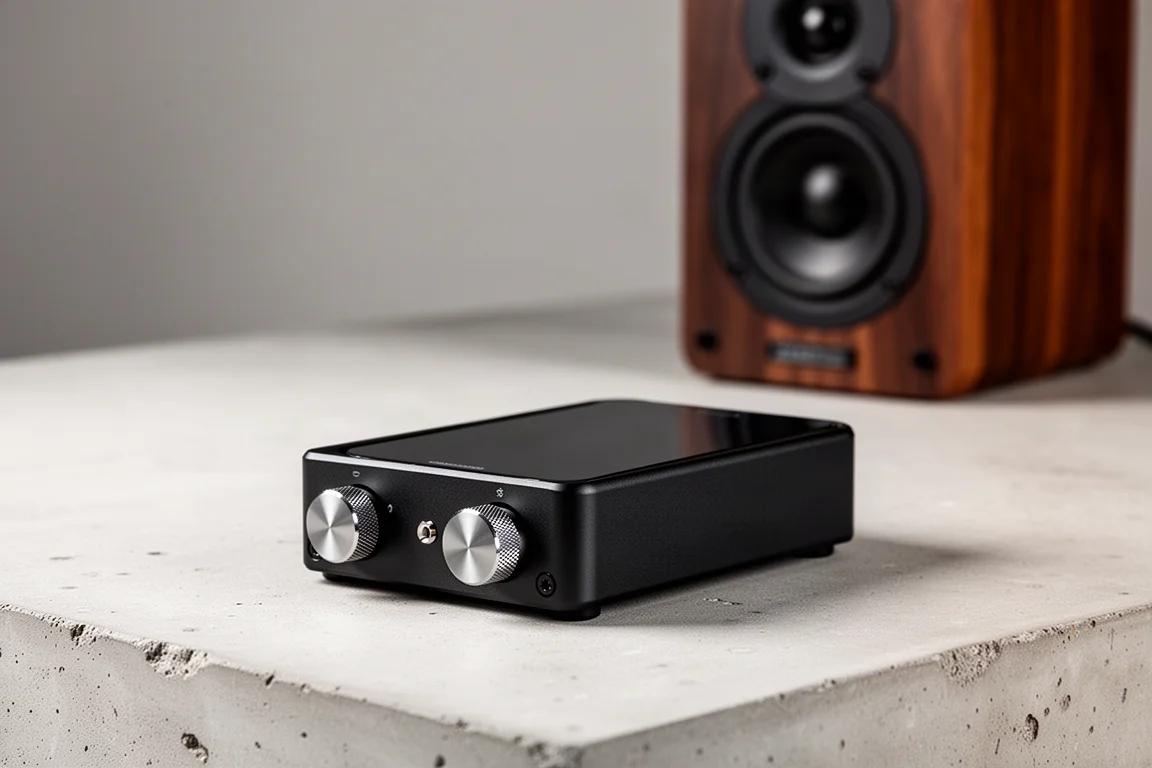
Fosi Audio has built a strong reputation among budget hi-fi listeners, and its compact class D amplifiers are a common starting point for desktop and small-room systems. The TB10D follows that same formula, pairing a Texas Instruments 3255 class D amplifier chip with bass and treble tone controls inside a small metal chassis.
On paper the recipe looks convincing. The 3255 chip is well regarded for its sound, and tone controls are something many rivals in this price bracket leave out entirely. In practice, the TB10D does not deliver on that promise, and the problems are not subtle ones.
Listeners who want an inexpensive amplifier with tone controls still have good options. This particular model is not one of them, and the sections below explain what goes wrong and where to look instead.
Who This Amplifier Is For
The TB10D is aimed at listeners assembling a low-cost near-field or small-room system. It offers a single RCA line input, two speaker outputs with banana-plug terminals, and an included 32V 5A power supply, which is a typical feature set for this price class. At around $75.99 at the time of purchase, it sits alongside well-liked competitors rather than undercutting them.
Realistically, there is no listener this amplifier suits well. Anyone shopping on price alone can find a better-behaved amplifier for roughly the same money, and anyone who values a quiet noise floor should avoid it entirely.
Main Strengths
It is worth being fair about what the design gets right. The Texas Instruments 3255 chip is a capable class D platform, and Fosi Audio has paired it with tone controls that several comparable amplifiers do not offer. The included 32V 5A power supply means there is nothing extra to buy, and the price is low.
Those are the intentions behind the product rather than the experience of using it. The sections that follow cover what that experience actually looks like.
Fosi Audio’s wider catalogue is worth noting here as well. The company’s other amplifiers and its phono preamp have a solid track record, which makes the TB10D’s shortcomings look like a specific miss rather than a brand-wide pattern.
Things to Consider Before Buying
The most immediate issue is noise. The TB10D produces an audible hiss as soon as it is switched on, and that hiss stays constant no matter where the volume control sits. Turning the volume up or down makes no difference to the level of the noise, which leaves no way to listen around it.
There are electrical concerns too. Sparks were observed both when connecting the power supply to the amplifier and when plugging the supply into a power strip. Similar arcing behaviour has been documented on other Fosi Audio models, where the manufacturer’s own documentation advises connecting the amplifier first and the power brick second. That is a genuine hardware concern rather than a minor quirk.
Availability is the third point to weigh. The TB10D has become difficult to find and appears to have been withdrawn from the US market, so buyers may struggle to locate one at all.
Sound Quality in Everyday Use
Even setting the noise aside, the TB10D does not sound good. Music comes across as veiled, without the openness and clarity that the same family of amplifier chips can deliver in other designs. It does not match the Fosi Audio BT20A or the Aiyima A07, despite sharing a similar class D foundation.
The tone controls do not help. Their effect is heavy-handed, and adjusting them does little beyond pushing the sound further from neutral. On an amplifier that is already hard to listen to, that leaves very little room to find a setting that works.
The result is an amplifier that gets in the way of the music rather than staying out of it, which is the opposite of what buyers want from a compact desktop system.
Alternatives Worth Considering Instead
The 3255 chip appears in several amplifiers that are considerably easier to live with. Aiyima’s A07, A08 and A300 all use it and are better options, as is Fosi Audio’s own BT20A, which adds Bluetooth and tone controls and offers decent power for its size. A lower-power SMSL unit in a similar form factor is another route for near-field listening.
None of these alternatives needs to be expensive. They sit in roughly the same price range, which makes the TB10D’s problems harder to justify.
Buying Advice
If you are shopping for an affordable amplifier with tone controls, this is not the model to choose. The issues described here appear to be inherent to the design rather than a one-off fault, and availability is already limited.
Buyers who want the sound of the 3255 chip should put their money toward one of the alternatives above instead. If a TB10D does come your way, connect the amplifier to the power supply before plugging the supply into the wall, and listen for the noise floor at zero volume before committing to it.
As a general rule in this price class, it is worth confirming that a model is still actively sold and supported before buying, since quiet discontinuation is often a signal in itself.
Conclusion
The Fosi Audio TB10D looks appealing on paper: a proven class D chip, tone controls, a bundled power supply and a low price. In use, it produces constant background hiss, sounds veiled, offers tone controls that are hard to work with, and has shown worrying electrical behaviour when powered up. It is not a recommended purchase, and the alternatives in the same price range are simply better amplifiers.
Product link
View more details for Fosi Audio TB10D
This product is mentioned in the review. Check the specifications, options, and compatibility before buying.
View more details for Fosi Audio TB10DFurther reading
Related Reviews
Audio Amplifiers
AGD Audion Mark III Review: A Compact Class D Amplifier With Tube-Like Musicality
A gallium nitride Class D amplifier that delivers tube-like midrange warmth, serious bass grip, and a modular upgrade path in a very small chassis.
Audio Amplifiers
Best Class D Amplifiers Under $100: Douk Audio A5 vs Fosi Audio V3
Two sub-$100 Class D amplifiers built on the same 3255 chipset, compared on bass weight, midrange body, treble presence, and real-world speaker matching.
Audio Amplifiers
Best Power Amplifiers Under $500: Six Stereo Amplifiers From $74 to $579
A practical roundup of six stereo power amplifiers under $500, covering real-world power, connectivity, cooling, and which kind of system each one suits.