Audio Preamps
Fosi Audio P4 Review: A Compact Preamp With Three Analog Inputs and a Remote
A $99.99 desktop preamp with three analog inputs, defeatable tone controls, a motorized volume knob and a subwoofer output. Here is what it does well and where it compromises.
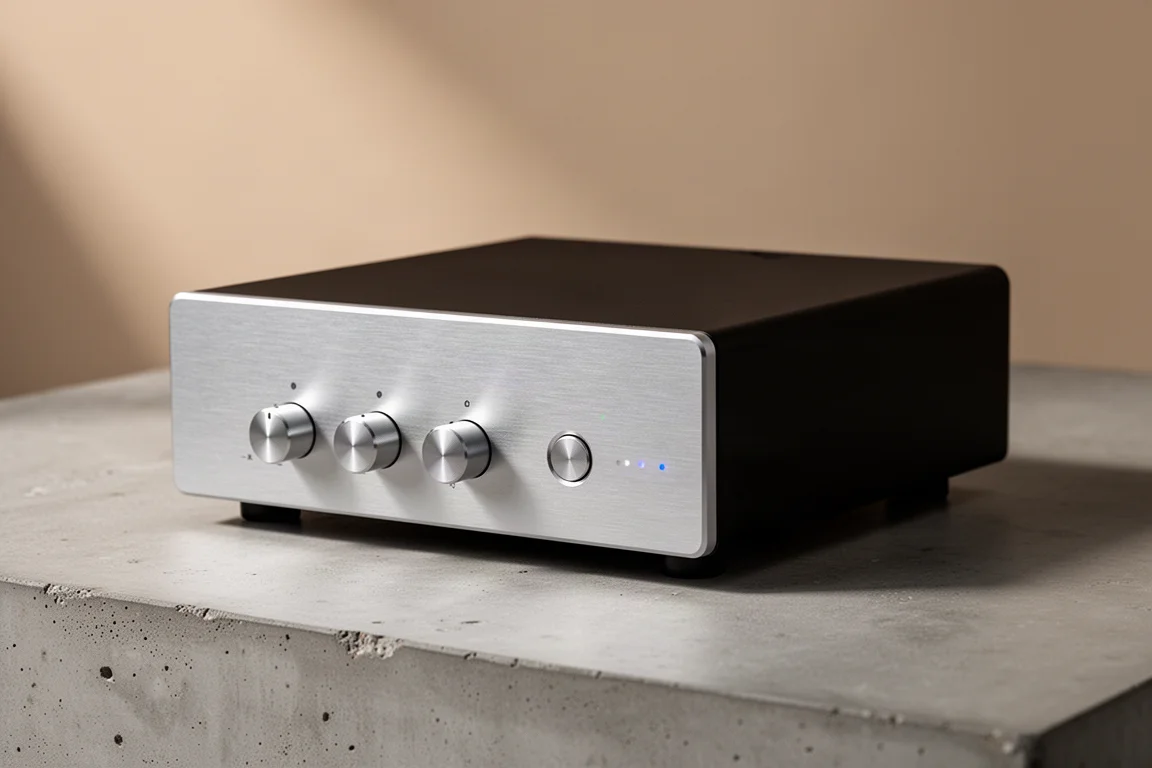
Introduction
Small amplifiers have improved dramatically over the past five years. It is genuinely remarkable how much performance is available at the $75 to $150 mark, and the category keeps getting more versatile through swappable op amps and upgraded power supplies. One thing has stayed stubbornly fixed, though: connectivity. Most of these compact amplifiers give you a single analog input, or at best a balanced input sitting next to a single-ended one.
The Fosi Audio P4 addresses exactly that gap. It is a preamplifier rather than a power amplifier, so it handles input selection, volume and tone, then passes the signal on to whatever amplifier you already own. It carries a list price of $99.99, and a 25 percent off coupon has been available at launch.
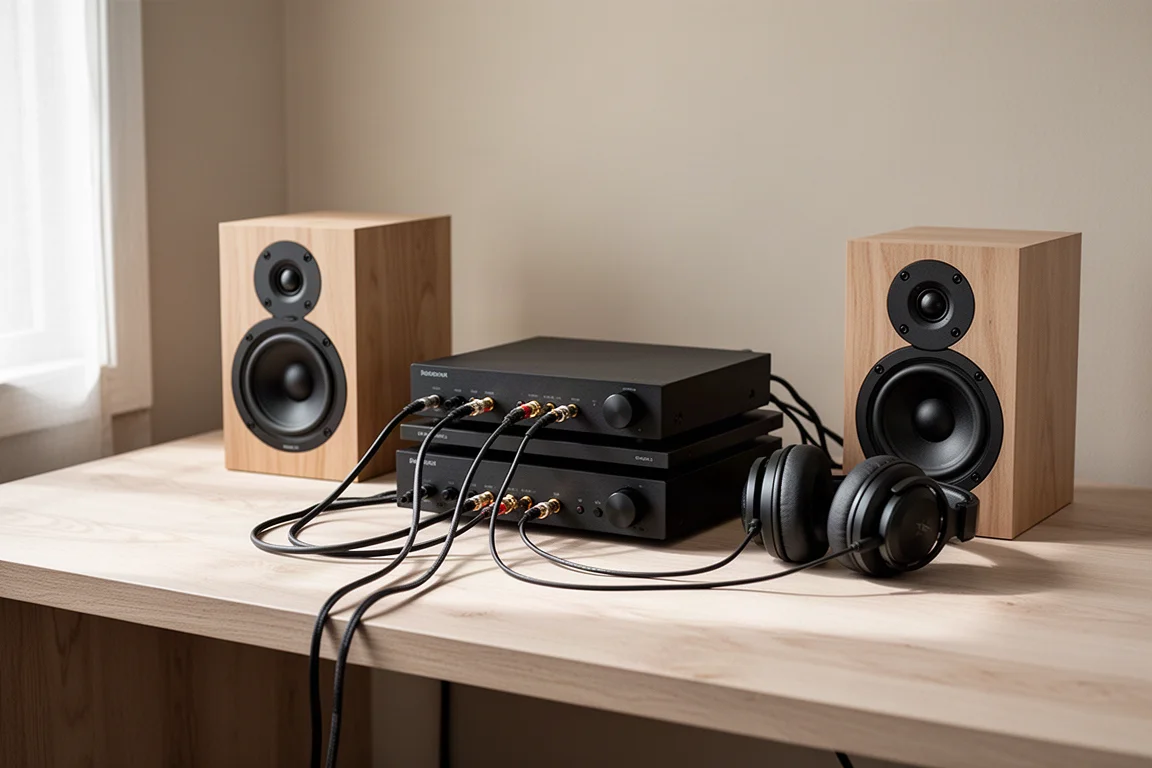
Because there is no amplification stage inside, the P4 is best understood as the control centre of a small system rather than a complete one. Everything downstream stays your choice, which is precisely the point.
Who This Product Is For
The P4 makes the most sense for listeners who have collected more than one analog source and have run out of places to plug them in. A turntable, a standalone DAC and a small CD player can all stay connected at the same time, with input switching handled by a single button on the front or by the included remote.
It is also a natural fit for anyone building a very small desktop system, or for replacing a soundbar with proper stereo components. The footprint is compact enough to sit on a desk or tuck into a shelf, and the case dimensions line up closely with the Fosi Audio V3 mono amplifiers, so the two can be stacked as a matched set.
It is worth being clear about what it is not. If you want one box that does everything, the P4 is not that product. It is aimed at listeners who either already own a power amplifier or plan to add one, and who value having several inputs available at once.
Main Strengths
The headline feature is the input count. Three single-ended analog inputs sit on the back, which is unusual at this price and unusual for the compact amplifier category in general. Alongside them you get one single-ended RCA output and a small 3.5 mm preamp output intended for a powered subwoofer, so a two-channel setup can be extended with bass support without an extra splitter.
Tone controls are the second major addition. Bass and treble knobs live on the front panel, each with a detent at the twelve o’clock position so you always know where neutral is, and a bypass switch on the rear panel takes them out of the signal path entirely when you want the cleanest possible route.
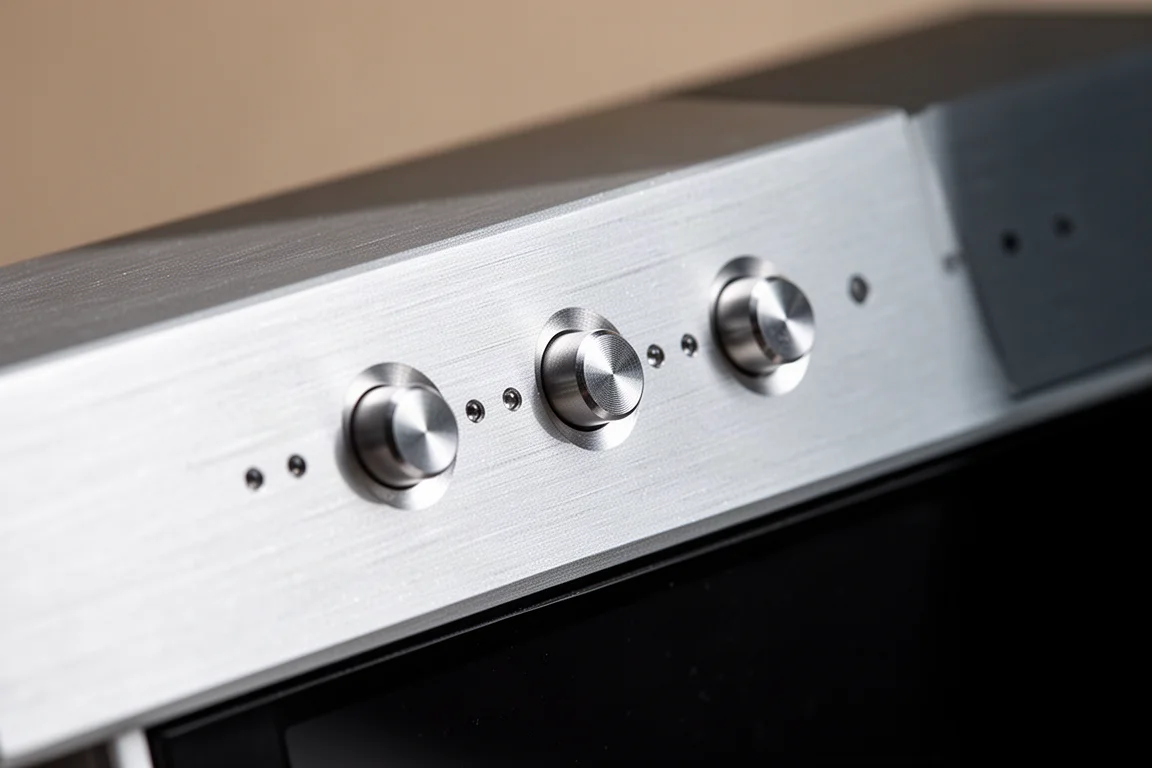
Volume is handled by a motorised potentiometer, which means the knob physically rotates when you adjust level from the remote. Many listeners consider a motorised pot preferable to a purely digital volume control, and the remote also handles input switching, so the unit can be operated entirely from across the room.
Three gain levels on the rear panel let you match the P4 to amplifiers of different sensitivities, and the op amp is replaceable, which opens up a straightforward upgrade path later. Build quality is solid, the knobs feel good in the hand, and the 12 volt DC input accepts an optional linear power supply if you want to go further.
Things to Consider Before Buying
The most notable omission is a trigger output. Without one, the P4 cannot switch on a connected power amplifier automatically when it wakes up. Some amplifiers, including the Fosi Audio V3 monos, use signal sensing and will power up on their own, and plenty of owners simply leave their amplifiers on, but the feature would have been a welcome addition.
Tone controls are front panel only. Bass and treble cannot be adjusted from the remote, so any change means walking over to the unit. The bypass switch on the back is also dedicated to the tone controls rather than acting as a full signal bypass.
It is also worth setting expectations on the treble adjustment. It works and does what it says, lifting high frequencies so they sound brighter, but the range feels modest rather than dramatic. Bass adjustment is more immediately audible.
Finally, remember that this is a preamp only. There is no amplification inside, so it cannot drive passive speakers by itself. If you connect it to an amplifier that already has its own volume control, you will be controlling level on the P4 instead of on that amplifier, which is a workable arrangement but worth knowing in advance.
Setup, Connectivity, and Upgrade Path
The rear panel is where the P4 justifies its price. Three RCA inputs, one RCA output, a 3.5 mm subwoofer output, a gain selector with three positions, the tone control bypass switch and a 12 volt DC input all fit into a very small space.
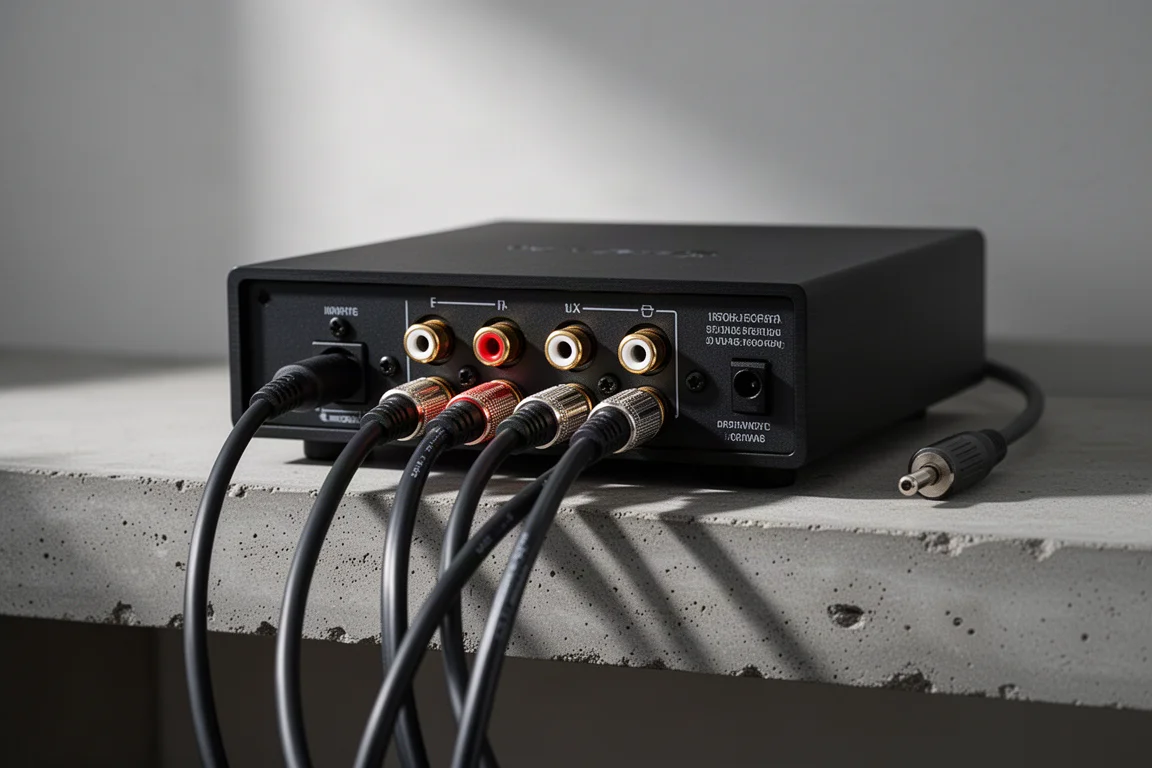
A wall adapter is included and is perfectly adequate for getting started, but the 12 volt input is the more interesting detail. It means the P4 can be paired with an external linear power supply later, which is a common and well-established upgrade for this class of equipment. Swapping the op amp is the other obvious first step, and it is the change most owners would likely make before anything else.
On the source side, the P4 accepts whatever you feed it. A standalone DAC, a phono stage and a compact CD player can all sit on the inputs simultaneously, and nothing about the signal path adds colour to the sound unless the tone controls are engaged. The remote can also control the Fosi Audio ZD3 DAC, which is a useful convenience if you already own one.
Buying Advice
At $99.99, with a 25 percent coupon that has brought the effective price closer to $75, the P4 is difficult to argue with. Three analog inputs, defeatable tone controls, a subwoofer output, a remote control and a motorised volume pot in one small chassis is a combination that simply has not been available at this price point before.
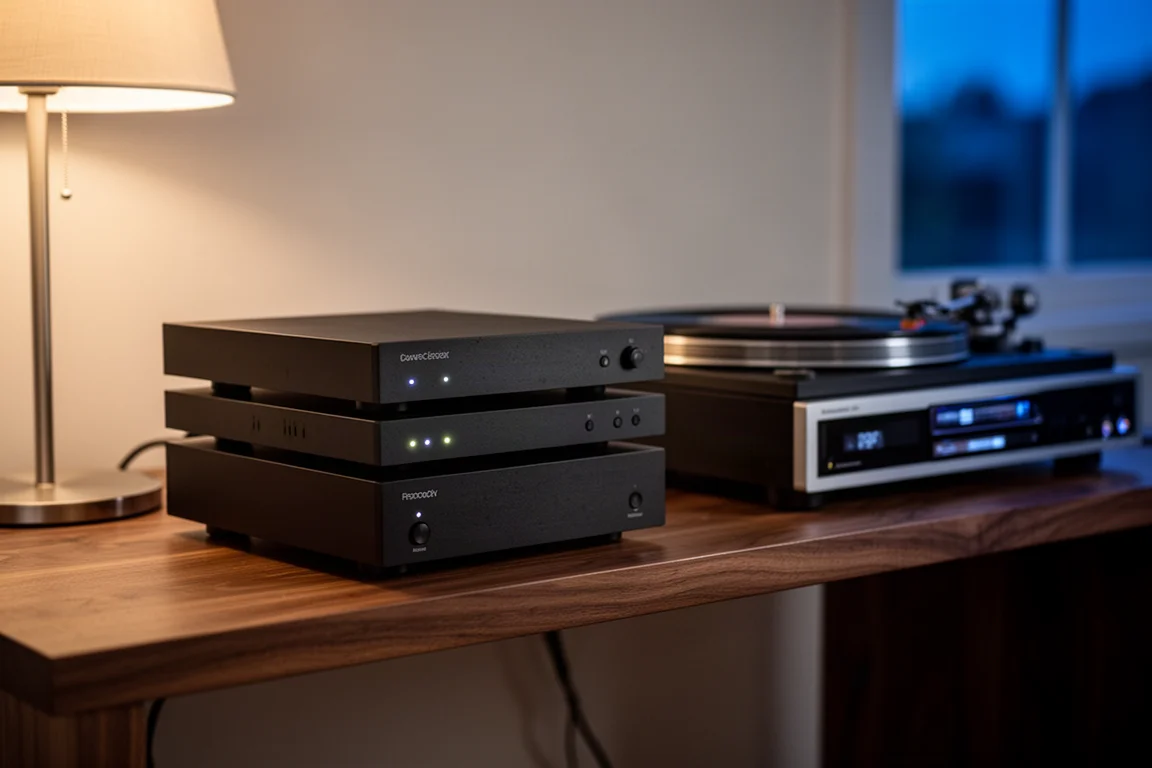
If your budget stretches further, a larger alternative exists. The Schiit Saga has historically been the most affordable preamp worth recommending, priced under $300, and it offers two additional analog inputs, two single-ended RCA outputs and its own gain settings. What it does not offer is tone controls. If you have closer to $300 to spend and do not need tone shaping, that is the more expansive option. If you have around $100, the P4 is the one to look at.
The natural partner for the P4 is the Fosi Audio V3 mono pair, which share a very similar footprint and stack neatly. Buyers with a power amplifier that already has volume control should also factor in that level will be managed on the P4.
Conclusion
The P4 answers a request that has been circulating in the compact audio world for years: a simple, solid-state preamp with multiple analog inputs, a remote and a real subwoofer output. It arrives without tubes, without unnecessary complexity, and without a premium price.
The compromises are real but narrow. There is no trigger output, the tone controls stay on the front panel, and the treble range is gentle rather than dramatic. Against that, you get clean and clear sound, a genuinely useful feature set, a replaceable op amp and a 12 volt input that leaves room to upgrade. For anyone assembling a small desktop system or finally wanting to connect three sources at once, it is an easy recommendation.
Product link
View more details for Fosi Audio P4
This product is mentioned in the review. Check the specifications, options, and compatibility before buying.
View more details for Fosi Audio P4Further reading
Related Reviews
Audio Components
Advance Paris ACD Apex vs Onkyo Icon C-30: Two CD Players, Two Very Different Paths
A $1,400 tube-equipped CD player against a $400 deck. Where the extra money goes, what you actually hear, and which one suits your system.
Hi-Fi Preamplifiers
Advance Paris XP700 Review: A Purist Two-Channel Preamplifier
A close look at the Advance Paris XP700, a $1,999 balanced preamplifier with a flexible phono stage, a Burr Brown DAC, and a deep set of sound-shaping options.
Audio Amplifiers
AGD Audion Mark III Review: A Compact Class D Amplifier With Tube-Like Musicality
A gallium nitride Class D amplifier that delivers tube-like midrange warmth, serious bass grip, and a modular upgrade path in a very small chassis.