Hi-Fi Amplifiers
Fosi Audio DA2120A Review: A Compact DAC Amp With Real Versatility
A compact integrated amplifier and DAC with five inputs, a subwoofer output, and flexible tone controls, priced around $125.
Introduction
The Fosi Audio DA2120A is a compact integrated amplifier with a built-in DAC, aimed squarely at the entry end of desktop hi-fi. It typically lists around $140, but it is frequently discounted to roughly $125, and coupons appear often enough that the real street price tends to sit below the list figure. For that outlay you get five input options, a subwoofer output, a remote control, and a tuning section that goes well beyond a single volume knob.
What makes it interesting is not any one specification. It is the combination: a 24-bit/192kHz DAC, a claimed 50 watts per channel, and enough tone shaping to adapt the sound to different speakers and different rooms. That package is genuinely unusual at this price point, and it is the main reason this amplifier deserves a closer look.
Who This Amplifier Is For
This is an amplifier for small systems. A kitchen, a den, a home office, or a kid’s room all suit it, and it also works as a replacement for a soundbar when you would rather use proper stereo speakers. It is an easy entry point for a first compact separates setup, especially if you want several sources connected at once without adding a separate DAC.
The main thing to check is speaker efficiency. The DA2120A drove a pair of 86 dB bookshelf speakers comfortably into the high 80s dB sound pressure range, which is loud enough that you would not want to listen for long at that level. If your speakers are around 86 dB or higher in efficiency and you are not chasing deafening volume, this amplifier is a sensible match.
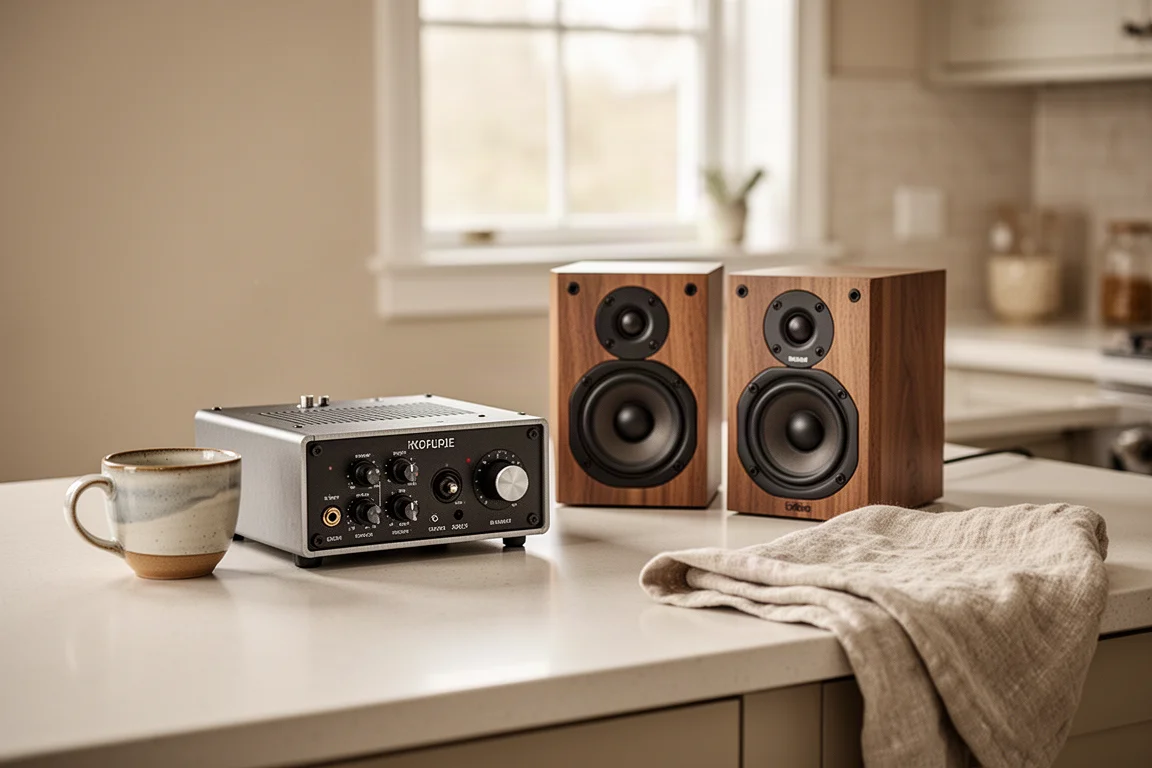
It is also a good fit for listeners who like to adjust the sound rather than accept it as delivered. Between the tone controls, the loudness options, and the preset EQ curves, there is more room to tailor the presentation than most compact amplifiers allow, and that flexibility is what makes the DA2120A feel less like a compromise and more like a deliberate piece of kit.
Design and Connectivity
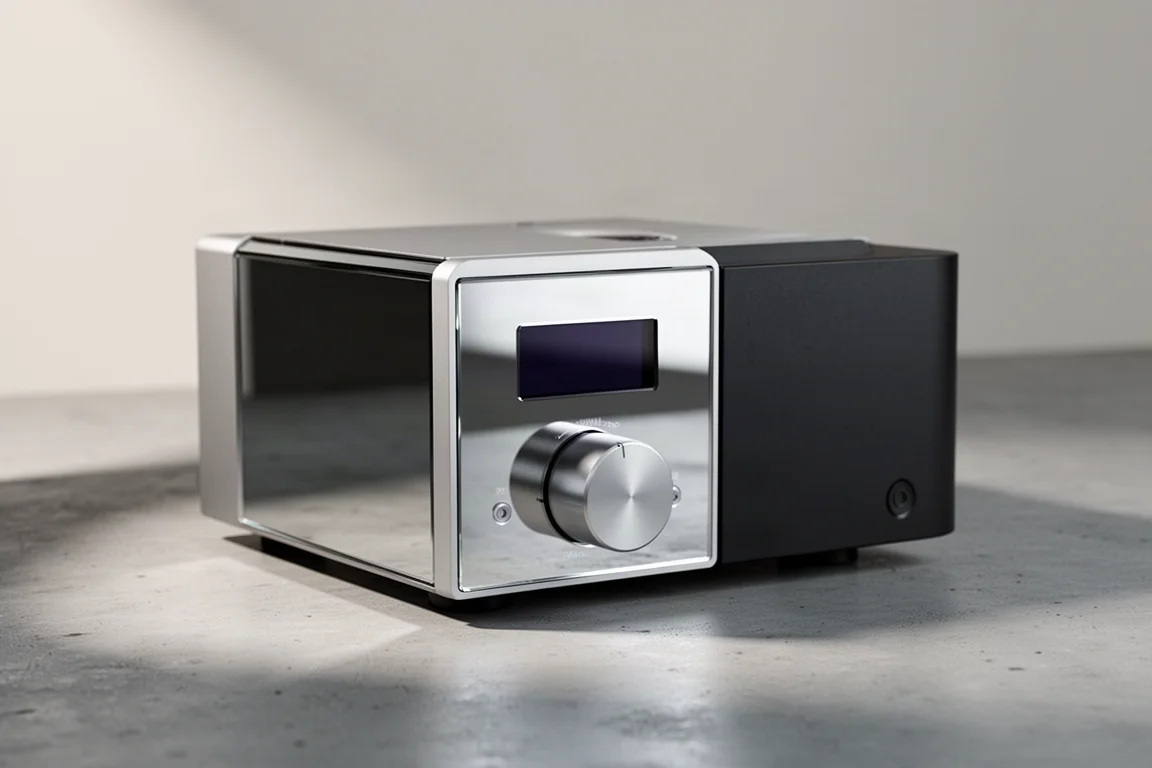
The front panel uses a mirrored finish, which is a matter of taste rather than a functional choice, and it holds a small display window plus a large volume knob. The knob is plastic, though it feels reasonably solid in use. The front face is secured with hex screws, which suggests the amplifier is not really designed for owners to open it up and start swapping components inside.
Around the back the layout is generous. There is a Bluetooth antenna, a 3.5mm analog input, a full-size USB port, a full-size optical input, and a coaxial input, followed by a subwoofer output, the speaker outputs, and the DC power input. The unit accepts 12 to 24 volts and ships with a 24 volt, 4.5 amp power supply, which is enough to support the claimed power rating.
The supplied remote covers the essentials and a bit more. Bass and treble sit at the top, alongside loudness, EQ, and a reset function that returns settings to neutral. Volume sits lower on the remote, with display off, mute, and input selection nearby. The volume position takes a little getting used to, because many remotes put it in the middle, but the tone controls are quick to reach once you adjust.
Main Strengths
The headline specification is a claimed 50 watts per channel into 4 ohms at 0.01 percent total harmonic distortion, and the included power supply is consistent with that figure. The amplifier is built around a Texas Instruments 5532 amplifier chipset, and the DAC section runs at 24-bit/192kHz. When fed from a streamer over optical, the displayed bit and sample rate changed with each track, which confirms the DAC is following the incoming signal rather than resampling everything to a fixed rate.
In practice the power claim holds up well. The DA2120A drove an 86 dB bookshelf speaker into the high 80s dB range without strain, and it also handled a second, similarly demanding pair of speakers with only a small treble adjustment. A subwoofer output adds another layer of usefulness, letting a small system reach lower without relying on the main speakers.
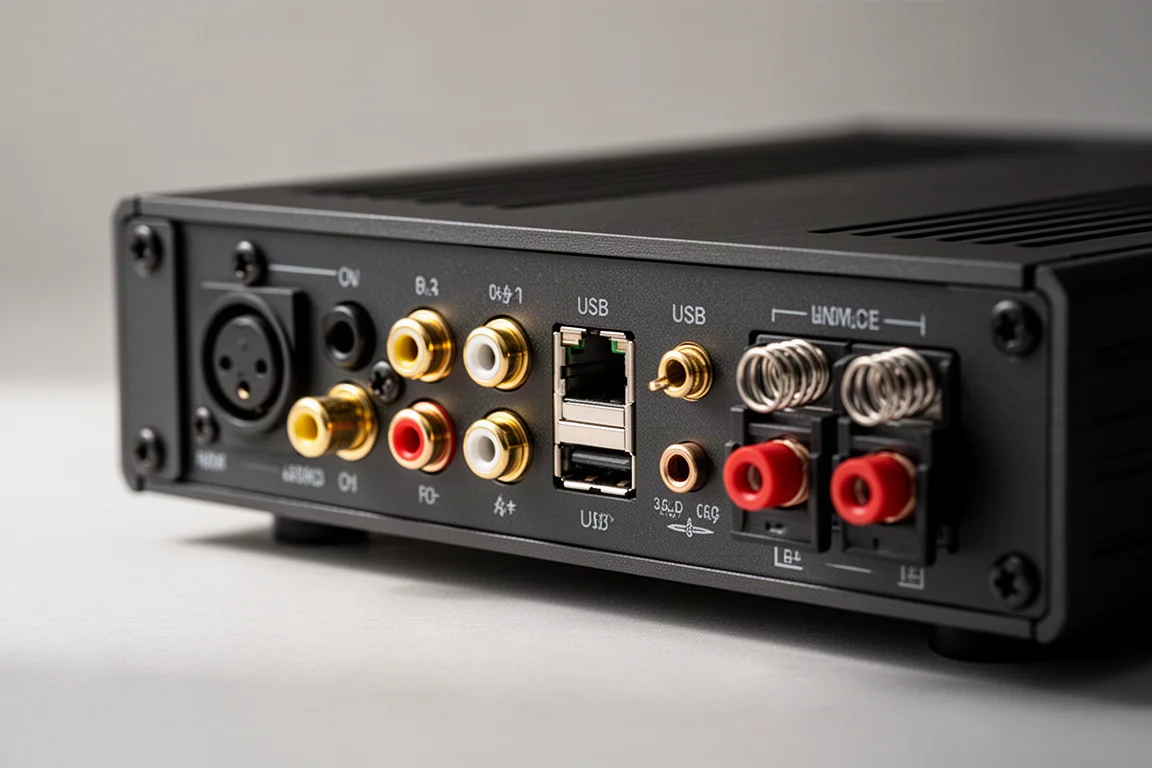
The value of that input set should not be underestimated. A single compact box that accepts Bluetooth, analog, USB, optical, and coaxial sources removes the need for an external DAC in most desktop setups, and the subwoofer output means the same box can anchor a small two-channel system with a dedicated low-frequency unit.
EQ, Loudness, and Tone Controls
There are five EQ presets on board, including rock, soft rock, jazz, and classical. The soft rock setting is the most balanced of the group and the easiest to live with. Jazz and classical are best left alone, and at least one of the remaining presets leans harsh.
Two loudness settings add low-frequency weight in different ways. The first is punchy and works well at low listening volumes, which is exactly where a compact amplifier usually needs help. The second pushes some of that emphasis into the lower mids and remains usable. Because loudness can be combined with the bass and treble controls, you can dial in the balance you want rather than picking a single fixed curve, and a reset option takes everything back to neutral when you want a clean starting point.
Sound Quality Notes
Flat, the DA2120A sounds good. The top end has a slight grain to it, a little unnatural rather than sharp or sibilant, and pulling the treble down by one or two steps smoothed that out on both pairs of speakers used with it. That single adjustment was enough to make long listening sessions comfortable. Bluetooth is acceptable but not the strongest input here, so optical or USB is the better route if your source allows it.
Against compact rivals, the picture is interesting. A competing compact DAC amplifier claims more power, but the Fosi Audio rating looks the more conservative of the two, and the two units trade blows rather than one clearly dominating. Another popular compact amplifier in this class remains a solid option as well. Step up to a full-size integrated amplifier and you do get more power, but the difference is smaller than the price gap would suggest.
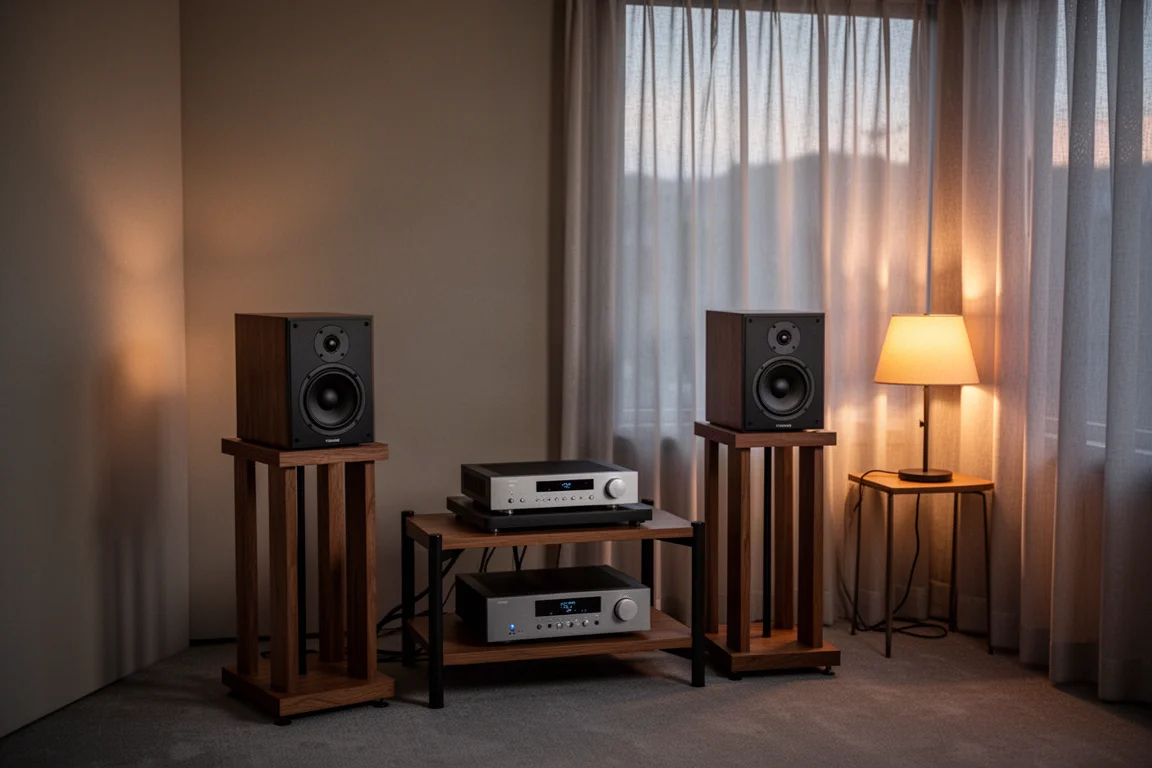
Where this amplifier wins is at ordinary listening levels in ordinary rooms. Most of the graininess only becomes obvious when you go looking for it, and the tone controls are effective enough to compensate. Listeners who mainly want background music, spoken word, or relaxed evening sessions will likely never find it objectionable.
Things to Consider Before Buying
The top end is the main compromise. It is slightly grainy, and a couple of the EQ presets sound harsh enough that they are best avoided. Bluetooth performance is average, so plan on a wired digital connection if quality matters to you.
Physically, the volume knob is plastic and the mirrored front panel will not appeal to everyone. The hex screws on the front face suggest the internals are not intended for user modification, and it is not clear whether the op amps can be swapped at all, so buy it for what it is rather than as a platform for upgrades.
Finally, speaker matching matters. With a low-efficiency speaker, this amplifier will run out of headroom sooner than a full-size integrated unit. With an 86 dB or higher speaker, and reasonable listening levels, it is a comfortable match.
Buying Advice
At around $125 with coupons, and a list price that is usually closer to $140, the DA2120A is one of the stronger value propositions in compact amplification. It is sold through Amazon, so it is worth checking for an active coupon before you complete a purchase, since the discount appears regularly.
Pairing it with a compact network streamer at around $75 creates a complete system for roughly $200, and that combination covers streaming, a clean optical path into the DAC, and enough power for most small rooms. If you already own efficient bookshelf speakers, this is one of the simplest ways to build a capable second system or to move away from a soundbar.
For a kitchen, den, or starter setup, the practical decision is straightforward. Match the amplifier to speakers of around 86 dB efficiency or higher, feed it digitally where possible, and use the loudness setting at low volumes. That configuration delivers far more than the price suggests, and it keeps the total system cost low enough that upgrading later is not painful.
Conclusion
The Fosi Audio DA2120A is not flawless. Its top end carries a touch of grain, its Bluetooth input is only average, and some of its EQ presets are best ignored. Set against those limitations is a genuinely useful feature set: five inputs, a 24-bit/192kHz DAC, a subwoofer output, a remote, and a tuning section that lets you shape the sound to your room.
For around $125, that combination is hard to argue with, particularly if your speakers are reasonably efficient and you are not trying to fill a large room at high volume. It is a confident recommendation for a compact kitchen, den, office, or first separates system, and a sensible alternative for anyone considering replacing a soundbar with real speakers.
Product link
View more details for Fosi Audio DA2120A
This product is mentioned in the review. Check the specifications, options, and compatibility before buying.
View more details for Fosi Audio DA2120AFurther reading
Related Reviews
Hi-Fi Amplifiers
Accuphase E-280 Review: Entry-Level Accuphase With Flagship Attention to Detail
A close look at the Accuphase E-280 integrated amplifier, covering its champagne build, AAVA volume control, sound quality, and the speakers and sources that suit it best.
Hi-Fi Amplifiers
Advance Paris A10 Classic vs Yamaha A-S301: Two Integrated Amplifiers Compared
A practical comparison of a $350 integrated amplifier and a $2,500 reference model, covering the differences that matter and the ones that do not.
Hi-Fi Amplifiers
Affordable Chinese Amplifiers Worth Buying: Five Budget Hi-Fi Amps Compared
A practical look at five affordable amplifiers, what each one does well, and the trade-offs to weigh before you buy.