Hi-Fi Amplifiers
Fosi Audio BT20A Max vs Aiyima A20: Compact Class D Amplifiers Compared
A close look at two compact Class D amplifier paths: the feature-rich Fosi Audio BT20A Max and the Aiyima A20 monoblock pair.
Introduction
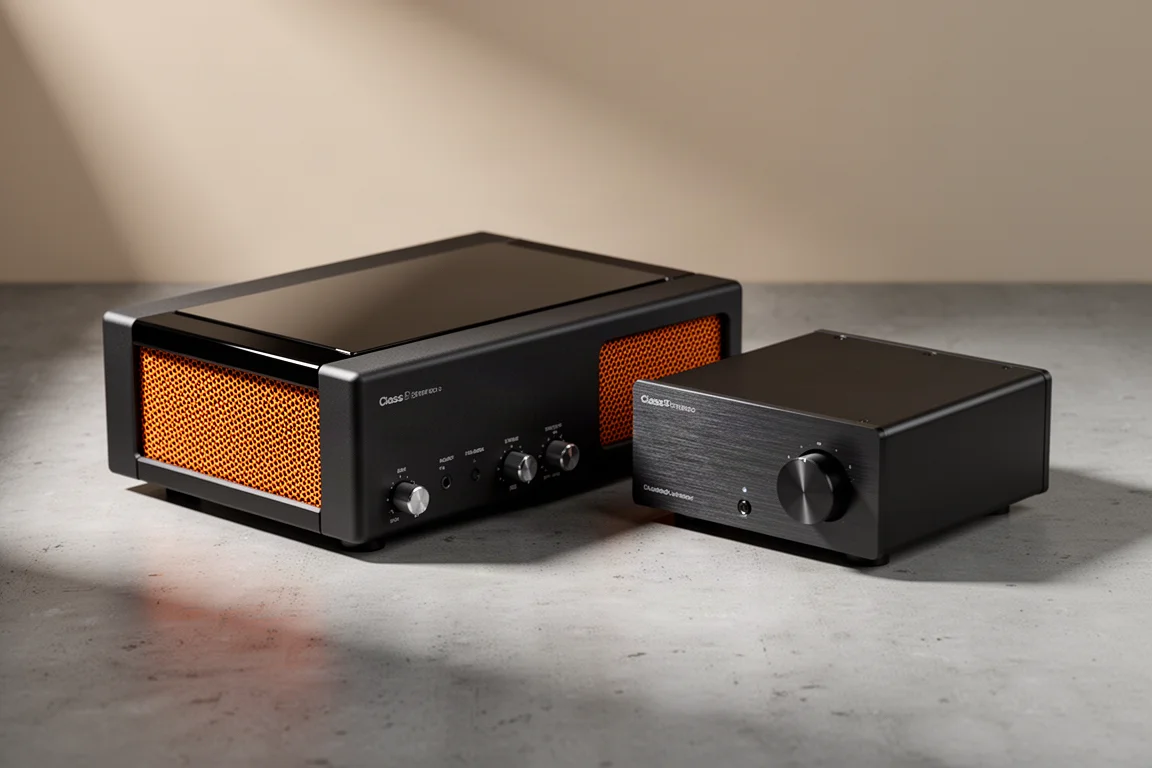
Fosi Audio has spent years refining a compact, affordable Class D amplifier formula, and the BT20A Max is the most feature-dense two-channel version of it so far at $250. Sitting alongside it in the same price territory is a very different answer to the same question: the Aiyima A20, sold as a pair of monoblocks that together cost around $300.
Both are small, both use switching amplifier designs, and both can drive real bookshelf and floorstanding speakers from a desk or a media console. The similarities mostly end there. This comparison walks through what each option does well, where each one asks for compromises, and which type of system each one suits.
Design and Build: A Step Up for Fosi Audio
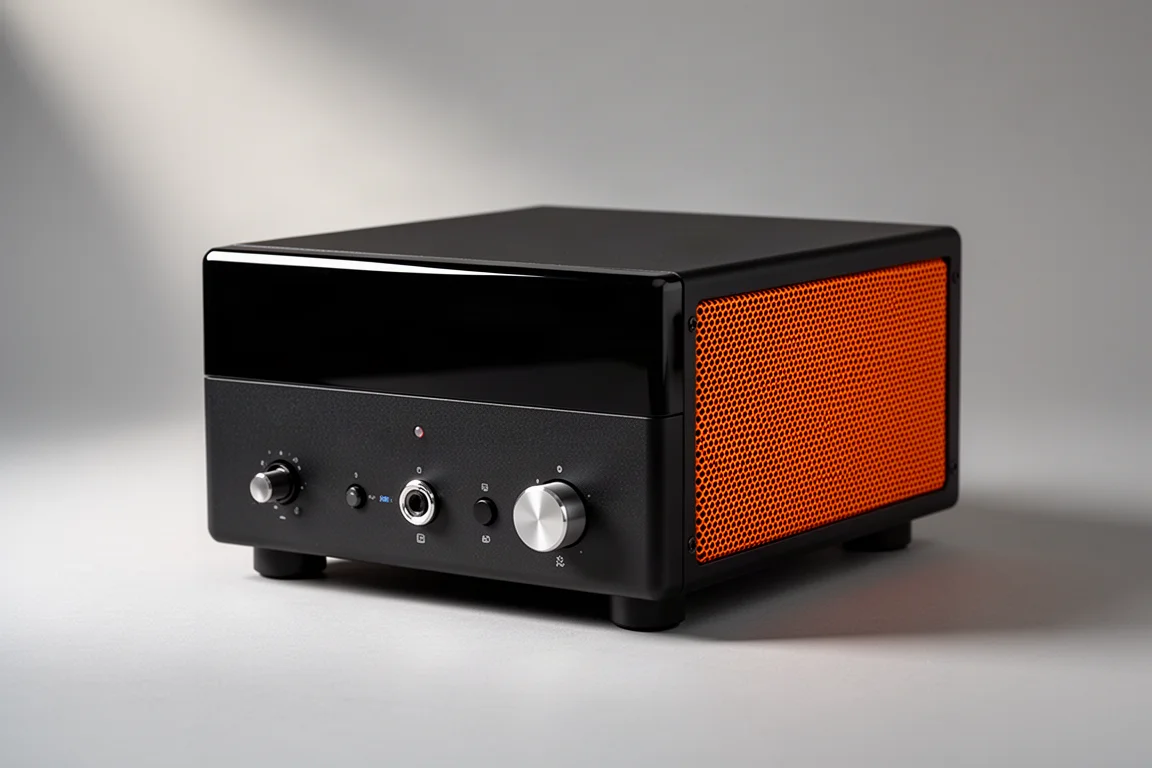
The BT20A Max is a clear step up in physical execution compared with earlier Fosi Audio models. The chassis feels substantial, with a matte black lower front panel and a glossy accent across the top, and the orange mesh ventilation on the side panels carries through to the top of the case. A small “Max” marking on the front signals that this is the flagship version of the design.
Button feel has improved noticeably as well. The front controls have a more solid, deliberate action than earlier generations, and even the rubber feet underneath carry a subtle brand marking.
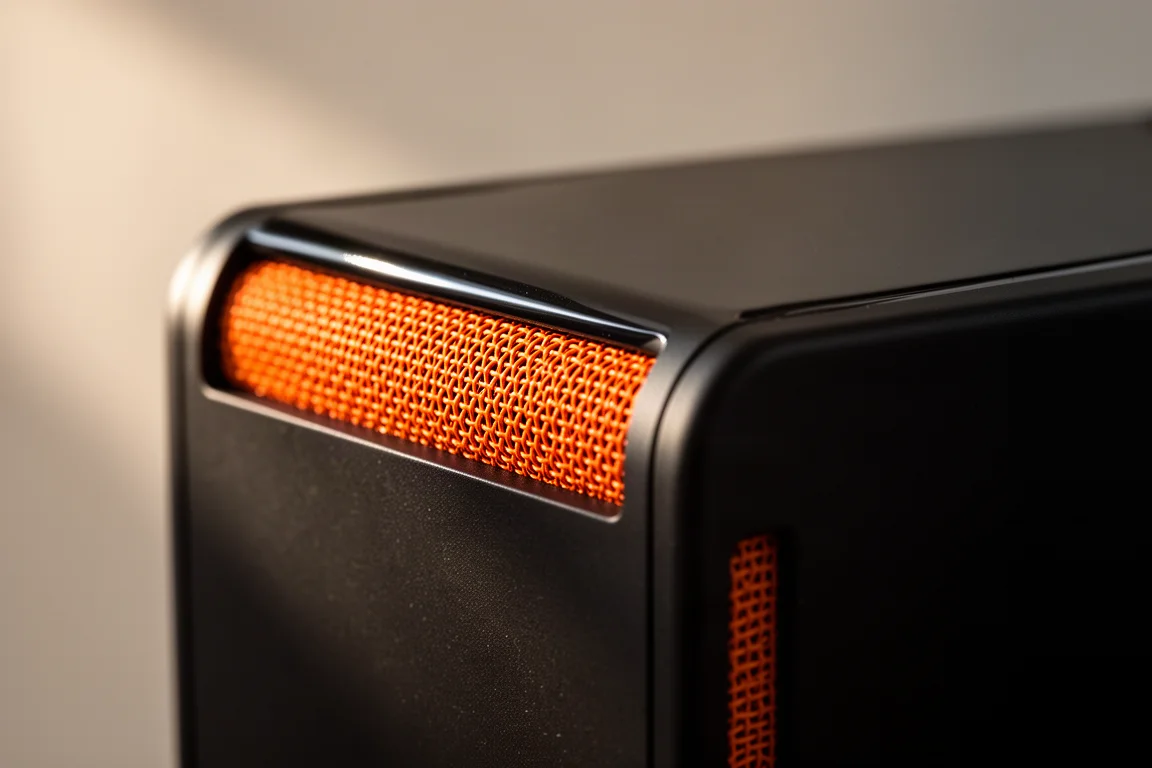
The trade-off hidden in that thicker, more premium-looking chassis is airflow. There are no vents on the underside of the case, so ventilation is limited to the side panels and the top. An internal fan helps move air through the enclosure, which suggests the design runs warm by nature rather than by accident.
Inputs, Bluetooth, and Everyday Connectivity
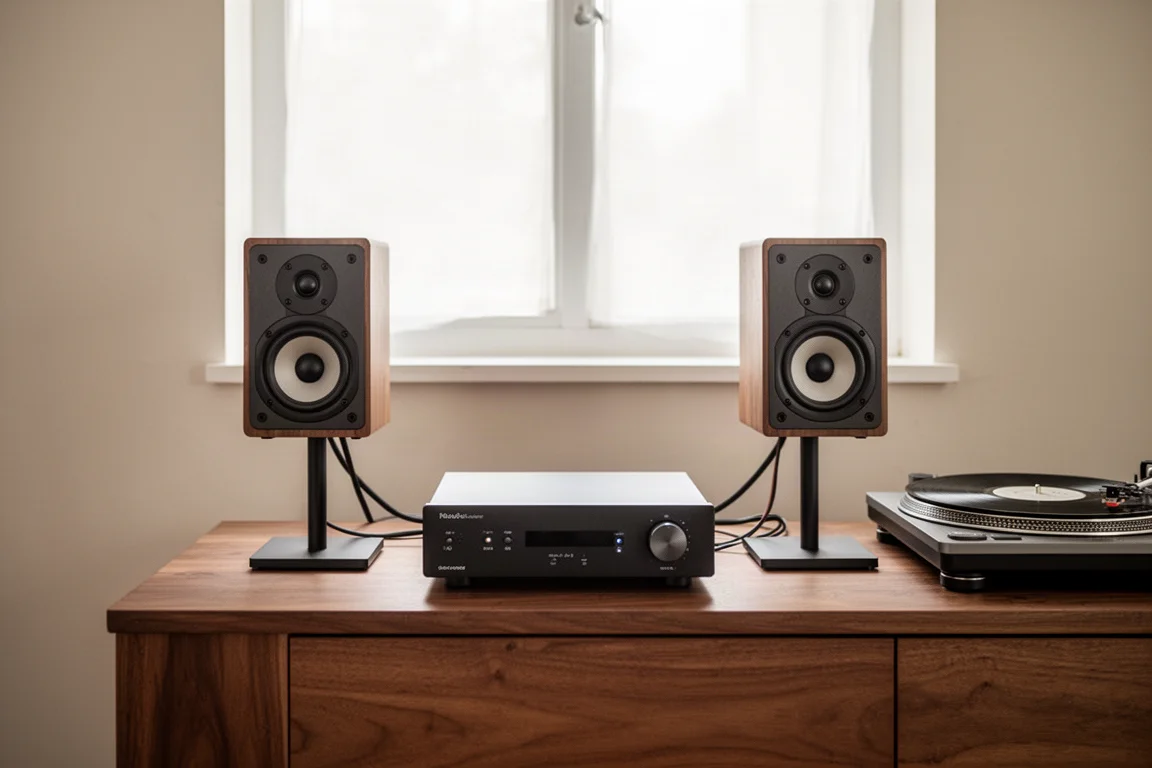
Feature count is where the BT20A Max separates itself. A front button cycles between Bluetooth and two separate RCA inputs, which means a turntable with a built-in phono preamp, a DAC, and a CD player can all stay connected at once.
Tone controls for bass and treble sit on the front panel and can be switched out of the signal path entirely with a switch on the rear. There is also a defeatable high-pass filter fixed at 80 Hz, useful for keeping low bass out of small bookshelf speakers. A 12V trigger input lets the amplifier power on automatically when a connected source does.
Volume is handled by a motorized potentiometer rather than a purely digital control, and a remote control is included. On the Bluetooth side, the documentation describes the connection as lossless, which is not a standard category for Bluetooth audio. The amplifier does support high-quality codecs including LDAC, while Apple devices will fall back to AAC.
By comparison, the Aiyima A20 offers none of this. No Bluetooth, no tone controls, and no input switching beyond whatever you connect to it.
Sound Notes: Where the BT20A Max Lands
With tone controls bypassed, the BT20A Max leans midrange-forward. Compared directly with the Aiyima A20 monoblocks, it sounds less dynamic, and vocals sit further forward in the mix. There is also some sibilance in the 4 kHz to 6 kHz region, the range where “s” and “ch” sounds can turn sharp.
Adding a little bass and treble takes the edge off, but the forward midrange character remains. Listeners who prefer a warmer, more laid-back presentation may find the balance harder to live with than the feature list suggests.
Power is not the limiting factor. The amplifier is built around a Texas Instruments 3255 chipset and pairs with an external 48V 5A supply, which works out to roughly 240 W on paper when voltage is multiplied by current. In practice it drove a range of speakers without complaint, including Klipsch Forte floorstanders, Sony SSCS5 Mark II bookshelf models, and Emotiva XP2 bookshelf speakers. Even with two channels sharing a single power supply, low-impedance or heavily bass-heavy speakers were not a problem.
Heat, Fan Behaviour, and Long-Term Use
Heat is the more serious concern. Left powered on at idle with nothing playing, the BT20A Max still becomes noticeably warm. That is unusual for a Class D design, which is normally prized for efficiency and low waste heat, and it is warm enough that it would not be surprising to see it run hotter than some Class AB amplifiers.
The internal fan and the absence of underside ventilation point to a chassis that is doing part of the thermal work itself. Whether that affects long-term output when the amplifier is pushed hard for extended periods is difficult to say, but the behaviour is worth planning around. Give the amplifier open space on a shelf rather than stacking it, and keep it out of enclosed cabinets.
Market feedback lines up with that observation. The BT20A Max sells through Amazon, B&H, and Best Buy, and its Amazon rating sits around 3.5 stars, with at least one buyer specifically noting how hot the unit runs.
Aiyima A20: The Monoblock Alternative
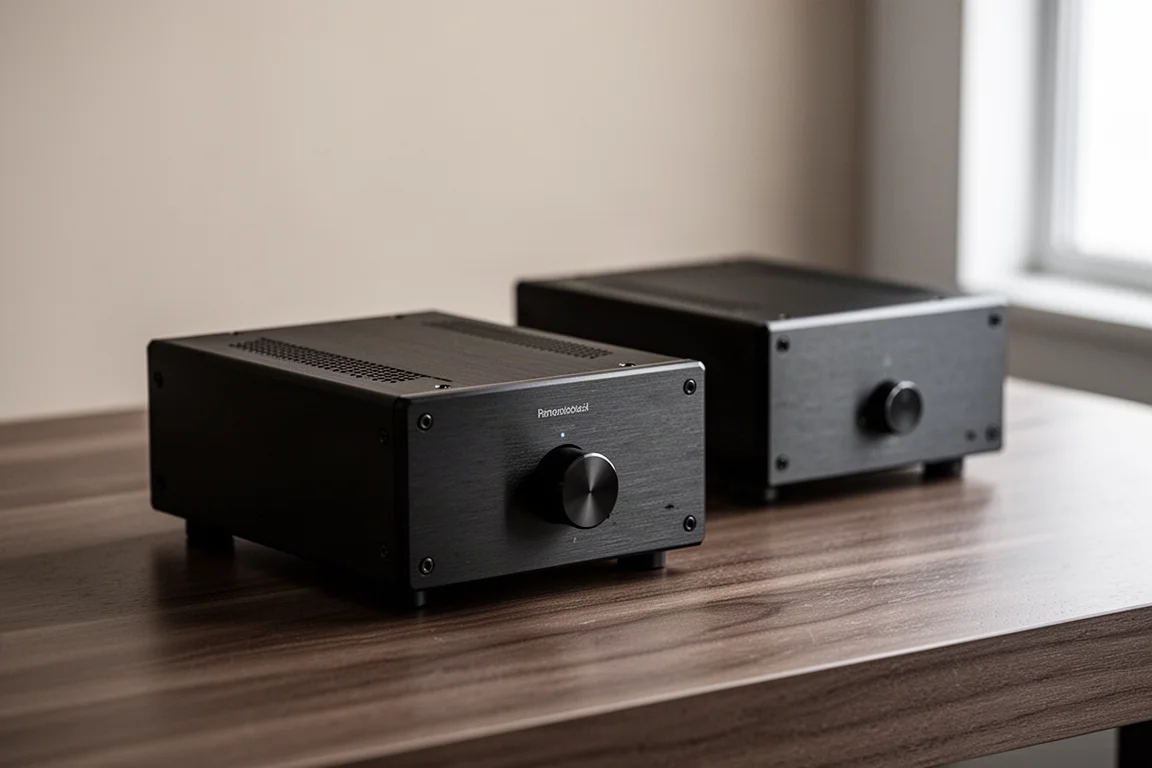
The Aiyima A20 takes the opposite approach. It is sold as a pair of monoblock amplifiers, and each unit has its own 48V 5A power supply. Two monoblocks together cost around $300, roughly $50 more than the Fosi Audio.
What you give up is convenience. There is no Bluetooth, no tone controls, and no front-panel input switching. What you get instead is dedicated power delivery per channel, and by direct comparison the A20 pair sounds considerably more dynamic and more engaging. Vocals sit back where they belong relative to the rest of the mix, and the forward, slightly sharp character of the BT20A Max is absent.
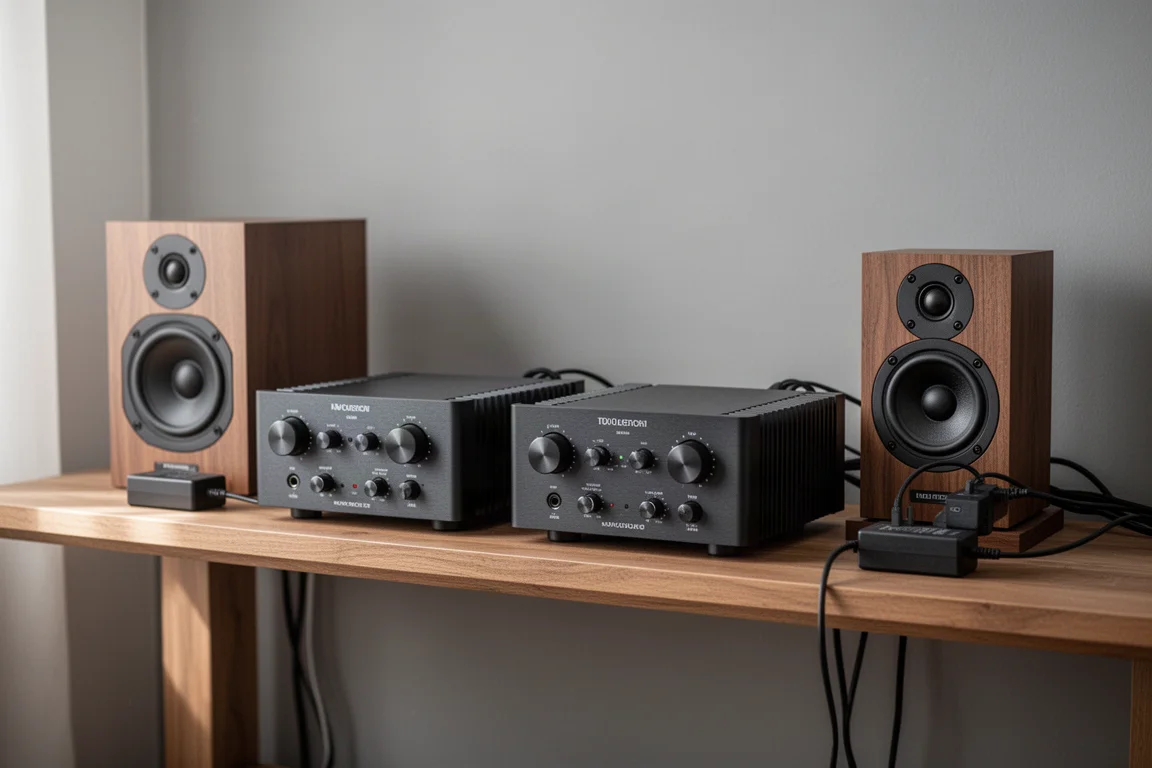
For listeners who already have a DAC or a streamer feeding their system, the missing features matter less. The A20 pair is a straightforward amplification solution: two boxes, two power supplies, and a sound that stands up well against the more feature-heavy alternative.
Price and Value Comparison
At $250, the BT20A Max is a meaningful jump from earlier BT20A models, which arrived around $100. The extra spend buys Bluetooth, defeatable tone controls, two RCA inputs, a 12V trigger, a remote control, and a motorized volume pot. On paper, that is a lot of functionality for the money.
The Aiyima A20 pair at roughly $300 spends its budget differently, on a separate power supply for each channel and a simpler signal path. Neither approach is automatically better. It depends on whether your system needs the extra inputs and wireless convenience, or whether sound quality and dynamics matter more than connectivity.
One practical note on Bluetooth: if wireless playback is the main reason you are considering the BT20A Max, a compact network streamer is often a better route. Many affordable streamers include Bluetooth as well, while also supporting higher-resolution playback without the codec matching issues that come with phone-based Bluetooth.
Buying Advice: Matching an Amplifier to Your Speakers
The BT20A Max is most likely to satisfy listeners running speakers with a warm tonal balance or a dip through the midrange. Its forward presentation can complement that kind of speaker rather than fight it. Anyone with neutral or already forward-sounding speakers should expect the midrange emphasis and the sibilance around 4 kHz to 6 kHz to be audible.
The Aiyima A20 pair makes more sense for listeners who want dynamics first and do not need Bluetooth or tone controls. Two monoblocks, two power supplies, and a clean, engaging sound make it a strong fit for a desk or media console where a DAC or streamer handles the sources.
If Bluetooth is essential and the budget is firm, the earlier BT20A generation is worth a look at its lower price point. If you do choose the BT20A Max, plan for airflow: leave space around the chassis, keep it out of closed cabinets, and expect some warmth in normal use.
Conclusion
Both amplifiers are compact Class D designs that can drive real speakers, but they aim at different priorities. The Fosi Audio BT20A Max packs in connectivity and features, and it looks and feels better built than earlier models in the line. Its midrange-forward sound and its heat output during idle use are the two things to weigh carefully before buying.
The Aiyima A20 pair costs a little more and offers far less in the way of features, but it delivers the more convincing sound of the two. Match the amplifier to your speakers and your sources, and either option can work well.
Further reading
Related Reviews
Hi-Fi Amplifiers
Accuphase E-280 Review: Entry-Level Accuphase With Flagship Attention to Detail
A close look at the Accuphase E-280 integrated amplifier, covering its champagne build, AAVA volume control, sound quality, and the speakers and sources that suit it best.
Hi-Fi Amplifiers
Advance Paris A10 Classic vs Yamaha A-S301: Two Integrated Amplifiers Compared
A practical comparison of a $350 integrated amplifier and a $2,500 reference model, covering the differences that matter and the ones that do not.
Hi-Fi Amplifiers
Affordable Chinese Amplifiers Worth Buying: Five Budget Hi-Fi Amps Compared
A practical look at five affordable amplifiers, what each one does well, and the trade-offs to weigh before you buy.