Home Theater Speakers
Focal On Wall 301 and 302: Two Slim Wall Speakers Built for Home Theater and Music
A practical look at the two-model Focal On Wall 300 series, what the shared tweeter and flax driver technology delivers, and which model fits a given room and system.
Introduction
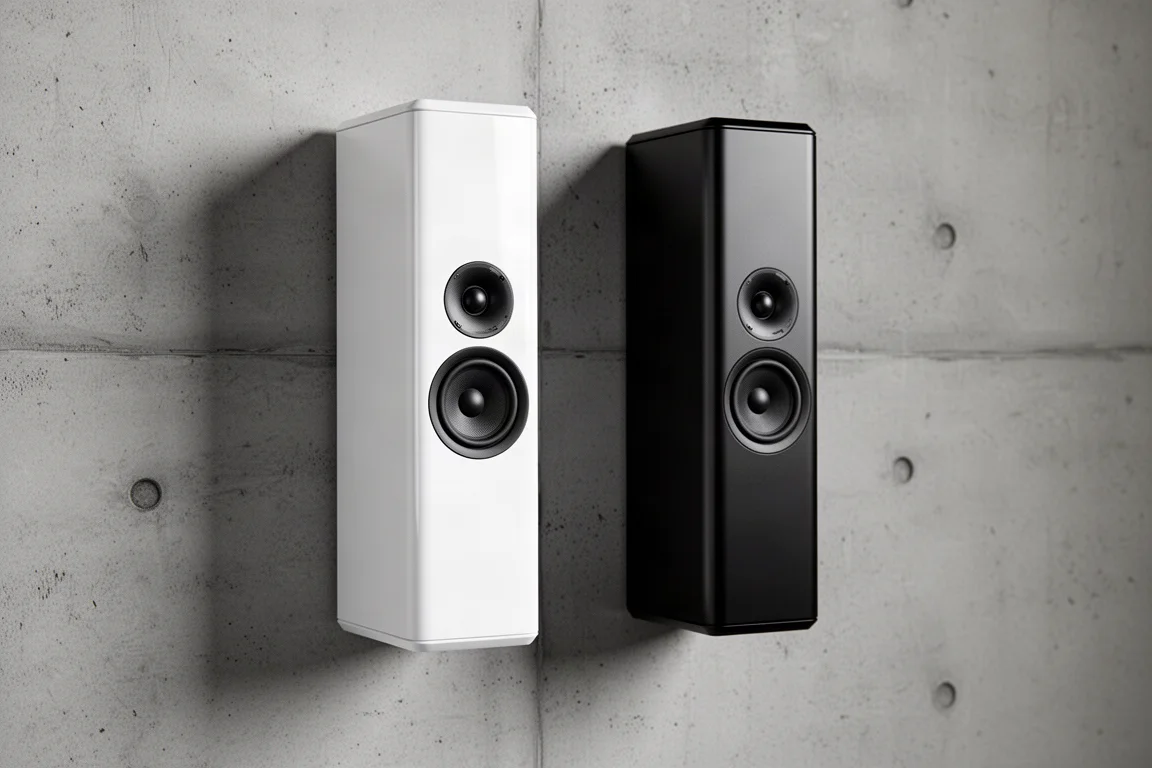
Focal builds six different lines of in-room loudspeakers, yet the 300 On Wall series has stayed largely under the radar. The series contains just two models, the Focal On Wall 301 and the Focal On Wall 302, and both are designed to be mounted on a wall. Either one can also be mounted to a floor stand built specifically for them.
That narrow focus is the point. These are slim speakers that can be mounted vertically or turned horizontally for use as a center channel, and they give listeners who want Focal sound a route into a high-channel-count, object-based surround system or a low-profile two-channel setup. The drivers are made at Focal’s factory in France, the fit and finish is typical Focal, and both models come in white gloss or satin black.
This guide covers what the two models share, where they genuinely differ, and which one makes more sense for a given room and system.
Shared Technology: Inverted Dome Tweeters and Flax Sandwich Drivers
Both models use the TNF inverted dome tweeter, a design Focal has refined for more than twenty years and a direct descendant of the tweeter used in the Utopia series. Because the dome is inverted, directionality is minimal, so the extended high-frequency detail stays intact well off axis.
Focal connects the inverted dome to its supports with Poron, a memory material developed for the Utopia line. In the critical 2 to 3 kHz region, that approach reduced distortion by a factor of three. A dedicated waveguide helps the tweeter hold an unusually flat response, within 0.5 dB across its operating range. In listening terms the top end comes across as smooth and easy rather than forward, with a light, delicate quality that makes fine detail feel present in the room.
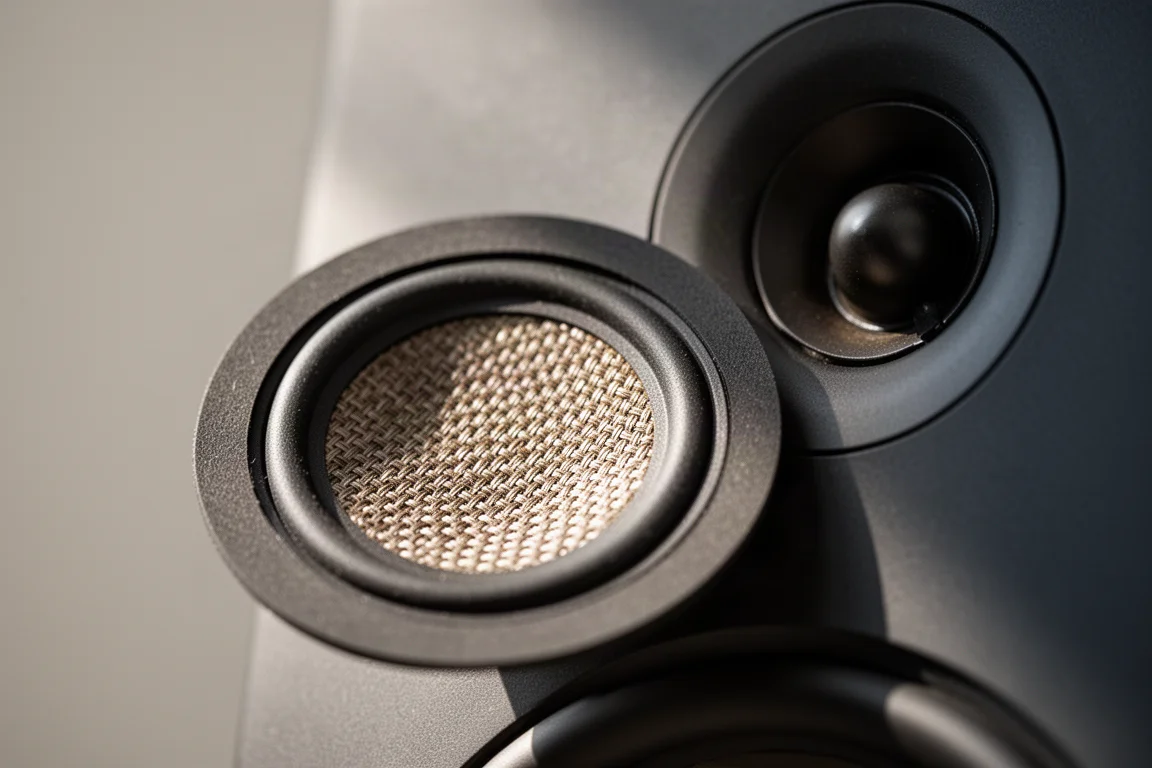
The mid-bass drivers use Focal’s flax sandwich cone, introduced in 2013. High-quality French flax fiber is sandwiched between two thin sheets of glass fiber. Flax is a hollow material, so it is light and has low elasticity, which helps the cone stay rigid while still damping well. Focal holds the patent on the technique, and the result across the 300 series is a fast, natural midrange without coloration.
Focal On Wall 301: Compact, Wall-Friendly, and Surprisingly Deep
The On Wall 301 stands 31.5 inches tall, about 6 inches wide and roughly 3.5 inches deep, with an angled top and bottom and a port at each end that helps deliver substantial bass response for a cabinet this size. The inverted dome tweeter is flanked by two 4-inch mid-bass drivers. The minus 3 dB point is 53 Hz, which is remarkable for a speaker of these dimensions, and sensitivity is 87 dB, placing it in the medium sensitivity range.
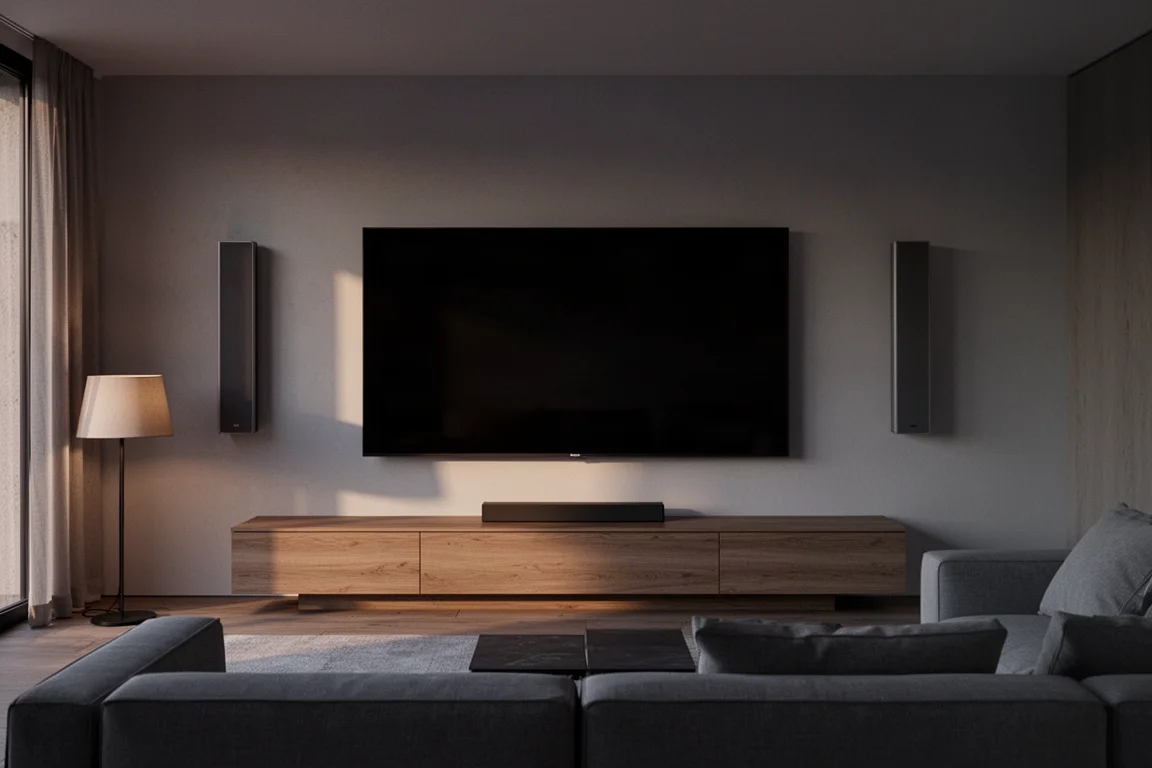
Its proportions are a practical advantage. A pair flanking a television lands at roughly the same height as many popular screen sizes, which makes for a tidy front stage without a large cabinet intruding into the room.
Focal On Wall 302: More Drivers and a Real Mid-Range Upgrade
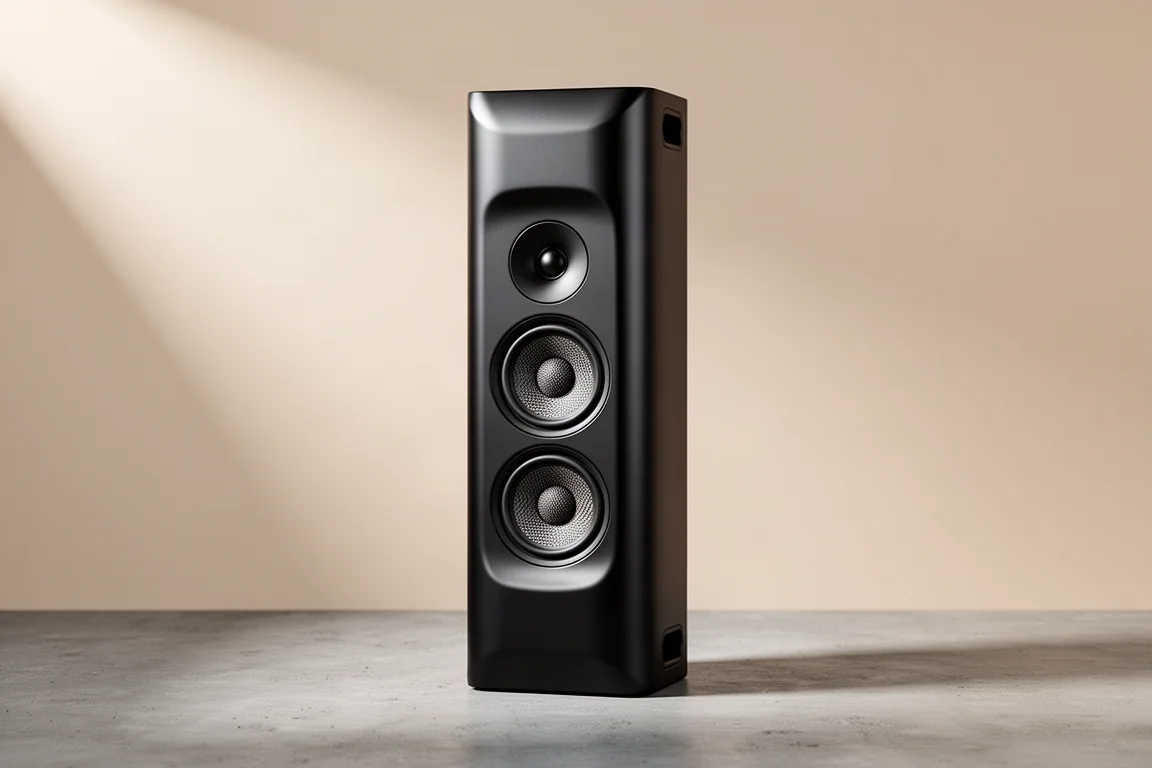
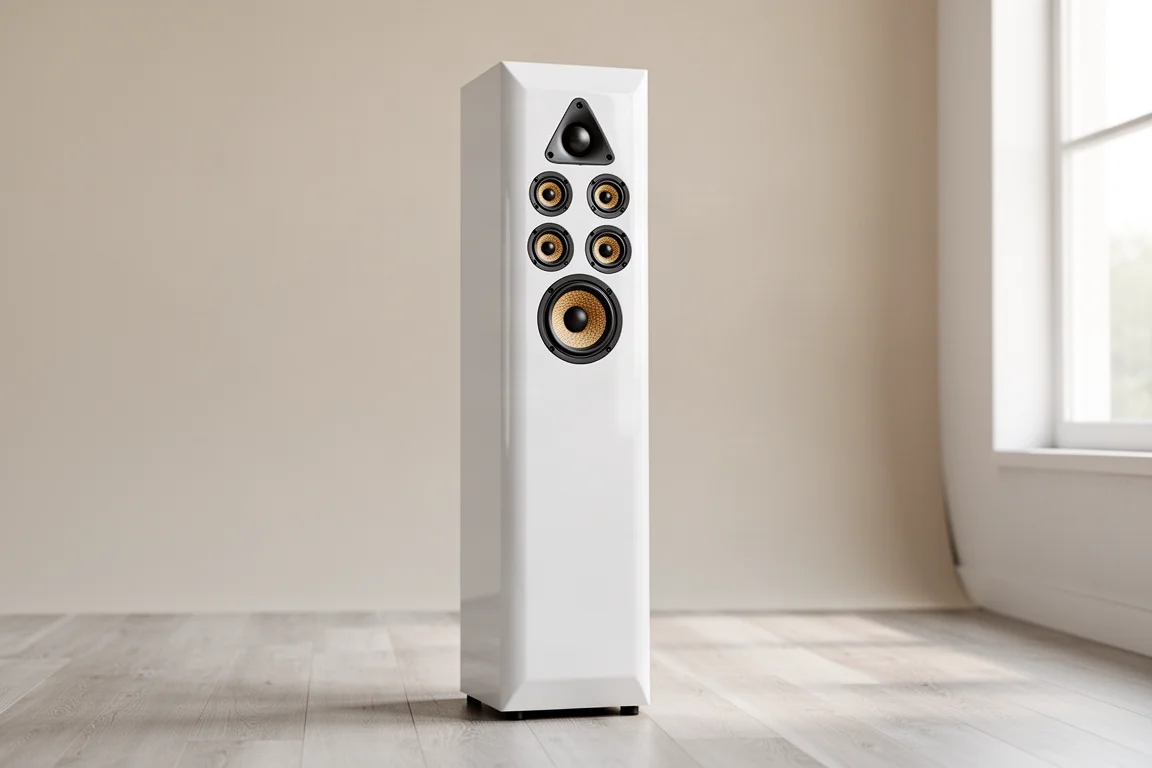
At first glance the On Wall 302 looks like the 301 with two more 4-inch drivers in a taller cabinet of roughly 49 inches, but the change is more significant than that. The four woofers are crossed over, with two covering the midrange and two covering bass, and that arrangement buys noticeably better midrange performance. The minus 3 dB point moves to 50 Hz, so there is a little more deep bass, but the midrange improvement is the bigger story.
Sensitivity rises to 91 dB, which makes the 302 far easier to drive and considerably more dynamic than its smaller sibling.
That extra headroom is what separates the two models in practice. The 302 can fill a large room with authority, while the 301 leans more on the subwoofer and the room’s own reinforcement to reach the same sense of scale.
Choosing Between the 301 and the 302
The decision usually comes down to room size and how demanding the content is.
For a stealthy two-channel system, the 302 is the stronger pick, even when a subwoofer is planned, because its midrange is simply better. For a three-speaker front stage around a television, a useful combination is a pair of 301s flanking the screen with a single 302 above or below for the center channel, where the midrange gain is most audible. With screens larger than 85 inches, three 302s match better visually and sound better as well.
For surround duty the math changes. The 301 costs less and reaches low enough for the typical 80 Hz crossover used on surround channels, and four 301s for surrounds run only a little more than two 302s. In an average-sized home theater, the 301 is the sensible choice. A larger space, a taste for dynamic and explosive content, or an interest in multichannel music all point toward the 302.
Mounting Options: On the Wall or on the Dedicated Stand
Both speakers ship with a template for marking mounting holes. The recommended approach is to level the template, tape it in place with painter’s tape, confirm level once more, and then mark the holes. Once the brackets are attached, the speaker hangs on the wall, and the design holds the cabinet just under 3/16 of an inch off the surface. That small gap lets speaker cable hang down behind the speaker without interfering with the way it mounts, which matters in rooms where running wire inside the wall is not an option. The mounting holes are easy to patch if the speakers need to move later.
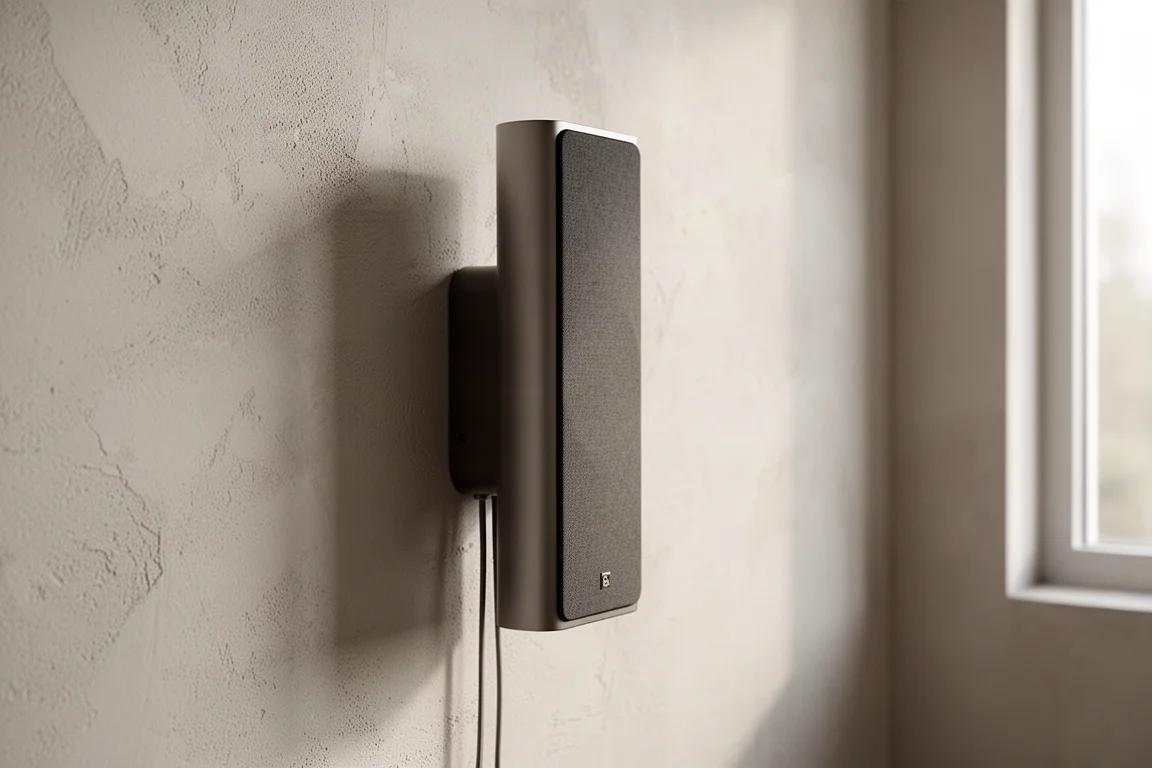
If putting holes in the wall is not desirable at all, the optional On Wall stand places the speakers at an ideal height and allows them to sit almost flush with the wall, so a surround layout can still be dialed in precisely.
System Building: Stereo, Center Channel, and Surround
One of the strongest arguments for the 300 series is how closely its drivers match the rest of the Focal range. Many home theater listeners want Focal sound inside a high-channel-count, object-based system, and object-based formats such as Dolby Atmos and DTS:X favor speakers that aim energy directly at the primary seats rather than throwing it off to the sides. The 301 and 302 suit that requirement, and because their drivers are so close to, and in some cases identical to, the technology used across Focal’s other lines, they integrate well as bed-layer surround channels alongside existing main speakers.
Room Size, Dynamics, and What to Prioritize
A simple way to frame the choice is to start with the room. Small to average rooms with a capable subwoofer are where the 301 makes the most sense, particularly across four surround positions. Larger rooms, higher playback levels, and multichannel music listening reward the 302’s greater sensitivity and superior midrange.
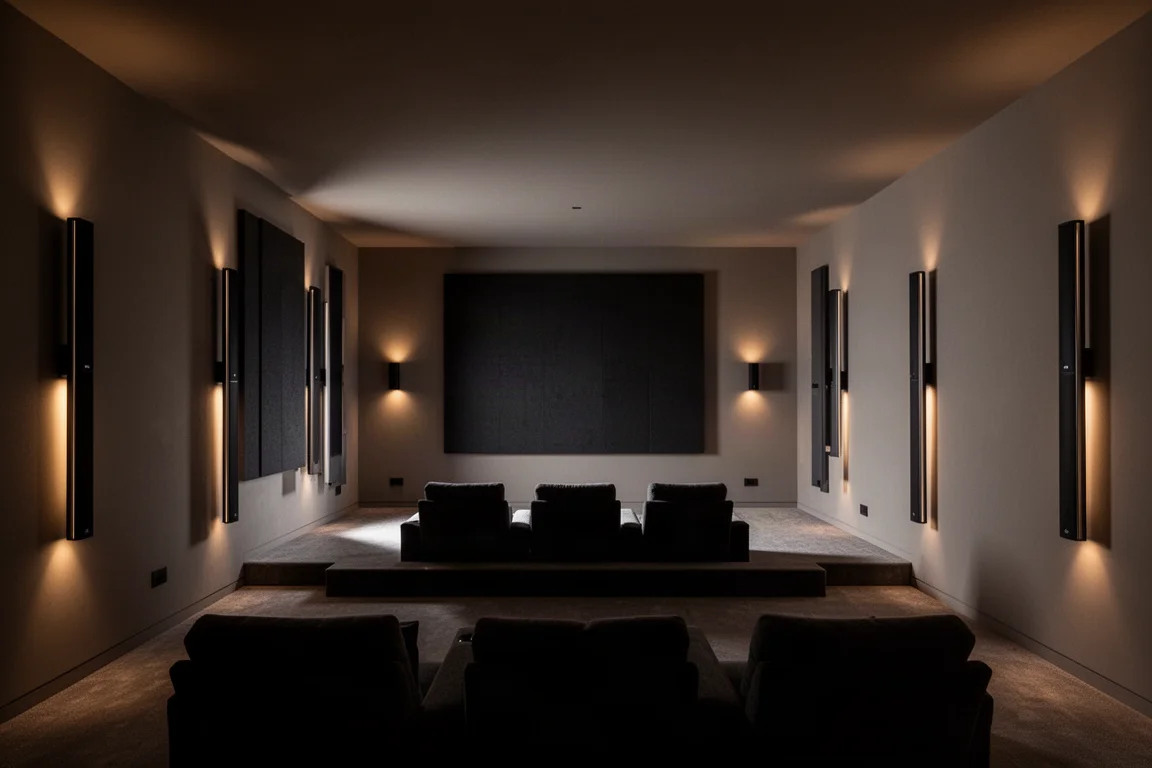
Depth is worth a thought as well. At around 3 inches deep, the cabinets can sit slightly proud of the slimmest flat panels, and a gloss finish beside a screen carries some risk of the picture reflecting off the cabinet sides. Satin black is the safer choice in that position, or a pull-out television mount can be set to bring the screen flush with the speakers so either finish works.
Because both models share the same mounting logic and the same voicing philosophy, mixing a 302 center with 301 surrounds, or choosing four of the same model, stays a straightforward decision once the room and listening habits are clear.
Conclusion
The Focal On Wall 301 and On Wall 302 address a gap that few speaker lines handle well: genuine high-end sound in a slim, wall-mounted cabinet that can serve stereo, center channel, and surround duties. The 301 is the compact, cost-conscious option that still reaches down to 53 Hz. The 302 adds two drivers, a dedicated bass crossover, better midrange, and 91 dB sensitivity for larger rooms and more dynamic material. Match the model to the room, and either one can anchor a system built around Focal’s signature sound.
Further reading
Related Reviews
Home Theater Speakers
Arendal 1723 THX S Monitor vs 1723 THX Monitor: Which Two-Way Monitor Fits Your Room?
A practical comparison of the Arendal 1723 THX S Monitor and the larger 1723 THX Monitor, covering driver size, sensitivity, bass extension, and room fit.
Home Theater Speakers
Emotiva A1 Review: A Small Speaker With Serious Surround Flexibility
A sealed two-way speaker built for Dolby Atmos, surround, and compact desktop duty at $179. Here is what it does well and what to check before buying.
Home Theater Speakers
Emotiva C2+ Review: High Output Center Channel With a Narrow Sweet Spot
The Emotiva C2+ delivers serious output, deep bass for its size and high sensitivity, but its widely spaced midrange drivers create a horizontal sweet spot that rewards centered seating.