Home Theater Speakers
Focal Kanta No.3, Kanta Center and Sub 1000F: A Three-Piece Home Theater System
A close look at the Focal Kanta No.3 tower, Kanta Center and Sub 1000F subwoofer, with listening notes, clear strengths, and the trade-offs to weigh before buying.
Introduction
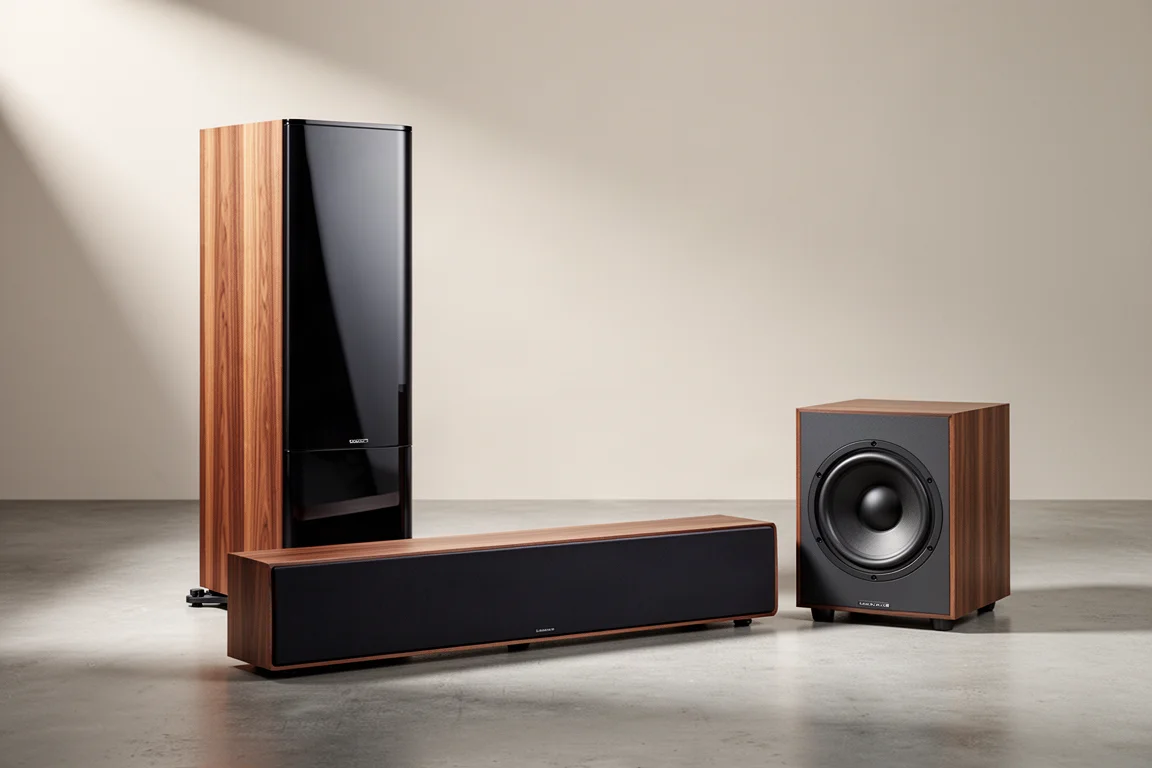
The Focal Kanta range occupies a specific place in the brand’s line-up: it borrows driver technology from the company’s higher-end designs and houses it in cabinets that mix wood veneer with a gloss, automotive-style baffle. This roundup covers three pieces from that family, the Kanta No.3 floorstander, the Kanta Center channel and the Sub 1000F subwoofer. Together they form a complete front stage for a home theater, and each one can also stand on its own.
Below is what each speaker brings, where it performs at its best, and what is worth thinking through before committing to a set.
How This System Was Evaluated
The three speakers were run as a 3.2 configuration: two Kanta No.3 towers, a single Kanta Center, and two Sub 1000F subwoofers, with no surround channels in the setup. One subwoofer was placed in the front right corner of the room and the other in the opposite rear corner, a placement chosen to even out the low-frequency response for the space.
The speakers were driven by a multichannel processor and amplifier, with demo material played back from a dedicated media player. The towers were auditioned both full range and crossed over at 80 Hz to the subwoofers, using film soundtracks with demanding object-based audio mixes to test detail retrieval, dialogue weight and bass impact.
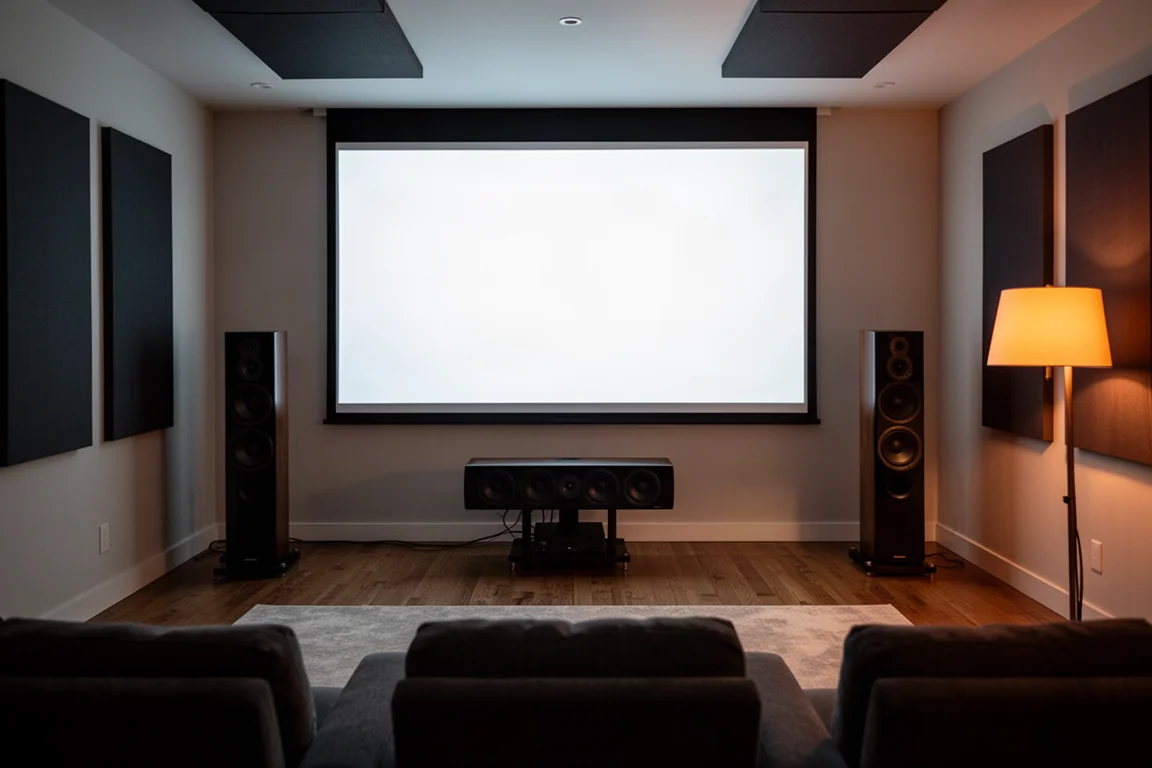
Because the towers and the center share the same tweeter and flax cone driver family, the front three channels were also checked for tonal consistency as effects panned across the stage, since matching timbre matters as much as outright performance in a multi-channel system.
Focal Kanta No.3: The Flagship Tower
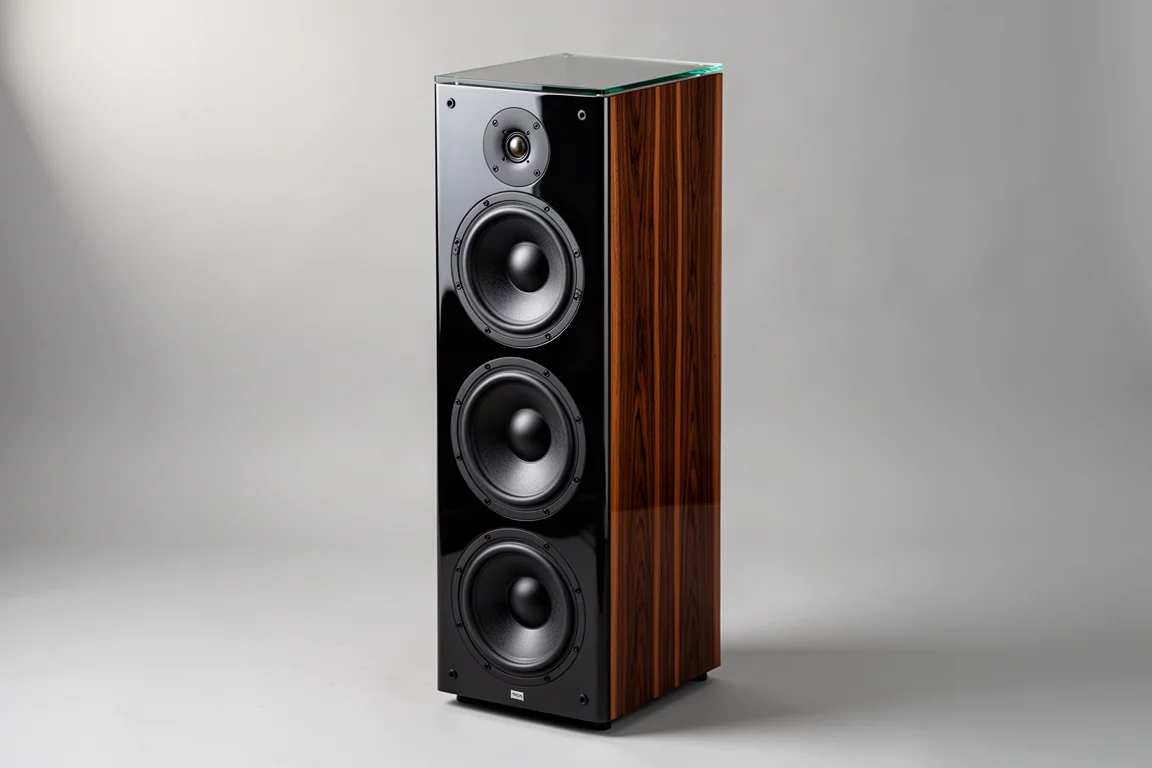
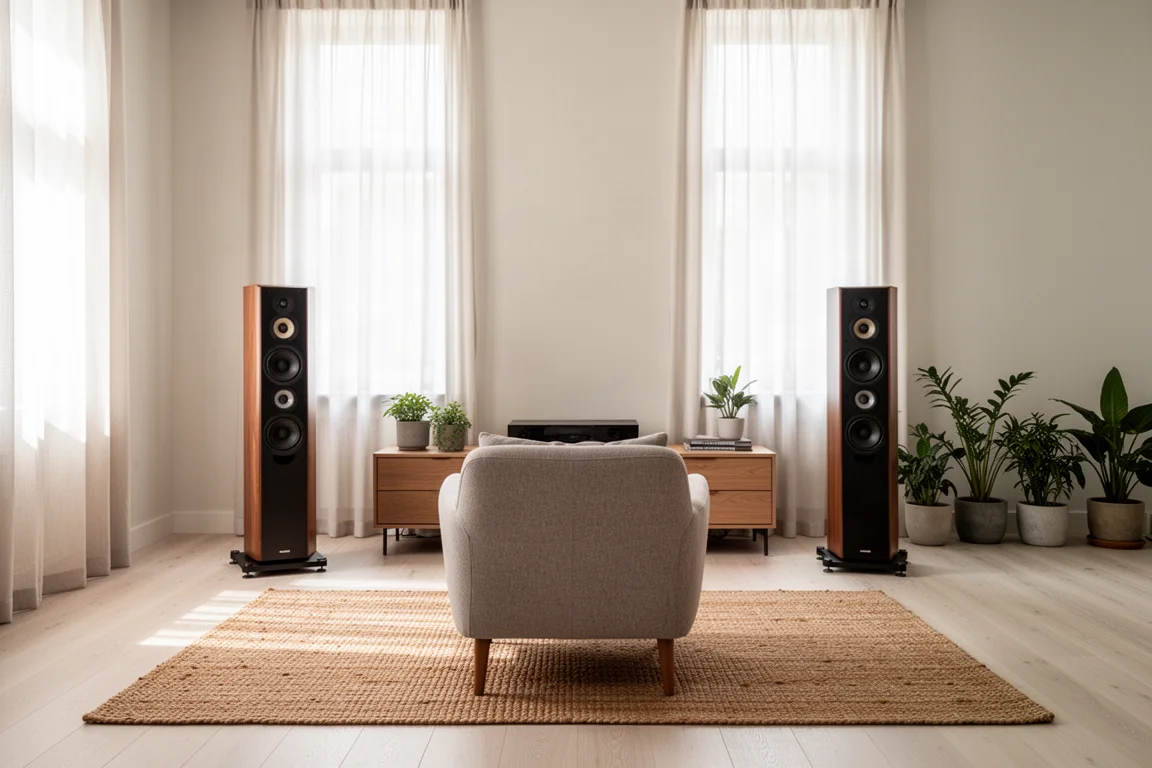
The Kanta No.3 is the flagship of the Kanta range and the largest piece in this group. It weighs 101 lbs and stands roughly 58 inches tall, so it needs genuine floor space and a room that can breathe around it. The driver complement is a 6.5-inch flax cone midrange at the top, two 8-inch woofers below to handle low frequencies, and the IAL 3 Beryllium dome tweeter that defines the Kanta sound. Flax cones are used throughout the range.
Frequency response is specified from 33 Hz to 40 kHz, with a sensitivity of 91 dB, so the tower reaches deep on its own and is easy to drive. The cabinet is a two-tone affair: a gloss front baffle with a sparkle finish that catches light much like automotive paint, wood veneer on the sides under a smooth lacquer, and a glass top with the logo set beneath it. Grilles attach magnetically, with a small one for the midrange and a larger one covering both woofers. The cabinet is ported at the front and at the rear, the binding posts are a single set rather than bi-wireable, and the spike feet can be raised or lowered by turning a knob at the base.
In use, the tower is fast and reactive, and its midrange clarity gives vocals a smooth, resonant warmth. Run full range, it kicks hard enough that a subwoofer is not strictly required for music. High-frequency detail is the headline: instruments and effects arrive with a great deal of air and space around them, and the amount of micro detail on offer ranks among the best in this class.
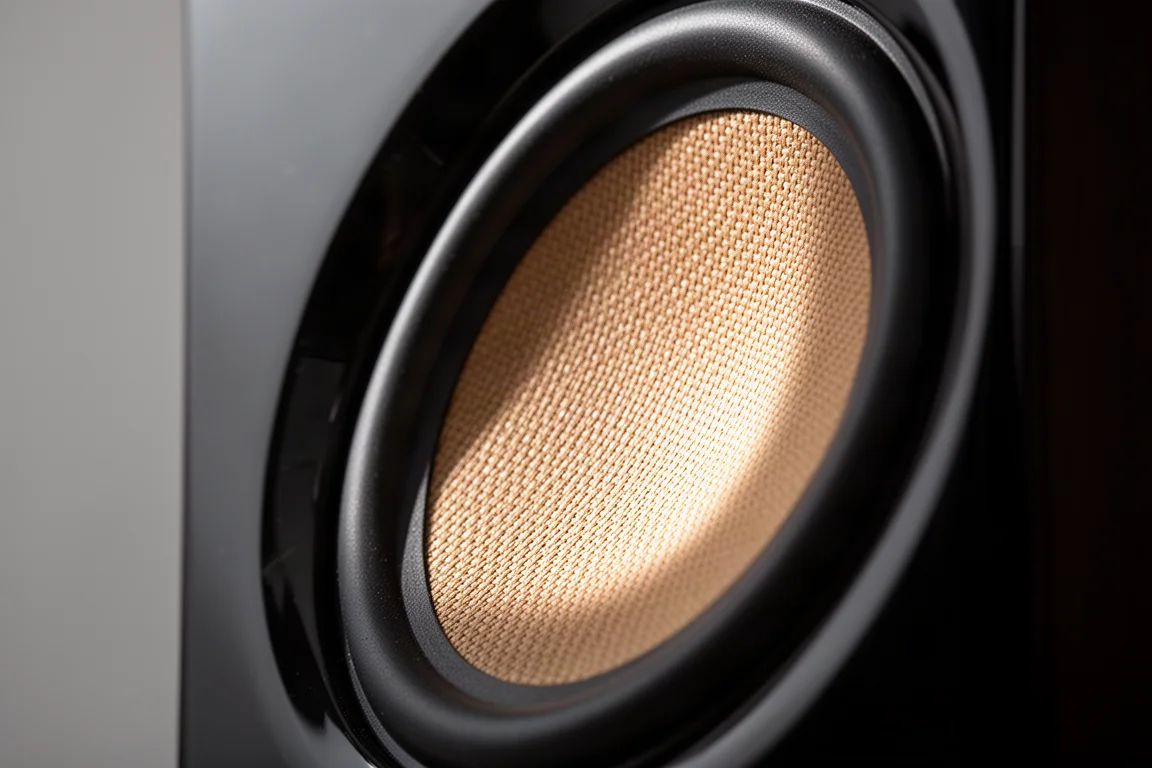
That brightness cuts both ways. Straight out of the box, the Kanta No.3 sits on the bright side of neutral, and it can be more than some listeners want over a long session. It also magnifies flaws in a mix rather than smoothing them over, which is worth knowing if a large part of your library is not pristine.
Focal Kanta Center: The Matching Center Channel
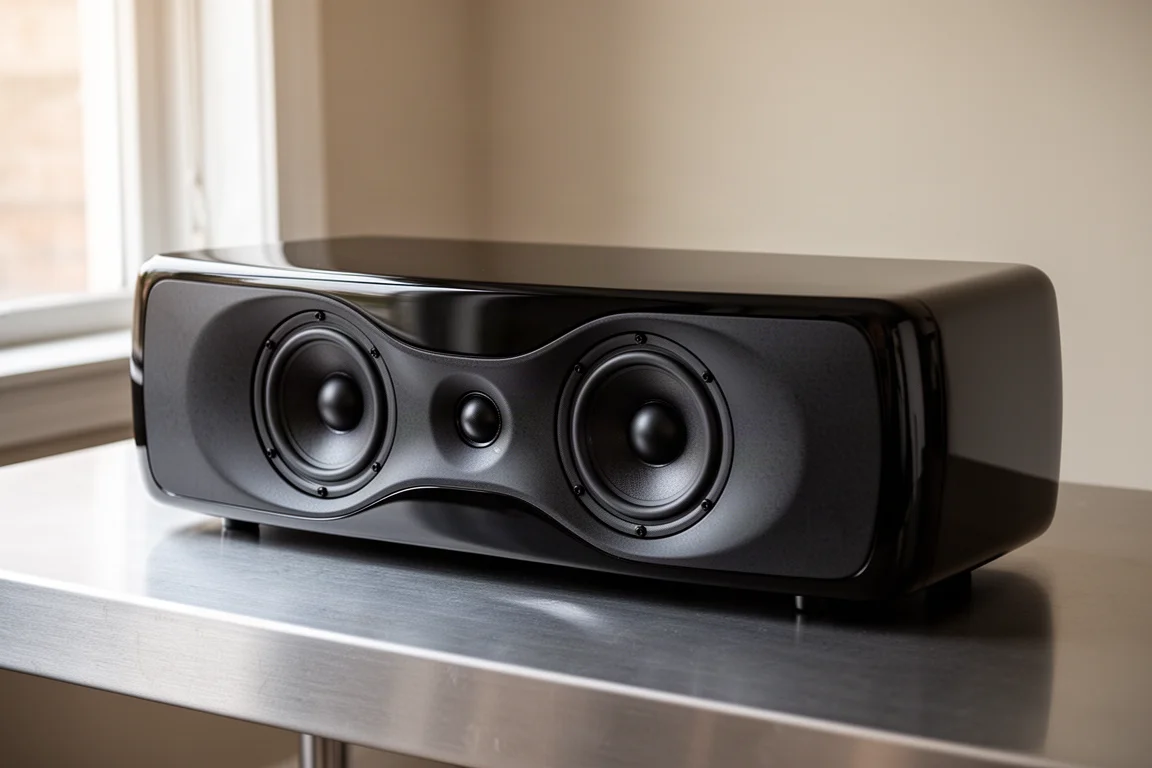
The Kanta Center is built to sit beneath a screen and carry dialogue, and it follows the same driver philosophy as the tower: a Beryllium dome tweeter in its latest IAL 3 form, plus two 6.5-inch flax cone midbass drivers. Sensitivity is 91 dB, matching the tower, and the cabinet is a ported design with a set of high-quality binding posts finished with rubber grips that make it easy to tighten spade connectors properly.
The finish mirrors the tower as well: wood veneer with a lacquer top coat on the sides, and the same sparkly gloss finish across the top panel. Specified response reaches down to around 55 Hz, so the center is not a thin-sounding speaker. Dialogue carries real weight, and its midbass presence is enough to hold its own when run full range. Timbre matching with the Kanta No.3 is close, and pans across the front three channels stay coherent.
The same tweeter that delivers so much detail can also draw attention to problems. On material where crackle or grit is baked into the center channel, that texture is amplified rather than hidden, and it is more noticeable here than on more forgiving designs. For most listening this is a non-issue, but at spirited volume levels it can pull focus away from the scene.
Focal Sub 1000F: The Low-Frequency Anchor
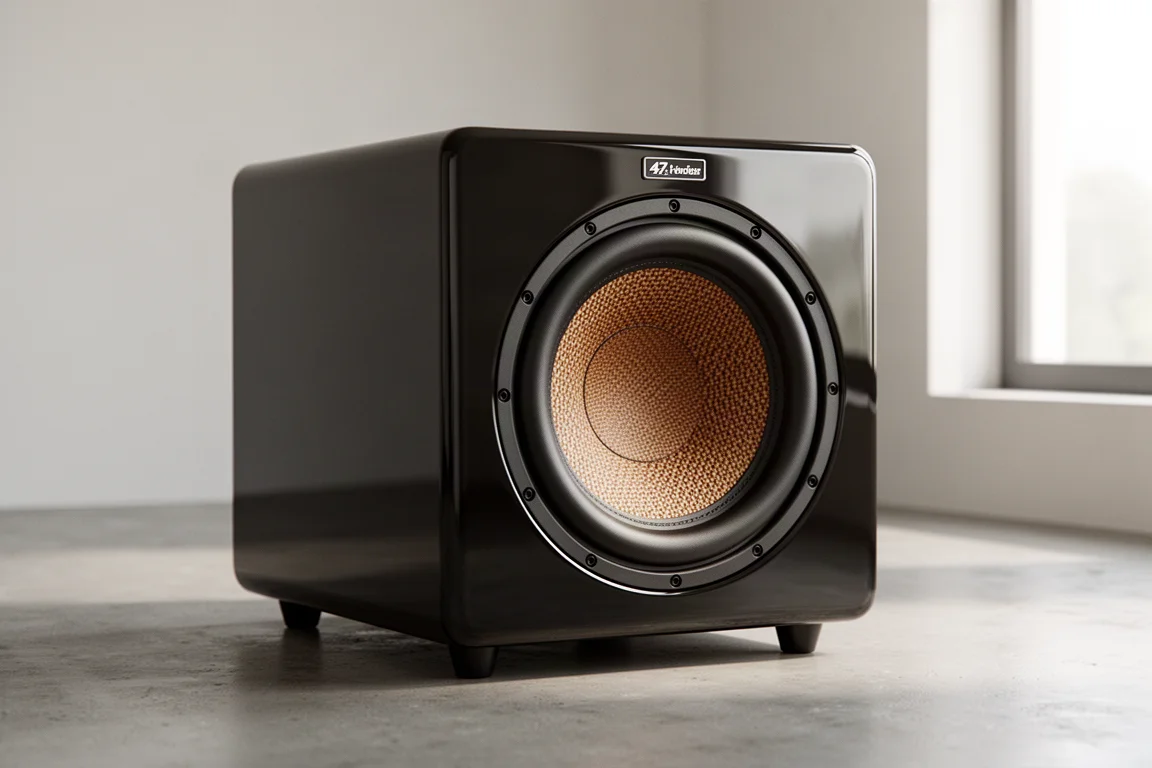
The Sub 1000F is Focal’s take on a compact 12-inch subwoofer, and at 47 lbs it stays manageable for one person to move. The driver is a 12-inch flax cone woofer, matching the cone material used across the Kanta range, and the front baffle has a gloss finish with the logo at the top. The grille is held in place by small push pins rather than magnets.
Around the back there is a 100 watt BASH amplifier, a power switch with on, off and auto positions, a volume control, an adjustable crossover, and a phase switch offering 0 or 180 degrees rather than a continuously variable setting. Inputs are line level only, with LFE, left and right connections and no XLR option.
In practice the sub digs low and delivers a lot of tactile output. With bass-heavy film material it produces the kind of physical, full-body impact that makes a system feel cinematic, and it complements the quick kick of the towers by handling the booming bottom end underneath them.

The catch is refinement. Against the speed and reactivity of the Kanta No.3, the Sub 1000F sounds slower and boomier, with some overhang that the towers simply do not have. It was designed to partner with the Aria line rather than Kanta, and that shows in the mix: the towers and the center play as one voice, while the subwoofer feels like a slightly different recipe.
Matching the Subwoofer to the Rest of the System
For a Kanta-based system, the subwoofer is the piece to think about hardest. The towers already reach 33 Hz and can carry a music-only system on their own, so a subwoofer is mainly about home theater impact and the extra weight that film soundtracks ask for.
Placement matters as much as the model. Splitting two subwoofers between the front and rear corners of the room evened out the response in this setup, and the same approach is worth trying in any rectangular room before deciding that a subwoofer is at fault.
If the goal is a single-brand Focal system, the Sub 1000F will do the job, particularly for effects-heavy material. Listeners who prioritize speed and texture alongside depth should audition Focal’s step-up subwoofer models before settling, since the Kanta towers set a high bar for agility.
Buying Advice: What to Consider Before You Commit
Three things determine whether this system works for you.
First, the tonal balance. The Kanta family is detailed and bright-leaning. That is a feature if you want maximum insight into a recording, and a problem if you want a speaker that flatters everything. Room treatment or EQ can tame the treble, but the character is there straight out of the box.
Second, the room. A 101 lb tower standing about 58 inches tall needs space and a seating distance that lets the drivers integrate properly. A smaller room will make the brightness more obvious.
Third, the rest of the chain. A sensitivity of 91 dB makes these speakers easy to drive, but they are transparent enough that partnering electronics will be audible. Where possible, listen to the towers and the center together rather than in isolation, because the timbre match across the front stage is one of the strongest arguments for buying them as a set.
At the time of writing, a single Kanta No.3 is $7,000, the Kanta Center is $3,500, and the Sub 1000F is $2,000 each. That makes this a serious investment, and one worth an extended audition in your own room before you decide.
Conclusion
The Kanta No.3 and the Kanta Center are the heart of this system. They deliver exceptional high-frequency detail, a warm and articulate midrange, and enough bass on their own to satisfy two-channel listening, and they match each other closely enough to disappear across the front stage. The trade-off is a bright, revealing character that rewards good recordings and exposes weak ones.
The Sub 1000F is the more complicated piece. It adds genuine cinematic weight and digs low, but it does not quite keep pace with the refinement of the towers. If your priority is impact for film, it will do the job. If your priority is texture and speed, audition carefully and compare it against the alternatives.
Either way, this is a system that benefits from a thorough listen before you commit. The detail these speakers can pull out of a soundtrack is remarkable, and so is the way they reveal everything feeding them.
Further reading
Related Reviews
Home Theater Speakers
Arendal 1723 THX S Monitor vs 1723 THX Monitor: Which Two-Way Monitor Fits Your Room?
A practical comparison of the Arendal 1723 THX S Monitor and the larger 1723 THX Monitor, covering driver size, sensitivity, bass extension, and room fit.
Home Theater Speakers
Emotiva A1 Review: A Small Speaker With Serious Surround Flexibility
A sealed two-way speaker built for Dolby Atmos, surround, and compact desktop duty at $179. Here is what it does well and what to check before buying.
Home Theater Speakers
Emotiva C2+ Review: High Output Center Channel With a Narrow Sweet Spot
The Emotiva C2+ delivers serious output, deep bass for its size and high sensitivity, but its widely spaced midrange drivers create a horizontal sweet spot that rewards centered seating.