Hi-Fi Speakers
Focal Diva Utopia Review: A Fully Active, Wireless Utopia for Modern Listening
The Focal Diva Utopia packs preamp, DAC, streaming, active crossovers and 400W of Class AB power into each speaker. Here is what that means for real buyers.
Introduction
The Focal Diva Utopia is a fully active, wireless floorstanding loudspeaker that carries a flagship name into a very different kind of system. Around $40,000 per pair buys speakers that already contain the preamplifier, the digital-to-analog converter, the streaming platform, active crossovers, DSP and 400 watts of Class AB amplification per cabinet. There is no rack of separates, no speaker cables to match, and no separate streamer to configure.
That packaging is the headline. Focal’s traditional passive Utopia towers remain in the lineup, and the Diva Utopia signals a parallel path built around fully active designs that keep the brand’s core driver technology intact while simplifying everything around it. The speakers arrive factory paired and are designed to be a complete music system from the moment they are unboxed.
Who This Speaker Is For
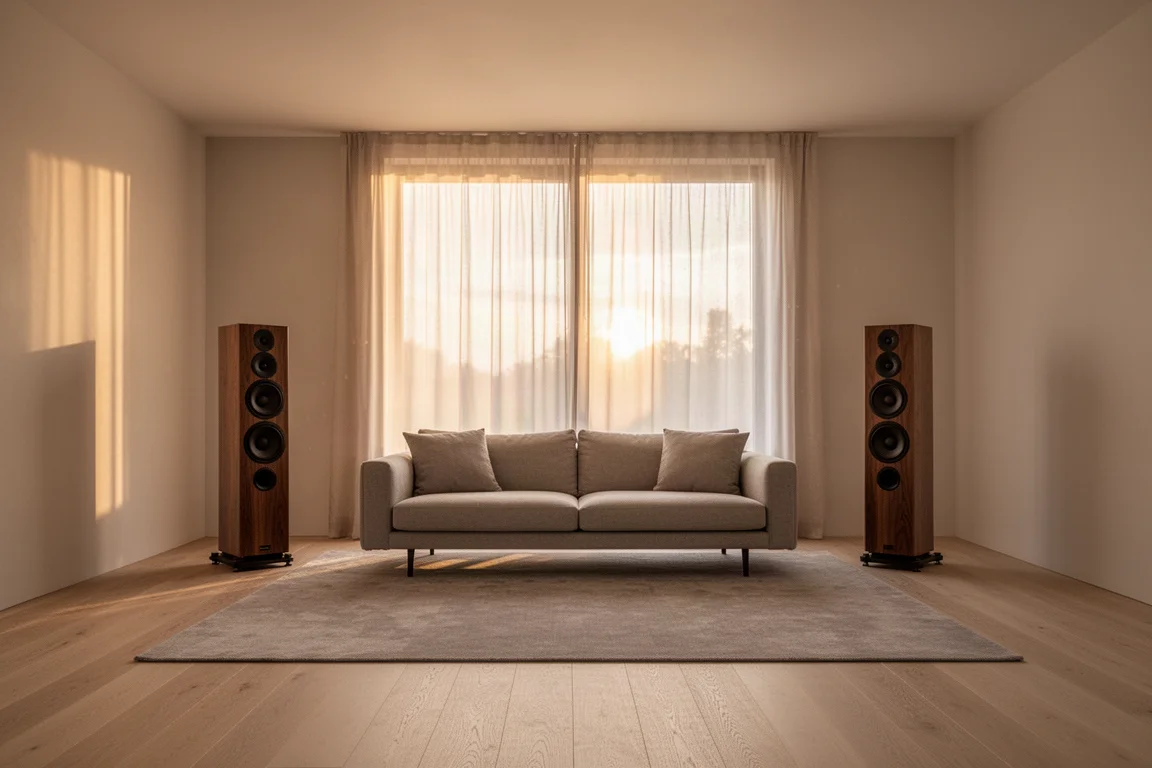
The Diva Utopia is aimed at listeners who want reference-level two-channel performance without the component stack. That includes design-forward buyers who care about how a system looks in a room as much as how it sounds, and owners of apartments or larger residences who want a tightly integrated solution rather than a collection of boxes.
It also suits people who split their time between music and television. One speaker acts as a preamp and accepts HDMI eARC alongside optical, USB, RCA analog and Ethernet inputs, so a TV-centric setup is a legitimate use case rather than an afterthought.
It is less suited to listeners who want subwoofer integration, distributed bass arrays or multi-channel expansion. The Diva Utopia is deliberately a self-contained full-range stereo system, and buyers planning a larger home theater ecosystem are looking at a different product category entirely.
Design and Cabinet Construction
The cabinet is molded from a high-density polymer rather than multi-layered plywood or HDF, a choice made for rigidity and low resonance. In extended listening, that construction did not introduce any audible coloration or resonance anomalies. The result is a speaker that stays out of its own way.
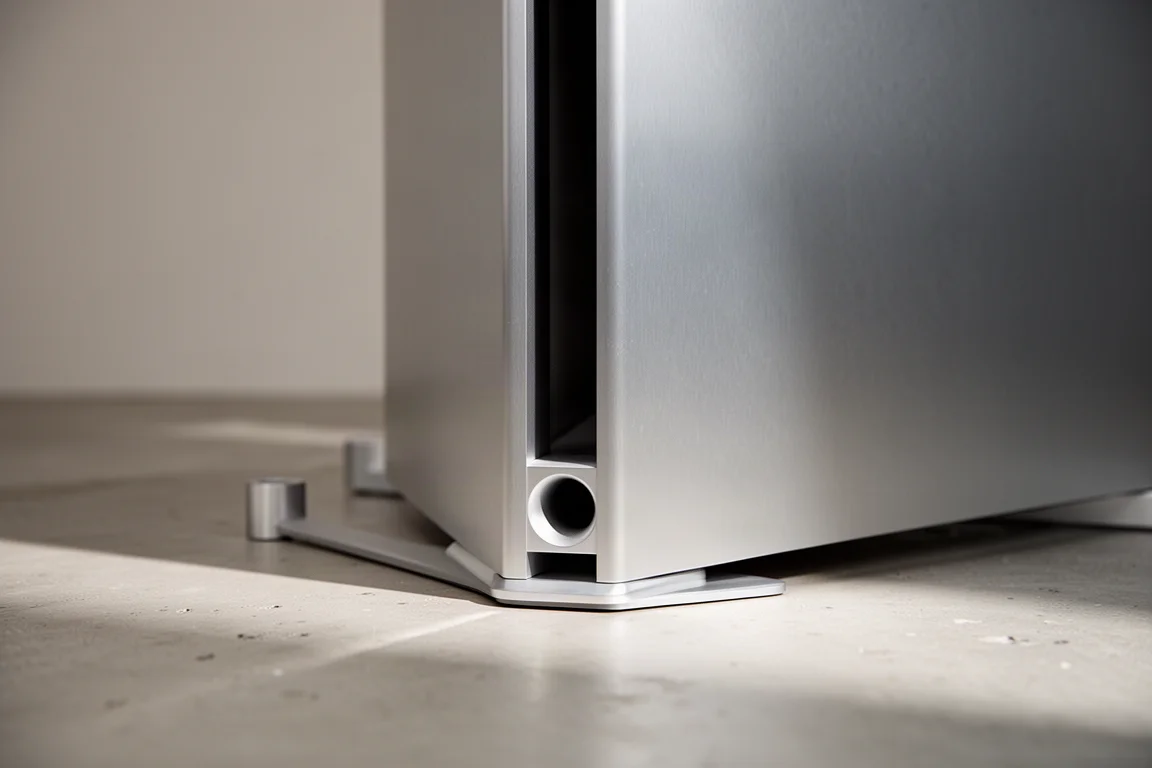
Setup reflects the same practicality. The base includes integrated casters, so the speakers can be rolled out of the box, guided up an included ramp and moved into position before being locked down. Once the placement is right, supplied spikes or hardwood floor protectors provide a stable, permanent installation.
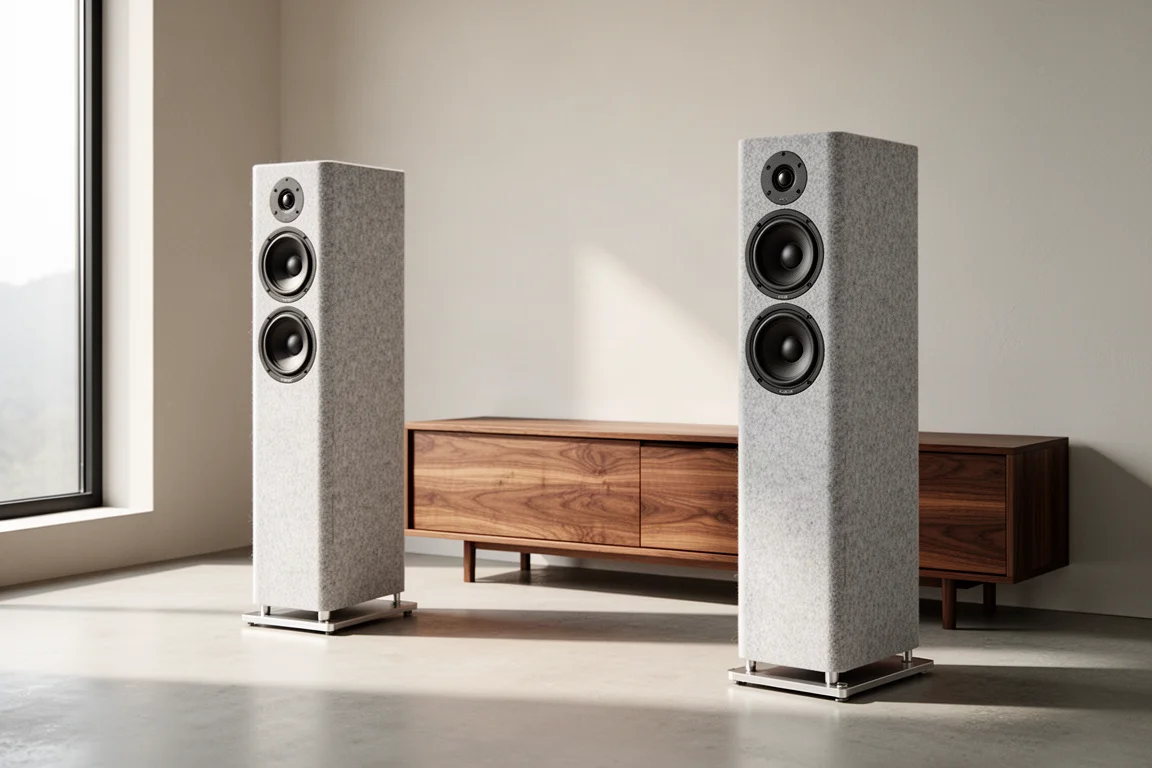
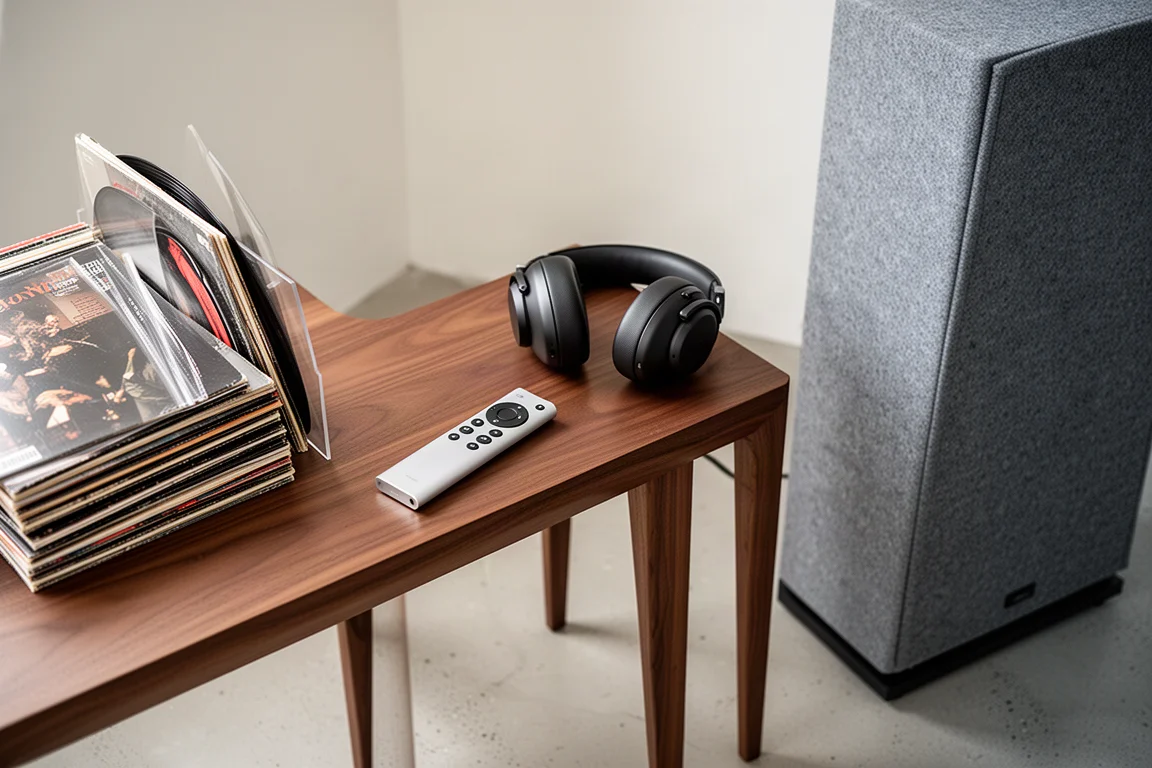
The side panels are OEKO-TEX certified felt and are purely cosmetic, with no acoustic function. They are interchangeable, and Focal offers optional high-gloss panels for buyers who prefer a more traditional luxury finish. Each speaker weighs 141 lbs, and the Diva Utopia is both smaller and thinner than the Scala Utopia Evo, which makes it noticeably easier to integrate into modern living spaces.
Driver Technology and Amplification
This is a three-way design built from Focal’s current Utopia-grade drivers, all manufactured in house and engineered for their specific role.
High frequencies come from a 1 5/8 inch pure beryllium inverted dome tweeter, and the Diva Utopia was the first model to use this upgraded unit. Pure beryllium is capable of extremely low distortion and exceptional transient response, and that character is audible immediately.
The midrange is handled by a 6.5 inch W sandwich cone driver. The W sandwich cone is known for transparency, low distortion and solid phase response, and it is roughly 20 times stiffer than Kevlar.
Bass comes from four 6.5 inch W sandwich woofers arranged in a push-push, side-firing configuration. That layout helps cancel cabinet vibration while preserving strong low-frequency output, and it lets Focal reach down to 27 Hz without resorting to a single large driver. The approach keeps the cabinet compact rather than oversized.
Amplification is fully integrated. Each speaker carries 400 watts of Class AB power developed with a British electronics partner, allocated as 75 watts for the tweeter, 75 watts for the midrange and two 125 watt stages for the bass drivers. Active crossovers work with a DSP engine that manages crossover slopes, phase alignment and time alignment across all drivers, so the integration is handled digitally rather than by passive components.
Streaming, Connectivity, and Room Correction
Wireless streaming covers AirPlay 2, Google Cast, Spotify Connect, Tidal, Qobuz and universal plug-and-play, with high-resolution file support up to 24-bit/384 kHz. The two speakers talk to each other over an ultra-wideband link capable of lossless stereo transmission up to 96 kHz/24-bit. That technology avoids the latency problems and wireless interference typical of Bluetooth and Wi-Fi, and the link proved completely stable in use.
For higher resolution, an Ethernet connection between the speakers raises operation to 192 kHz/24-bit, and Focal includes a braided shielded cable for exactly that purpose. There are no volume controls or other physical controls on the speakers themselves. Everything, from streaming services and inputs to system configuration, volume and updates, runs through the companion app.
The Diva Utopia is also the first speaker to support Focal’s Adapt room correction, short for Adaptive Acoustic Personal Tuning. It requires no external microphone and no computer. Setup runs through the app using test tones and a smartphone, and on a modern phone with augmented reality capability the system calculates the relevant distances automatically. The process moves through three steps: entering distances, balancing left and right, and optimizing in-room performance. A first run takes roughly 15 to 20 minutes, and once familiar, a calibration can take as little as 5 to 10 minutes. Intensity can be fine-tuned across a range of plus or minus 10 steps, or defeated entirely for a direct comparison.
Listening Impressions
The beryllium tweeter is the standout. The top end is pristine, effortless and airy, and it stays smooth over long sessions without harshness or fatigue. From the first notes the system sounds remarkably cohesive, and it images vocals, choral pieces and instruments with a large, clearly defined soundstage. On dense productions, layered vocals and synthesizer basslines remain distinct from cymbals and backing parts, and the presentation sits at the plane of the speakers rather than pushing forward or receding.
Bass is articulate, tuneful and deep, with good punch and texture on well-recorded material. Macro dynamics benefit from the onboard amplification, which delivers abundant headroom and precise transients, and large orchestral works come across as majestic rather than compressed. Adapt does meaningful work in the low end, particularly below 70 hertz where room modes dominate, and its effect begins around 450 hertz. The correction tames excess bass without crushing system dynamics or dulling the tweeter’s top-end air, which keeps the character of the speaker intact.
Things to Consider Before Buying
There is no subwoofer output or subwoofer integration. That is consistent with the design brief, which treats the Diva Utopia as a complete full-range stereo system, but it rules out the kind of multi-subwoofer bass management some listeners rely on.
There is also no native Roon Ready support. Roon users will need to stream via AirPlay 2 or Google Cast instead, and those coming from a native Roon endpoint will notice the difference in workflow.
Adapt cannot store multiple calibration profiles, so switching between saved setups for different seating positions or room treatments is not currently possible. It is a limitation worth knowing about if you plan to experiment.
The optional high-gloss panels are a paid extra at $9,500, which is a significant share of the system’s price. Buyers who want the standard finish will not pay it, and the felt panels are included and interchangeable.
Finally, the amplification is Class AB throughout, including the bass drivers, rather than the Class D designs that have become common in active speakers. That is a deliberate engineering choice rather than an oversight, but it is a detail worth understanding before committing.
Buying Advice
At around $40,000 per pair, the Diva Utopia is an all-in proposition. That figure covers the preamplifier, DAC, streaming platform, room correction, active crossovers and all amplification. Compared with a passive Utopia tower driven by separates, where electronics can add another $40,000 to $50,000 to the total, the integrated approach changes both the cost structure and the ownership experience.
The comparison with the Scala Utopia Evo is instructive. The Scala delivers a bit more satisfaction in the low end, in both frequency response and weight, while the Diva Utopia holds a slight edge in the tweeter. The Diva also occupies a smaller footprint, and it avoids the cable and component matching work that a passive system demands.
For buyers weighing the two paths, the deciding factor is usually the room and the lifestyle rather than the specification sheet. If the goal is a reference two-channel system that disappears into a modern living space and can be serviced without shipping 141 lb cabinets back to a distributor, the integrated design has clear advantages. Slide-out electronics make long-term serviceability more practical, and interchangeable panels mean a finish can be updated or replaced without replacing a speaker.
Conclusion
The Focal Diva Utopia is a significant product for the company: a fully active, wireless Utopia that gives up none of the brand’s core strengths while embracing how people actually listen today. The beryllium tweeter is superb, the midrange is open and articulate, and the bass is deep and tuneful. Adapt room correction is one of the easiest and most repeatable systems of its kind, and the ultra-wideband link between speakers removes the timing and interference concerns that usually accompany wireless audio.
It is not the right answer for every system. Buyers who want subwoofer integration, native Roon support or multiple room-correction profiles will need to look elsewhere, and the optional gloss panels carry a real premium. For the listener who wants state-of-the-art sound with state-of-the-art simplicity, and who values a clean, component-free setup in a design-conscious room, the Diva Utopia makes a compelling case as a reference speaker for the modern audiophile.
Product link
View more details for Focal Diva Utopia
This product is mentioned in the review. Check the specifications, options, and compatibility before buying.
View more details for Focal Diva UtopiaFurther reading
Related Reviews
Hi-Fi Speakers
1723 THX Tower vs 1528 Bookshelf: Which Speaker Fits Your Room?
Two speakers at roughly the same price, built very differently. How the 1723 THX tower and the 1528 bookshelf compare on construction, bass, power needs, and sound.
Hi-Fi Speakers
Acoustic Energy AE 300 Review: Deep Bass From a Compact Standmount
A two-way standmount with real wood veneer, surprising low-end weight, and a warm, easygoing character. Here is what to know before buying.
Hi-Fi Speakers
Acoustic Energy AE1 40th Anniversary Review: A Modern Take on a British Classic
A compact standmount that revives a 1980s favorite with all-new parts, a warm mid-centric balance, and a price of £1,499 per pair.