Hi-Fi Speakers
Focal Diva Mezza Utopia vs Diva Utopia: Two All-in-One Flagship Speakers Compared
A close look at Focal's Diva Mezza Utopia and Diva Utopia, two fully active all-in-one speaker systems built for very different room sizes.
Introduction
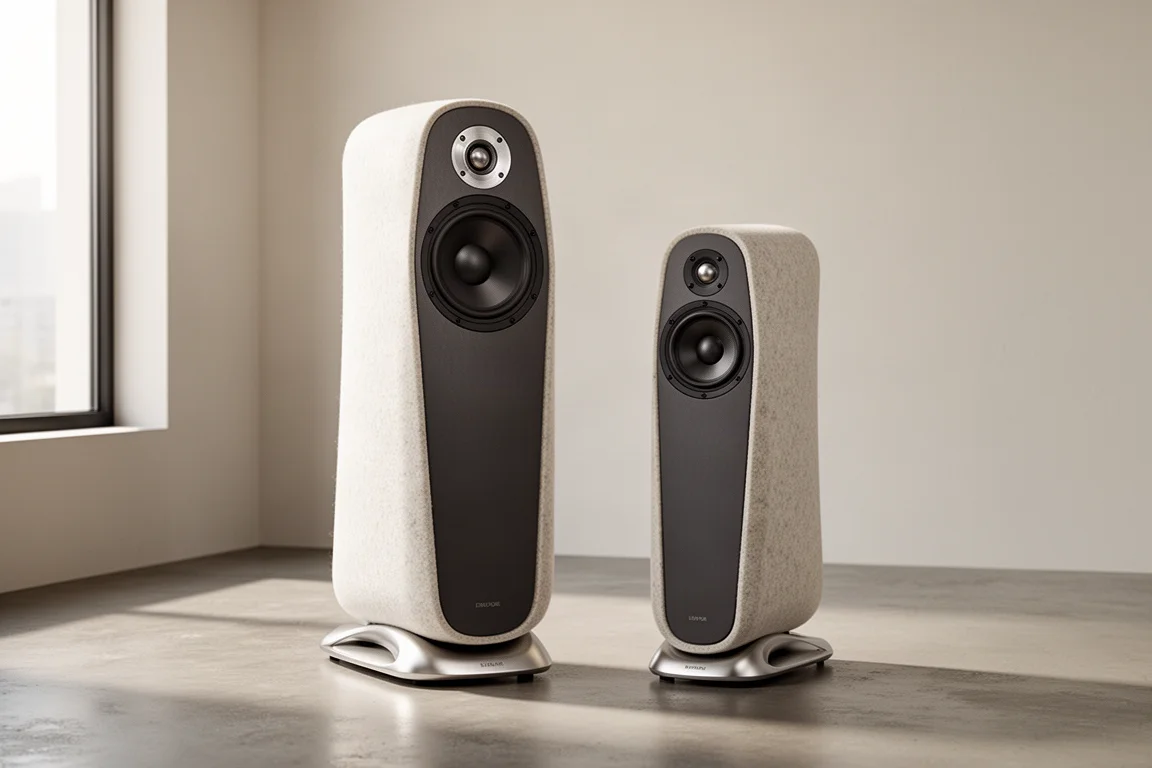
Focal’s Diva Utopia made a persuasive case that a flagship system can arrive as a single pair of speakers rather than a rack of separates. The Diva Mezza Utopia takes that idea further. It keeps the same all-in-one approach but adds cabinet volume, larger woofers, and more amplifier power, and it is priced at around $70,000 per pair. Both models are fully active, both stream on their own, and both are designed to be operated from a phone. The differences come down to scale, bass, and the size of the room you want to fill.
A Larger Utopia: What Changes With the Diva Mezza
At a glance, the Diva Mezza Utopia reads as a scaled-up version of its smaller sibling, and in most respects that is exactly what it is. Every dimension grows, which increases internal volume for the larger low-frequency drivers. The flowing curves and modern silhouette carry over unchanged, while the cabinet itself is molded from a high-density polymer with heavy internal bracing and optimized geometry that keeps vibration away from the drivers. The base is machined from injected aluminum and houses the downward-firing port used for the low end.
At nearly 200 lb per speaker, the Mezza is a serious physical object, and it ships with pre-installed rolling casters so placement can be dialed in without a struggle. The routine is straightforward: roll each speaker into position, mark the spot, then swap the casters for the included spikes to lock the cabinet down. It is a small design decision that makes a very large speaker far easier to live with.
Inside the Diva Mezza: Drivers and Bass
The driver layout follows the proven Utopia approach, with a more capable bass section. The tweeter is a 27 mm pure beryllium M-profile inverted dome mounted in an infinite acoustic loading chamber, a design that controls pressure behind the dome for cleaner, more extended treble. The M-profile shape widens the usable listening position while adding rigidity to the dome, and a 25 mm voice coil raises power handling so the tweeter stays composed at high output.
The midrange uses a 6.5-inch W sandwich cone, built from two layers of finely woven glass fiber bonded to a structural foam core, paired with a tuned mass damper surround and a neutral inductance circuit motor. The tuned mass damper uses small, precisely placed toroidal weights to stabilize the surround and suppress irregularities between 1 kHz and 2 kHz, which helps vocals and acoustic instruments stay clean and lifelike.
The bass is the biggest change. Where the Diva Utopia uses four 6.5-inch woofers, the Mezza uses four 8-inch W sandwich cone woofers, two on each side in a push-push configuration that cancels opposing forces and keeps the cabinet stable during bass-heavy material. The larger cone area and stronger motors move air with less effort, reaching down to 22 Hz. The entire bass system vents through the base rather than the rear panel, which makes placement more flexible than a typical rear-ported design.
The Diva Utopia: Same Philosophy, Smaller Scale
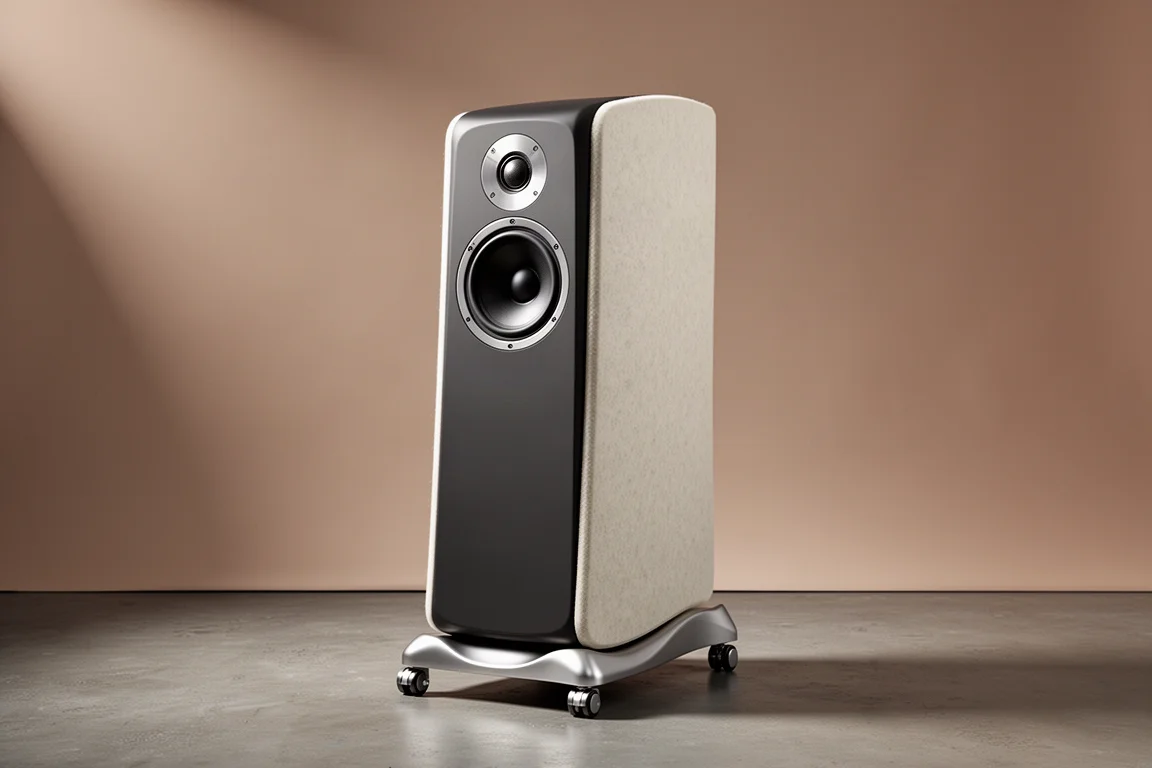
The Diva Utopia is the model that started this line, priced at around $40,000 per pair. It is smaller and a little lighter than the Mezza, with four 6.5-inch woofers and 400 watts of amplification per speaker. Focal positions it for medium to large rooms, where it delivers balanced sound across a wide range of listening levels. It uses the same driver technology and the same fully active architecture, so the difference between the two is capacity rather than character.
For many rooms, that smaller cabinet is the smarter choice. The Diva Utopia gives up some bass depth and headroom compared with the Mezza, but it keeps the openness and tonal accuracy that define the range, and it is easier to place in a space that was not designed around a pair of very large speakers.
Design, Materials, and Placement
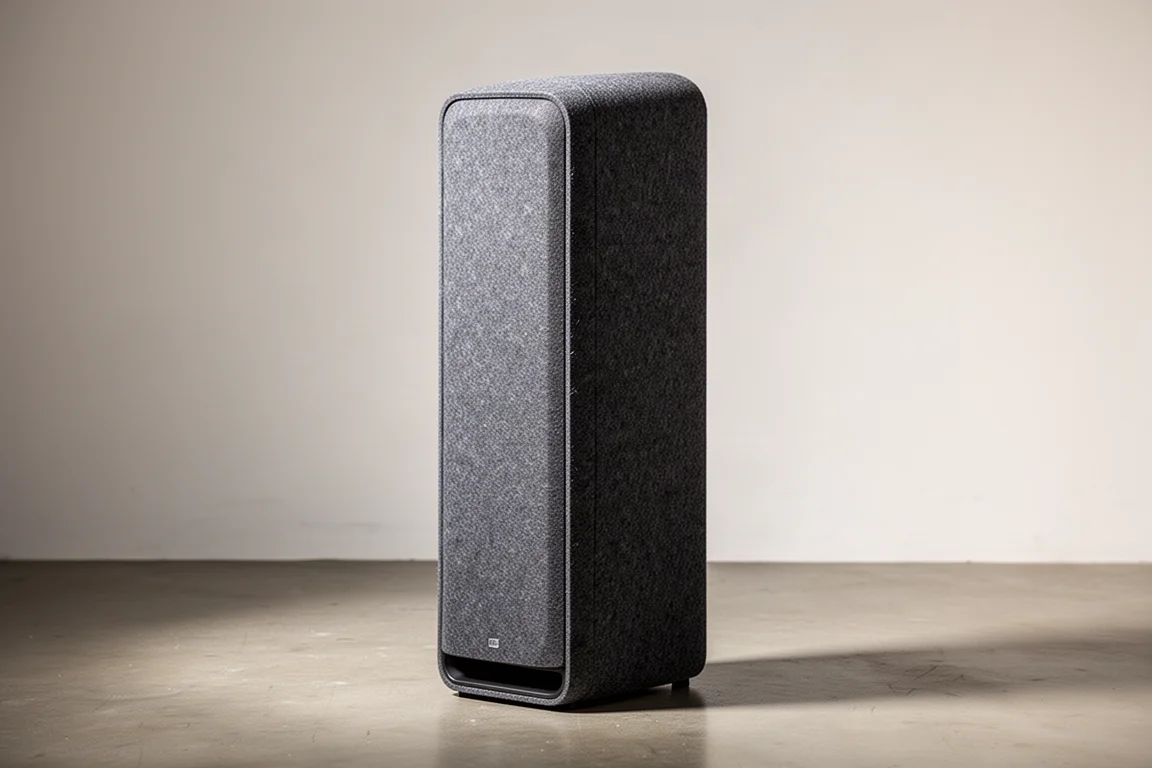
The side panels are wrapped in Ecote Tech certified felt in a light ivory finish. It is a look that some listeners will love immediately and others will need time with, and it reads better in person than in photographs, where the material adds a subtle warmth and glow to the room. The panels are removable, so they can be swapped for lacquer finishes in brilliant black, off-white, or dune, or combined with the felt if you prefer a mixed finish. Changing them later is an option rather than a commitment.
Smaller details reinforce the position of the range. A brushed aluminum ring surrounds the tweeter, a motif Focal uses across the Utopia line. The tweeter grille is black, with red edging visible up close. A glowing Focal logo sits at the base of each cabinet, and its brightness can be adjusted in the app.
Amplification, Streaming, and Control
Both speakers are fully active, and neither needs an external amplifier. Focal worked with its sister brand Naim to design amplification specifically for these cabinets, integrating a complete signal chain inside each tower: streamer, preamp, DAC, DSP, and four Class AB amplifier channels. Each driver gets its own channel. The four 8-inch woofers share 280 watts, the midrange receives 130 watts, and the tweeter gets 90 watts, for 500 watts per speaker in total, up from 400 watts in the Diva Utopia. A dual power supply helps keep dynamics stable during demanding peaks, and the crossover is handled digitally in the DSP for precise timing, phase, and frequency management.
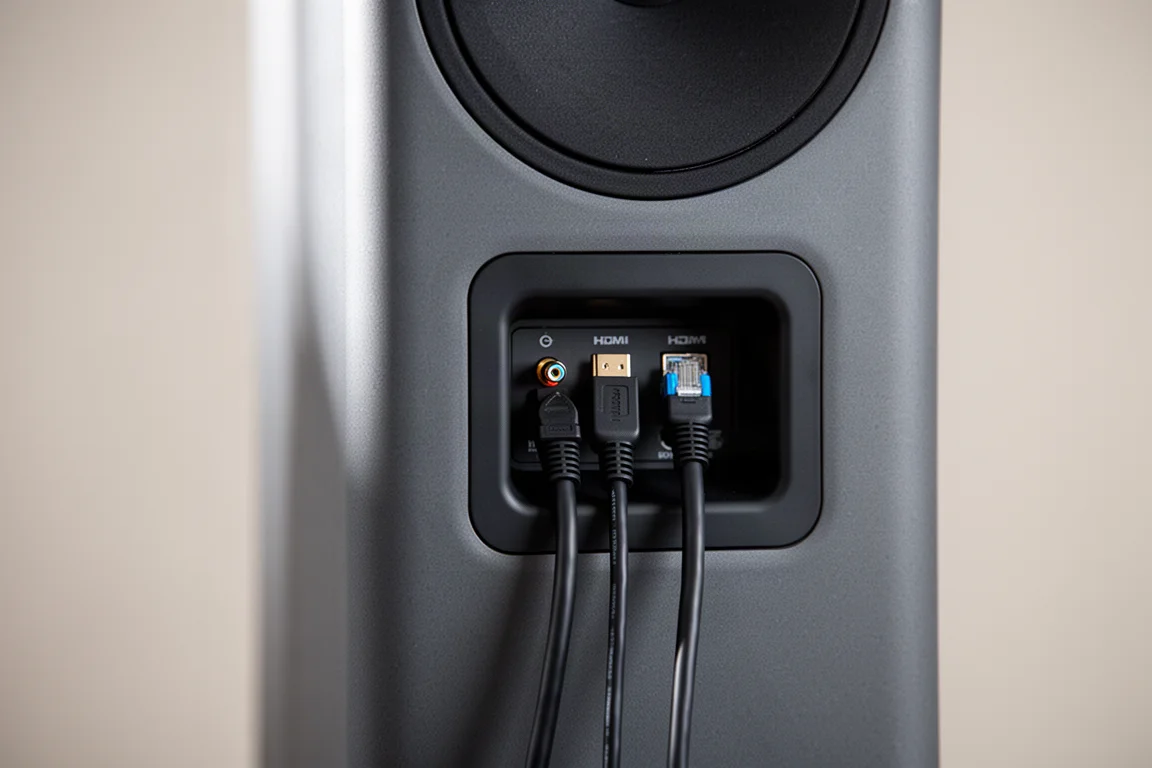
Getting sound into the system is simple by design. One speaker carries only the power connection, while the other holds all the inputs and outputs, and you choose in the app which cabinet serves as left and which as right. Connectivity covers HDMI eARC for TV use, optical and analog RCA inputs, USB-A for local files, Ethernet, and Wi-Fi 6. Bluetooth with aptX Adaptive handles quick pairing from a phone. The two speakers can link wirelessly at 24-bit/96 kHz, or through the included cable at 24-bit/192 kHz for higher resolution.
Streaming support is broad: AirPlay 2, Chromecast, Spotify Connect, Tidal and Tidal Connect, Qobuz and Qobuz Connect, UPnP, Internet Radio, Google Home, HomeKit, and QQ Music. The Focal & Naim app, available on iOS and Android, handles streaming services, podcasts, local content, system settings, and room optimization, and the speakers also join the Focal & Naim multiroom ecosystem.
Room Correction With ADAPT
Focal’s ADAPT system, short for Adaptive Acoustic Personal Tuning, is built in and runs from the app. It plays a series of test signals to measure the speakers in your room, accounting for placement, boundaries, and the room’s own acoustic signature, then applies corrections that aim for a balanced, natural response while preserving the character of the speaker. There is also an augmented reality view that shows where each speaker sits relative to the room boundaries, which makes the calibration step easier to visualize. Fine tuning for personal taste is available once the measurement is complete.
Buying Advice: Matching Speaker to Room
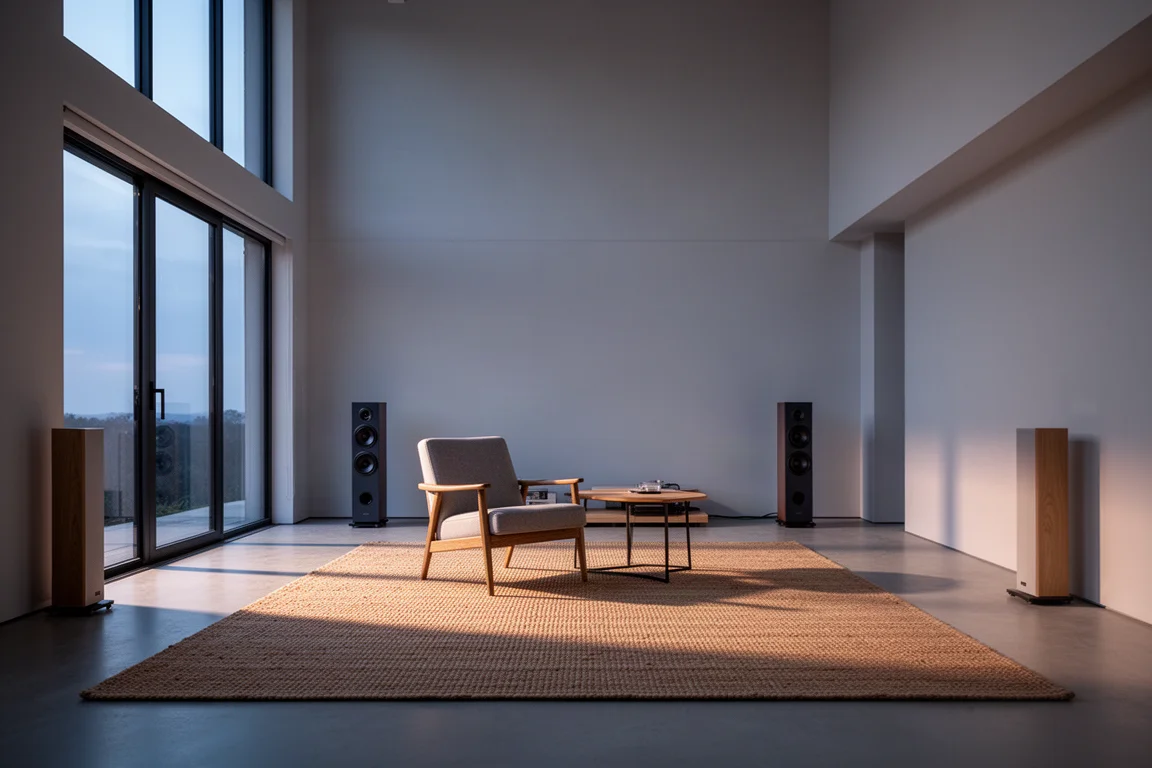
Room size is the deciding factor. The Diva Utopia is the more versatile of the two and works well in medium to large rooms, where its balance holds up at both quiet and loud listening levels. The Mezza is built for much larger spaces and for listeners who want deeper bass and considerably more headroom, and it rewards a room that can accommodate its size and output.
Budget matters as much as space. At around $40,000 per pair, the Diva Utopia is the more accessible route into a fully active flagship system. At around $70,000 per pair, the Mezza costs substantially more, and in the right room it delivers scale and effortlessness that the smaller model cannot match. If you are weighing the two, be honest about the room first, then about how loud you listen and how much low-frequency authority you actually want.
Setup is quick on both models. Plug each speaker into power, link the pair wirelessly or with the supplied cable, connect to the network, run ADAPT, and you are listening. Room correction helps, but it is not a substitute for sensible placement and acoustic treatment in the room itself.
Conclusion
The Diva Mezza Utopia and the Diva Utopia share one idea: flagship sound without separates, cable clutter, or a complicated setup. The Diva Utopia remains the more broadly usable speaker, suited to medium and large rooms at around $40,000 per pair. The Diva Mezza Utopia takes the same refinement and adds scale, deeper bass, and greater headroom for very large rooms, at around $70,000 per pair. Both are expensive, both are built to a very high standard, and both make the case that an all-in-one system can stand alongside traditional separates.
Further reading
Related Reviews
Hi-Fi Speakers
1723 THX Tower vs 1528 Bookshelf: Which Speaker Fits Your Room?
Two speakers at roughly the same price, built very differently. How the 1723 THX tower and the 1528 bookshelf compare on construction, bass, power needs, and sound.
Hi-Fi Speakers
Acoustic Energy AE 300 Review: Deep Bass From a Compact Standmount
A two-way standmount with real wood veneer, surprising low-end weight, and a warm, easygoing character. Here is what to know before buying.
Hi-Fi Speakers
Acoustic Energy AE1 40th Anniversary Review: A Modern Take on a British Classic
A compact standmount that revives a 1980s favorite with all-new parts, a warm mid-centric balance, and a price of £1,499 per pair.