Hi-Fi Speakers
Focal Aria Evo X N°2 Review: A Neutral-Leaning Tower That Scales With Your System
The Focal Aria Evo X N°2 is the smallest tower in the new Aria Evo X line. Here is what it does well, what it asks of your amplifier, and who should put it on a shortlist.
Introduction
Focal’s Aria Evo X range covers a lot of ground: a bookshelf model, three floorstanding towers, and a center channel. The Aria Evo X N°2 is the smallest tower in that line, which makes it the natural entry point for listeners who want a slim floorstander rather than a large one.
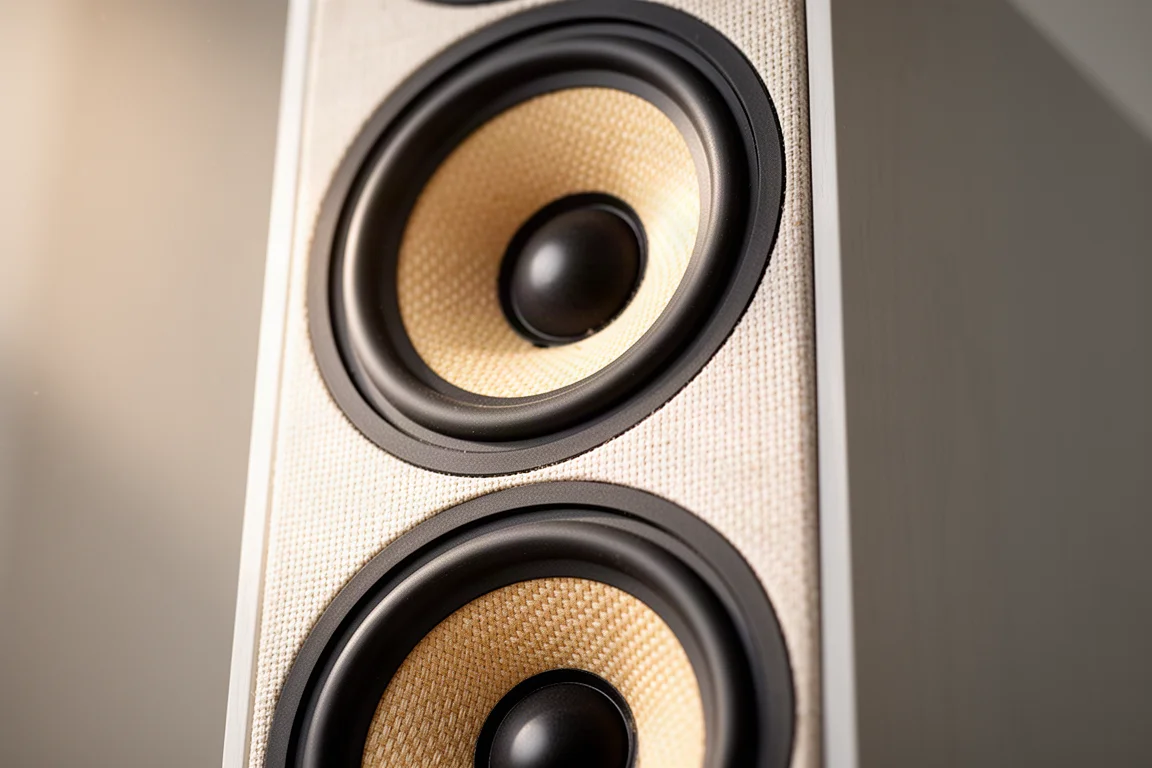
It is a three-way bass reflex design, ported through a pair of vents, and it uses four drivers: two 6.5-inch bass drivers and a single 6.5-inch midrange driver, all built with Focal’s flax cone material, plus a 1-inch aluminum and magnesium inverted dome tweeter. The published frequency response is 45 Hz to 30 kHz. That is not full range on paper, and yet the N°2 tends to sound deeper and richer in a real room than those numbers imply.
At roughly $5,000 for the pair, it sits in the middle of a busy market for tower speakers. The more useful question is not whether it performs, but where it fits and what it asks of the rest of your system.
Who This Speaker Is For
The N°2 suits listeners who want a tower that stays composed across genres and volumes rather than one that chases a single flavor. It is a strong candidate if you already own a capable amplifier or receiver and you listen to a wide spread of music: acoustic recordings, electronic, pop, rock, and everything in between.
It also makes sense if your speaker budget is larger than your electronics budget. The N°2 responds clearly to the quality of what feeds it, so a well-matched mid-priced integrated amplifier will take you further than an expensive speaker paired with an underpowered amp.
One thing you do not have to worry about is material. Poor recordings do not fall apart on this speaker, which makes it a comfortable choice for anyone with a library that spans decades and mastering quality.
Design and Build Quality
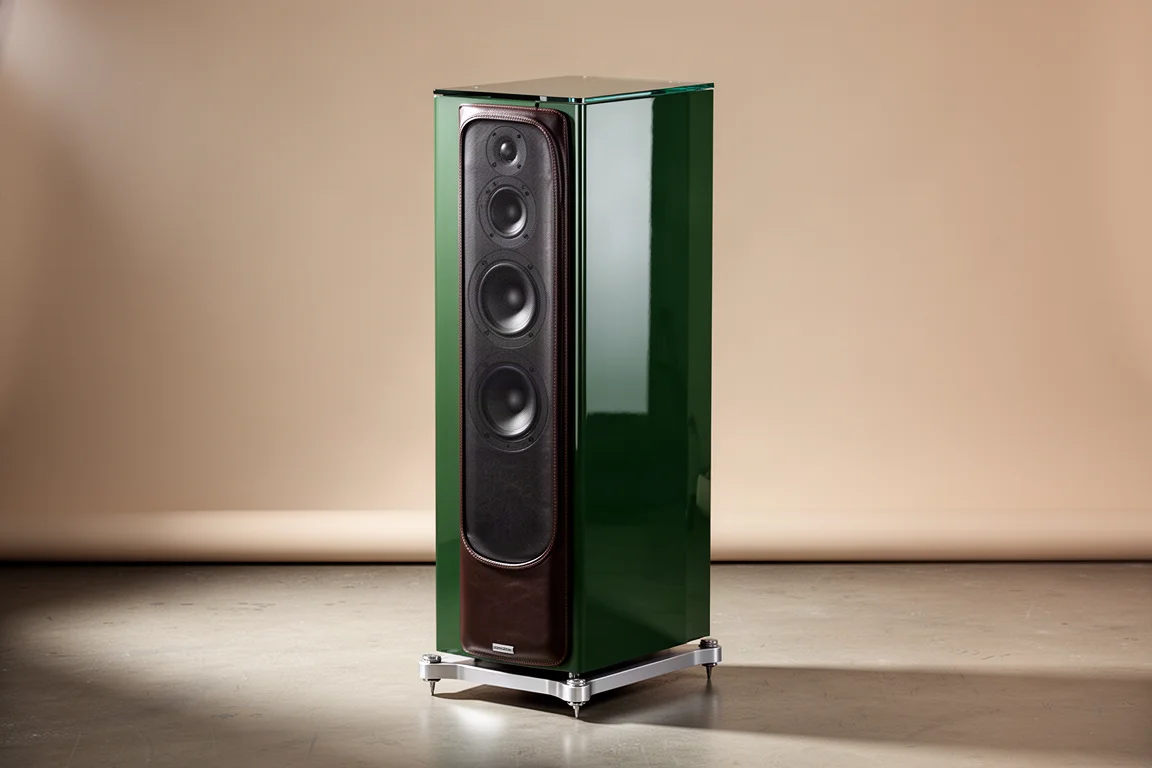
The line is offered in three finishes: high gloss piano black, walnut, and a high gloss moss green. In some lighting the green reads much darker than product photos suggest, close to black, so it is worth seeing in person if the finish matters to you. Whichever you choose, the finish appears on the side panels only; the front and back of the cabinet are clad in leather.
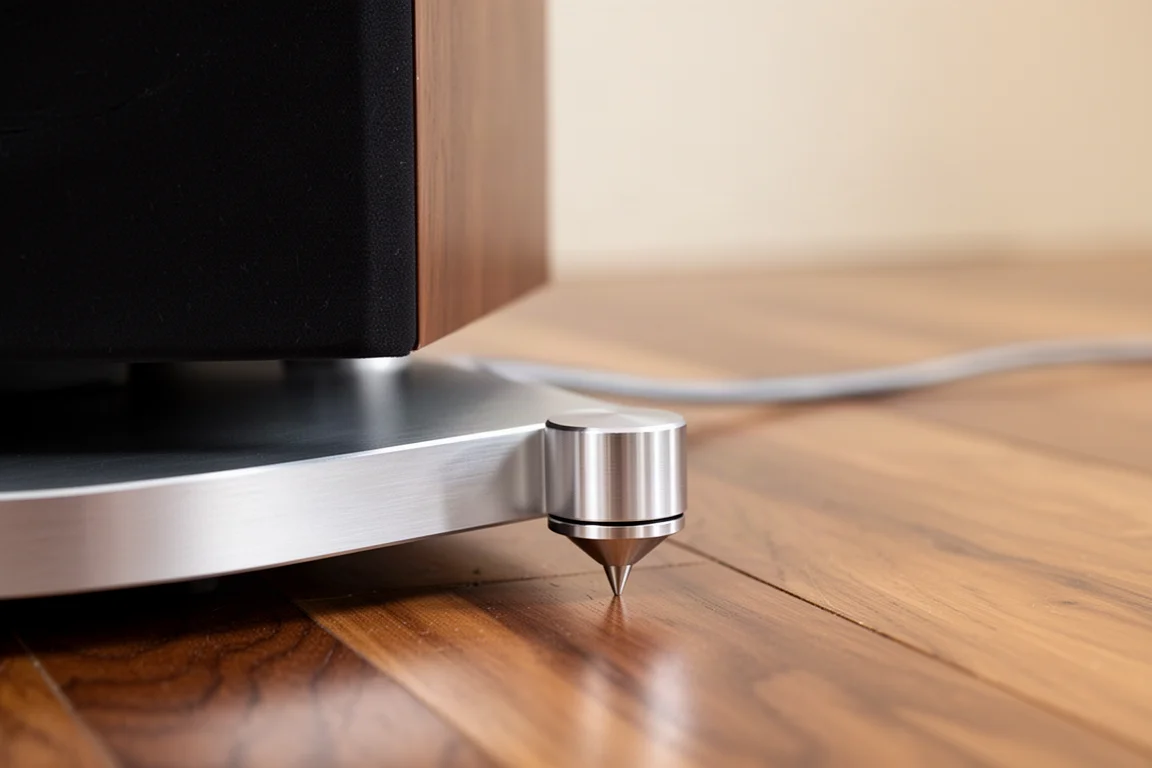
The rest of the detailing is thoughtful. There is a glass top panel, and the cabinet sits on an aluminum plinth with adjustable spikes that makes leveling the speaker straightforward. Magnetic grilles are included and cover the drivers cleanly if you prefer a more subdued look.
Sound Quality and Real-World Performance
In-room measurements taken at the listening position, on and off axis at 75 dB, show a mildly boosted bass response, a mostly linear midrange that tapers gently into the treble, and a rise in the top octave near 20 kHz. That final characteristic gives the N°2 a sense of liveliness and detail without tipping into brightness.
Bass and Dynamics
The N°2 favors impact and punch over absolute bass detail. Kick drums come across as controlled and largely free of bloom. In a large room it reached down to 40 Hz comfortably, and the sensation of low-frequency weight felt greater than that figure suggests.
Dynamically it is snappier and livelier than some rivals, and it takes less volume to come alive. Electronic, pop, and rock material benefits most. Adding a subwoofer in a large space will show you what the speaker is not doing on its own.
Midrange and Treble
The midrange is the highlight. Vocals sound true to life, with an articulation and agility that can be genuinely addictive. There is less low-midrange weight here than some competitors offer, but the N°2 never sounds thin.
The inverted dome tweeter is composed and fatigue-free at every volume, with enough sparkle to feel open without sounding overbearing or artificial. It is also unfussy about source quality, which is rarer than it should be at this level.
Soundstage and Scale
Spatially the N°2 is very good. Separation and the delineation of individual instruments within the stage are a touch better on the KEF R11 Meta, with the Focal a close second. A far more expensive flagship that happened to be on hand redefined the ceiling for soundstage, and almost any speaker will look modest next to it.
The N°2 also scales unusually well. As volume rises, its measured response stays essentially unchanged, which is good news if you like to listen loud.
Pairing, Placement, and Room Fit
Focal rates the N°2 at a nominal 8 ohms, but the impedance can dip as low as 2.9 ohms. That dip makes a capable amplifier or receiver a practical requirement rather than a nicety.
Pairings change the character more than you might expect. A clean, detail-focused front end keeps the emphasis on dynamic contrast. A warmer, more laid-back receiver softens the presentation and relaxes the treble. A neutral integrated amplifier lands in between, and is a sensible choice if you would rather spend on the speaker than on electronics.
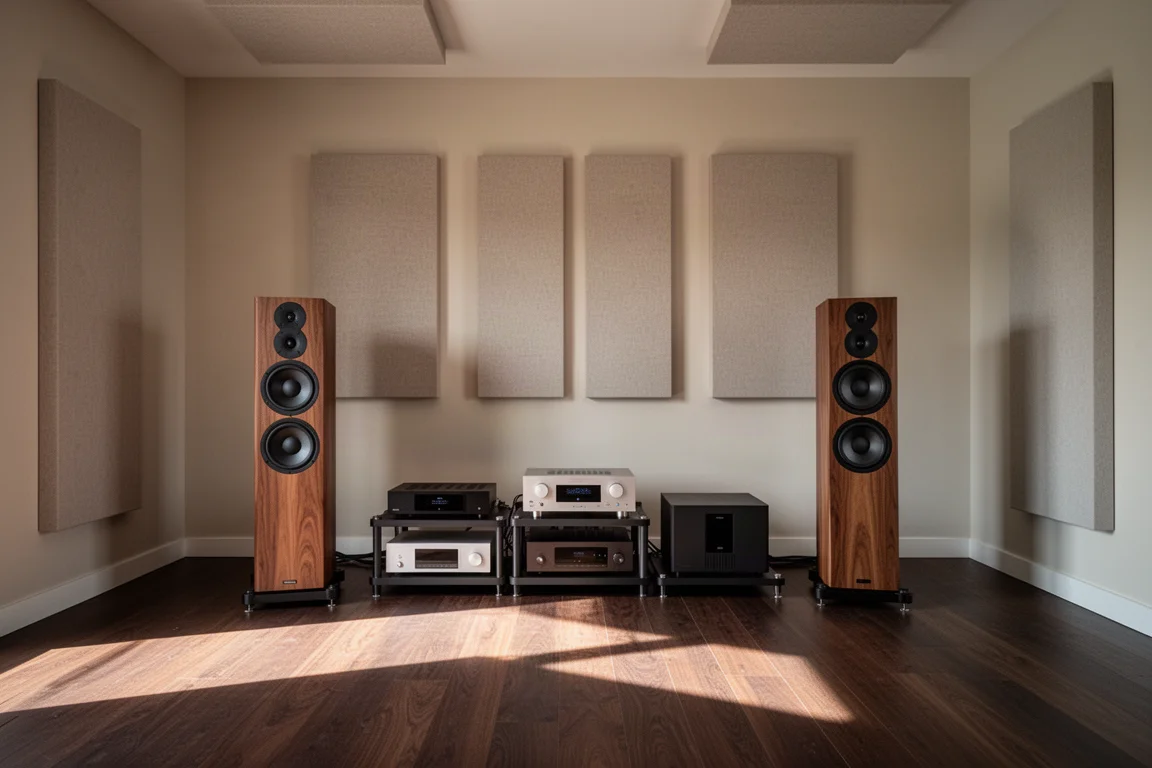
Placement matters too. The N°2 worked best about 2.5 ft from the front wall, with almost 10 ft between the speakers and roughly 12 ft to the listening position, which is broadly in line with Focal’s own recommendations.
How It Compares
At around $5,000 per pair, the N°2 faces serious competition, and a few comparisons are worth knowing before you commit.
The Sonus faber Lumina V costs roughly $3,000 per pair and is a similarly space-friendly tower. It has less of a bass lift, so it may not deliver the same sense of range, and the two are closely matched through the midrange. The Focal sounds a little more refined and less peaky at higher volumes.
The MartinLogan Motion XT F100 is more dynamically punchy and plays deeper, reaching below 30 Hz easily, which may remove the need for a subwoofer altogether. Its AMT tweeter is an acquired taste, and the Focal handles subtle detail a little better.
The Klipsch Forte IV is a different proposition entirely. If the Klipsch sound is what you want, no amount of comparison will change your mind, and the two speakers have almost nothing in common.
The Yamaha NS-2000A is very evenly matched, with an organic presence that invites long listening sessions. The Focal measures better, but the gap is not decisive. The KEF R11 Meta is slightly more expensive and remains the more refined, more neutral speaker, with better separation and delineation, though the Focal is the livelier and more energetic of the two.
Things to Consider Before Buying
- The 2.9 ohm impedance dip means budgeting for an amplifier that can handle a demanding load.
- Bass prioritizes punch over texture. If minute low-frequency detail is your priority, the KEF R11 Meta does more there.
- The reported 45 Hz lower limit is honest. In a large room, a subwoofer is a worthwhile addition.
- The moss green finish can read almost black depending on the light, and the finish appears on the side panels only.
- The cabinet is a little more alive or resonant in places than some rivals, which adds energy but is not the last word in cabinet neutrality.
Buying Advice
Start with your amplifier. If you own something capable of driving a load that dips to 2.9 ohms, the N°2 is ready to reward it; if you do not, factor that cost into the decision before anything else.
From there, the choice comes down to character. If you want a genre-agnostic tower that sounds lively at low volumes, keeps its composure when pushed, and handles everything from electronic to acoustic material without fatigue, the N°2 is one of the better options in this price band. If maximum neutrality and low-level detail are your priorities, the KEF R11 Meta is the more linear speaker. If you want maximum excitement, Klipsch remains its own thing. If you would rather avoid a subwoofer entirely, the MartinLogan Motion XT F100 digs deeper out of the box.
In a large room, plan on a subwoofer to fill in what the N°2 cannot reach on its own; it integrates cleanly and the speaker keeps its composure when relieved of the deepest octaves. Pair it with a neutral amplifier and take the time to position it properly, and it delivers a level of performance that holds up well against considerably more expensive speakers.
Conclusion
The Aria Evo X N°2 is one of Focal’s better speakers, and an easy one to recommend for anyone shopping in the upmarket segment without wanting to spend flagship money. It asks for a capable amplifier and rewards careful placement, but the payoff is a neutral-leaning, fatigue-free tower that scales with volume and suits almost any genre you throw at it.
Product link
View more details for Focal Aria Evo X N°2
This product is mentioned in the review. Check the specifications, options, and compatibility before buying.
View more details for Focal Aria Evo X N°2Further reading
Related Reviews
Hi-Fi Speakers
1723 THX Tower vs 1528 Bookshelf: Which Speaker Fits Your Room?
Two speakers at roughly the same price, built very differently. How the 1723 THX tower and the 1528 bookshelf compare on construction, bass, power needs, and sound.
Hi-Fi Speakers
Acoustic Energy AE 300 Review: Deep Bass From a Compact Standmount
A two-way standmount with real wood veneer, surprising low-end weight, and a warm, easygoing character. Here is what to know before buying.
Hi-Fi Speakers
Acoustic Energy AE1 40th Anniversary Review: A Modern Take on a British Classic
A compact standmount that revives a 1980s favorite with all-new parts, a warm mid-centric balance, and a price of £1,499 per pair.