Home Audio
Fluance Ai81 Review: Are These $500 Powered Tower Speakers Worth Buying?
A practical look at the Fluance Ai81 powered tower speakers, covering their 150-watt amplification, Bluetooth 5 and optical inputs, bass-forward tuning, and the listeners they suit best.
Introduction
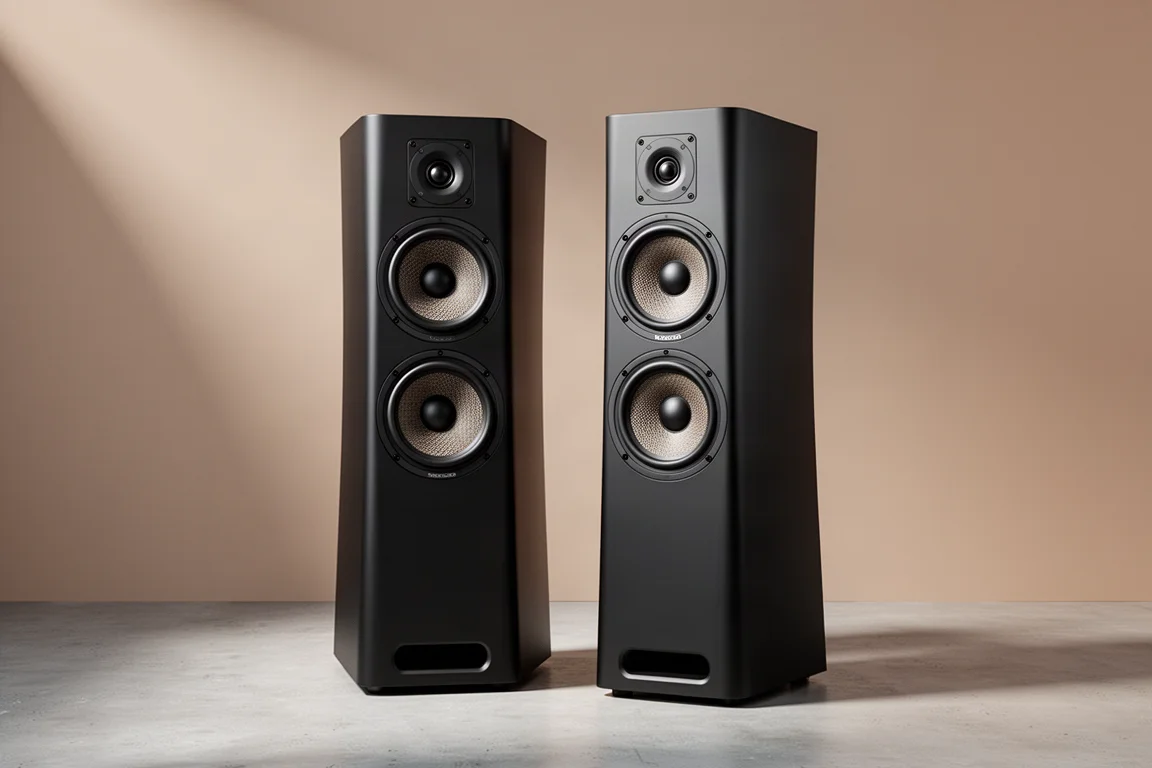
The Fluance Ai81 is a pair of powered tower speakers that sells for around $500 per pair, and that combination of size, built-in amplification, and price is unusual. Each tower houses two 6.5-inch woofers and an integrated 150-watt amplifier, so there is no receiver or separate power amp to buy. Inputs cover RCA and optical, Bluetooth 5 handles wireless streaming, and a subwoofer output is there if you want more low end.
The question is not whether the Ai81 offers a lot of hardware for the money. It clearly does. The question is whether its sound signature matches the way you actually listen.
Who the Fluance Ai81 Is For
These speakers make the most sense for listeners who value convenience and scale over analytical detail. They suit someone who wants big, room-filling sound from a simple two-piece setup, whether that is background music while cooking, music for a dinner with guests, or television audio without adding an AV receiver.
They also suit anyone stepping up from a single Bluetooth speaker. The jump in physical size, bass output, and stereo imaging is substantial, and the included remote with tone controls keeps everyday use simple.
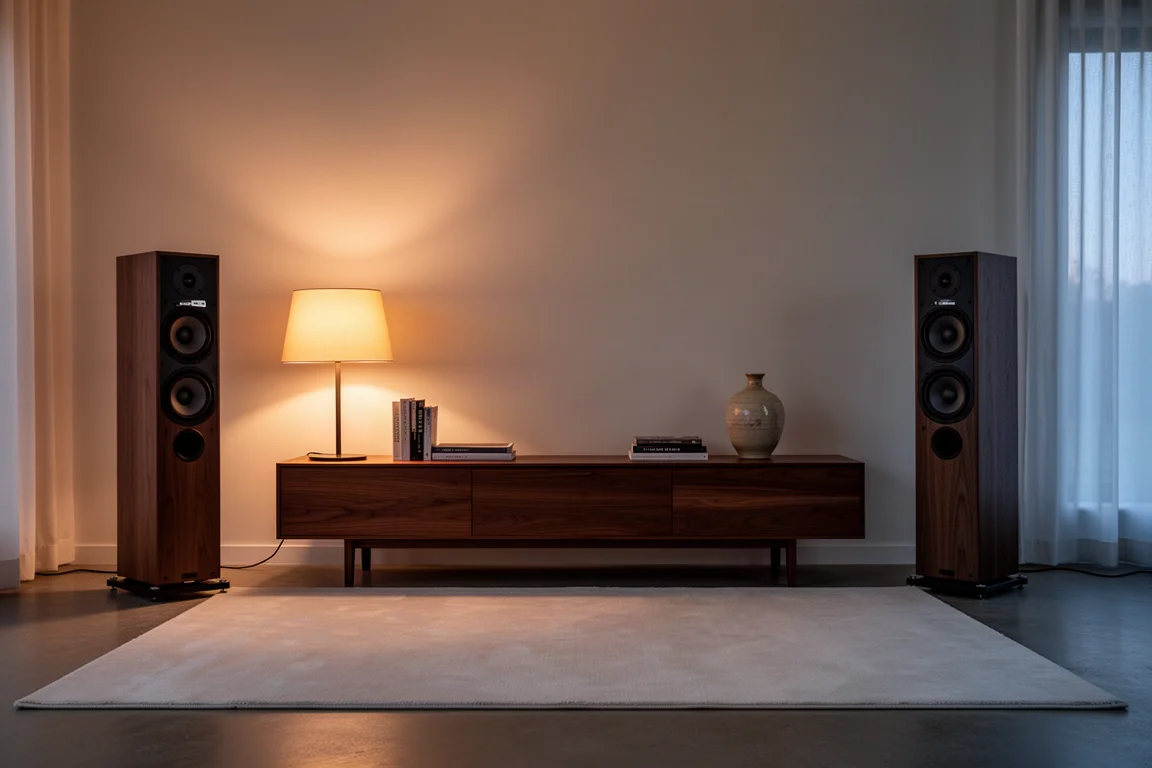
They are less suited to listeners who want a neutral, midrange-forward presentation or who plan to do close, critical listening.
Main Strengths: Deep Bass and a Wide Sound Stage
Bass output is the headline. The Ai81 reaches deep for its price, and the onboard processing deliberately emphasizes the low end. The speakers also throw a very large sound stage, which gives music a sense of scale that small speakers cannot match.
Bluetooth streaming is genuinely enjoyable through them, and the presentation works well when music is part of the room rather than the sole focus. High frequencies come through clearly, and there is plenty of low-frequency presence to fill a living space.
The system is also easy to live with. Everything is amplified inside the powered cabinet, so setup means connecting your sources, plugging in power, and running the supplied cable to the second tower.
Setup and Connectivity: RCA, Optical, Bluetooth 5
The back panel is straightforward. There are two RCA inputs, a subwoofer output, and an IEC power connection. Speaker outputs run from the right speaker to the left, which means both towers are driven by the amplifier in the powered cabinet.
Bluetooth 5 handles wireless streaming, and the optical input lets you take audio straight from a television. Adding a subwoofer is possible through the subwoofer out, and the system applies an 80 Hz crossover to that output when a sub is connected.
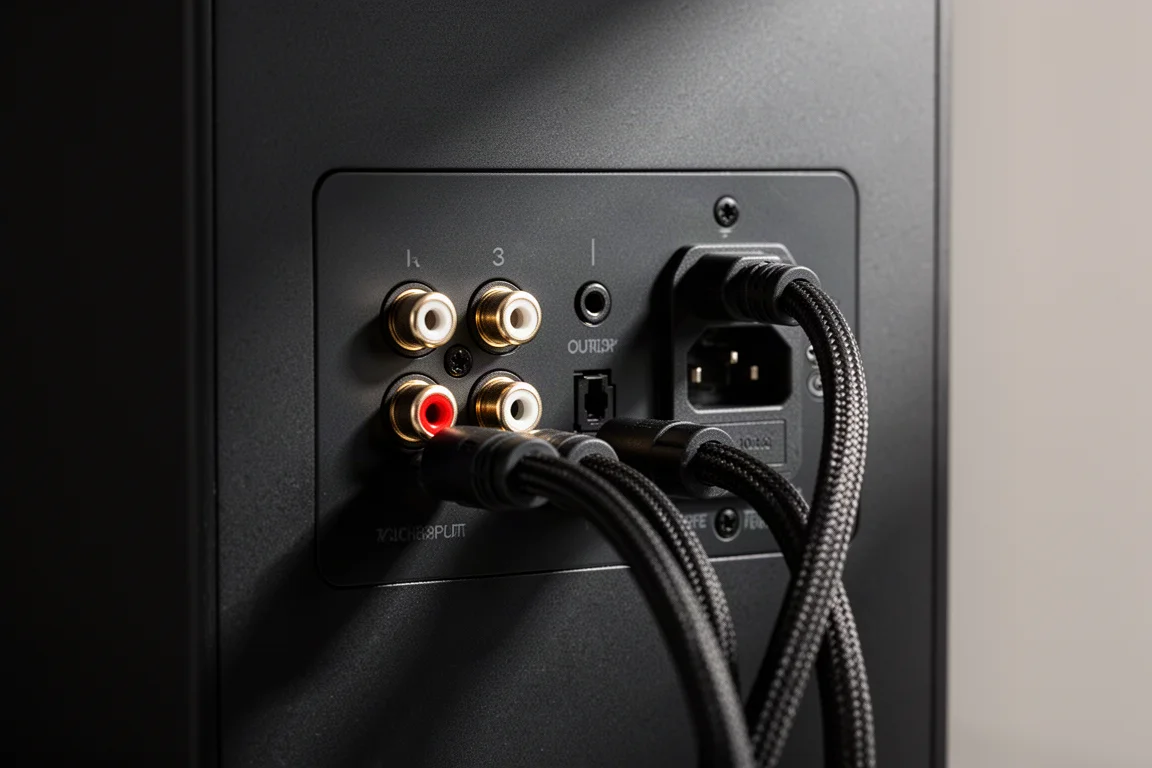
One small note: the included speaker cable is short and does not arrive terminated with banana plugs, although the terminals on the speakers accept them. If your layout needs more length, plan on using your own cable.
Cabinet and Build Observations
The cabinets are made from internally braced MDF and use down-firing bass ports for deep, omnidirectional low-frequency output. Finish options are varied: a white version with bamboo sides, brown versions with either a black or a white baffle, and an all-black version for a discreet look.
Weight gives some indication of the construction. The amplified tower weighs about 30 pounds and the passive tower about 29 pounds, so the amplifier itself adds very little mass. For a cabinet of this size holding two 6.5-inch woofers, that is light, and the enclosure does not feel especially rigid.
Where the Ai81 Fits in the Fluance Powered Range
Fluance offers three powered models. There is a 6.5-inch bookshelf version at around $299, the tower covered here with two 6.5-inch woofers at around $500, and a 5-inch bookshelf version at around $249.
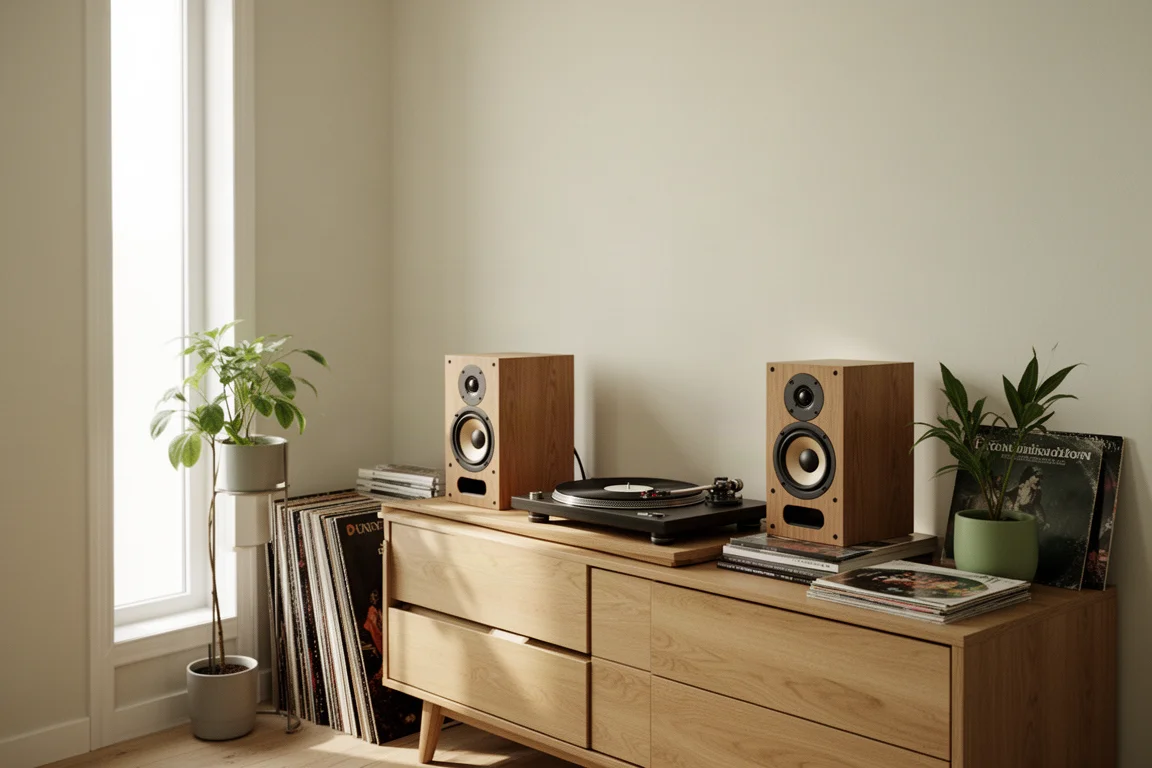
That lineup makes the decision fairly clear. If you want maximum output and physical presence, the tower is the one to pick. If space or budget is tighter, the bookshelf models deliver similar convenience in a much smaller footprint.
Things to Consider Before Buying
The stock tuning is strongly V-shaped, with bass and treble both boosted. That low-end emphasis is deep enough to cover up a good amount of midrange detail, and the lifted treble adds extra brightness on top. The remote’s tone controls help: lowering bass by roughly three or four steps and treble by around two brings things closer to balance. These are simple controls rather than a full equalizer, though, and there is no midrange adjustment and no multi-band EQ.
Midrange vocals can sound a little hollow, and the cabinet produces some resonance in the upper bass and lower mids that colors voices. Listeners who want clearly defined mids will notice it. There is also no phono input, so a turntable needs its own phono stage or a separate preamp.
Buying Advice
If you frame the Ai81 as a premium Bluetooth speaker built into two cabinets, with a remote, tone controls, optical and RCA inputs, and a subwoofer output, the value is hard to argue with at this price. Very little else at this price delivers this much physical scale and bass output with so little setup.
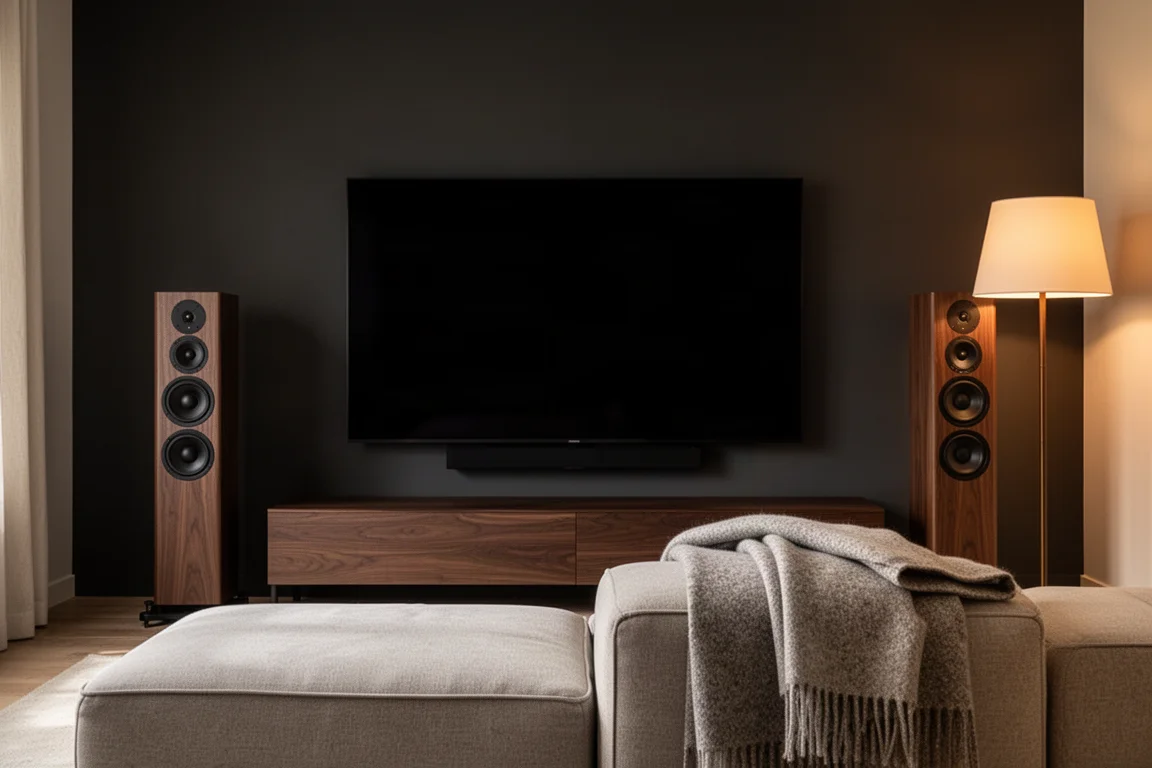
If you frame it as a serious hi-fi speaker for critical listening, expectations should be different. The tuning and the cabinet behavior put limits on midrange clarity and refinement. For movies and television it holds up well, dialogue stays intelligible, and low-end output is not a concern even without a subwoofer.
Buyers should decide based on use case. Convenience, volume, and simplicity point toward yes, while neutral tonal balance and detailed mids point elsewhere.
Conclusion
The Fluance Ai81 is a high-value powered tower speaker for listeners who want a lot of sound with almost no equipment. Deep bass, a wide sound stage, Bluetooth 5, optical and RCA inputs, and a usable remote cover the practical needs of a living room system, and the price per pair is low for this much cabinet and amplification.
The trade-off is a bass-heavy, treble-forward tuning with a veiled midrange and some cabinet resonance. That is a reasonable compromise at this price, but it is still a compromise. If your priority is big, easy, convenient sound, the Ai81 delivers it. If your priority is a balanced, midrange-focused presentation, this is probably not the speaker for you.
Product link
View more details for Fluance Ai81
This product is mentioned in the review. Check the specifications, options, and compatibility before buying.
View more details for Fluance Ai81Further reading
Related Reviews
Home Audio
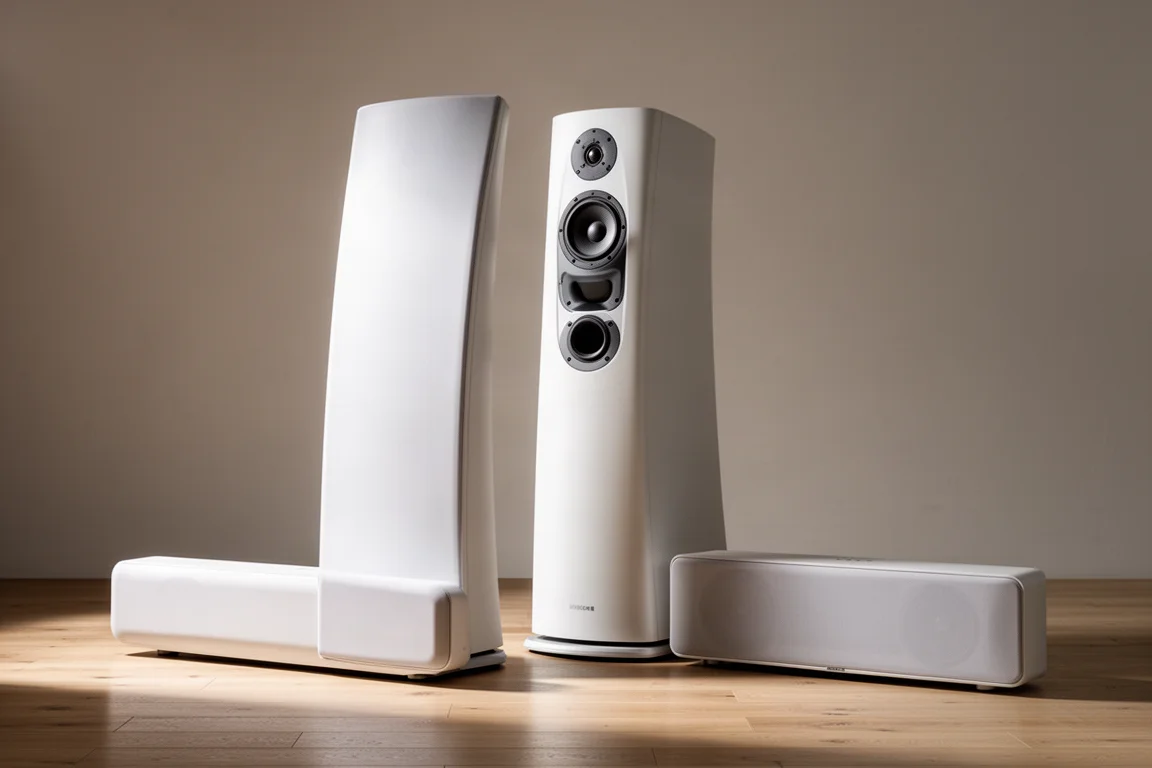
Aperion Novus Tower and Center Review: Punchy Home Theater Sound With Real Refinement
A close look at the Aperion Novus tower and center speakers, from their layered paint finish and punchy bass to the 4-ohm load and what the price actually buys.
Home Audio
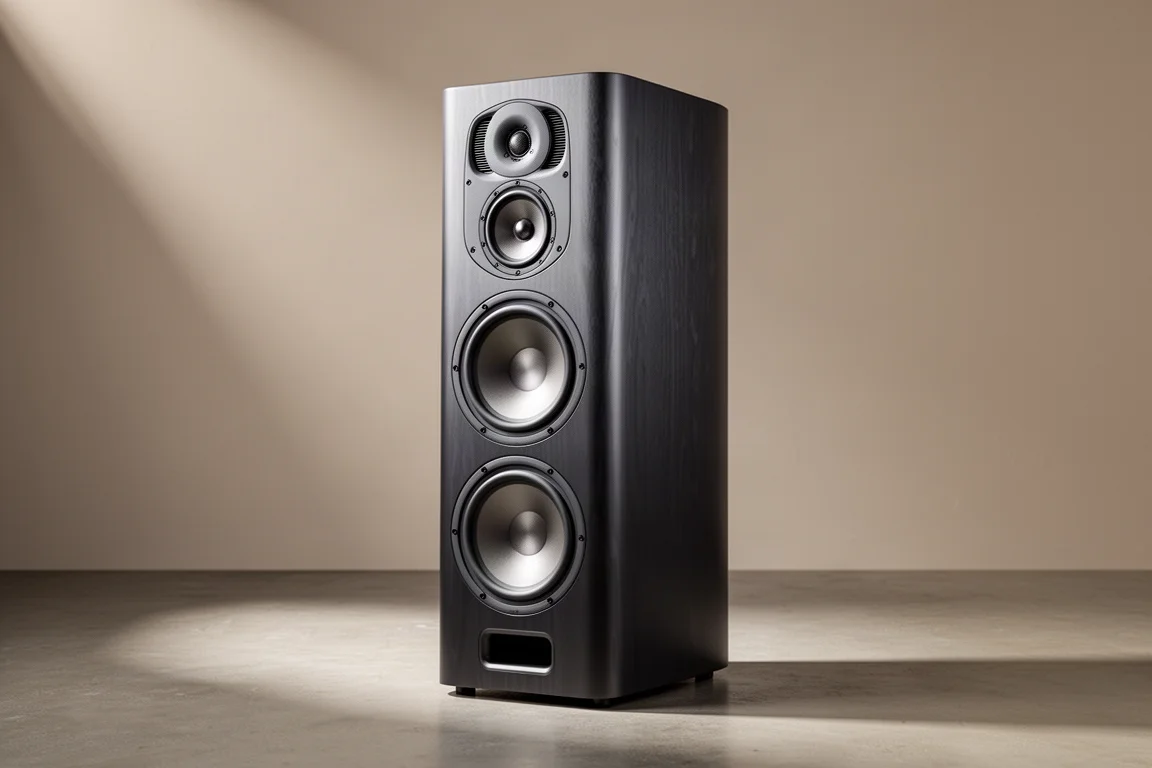
Arendal 1610 Tower Review: Flagship Dynamics in a Room-Friendly Tower
A compact floorstanding tower with three 8-inch aluminium woofers, a 5-inch carbon midrange, and the kind of bass heft usually reserved for much larger speakers.
Home Audio
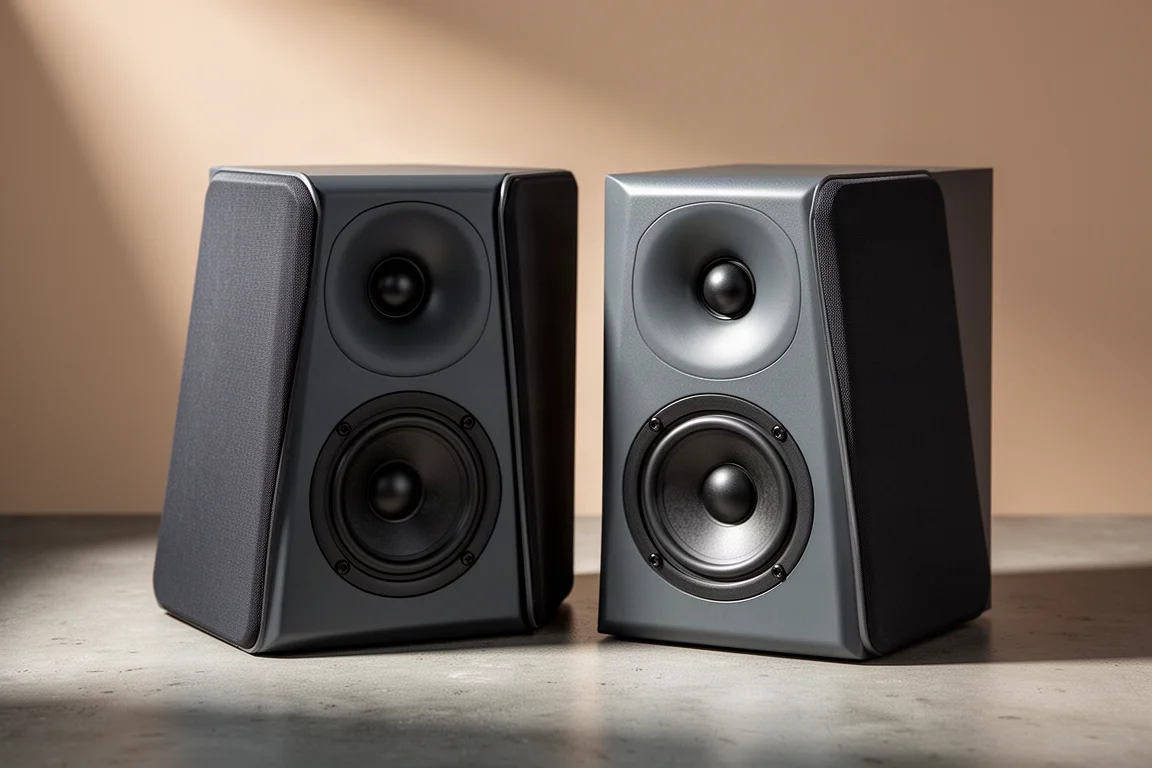
Arendal 1723 S THX Review: A Reference Speaker Built Like a Tank
A practical look at the Arendal 1723 S THX, a sealed, THX-certified speaker with exceptional build quality, a very flat top end, and a midrange that responds beautifully to EQ.