Outdoor Clothing
Fjallraven Expedition Pack Down Hoodie Review: A 490g Down Layer for Cold Days
A close look at the Fjallraven Expedition Pack Down Hoodie, a 490g jacket with 110g of ethically sourced goose down, a high collar, and a long cut built for cool-weather layering.
Introduction
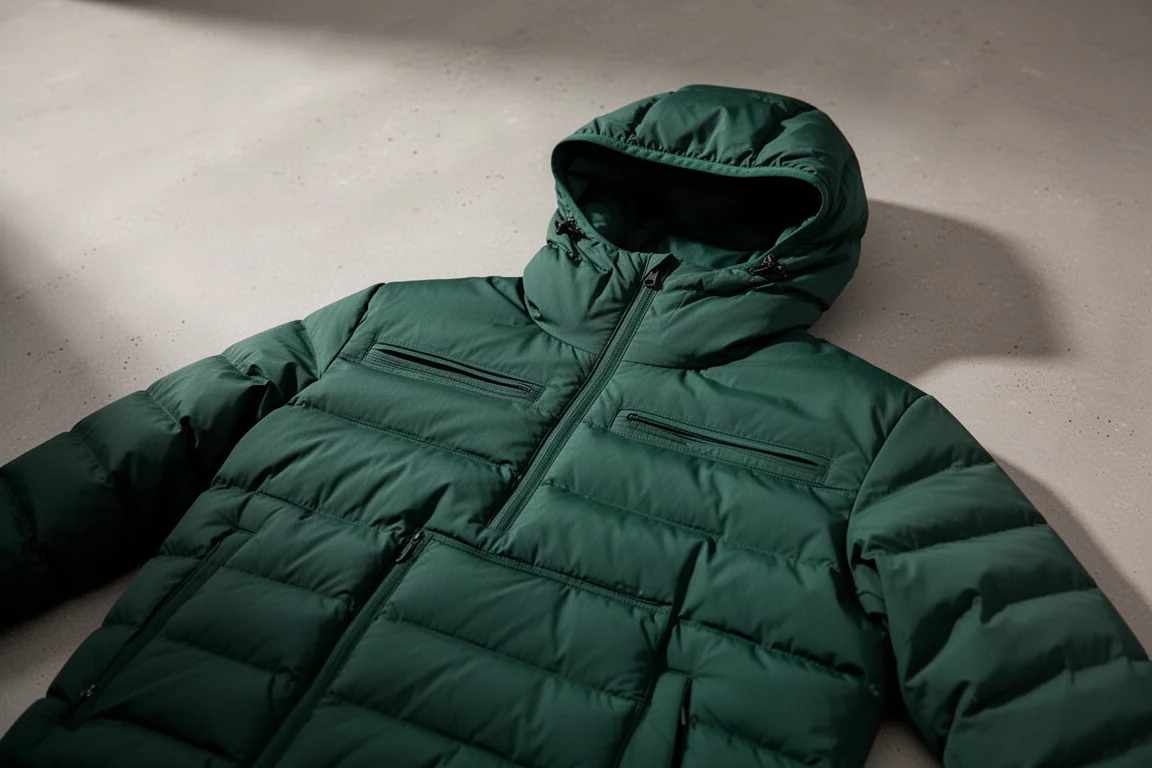
The Fjallraven Expedition Pack Down Hoodie is a lightweight down jacket aimed at people who spend real time outdoors in cool conditions. It carries 110 grams of ethically sourced down, 90 percent of which is goose down, and the complete jacket weighs 490 grams. That combination is the core of the pitch: enough insulation to matter on a cold morning, without turning a day pack into a heavy load.
It is also a premium purchase. At around 275 pounds, this is not a jacket you buy casually, so the useful question is whether the design decisions behind it line up with how you actually wear a jacket outdoors. The short answer is that the Expedition Pack Down Hoodie is built around warmth retention and packability, and it leans hard into both.
Who This Product Is For
This jacket suits anyone who is outdoors often in cool weather: hill walkers, backpackers, and people who walk daily, whether that is a morning loop, a lunchtime stretch, or a full weekend on the hills. The 490 gram weight is the reason it works so well in that role. It is light enough to carry as a spare layer in a rucksack and warm enough to wear as your main outer layer when temperatures sit somewhere around zero to five degrees.
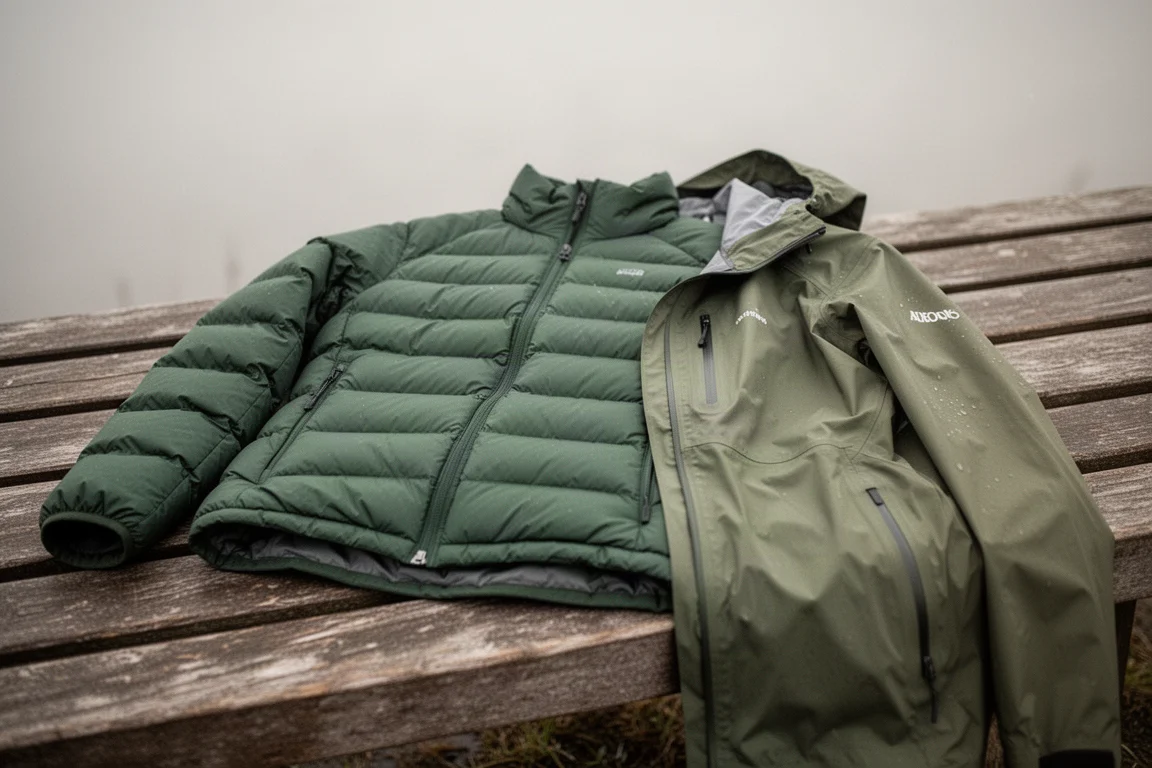
It also fits neatly into a layering system. Worn underneath a waterproof hardshell it behaves as a mid layer, and on drier, calmer days it is comfortable enough to wear on its own. That flexibility is what makes it a sensible choice for people who want one jacket that covers a wide range of cool-weather days rather than a specialist piece for extreme cold.

The sizing runs long, which is a deliberate part of the design rather than an accident. The cut extends to just above the backside on a wearer around 172 centimeters tall in a size small, and that extra length translates directly into extra warmth around the lower back and hips. For anyone who dislikes a short jacket riding up in the wind, that is a meaningful benefit rather than a minor detail.
Main Strengths
The single most striking feature is the neckline. The collar sits unusually high, and it does a genuinely effective job of keeping cold drafts away from the throat, which is the sort of thing you notice immediately on a windy ridge or an early morning walk. The hood is well judged too. Once the jacket is zipped fully, the hood can be adjusted to sit close around the head, and the result is a jacket that seals out drafts rather than letting them creep in around the edges.
Storage is handled thoughtfully for a jacket this light. There are two hand-warmer pockets positioned where you would naturally put your hands on a cold day, plus an internal pocket for small items. A pull cord at the bottom hem lets you cinch the jacket in and stop breezes working their way up underneath. Inside, there is a small information panel about the jacket itself, a detail that fits the Expedition series’ reputation for considered design.
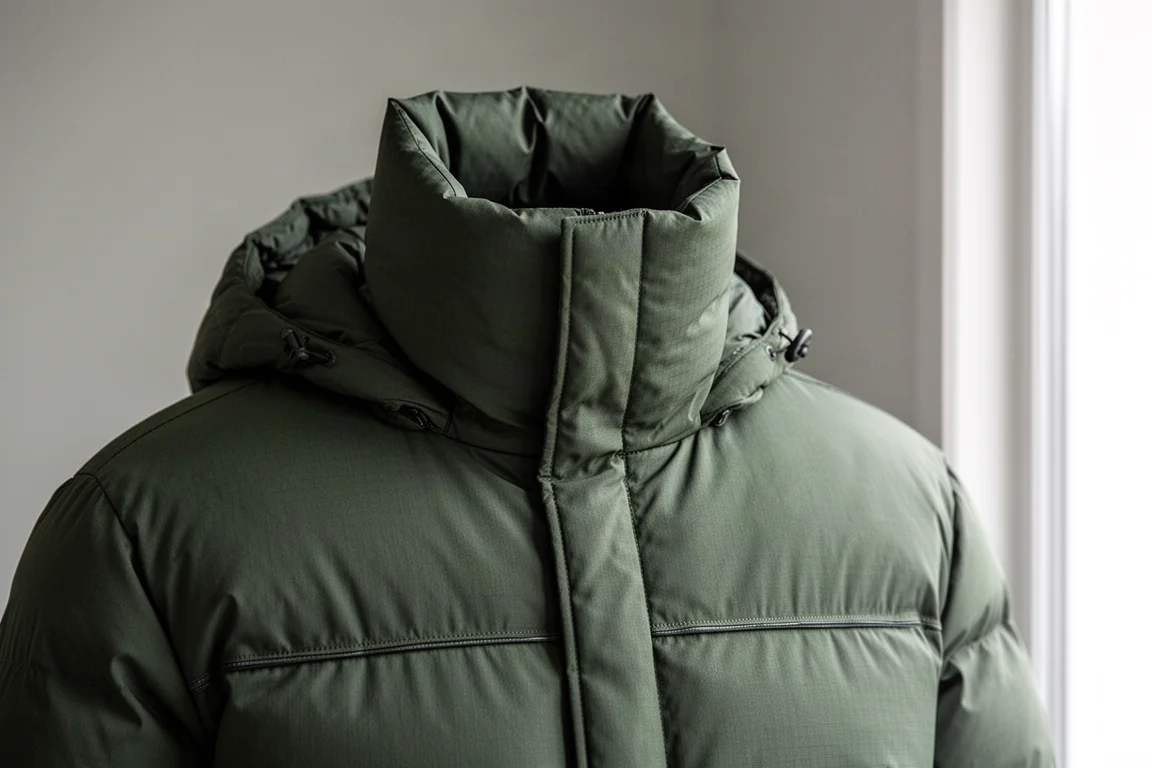
Packability is the other headline strength. The jacket folds into its own pocket, so when you are not wearing it, it takes up very little room in a rucksack or backpack. Combined with the low overall weight, that makes it easy to justify carrying as insurance against a cold summit or a change in the weather. The fabric itself feels soft and comfortable against the skin, and the whole jacket feels flexible rather than stiff, so it moves with you instead of fighting you on a climb.
Things to Consider Before Buying
The price is the first thing to weigh up. At around 275 pounds, this sits at the top end of what most people would expect to pay for a lightweight down layer, and that cost is the main barrier rather than any shortcoming in the design.
The second consideration is the temperature window. This jacket is at its best in cool conditions in the region of zero to five degrees. It is not intended as a deep-winter piece for sustained sub-zero exposure, and it is not a warm-weather layer either. If your outdoor time is mostly in milder temperatures, you would be paying for insulation you rarely need.
Fit is worth thinking about as well. The long cut is one of the jacket’s best features, but it does mean the sizing feels different from a shorter, more standard insulated jacket, so it is worth checking measurements rather than assuming your usual size will sit the way you expect. It is also worth knowing that the shoulders carry a small amount of synthetic insulation alongside the down, a design choice that adds structure and resilience to the areas most exposed to moisture and pack straps.
Buying Advice
If you want one lightweight insulated jacket that works as both a mid layer under a shell and a standalone outer layer on cool days, this is a strong option. The 490 gram weight, the 110 grams of ethically sourced 90 percent goose down, and the ability to pack into its own pocket all point to a jacket designed for people who move and want their gear to keep up.

Buy it if you are regularly outdoors in cool weather and you value a high collar, an adjustable hood, and a longer cut that keeps your lower back covered. Think carefully if your budget is tighter or your typical conditions are milder, because the value here comes from how often you actually wear it in the zero to five degree range. For daily walkers, hill walkers, and backpackers who want a light, soft, genuinely comfortable layer, the case for it is clear.
Conclusion
The Fjallraven Expedition Pack Down Hoodie earns its place as a serious lightweight down layer. It is warm where it matters, with a high neckline and an adjustable hood that keep drafts out, and it is light and packable enough to disappear into a rucksack when the weather turns. The long cut adds coverage, the pockets are well placed, and the fabric feels soft and flexible in use.
The compromises are honest ones: a premium price and insulation tuned to a specific cool-weather band rather than year-round versatility. For the right buyer, someone who is outdoors often and wants a jacket that performs as a mid layer and an outer layer, it is a very easy piece of kit to justify.
Product link
View more details for Fjallraven Expedition Pack Down Hoodie
This product is mentioned in the review. Check the specifications, options, and compatibility before buying.
View more details for Fjallraven Expedition Pack Down HoodieFurther reading
Related Reviews
Outdoor Clothing
Artelect Layering System Review: Four Outdoor Layers Built to Last
A closer look at four pieces from the Artelect layering system, from a full merino base layer to a 30,000 mm waterproof shell, and where each one fits.
Outdoor Clothing
Best Sun Hoodies for Hiking: Rab Force and Black Diamond Alpenglow Compared
Two lightweight sun hoodies for hiking, climbing, and mountaineering, compared on fabric feel, breathability, hood design, odor control, and value.
Outdoor Clothing
Decathlon Down Jackets Compared: Trek 100 and Forclaz 900
A practical look at two Decathlon down jackets: the low-cost Trek 100 and the warmer Forclaz 900, plus the trade-offs that matter before you buy.