Cycling Saddles
Fizik Antares Versus Evo R1 Adaptive vs Specialized S-Works Romin EVO Mirror: Two 3D-Printed Saddles Compared
A close comparison of two premium 3D-printed bike saddles, covering shape, comfort, cleaning, durability, and whether the high price is justified.
Introduction
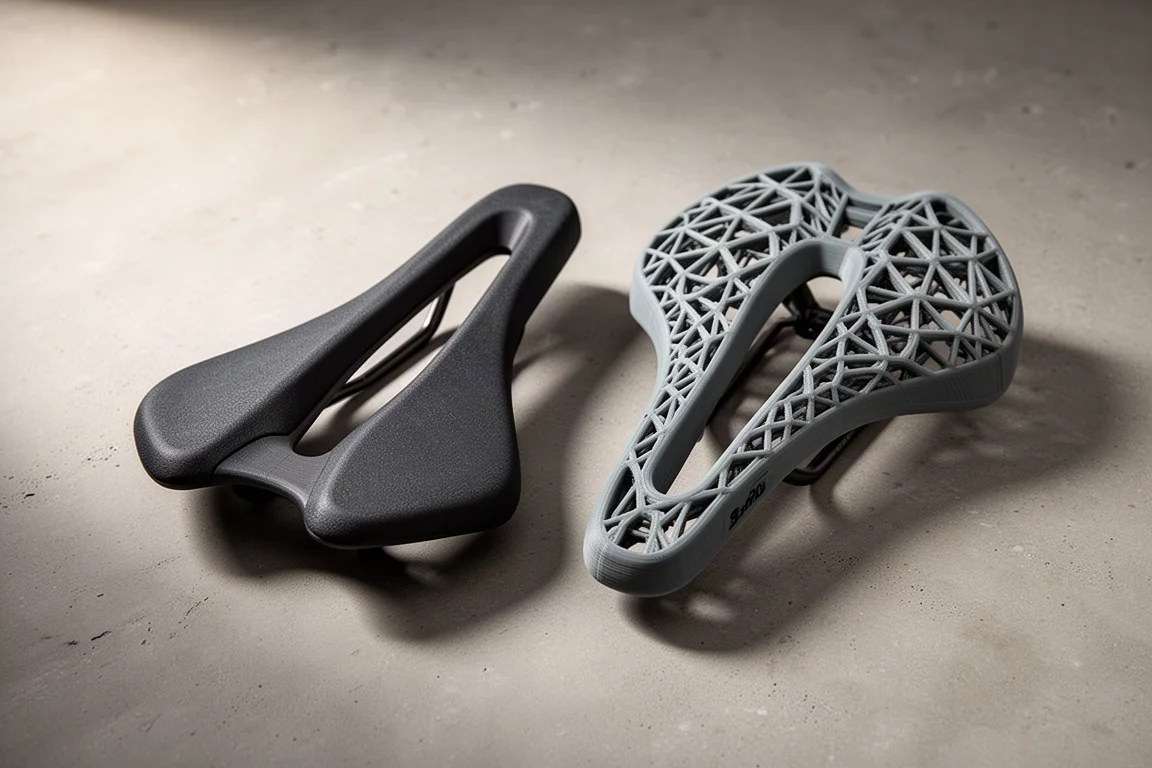
Two saddles sit at the top of the 3D-printed market right now, and both look like nothing else fitted to a bike. The Fizik Antares Versus Evo R1 Adaptive and the Specialized S-Works Romin EVO Mirror are radical in appearance, unusual in texture, and expensive to buy. The Fizik is listed at £299 with carbon rails, with an alloy-rail version at £250, while the Specialized S-Works Romin EVO Mirror sits at £390 with four carbon rails.
The two are closely matched in length and width, which makes the comparison natural: anyone considering one is almost certainly considering the other. The real question is whether the printed construction delivers enough comfort to justify the outlay over months of riding rather than a few minutes in a shop.
Shared 3D-Printed Construction and What It Changes
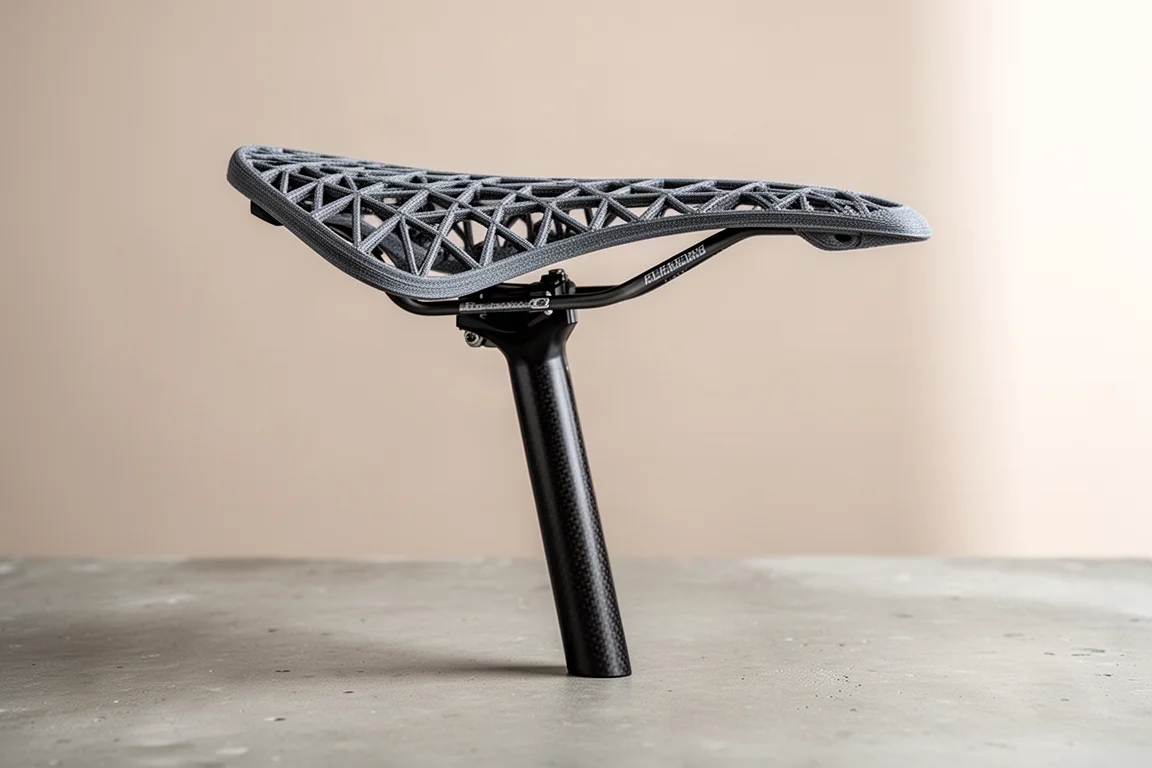
The two saddles share more than a silhouette. Both are produced by the same Silicon Valley based company, which developed its own 3D printing technology. A special polymer is laid down layer by layer, which allows complex honeycomb and lattice structures that foam or gel cannot reproduce. The lattice can also be tuned, printed softer where pressure relief matters most and firmer where support is needed. Specialized quotes an eye-catching 22,000 struts and 10,700 nodes in this saddle’s construction, though nobody is likely to count them by hand.
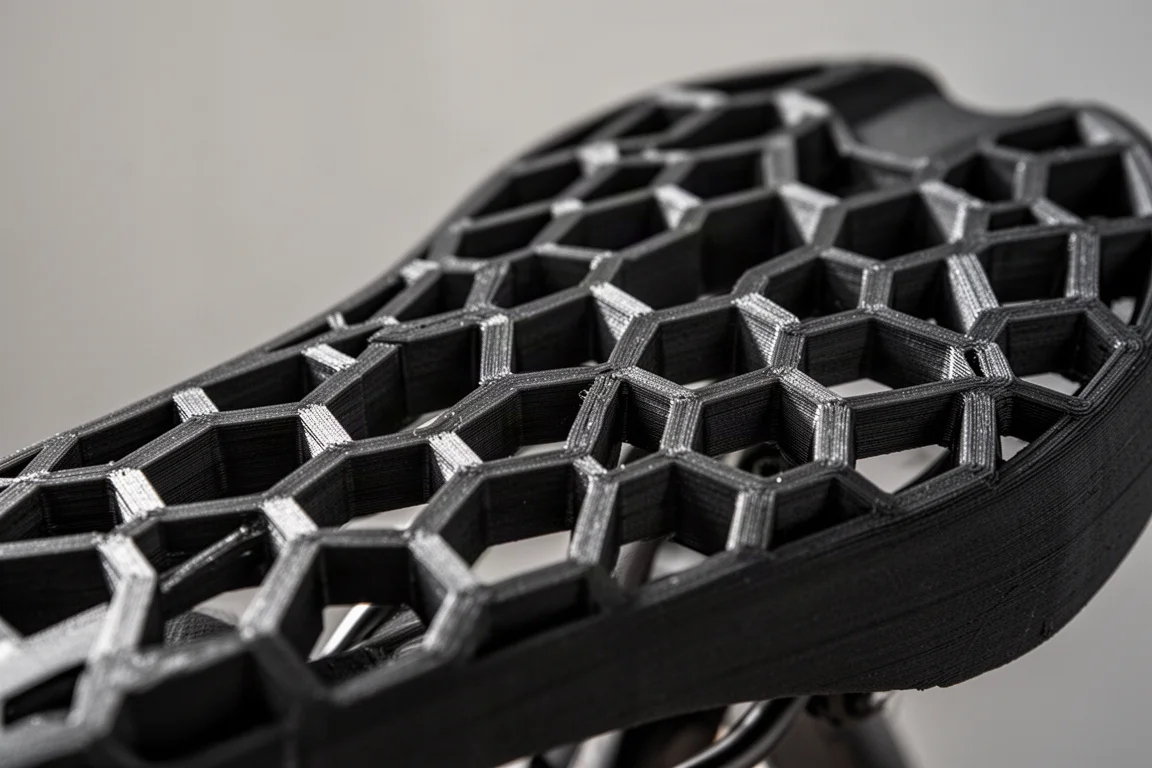
The first impression on the bike is unusual. The surface feels soft and squishy, almost like a flat rear tire, but that sensation fades quickly and is replaced by firm, even support that lasts much further into a long ride than a conventional foam saddle typically does.
Fizik Antares Versus Evo R1 Adaptive
At 274mm long and 149mm wide in this version, the Fizik is the longer of the two. It uses carbon rails on the £299 model, with a £250 alloy-rail version also listed. The most distinctive feature is the deep channel running down the centre, with the base left exposed, so the saddle reads as two halves joined onto a solid base. Weight is not where this saddle shines. Lighter options exist, including full carbon constructions, and the appeal here is comfort rather than grams.
Specialized S-Works Romin EVO Mirror
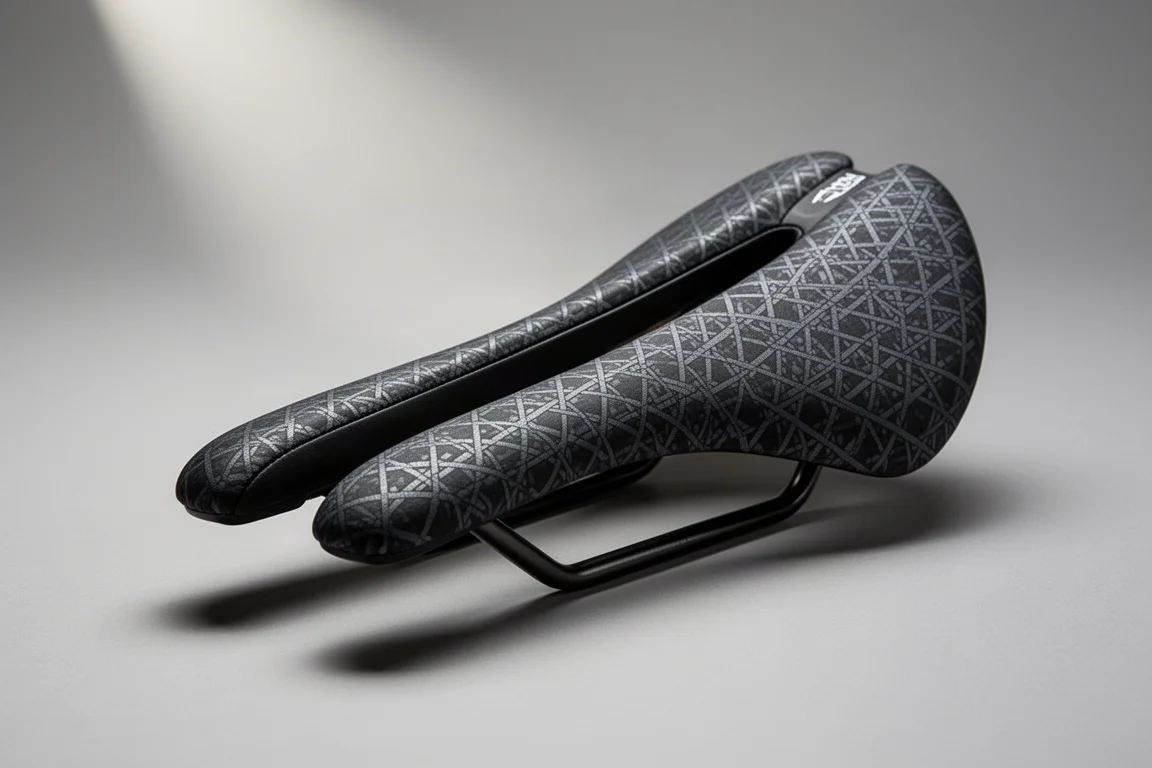
The Specialized is slightly shorter at 260mm and narrower at 143mm in this version, and it sells for £390 with four carbon rails. Its construction looks different in use: webbing runs across the top, the central channel is shallower and softer, and the base has an opening where the printed structure pushes through under pressure. The result is a full covering of the lattice material rather than exposed base sections.
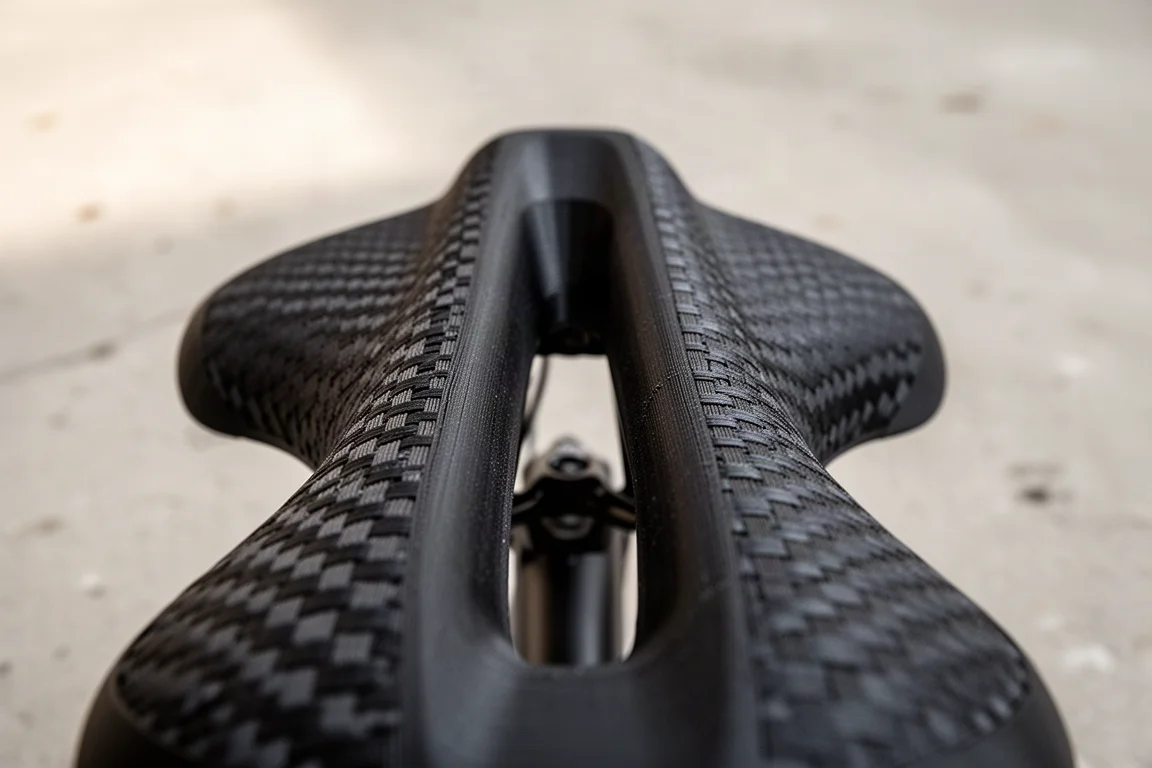
Because the two saddles are so close in length and width, the choice comes down to details rather than overall footprint, and the channel design is the biggest of those details.
Comfort Over Long Rides
Comfort is the entire point of this technology, and it is where both saddles separate from conventional foam designs. After a week of riding every day, including seven consecutive days on a bike, there was no discomfort and no need for chamois cream to stay comfortable. That is not a typical outcome on a foam saddle. The feeling is best described as sitting on a cushion of air, with no hot spots and no pinch points, and the support does not fade after four hours, six hours, or five days in the saddle. Compared with a regular foam saddle in the same shape, the advantage is real and notable, though it is not a night and day transformation.
Riding Rough Roads: Cushioning and Rebound
One of the less advertised benefits shows up on rough local roads. The printed structure adds cushioning and suspension, giving more and recovering better than foam, which tends to pack down over time. The Specialized is tuned with a softer rear section and a firmer middle, which shapes how the saddle supports the rider under load.

That extra give matters most on broken surfaces and long days when small vibrations accumulate, which is where the design earns its place beyond the initial softness.
Cleaning and Durability After Months of Riding
The open structure raises an obvious question about mud and dirt. In practice, mud goes in and mud comes out again, so the saddle does not fill up or clog. A hose down during a normal bike wash clears any grit, and after several months of riding both saddles still look clean and fresh. Durability has also held up through several thousand kilometres, with no issues around the integrity of the structure on either saddle. Longer-term wear is still being watched, but the early signs are good.
Which Saddle Should You Buy?
The two are extremely close in use, and the decision comes down to small margins. Between them, the Specialized takes the edge by a whisker, mainly because of its softer and smoother central channel. The Fizik has slightly harder channel edges, which are not uncomfortable but are less pleasant over long distances.
The bigger question is price. Both saddles cost a substantial amount, and if a current saddle is already comfortable, the upgrade case is weaker. If a saddle is causing problems, this technology may help. Fizik already discounts these saddles on its own site, and prices across the category are likely to fall over time. At around £200 to £250 the decision becomes much easier; at £400 it is harder to justify. Whatever the choice, shape, width, and length matter more than any material claim, because what works for one rider may not work for another.
Conclusion
Both saddles represent the current edge of saddle design. The comfort is genuine, the cleaning is straightforward, and the structure has held up well over months of riding. The sticking point is cost. If the budget allows and comfort is a priority, either saddle delivers a meaningful step up over a foam design. If the price feels steep, waiting for the category to mature is a reasonable position.
Further reading
Related Reviews
Cycling Saddles
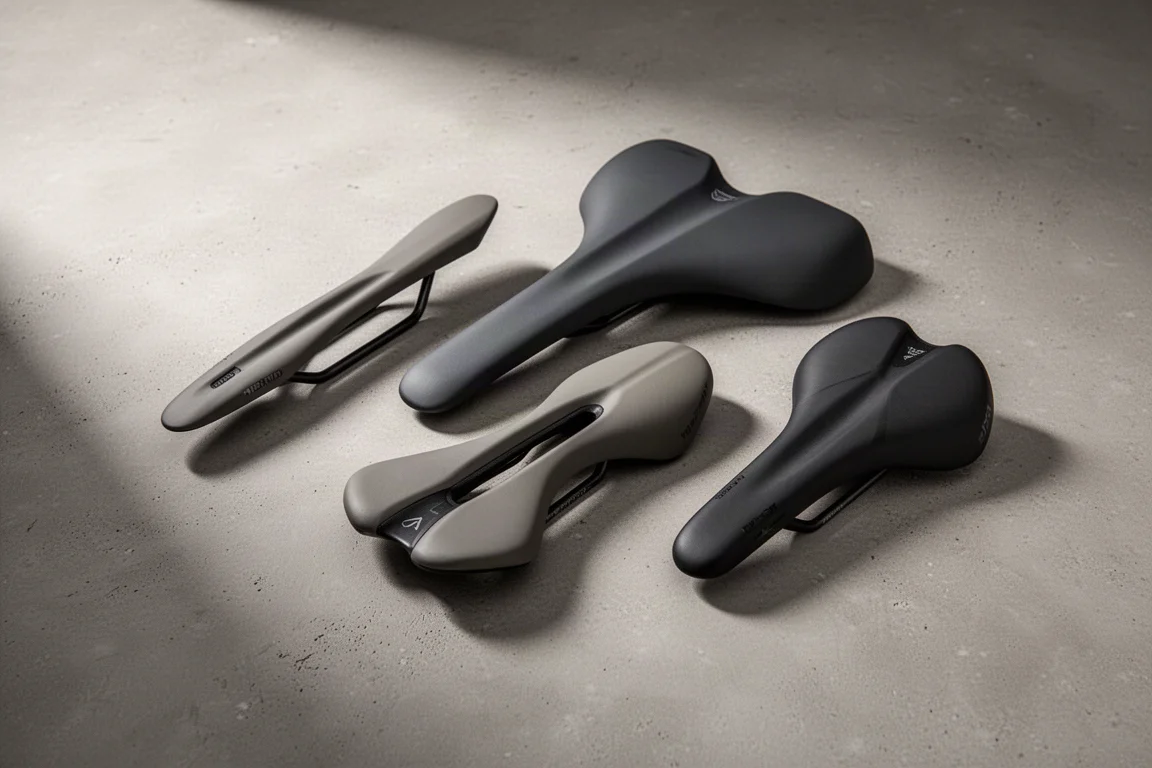
Best Bicycle Saddles Ranked: Ten Models Compared for Comfort and Fit
A practical ranking of ten road and triathlon saddles, from wide flared shapes that rub the thighs to narrow designs that support the rear of the saddle properly.
Cycling Saddles
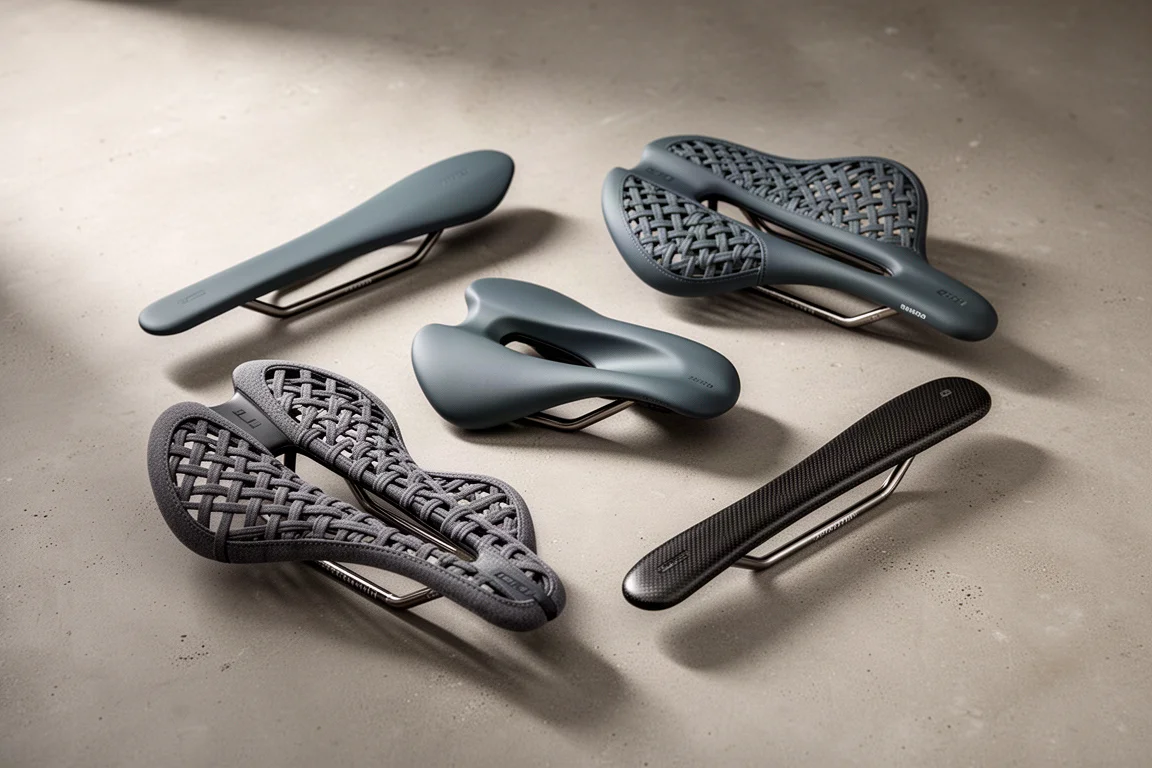
Best Road Bike Saddles 2026: Choosing the Right Width and Pressure Relief
A practical guide to road bike saddle selection, covering pressure relief, saddle width, and two widely known designs, the Selle Italia SLR Boost and the Specialized Power.
Cycling Saddles
Best Road Bike Saddles Ranked: Nine Options From Worst to Best
A fitter's ranking of nine road bike saddles, from wide flared designs that catch the thighs to the narrow shape most riders end up choosing.