Backpacking Gear
A Five-Year Backpacking Kit: Eight Pieces of Gear That Earn Their Place
A long-term backpacking kit built on a simple rule: buy one thing you like and keep using it. Eight pieces that have survived years of trips.
Introduction
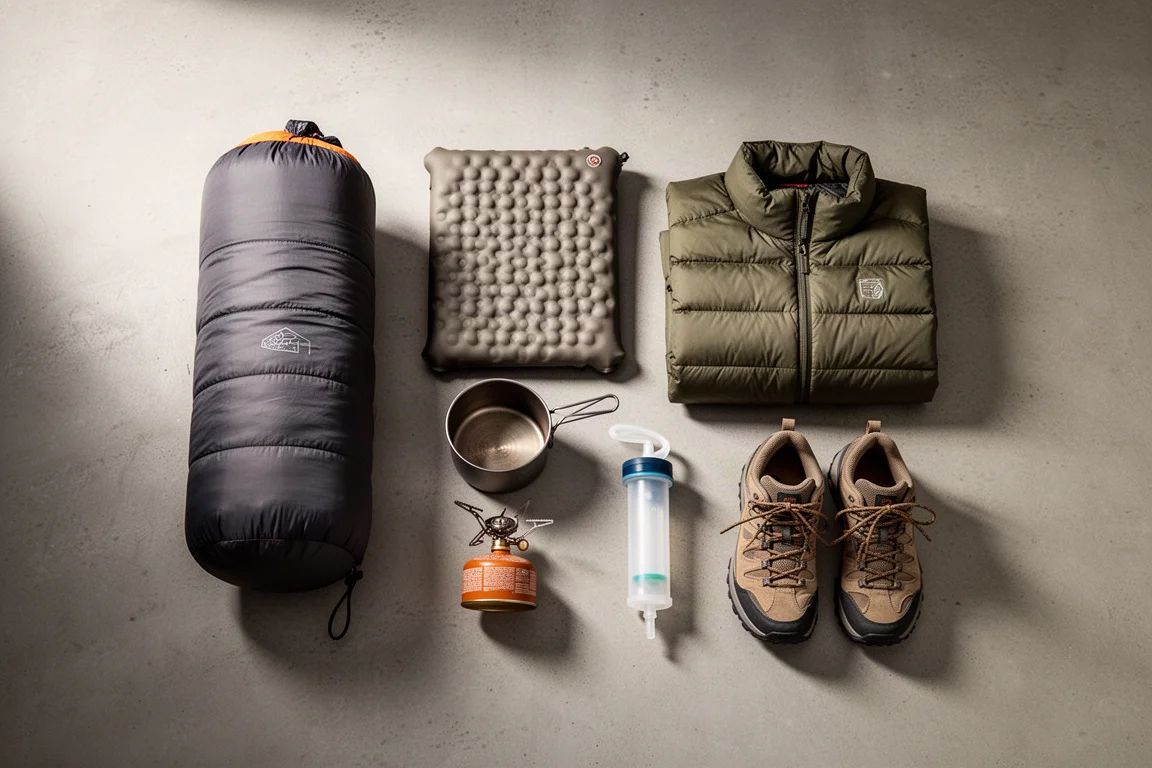
Most backpacking gear coverage focuses on what is new. This guide looks at what has stayed. The kit below belongs to a backpacker with roughly six years of backcountry experience who has deliberately kept the same loadout for most of that time. The guiding idea is simple: buy one thing you genuinely like, use it until it wears out, and repair it rather than replace it.
The result is a kit with visible history. There is tape on a sleeping bag, a faded logo on a stove, a patched jacket, and a hat that has absorbed a lot of miles. It also includes gear that has been out for hundreds of nights and still does exactly what it should.
How This Kit Was Evaluated
Rather than rotating through new products every season, this kit was assembled by replacing items only when the previous one failed or genuinely did not work. Most pieces here are the second version of something, not the fifth.
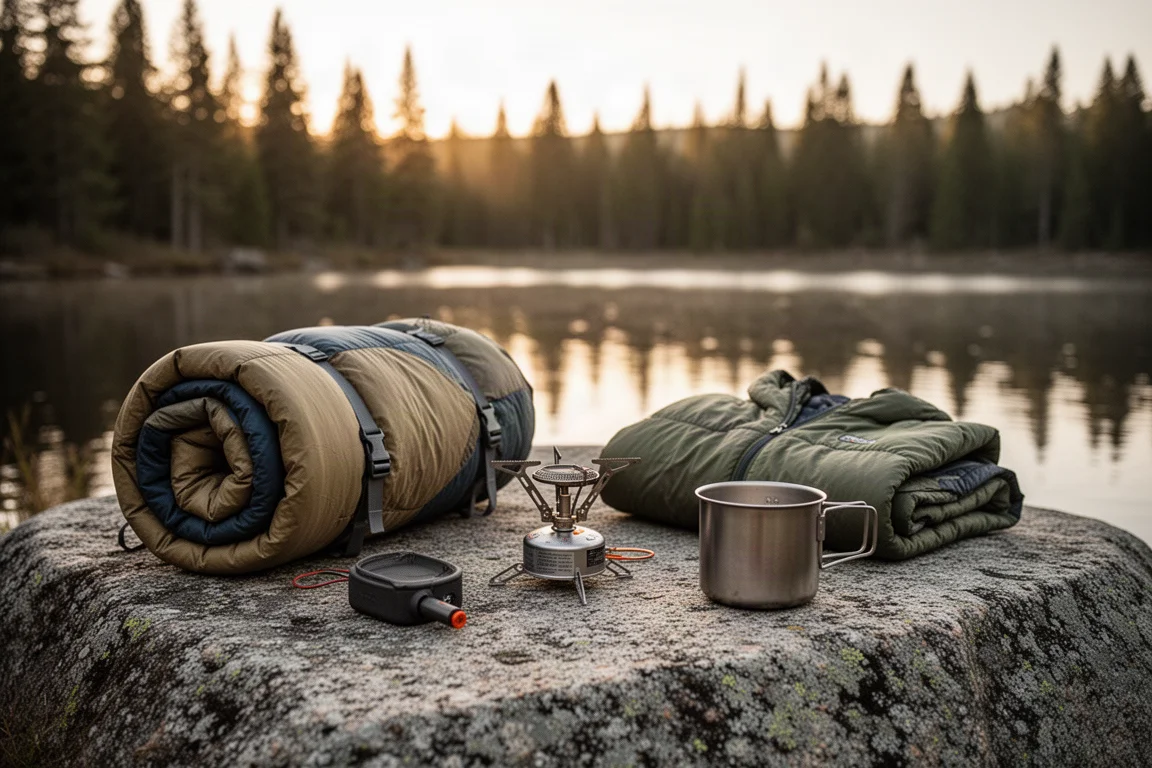
Three criteria come up again and again in the choices below. Durability matters more than a small weight saving, comfort over long days matters more than a spec sheet, and versatility matters more than specialization. A single high-R-value sleeping pad that works year round, for example, is preferred over owning two pads and deciding between them before every trip.
That approach has trade-offs, and they are noted in each section.
Nemo Riff 15: A Sleeping Bag for Restless Sleepers
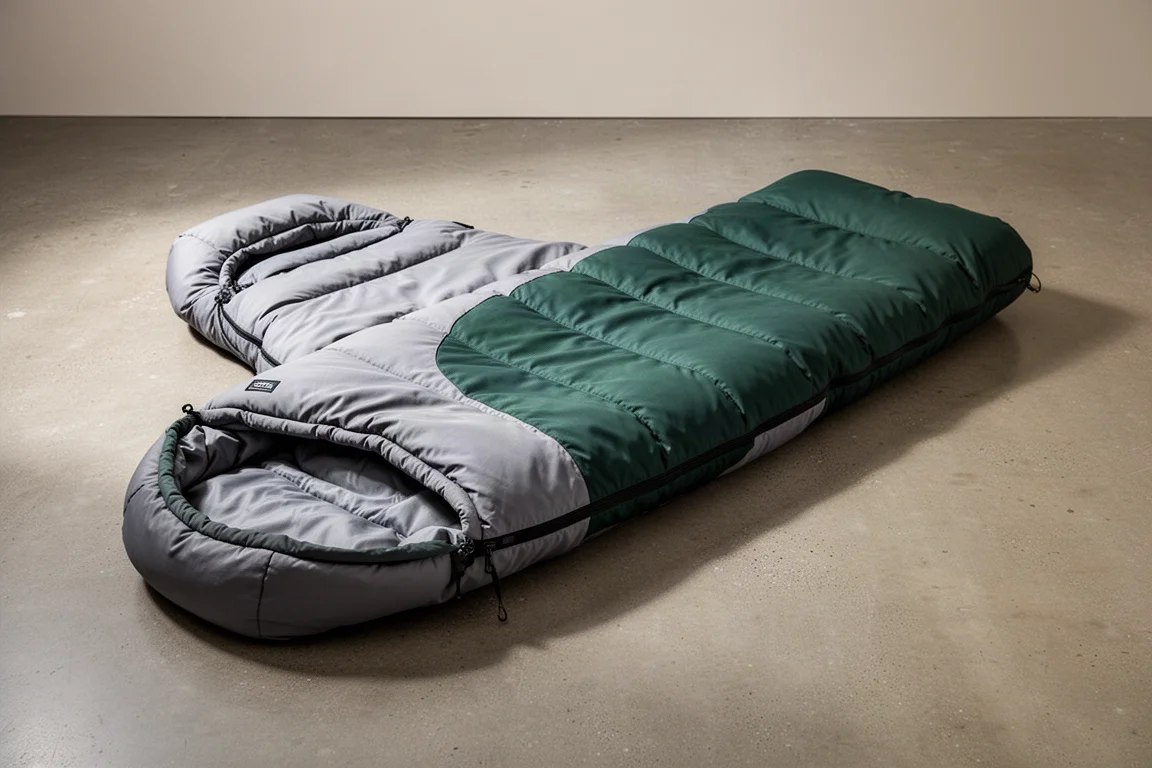
The Nemo Riff 15 is a spoon-shaped sleeping bag rated to 15°F. It has been in use for roughly four to five years and has accompanied nearly every trip in that period, missing only two.
The shape is the reason it stuck. A wider middle section lets a sleeper roll from back to side to stomach without the bag twisting into a knot, which was a recurring problem with the true mummy-style bag used before it. Two details stand out in nightly use: a pillow pocket that holds a pillow in place through the night, and a set of venting zips along the bag that can be opened for airflow or closed for warmth.
On temperature, the realistic read is that the rating is optimistic. Sleeping comfortably down to about 20°F is a fair expectation, and pushing to the stated 15°F calls for extra layers. Keeping roughly five degrees of margin above the rating has been the practical rule.
The bag costs around $450 and shows real wear, including small rips and patches of repair tape. It is still in service, and the plan is to keep using it as long as it can be repaired.
Nemo Tensor Extreme Conditions: One Pad for Every Season
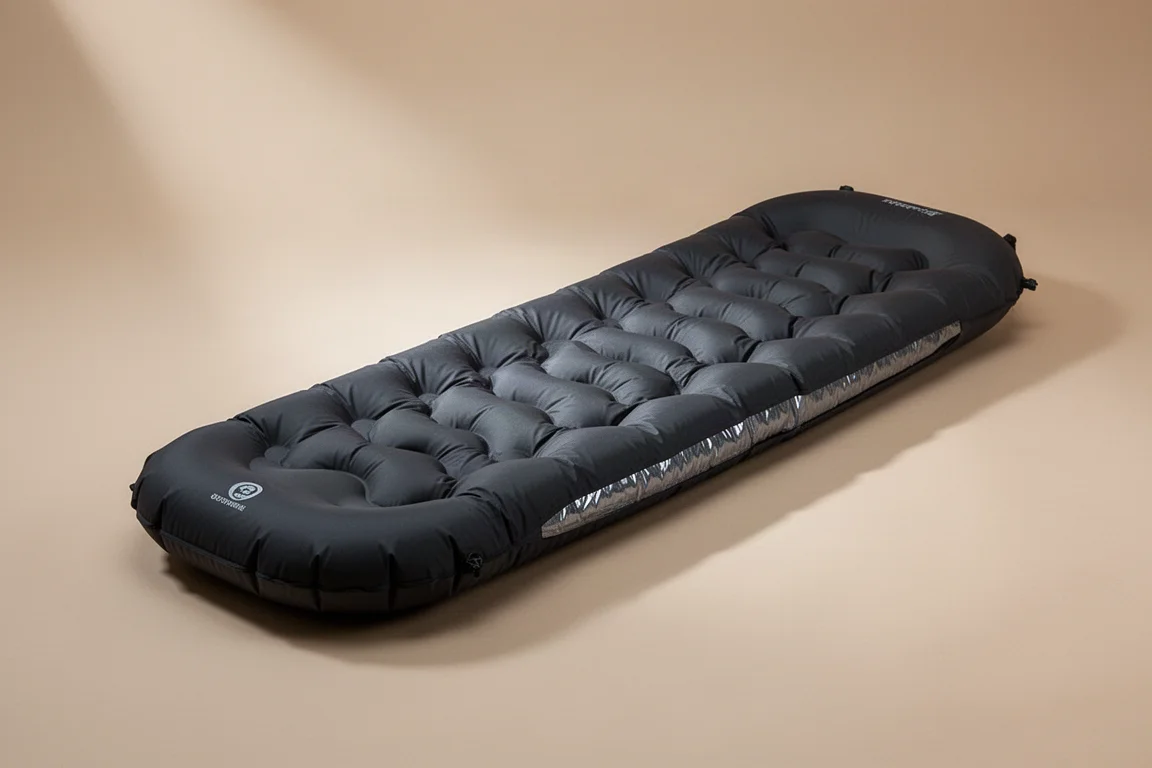
The Tensor Extreme Conditions is a sleeping pad with an R-value in the 8 range, which is far more insulation than a typical three-season trip requires. That is the entire point. Instead of owning a summer pad and a winter pad, this single pad covers everything from cold winter nights to the warmest summer ones.
It replaced a Therm-a-Rest NeoAir Xlite, a roughly 4.5 R-value pad that served well for years before it finally punctured. Once that happened, the higher-R-value pad became the everyday option rather than a winter-only one.
The practical argument for the warmer pad is that warmth is hard to add and easy to remove. An arm can be slipped out of a bag or a pad’s side opened when things get too warm, but there is no simple way to add insulation in the middle of the night. The weight difference between this pad and a lower-R-value option is small enough that it is not noticeable on the trail.
Arc’teryx Cerium Down Jacket: Winter Wear That Holds Up
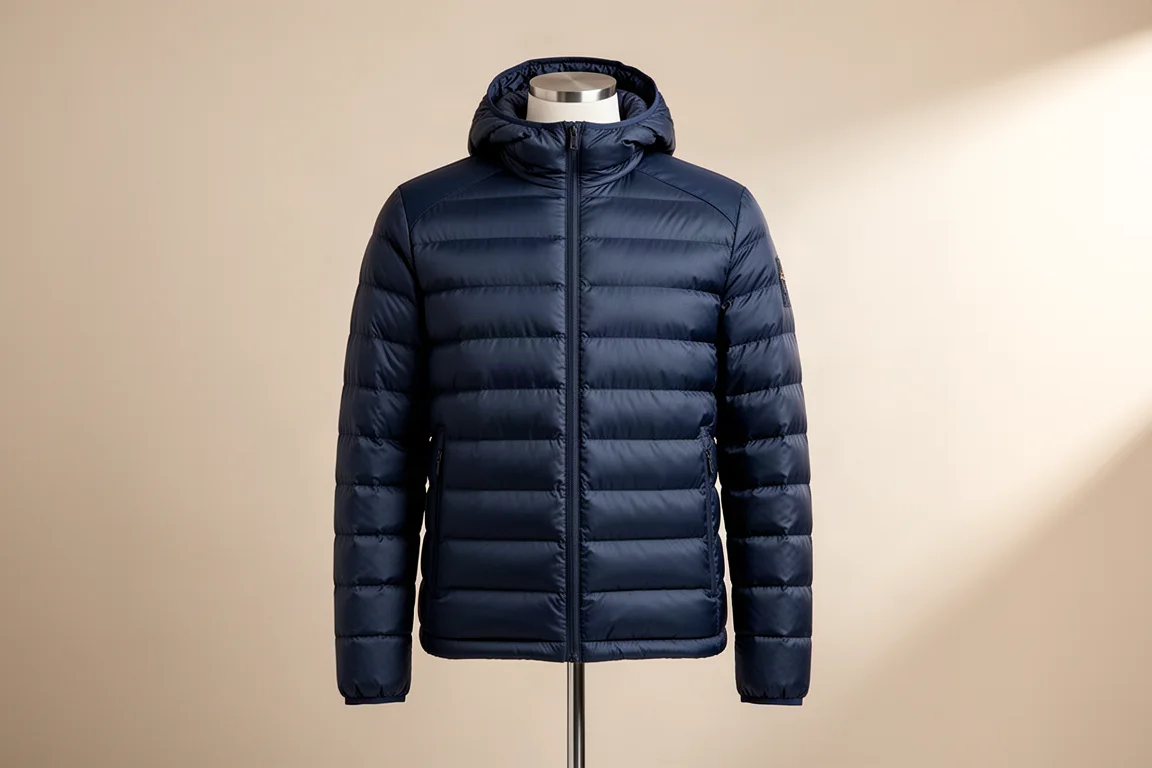
This down jacket has been worn on every backpacking trip for more than four years, plus nearly every winter day around town. That is a serious amount of use for an insulating layer, and it still looks close to new apart from one patch.
The detail worth knowing is where the insulation changes. In the shoulders, cuffs, and the baffle at the hem, the jacket uses sheets of synthetic insulation instead of down. Synthetic insulation keeps working when it gets wet, and those are the areas where moisture and abrasion show up first. When a stove singe opened the fabric at the hem, nothing leaked out because there were no loose feathers in that section, and a patch solved it.
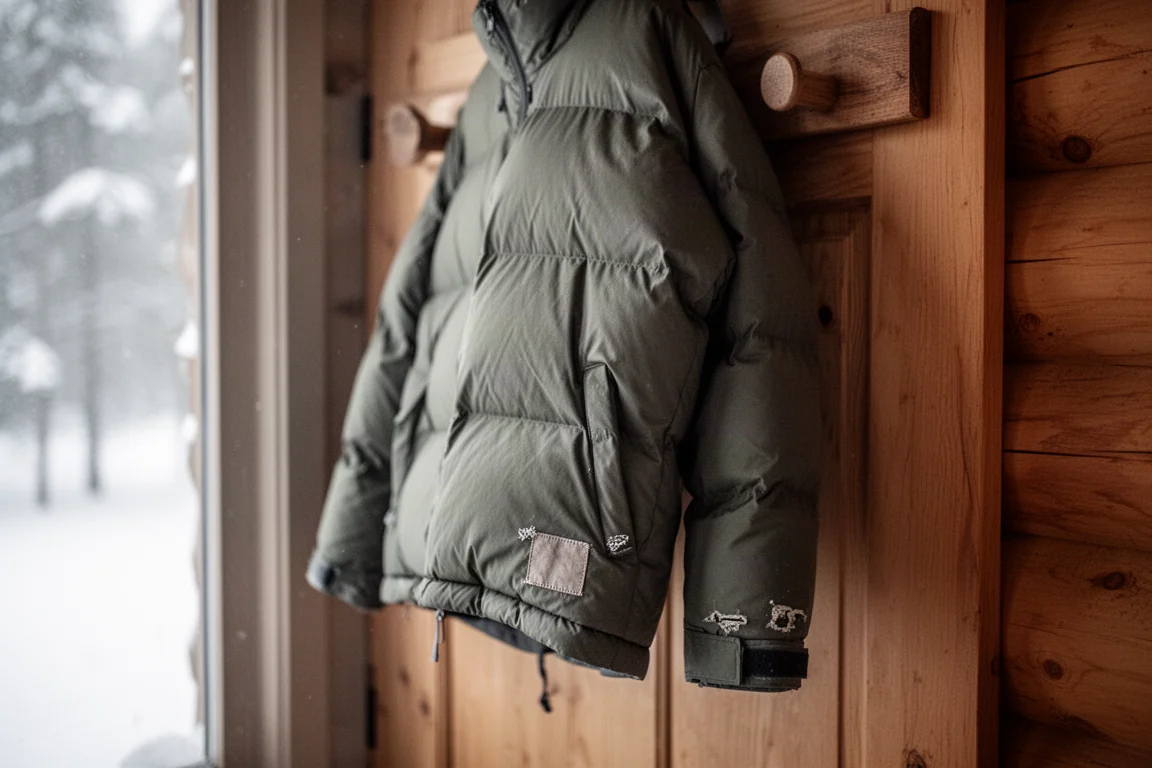
Jackets in this class are not cheap. This one runs around $450 to $500, and may cost more now. Spread across years of winter and trail use, the cost per outing is low, which is the argument for buying the version you actually want once rather than cycling through cheaper options.
REI Sahara Sunshade Hoodie: Sun Protection You Stop Noticing
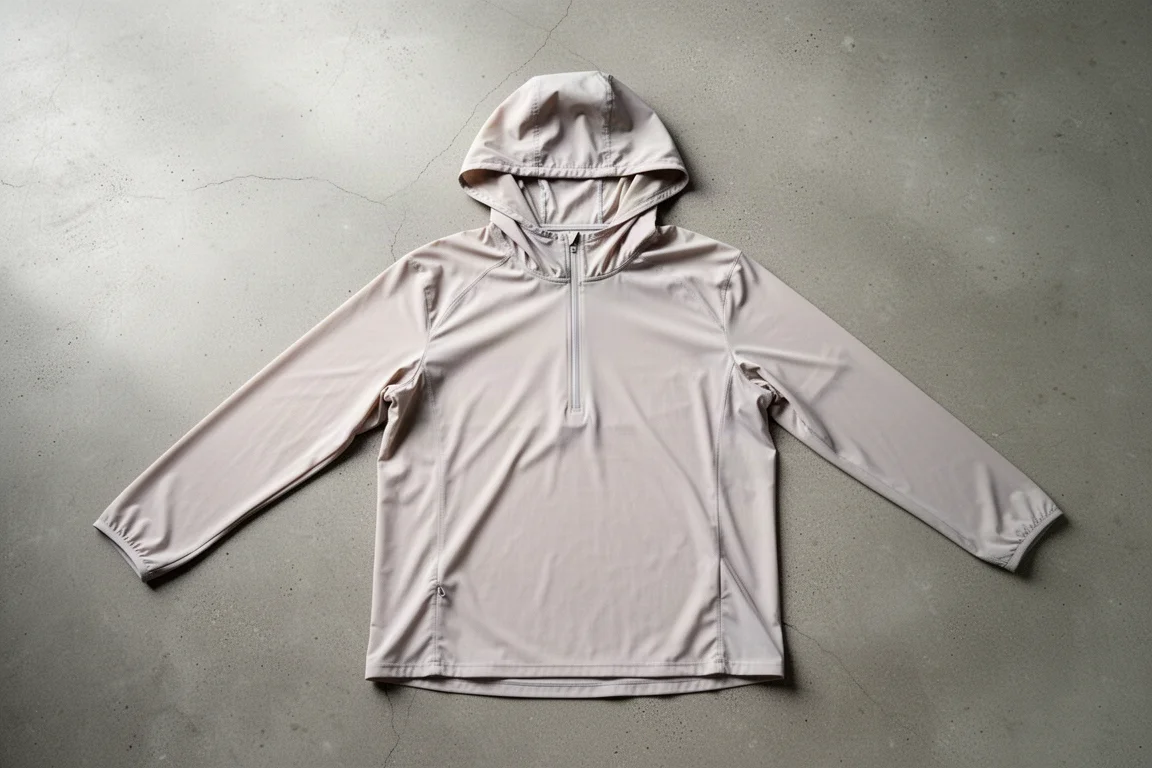
The Sahara Sunshade Hoodie is a UPF 50 hooded sun shirt, and it is the one item worn on every hike, from short day walks to multi-day trips. It has been slept in and hiked in for days at a time.
The trade-off is heat. Because it blocks so much sun, it runs warm and sweaty in exposed conditions. The counter-argument is that constant sun exposure is worse: it drains energy, demands repeated sunscreen application, and offers nothing on long exposed stretches of trail. The fabric is synthetic, so it dries quickly, and wetting it down helps on hot days.
After years of use it has picked up small rips, but it remains comfortable enough that replacing it has been postponed.
REI Flash 55: A Pack That Carries Quietly and Comfortably
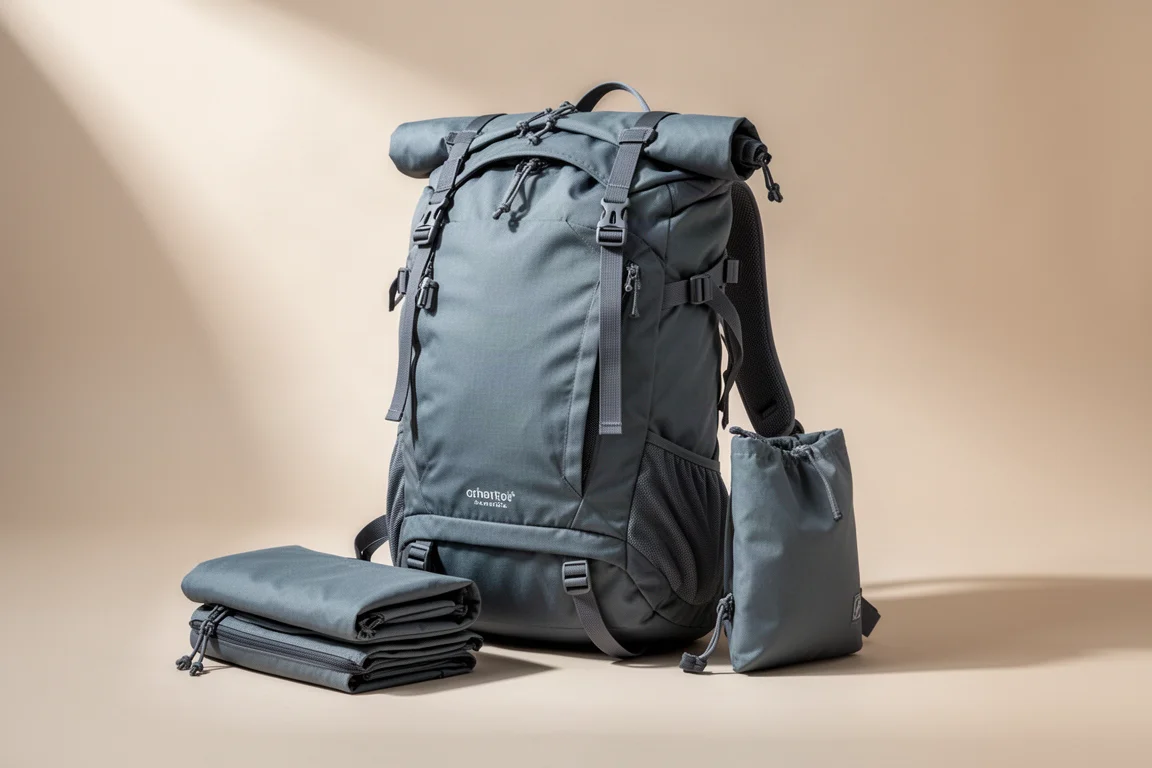
The Flash 55 is a roughly 55-liter backpack that has been in use for about two years, following three years with an earlier version. It carries a typical load of 30 to 35 pounds comfortably, which is the range that matters when camera gear is part of the kit.
Two things make it a keeper. The hip belt pockets are large enough to hold snacks and a bottle within easy reach, and the pack is light enough to feel close to ultralight while still surviving bushwhacking and scraping branches. Comfort depends heavily on getting the fit right, and for this wearer it fits well enough that there is no reason to change.
The pack it replaced was an Osprey Atmos, which was comfortable on the body but squeaked constantly and had a clamshell hip belt that was awkward to put on. One detail worth noting for anyone comparing versions: the newest Flash 55 dropped the water-resistant pocket on the lid, so the lid from the older pack was moved across to keep that feature.
MSR PocketRocket Deluxe: Six Years, Zero Failures
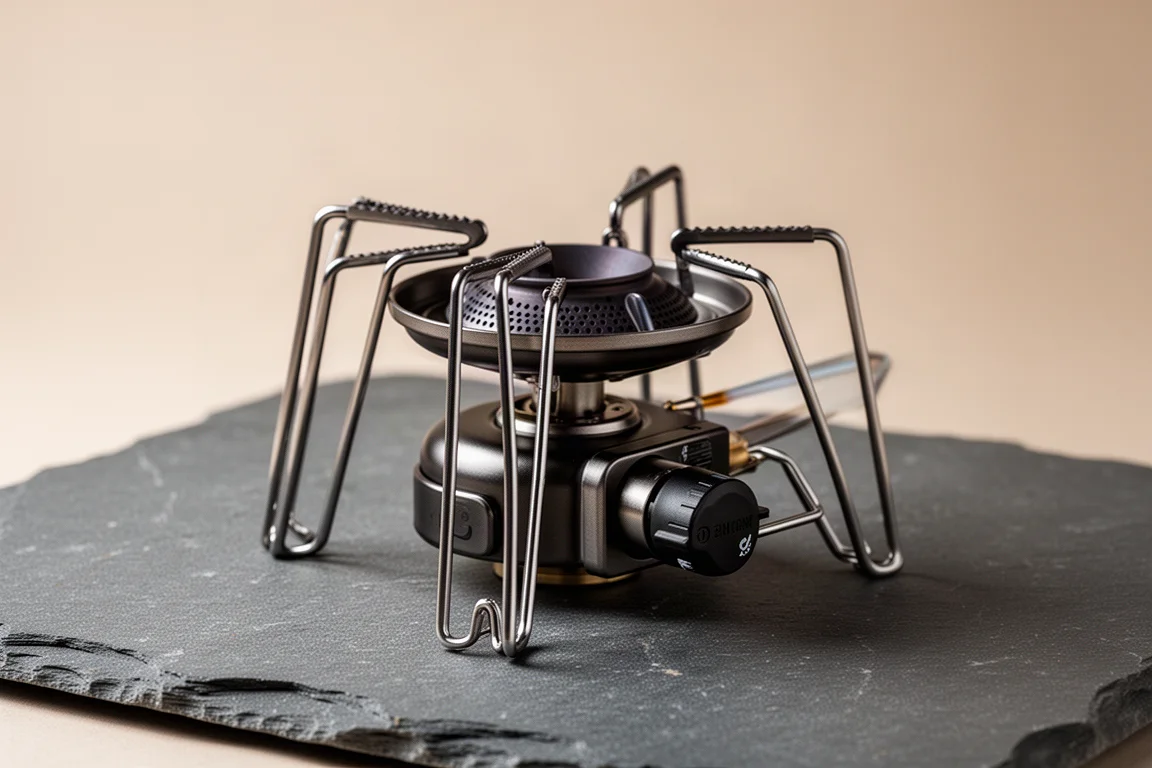
This stove was bought in February 2019, from the first production run, and has been the only stove used on every trip since. Its logo has faded and it has picked up a dent, but it has never failed to light or boil.
That reliability comes from a simple design: a pot grabber, and a ridged burner head that helps in light wind. In genuinely windy conditions a stove like this still needs some shelter, so treat the ridges as help rather than a solution.
It is paired with a 900ml titanium pot, an upgrade from the original kit pot whose plastic lid was lost almost immediately. The pot is used only for cooking, with a separate collapsible cup reserved for coffee.
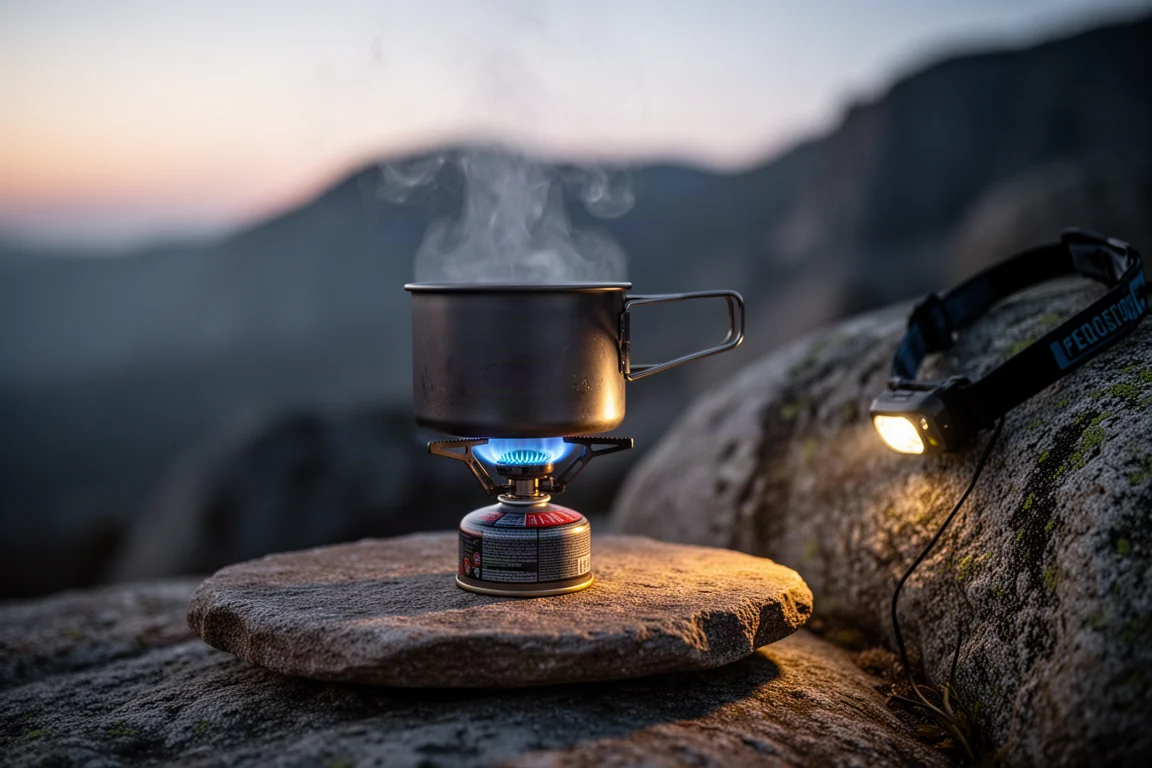
For anyone wondering whether a stove this old is still worth buying, the answer is that a well-built canister stove is one of the few pieces of backpacking gear that can genuinely last a decade of regular use. Between 40 and 50 nights out per year over six years is a lot of breakfasts, coffees, and dinners.
Altra Lone Peak 6: Wide, Flat, and Easy to Forget
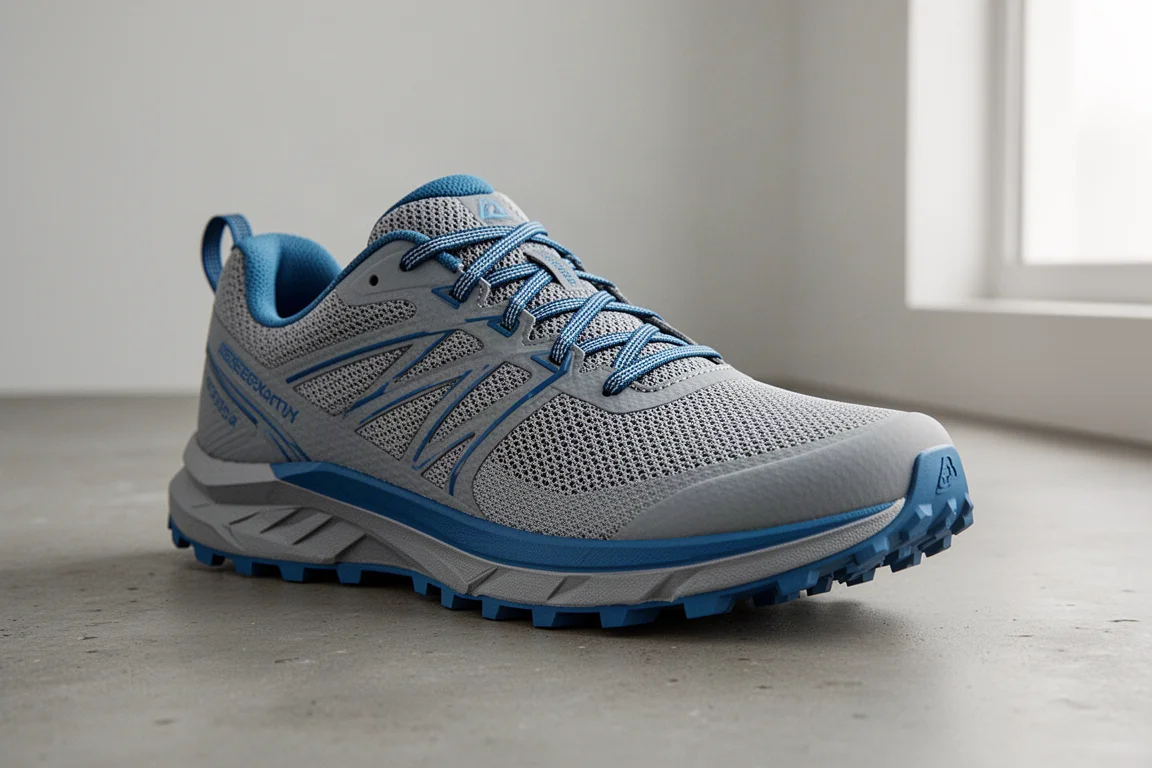
The Lone Peak 6 is a zero-drop trail shoe with a wide toe box, worn for hiking and around town. The wide toe box matters most on multi-day trips, when feet swell and a cramped shoe turns into a real problem.
The switch to trail runners came after years in boots that felt heavy and clunky. The best thing that can be said about these shoes is that they are never noticed: no hot spots to manage, no pressure points to think about. That said, a wide toe box may feel roomy for narrower feet, and the zero-drop geometry takes some adaptation if you are coming from traditional boots.
Sawyer Squeeze: A Filter That Refuses to Retire
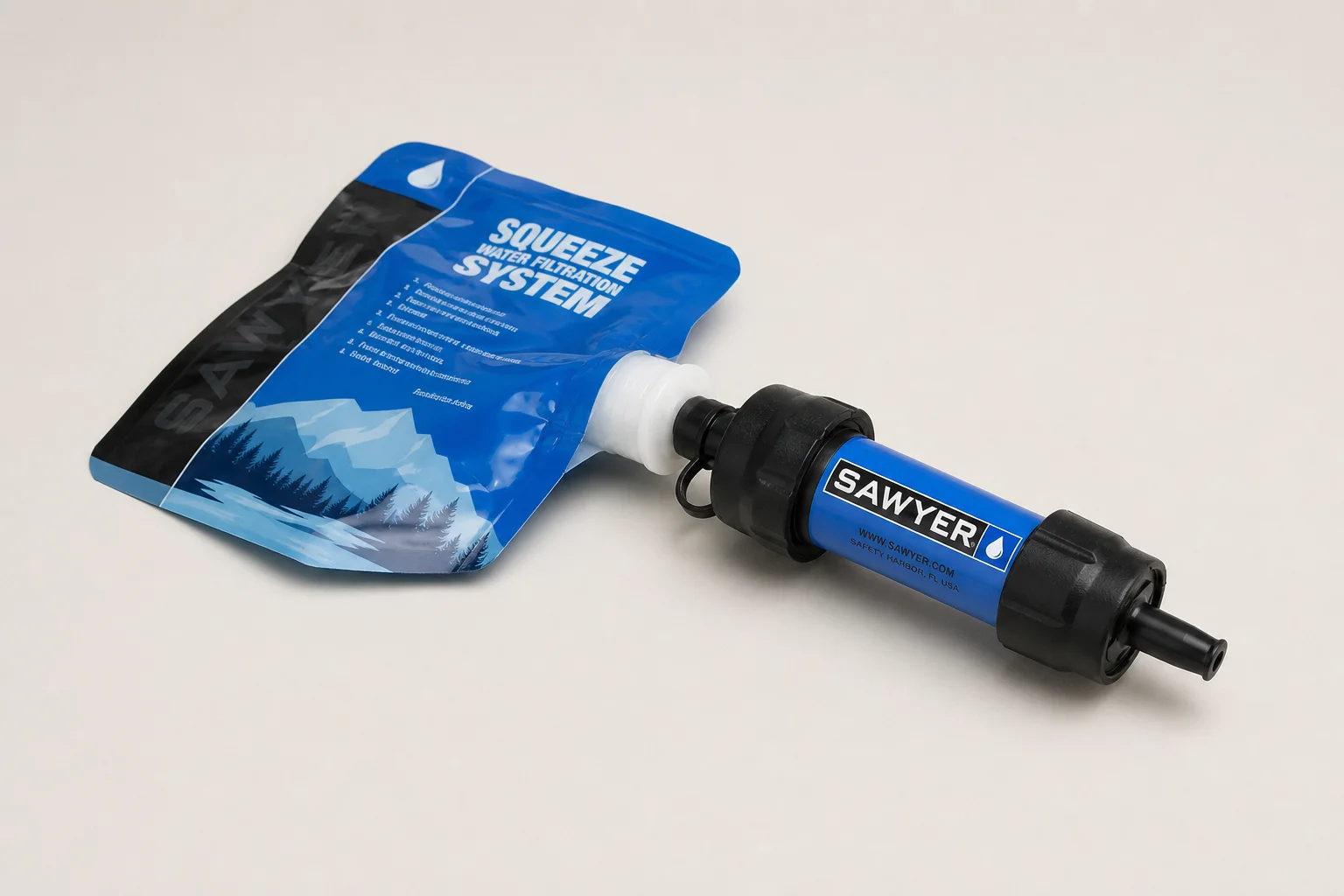
The Sawyer Squeeze has been in the kit for years, and its housing has faded with use. It is used with a separate water bag and a coupling that lets water be filtered directly into a bottle.
The bag has developed a small hole, but it is small enough to hold water for the time it takes to filter. The reason the bag stays in the kit is scooping: filling from a shallow source is far easier with a bag than with a bottle.
This is a good example of the kit’s overall logic. A filter that works, is familiar, and has never failed does not need replacing just because a newer model exists.
Overall Buying Advice
The pattern across this kit is worth stating plainly. Most of these items were the second version of something, bought after the first attempt did not work out. Once the right item was found, it stayed, even after it started showing wear.
A few practical takeaways stand out:
- Prioritize the gear you use every night. A sleeping bag, a sleeping pad, and a pack that fits determine whether a trip is comfortable far more than any accessory.
- Prefer one versatile item over two specialized ones. A single high-R-value pad and a single sleeping bag that covers most conditions remove a decision from every trip.
- Repair before replacing. Tape, patches, and small fixes have kept several of these items in service for years.
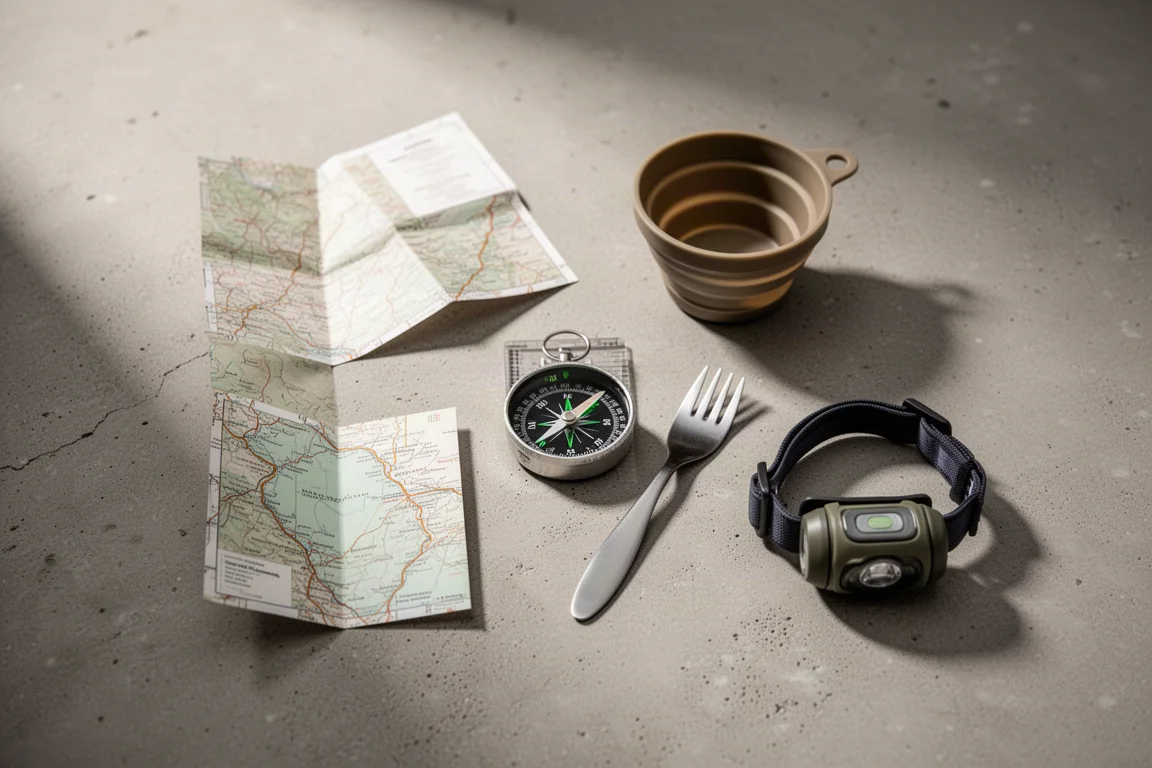
- Carry a paper map and a physical compass even if your phone handles navigation. Offline maps are excellent until a battery dies, a screen cracks, or a device ends up in the water.
It is also worth being honest about what this approach costs up front. A $450 sleeping bag and a jacket in the same range are significant purchases. The case for them is not that they are cheap, but that they are used on every trip for years, which is where the value shows up.
None of these items are perfect. Every one has a trade-off, whether that is warmth, weight, or a feature that disappeared in a newer version. What they share is that they have been used enough to prove they work.
Conclusion
The most useful backpacking gear may well be the gear already in your closet. This kit makes that case better than any spec sheet: a sleeping bag with tape on it, a stove from 2019, a sun hoodie that has been worn for days straight, and a filter that is still going long after its housing faded.
If you are rebuilding a kit, start with the sleep system and the pack, buy the version you actually want once, and then leave it alone. Upgrade when it makes sense, repair when you can, and let the gear earn its place over seasons rather than weekends.
Further reading
Related Reviews

Backpacking Gear
Building a 10 lb Base Weight: An Ultralight Backpacking Gear List
A practical walkthrough of the ultralight pieces behind a 10 lb base weight, from a 765 g pack and a roomy one-person tent to a full camp chair and a dependable water filter.

Backpacking Gear
A 15-Pound Lightweight Backpacking Gear List for Solo Trips
A beginner-friendly 15-pound backpacking setup built from easy-to-find gear, with notes on what each piece does, how it packs, and where to spend your attention.

Backpacking Gear
8 Ultralight Backpacking Gear Upgrades Worth Carrying
Eight small, affordable backpacking upgrades that solve real trail annoyances, from a pillow that stays put to a fuel valve that rescues leftover canister gas.