Backpacking Gear
Five Backpacking Gear Items Worth Buying Sooner
A practical look at five backpacking essentials that pay off early: a squeeze water filter, trekking poles, durable hiking socks, a canister stove, and a lightweight rain jacket.
Introduction
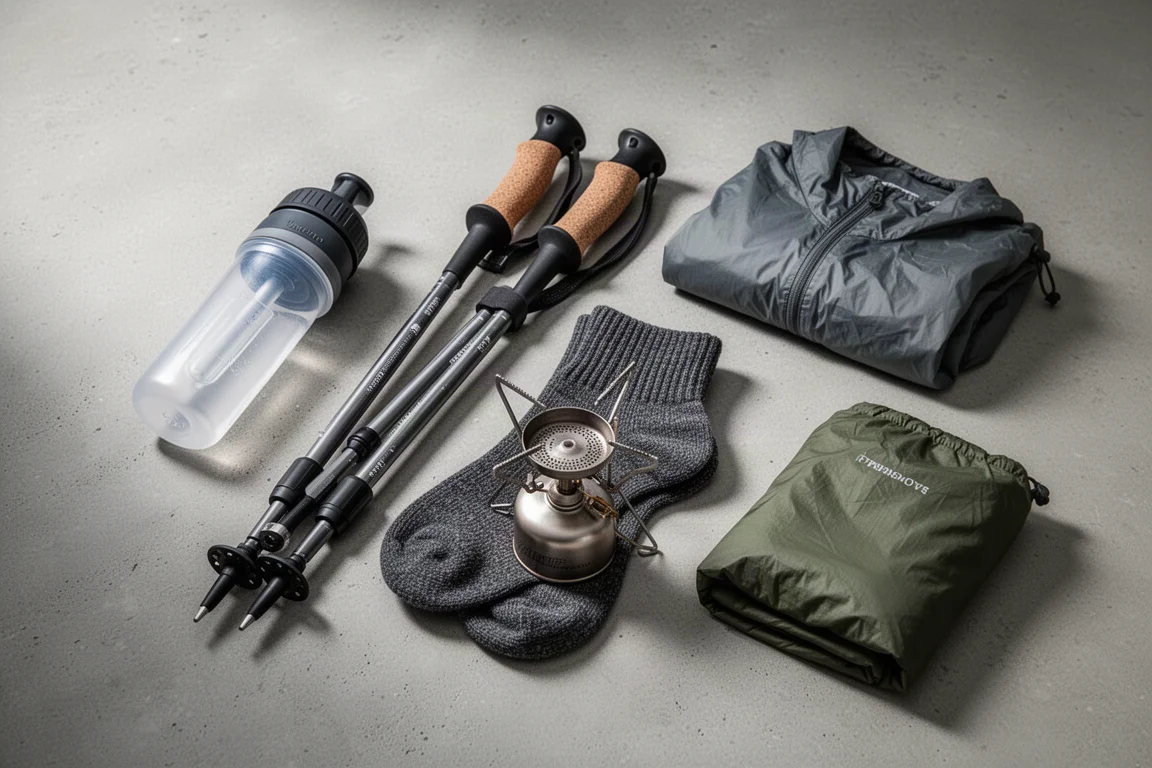
Gear mistakes tend to show up early in a backpacking habit, usually because the cheapest or most familiar option is not the one that works best on trail. The five items below are the ones that consistently earn their place once a hiker has spent a few seasons carrying a pack: a squeeze water filter, a pair of trekking poles, durable hiking socks, a canister stove, and a lightweight rain jacket.
None of them are exotic, and none require a large budget by default. What they share is that each one removes a specific, recurring problem: slow water treatment, unstable footing under a heavy load, sore feet, unpredictable cooking, and getting soaked in three-season rain.
What These Five Items Have in Common
Each pick here solves a problem that comes up on almost every trip rather than a niche one. They also lean toward simplicity. Nothing on this list depends on batteries, which matters because a dead battery on trail is a failure that cannot be fixed in the field. Most of the items are inexpensive relative to the rest of a pack, and the ones that cost more, such as quality socks, offset that cost through durability and replacement support.
There is also a practical angle. Beginners usually carry heavier and less comfortable packs than experienced hikers, so gear that reduces strain or effort is worth more in the first year than it is later on.
Sawyer Squeeze Water Filter: Fast Filtration Without Batteries
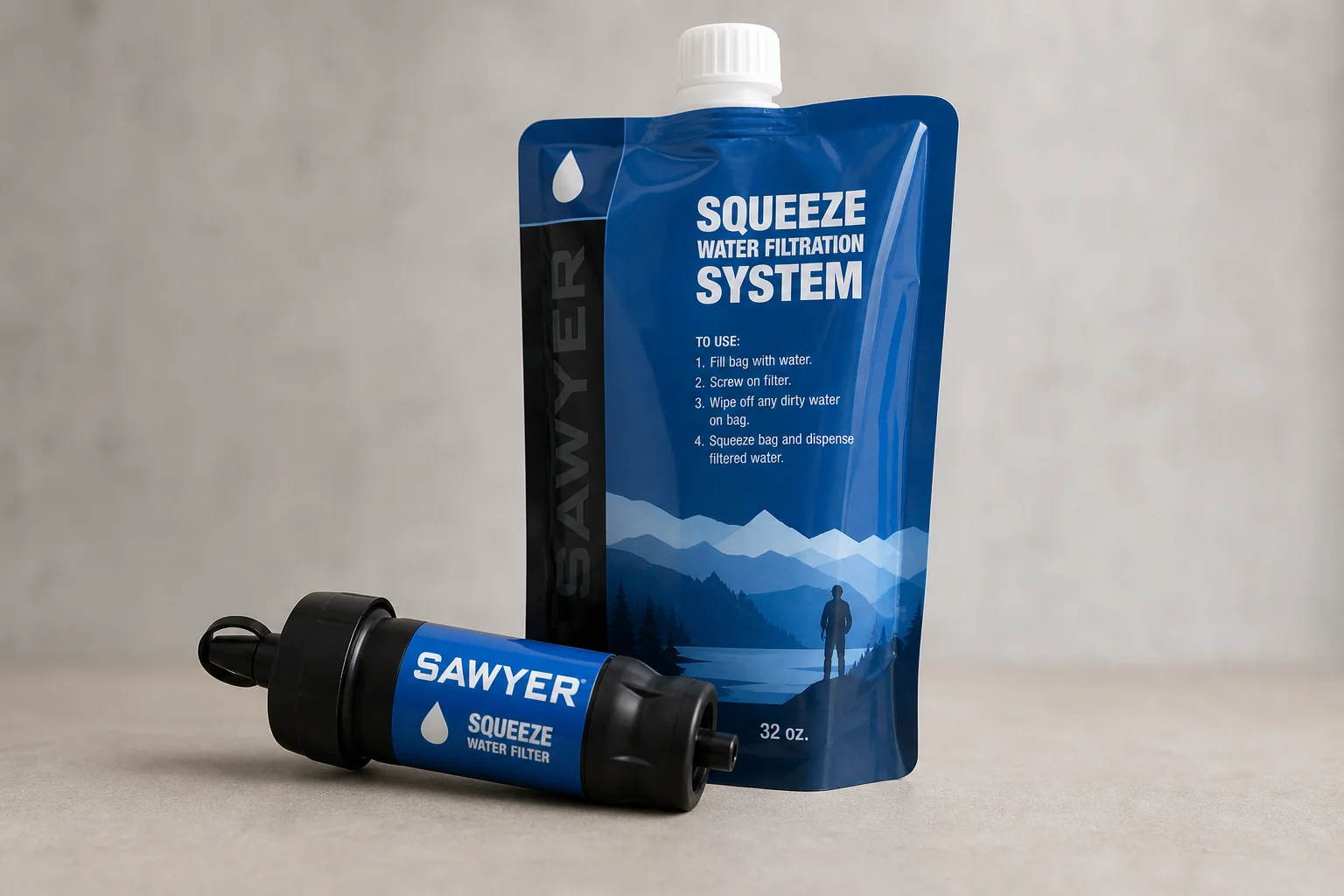
The Sawyer Squeeze screws directly onto a bottle, and once it is attached, filtering is a single action: squeeze, and drink. There is no stirring, no chemical treatment to wait on, and no batteries to manage.
That last point matters more than it sounds. Battery-powered treatment options add a dependency that a water filter does not need to have, and running out of power at a water source is a problem with no good workaround. The squeeze format is also lightweight, which keeps it easy to carry as a backup even when another treatment method comes along for the trip.
Similar squeeze filters exist and are worth comparing, but the core appeal is the same: water goes in one end, filtered water comes out the other, and it happens immediately rather than after a waiting period.
Trekking Poles: Support for Heavier Beginner Loads
Trekking poles are not a requirement, and no beginner needs to be told they are essential to start backpacking. They are, however, one of the easiest ways to make a heavy beginner load more manageable. Poles help with balance, support a steadier stride, and take some of the pressure off the knees, ankles, and legs.
That combination can matter in two ways. It can reduce the chance of a fall on rough or loose ground, and it can lower the risk of the overuse injuries that build up over long days. The heavier and less comfortable a pack is, the more a hiker tends to lean on poles for stability.
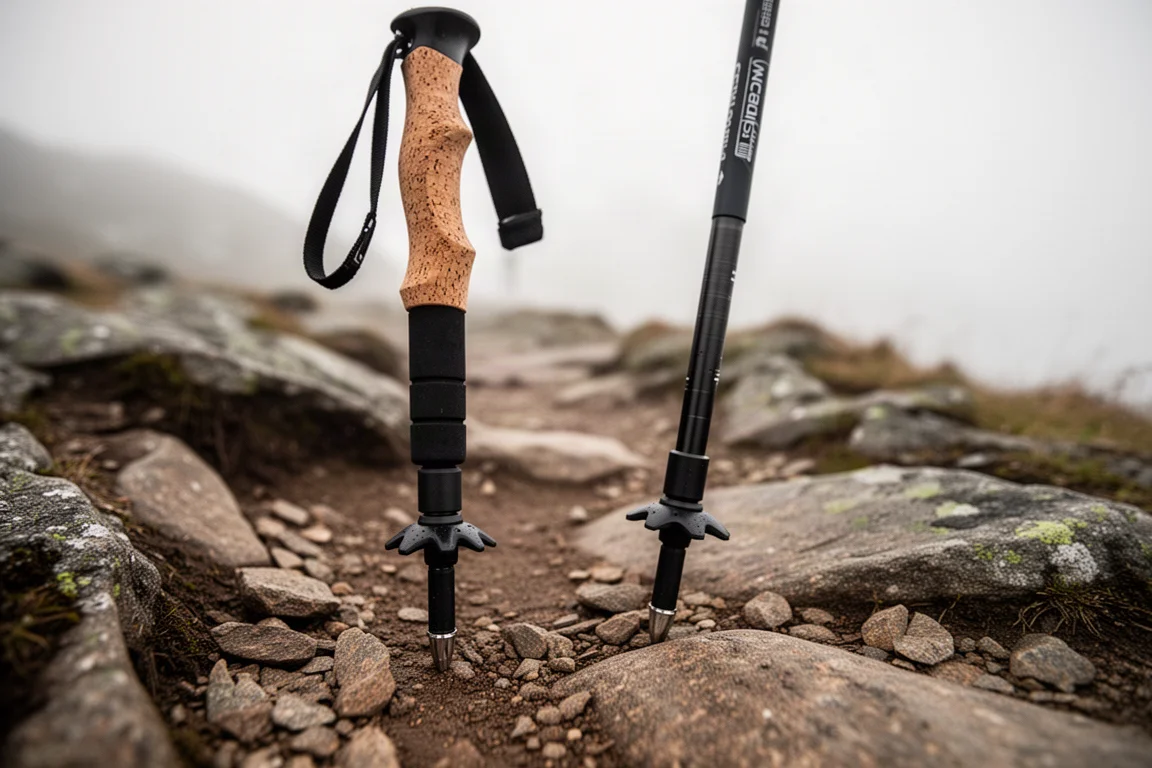
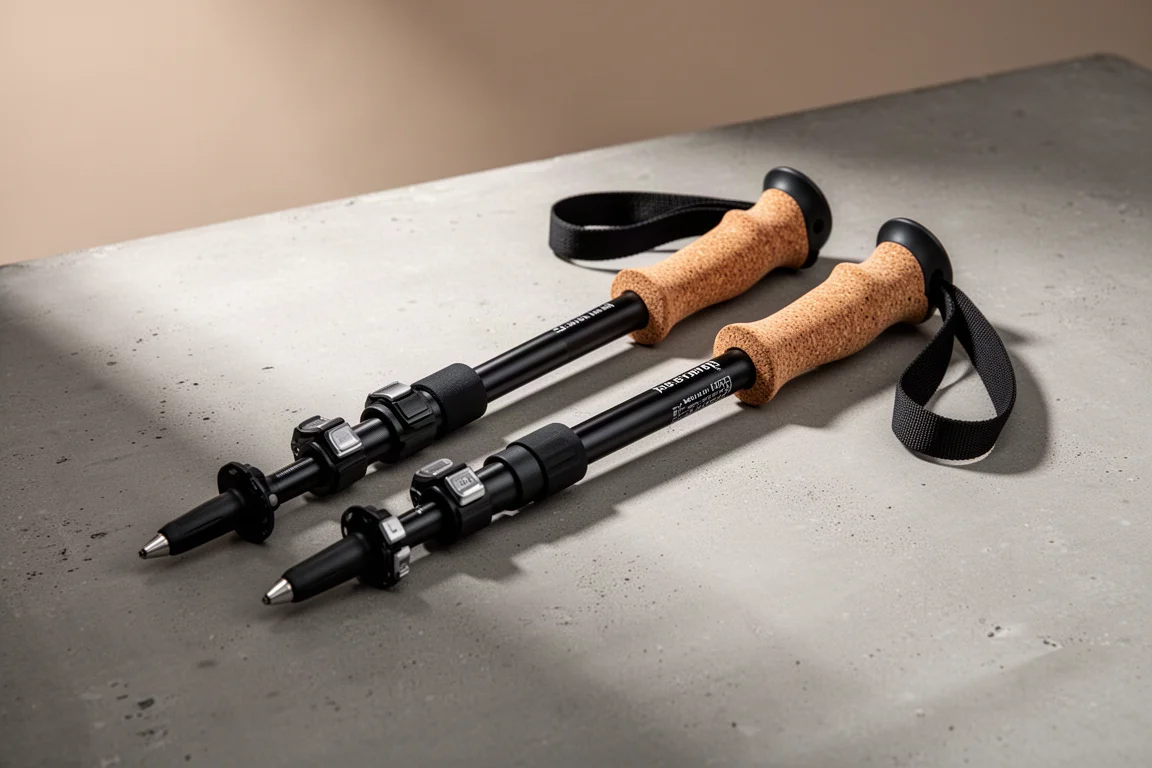
The example here is the Leki Corklite, a cork-grip pole. Availability of that exact model can vary, so the sensible approach is to treat poles as a category: look for a pair that feels comfortable in the hand, suits your height, and is light enough that you will actually carry it.
Darn Tough Socks: The Pair That Gets Replaced
Hiking socks are the item most beginners underrate, and cheap bulk socks are usually the reason. Thin, unsupportive socks can leave feet sore and blistered after long days, and that damage compounds over a multi-day trip.
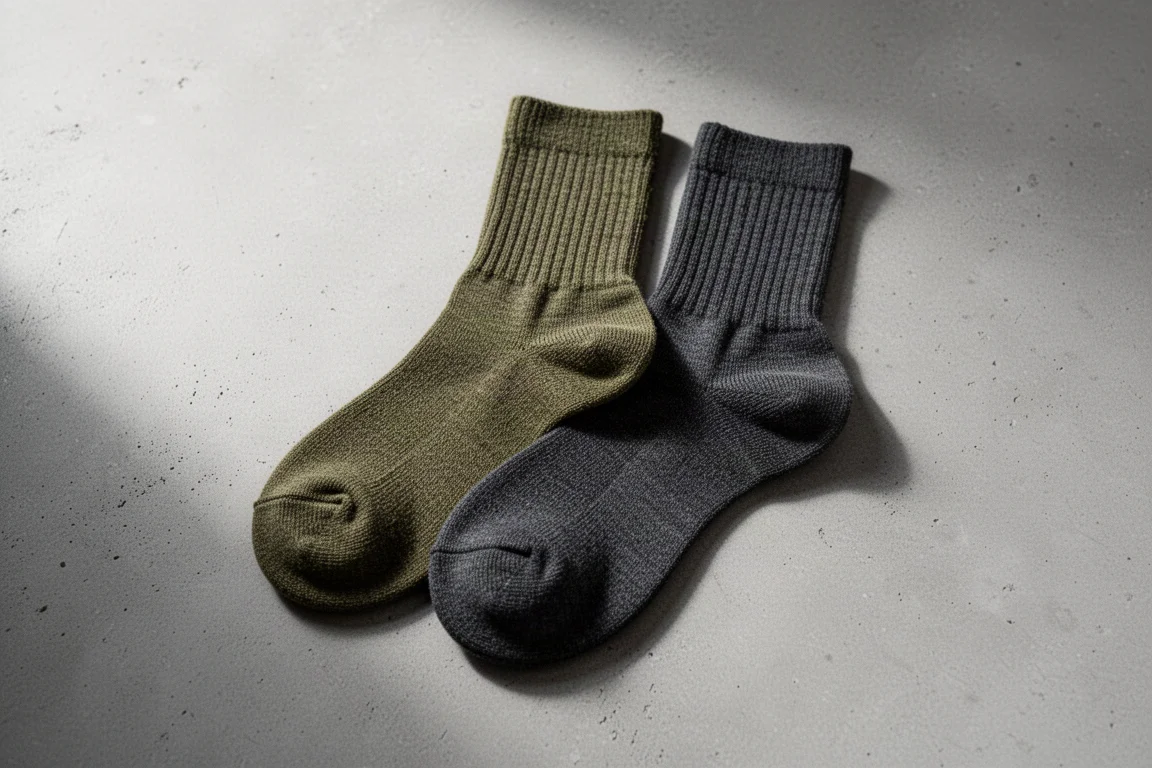
Darn Tough socks are the most common hiking socks on trail, and they are built to outlast typical socks by a wide margin. They are comfortable enough to wear daily, not only on hikes, and the knit holds up to repeated use.
The guarantee is the part that changes the math. When the socks eventually wear through, they are replaced at no cost. Some outdoor retailers handle the exchange in store, though not every shop does, so it is worth checking with a specific retailer before turning up with a worn pair. Otherwise the socks can be shipped to the manufacturer and a replacement pair comes back, which means the policy works from anywhere with a mailing address.
At roughly $20 per pair, the upfront price is higher than most people expect to pay for socks. The replacement policy is what makes that number reasonable across several seasons.
BRS Canister Stove: Cheap Heat You Can Actually Control
A canister stove is one of the first pieces of gear most beginners research, and it is still worth getting right. The main advantage over improvised alcohol stoves is control: a valve lets you dial the flame down so food can be simmered and stirred instead of cooked at a fixed, full-blast heat.
Alcohol stoves have other drawbacks. Judging how much fuel to use is difficult, and an overfilled stove can leave a burning unit that is hard to extinguish once the water has boiled. That is a safety problem, not just an inconvenience.
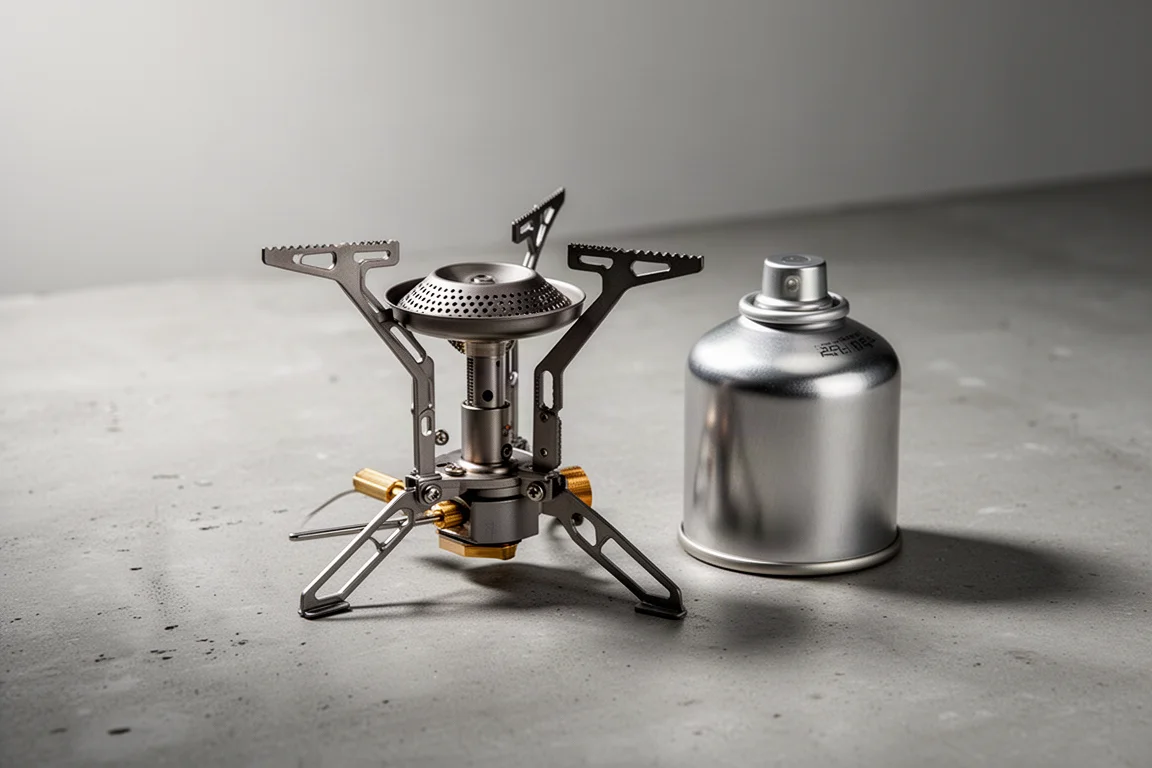
The BRS canister stove is inexpensive, small, and light, which makes it an easy first stove. One caution is worth passing along: a user report describes a stove of this model melting. That has not been a common problem in practice, and this stove has held up through heavy use, but it is a reasonable reminder to inspect any stove and its connections before lighting it.
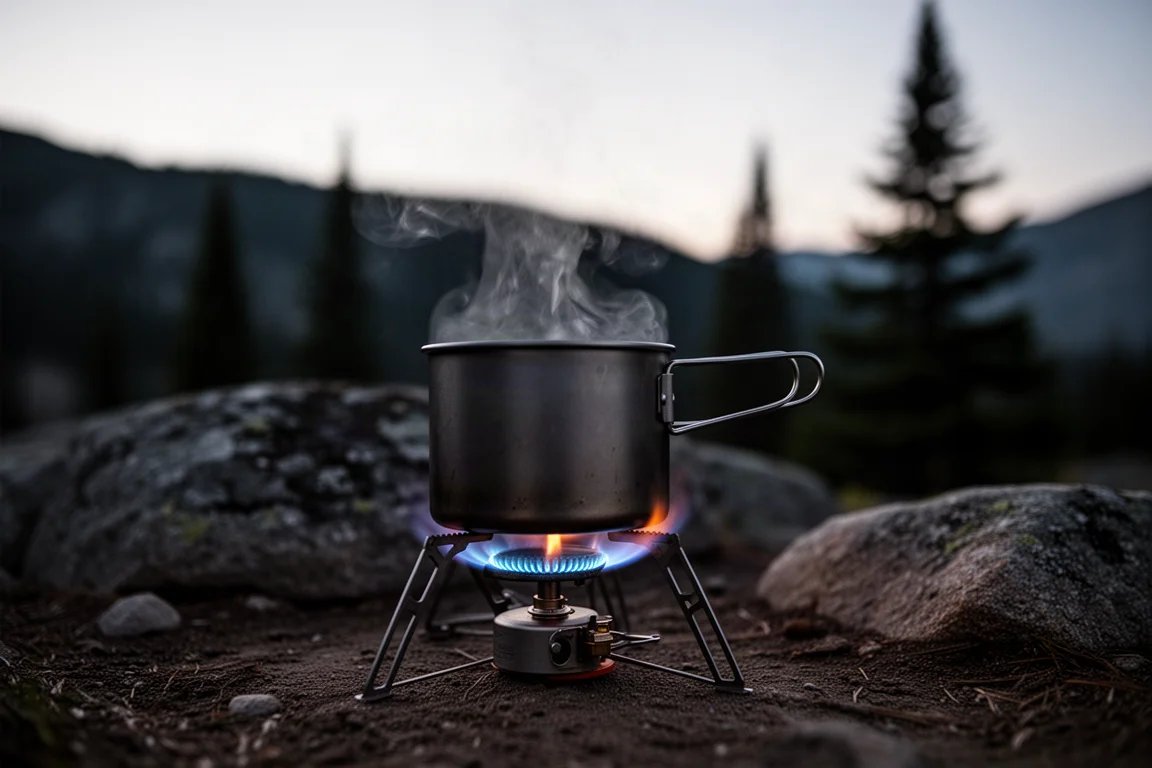
Canister fuel does have to be bought and carried, and canisters are not refillable, so the running cost is higher than a stove that burns alcohol or liquid fuel. For most three-season backpackers, the trade is still worth it for the control and simplicity.
Frogg Toggs Rain Jacket: Light, Inexpensive, and Proven
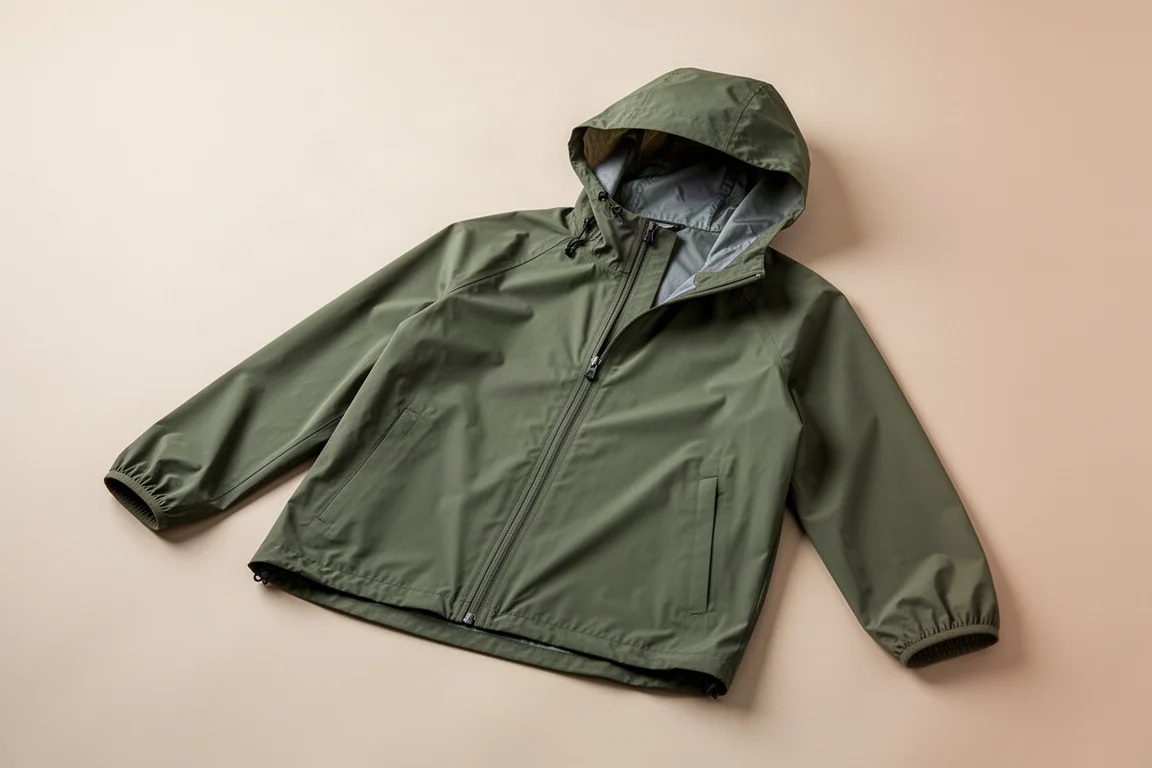
The Frogg Toggs rain jacket is not a premium shell. It is inexpensive, extremely light, and widely available, including at general retailers rather than only at outdoor shops. It also works: it keeps rain out about as well as any jacket does in a real storm, and it adds a useful layer of warmth in cool, wet conditions.
It is a three-season jacket, not winter gear. It is not the most comfortable option and it is not a style piece, but neither of those things matter much when the priority is staying dry without adding much weight to a pack.
The durability story is unusually strong for the price. A single Frogg Toggs jacket lasted an entire long-distance thru-hike of the Appalachian Trail, covering roughly 2,109 miles before it was finished. Experienced hikers who own far more expensive shells still choose this one, often because the expensive alternative is not meaningfully better in the conditions that matter.
Buying Advice for New Backpackers
If the goal is to spend well rather than spend a lot, the order matters. Water treatment comes first, because it is used every single day and a slow or battery-dependent system affects every stop at a water source. Socks come next, since foot comfort decides how a trip feels by day three. A stove and a rain jacket follow, and trekking poles are the most optional item on the list.
For most beginners, the practical move is to save on the items that are simple by nature and spend on the ones that affect daily comfort. An inexpensive canister stove and an inexpensive rain jacket both perform their jobs, while a durable pair of socks pays for itself through replacement support. Poles are worth adding once a pack feels heavy enough that balance and knee strain become the limiting factor.
Conclusion
None of these five items require a large budget, and none of them are complicated to use. What they offer is a shorter path to comfortable trips: water you can drink without waiting, steadier footing under a heavy pack, feet that survive long days, cooking heat you can control, and a rain shell light enough to carry without thinking about it.
Buying them at the start of a backpacking habit is cheaper than replacing the wrong versions later.
Further reading
Related Reviews

Backpacking Gear
Building a 10 lb Base Weight: An Ultralight Backpacking Gear List
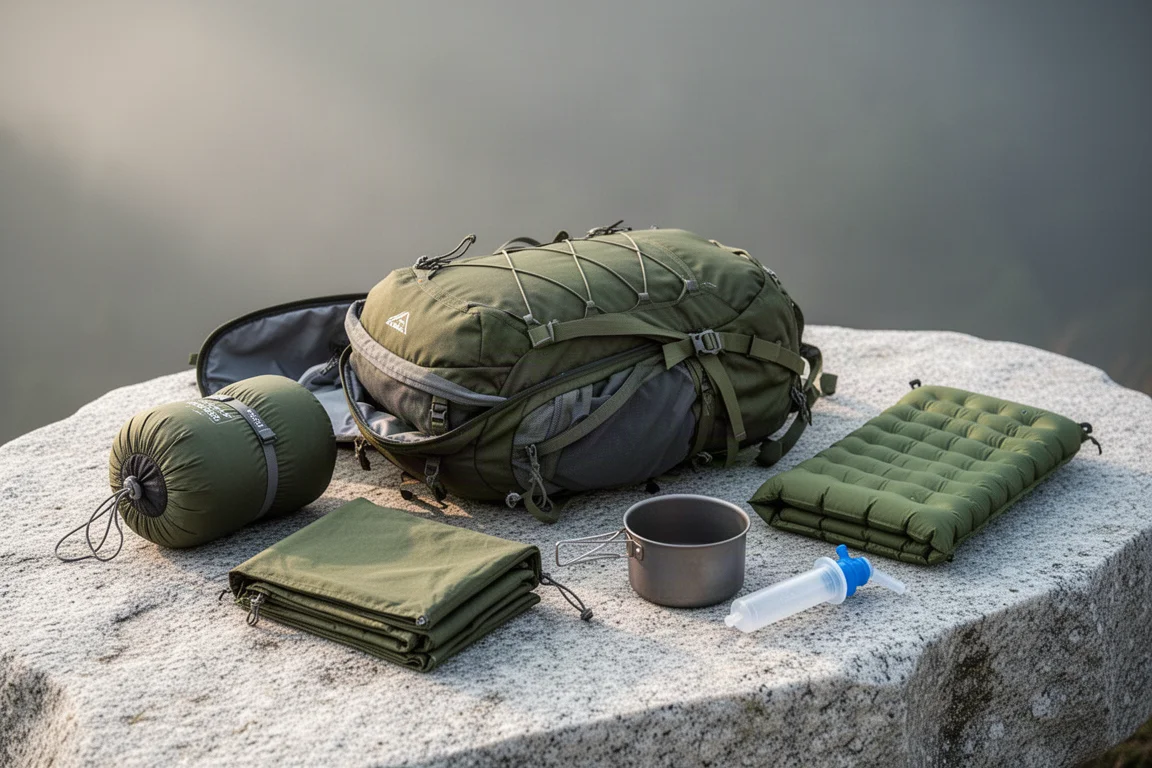
A practical walkthrough of the ultralight pieces behind a 10 lb base weight, from a 765 g pack and a roomy one-person tent to a full camp chair and a dependable water filter.
Backpacking Gear
A 15-Pound Lightweight Backpacking Gear List for Solo Trips
A beginner-friendly 15-pound backpacking setup built from easy-to-find gear, with notes on what each piece does, how it packs, and where to spend your attention.
Backpacking Gear
8 Ultralight Backpacking Gear Upgrades Worth Carrying
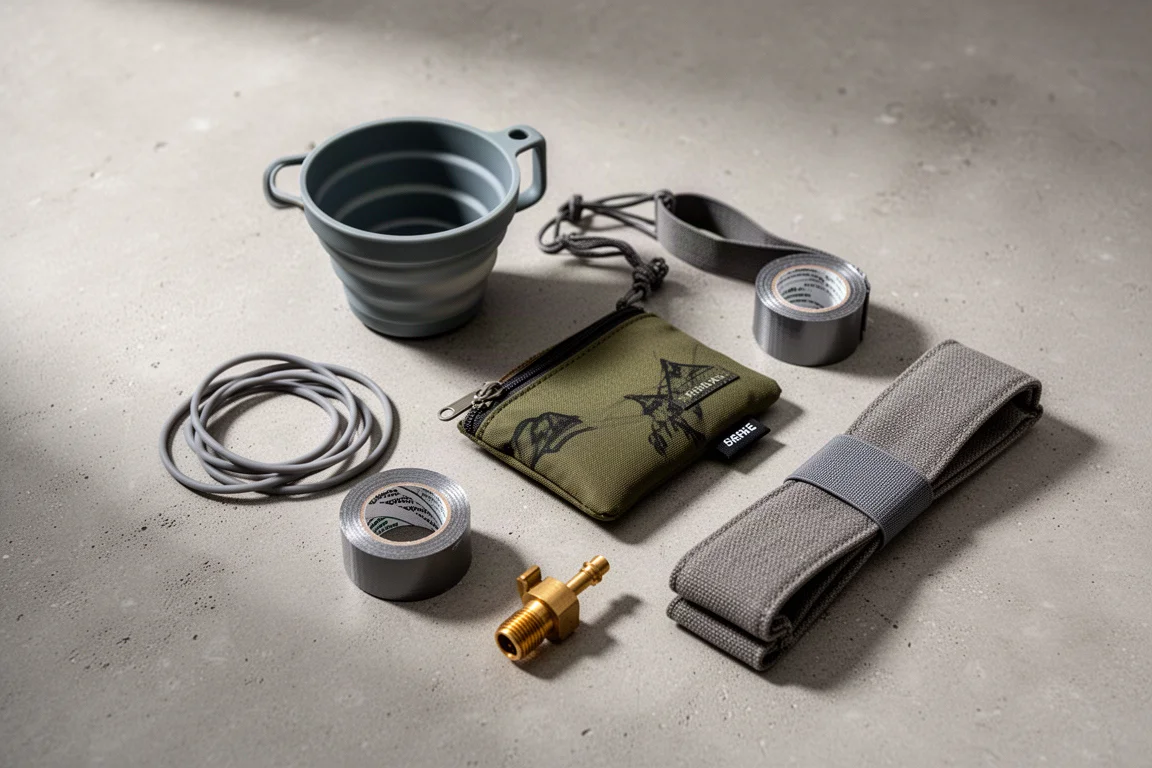
Eight small, affordable backpacking upgrades that solve real trail annoyances, from a pillow that stays put to a fuel valve that rescues leftover canister gas.