Camping Stoves and Cookware
Fire Maple Petrol G3 Review: Does the Heat Exchanger Groove Really Help?
A practical look at the Fire Maple Petrol G3 heat exchanger pot and Green Peak stove kit, with boil-time comparisons that separate real gains from marketing.
Introduction
Boil-time claims are easy to make and hard to check. The Fire Maple Petrol G3 arrives as a kit built around an aluminium heat exchanger pot with a shaped, grooved base, paired with the Green Peak gas stove and a titanium canister stand, and the obvious question is whether that groove changes anything you can actually measure or whether it simply looks clever.
This review covers both parts of the kit and how they behave together. The boil test compared the same pot, the same water volume and the same stove, once with the pot seated in the groove and once with the pot resting on top of the stove arms, using an unregulated burner in cold air.
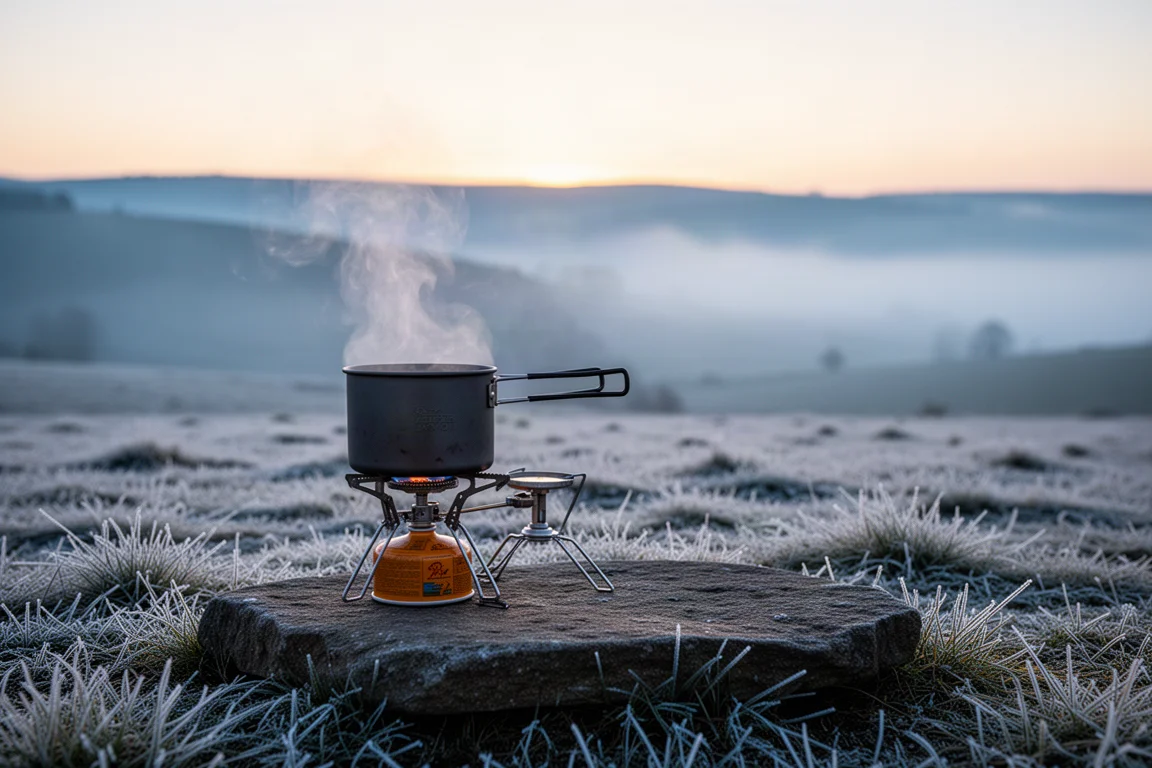
Conditions were closer to a winter morning on the hill than to a bench test: around 2 degrees Celsius, a light breeze at times, and a canister that visibly frosted over as the session went on. That context matters when reading the numbers below, because gas pressure, not the pot, is the biggest variable in a test like this.
What Comes in the Box
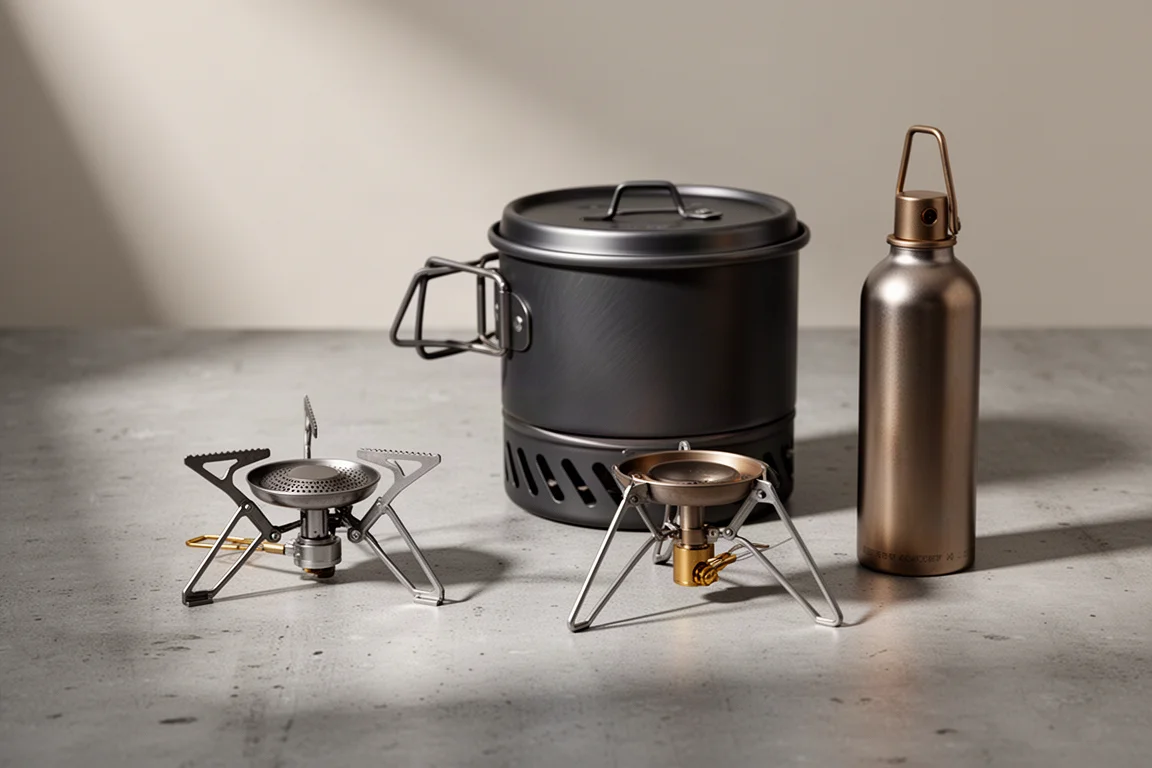
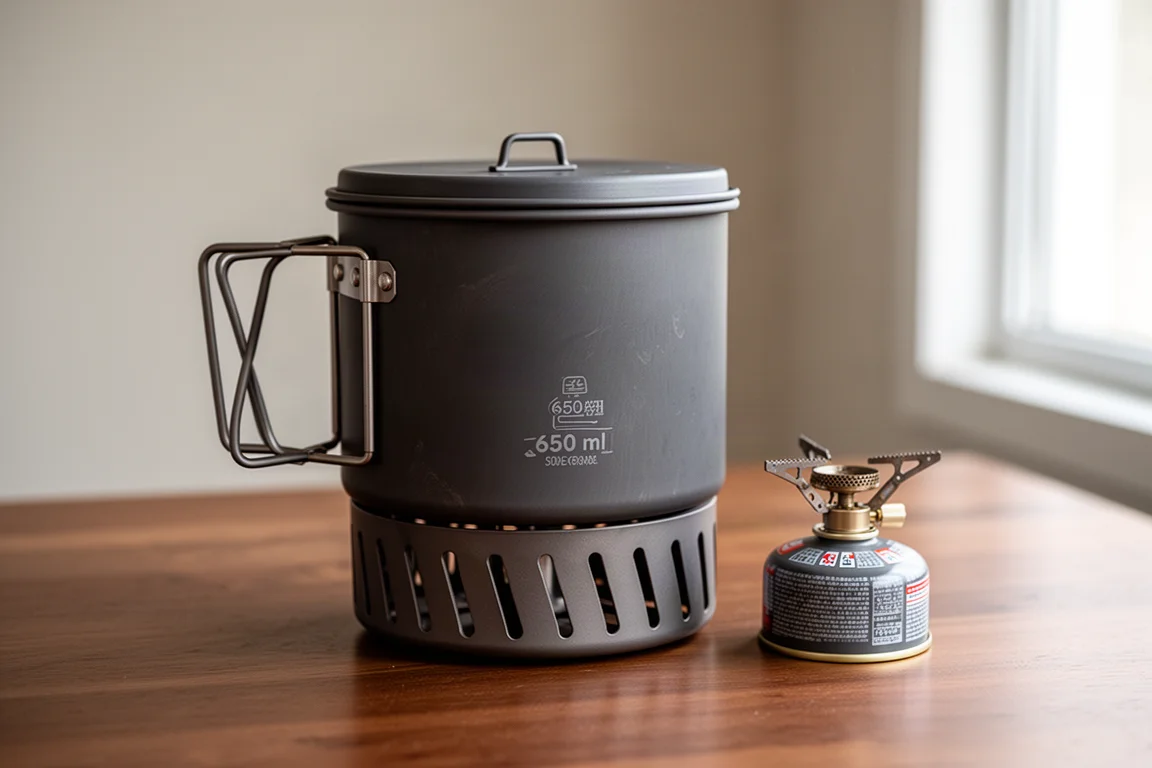
The kit is compact and clearly designed as a set. The pot is aluminium with a lid and a water-level marker inside, and its base carries a cutout and groove pattern rather than a flat floor. The Green Peak stove and a small titanium canister stand complete the package.
The canister stand clips onto the base of the gas canister and widens its footprint, which makes the whole assembly noticeably steadier on uneven ground. It is a small addition, but it is the sort of thing you appreciate when you are balancing a pot on a cold, sloping pitch.
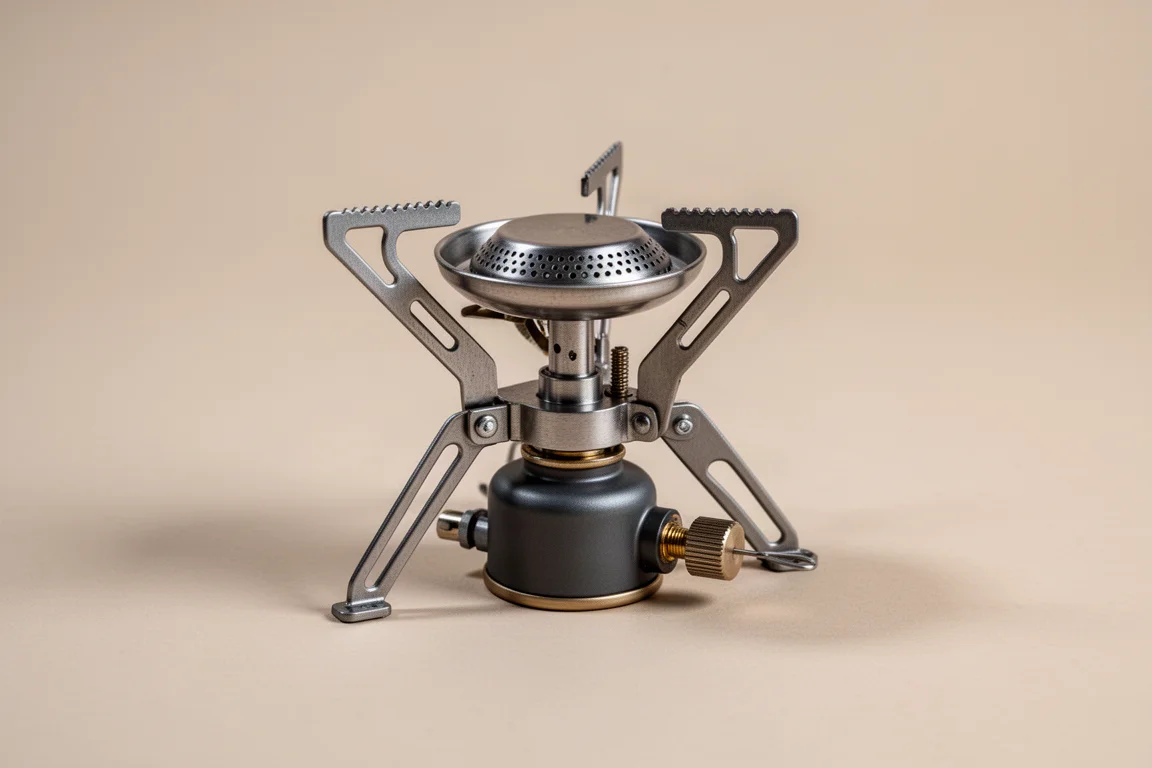
The stove folds out into a triangular shape with roughly 180 degrees between each arm, and those arms are shaped to sit inside the groove on the pot’s base. That brings the burner unusually close to the bottom of the pot, and it is the part of the design most worth putting to the test.
Fire Maple Petrol G3 Heat Exchanger Pot: The Boil Test
The first run seated the pot directly in the groove with the stove arms locked into place. The pot was filled to the same marker line for every run, the stove was opened to full, and timing started at ignition.
With the pot seated in the groove, the water reached a rolling boil in 2 minutes 39 seconds. For an unregulated burner in cold air that is quick, and the arrangement felt stable with the flame tucked underneath the pot.
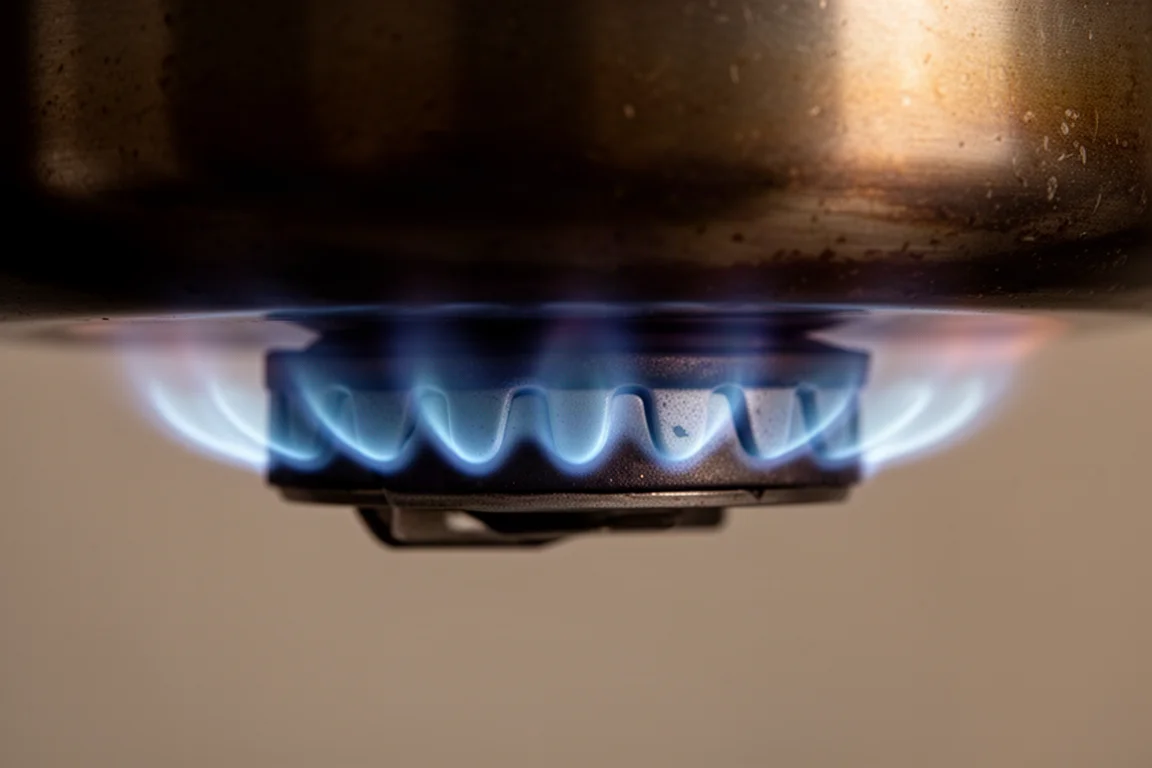
The second run used the same pot and the same water volume, but the pot sat on top of the stove arms instead of inside the groove, leaving a gap of roughly half an inch between burner and base. That run took 4 minutes 31 seconds, and the difference was obvious long before the timer stopped: at the two-minute mark there was barely any movement in the pot.
A third run used a fresh canister with the pot outside the groove and finished in 3 minutes 22 seconds. The canister from the second run had frosted over during testing, which is a fair explanation for part of that gap. The conservative reading is that the groove-seated setup saved somewhere between one and two minutes, depending on how the canister was behaving.
Fire Maple Green Peak Stove: Compact and Simple
The Green Peak is a small folding gas stove with a piezo igniter built in, so routine lighting does not require a separate lighter. Its arms fold out for use and collapse for storage, and it packs down small enough to travel with the rest of the kit.
It is not a pressure-regulated stove, which is worth knowing before buying. Unregulated burners lose output as canister pressure falls, and the frosting seen during testing is a reminder that cold weather and a partly used canister will both work against you. With a fresh canister in milder conditions, the same stove should hold its performance more consistently.
The triangular arm layout is what makes the pairing work. Because the arms match the groove in the pot’s base, the burner sits close to the pot rather than well below it, which is exactly the arrangement the boil test compared against a wider gap.
How the Groove Affects Real Boil Times
Two things change when the pot sits in the groove rather than on top of the arms. The first is burner-to-pot distance: the flame sits closer to the metal, so more of its heat goes into the pot instead of spilling around the sides. The second is wind protection, since the shaped base acts as a partial shield around the flame.
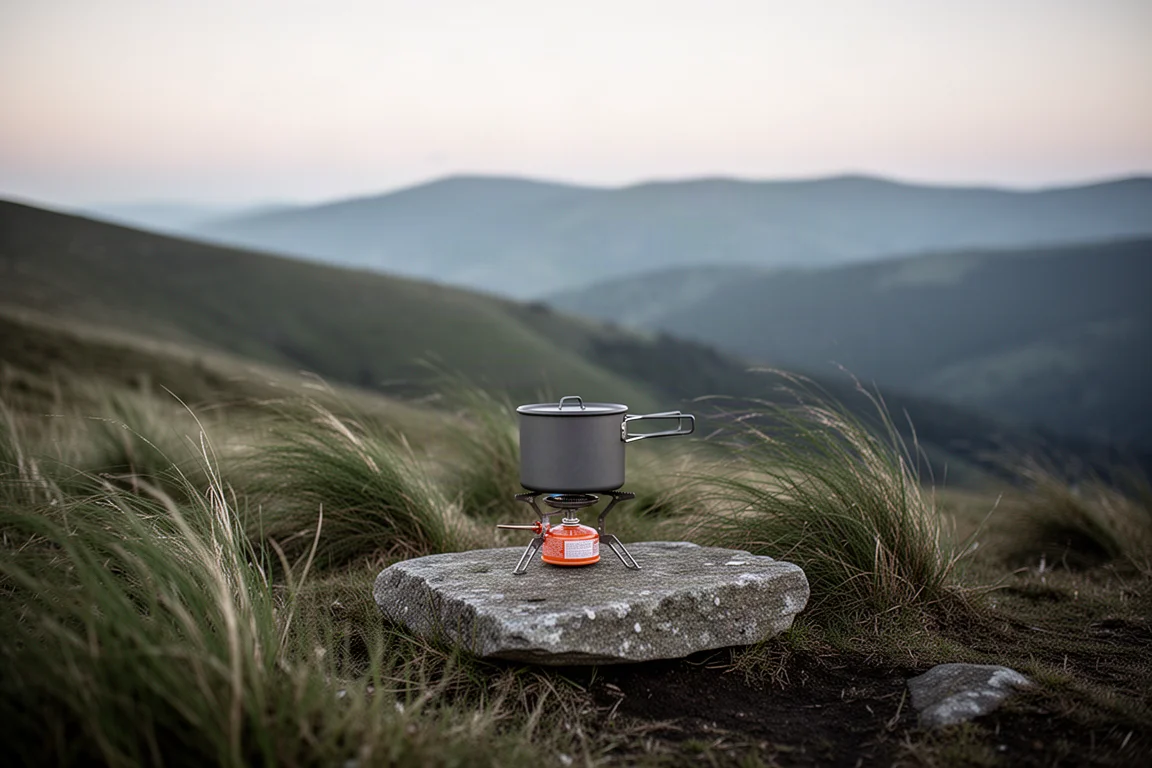
Integrated stove systems have used enclosed pot bases for years for the same reason, so the principle is well established rather than novel. What matters here is that this kit applies it without tying you to a proprietary canister format, and that the measured difference was large enough to be worth designing around.
Whether that translates into a better trip depends on how you cook. If your routine is boiling water for dehydrated meals and hot drinks several times a day, a saving of around two minutes per boil adds up quickly. If you mostly brew one cup at a stop, the gain is pleasant rather than essential.
Things to Consider Before Buying
The pot is aluminium, and some people prefer not to cook or eat directly from aluminium cookware. That is a personal preference rather than a performance issue, but it is worth settling before you buy.
The stove is not pressure regulated, so cold weather and a low canister will both reduce output. The boil times measured here are a snapshot of one cold session, not a guaranteed figure.
The groove is designed around the supplied stove arms. The pot and stove work as a matched pair, so performance depends on using them together rather than mixing in a different burner.
Finally, treat any single boil test as indicative rather than exact. Water volume, air temperature, wind and canister state all move the number, and the differences between runs in this session showed that clearly.
Buying Advice
The kit makes most sense for anyone who boils water repeatedly on trips and wants that to happen quickly without carrying a heavy integrated system. The pot, stove and stand are designed to work together, and the boil test showed a real difference between using them as intended and simply resting the pot on top.
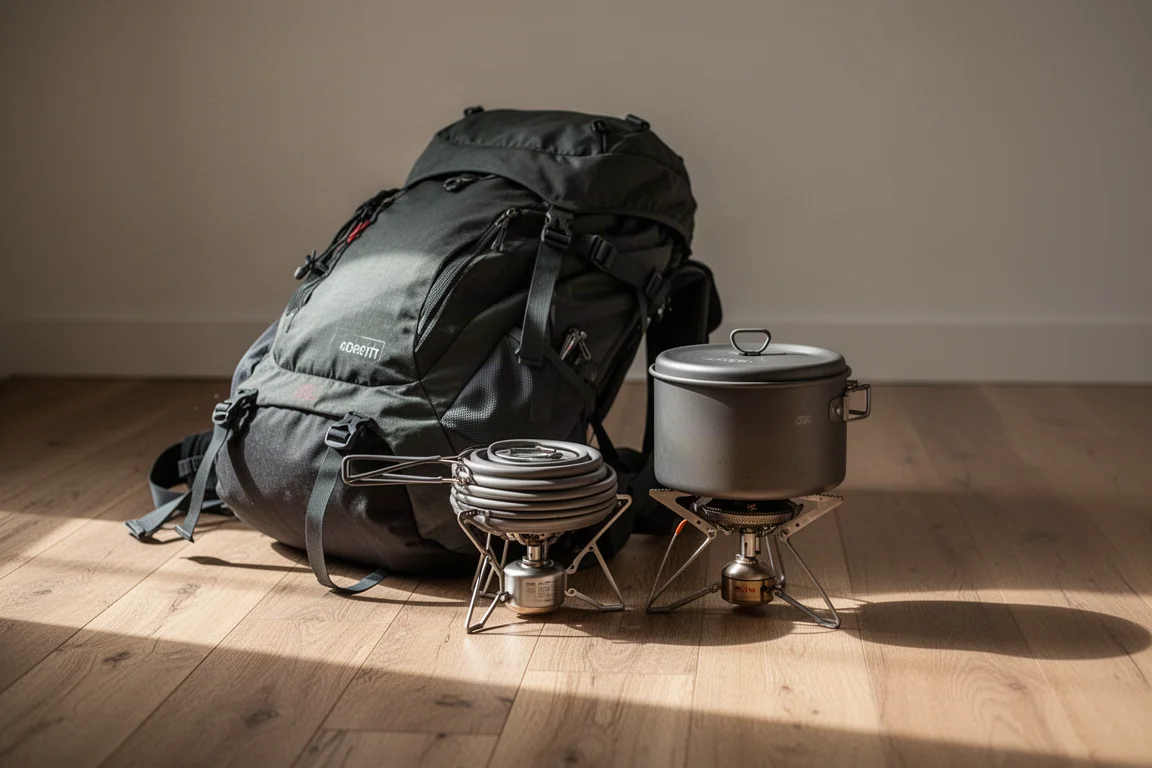
If you already own a dependable stove and a plain pot, this is a convenience upgrade rather than a necessity, and the value depends on how often you boil. If you are starting from scratch, buying the pot and stove as a set removes the guesswork about whether the arms will line up with the base.
For colder trips, plan around the stove’s lack of pressure regulation. A fresh canister and a little insulation under it will do more for your boil times than any other change you can make at camp.
Conclusion
The Fire Maple Petrol G3 heat exchanger pot earns its place in a pack. Seated in the groove, the kit boiled in 2 minutes 39 seconds; with the pot resting on top of the arms, the same water took 4 minutes 31 seconds, and a follow-up run with a fresh canister outside the groove still came in slower at 3 minutes 22 seconds. The grooved base is a functional part of the design, not decoration.
The Green Peak stove is simple, small and easy to live with, with the caveat that it is not pressure regulated. Bought together, the two make a light and quick boiling setup for anyone who spends a lot of time waiting for water to boil.
Further reading
Related Reviews
Backpacking Gear
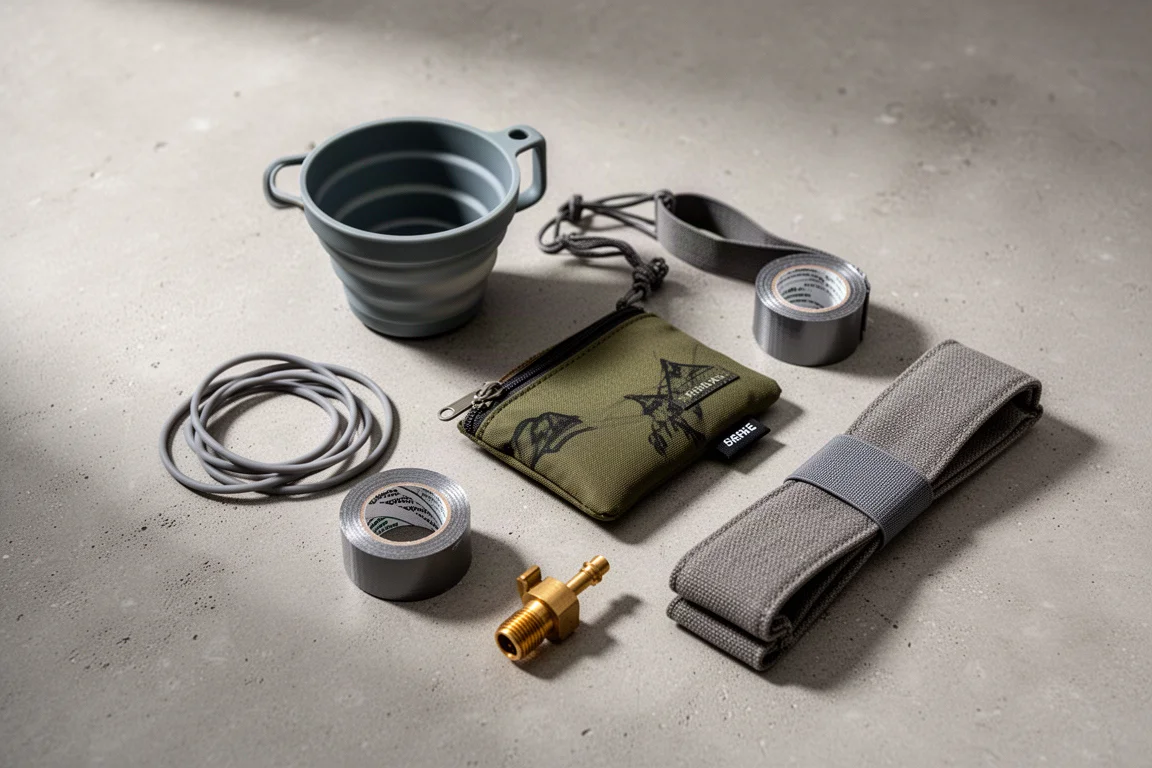
8 Ultralight Backpacking Gear Upgrades Worth Carrying
Eight small, affordable backpacking upgrades that solve real trail annoyances, from a pillow that stays put to a fuel valve that rescues leftover canister gas.
Backpacking Gear
Affordable Alternatives to Premium Backpacking Gear: Five Budget Picks Compared
Five premium backpacking items paired with five lower-cost alternatives, compared on weight, materials, weather performance, and price.
Backpacking Gear
Affordable Backpacking Gear: Four Low-Cost Items That Make Trips Better
Four inexpensive backpacking items, from reusable food bags to a sub-100 gram camp pillow, plus the packing habits that keep pack weight honest.