Network Streamers
FiiO SR11 Review: The Best-Value Entry-Level Network Streamer
A close look at the FiiO SR11, a roughly $100 network streamer with Ethernet, Roon Ready certification, a front-panel sample rate display and a volume-controllable USB output.
Introduction
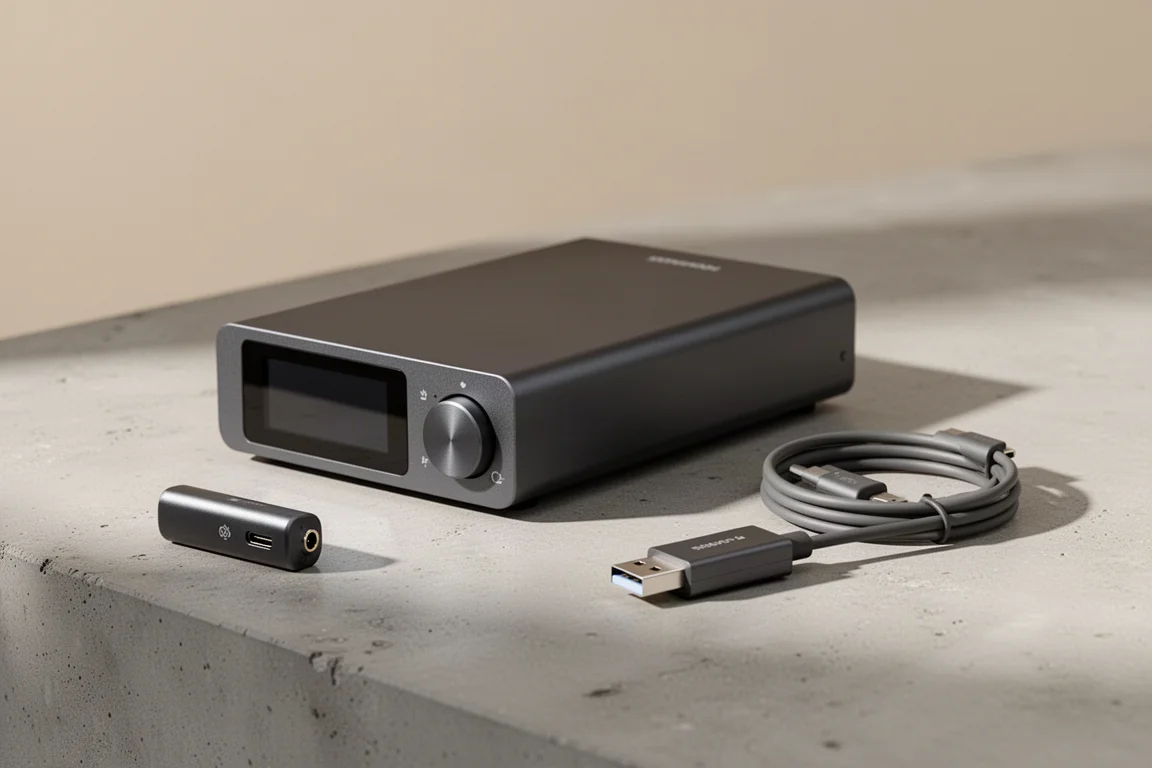
The FiiO SR11 is a compact network streamer that sells for around $100 in the US and Europe, and it handles the fundamentals better than almost anything else at that price. It is a digital transport rather than a complete player: there is no DAC inside, so the rear panel carries digital outputs only, and you supply the conversion stage yourself. That could be a desktop DAC, a USB dongle DAC, or the digital input on an integrated amplifier.
The SR11 shares its chassis design with the FiiO K11 R2R DAC, but it is USB powered, so there is no bulky power brick to hide behind the shelf. A firmware update has also widened its streaming inputs from AirPlay 1 and Roon to include Bluetooth, DLNA, and file playback from a USB drive connected directly to the unit, with the FiiO Connect app used to access those files.
What makes the SR11 interesting is not a long feature list but the combination of Ethernet, a front-panel sample rate and volume display, a volume-controllable USB output, and Roon Ready certification at an entry-level price. For a first network streamer, that combination removes most of the usual setup friction.
Who the FiiO SR11 Is For
The SR11 suits listeners who already own a DAC and want a simple way to get network audio into it. Setup is plug and play: connect power over USB, join the network over Wi-Fi or Ethernet, choose a digital output in the menu, and start streaming. There is no operating system to write to a memory card and no digital HAT to configure.
It is also a good fit for headphone listeners who like to swap between USB dongle DACs, because the USB output can be made volume adjustable, and for anyone who wants to add AirPlay reception or Roon support to a DAC, CD player, or integrated amplifier that already has digital inputs.
It is not the right choice if you need Spotify Connect or Tidal Connect built in, or if you want a single box with analog outputs and no separate DAC.
Main Strengths
Roon Ready certification is the headline. The SR11 has passed Roon’s internal testing, so Roon streams to it without functional quirks or gotchas, and high-resolution files play properly, well above AirPlay’s 48 kHz sample rate ceiling. Volume on the SR11 stays continuously synchronized with the Roon remote app, and a third-party extension allows volume control with a Microsoft Surface Dial.
The menu system lets you pick the active digital output and decide whether that output runs at maximum level or stays volume adjustable. If you pair the SR11 with a DAC that has its own volume control, you can set the streamer to maximum and use the DAC’s control. If you use a USB DAC without a volume control of its own, you make the SR11’s volume adjustable instead.
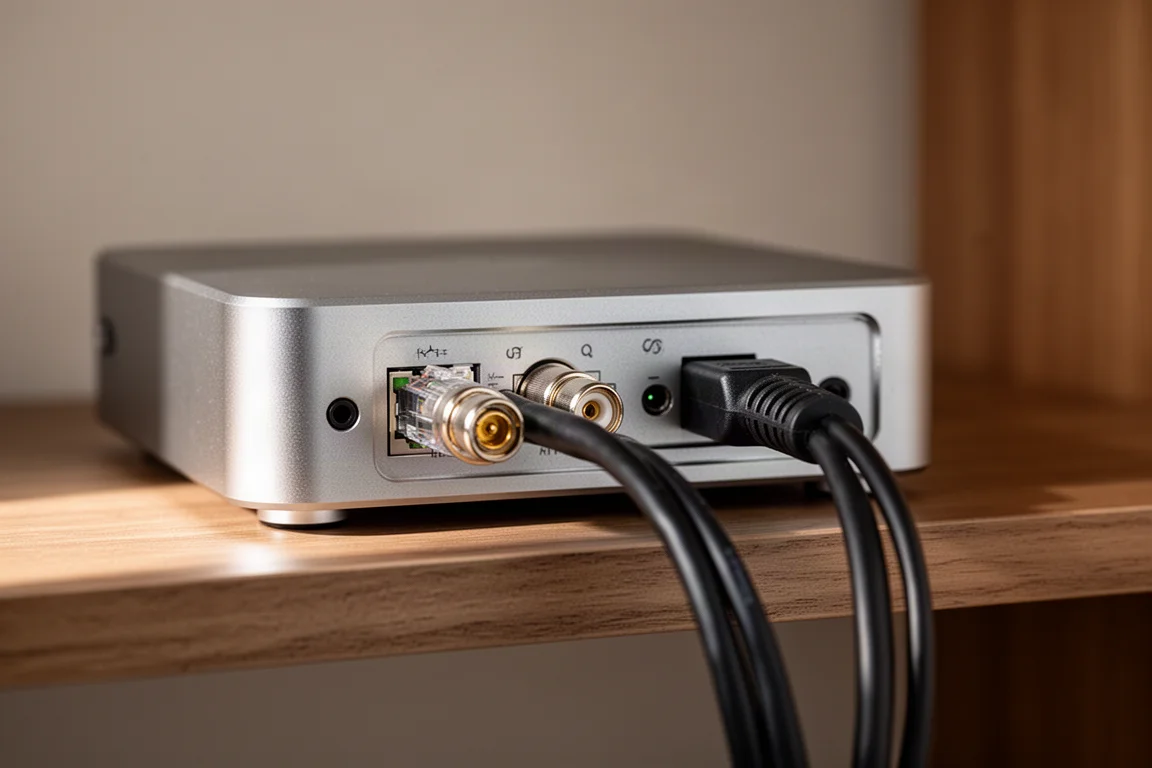
Day-to-day usability is stronger than the price suggests. The front panel shows the incoming sample rate and volume level, the display and the top plate logo can be dimmed in the menu, and the display can be switched off quickly with the button beside it. A remote control is included for volume and menu navigation, which helps because the front-panel wheel can feel fiddly.
Roon Ready and What It Means in Practice
Roon Ready is more than a label. It means the SR11 has been through Roon’s own testing process and can be used as a Roon endpoint without the workarounds that uncertified devices sometimes require. High-resolution playback works correctly, the streamer’s volume stays in step with the Roon app, and the device behaves predictably when you switch between tracks and sample rates.
For anyone already paying for Roon, that certification is the difference between a device that works and a device that mostly works. At this price point, the SR11 is unusual in offering it alongside Ethernet and a volume-controllable USB output.
Where the FiiO SR11 Fits in a Real System
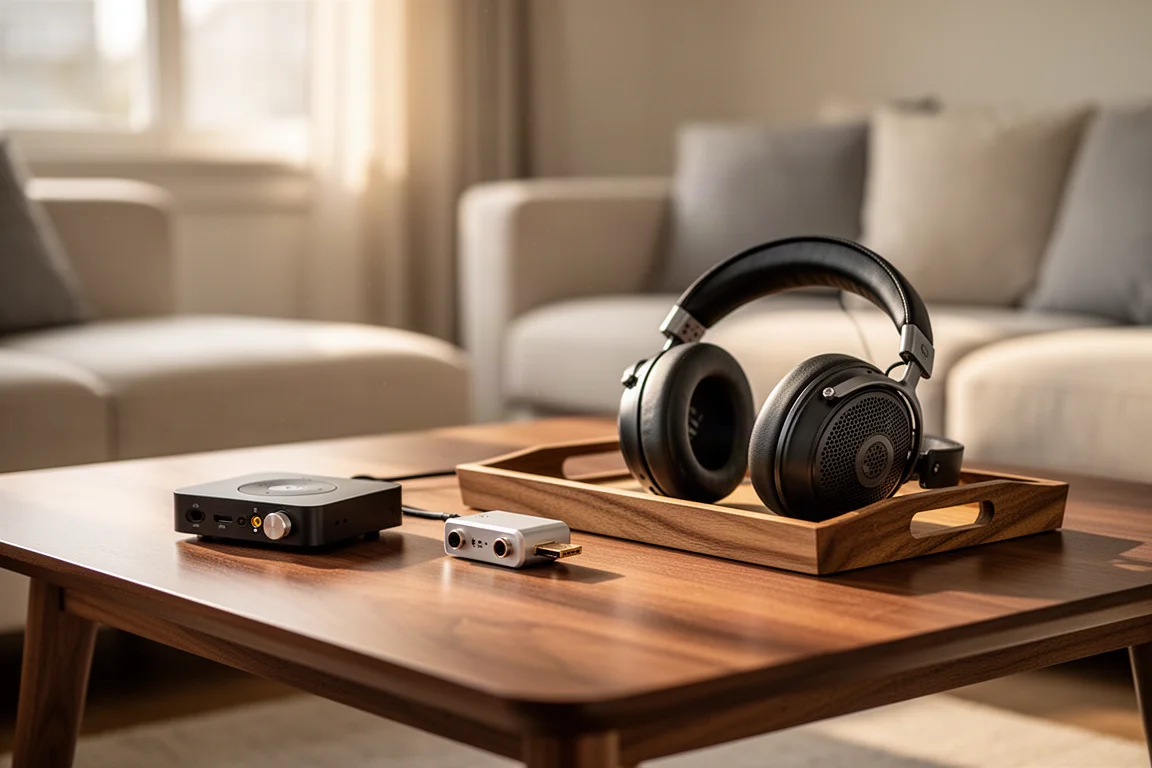
The most flexible use is a small headphone setup. Placing the SR11 next to a USB dongle DAC on a coffee table puts headphone listening within arm’s reach, and swapping dongle DACs changes the sound signature without touching the rest of the chain. The dongle DAC’s analog output can also feed an integrated amplifier, and with the right dongle and adapter cable, a balanced connection to that amplifier is possible.
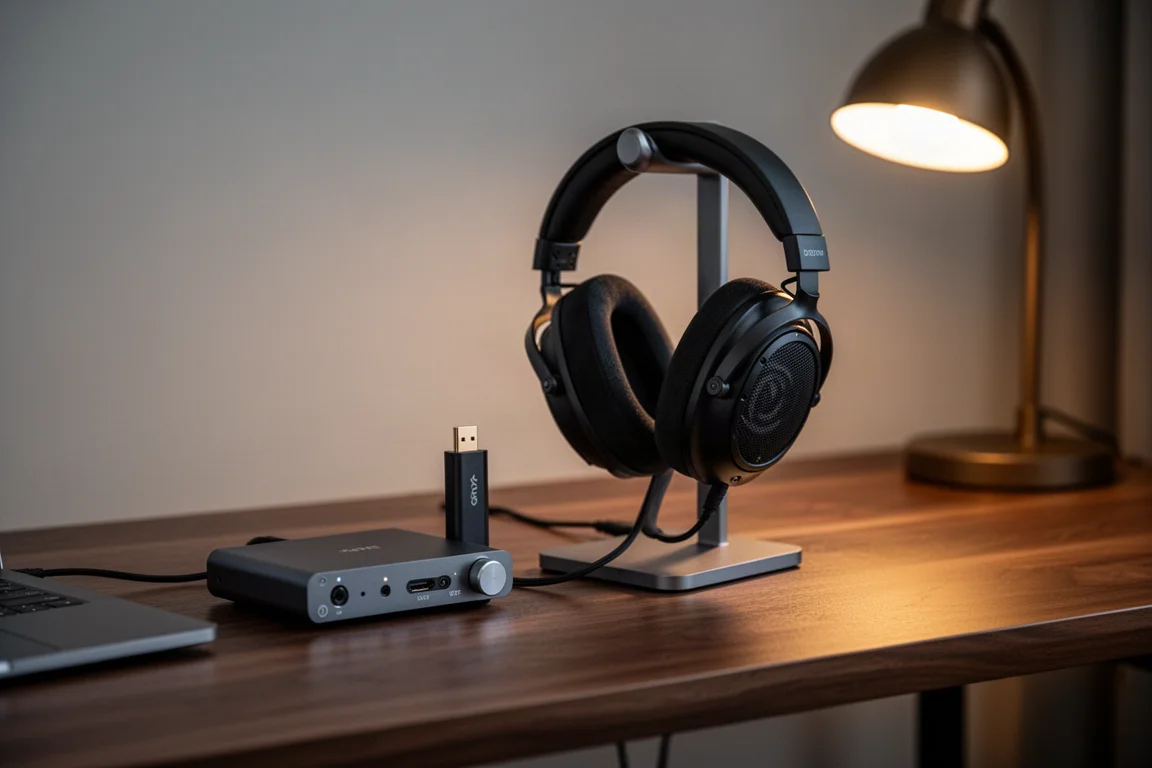
The SR11 can also act as an add-on for existing equipment. It can turn a DAC into an AirPlay receiver, which is handy when you want to send audio from a television or phone to a system without running a long optical cable. It can add Roon Readiness to a CD player or integrated amplifier that has optical, coaxial, and USB inputs. It also works with a DAC whose only digital input is USB.
Things to Consider Before Buying
The SR11 has no DAC inside, so it always needs a partner device with digital inputs. That is the trade-off that keeps the price low, and it is worth being clear about before buying.
Connectivity is another consideration. There is no Spotify Connect and no Tidal Connect here. The obvious alternative at this price, the WiiM Mini, offers both, but it is not Roon Ready, it has no Ethernet input, it does not show volume level and incoming sample rate on its front panel, and it has no USB output. The WiiM Pro and WiiM Pro Plus are Roon Ready and do have Ethernet sockets, but neither offers a USB output.
A Raspberry Pi is the other route. It does have a USB output, but once you add a case and a power supply you are close to $100 anyway, and you still do not get coaxial or optical outputs. A Pi also suits power users who want to choose their own operating system; writing an OS to a micro SD card and configuring a digital HAT are real points of friction for beginners.
Finally, small details matter day to day. The volume wheel doubles as the menu navigator and can be awkward to use, the included remote is a basic plastic unit, and the menu-driven options for output selection and volume behavior take a few minutes to learn.
Buying Advice
If you want an entry-level network streamer that is genuinely plug and play, the SR11 is the strongest option around $100. Ethernet, Roon Ready certification, a front-panel sample rate display, and a volume-controllable USB output are exactly the features that make a streamer easy to live with, and they are rarely found together at this price.
Choose it if you already have a DAC, or if you plan to pair it with a USB dongle DAC or a desktop DAC with a USB input. It is also a sensible way to add AirPlay or Roon to an amplifier or CD player you already like.
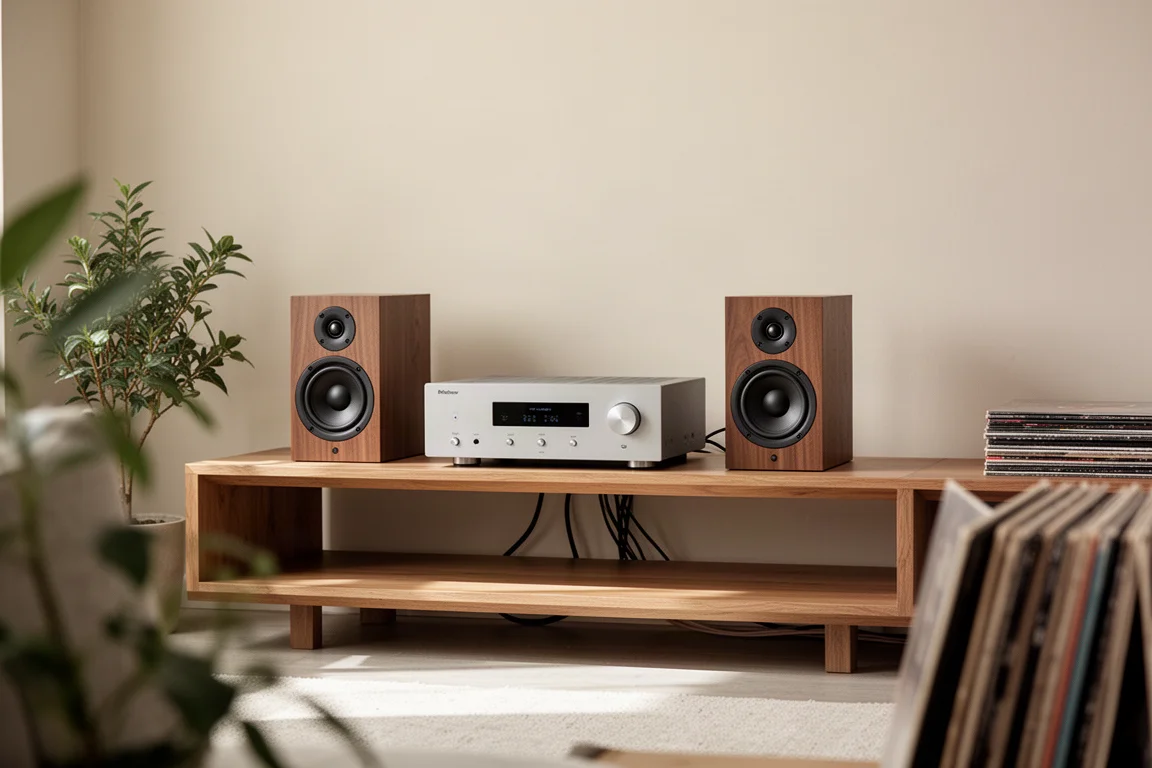
Look elsewhere if Spotify Connect or Tidal Connect is essential and you do not want to add another device: the WiiM Mini covers those services, though it gives up Ethernet, the sample rate display, and the USB output. If Roon and Ethernet matter more than a USB output, the WiiM Pro and WiiM Pro Plus are the natural step up. If you enjoy tinkering with operating systems and HATs, a Raspberry Pi build can be a rewarding project.
Conclusion
The FiiO SR11 succeeds by keeping the essentials and skipping the extras. For around $100 it delivers a plug-and-play digital transport with Ethernet, Roon Ready certification, a readable front panel, and a volume-controllable USB output that opens the door to dongle DACs and USB-only DACs. Add a DAC you already trust, and it becomes one of the simplest ways into network streaming.
Product link
View more details for FiiO SR11
This product is mentioned in the review. Check the specifications, options, and compatibility before buying.
View more details for FiiO SR11Further reading
Related Reviews
Network Streamers
Cambridge Audio MXN10 vs WiiM Ultra: Two Network Streamers Compared
A side-by-side look at the Cambridge Audio MXN10 and the WiiM Ultra, covering sound character, streaming features, connectivity, and which kind of system each streamer suits.
Network Streamers
EverSolo DMP-A8 Review: A Higher-End Streaming Deck and Preamplifier
A closer look at the EverSolo DMP-A8, a streaming deck and preamplifier with AKM DAC chips, a linear power supply for the audio circuit, HDMI ARC, an analog input, and a parametric EQ.
Network Streamers
FiiO R7 vs Bluesound Node X: Two Network Streamers, Two Very Different Approaches
A practical comparison of the FiiO R7 and the Bluesound Node X, covering app support, connectivity, headphone output and the small sound quality differences that decide between them.