Desktop Speakers
FiiO SP3 vs PreSonus Eris 3.5 vs Monoprice MM-3: A Desktop Speaker Comparison
The FiiO SP3 brings a rigid cabinet and useful desk features, but its measured tuning raises real questions at its price. Here is how two cheaper desktop speakers compare.
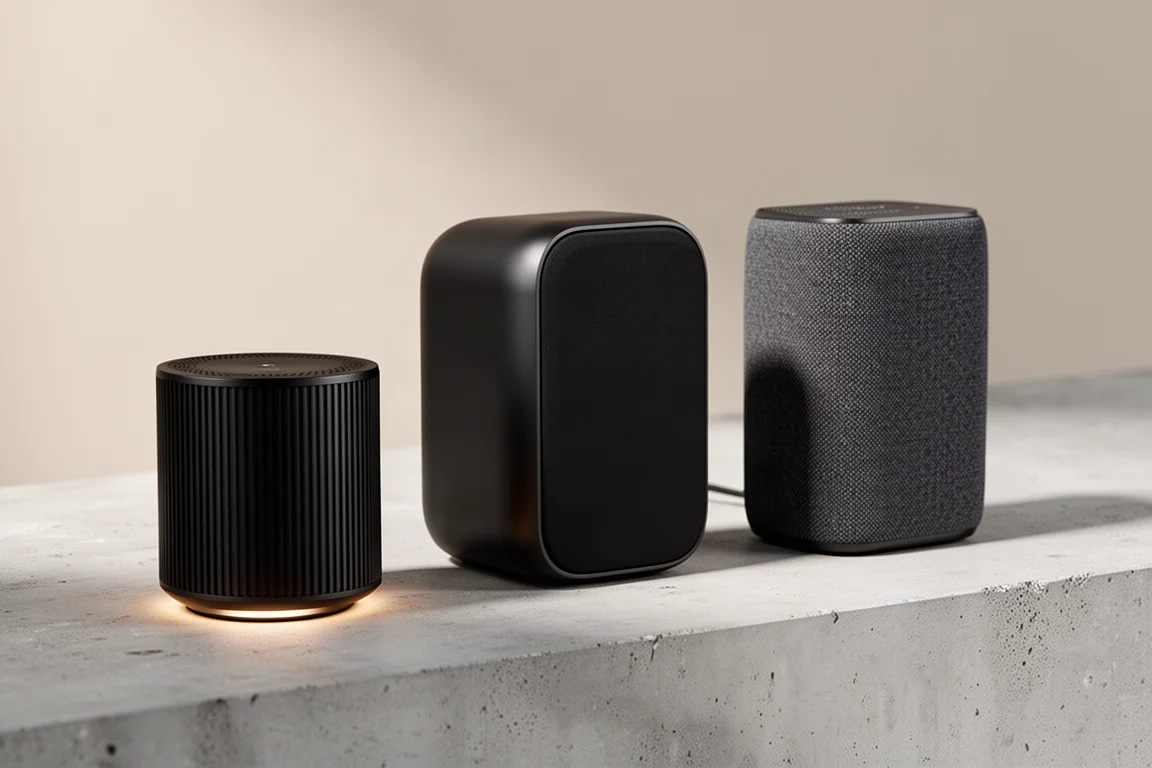
Introduction
Desktop speakers are a category built on compromise. Cabinet volume, driver size, crossover design, and price all pull against one another, and the result is that a handsome product with genuinely good hardware can still miss the mark where it matters most.
The FiiO SP3 is exactly that kind of product. It is a compact powered desktop speaker pair with a dense, rigid cabinet, an unusual feature set, and a price around $300 per pair. Its measured sound performance, however, does not line up with the way it is presented.
Two lower-cost alternatives are worth understanding before any money changes hands: the PreSonus Eris 3.5 at roughly $99 and the Monoprice MM-3 at roughly $180. This comparison covers what each speaker actually delivers, where the SP3 falls short, and which of the three makes sense on a real desk.
What to Look For in a Desktop Speaker
A desktop speaker is a near-field tool, so a few practical criteria matter far more than a long spec sheet.
Placement flexibility comes first. Most desks put speakers below ear level, so a design that tilts upward or offers some mounting solution has a genuine advantage. Cabinet rigidity matters too, because a resonant enclosure colors everything the drivers produce, no matter how good those drivers are. Conveniences such as base lighting, connectivity options, and front-panel controls do not change performance, but they do change how pleasant the speakers are to live with day to day.
The most important criterion is tuning. A well-integrated crossover keeps the handoff between woofer and tweeter smooth across a range of listening angles. Bass extension should be honest about the limits of the cabinet rather than producing one loud resonance note. And an even on-axis response gives you a neutral starting point you can adjust with equalization if you want a different balance.
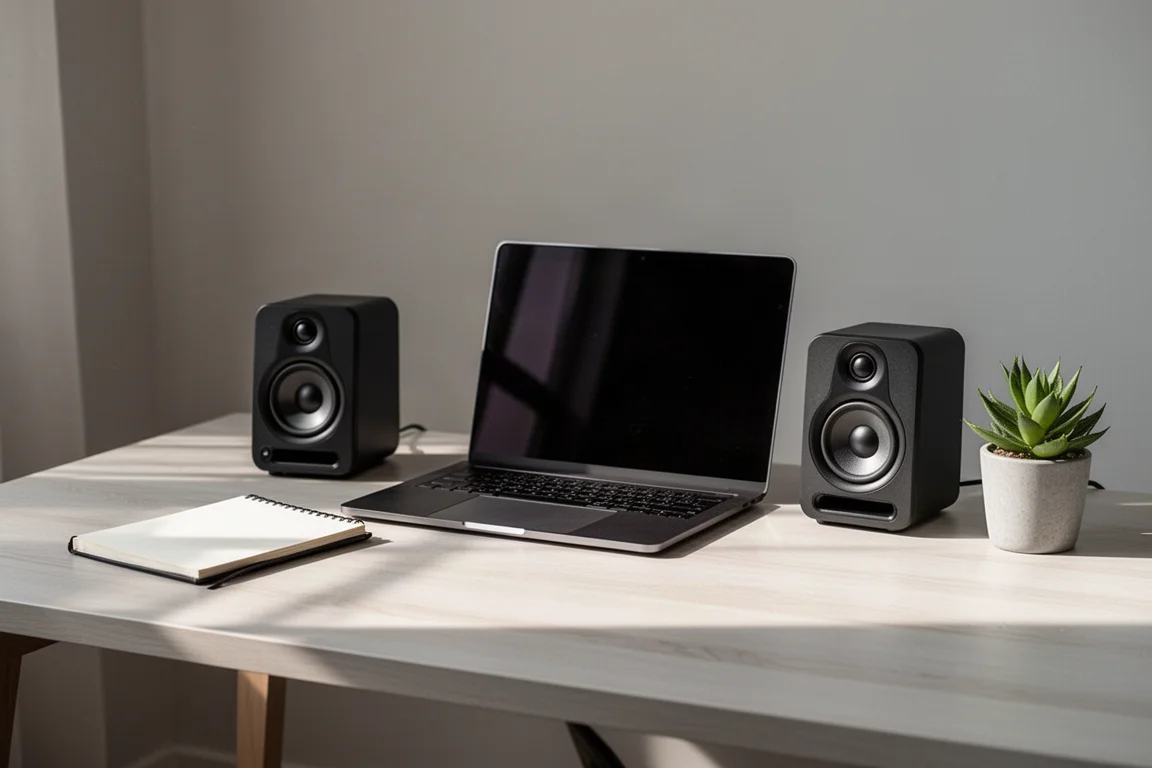
Price is the final filter. A speaker asking around $300 should be judged against what $99 and $180 already deliver in the same size class.
FiiO SP3: Build Quality, Design, and Features
The SP3 pairs a 3.5-inch carbon fiber midwoofer with a 1-inch silk dome tweeter, driven by roughly 30 watts for the woofer and 10 watts for the tweeter.
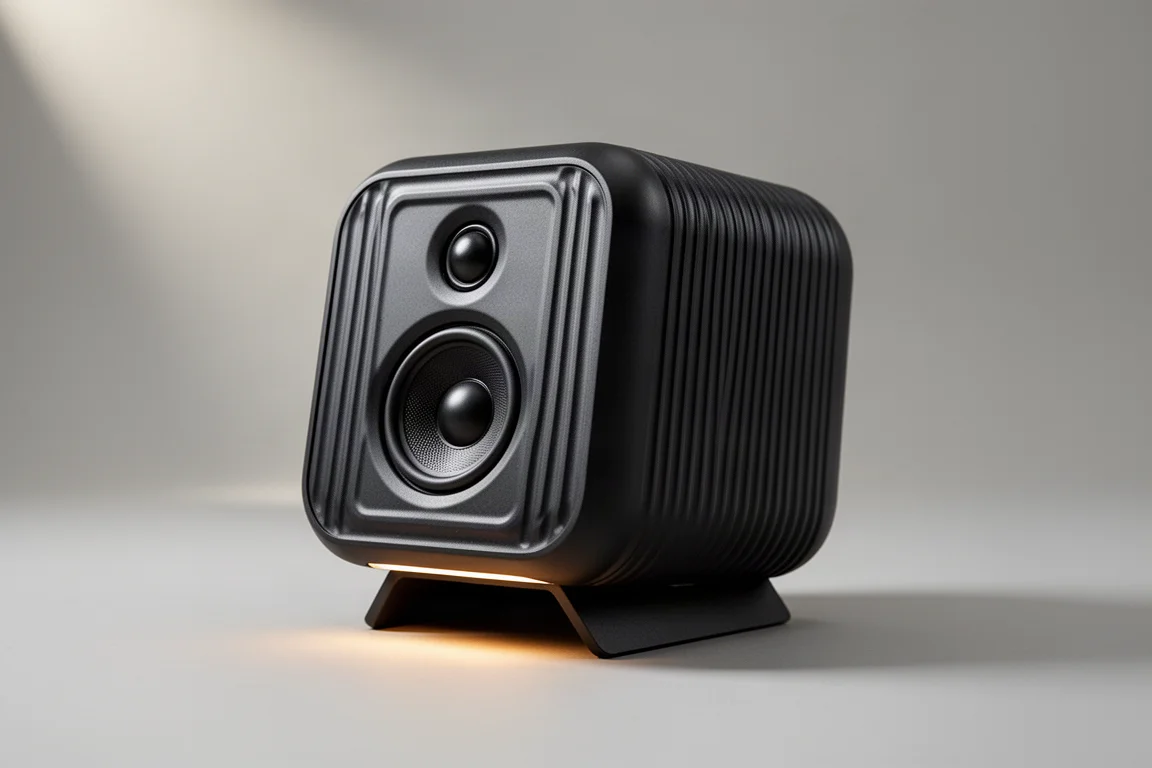
The cabinet is the standout. It feels dense and solid, and it stays compact enough for a crowded desk. A 7-degree riser tilts the speaker up toward the listener, which is a thoughtful detail for desk placement where the speakers sit below your ears. The bottom pad includes a clear section that lets the RGB lighting underneath show through, and that lighting is one of the more appealing parts of the design.
Not everything lands. The ribbed exterior finish reads as 3D printed rather than premium, and there is no volume knob on the front, which means level changes happen somewhere other than where your hand naturally reaches.
FiiO also emphasizes a large empty cavity behind the tweeter magnet that allows the tweeter to reach as low as 800 Hz. The actual crossover, though, sits at 3.4 kHz. Crossing the tweeter lower would have filled in the response dip in that region, so the claim is more interesting than the implementation behind it.
FiiO SP3: Sound Quality and Measured Performance
This is where the SP3 struggles, and it struggles at every listening angle.
On axis, the treble is elevated and the midrange is scooped out, which pushes vocals and instruments behind a bright top end. The bass is the larger problem. The response peaks around 70 Hz with a narrow, high-Q resonance, then falls away quickly: -3 dB at 59 Hz and -10 dB at 53 Hz, a 7 dB drop across just 7 Hz. What you hear is a single prominent bass note rather than real low-frequency extension, and the cabinet is simply too small for this driver to behave any other way.
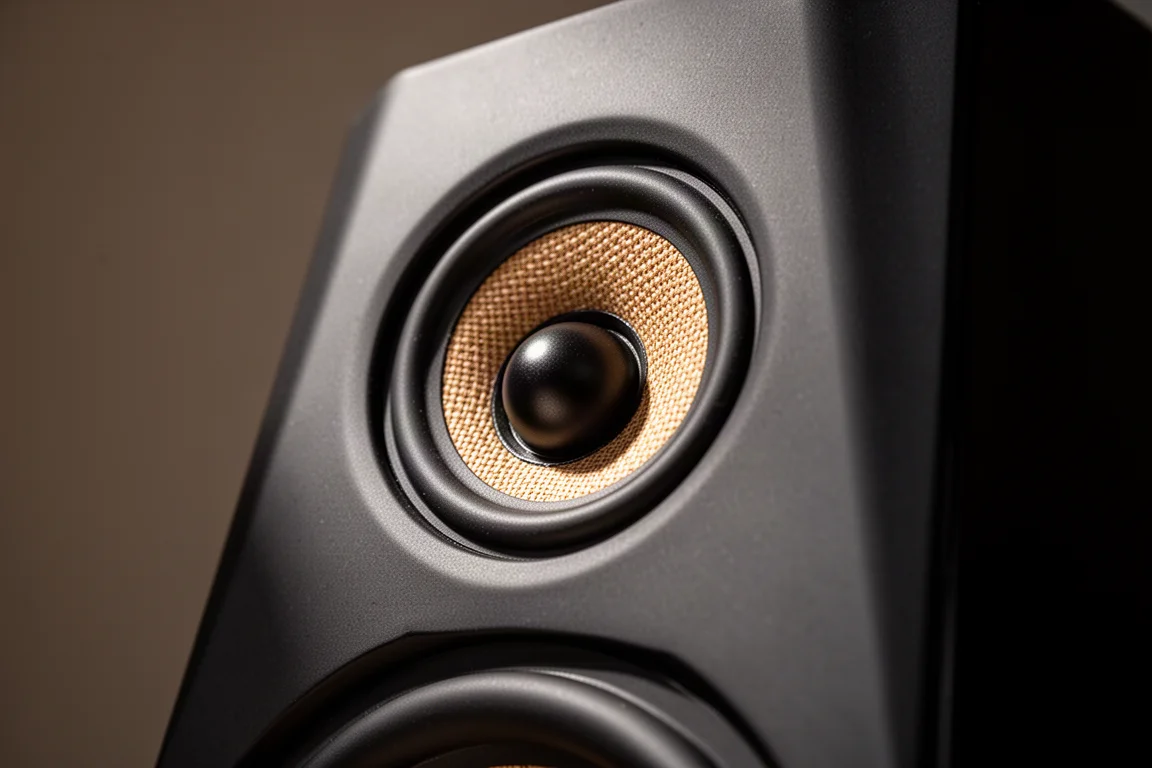
The crossover region compounds the issue. Depending on how far below the tweeter you sit, the dip in the upper midrange measures somewhere between 5 and 10 dB. Tilting the speaker up with the riser does not resolve it. Even with the speakers placed on axis with your ears, the dip is still around 7 to 8 dB, which removes much of the upper midrange detail a listener should be hearing. Above the tweeter line, from roughly 10 to 40 degrees, the vertical response opens up a further hole. Port noise is audible as well, with a ringing character that undercuts the clean bass the design implies.
Some of the measurements are genuinely good. Distortion stays low at moderate levels, and the tweeter holds up well under compression, meaning the treble stays composed as volume rises. Clean treble sitting on top of a scooped midrange and a one-note bass, however, does not add up to a balanced speaker.
Equalization offers only partial relief. The bass resonance and much of the treble lift can be addressed with a desktop EQ, but directivity swings near 1 kHz and around 1.3 kHz cannot be corrected that way, because those are changes in how the speaker radiates rather than simple level errors.
It is also worth noting that some of the marketing around the SP3 overstates the physics. Larger woofers do not inherently produce a wider sound stage, and in practice they often beam earlier and narrow the radiation pattern instead. A 1-inch tweeter is not automatically better than a 3/4-inch dome either, since smaller domes typically radiate more broadly as frequency climbs.
PreSonus Eris 3.5: The Budget Reference Point
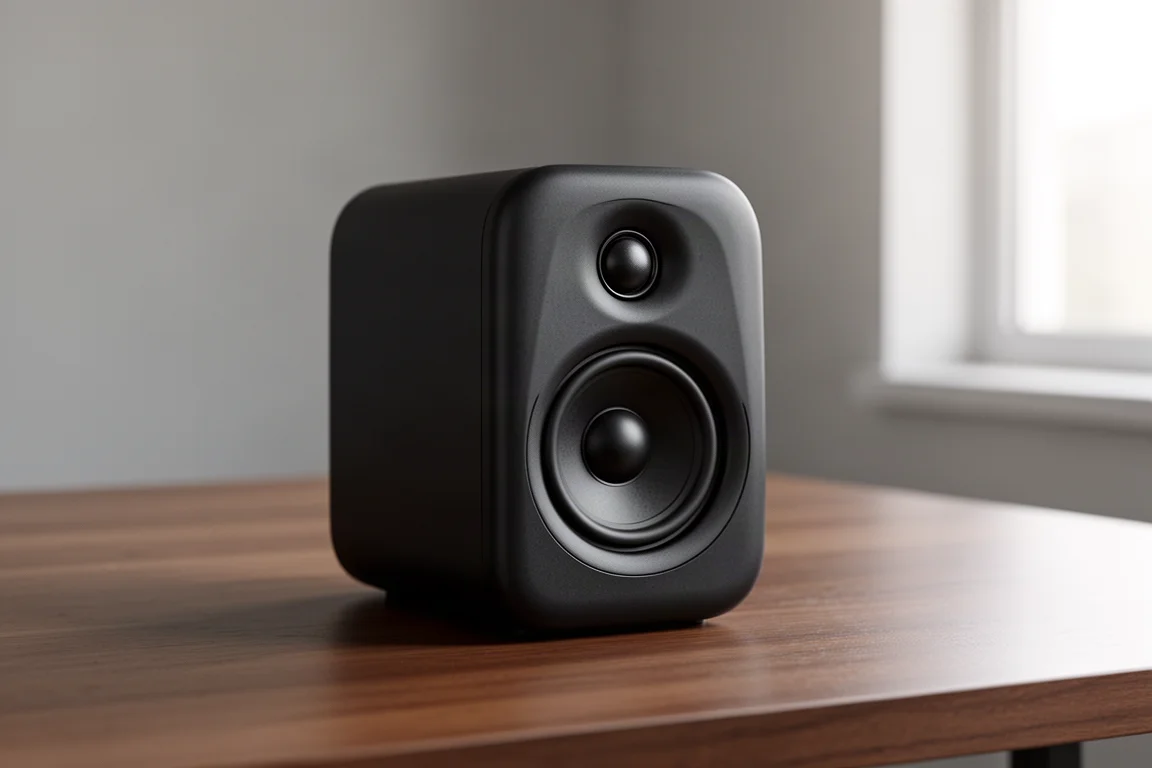
At around $99, the PreSonus Eris 3.5 sits in the same 3.5-inch driver class as the SP3 for roughly a third of the price. It is not a high-fidelity performer either, and it should not be treated as a step up in sound quality.
What it offers is context. It shows what this size class delivers at the entry price, which makes the SP3’s roughly $300 ask harder to justify on sound quality alone. For a listener with a genuinely tight budget who needs a compact pair for casual desktop use, the Eris 3.5 remains a familiar option in this segment.
Monoprice MM-3: The Value Alternative
The Monoprice MM-3 costs around $180, roughly half of what the SP3 asks, and it makes a stronger case on measured performance.
Measured with the port stuffed, the MM-3 still carries an upper treble lift, so it is not perfectly neutral. What it avoids is the SP3’s narrow bass resonance. Its low-frequency response is smoother and rolls off more naturally, which means bass sounds like bass rather than one repeated note. It is also more responsive to equalization overall, giving a desktop listener more room to shape the sound toward their own preference.
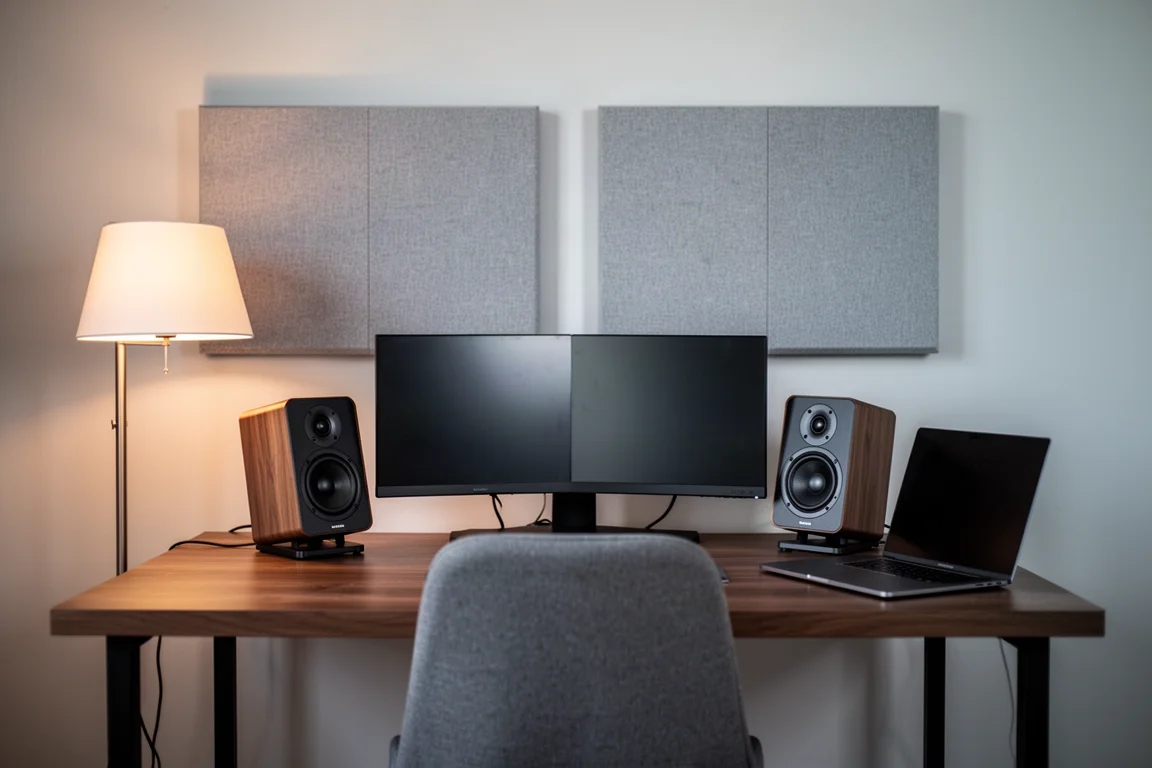
For a desk setup where the speakers sit close and the room is small, that combination of a lower price and more workable tuning is difficult to argue with.
How the Three Desktop Speakers Compare
| FiiO SP3 | PreSonus Eris 3.5 | Monoprice MM-3 | |
|---|---|---|---|
| Approximate price per pair | $300 | $99 | $180 |
| Driver class | 3.5-inch carbon fiber midwoofer, 1-inch silk dome tweeter | 3.5-inch class | Compact desktop pair |
| Build and features | Rigid cabinet, 7-degree riser, RGB base lighting, no front volume knob | Entry-level desktop speaker | Compact desktop speaker |
| Bass behavior | Narrow peak near 70 Hz, -3 dB at 59 Hz | Limited | Smoother roll-off, no single-note resonance |
| Tuning | Bright treble, scooped midrange, crossover dip of 5 to 10 dB depending on angle | Not a high-fidelity performer | Upper treble lift, but more even overall |
| Equalization potential | Limited near 1 kHz and 1.3 kHz | Limited | More responsive |
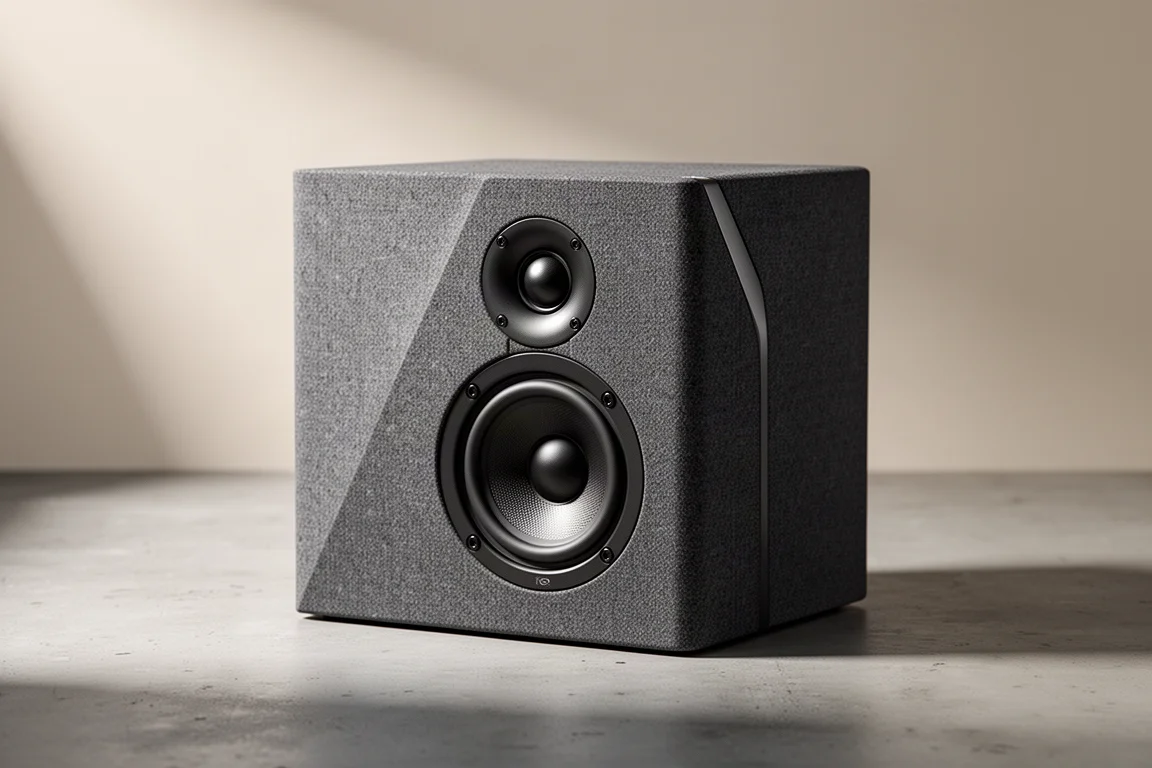
The pattern is straightforward. The SP3 wins on cabinet construction and desk-friendly features. The MM-3 wins on the balance between price and measured behavior. The Eris 3.5 wins on price alone and asks you to accept entry-level performance in return.
Buying Advice
Start by deciding what you are actually optimizing for.
If build quality, a compact footprint, and design features such as the 7-degree riser and base lighting matter most, the SP3 delivers on the hardware side. Be aware that you are paying a premium for that hardware while accepting a scooped midrange, a narrow bass peak, and a crossover dip that shows up whether you sit on axis or below the tweeter. A desktop EQ can soften some of it, but not the directivity issues near 1 kHz.
If sound per dollar is the priority, the Monoprice MM-3 is the more sensible choice at around $180. Its low-frequency behavior improves further with the port blocked, which is a simple tweak many desktop users can try. The upper treble lift remains, but the response is smoother and easier to shape.
If your budget tops out near $99, the PreSonus Eris 3.5 keeps you in the same driver class without pretending to be more than it is. Just go in expecting entry-level sound rather than a bargain version of a $300 speaker.
Two practical checks before you buy: confirm where the volume control lives, since the SP3 does not put one on the front, and think honestly about whether you will actually use EQ software. If the answer is no, the tuning you buy is the tuning you keep.
Conclusion
The FiiO SP3 is a well-built, compact desktop speaker with real design effort in its cabinet and its desk-placement features. On measured sound quality, it does not hold up at around $300 per pair: bright treble, a scooped midrange, a crossover dip that persists across listening angles, and a narrow bass peak that leaves low frequencies sounding like one note.
The Monoprice MM-3 at around $180 is the more balanced proposition for most desks, and the PreSonus Eris 3.5 at around $99 is the honest entry point for a tight budget. If the SP3’s build and features are what you are after, it remains a solid piece of hardware. If you are buying for sound, the alternatives make a stronger case.
Further reading
Related Reviews
Desktop Speakers
Audio Smile Little British Monitor Review: A Compact Desktop Speaker With Measured Neutrality
A small European powered desktop speaker with a waveguide tweeter, an aluminum cone woofer, and an unusually flat measured response for its size.
Desktop Speakers
Audioengine A2+ Review: A Small Desktop Speaker That Knows Its Place
The Audioengine A2+ is a compact powered desktop speaker pair with Bluetooth, a tidy footprint, and a sound profile tuned for life on a desk rather than a listening room.
Desktop Speakers
Five Desktop Speakers Compared: Edifier, Kanto, Adam Audio, and Kali
Five compact desktop speakers from roughly $170 to $349 per pair, compared on accuracy, listening window stability, output capability, and desk footprint.